
ICAS Bulletin (online ISSN 2836-3418, print ISSN 2836-340X) is published every other week throughout the year at 1919 M St NW, Suite 310, Washington, DC 20036.
The online version of ICAS Bulletin can be found at chinaus-icas.org/bulletins/.
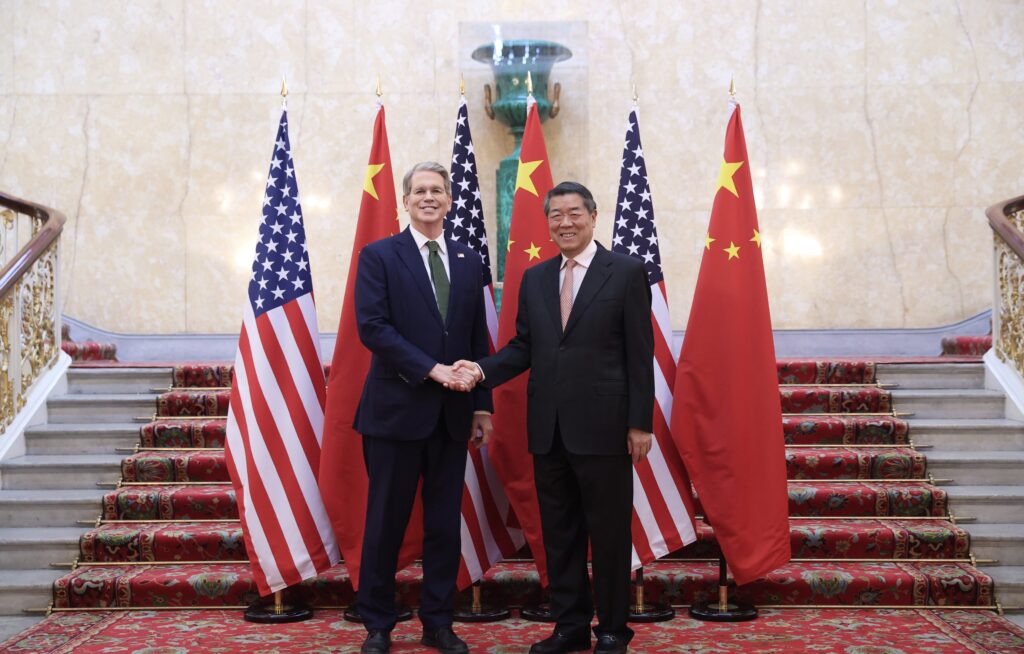
– A tentative trade framework agreement between the United States and China was announced on June 10, following high-level negotiations in London. According to President Donald Trump, the deal sets U.S. tariffs at 55% and China’s at 10%, while including commitments from Beijing to resume rare earth exports and reopen student visa access for Chinese nationals, although the details of the agreement and its pending approval remain uncertain.
– Investor sentiment reflected this uncertainty. While Chinese equities rose modestly following the announcement, U.S. markets remained cautious, reflecting deeper doubts about whether the truce addressed structural concerns, such as technology transfer, intellectual property rights, or market access barriers.
– In May, China’s exports to the U.S. experienced the sharpest year-on-year drop since 2020, reflecting the cumulative toll of ongoing tariff escalations and global supply chain strain. This economic pressure likely motivated Beijing to return to the negotiating table.
– The negotiations in London on June 9 focused on tariff reductions, access to advanced technologies, and the broader goal of avoiding economic decoupling as both countries face mounting domestic political pressures, increasing the urgency for a stable bilateral framework.
– With President Trump’s July 8 deadline approaching for reviewing tariffs on other U.S. trade partners, and ongoing domestic challenges—including immigration protests and tax scrutiny—the stakes remain high for both administrations.
Associated News References:
“China’s Latest Trade Truce With U.S. Leaves Investors None The Wiser,” Reuters, June 11
“Deal To Get Us-China Trade Truce Back On Track Is Done, Trump Says,” Reuters, June 10
“U.S.-China Trade Talks In London Hang Over Markets,” Channel News Asia, June 10
“China’s Exports To U.S. Suffer Biggest Decline Since 2020,” Wall Street Journal, June 9 [Paywall]
“China Has Valuable Card To Play As It Holds Trade Talks With The U.S. Today,” CNN, June 9
“U.S. And Chinese Officials Meet In London For Pivotal Trade Talks,” Reuters, June 9
“U.S. And China Meet At Precarious Moment In Trade War,” The New York Times, June 9 [Paywall]
“U.S. And Chinese Officials Will Resume Trade Talks In London On Monday,” CNN, June 6
“Trump Calls Dealmaking With China’s Xi ‘extremely Hard’ As Frictions Rise,” CNN, June 4
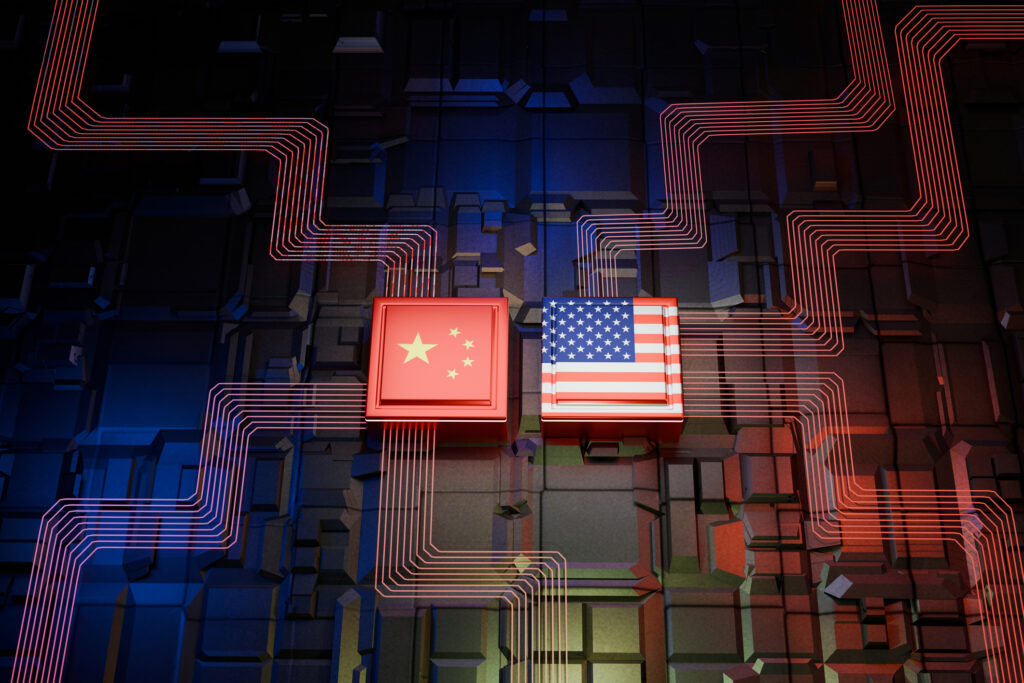
– On June 15, it was reported that the U.S.-China trade agreement negotiated in London deliberately excluded military-use rare earths, allowing China to retain control over high-performance magnets crucial to U.S. defense systems. Meanwhile, the U.S. maintained restrictions on advanced AI chips, reinforcing strategic chokepoints in emerging technologies.
– The same day, critical metals surged 50% after the U.S. Export-Import Bank proposed a $120 million loan for Greenland’s Tanbreez rare earth project-an initiative broadly seen as part of the West’s effort to diversify supply chains away from Chinese dependence.
– On June 12, the U.S. government tightened export controls on AI chips, limiting Huawei to no more than 200,000 units in 2025, and expanding restrictions to cover advanced chip-design software, an essential building block for next-generation AI.
– On June 6, China granted six-month emergency licenses for rare earth exports to continue temporarily for top U.S. automakers. While this provided short-term relief, the decision emphasized the persistent uncertainty in mineral trade and geopolitical supply chain risks.
– On June 5, U.S. and European automakers raised alarms as China’s export curbs on rare earths began to plant. Key components like EV motors, sensors, and alternators were disrupted, exposing vulnerabilities in both EV and defense sectors.
Associated News References:
“U.S.–China Trade Truce Leaves Military-Use Rare Earth Issue Unresolved,” Reuters, June 15
“Auto industry sounds the alarm as China’s rare earth curbs start to bite,” CNBC, June 5
“Beijing Puts Six-Month Limit On Its Ease Of Rare Earth Export Licenses,” Wall Street Journal, June 11 [Paywall]
“China Puts Six-Month Limit On Its Ease Of Rare-Earth Export Licenses,” Wall Street Journal, June 11
“U.S. Says China’s Huawei Can’t Make More Than 200,000 Ai Chips In 2025,” Reuters, June 12
“Critical Metals Climbs 50% Percent In A Week, Eyes 120$ Million U.S. Ex-Im Bank For Greenland Rare Earth Projects,” MSN, June 16
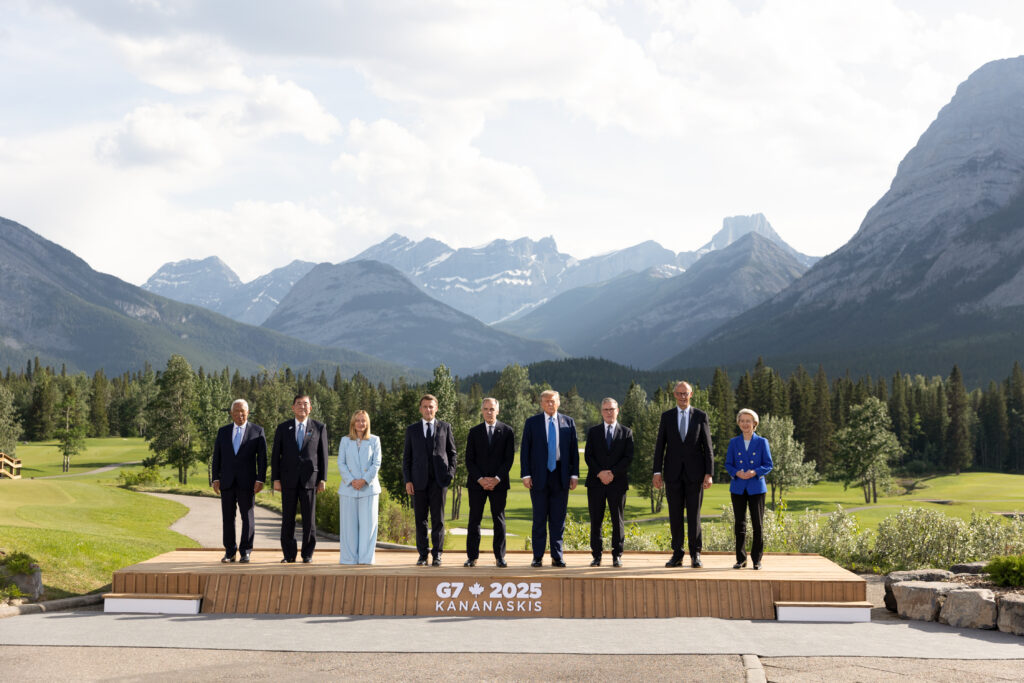
– At the 2025 G7 Summit, leaders reached a preliminary agreement on a strategy to strengthen supply chains for critical minerals vital to green energy and semiconductor industries.
– U.S. and its partners stressed the importance of reducing dependency on Chinese sources. The draft strategy includes expanding supplier networks, collaborating on mining projects outside China, and creating coordinated responses to potential future disruptions.
– During the summit, a draft urging restraint in the Israel–Iran conflict revealed rifts within the G7, as President Trump refused to endorse it.
– President Trump sparked backlash by suggesting Russia’s expulsion was a “mistake” and proposing China’s inclusion to form a “G9.”
– In response to the G7’s draft communique addressing China-related issues, Beijing issued a sharply worded statement on June 13 accusing G7 nations of interference, urging the group to “stop manipulating China-related issues.”
Associated News References:
“Transcript: Europe’s Game Plan For Handling Trump At G7,” Financial Times, June 12 [Paywall]
“China Tells G7 To Stop Manipulating China Issues, Issues Its Own Agenda,” Reuters, June 13
“Trump Muses About Turning The G7 Back Into The G8—Or Even The G9 With China,” AP News, June 16
“G7 Leaders Agree On Strategy To Protect Critical Mineral Supply, Draft Document Says,” Reuters, June 16
“Trump Says He’d Invite Putin To G7 As Canada And Others Oppose Russia’s Return,” The Independent, June 16
“G7 Leaders Urge ‘de-Escalation’ But Stop Short Of Calling For Israel-Iran Ceasefire,” BBC News, June 17
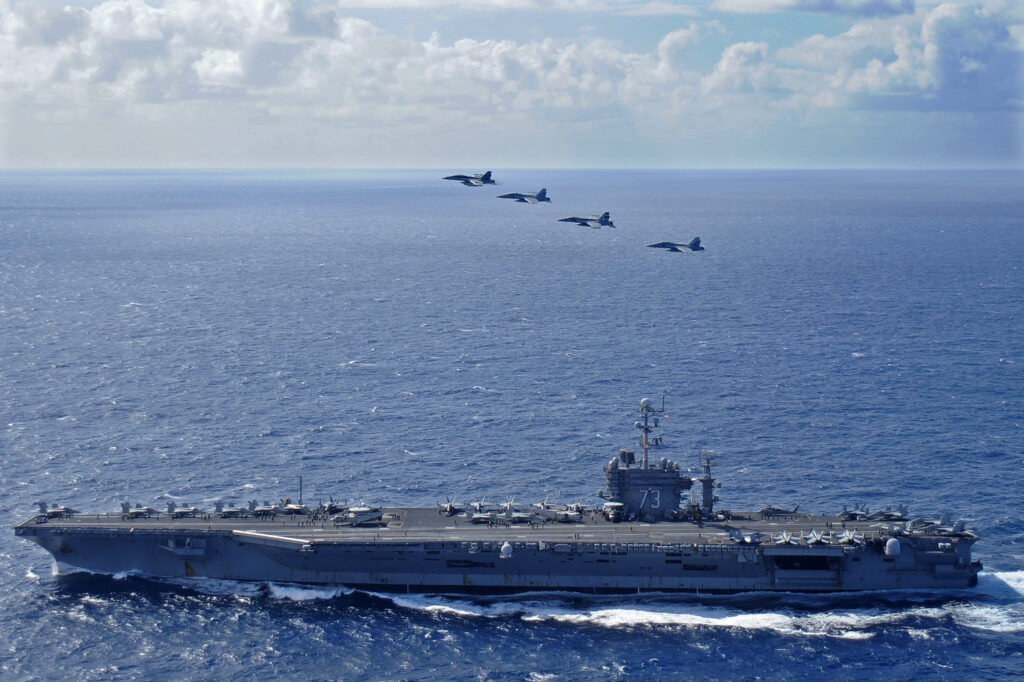
— On June 16, the aircraft carrier USS Nimitz that was originally operating in the South China Sea canceled its plan of port call in Vietnam and was redeployed towards the Middle East amid tensions between Israel and Iran.
– On June 11, the U.S. Navy ordered the aircraft carrier USS George Washington to start its summer patrol in the West Pacific, which coincides with the Chinese naval operations in the region.
– On June 10, the Japanese Ministry of Defense stated that the Chinese Navy deployed two aircraft carriers, the Liaoning and the Shandong, into the West Pacific simultaneously. This is the first time that both of the two commissioned Chinese aircraft carriers have been deployed into the Pacific.
– On the same day, the Chinese Navy confirmed the deployments, stating that these deployments are “in compliance with relevant international laws and practices and are not directed against any specific country or target”.
– On June 8, the Chinese aircraft carrier Liaoning and 3 other vessels were observed at around 300 kilometers southwest of the remote, uninhabited Japanese island of Minamitori.
Associated News References:
“US Aircraft Carrier Heads West From South China Sea Amid Middle East Tensions,” Reuters, June 16
“U.S. Deploys ‘nuclear’ Aircraft Carrier As China’s PLA Navy Threatens With Liaoning & Shandong In W.Pacific,” The Eurasian Times, June 11
“China Sends Two Aircraft Carriers Into The Pacific For The First Time,” The New York Times, June 10
“China Deploys 2 Aircraft Carriers to Western Pacific for the First Time, USS George Washington Leaves Japan for Carrier Qualification,” U.S. Naval Institute, June 10
“USNI News Fleet And Marine Tracker: June 9, 2025,” U.S. Naval Institute, June 9
“Chinese Aircraft Carrier Seen Operating Deeper Into Pacific,” Bloomberg, June 8
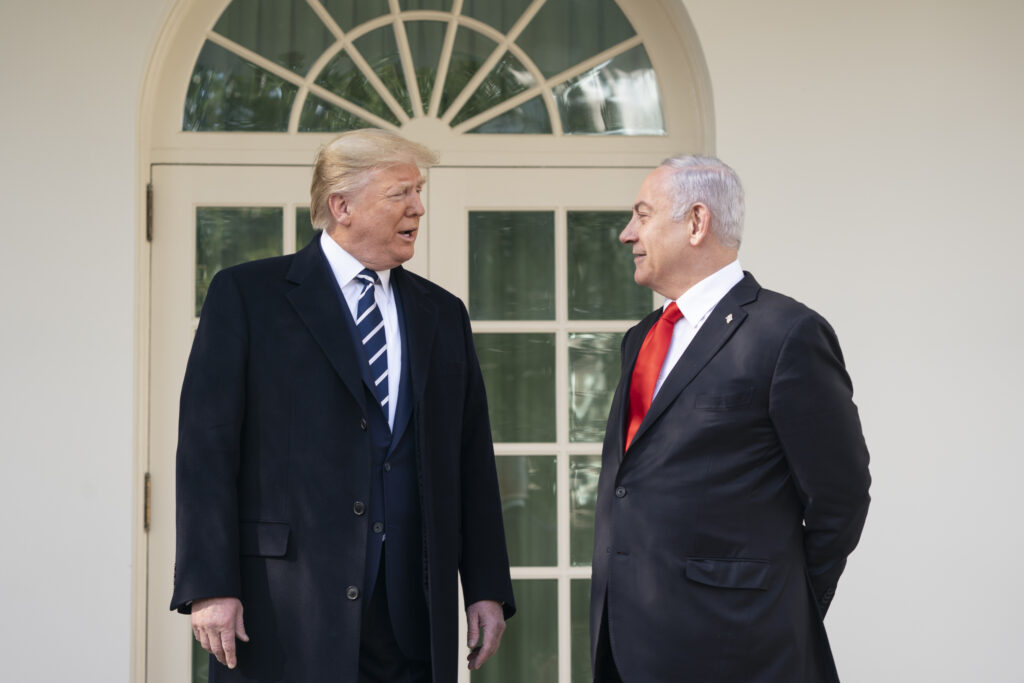
– Following the escalation of the Iran-Israel conflict, on June 12, the U.S. Secretary of State Marco Rubio stated that the U.S. had no involvement in Israel’s unilateral strikes on Iran but had been told that Israel considered the attack necessary for its self-defense.
– Different from Secretary Rubio’s statement, on June 13, President Trump repeatedly praised the attack as “successful” in a media blitz.
– On June 14, the Chinese Foreign Minister Wang Yi held a phone call with the Iranian Foreign Minister Seyed Abbas Araghchi. Wang Yi stated that China has explicitly condemned Israel for violating Iran’s sovereignty, security, and territorial integrity, and will support the Iranian efforts to protect its home territory.
– On June 14, the Chinese Foreign Minister Wang Yi also held a phone call with the Israeli Foreign Minister. Wang Yi stated that the Israeli actions were unacceptable. Wang Yi also pointed out that China would play a constructive role in the peaceful solution of the Iranian nuclear issue, while diplomatic solutions are still available.
– On June 15, President Trump vetoed an Israeli plan to kill the Iranian supreme leader Ayatollah Ali Khamenei. Meanwhile, the top U.S. officials were reported to be in constant communications with Israeli officials in the days since Israel launched its first strike on Iran.
– On the same day, President Trump stated that although the U.S. is not currently involved in the conflict, the possibility for the U.S. to participate in the conflict remains. At the same time, Trump has also stated that the U.S. can play a role as a mediator in this conflict.
– On June 17, president Trump warned the Iranian leader Ayatollah Ali Khamenei that he is an easy target and stated that the U.S. has limited patience. Trump has also demanded Tehran to “unconditionally surrender” in its escalating conflict with Israel.
Associated News References:
“Trump Threatens Iran’s Leader, Demands ‘unconditional Surrender’,” CNBC, June 17
“China’s Wang Yi Decries ‘unacceptable’ Israeli Attack On Iran, Urges Political Resolution,” South China Morning Post, June 15
“Trump Says ‘it’s Possible’ Us Gets Involved In Israel-Iran Conflict,” ABC News, June 15
“Trump Vetoed Israeli Plan To Kill Iran’s Supreme Leader, Us Officials Say,” Reuters, June 15
“Chinese FM Wang Yi Holds Phone Conversation With Iranian FM, Says Israel’s Attack On Nuclear Facilities ‘sets Dangerous Precedent’,” Global Times, June 14
“Trump Embraces Israel After ‘successful’ Iran Attack,” Politico, June 13
“U.S. Says It Was Not Involved In Israeli Strikes On Iran,” The New York Times, June 12
“Brad Pitt’s F1 Movie Set For Release In June 2025,” China Daily, June 18
“Trump Calls For Iran’s Unconditional Surrender As Israel-Iran Air War Rages On,” CNBC, June 17
“Stunning Lineup: China’s J-20, J-35a, J-10ce Fighters To Feature At Paris Air Show,” CGTN, June 16
“Threat Of U.S.-China Land Grab In Space Demands Urgent Legal Reforms,” South China Morning Post, June 15
“China’s Military Conducts Patrols In South China Sea, Warns Philippines,” Reuters, June 15
“China Is Building The World’s Largest National Parks System,” National Geographic, June 13
“China Eyes Stronger Cooperation With ECB Amid Global Trade Tensions,” Reuters, June 12
“China To Remove Tariffs On Nearly All Goods From Africa As Both Criticise US Trade Moves,” South China Morning Post, June 12
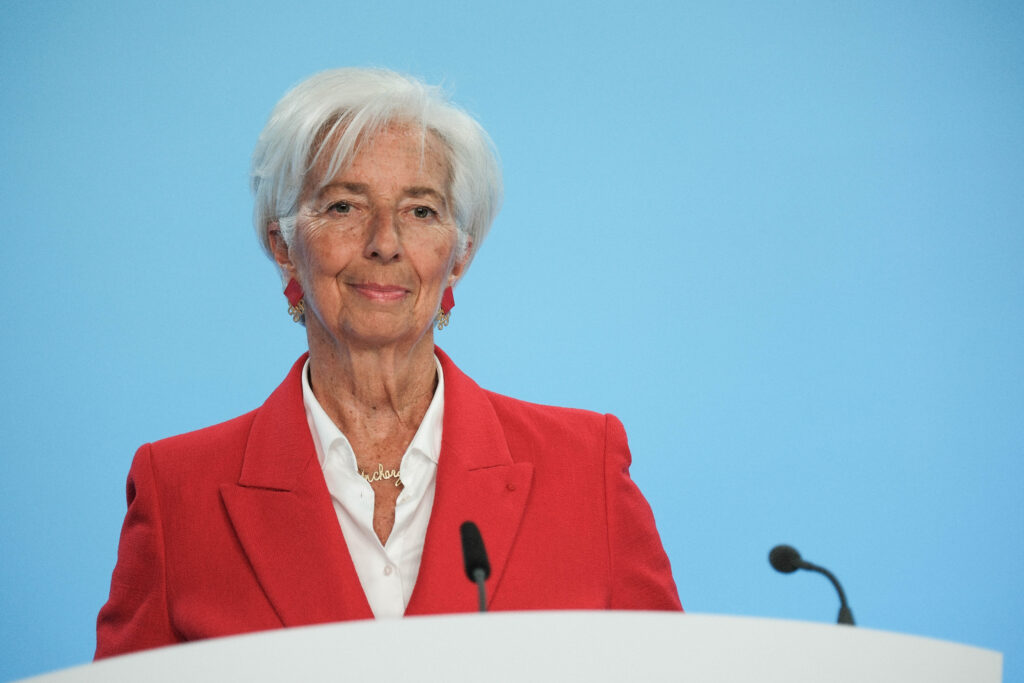
“Ecb’s Lagarde Gently Urges China To Change Its Ways,” Politico, June 11
“Why Xi’s Decision To Talk To Trump During Trade Crisis Speaks Volumes,” South China Morning Post, June 9
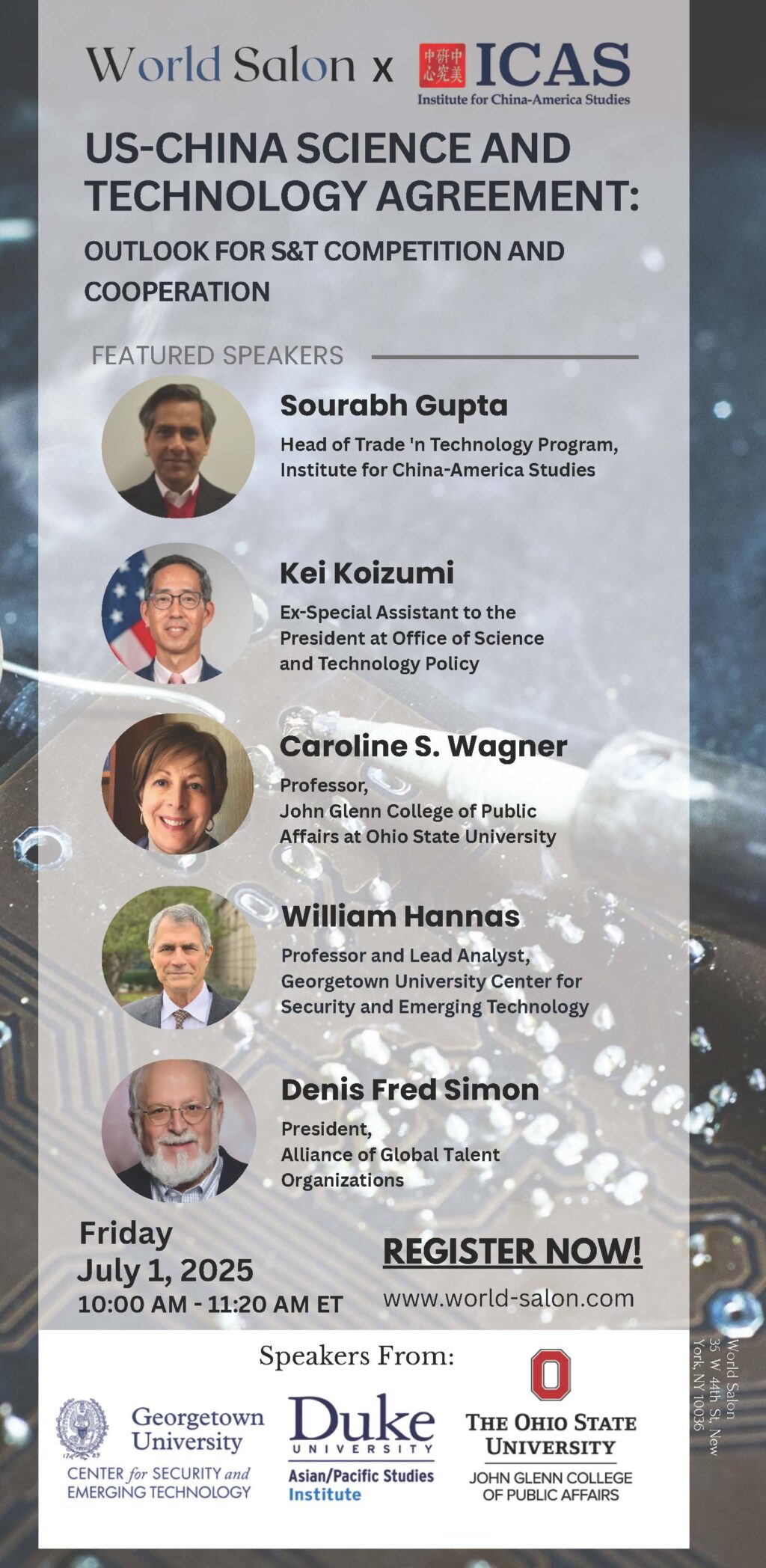
July 1, 2025
10:00AM-11:20AM EST
The U.S.-China Science and Technology Agreement (STA), renewed by the Biden administration in late 2024, continues to provide a foundational framework for bilateral scientific cooperation and competition. The latest renewal introduces significant revisions aimed at addressing strategic concerns, particularly by restricting collaboration primarily to basic research. Sensitive technology sectors such as artificial intelligence, quantum computing, semiconductors, and biotechnology are explicitly excluded, reflecting growing U.S. apprehensions about technological transfer, espionage, and national security risks.
ICAS and World Salon will jointly host the second event of the Digital Fireside Series on July 1. The virtual public event will feature Sourabh Gupta, Senior Fellow and head of Trade ‘n Technology Program of the Institute for China-America Studies (ICAS); Kei Koizumi, Ex-Special Assistant to the President at Office of Science and Technology Policy; Professor Caroline Wagner from the John Glenn College of Public Affairs at Ohio State University; William Hannas, lead Analyst of the Georgetown University Center for Security and Emerging Technology; and Denis Simon, president of the Alliance of Global Talent Organizations and Distinguished Fellow of ICAS.
Click here to register ahead of time!
Don’t call It a Done Deal: The U.S.-China London Talk is (Hopefully) Just the Beginning
By Yilun Zhang
June 17, 2025
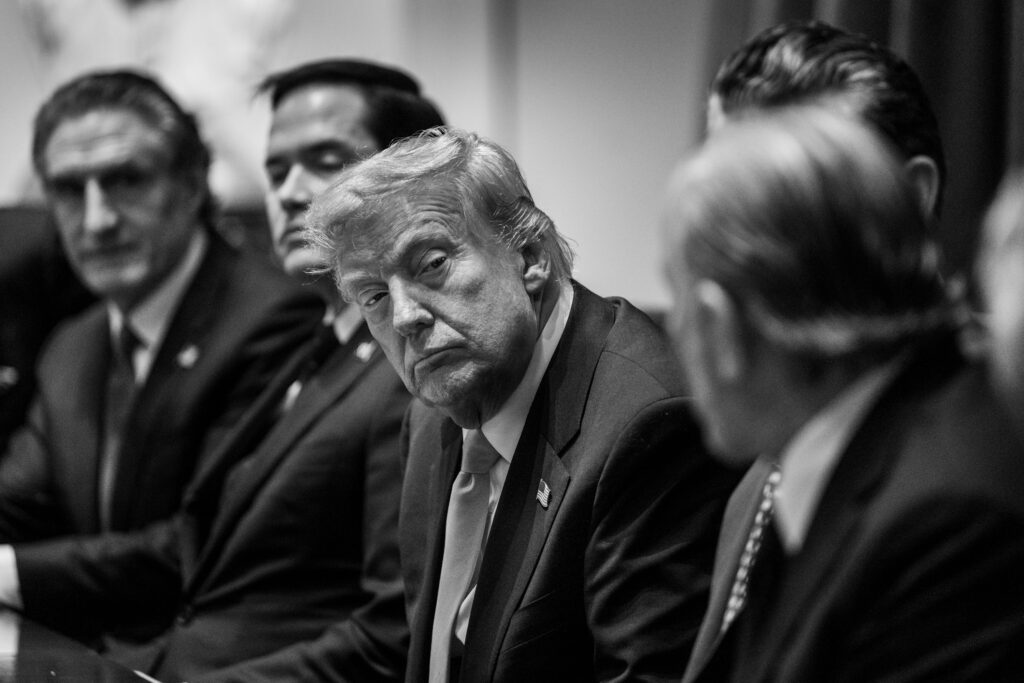
Following the conclusion of the U.S.–China economic dialogue in London, President Trump swiftly declared on Truth Social: “OUR DEAL WITH CHINA IS DONE… THANK YOU FOR YOUR ATTENTION TO THIS MATTER!” The statement, while characteristic in tone, stood in contrast to the more measured language in the official Chinese readout, which emphasized that both sides had reached a “framework consensus in principle” and agreed to maintain engagement through “institutionalized dialogue mechanisms.”
Hybrid Cars Offer America A Greener And Cheaper Road Forward
By Zhangchen Wang
June 16, 2025
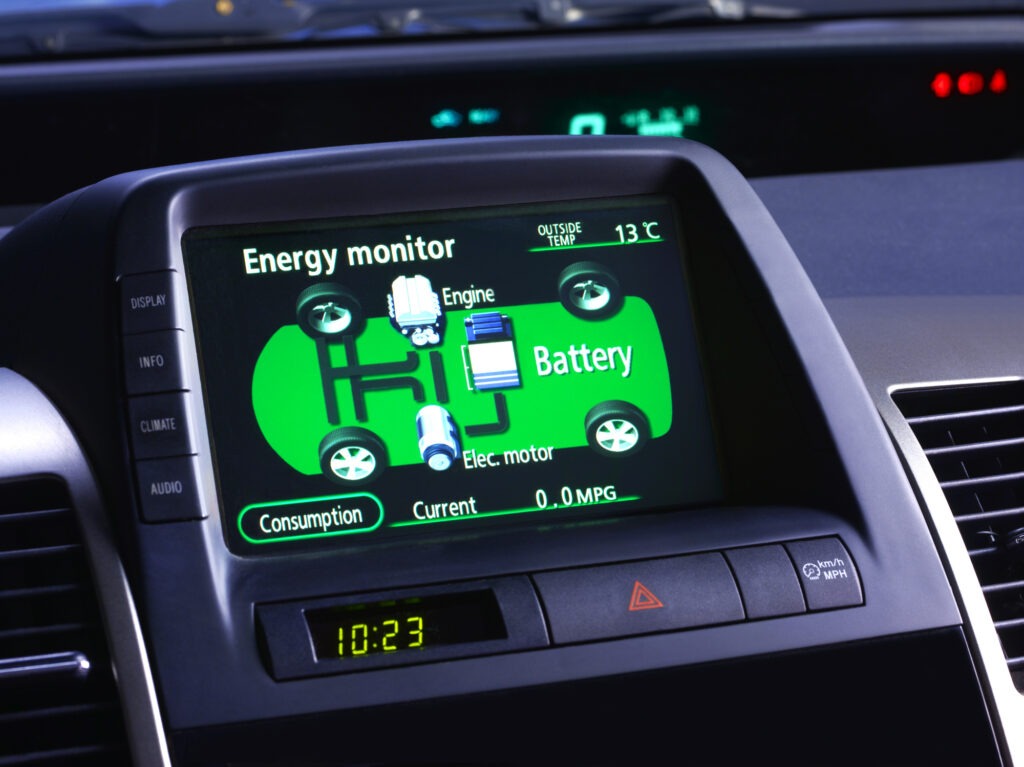
In the aftermath of sweeping budget “One Big Beautiful Bill Act” negotiations, it is becoming almost certain that the GOP aims to press Congress to eliminate federal tax credits on electric vehicles (EV), reigniting new debates about America’s future clean transportation strategy. In fact, rather than framing the policy choice of the United States as an all-or-nothing leap toward fully electric vehicles, hybrid electric vehicle (HEV)—which combines an internal combustion engine with an electric motor to simultaneously improve fuel efficiency and reduce emissions—actually present a more pragmatic and effective middle path toward a more sustainable future in many aspects. Beyond delivering immediate reductions in greenhouse gas emissions and improving energy efficiency, HEV provides the American automobile industry a more feasible pathway towards sustainability, both environmentally and economically, without requiring massive new infrastructure or perpetual government subsidies while still preserving the potential for greater levels of electrification in the future…
Tariffs Won’t Fix U.S. Autos, Fair And Positive Competition Might
By Yilun Zhang
June 9, 2025
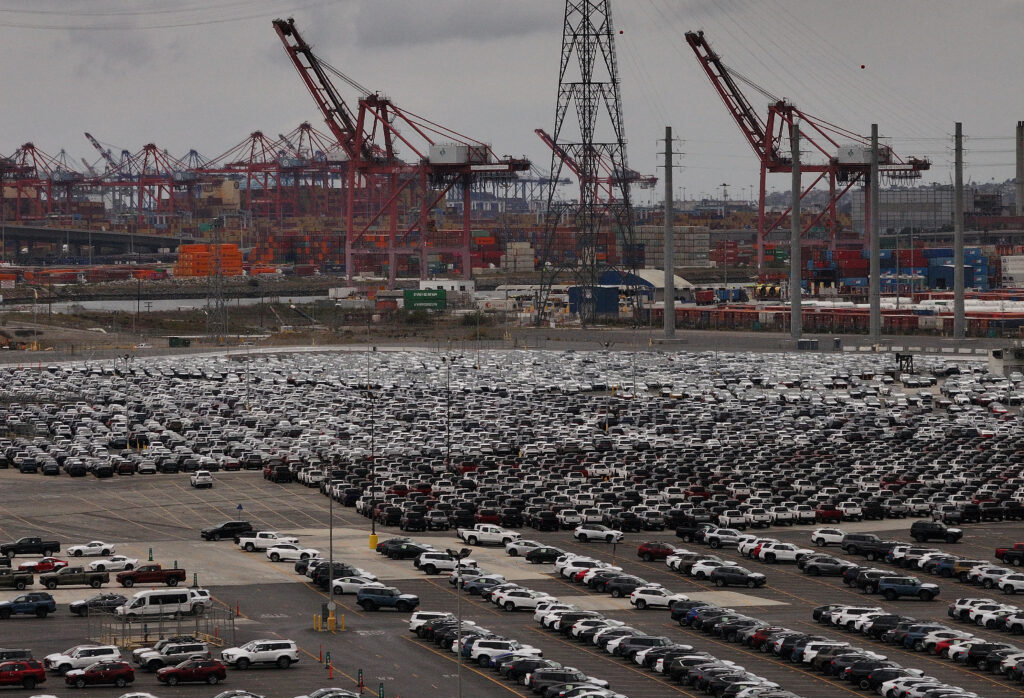
For a country that once defined the modern automobile, the United States now finds itself at a crossroads. Today’s automotive landscape is being reshaped by rapid technological change, evolving consumer demands and intensifying global competition, much of which the United States is actively shutting out.
Truth be told, the American auto industry is in big trouble. Not only was its new energy sector struggling to gain competitiveness in recent years, but its traditional sectors were also facing increasing competition from global competitors and mounting risks generated by trade tensions….
L.E.A.D. Project Brief: The Trump Administration Emerging Strategic and Economic Framework for China
By Sourabh Gupta
June 5, 2025
On his first day in office, President Donald Trump issued the America First Trade Policy executive order – one of 26 executive orders released that day. These 26 executive orders were followed by another 117 over the next 99 days – the most by any president in living memory. At the turn of its 125th day in office, the second Trump administration has been the most meaningfully active – and disruptive – presidency since the first 125 days of President Franklin Roosevelt’s presidency, both on the domestic and international policy front. The outlines of an emerging strategic doctrine as well as an emerging China policy, both from a national security and economic and trade standpoint, are beginning to be evident too. A common theme cuts across the Trump administration’s strategic and economic frameworks, both globally and vis-à-vis China, which is the explicit acknowledgement for the first time that the age of American post-Cold War dominance has come to an end.
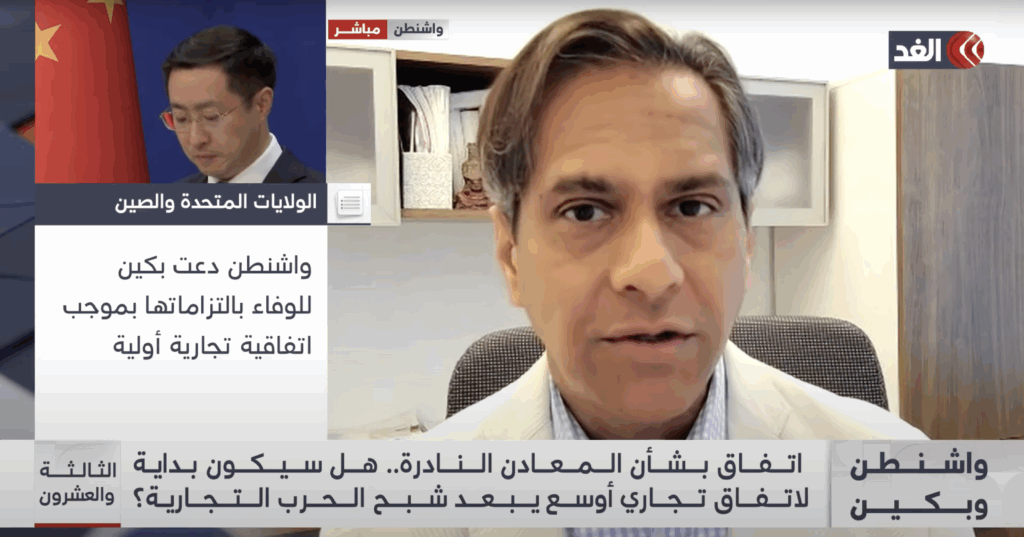
On Wednesday, June 11, 2025, Senior Fellow Sourabh Gupta was interviewed by Alghad TV to discuss the U.S.-China trade truce in London.
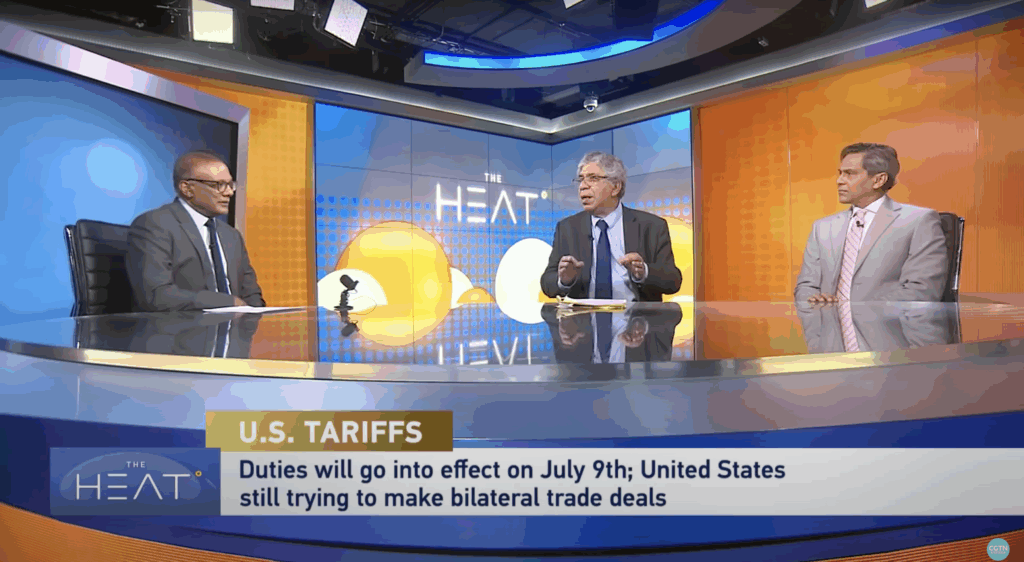
On Tuesday, June 10, 2025, Senior Fellow Sourabh Gupta was interviewed by CGTN America’s The Heat to discuss the Biden and Trump administration’s approaches to U.S. tariff strategy and global trade dynamics.

On Thursday, June 5, 2025, Senior Fellow Sourabh Gupta was interviewed by EWTN News Nightly regarding renewed U.S.-China trade talks and the strategic context of President Trump’s outreach to the Chinese President Xi Jinping.