BCCC Quarterly Q4 2025 Out Now!
This quarters Project Profile is on the 2025 United Nations Climate Change Conference (COP30), held in Belém, Brazil, which unfolded amid intensifying climate impacts and growing pressure on the international system to move from pledges to delivery. While the conference produced a range of institutional and procedural outcomes, it also underscored how much of the global climate agenda remains stalled at the level of political commitment rather than implementation. Many of COP30’s headline advances took the form of new frameworks, processes and dialogues, reflecting both incremental progress and the persistent inability of governments to mobilize sufficient finance or agree on contentious issues such as fossil-fuel transition.
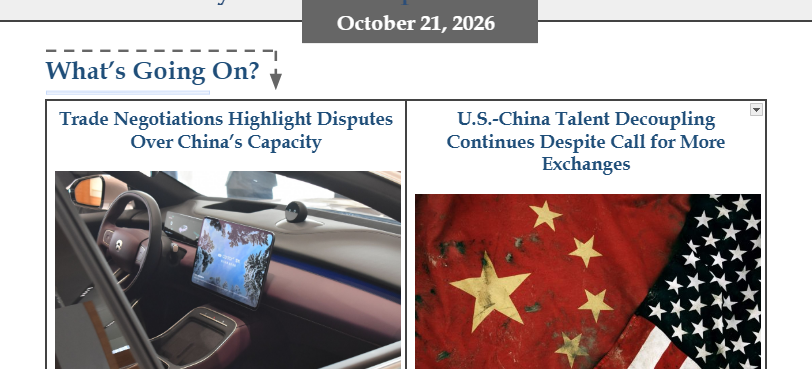
Explore & Share the ReportNot China's Fault: America's Auto Dilemma
The U.S. auto industry faces a structural crisis that cannot be explained away by simply citing foreign competition as a scapegoat. Decades of prioritizing SUVs and pickup trucks left Detroit unprepared for the global pivot to smaller, more efficient vehicles before an even more revolutionary turn towards electrification that paves ways towards future intelligent driving. While Tesla demonstrates that American firms can succeed in electrification, its success is not replicable at scale given its unique global supply chain combination that is no longer feasible in an era of retreat from globalization.
Read the Full ReportICAS 2025 Annual Conference
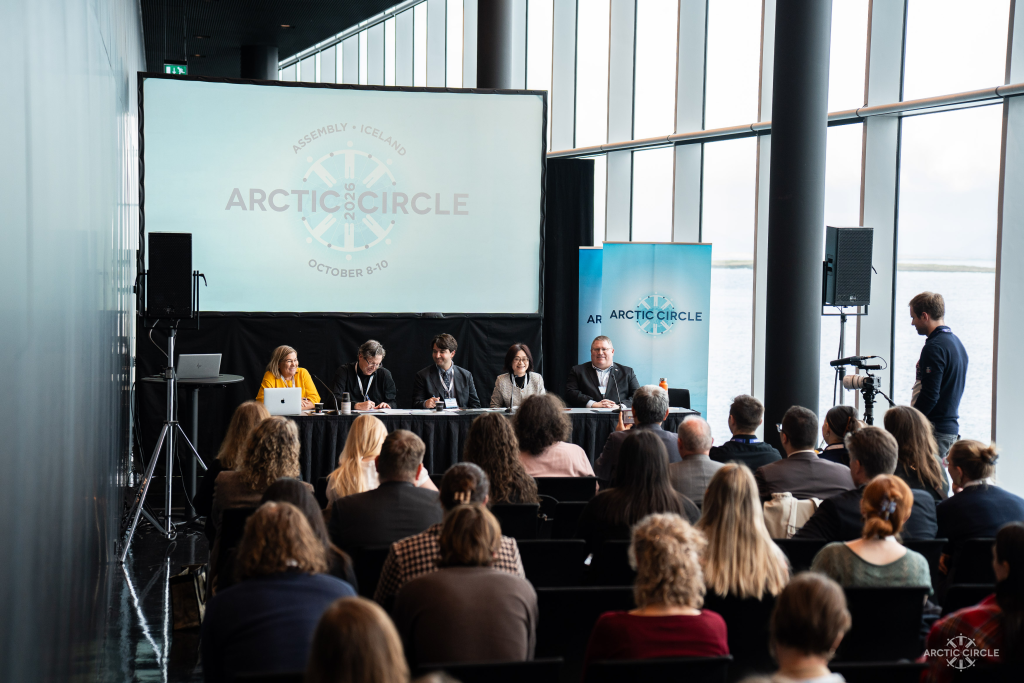
On October 30, the Institute for China-America Studies (ICAS) organized its 2025 Annual Conference in full, well-attended, in-person format at the Georgetown Marriott Hotel in downtown Washington, D.C. View the full summaries of the event and watch featured speakers and panelists videos below.
Click HereZhou Mi on Global Trade in Tension: U.S. & China
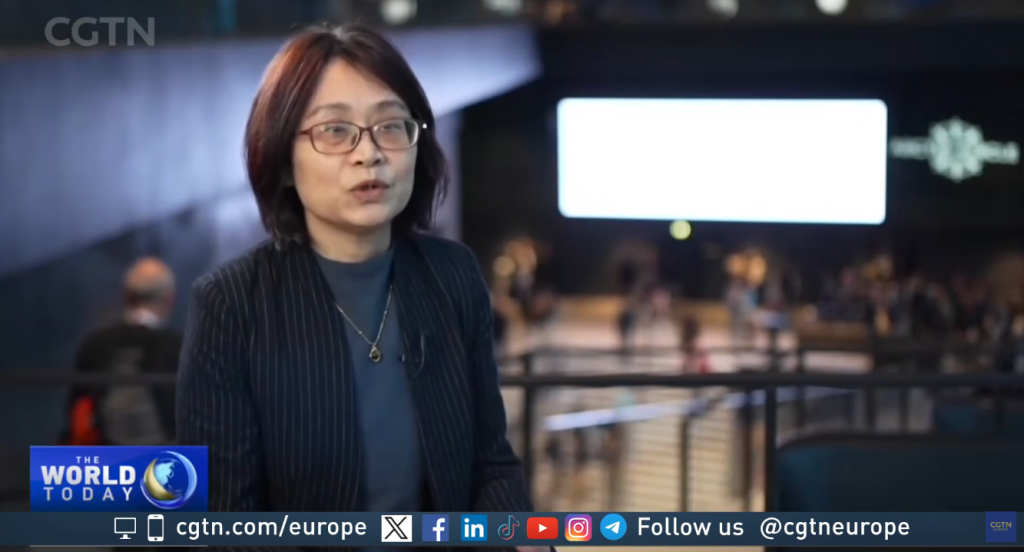
On June 27, 2025 ICAS launched a special EVI segment: the Global Trade in Tension Series. This new series comes at a time when global trade tensions are once again on the rise—not just between the United States and China, but also involving Europe, Canada, Mexico, and many others. While tariffs remain a flashpoint, today’s disputes extend far beyond that—to export controls, capital restrictions, and broader concerns about the direction of globalization itself. In such a fragmented environment, it is more important than ever to understand how different economies perceive the stakes and define their interests. Through this series, we hope to spotlight diverse perspectives from around the world, provide context behind national positions, and—most importantly—explore how we might collectively navigate through this period of uncertainty and renewed competition.
Watch Full Video Here
February 26, 2026
Volume 5
Issue 2
Spotlight Topic:
Japan’s Growing Maritime Defense Industry
Spotlight Author:
Yilun Zhang
Maritime Affairs Program
The ICAS Maritime Affairs Program (MAP) stimulates intellectual research and exchanges on ocean governance in the global maritime domain.
Trade 'n Technology Program
The ICAS Trade ‘n Technology (TnT) Program chronicles and analyzes the evolving dynamics of U.S.-China trade and technology affairs as they occur.
Blue Carbon & Climate Change Program
The ICAS Blue Carbon & Climate Change (BCCC) Program explores pathways for sustainably developing the blue carbon economy and combating climate change through open dialogue and novel policy research.
See our experts
ICAS in the News
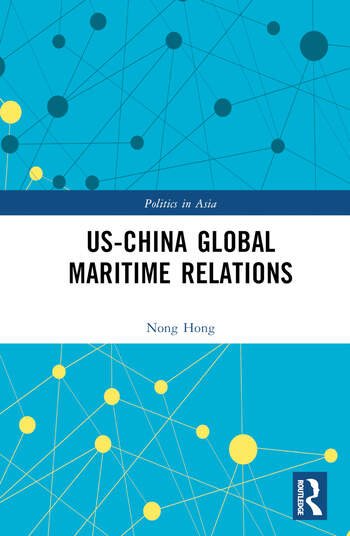
US-China Global Maritime Relations
Book by Nong Hong
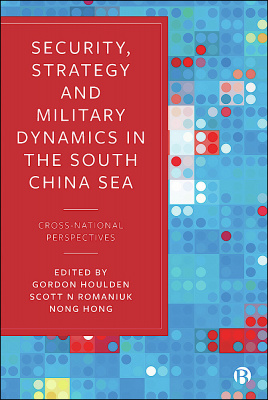
Security, Strategy, and Military Dynamics in the South China Sea
Co-edited by Gordon Houlden and Nong Hong
Security, Strategy, and Military Dynamics in the South China Sea: Cross-National Perspectives
Co-edited by Gordon Houlden and Nong Hong
VIEW BOOK
Explore our
Social Media Presence
ICAS maintains an active presence on several social media platforms to share our various research products, connect with individuals and other institutions, and contribute to discussions on topics related to U.S.-China relations.
What global firms should take note of after U.S. Supreme Court's ruling on Trump's tariffs