
June 3, 2026
ICAS Bulletin (online ISSN 2836-3418, print ISSN 2836-340X) is published every other week throughout the year at 1919 M St NW, Suite 310, Washington, DC 20036.
The online version of ICAS Bulletin can be found at chinaus-icas.org/bulletins/.
- What's Going On? -
U.S.-China Trade Ties Improve, Some Tensions Persist
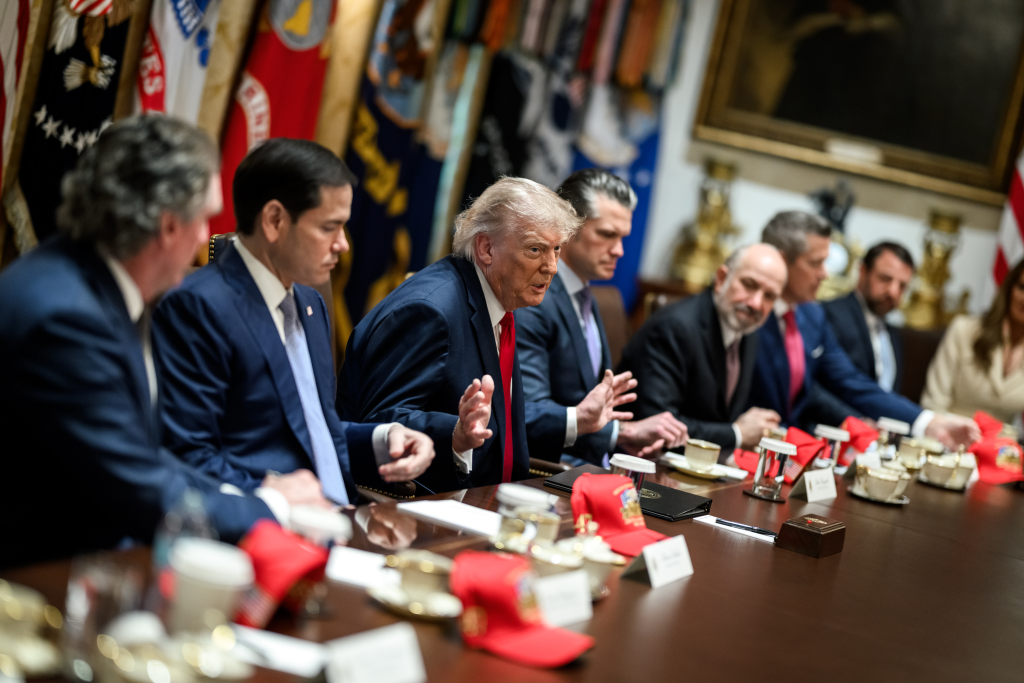
– President Trump’s visit to China boosted confidence among U.S. businesses and K Street lobbyists who see opportunities in lowering tariffs through the Board of Trade, despite no details of specific measures.
– Investment came under uncertainty on June 1 when China revealed its new outbound investment rules, which encourages private outbound investment while tightening its hold over tech investment.
– While the U.S. opened chip sales to China, the Department of Commerce released a new guideline on May 31 that aimed to close a potential loophole allowing AI chip exports to Chinese firms abroad.
– U.S. Trade Representative Jamieson Greer announced on May 26 that the U.S. government will soon seek public comment to decide which Chinese products should qualify for lower tariffs under the newly formed Board of Trade.
– On May 22, U.S. Senior Official to APEC Casey Mace indicated that the U.S. is working hard to promote U.S. AI options and solutions in China and Asia in general.
– On May 21, a group of eight GOP lawmakers asked the U.S. to prioritize blocking Chinese investment into the Mexican auto industry and push Canada to roll back its plan to allow a limited number of Chinese electric vehicles to enter North America.
– The Chinese Ministry of Commerce announced on May 20 that both countries agreed to cut tariffs on agricultural trade as President Trump announced that China agreed to buy $17 billion worth of U.S. agriculture annually, while the details of the purchase commitment remain unknown.
– Despite easing friction, Secretary of State Scott Bessent said on May 19 that the Trump administration is “not in a rush” to extend a tariff and critical minerals trade truce with China that expires in November.
Associated News References:
“China Tightens Rules on Outbound Investment in Fight for Global Tech Edge,” The Wall Street Journal, June 1
“US takes step to halt Nvidia AI chip shipments to Chinese firms outside China,” Reuters, May 31
“Trump wants to ‘manage’ China trade. Businesses see a tariff opening.” POLITICO, May 30
“US to seek public comment on which Chinese goods qualify for lower tariffs, Greer says,” South China Morning Post, May 23
“U.S. pushes its AI in China and Asia after Trump-Xi meeting,” CNBC, May 22
“China again flags tariff cuts for US agricultural trade after Trump-Xi meeting, but still no details,” Reuters, May 20
“Exclusive: US not in a hurry to extend China trade truce, Bessent says,” Reuters, May 19
China-EU Pressure Rises as EU seeks Tighter Market Access Control
– On May 28, European Union industry chief Stephane Sejourne said Brussels would broaden import quotas and tariffs against China.
– Tension quickly rose between Brussels and Beijing as China warned on May 29 that it would launch trade probes against the European Union if it forges ahead with said import control.
– In response, the European Commission said on May 29 that they see the EU’s trade and investment relations with China as “not sustainable.”
– One of the EU’s first actions to limit Chinese imports began with a France-led initiative, supported by Spain and Italy, to push the EU to revamp trade measures against Chinese goods, although Spain later withdrew its support to boost the EU’s trade defense against China on May 28.
– Despite concerns in Brussels over supply chain dependence on China, on May 26, the EU Chamber of Commerce in China survey found that more European companies are maintaining or expanding their supply chains to remain competitive globally.
– The Chinese Ministry of Commerce also announced on May 28 that it is in negotiations with the EU over its limits on duty-free steel imports.
– The Chinese Association of Automobile Manufacturers on May 22 expressed “serious concern, strong dissatisfaction and firm opposition” to the EU’s Industrial Accelerator Act, which aims at reducing EU’s reliance on the Chinese green industry.
– The EU announced on May 21 that it will propose to temporarily lift sanctions on a major Chinese semiconductor supplier to avoid auto supply disruption.
Associated News References:
“European Commission vows tougher action on trade with China,” Reuters, May 29
“EU Warns Trade Relationship With China Is ‘Not Sustainable’,” Bloomberg, May 29
“China Threatens to Launch Trade Probes Against the European Union,” The Wall Street Journal, May 29
“China is negotiating with EU over its steel trade measures, Chinese commerce ministry says,” Reuters, May 28
“Spain distances itself from call for EU to get tougher on China,” POLITICO, May 28
“EU to broaden import quotas and tariffs against China, official tells FT,” Reuters, May 28
“European companies double down on China manufacturing despite EU de-risking push,” CNBC, May 26
“France, Italy and Spain urge EU to toughen and hasten trade defences,” Reuters, May 26
“China’s auto body says it strongly opposes EU’s Industrial Accelerator Act,” Reuters, May 22
“EU Seeks to Lift Ban on Chinese Chips It Barred Only Weeks Ago,” Bloomberg, May 21
Future of Asian Security Uncertain at 2026 Shangri-La Dialogue
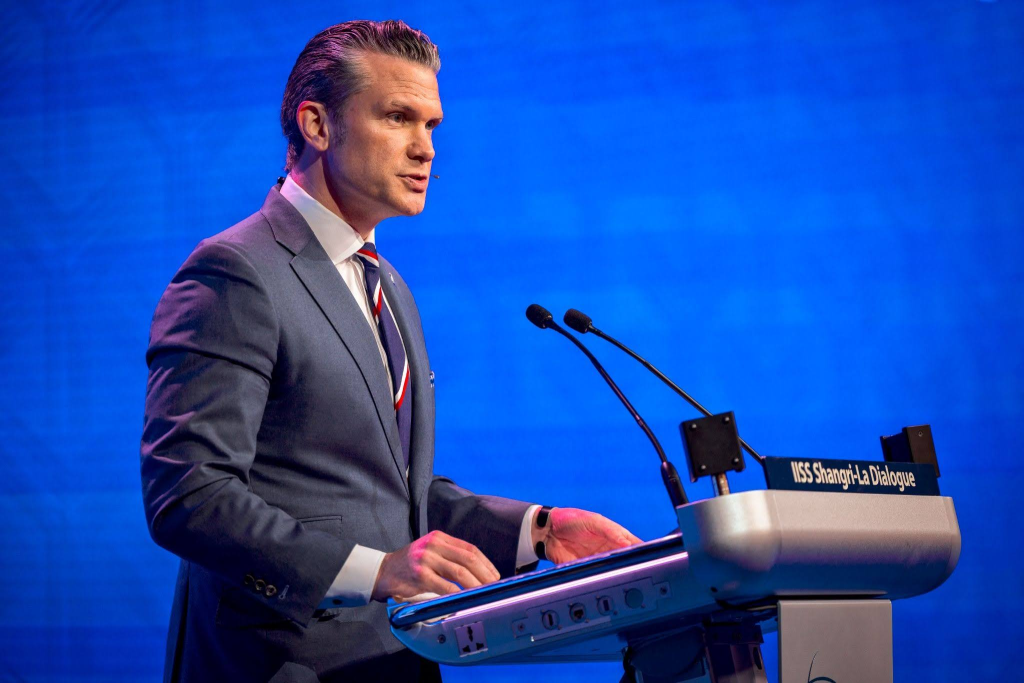
– The 2026 Shangri-La Dialogue (SLD), Asia’s premier defense summit, was held between May 29-31 in Singapore. This year’s SLD focused on China’s rapid military modernization, American priorities in Asia, and the Middle East Crisis.
– On May 30, the Chinese delegation to SLD warned of the challenge of “hegemonism” and “bloc confrontation” during its session, without directly naming the U.S.
– The Chinese delegation drew attention during this year’s SLD as it is led by PLA “experts and scholars” instead of the Minister of Defense Dong Jun, who has been absent for a consecutive two years.
– In his address, U.S. Secretary of Defense Pete Hegseth called for Asian allies to increase defense spending to counter China’s “historic military buildup” but did not mention Taiwan, which was previously seen as a focal point of Asia security.
– Vietnamese President To Lam, the keynote speaker at this year’s SLD, pointed at the Strait of Hormuz as a warning concerning the greater U.S.-China rivalry and called for the two countries to avoid provoking a global crisis.
– Philippine Defense Minister Gillberto Teodoro vowed to increase its military’s spending and expand allies in the region.
– Chinese Major General Meng Xiangqing criticized Japan’s efforts to revise its “pacifist constitution” and the three non-nuclear principles, as well as its pursuit of the deployment of allied nuclear weapons on Japanese territory.
– Japanese Defense Minister Shinjiro Koizumi rejected accusations of “new militarism” by Beijing and criticized China for rapidly expanding its military, recommitting to use “every available opportunity to communicate firmly with the Chinese side.”
Associated News References:
“No Dong Jun, but plenty of China at Shangri-La Dialogue,” CNA, May 31
“Japan rejects ‘new militarism’, accuses China of rapidly arming,” Reuters, May 30
“Hegseth urges Asian leaders to boost military spending against China,” NPR, May 30
“‘Where is China’ ask delegates at Asian defence forum,” Reuters, May 30
“Following Trump’s China visit, Hegseth calls for ‘quiet’ defense plan in Asia,” The Washington Post, May 30
“China dials down rhetoric but regional risks persist at Shangri-La Dialogue,” South China Morning Post, May 30
“Asia defense summit opens with China and doubts about U.S. priorities topping concerns,” PBS, May 29
“Vietnam’s To Lam points to the Strait of Hormuz as a warning for Asia-Pacific rivals,” AP News, May 29
“Asia defense summit opens amid doubts over U.S. priorities,” NPR, May 29
“Hegseth heads to Asia with Taiwan questions swirling,” The Hill, May 27
In Other News

“China seen tapping deeper into oil stockpiles as imports hit decade-low,” Reuters, Jun 2
“Trump ‘personally called for China’s help’ to end Ukraine war in summit with Xi,” South China Morning Post, Jun 1
“‘Seasoned China hand’ set to lead National Committee on US-China Relations: sources,” South China Morning Post, Jun 1
“China’s factory activity beats forecasts in May, private survey shows, despite softer official data,” CNBC, May 31
“China’s Rise in Drug Development Looms Over U.S.,” The New York Times, May 30
“China Eliminates Tariffs on Africa to Outmaneuver Trump,” The Wall Street Journal, May 26
“China launches Shenzhou 23 spacecraft with 1 of 3 astronauts set for yearlong stay,” NPR, May 25
“China deployed over 100 vessels near Taiwan in the wake of Trump-Xi summit, Taiwan security official claims,” Fox News, May 23
“APEC trade envoys gather in China to discuss trade imbalances, supply chain resilience,” Reuters, May 22
“China to crack down on ‘illegal’ cross-border securities,” Reuters, Reuters, May 22
“China calls for APEC cooperation as commerce minister skips opening over ‘urgent official business’,” CNBC, May 21
“Asia-Pacific trade risks loom large as Apec official warns of protectionism, imbalances,” South China Morning Post, May 21
“Nvidia says it has ‘largely conceded’ China’s AI chip market to Huawei,” CNBC, May 20
“Japan Trade Minister to Attend APEC in China Amid Strained Ties,” Bloomberg, May 20
- What Are We Reading? -
- The Hill: “Trump is tanking decades-old policy toward Taiwan — but it’s not too late for change” By Joseph Bosco (June 2)
- Council on Foreign Relations: “Time to Stop Forecasting China’s Surplus Away” By Brad W. Setser (June 1)
- Bloomberg: ‘Europe Needs a USB-C to Counter China’s EV Truck Threat“ By David Fickling (June 1)
- The Washington Post: “How a Chinese blockade could grind America’s military and economy to a halt” By Bradford C. Brown and Kenneth J. Harrold (June 1)
- Council on Foreign Relations: “China’s platform economy is an AI deployment engine. The U.S. is still looking for its own.” By Zoë Moore and Lyla Renwick-Archibold (June 1)
- The Wall Street Journal: “We Should Starve Adversaries of AI Compute” By Michael Sobolik (May 31)
- South China Morning Post: “US quietly plays the long game on energy dominance against China” By Athanasios Platias and Vasilis Trigkas (May 31)
- The Wall Street Journal: “China Cooks the Carbon Emissions Books” By The Editorial Board (May 31)
- Foreign Affairs: “China’s AI Heist: How to Counter Beijing’s Unauthorized “Distillation”” By Jared Dunnmon, Avanika Narayan, and Jon Saad-Falcon (May 29)
- Washington Examiner: “Will the EU finally get tough on China’s ‘existential’ trade threat? Doubtful” By Tom Rogan (May 29)
- CSIS: “Rebuilding U.S. Missile Inventory: A Multiyear Project” By Mark F. Cancian and Chris H. Park (May 27)
- Council on Foreign Relations: “The Future of American Strategy: Weaponizing Interdependence” By Brad W. Setser (May 26)
- Foreign Affairs: “The G-2 Reality: America and China Cannot Dominate or Exclude Each Other” By Zheng Wang (May 26)
- CSIS: “Economic Warfare and Military Power” By Benjamin Jensen and Jacob Calyton (May 26)
- The Washington Post: “China squeezed too tight on rare earths. Now the market is taking action.” By Editorial Board (May 22)
- Foreign Affairs: “Hormuz Is a Warning for the Indo-Pacific” By Lynn Kuok (May 22)
- The Wall Street Journal: “China Won’t See the Iran War as a Green Light for Aggression” By Michael Pozansky and Micahle O’Hanlon (May 21)
- The Washington Post: “Trump did fine in China. But the real problem is in Detroit.” By Julia R. Cartwright (May 20)
- CSIS: “What the Trump-Xi Summit Revealed, and Left Unsaid, About U.S.-China Tech Competition” By Lauryn Williams and Kuhu Badgi (May 20)
- What's Happening Around Town? -
Past Events
May 26 hosted by CSIS
May 27 hosted by CFR
June 2 hosted by Brookings
Upcoming Events
June 4 hosted by CSIS
June 9 hosted by PIIE
June 11 hosted by Stimson Center
June 16 hosted by CNAS
June 16 hosted by FPRI
- What ICAS Is Up To -
ICAS Past Event
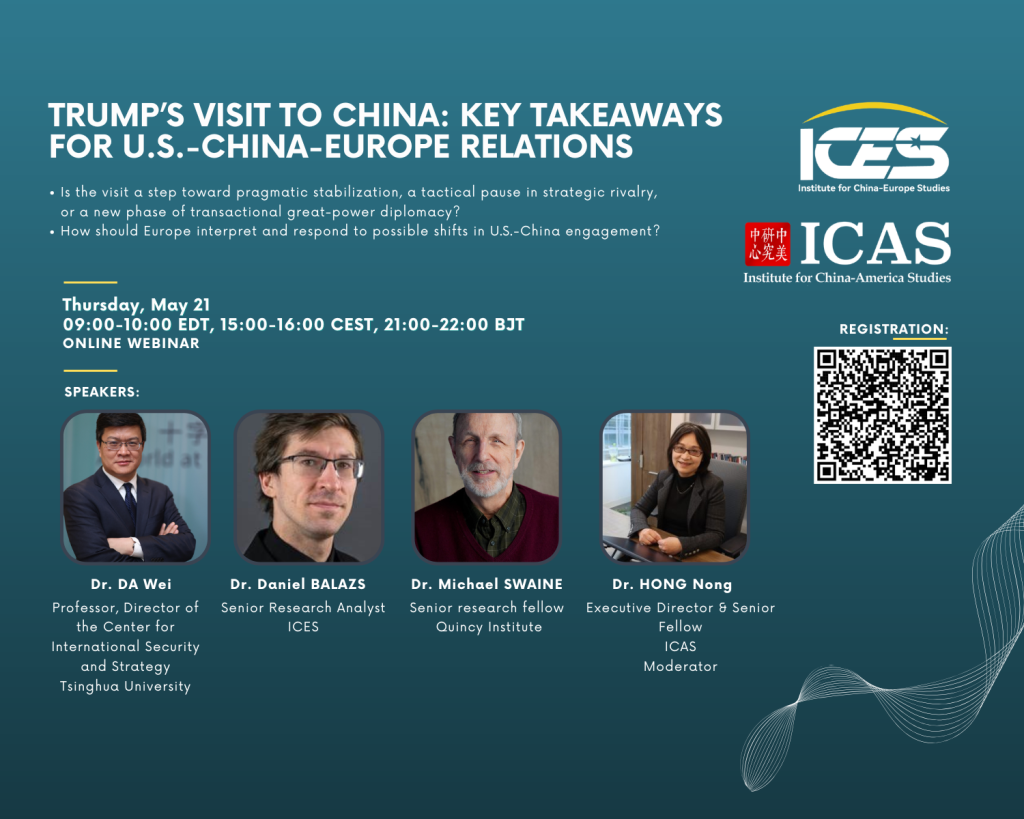
Trump’s Visit to China: Key Takeaways for U.S.-China-Europe Relations
Hosted by ICAS & ICES
May 21, 2026
ICAS, in collaboration with the Institute for China-Europe Studies (ICES), held a virtual discussion on May 21 with speakers Dr. Michael SWAINE (Senior research fellow, Quincy Institute), Dr. DA Wei (Director of the Center for International Security and Strategy, Tsinghua University), and Dr. Daniel BALAZS (Senior Research Analyst, ICES).
The discussion took place just a week after President Donald Trump’s visit to China, which comes at a consequential moment for U.S.-China relations and the wider international order. After years of strategic competition, economic tension, technology restrictions, and growing geopolitical mistrust, the visit offered an important opportunity to assess whether Washington and Beijing are moving toward a more stable framework of engagement-or simply managing competition through temporary understandings.
A tale of two presidents in Beijing
By Sourabh Gupta
May 28, 2026
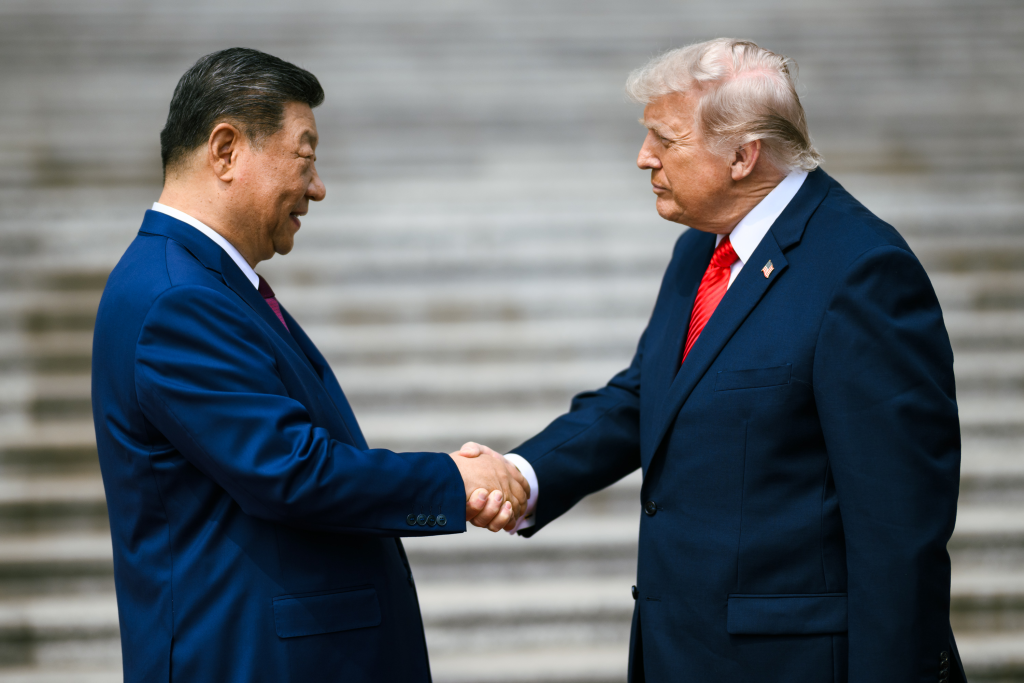
On May 13–15 2026, over eight years after his first ‘state visit-plus’ to Beijing, US President Donald Trump paid a lower key, yet higher stakes state visit to China. Trump’s meeting with Chinese President Xi Jinping resulted in a host of commitments, including a scheduled reciprocal visit to Washington in September 2026, signaling that hope for strategic restraint could yet return to the bilateral relationship.
The bottom had begun to fall out of the US–China relationship a month after Trump’s November 2017 visit to Beijing, with the publication of the 2017 National Security Strategy. The 2017 National Security Strategy characterized China as a ‘revisionist’ power that was engaged in long-term ‘geopolitical competition’ with the United States. Following a Section 301 probe into China’s technology transfer policies and practices, the US–China trade war was initiated in March 2018.
ICAS In the News
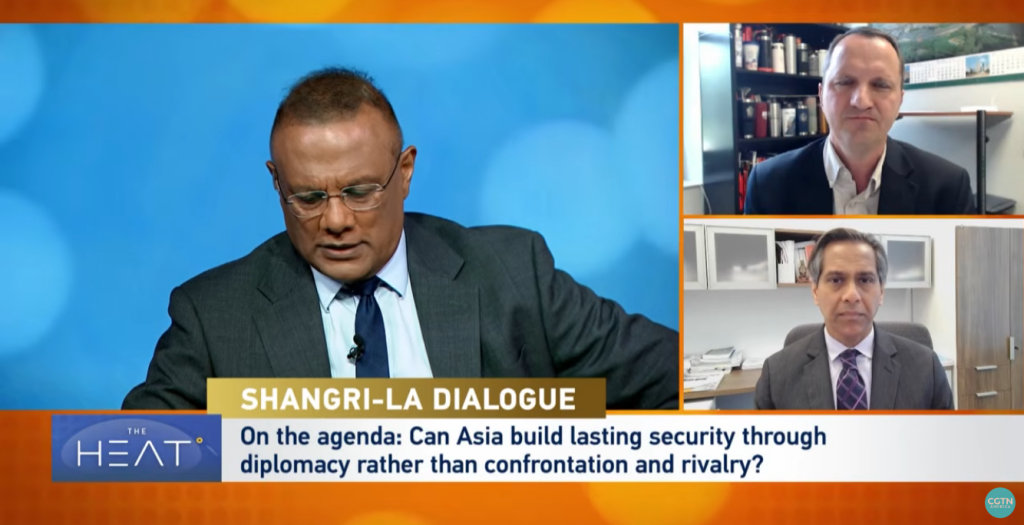
On Monday, June 1, 2026, Senior Fellow Sourabh Gupta appeared on CGTN America’s The Heat to discuss Shangri-La Dialogue.
- “The Chinese side didn’t want to get pigeonholed into the nuclear dialogue because there isn’t a real equivalency out there. The Russians and the Americans have far greater nuclear capabilities and China does not want to get locked up into an unfavorable equilibrium from an arms control standpoint.”
On Saturday, May 23, 2026, Senior Fellow Sourabh Gupta was quoted by South China Morning Post on Secretary of State Marco Rubio’s visit to India.
- “There was a certain need for reassurance that Trump fulfilled in his call to Takaichi, which was not necessarily needed vis-a-vis Modi, Rubio will be briefing the Indian side in person within 10 days of the Trump-Xi meeting is a good enough follow-through.”