
Maritime Affairs Program (MAP) Handbill Spotlight
MAP Spotlight: International LNG Shipping

Yunchao Mao
July 29, 2025
Issue Background
The demand for liquefied natural gas (LNG) is gradually increasing in the global energy market. There are three factors that have contributed to the rising global demand for natural gas. When burned, it pollutes less than crude oil and coal, making natural gas more appealing to nations with climate targets. Second, the ongoing electrification process also contributes to the increase in demand. Growing global electricity demand has led to a rise in natural gas consumption. Currently, natural gas is the second-most-used fossil fuel in electricity generation in the world. Last, the liquid form of natural gas can be shipped in larger quantities and over longer distances compared to other traditional fossil fuels such as crude oil and coal. As the international community continues to shift towards natural gas, demands for long-distance LNG shipping and tankers will subsequently increase globally.
Noticing such trends, countries worldwide are also increasing their efforts in the LNG market. As of 2024, the world’s largest LNG importers, China, Europe, and India, are all expected to further increase their LNG consumption in the future. The world’s largest LNG exporters are the United States, Australia, Qatar, Russia, and Malaysia. The U.S. saw a significant increase in its LNG production and export in 2021, and rose to become the top exporter in 2023. The amount of LNG exported by the other 4 countries remained relatively stable between 2019 and 2024. The geographical separations between major importers and exporters stress the need for international LNG shipping capacity.
The fourth-largest exporter, Russia, has faced harsh sanctions in its fossil fuel sector from the West, particularly from the U.S. In 2025, Russia experienced a 4.4% year-on-year drop in its LNG exports. This is mostly the result of a sharp decline in European purchases of Russian energy by 13%.
Recent Events
Amid strict sanctions, Russia still aims to increase its LNG production and export. As a result, the Arctic LNG 2 plant has experienced increased activity. The plant resumed natural gas processing on April 1. It has been significantly ramping up its gas output; the daily output on June 28-29 was about 14 million m3, which is its highest-ever recorded. Two LNG tankers have docked at Arctic LNG 2, the Iris and the Voskhod. The Iris arrived the week of June 23, which is the first docking in the past eight months. The ship moored at the plant for two days and then headed toward the northern port of Murmansk. The Voskhod arrived at the plant empty on July 16, ready to load.
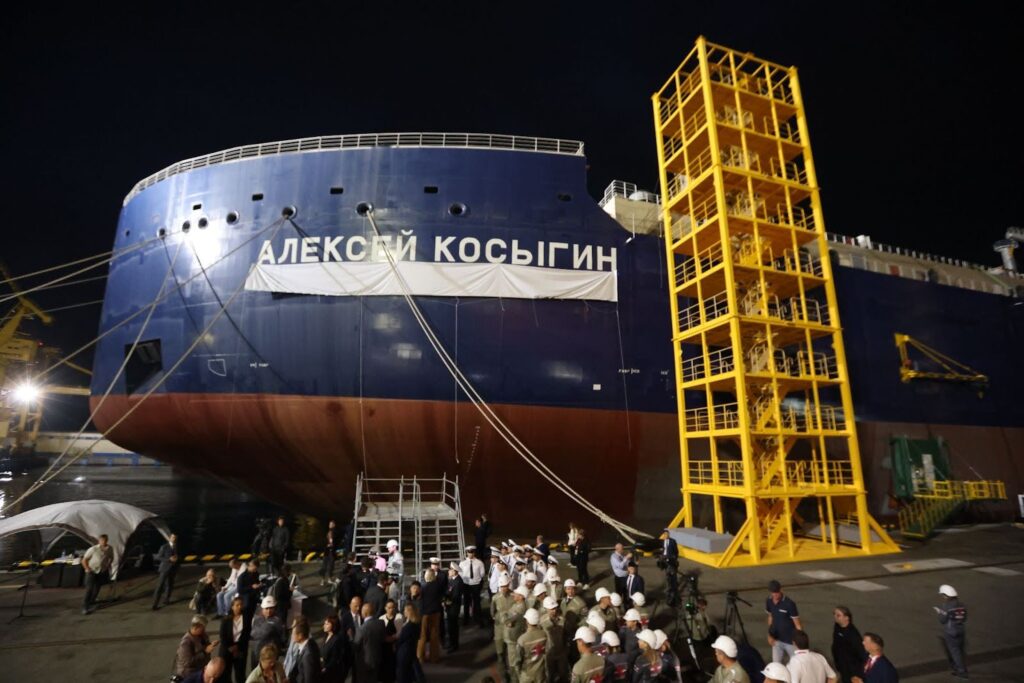
Russia’s first ice-class LNG tanker is currently undergoing the final stage of its sea trials, which will end in July. It is expected to enter into operation later this year. The tanker will join the vessel fleet for Russia’s Arctic LNG 2 plant, as the lead vessel of a series of 15 next-generation Arc7 ice-class LNG tankers fleet commissioned by the partners of Arctic LNG 2. Similar to the newly built tanker, the plant and other Russian tankers were also heavily sanctioned. Those sanctioned vessels form Russia’s “shadow fleet”. Such efforts allow Russia to move its oil and gas to non-sanctioned partners for Russia’s energy exports.
Keep In Mind
Energy export is a central pillar for Russia’s economy, and the country will continue to be a key player in the international energy market. Russia is preparing to restart natural gas production, liquefaction, and export operations that were previously curtailed due to sweeping Western sanctions. This development underscores both the effectiveness and the vulnerabilities of sanctions as a long-term geopolitical strategy.
The initial suspension of LNG-related operations demonstrates that the targeted sanctions were effective in disrupting Russia’s energy export infrastructure. The interruption proved that sanctions could impose meaningful costs and delay key industrial projects. However, Russia’s move to revive its LNG production also points to how essential this sector is to the country’s economy, and how far it is willing to go to preserve it, even under sanctions and pressure.
Yet, the reactivation of Russian LNG facilities also exposes the limitations of sanctions. If Russia successfully resumes LNG exports, the long-term effectiveness of sanctions will be diminished. Sanctions are most powerful when the targeted economy remains closely tied to the U.S.-led financial system and the U.S. dollar. As sanctioned countries seek alternatives and forge new trade relationships, the economic leverage behind sanctions erodes. In Russia’s case, it has already pivoted toward major buyers like China and India. While China benefits from direct pipeline access to Russian gas, India is emerging as the most probable top buyer of Russian LNG.
The shift is already underway, with early signs pointing to a clear reorientation of Russia’s energy trade. On July 18, Russian oil tankers arrived at India’s Vadinar port, signaling an established trade channel with LNG sales expected to follow. This pattern suggests that even under sanctions, Russia can secure new markets for its energy resources, and they are often sold at discounted prices. This creates a clear incentive for buyers like India to continue purchasing Russian fossil fuels, undermining the intended isolating effect of sanctions.
If Western countries aim to limit the economic benefits that Russia can derive from its LNG exports, they must do more than just restricting trade. Western powers should actively compete with Russia in both energy sales and shipping capabilities. However, Europe’s limited capacity in energy export means that this burden falls largely on the United States. U.S. LNG and other energy supplies could become an essential component in future trade negotiations, particularly with India. Including energy procurement in broader trade deals may help align strategic goals while reducing reliance on Russian resources.
In sum, Russia’s LNG rebound illustrates that while sanctions can be effective in the short term, their power wanes if alternative markets emerge and if sanctioning countries fail to offer compelling substitutes. Strategic competition, especially in global energy markets, must accompany economic restrictions to ensure they remain impactful over time.
This Spotlight was originally released with Volume 4, Issue 7 of the ICAS MAP Handbill, published on July 29, 2025.
This issue’s Spotlight was written by Yunchao Mao, Research Assistant Intern.

Maritime Affairs Program Spotlights are a short-form written background and analysis of a specific issue related to maritime affairs, which changes with each issue. The goal of the Spotlight is to help our readers quickly and accurately understand the basic background of a vital topic in maritime affairs and how that topic relates to ongoing developments today.
There is a new Spotlight released with each issue of the ICAS Maritime Affairs Program (MAP) Handbill – a regular newsletter released the last Tuesday of every month that highlights the major news stories, research products, analyses, and events occurring in or with regard to the global maritime domain during the past month.
ICAS Maritime Affairs Handbill (online ISSN 2837-3901, print ISSN 2837-3871) is published the last Tuesday of the month throughout the year at 1919 M St NW, Suite 310, Washington, DC 20036.
The online version of ICAS Maritime Affairs Handbill can be found at chinaus-icas.org/icas-maritime-affairs-program/map-handbill/.