
October 3, 2025
Volume 5
Issue 20
ICAS Trade ‘n Tech Dispatch (online ISSN 2837-3863, print ISSN 2837-3855) is published about every two weeks throughout the year at 1919 M St NW, Suite 310, Washington, DC 20036.
The online version of ICAS Trade ‘n Tech Dispatch can be found at chinaus-icas.org/icas-trade-technology-program/tnt-dispatch/.
What's Been Happening
-1-
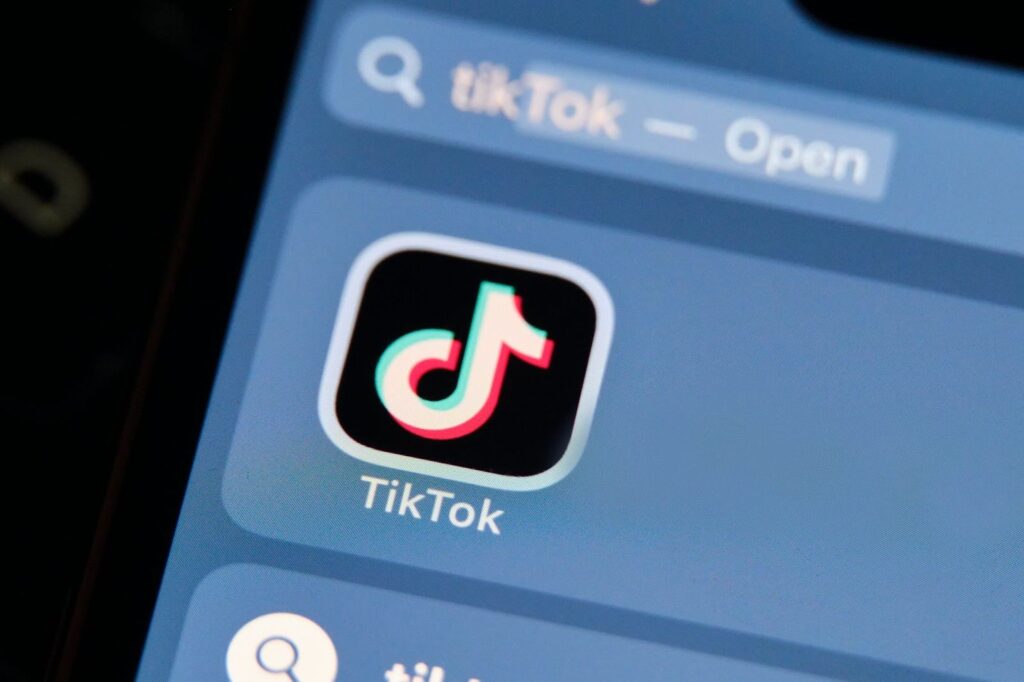
TikTok Deal Moves Ahead with Commercial Terms to be Finalized in 120 Days
-1-
In One Sentence
- U.S. President Donald Trump announced that he is expected to meet Chinese President Xi Jinping on the sidelines of the Asia-Pacific Economic Cooperation (APEC) Leaders’ Meeting in Gyeongju, South Korea, from October 31 to November 1.
- On September 25, Trump signed an Executive Order that approved a deal to keep TikTok operating in the United States by creating a ‘TikTok US Data Security Joint Venture’ to be valued at $14 billion.
- The Executive Order mentions that the new venture will be “majority-owned and controlled by United States persons” and provides 120 days to finalize the arrangement.
- A group of U.S. investors would own a majority stake in the company, while ByteDance, the owner of TikTok U.S., would control “less than 20 percent of the entity” but collect over 50% of the profits from the platform’s operations.
- China responded to the Trump announcement on TikTok, saying that it hoped that the U.S. will “provide an open, fair and non-discriminatory business environment for Chinese enterprises to invest in the United States.”
Mark the Essentials
- Before the announcement, on September 20, the White House Press Secretary Karoline Leavitt told Fox News that out of the seven seats on the board of the new entity, six would be held by American citizens.
- A group of investors, including private-equity firm Silver Lake, Oracle’s Larry Ellison, media moguls Rupert and Lachlan Murdoch, and the CEO of computer maker Michael Dell are expected to control around 50% of the stake, and 30% would be held by existing shareholders of ByteDance.
- Vice President JD Vance asserted that the arrangement had “successfully separated this company from TikTok global,” adding that it would ensure that the “algorithm is not being used as a propaganda tool by a foreign government.”
- According to the deal, TikTok’s new entity would lease a copy of the algorithm from Chinese owner ByteDance, provide oversight and security, and retain control over all U.S. user data.
- The Trump Administration is also expected to pocket billions in “fees” from U.S. investors to facilitate the TikTok transaction.
- On September 24, the Commerce Department opened new Section 232 investigations into personal protective equipment (PPEs), robotics, and industrial machinery, setting the stage for additional tariffs in these sectors.
- The Commerce Department’s Bureau of Industry and Security (BIS) released a 50% rule on September 29, expanding the Entity List to include all entities that are at least 50% owned by one or more parties on the existing Entity List or Military End-User List.
Keeping an Eye On…
- TikTok U.S. will not be going dark. A bright new chapter of its U.S. operations is about to open under new management. On September 14-15, ministerial-level U.S. and Chinese delegations held a fourth round of trade talks in Madrid, following their meetings in Geneva (May 2025), London (June 2025) and Stockholm (August 2025). The key outcome of the Madrid talks was a framework agreement to transfer control of TikTok’s U.S. operations from China’s ByteDance to a consortium of American-led investors. Its key elements are:
- ByteDance’s operations in the U.S. is to be divided into two companies – TikTok U.S. and TikTok US Data Security Joint Venture (TikTok USDS Joint Venture).
- ByteDance will continue to wholly-control (100%) TikTok U.S., which will manage the firm’s e-commerce and advertising operations and interconnection with its international-facing businesses.
- A new entity, TikTok USDS Joint Venture, is to be set-up with an American-led capital injection to ensure majority U.S. investor control. Oracle, private equity group Silver Lake and Abu Dhabi-based advanced technology investor MGX are to hold 45% of the equity. A group of new and existing investors, including General Atlantic and KKR, will hold 35%. ByteDance’s stake is to be reduced to 19.99% to abide by ‘foreign adversary’ statutory limits.
- ByteDance will license a copy of TikTok’s recommendation algorithm to the new entity, TikTok USDS Joint Venture, while retaining ownership of the algorithm. Over the past year, TikTok U.S. has been busy duplicating the codebase, including AI models, algorithms, features and user data, to prepare for a clean separation from the global platform.
- On the above basis, the Chinese Government will remove TikTok’s recommendation algorithm from the “restricted” section of its Catalogue of Technologies Prohibited or Restricted from Export to permit its licensed transfer.
- The new entity, TikTok USDS Joint Venture, will be responsible for TikTok’s data security, content moderation and software assurance responsibilities. Its seven-person board will feature one representative from ByteDance, who will be excluded from its security committee.
- The Committee on Foreign Investment in the U.S. (CFIUS) will subsequently enter into an agreement with the key investor parties to ensure compliance with national security requirements.
- ByteDance’s TikTok U.S. operation will cede a portion of its advertising and e-commerce profits to the joint venture while ensuring that ByteDance retains a share of profits (up to 50%, as per reports) that is substantially larger than its JV share (19.99%).
- A final implementing agreement is to be finalized within 120 days (Jan 23, 2026).
The Framework Agreement ensures that: (a) TikTok is removed from the control of a foreign adversary (China) as defined under the Protecting Americans from Foreign Adversary Controlled Applications Act of 2024, given that ByteDance’s stake is reduced to less than 20%; (b) that the operation of the algorithms and code, as well as content-moderation decisions, are placed under the American control of the new joint venture; (c) that sensitive U.S. user data is housed in a cloud environment run by an American company and, thus, beyond the control of the foreign adversary; and (d) that software updates, algorithms, and data flows are monitored by trusted U.S. entities, and all recommendation models, including algorithms, that use U.S. user data is retrained from the ground up under U.S. supervision to ensure the content is free of political manipulation. Given that software updates will likely be provided by ByteDance, a possible oversight gap might arise that may need to be plugged.
So what are the key takeaways?
First, ByteDance’s divestiture of majority control and transfer of TikTok’s U.S. operations to American control is as close to being a ‘win-win’ arrangement in the circumstances. Control of the app will belong to U.S. capital under U.S. government oversight and monitoring; profits will flow disproportionately to ByteDance (and China).
Second, both sides get to hit their statutory bottom lines. For the U.S., the deal and divestiture ensures that the data security and content manipulation concerns that drove the passage of the Protecting Americans from Foreign Adversary Controlled Applications Act are resolved. Importantly, the cord that tied ByteDance, and possible Chinese government influence, to TikTok U.S. via the app’s powerful content recommendation algorithm will now be fully severed. For China, the licensing of the algorithm to the TikTok USDS Joint Venture provides a face-saving formula that can be passed off as a normal commercial transaction that complies with Chinese laws and regulations.
Third, the TikTok deal is an important confidence-builder as the two sides work towards a larger framework trade agreement as well as pave a pathway for a meeting of their two presidents on the sidelines of the APEC 2025 summit in South Korea. For Trump, it promotes his self-image as a consummate dealmaker. For Xi, it allows him to deepen an equation with Trump (who has 15 million-plus TikTok followers) by catering to a personal priority as well as signal China’s openness to broader dealmaking compromises on the trade front on the right terms.
Expanded Reading
- US Expands Export Controls with Long-Awaited ‘50% Rule’ — Here’s What To Know, Kharon, September 29, 2025
- ByteDance to Get About 50% of TikTok US Profit Under Trump Deal, Bloomberg, September 26, 2025
- Trump’s TikTok deal payment criticized as ‘shakedown scheme’ by experts, NPR, September 26, 2025
- Top Republican on House China panel seeks briefing over TikTok deal, The Hill, September 26, 2025
- China Reacts to Trump’s $14B TikTok Takeover, Newsweek, September 26, 2025
- Commerce opens Section 232 probes into PPE, robotics and related items, Inside U.S. Trade, September 24, 2025
- Trump Clears Way for American-Owned TikTok Valued at $14 Billion, NYT, September 25, 2025
- Inside Trump’s deal to save TikTok, Axios, September 22, 2025
- White House outlines TikTok deal that would give US control of algorithm, BBC, September 20, 2025
- Trump to meet Xi in South Korea, visit to China to follow The Hill, September 19, 2025
-2-
China Renounces Developing Country Benefits at WTO amid calls for Deeper Reform; Fisheries Subsidies Agreement Enters into Force
-2-
In One Sentence
- Chinese Premier Li Qiang announced on September 23, 2025 that China will forego special and differential treatment (S&DT) for developing countries in WTO negotiations while maintaining its developing country status, a move praised by WTO leadership and seen as a signal of easing trade tensions with the U.S. ahead of the planned Trump-Xi summit.
- The WTO’s Agreement on Fisheries Subsidies officially entered into force on September 15 after surpassing the two-thirds acceptance threshold, and prohibits harmful subsidies linked to illegal fishing practices and overfished stocks.
- The WTO will begin formal consultations with members on dispute settlement reform after next month’s General Council meeting as the U.S. continues to question the viability of reform and reiterated its opposition to restoring the functioning of the Appellate Body.
- President Donald Trump announced a new $100,000 fee for H-1B visa applications as part of an effort to curb legal immigration and prioritize U.S.-born workers, a move that officials say targets tech companies but faces questions over implementation and legality.
Mark the Essentials
- China said its decision to stop seeking developing country status and benefits in WTO negotiations was a “solemn commitment” to safeguard and strengthen the multilateral trading system, contrasting its stance with the U.S.’ “arbitrary” tariffs while stressing it still retains developing country status and existing rights under current agreements.
- A successor agreement to the Fisheries Subsidies Agreement to eliminate subsidies for overfishing and overcapacity, targeted for finalization at MC14 in Cameroon in March 2026, appears to be stalling.
- WTO Director-General Ngozi Okonjo-Iweala said on the first day of the WTO Public Forum that the organization remains vital despite U.S. trade disruptions, urging reform momentum ahead of the 2026 ministerial (MC 14) while many await clarity on Washington’s role and funding.
- The WTO’s 2025 World Trade Report says that while artificial intelligence has the potential to boost global trade and productivity, unequal access risks widening the digital divide, and emphasizes that open trade policies, stronger digital infrastructure, and coordinated international efforts are needed to ensure AI-driven growth benefits all economies.
- WTO members voiced concern and uncertainty over the Trump Administration’s new bilateral trade deals with the EU and Japan, questioning their compatibility with WTO rules and what they mean for the institution’s reform efforts ahead of the 2026 ministerial in Cameroon.
- The White House has clarified that President Trump’s new $100,000 H-1B visa fee will only apply to new applicants outside the U.S. and not to current visa holders, despite widespread confusion following the announcement.
Keeping an Eye On…
The fish have had it relatively good for some time now. Foreign IT workers and students? Not so much. In mid-September, the WTO Agreement on Fisheries Subsidies, the first WTO multilateral agreement focused on environmental sustainability and successful negotiation at the WTO since the Trade Facilitation Agreement of 2013 – entered into force with acceptance by 111 member states (two-thirds of the WTO’s membership). Importantly, this includes the U.S., which acceded in April 2023. With the coming into force of the agreement, subsidies that contribute to IUU (illegal, unreported, and unregulated) fishing as well as already overfished stocks are now prohibited. Importantly, China acceded to the Port State Measure Agreement (PSMA) earlier this year, which aims to prevent, deter and eliminate IUU fishing. A follow-on WTO fisheries agreement on addressing subsidies that contribute to overcapacity and overfishing (Fish2) appears to be out of reach at this time.
The past few months have seen a number of transformative as well as modest oceans-related initiatives come to fruition. On January 1, 2026, the Biological Diversity Beyond National Jurisdiction (BBNJ) Treaty, or High Seas Treaty, will come into effect now that the requisite number of ratifications (60) has been reached. Approximately 65% of the world’s oceans will fall under its protections. In April, member states of the International Maritime Organization (IMO) voted by a 63-16 majority to impose a carbon levy on ship operators as part of its net zero framework goals. This May, the International Tribunal for the Law of the Sea (ITLOS) delivered a landmark advisory opinion that unanimously found that greenhouse gas emissions constitute a form of marine pollution, and that States are under a legal obligation to prevent, reduce and control such sources of pollution. Large majorities are also in favor of rolling over the existing moratorium on deep-seabed mining in the high seas for now, while the International Seabed Authority drafts a responsible mining code.
Over on land in the states, the news has been less-than-welcoming. On September 19, President Trump issued a proclamation that will virtually eviscerate the H1-B non-immigrant visa program, a talent pipeline for advanced industries in need of skilled workers, as well as inflict large collateral damage to the higher education sector. Even though Congress is the empowered player on immigration matters, in keeping with recent form, the authority for the proclamation rests on a 1952 law that allows the president to “suspend the entry” of foreigners “who would be detrimental to the interests of the United States.” Foreign tech industry hopefuls and nerdiest college seniors have now become the U.S.’ newest national security threat, just like upholstered furniture imports.
At this rate, is there a point in engaging the current administration within the WTO with regard to the institution’s reform? And the question furthermore arises as to whether any country is willing to challenge the H1-B proclamation within the WTO’s dispute settlement body as a disguised barrier to trade – if for no reason other than to vindicate a point of law. The fish aren’t complaining though.
Expanded Reading
- U.S. May Tighten Quantum Investment Restrictions On China, The Quantum Inside, June 26, 2024
- Statements by the United States at the September 26, 2025, DSB Meeting, U.S. Mission to International Organizations in Geneva, September 30, 2025
- U.S. Deals with EU, Others Spark Questions about WTO Reform, Leadership, Inside US Trade, September 25, 2025
- China’s Position Paper Regarding Special and Differential Treatment in the WTO, World Trade Organization, September 24, 2025
- China to Stop Claiming Special WTO Benefits That Rankled US, Bloomberg, September 23, 2025
- White House Tries To Tamp Down Corporate Panic for High-Skill Visa Holders after Last-Minute Overhaul, Politico, September 20, 2025
- Trump to Announce $100k Fee for H-1B Specialty Visas, Politico, September 19, 2025
- A New Trading System? A Conversation with Ngozi Okonjo-Iweala, Peterson Institute for International Economics, September 17, 2025
- Leaner and Focused WTO Public Forum 2025 Takes Trade Centre Stage in Geneva, World Trade Organization, September 17, 2025
- AI To Boost Trade by Nearly 40% by 2040 if Gaps Are Bridged, World Trade Report 2025 Finds, World Trade Organization, September 17, 2025
- WTO Agreement on Fisheries Subsidies Enters into Force, World Trade Organization, September 15, 2025
On the Hill
Legislative Developments
- Senate Finance Committee ranking member Ron Wyden (D-OR) and six other senators have introduced a resolution to roll back President Trump’s 50 percent tariffs on many Brazilian goods, calling the tariffs a “blatantly illegal abuse of the law.”
- Apart from Brazil, a group of 14 senators including three Republicans have reintroduced legislation to terminate Trump’s tariffs on Canada, with Senator Tim Kaine (D-VA) calling the trade war with Canada “senseless.”
Hearings and Statements
- Senators Dave McCormick (R-PA) and Catherine Cortez Masto (D-NV) have introduced a U.S.-Mexico-Canada Agreement (USMCA)-related bill, pushing for Canada and Mexico to establish a U.S.-equivalent foreign investment screening mechanisms as the pact gears up for review in 2026.
- Five U.S. unions have called on Congress to pass the bipartisan SHIPS for America Act to help secure funding for reviving domestic shipbuilding as a new port fee on Chinese ships come into effect in mid-October.
- Supporters of the Trump Administration and the Department of Justice stated in briefs to the Supreme Court that Congress’s failure to repeal or narrow the International Emergency Economic Powers Act undercuts challengers’ claims against Trump’s tariff authority, arguing in amicus briefs that Congress deliberately granted the president broad powers and has consistently chosen not to curtail them, making his use of tariffs under IEEPA lawful.
- House China Committee Chair Rep. John Moolenaar (R-MI) urged Commerce Secretary Howard Lutnick to investigate Chinese tech firm Anker for allegedly receiving Chinese government subsidies and evading U.S. tariffs, warning that its practices could harm U.S. businesses, compromise national security, and embed security risks in consumer products.
- Senators Chris Coons, Tim Kaine, Rand Paul and Chuck Schumer have refiled legislation in the Senate to terminate President Trump’s February 1 emergency declaration and repeal his International Economic Emergency Powers Act tariffs on Canada.
- House China Committee Chair Rep. John Moolenaar (R-MI) urged President Trump to press G7, NATO, and Quad allies to adopt reciprocal measures against China’s restrictions on rare earth and magnet exports, arguing coordinated action is needed to counter Beijing’s “weaponization” of critical supply chains and strengthen U.S. leverage in trade negotiations.
- Sen. Catherine Cortez Masto (D-NV) and Bill Hagerty (R-TN) have introduced a bipartisan Restoring American Mineral Security Act, which would direct USTR to negotiate a duty-free critical minerals trade alliance with like-minded countries to counter Chinese influence and bolster U.S. supply chain security.
- House Ways & Means Democrats, led by Rep. Linda Sánchez, have sent a letter urging President Trump to abandon his plan requiring Nvidia and AMD to give the government 15% of revenues from licensed semiconductor sales to China, arguing it is unconstitutional, unlawful under export law, invites corruption, undermines export controls, and threatens U.S. national security.
Expanded Reading
- Trump allies say lawmakers’ failure to end IEEPA tariffs boosts court defense , Inside US Trade, September 24, 2025
- Unions push US lawmakers to pass SHIPS Act to secure shipbuilding funding, Reuters, September 23, 2025
- Moolenaar Asks Commerce to Investigate CCP-backed Anker Innovations and Protect American Consumers, The Select Committee on the CCP, September 22, 2025
- Senators McCormick and Cortez Masto Introduce Legislation to Protect the USMCA from Harmful Chinese Investment, Dave McCormick’s Office, September 19, 2025
- Senators Coons, Kaine, Paul, colleagues refile legislation to challenge Trump’s tariffs on Canada, Senator Chris Coon’s Office, September 19, 2025
- Shaheen, Kaine, Paul, Schumer and Wyden File Legislation to Challenge Trump’s Tariffs on Brazil, Senate Foreign Relations Committee, September 18, 2025
- President Trump to Leverage Aviation Sector in Allied Response to China’s Rare Earth Export Restrictions, The Select Committee on the CCP, September 18, 2025
- Hagerty, Cortez Masto Introduce Bipartisan Legislation to Restore American Mineral Security, Combat Communist Chinese Price Manipulation, Bill Hagerty, September 18, 2025
- Sánchez, Ways and Means Colleagues To Trump: Reverse Export Tax, National Security Not for Sale, Linda Sánchez, September 11, 2025