
ICAS Maritime Affairs Handbill (online ISSN 2837-3901, print ISSN 2837-3871) is published the last Tuesday of the month throughout the year at 1919 M St NW, Suite 310, Washington, DC 20036.
The online version of ICAS Maritime Affairs Handbill can be found at chinaus-icas.org/icas-maritime-affairs-program/map-handbill/.
Two U.S. Navy Aircraft From Same Carrier Crash Into South China Sea
October 27 – The Wall Street Journal
[United States, South China Sea]
A U.S. Navy F/A-18F Super Hornet and an MH-60R Sea Hawk from the USS Nimitz crashed into the South China Sea within 30 minutes on October 26, with all crew rescued safely. The incidents, described by President Trump as “highly unusual,” occurred as the carrier was returning from Middle East operations amid ongoing U.S. patrols in the contested waterway.
Beijing accuses US of undermining South China Sea peace after plane and helicopter crashes
October 27 – South China Morning Post
[United States, China]
After a U.S. Navy fighter jet and helicopter from the USS Nimitz crashed into the South China Sea, Beijing accused Washington of destabilizing the region through frequent military deployments. Chinese officials said the U.S. “shows off its military power,” calling it the root cause of maritime security issues while offering humanitarian assistance if requested.
Philippine Forces Practice Defending Strategic Island Near South China Sea
October 22 – USNI News
[Philippines, United States, China, Malaysia]
Philippine Marines and Coast Guard special forces conducted joint drills around Balabac Island, a strategic site near the South China Sea slated for new naval and air base construction under the U.S.–Philippine Enhanced Defense Cooperation Agreement. The exercise, part of the annual Marine Aviation Support Activity with U.S. forces, aims to strengthen maritime defense and deterrence amid growing Chinese activity in nearby waters.
Trump Backs Selling Submarines to Australia Under AUKUS Agreement
October 20 – USNI News
[United States, Australia]
During a meeting with the Australian Prime Minister Anthony Albanese, Trump voiced his support for the AUKUS security pact that would sell Virginia submarines to Canberra. The U.S. is scheduled to sell several attack boats to Australia starting in the 2030s as per an agreement reached four years ago between AUKUS.
US blocks a global fee on shipping emissions as international meeting ends without new regulations
October 17 – AP News
[United States, Saudi Arabia, U.K., China, Brazil, Vanuatu]
The United States, backed by Saudi Arabia, blocked adoption of a global carbon fee on shipping at the International Maritime Organization (IMO) meeting in London, pressuring delegates to postpone the decision for a year. The move, celebrated by U.S. officials as a victory against a “U.N. tax,” drew condemnation from environmental groups and small island nations for undermining global climate efforts.
US-China Reciprocal Port Fees Signal New Era in Trade Tensions
October 17 – gCaptain
[United States, China, South Korea]
China imposed retaliatory “special port fees” on U.S.-linked vessels after Washington’s new Section 301 tariffs on Chinese shipping, which are expected to generate up to $3.2 billion in annual revenue for U.S. ports. Beijing’s mirror measures could collect comparable sums, underscoring a deepening regulatory and economic rift as both sides weaponize maritime trade ahead of the APEC summit.
Luxury U.S. Cruise Ship Skips Shanghai Over China’s New Port Charges
October 17 – Caixin Global
[United States, China]
U.S.-owned Oceania Cruises canceled a planned Shanghai stop after China imposed new special port fees on American-linked vessels, while Royal Caribbean’s Spectrum of the Seas received a limited waiver allowing it to dock; other cruise lines are reviewing itineraries.
The United States as the Indo-Pacific’s Self-Appointed Maritime Police
October 16 – Modern Diplomacy
[United States, China]
The U.S. announced new funding for Indo-Pacific maritime security through a State Department fact sheet but drew criticism for downplaying UNCLOS and prioritizing strategic influence over legal and environmental obligations, reinforcing perceptions of Washington as a self-appointed “maritime police” in the region.
Philippines, China trade accusations over South China Sea vessel clash
October 12 – Reuters
[Philippines, China, United States]
Manila and Beijing exchanged blame after a Chinese coast guard vessel allegedly used water cannons and rammed a Philippine ship near Thitu Island on October 12, escalating tensions. China accused the Philippines of “illegally entering” its waters, while the U.S. ambassador condemned Beijing’s “dangerous ramming” of the Filipino vessel.
India, Australia deepen maritime security ties for ‘free and open’ Indo-Pacific
October 9 – The Tribune
[India, Australia, United States, Japan]
India and Australia agreed to deepen maritime security cooperation under a new framework promoting a “free and open Indo-Pacific,” as Defence Ministers Rajnath Singh and Richard Marles met in Canberra to discuss joint exercises, defense industry collaboration, and a forthcoming maritime security roadmap aligned with Quad objectives.
U.S. and Philippine Forces Drill Near South China Sea Flashpoint
October 8 – USNI News
[Philippines, United States, Japan, Australia, China]
The U.S. and the Philippines launched the 2025 Sama Sama naval exercise near the South China Sea with participation from multiple allies, including Japan and Australia. The expanded drills, featuring anti-piracy, humanitarian, and combat operations, aim to enhance interoperability and reinforce Manila’s defense posture amid persistent tensions with Beijing over contested maritime territories.
Japan Holds Minelaying Drills Around Strategic Islands Near Taiwan
October 7 – USNI News
[Japan, China, Taiwan, United States]
Japan’s Maritime Self-Defense Force conducted rare minelaying drills near the Sakishima Islands close to Taiwan, signaling its determination to deter unilateral changes to the regional status quo amid rising Chinese naval activity. The exercise underscored Japan’s growing coordination with U.S. forces and efforts to strengthen island defenses against potential contingencies.
U.S. Navy Seeks Singapore-based American Contractor For Indo-Pacific Ship Repairs
October 6 – USNI News
[United States, Singapore, India, South Korea, Indo-Pacific]
The U.S. Navy announced plans to hire an American contractor to establish a Singapore-based maintenance hub by 2027, expanding partnerships with shipyards across India, South Korea, and Southeast Asia to strengthen regional repair capacity and operational resilience.
Chinese jets intercept Canadian aircraft tracking North Korean ships over East China Sea
October 6 – The Economic Times
[China, Canada, North Korea, Russia, Japan, United States]
Chinese fighter jets intercepted a Canadian CP-140 Aurora over the East China Sea during Operation NEON, closely shadowing the aircraft as it monitored North Korean vessels suspected of sanctions violations, underscoring regional tensions involving China, Canada, and North Korea.
Developments across the Indo-Pacific region in the last month reflect intensifying maritime competition and expanding security cooperation among major powers. The U.S. has remained deeply engaged, exemplified by multiple naval incidents and exercises. Two U.S. Navy aircrafts from the USS Nimitz crashed into the South China Sea, drawing both concern and accusations from Beijing that Washington’s military presence destabilizes the region. Meanwhile, Washington continued strengthening its strategic posture through joint exercises with the Philippines and drills involving Japan and Australia, alongside logistical initiatives such as establishing a Singapore-based repair hub to bolster Indo-Pacific operations.
Regional partners have also stepped up their defense activities in response. The Philippines conducted drills to defend strategic islands and clashed diplomatically with China after another vessel confrontation. Japan held rare minelaying exercises near Taiwan while India and Australia advanced a maritime security roadmap aligned with Quad goals to promote a “free and open Indo-Pacific.” These moves underscore the growing coordination among U.S. allies to counter perceived Chinese coercion and safeguard critical sea lanes amid increasing military posturing and accidents in contested waters.
Beyond military maneuvers, economic and regulatory frictions have deepened the Indo-Pacific’s complexity. The U.S. and China exchanged new trade restrictions through reciprocal port fees, impacting shipping and tourism, while Washington blocked a global carbon fee on shipping at the International Maritime Organization, frustrating environmental advocates and small island states. At the same time, U.S. backing for submarine sales to Australia under AUKUS reinforced long-term defense commitments, even as critics argued Washington is acting as the region’s “self-appointed maritime police.” Collectively, these developments highlight a volatile Indo-Pacific environment where military assertiveness, strategic partnerships, and economic rivalry intertwine, shaping the region’s evolving security and governance landscape.
The result is a maritime landscape where trade, regulation, and sustainability are increasingly shaped by strategic rivalry. The Indo-Pacific, the world’s shipping artery, has once again become the stage on which the rules of global commerce are contested. Together, the interplay of tariffs, retaliatory measures, and regional flashpoints reveals how the Indo-Pacific’s maritime order is entering an era of overlapping economic, environmental, and security tensions, making the governance of global shipping more complex and unstable than ever.
China’s scientific team makes history with first Arctic manned deep dive
October 27 – Global Times
[China]
China’s Arctic scientific expedition team returned home after completing 43 manned dives in the Arctic Ocean using the Fendouzhe and Jiaolong submersibles aboard the Tan Suo San Hao research vessel. The mission achieved the world’s first manned deep-sea exploration of the Gakkel Ridge at a depth of 5,277 meters and marked China as the only country capable of continuous manned deep-diving operations in dense Arctic sea ice.
Germany and Norway discuss building submarines with Canada
October 22 – ArcticToday
[Germany, Norway, Canada]
German Defence Minister, Boris Pisorius, and the Minister of Defense of Norway, Tore Sandvik, held talks in Canada to discuss plans to build new submarines together to increase protection in the Arctic waters. These talks mainly come in response to increased Russian aggression within the North Atlantic.
Russia and China Sign Deal to Advance Arctic Shipping Development Along the Northern Sea Route
October 21 – Maritime Optima
[China, Russia]
On October 18 in Harbin, Russia and China formally signed an agreement to jointly develop shipping along the Northern Sea Routh (NSR). Some of the key objectives of this agreement are to commercialize the NSR and to facilitate more efficient connections between Asia and Europe.
EU seeks maritime declaration to inspect Russia’s ‘shadow fleet’
October 19 – Reuters
[European Union, Russia]
The EEAS is urging member states to back a maritime declaration that would allow EU nations to arrange inspections on Russia’s “shadow fleet”. This declaration is the latest EU proposal that is aimed at curbing Russian oil revenue, which is being used to fund Russia’s war with Ukraine.
Denmark to Strengthen Arctic Defense by DKK 27,4 Billion
October 15 – High North News
[Denmark, Greenland]
The governments of Greenland, the Faroe Islands, and Denmark have negotiated on the Second Agreement on the Arctic and North Atlantic 2025. This agreement includes investments of DKK 27.5 billion (around USD 4.26 billion) towards the bolstering of the Danish Armed Force’s capabilities and the cooperation between Denmark and Greenland.
October 15 – gCaptain
[Netherlands, Canada]
Six weeks after the Dutch cargo ship Thamesborg ran aground in Canada’s Arctic waters, the vessel was refloated and assisted by escorts out of the waters of the Northwest Passage. After a thorough inspection, the Thamesborg began its journey to exit Arctic waters and is expected to reach its original destination by October 24.
Chinese freighter cuts EU delivery time in half on first Arctic voyage to UK
October 14 – Maritime Link
[China, Arctic]
The Chinese container ship, Istanbul Bridge, completed its record-breaking voyage through the Arctic into a UK port by cutting the transit time in half. Through these voyages, China is looking to improve its maritime connections with Europe and diversify export markets to maintain its economy. This voyage is now possible due to increased global warming, which has made it possible for ships to now navigate through this new Northern Sea Route.
U.S. Coast Guard Rescues Dozens From Flooding in Alaskan Villages
October 13 – The Maritime Executive
[United States]
Typhoon Halong swept through the Bering Sea, devastating small towns and communities within the area. The U.S. Coast Guard and other state agencies are conducting large-scale search and rescue missions near Bethel, Alaska, with many small towns sustained extensive damage from flooding and winds. Villages, such as Kipnuk, are particularly vulnerable to river flooding, but a grant from the EPA to assist with this was recently suspended due to federal cuts on climate programs.
U.S. Coast Guard to Receive 11 New Icebreakers Under Landmark Finland Deal
October 13 – High North News
[Finland, United States]
A deal made between Trump and Finnish President Alexander Stubb will result in the construction of eleven medium-size polar icebreakers, also known as Arctic Security Cutters. The first of these vehicles are expected to be delivered to the US by 2028 and reflect a massive turnaround post almost a decade of delays.
October 3 – High North News
[United States, Alaska]
The world’s largest container shipping operator, the Mediterranean Shipping Company (MSC), reaffirmed its commitment to not ship on Arctic routes. MSC listed concerns about the region’s fragile ecosystem and having a negative impact over the routes of local and indigenous communities. This statement comes the same week that a Chinese container ship, Istanbul Bridge, sets sail on a record-setting Northern Sea route transit from China to the United Kingdom.
U.S. Coast Guard Moves Forward with Proposed 4-mile-wide Arctic Shipping Corridor Near Alaska October 3 – High North News
[United States, Alaska]
The U.S. Coast Guard and other multilateral agencies are moving forward with a proposition regarding a four-mile wide channel that aims to minimize the impacts of activity on marine ecosystems and local indigenous communities. This proposed route would go from Western Alaska in the Bering Strait to the U.S.-Canada border in the Beaufort Sea.
US Arctic Research Consortium Shuts Down
September 29 – High North News
[United States]
The Arctic Research Consortium of the United States (ARCUS) closed at the end of September after having its funding cut earlier this year. ARCUS was founded in 1988 and served as a link between Arctic research and education with the goal of making the Arctic a more cooperative space. This closure reflects a part of the Trump administration’s restrictions on research and education throughout the country.
Recent developments in the Arctic highlight a growing intersection of science, security, and geopolitics as global powers compete for influence in the rapidly transforming region. China marked a major scientific milestone with the first-ever manned deep-sea dives in the Arctic Ocean’s Gakkel Ridge, showcasing advanced submersible technology and its ambitions to become a leading polar power. The country also advanced its economic and strategic foothold through a new agreement with Russia to jointly develop shipping along the Northern Sea Route (NSR) — an increasingly viable corridor due to melting sea ice. Complementing this, Chinese vessels such as the Istanbul Bridge have begun completing record-setting Arctic transits to Europe, halving delivery times and demonstrating Beijing’s determination to commercialize Arctic routes despite environmental and political concerns.
Western nations, meanwhile, are reinforcing Arctic defenses and maritime infrastructure in response to growing Russian activity and climate-driven access to northern waters. The U.S. announced a landmark deal with Finland to construct eleven new icebreakers, expanding its limited polar fleet, and advanced plans for a four-mile-wide shipping corridor near Alaska to balance trade facilitation with ecological protection. Denmark committed over USD 4 billion to strengthen defense cooperation with Greenland and the Faroe Islands, while Germany and Norway discussed building submarines with Canada to bolster North Atlantic and Arctic security. However, domestic challenges persist: the U.S. Arctic Research Consortium (ARCUS) was shut down following funding cuts, raising concerns about the country’s long-term research and governance capacity in the region.
At the same time, the European Union intensified efforts to limit Russian maritime maneuvering by proposing inspections of Moscow’s “shadow fleet”. Civilian and environmental dimensions also remained prominent — from the U.S. Coast Guard’s rescue missions in Alaska following Typhoon Halong to renewed debates over the ecological risks of Arctic navigation. While major shipping firms like MSC have rejected Arctic routes due to sustainability concerns, others see opportunity in the melting ice. Collectively, these developments underscore the Arctic’s shifting identity from a remote frontier of science and conservation to a focal point of strategic rivalry, infrastructure investment, and climate adaptation.”
Hegseth says he has every authorization needed for Caribbean strikes
October 5 – Reuters
[United States, Caribbean]
In a Fox News interview Defense Secretary Hegseth said he has every authorization needed for U.S. military strikes on alleged drug vessels within the Caribbean. He did not provide any further details about this authorization while legal experts argue whether or not these attacks in international waters are justified. Trump and Hegseth argue that these operations have halted drug trafficking from South America and saved thousands of American lives. .
U.S. Conducts Fourth Strike on Suspected Drug Boat
October 3 – USNI News
[Caribbean, United States]
The U.S Navy conducted a fourth strike on a suspected boat carrying narcotics, killing four people in international waters. This strike, along with others stretching back to September, are characterized by the Trump administration as military self-defense operations and combating drug trafficking from the Caribbean. These continuous strikes in international waters continue to bring up questions of violating international law.
Houthis Attack Dutch Ship in the Red Sea
October 2 – USNI News
[Yemen, Netherlands, Israel]
Yemen’s Houthi forces fired a cruise missile at the Dutch cargo ship Minervagracht in the Gulf of Aden, causing a fire and injuring two crew members. The Netherlands condemned the attack and urged the EU to sanction the Houthis, who claimed the strike targeted a vessel that violated their ban on port visits to Israel.
Manila Recovers Chinese Underwater Drone Operating in Philippine Waters
October 2 – USNI News
[Philippines, China]
The Philippine Coast Guard seized a Chinese-made underwater drone operating within Philippine waters after local fishermen found it near Linapacan. Authorities said the drone carried oceanographic sensors and may have been used for mapping and intelligence purposes, underscoring rising maritime surveillance tensions between Manila and Beijing.
Flotilla Bound for Gaza Reports it is Being Intercepted
October 1 – The Maritime Executive
[Gaza, Israel]
The Global Sumud Flotilla, one of the biggest maritime missions to break the siege on Gaza with humanitarian aid, reported Israel intercepting its vessels. Activists aboard the flotilla reported Israeli naval vessels jamming electronic signals and threatening to detain them in international waters. The Israeli Foreign Ministry claimed that the flotilla was not interested in providing aid, but in provocation.
France Boards Shadow Fleet Tanker and Detains Captain and First Officer
October 1 – The Maritime Executive
[France]
The French Navy boarded a tanker that refused to identify itself and took into custody the two officers on the vessel. The crew members on this tanker are believed to be a part of the “shadow fleet” linked to Russia. This follows an earlier authorization by the European Union that all vessels must prove their registry and insurance as a means to enhance maritime security within the region.

On October 6, Reuters reported that the Trump administration is considering converting a US$50 million Defense Production Act grant into an equity stake in Critical Metals Corp, the company developing Greenland’s Tanbreez rare earth project. Washington had previously supported the mine through defense grants and export–import loans. Now, it is exploring a direct government shareholding—potentially up to 8 percent—marking a notable shift in how the United States approaches resource competition, from funding research to buying strategic leverage.
This is more than a business transaction. It reflects the growing use of state-backed capital as a tool of diplomacy, as governments increasingly deploy financial instruments to secure critical minerals and project influence across emerging resource frontiers. Greenland, once seen as peripheral, is fast becoming a testing ground for the geopolitics of rare earths, the energy transition, and great-power rivalry in the Arctic.
Traditionally, the United States has played a limited direct role in mining ventures, preferring to let the private sector take the lead while providing research support and technical assistance through agencies such as the Department of Defense and the U.S. Geological Survey. That era appears to be ending. Confronted with China’s dominance in rare-earth supply chains and Europe’s regulatory assertiveness, Washington is turning toward financial diplomacy—mobilizing the Export–Import Bank (EXIM) and the U.S. International Development Finance Corporation (DFC) as strategic investors in the race for critical minerals.
Equity participation offers two advantages. It locks in access to resources and signals long-term commitment to strategic regions. Analysts note that Washington’s growing reliance on state-backed capital through institutions, such as the EXIM and DFC, reflects a broader shift toward economic statecraft, in which financial instruments and selective coercive measures have become central to U.S.–China competition.
Yet within the United States, this approach is not without debate. Some argue that in a world where Beijing uses state-directed finance to secure control over critical minerals and infrastructure, the U.S. must compete on similar terms rather than relying solely on market-led mechanisms. Others caution that melding public policy with private investment could politicize investment decisions, distort market signals, or overextend agencies like EXIM and DFC beyond their traditional mandates. Broader analyses of economic statecraft also warn that blending strategic intent with market operations risks eroding transparency and accountability
In the realm of Arctic resource politics, this emerging tension plays out in real time. Washington is increasingly wielding investment, not just sanctions, as an instrument of influence, but doing so while still defining the limits of its own economic power. Under former President Joe Biden, Washington reportedly lobbied privately held Tanbreez Mining to sell its Greenland project to the U.S.-backed Critical Metals Corp rather than to a Chinese developer.
Beijing’s approach to resource diplomacy has long blended state direction, financial leverage, and strategic patience. Through policy banks such as the China Development Bank (CDB) and the Export–Import Bank of China (China EXIM Bank), China has provided significant financing for mining and infrastructure projects across Africa and Latin America, frequently structuring these arrangements around long-term cooperation and resource supply agreements. In the Arctic, however, political sensitivities and the constraints of regional governance have prompted a more cautious approach. Rather than pursuing full acquisitions, China has focused on scientific cooperation, technology partnerships, and minority investments—as seen in projects like Yamal LNG and the China–Iceland Arctic Science Observatory.
Nevertheless, China’s broader strategy remains consistent. It seeks to align industrial policy with global access to strategic resources. Official statements emphasize “mutual benefit” and “win–win cooperation”, but observers note that economic and geopolitical objectives increasingly overlap. While Washington portrays its investments as “open and transparent,” both powers are now using sovereign-backed capital to shape markets that private investors often deem too risky. The key difference lies less in methodology than in narrative—each side frames its financial statecraft as a form of responsible engagement in a competitive global landscape.
The European Union has also recognized the urgency of securing critical minerals. Its Critical Raw Materials Act (2023) sets ambitious targets, aiming to produce 10 percent and process 40 percent of its own critical minerals by 2030. However, this approach remains largely regulatory and fragmented. The EU emphasizes environmental standards, transparency, and diversification of supply, yet it lacks centralized financing tools comparable to the U.S. DFC or China’s policy banks.
Across Europe, national strategies differ in character and emphasis. In Denmark, oversight of Greenland’s resource policy has grown increasingly security-oriented. Copenhagen now subjects foreign mineral investments to tighter scrutiny to mitigate dual-use risks, even as Greenland continues to assert its right to pursue economic development. Finland has focused on integrating battery and refining technologies with mining initiatives, positioning itself as a hub in Europe’s emerging critical-minerals and energy-transition network. Sweden, with promising deposits of rare earths, lithium, and other critical minerals, is strengthening its regulatory framework to enable responsible domestic development. Recent reforms aim to streamline permitting while introducing investment screening to safeguard national and environmental interests. The state acts mainly as regulator and facilitator, not as a direct investor or operator. France, Italy, and Germany recently launched a joint push for the extraction, processing, and recycling of critical raw materials, and have coordinated proposals in international forums including the EU’s Critical Raw Materials Act.
For Greenland, growing external interest—especially from the United States—has reinforced the island’s strategic relevance. Current debates in Nuuk focus on how to translate this attention into sustainable development while safeguarding transparency, environmental integrity, and local autonomy. State-backed investments can advance national security objectives, yet they also blur the line between economic strategy and political intervention. When governments act as shareholders, commercial risk becomes geopolitical risk. Without clear global standards for disclosure and accountability, the new wave of equity diplomacy may intensify tensions, pressuring smaller states to align with competing blocs. Prime Minister Múte Bourup Egede has repeatedly emphasized that Greenland will not become a pawn in global great-power competition and that resource development must align with sustainability and local benefit.
The Tanbreez case reflects a broader evolution in global economic statecraft. The traditional model of grant diplomacy, in which aid and soft power were central tools of influence, is gradually being complemented by what might be termed equity diplomacy, where capital investment plays a more direct role in advancing strategic interests. Across major economies—from Washington to Beijing to Brussels—governments are becoming more active participants in markets. Financial instruments that were once viewed as purely technical or commercial are increasingly intertwined with broader efforts to manage strategic competition in an era of decarbonization.
For Greenland, this competition brings both opportunity and risk. It offers a chance to channel global attention toward sustainable growth, yet also exposes the island to the rivalries of larger powers. For the wider world, this moment signals the rise of a new form of great-power politics—one measured not by the number of troops deployed, but by the shares held in resource companies.
This issue’s Flagship Analysis was written by Nong Hong, Executive Director at ICAS.
After the military takeover of Hamas in Gaza in 2007, Israel has intensified its blockade on the strip. Exit and entry into Gaza by air and sea is prohibited. There are only three crossings which are controlled by Israel and Egypt. Palestinian movement, imports, and exports are heavily restricted, virtually isolating those within Gaza. After October 7th, Israel announced a “total” blockade, cutting off the entry of food, water, electricity, fuel, and medicine to the 2.3 million people within the strip.
Beginning in 2008, the Free Gaza Movement has launched dozens of ships in order to breach this Israeli blockade of the Gaza strip. The flotillas’ main goal and mission is to carry humanitarian aid with the intention of breaking the Israeli blockade on the Gaza strip. Between 2008 and 2010 several boats successfully reached Gaza, marking the first break in Israel’s naval blockade. However since 2010, all flotillas attempting to break the blockade have been intercepted by Israel in international waters.

In late August and early September, The Global Sumud Flotilla set sail from Spain with humanitarian aid. The Flotilla, which comprised of over 40 vessels with 500 activists from over 44 countries, is the largest civilian-led convoy of its kind in history. The Israeli foreign ministry released a statement on the Flotilla, stating it was organized by Hamas and that it would not allow the vessels to breach the lawful naval blockade. Israel urged the participants to not break the law and instead utilize the correct channels to deliver aid to the Gaza strip despite little of that aid reaching Palestinians. Food, medicine, and other aid is being weaponized by Israel with over 2000 Palestinians killed within the past 23 months trying to access these aid distribution sites.
On the night of September 24, multiple vessels in the Global Sumud Flotilla were attacked by drones near the South of Greece, prompting Spain and Italy to send Navy patrol vessels for protection and assistance, although not for the whole journey. A couple of days later, on September 28, after the convoys merged in Crete and finished repairs, the vessels continued their journey towards Gaza.
Between October 1 and 2, the Israeli Navy intercepted the ships, with the last vessel being boarded around 42.5 nautical miles (78 kilometers) from Gaza. Hundreds of activists were detained including Greta Thunberg, Nkosi Zwelivelile Mandela, and Rima Hassan. The interceptions reportedly began around 70 nautical miles (130 kilometers) off the shore of Israel and Gaza. A couple of days later on October 8 Israeli forces seized the last nine vessels and detained 145 activists about 120 nautical miles (222 kilometers) off Gaza, causing many to question the legitimacy of Israel’s interception in international waters.
The interception of the Global Sumud Flotilla’s voyage drew international attention and the detention of activists triggered widespread protests in cities all over the world. It illustrates the ongoing debate over the legality and morality of Israel’s blockade and the conflict between a nation’s security and international humanitarian norms amidst the ongoing genocide.
Beyond the 1982 UN Convention on the Law of Sea (UNCLOS), which affirms freedom of navigation on the high sea, the interception of the Flotilla raises legal and ethical concerns. Under the San Remo Manual on International Law Applicable to Armed Conflicts at Sea (1994), a naval blockade may be considered lawful if it meets certain conditions, most importantly, that it is not intended to starve civilians or deny them humanitarian assistance While Israel justifies its actions as being necessary to enforce its “legal” blockade rights and national security, numerous UN agencies along with other humanitarian organizations, such as Amnesty International and the Human Rights Watch, have argued that Israel’s blockade is a form of collective punishment on Gaza’s civilian population in violation with the Fourth Geneva Convention (1949). The use of force against unarmed civilian vessels and unlawful detention of activists has also intensified scrutiny of Israel’s adherence to international humanitarian law.
It is crucial to consider the wider geopolitical and economic implications within the Middle East and how regional instability affects the global shipping routes. In particular, Israel’s siege on Gaza has been impacting the Red Sea, a critical maritime route for global trade and energy shipments. The ongoing conflict not only affects global markets but highlights the fragile regional security and relations surrounding the Red Sea. Regional rivalries and conflicts, notably the Houthi attacks, have resulted in blockades, maritime attacks, and growing tensions within the area. Since 2023, with Iranian support the Houthi movement has increasingly targeted maritime traffic within the Red Sea, targeting ships tied to Israel in response to the war. These broader regional security concerns risk potential further escalation with regional powers, especially between Israel and Iran.
While Israel’s blockade and these flotilla missions are nothing new, the latest interception of the Global Sumud Flotilla stresses the need to reassess the root causes of Israel’s blockade and the ongoing humanitarian crisis, otherwise the cycle of violence and suffering will continue to affect Palestinian civilians. Beyond the immediate issue of Gaza, the broader geopolitical implications further illustrate the effects on global shipping routes and Middle Eastern relations within an already unstable region.
This issue’s Spotlight was written by Jules Montanez, Part Time Research Assisstant Intern at ICAS.
Government Releases & Other Press Statements
Analyses & Opinions
Other Research
Announcement Details
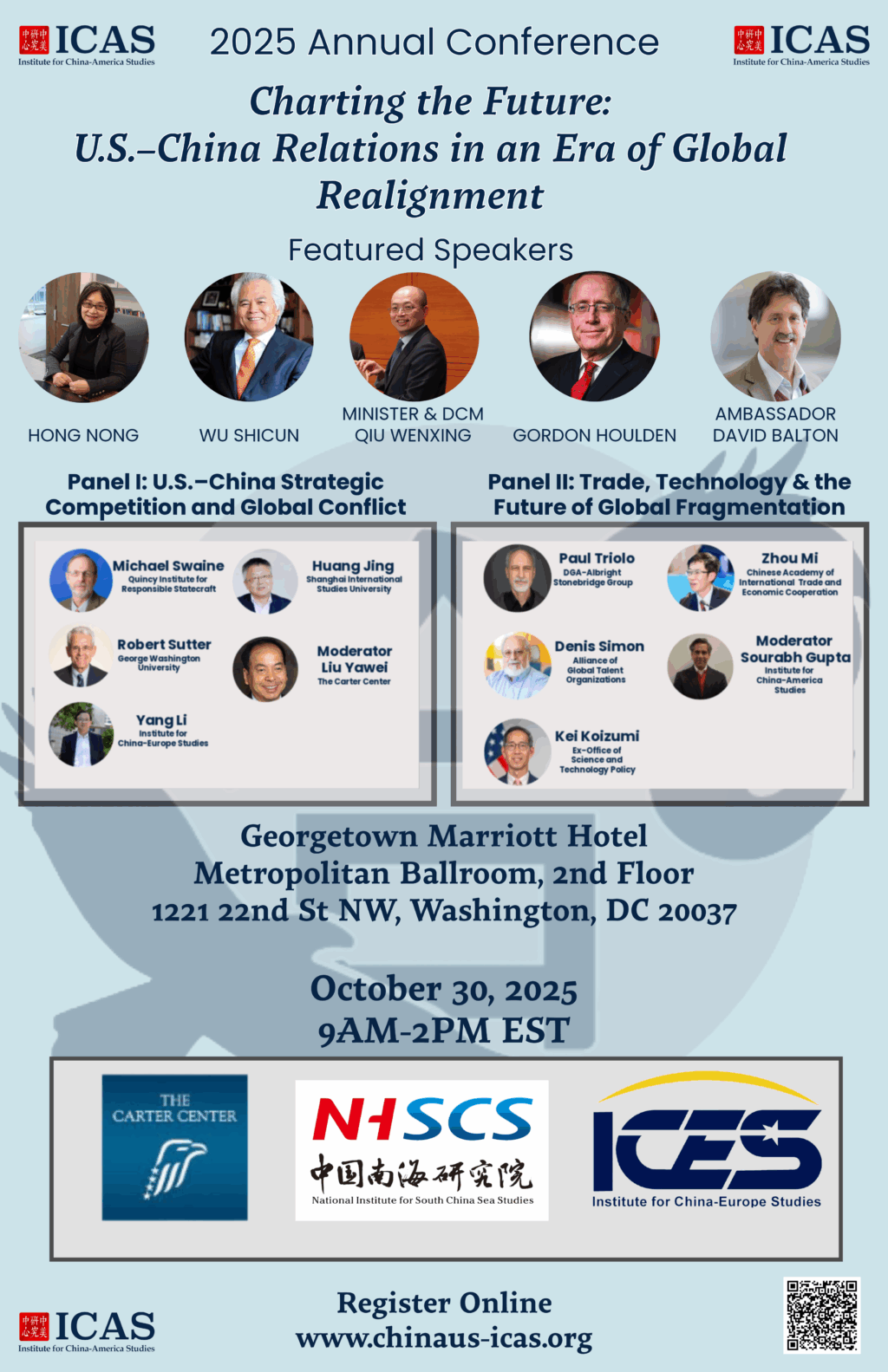
Charting the Future: U.S.–China Relations in an Era of Global Realignment
Hosted by ICAS
October 30, 2025
9:00AM-2:00PM
ICAS will hold its 2025 Annual Conference in-person at the Georgetown Marriott Hotel in Washington, D.C. on Thursday, October 30!
Featuring a keynote by Minister & DCM Qiu Wenxing (Embassy of the People’s Republic of China in the United States), a luncheon speech by Ambassador David Balton (Harvard Kennedy School’s Belfer Center Arctic Initiative) to discuss future Arctic cooperation and U.S.-China relations in the context of Arctic development, and two expert panels, this year’s conference will assess the evolving U.S.–China relationship amid global realignment, shifting power dynamics, and the early months of the Second Trump Administration. Lunch will be provided to registered guests.
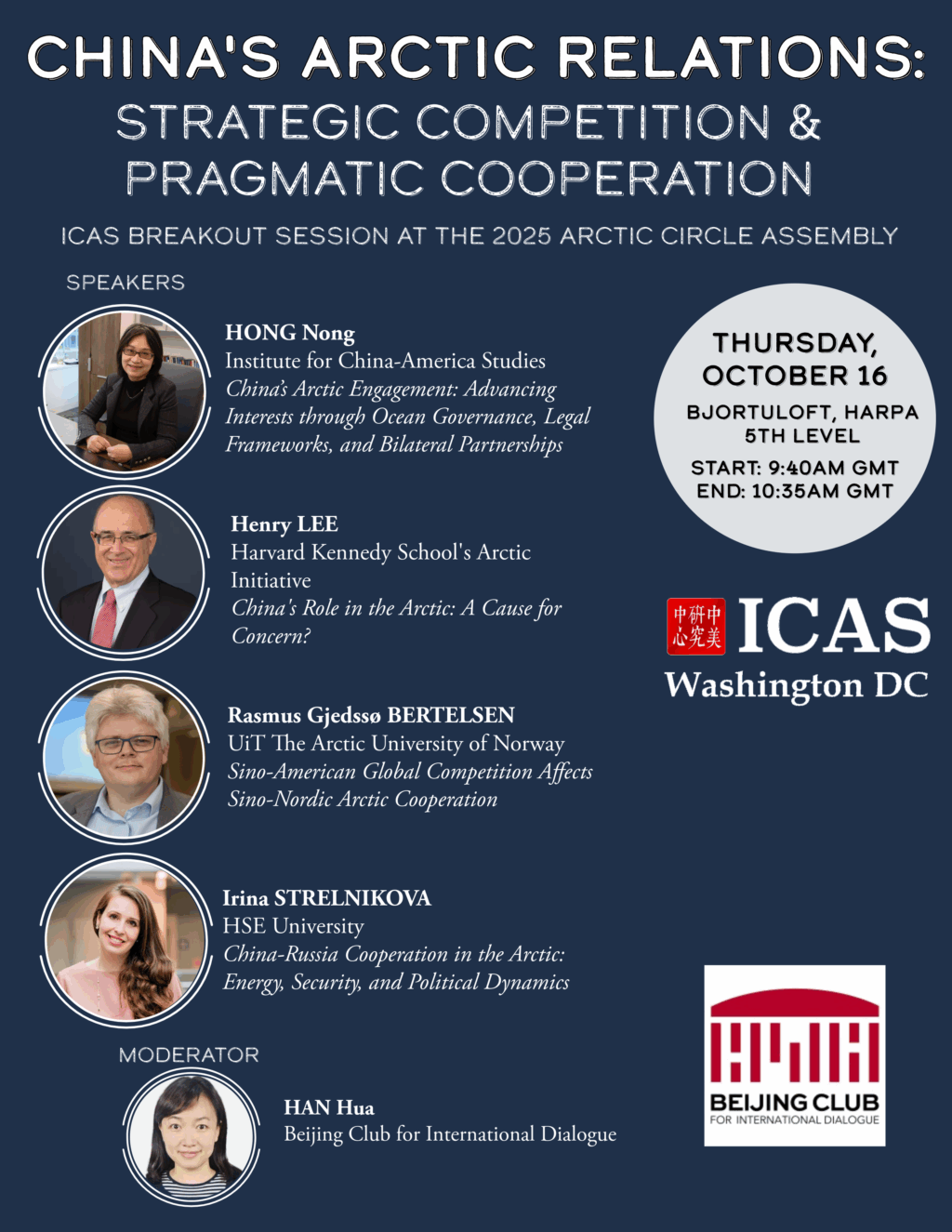
China’s Arctic Relations: Strategic Competition & Pragmatic Cooperation
October 16, 2025
ICAS proudly presented this breakout session at the 2025 Arctic Circle Assembly in Reykjavik, Iceland on October 16 in conjunction with the Beijing Club for International Dialogue to discuss China’s Arctic relations.
Featured speakers were Dr. Nong Hong, Executive Director and Senior Fellow at ICAS, Prof. Henry Lee of the Harvard Kennedy School’s Arctic Initiative, Dr. Rasmus Gjedssø Bertelsen of UiT The Arctic University of Norway, and Dr. Irina Strelnikova of HSE University. The breakout session was moderated by Ms. Han Hua of Beijing Club for International Dialogue.
The Price of Docking Costs Trade Stability
by Yilun Zhang
October 27, 2025
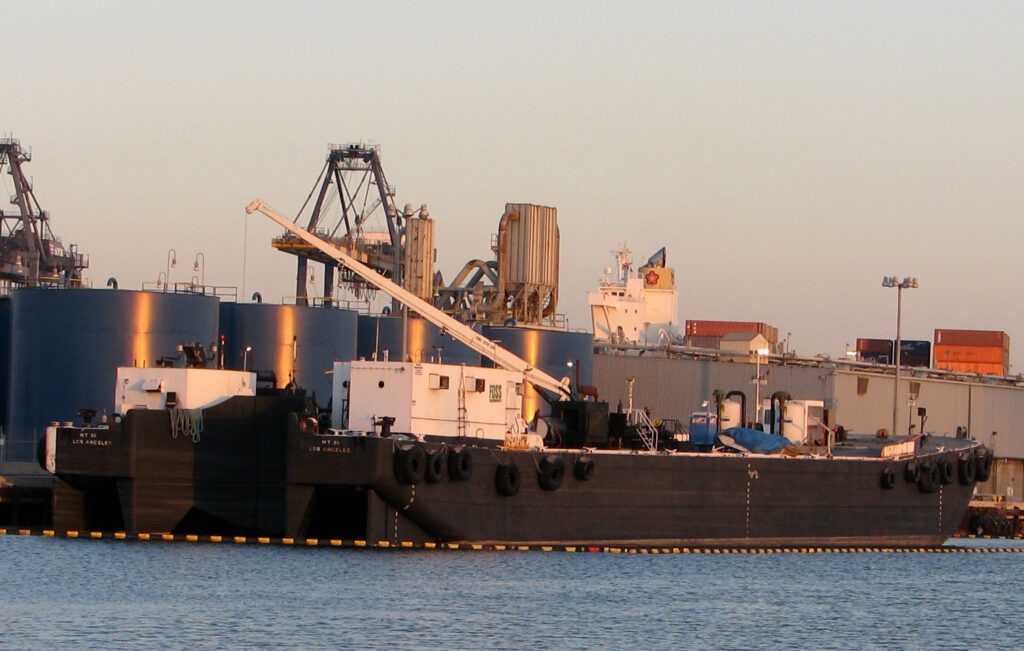
Within days of Washington unveiling its long-expected port fee for Chinese-linked vessels, Beijing answered with reciprocal fees on U.S.-flagged ships calling at Chinese terminals. On paper, the numbers are already appalling. The U.S. is estimated to collect an annual tariff bill of $34 million. In practice, the move is also a sharp reminder that the most operational layers of global trade—pilots, berths, quay cranes, invoices—are now fair game in a contest that once played out at higher altitudes. The U.S.-China trade dispute is increasingly turning into a structural clash that puts global supply chain stability at high risk.
Ocean Governance in the Arctic: Balancing the Three C’s—Competition, Cooperation, and Conservation
by Nong Hong
October 28, 2025
As global ocean change accelerates, from rising sea levels to shifting trade routes, the Arctic has emerged as both a barometer and a battleground for how humanity manages shared spaces. Once seen as remote and inhospitable, the Arctic Ocean now stands at the nexus of science diplomacy, maritime governance, and great-power politics. Questions that once belonged to scientific circles—who governs the Arctic, how its resources are managed, and how its ecosystems are protected—have moved to the forefront of international discourse. Against this backdrop, the 2025 Arctic Circle Assembly convened, providing a vivid window into how nations and institutions seek to reconcile competition, cooperation, and conservation in one of the planet’s most rapidly transforming regions.
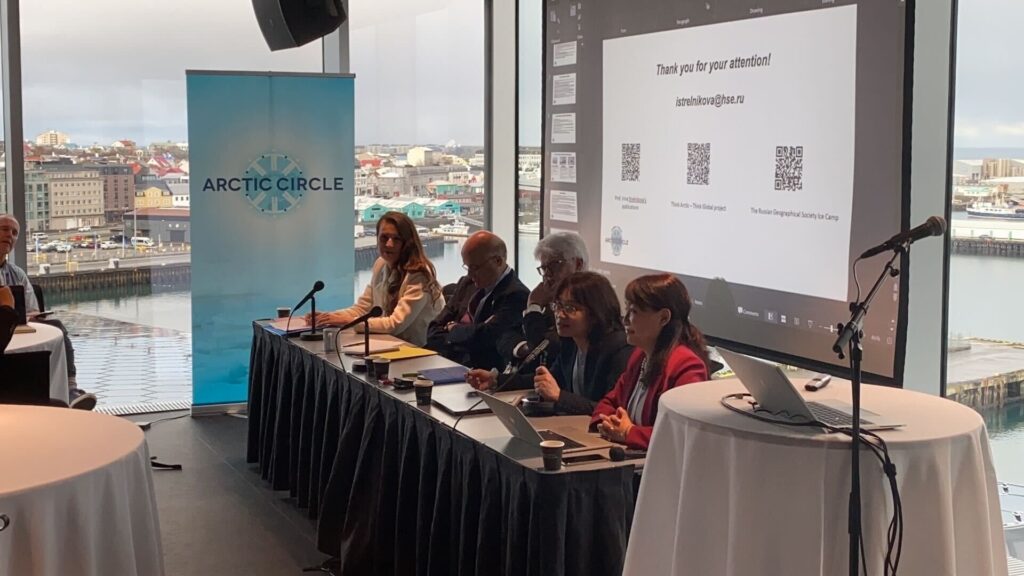
On Wednesday, October 22, 2025, ICAS’ Arctic Assembly Breakout Session was mentioned by Brasil247 on a broader increase in Asia’s Arctic presence.
“Two highlights stood out this year. The first was a roundtable discussion jointly organized by the Institute of China-America Studies (ICAS) and the Beijing Dialogue, titled ‘China’s Arctic Relations: Strategic Competition and Pragmatic Cooperation’, which drew a packed audience, even standing room only.”
On Friday, October 17, 2025, Senior Fellow Nong Hong was mentioned by CGTN Europe on China-Russia Collaboration at Arctic Circle Assembly 2025.
“China is not working solely with Russia but with a variety of partners across the region, adding that Russia itself is cautious about becoming overly dependent on Chinese investment and China is cautious about relying too much on one single partner.”