
ICAS Bulletin (online ISSN 2836-3418, print ISSN 2836-340X) is published every other week throughout the year at 1919 M St NW, Suite 310, Washington, DC 20036.
The online version of ICAS Bulletin can be found at chinaus-icas.org/bulletins/.

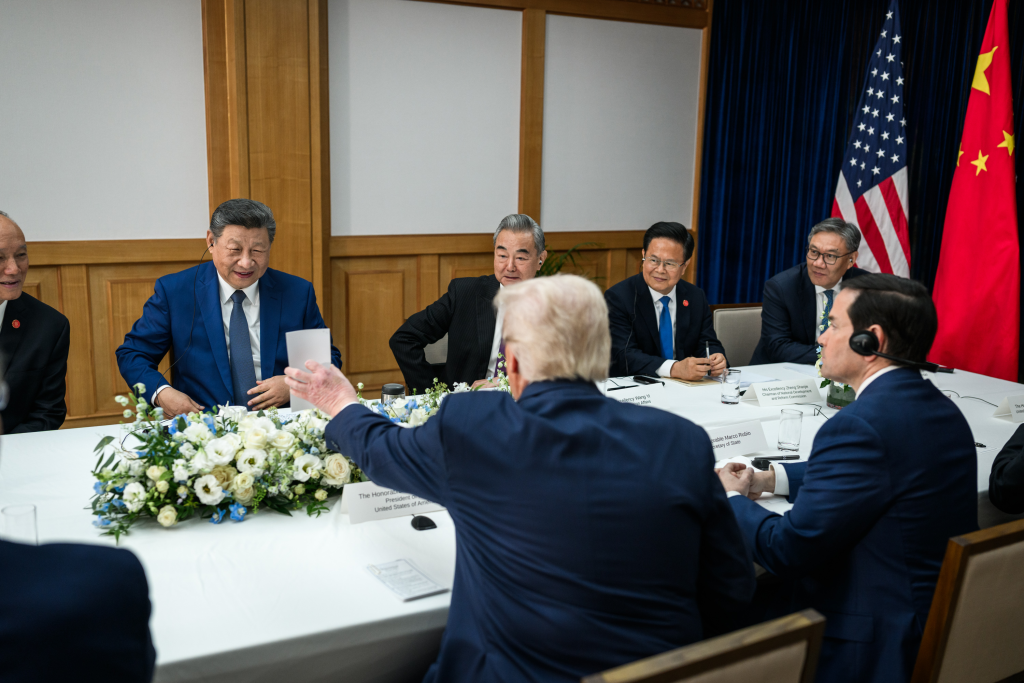
– U.S. agricultural exporters expressed optimism during China’s import expo from November 5 to 10, that farm trade will normalize after the Trump-Xi framework agreement eased recent tariffs and controls, even as analysts warn the détente remains fragile and U.S. soybeans still face cost-raising duties.
– China’s Ministry of Commerce on November 7 suspended for one year its October export controls on rare earth–related equipment but left other curbs untouched despite U.S. claims of broader commitments after the Xi–Trump summit, creating uncertainty around promised “general licenses” for critical minerals.
– 2 days later, China on November 9 announced that it would suspend export restrictions of 5 critical minerals for 1 year. The 5 critical minerals are gallium, germanium, antimony, tungsten, and graphite, which could be used to manufacture semiconductors, explosives, ammunition, nuclear reactors, or batteries.
– The United States on November 10 formally delayed its new “affiliates rule” for one year, pausing export controls targeting subsidiaries of blacklisted Chinese firms as part of the Trump-Xi trade truce. The suspension, welcomed by U.S. tech exporters, was exchanged for China’s agreement to postpone expanding its rare-earth export restrictions, easing tensions after recent disputes involving firms like Nexperia.
– China’s Ministry of Commerce on the next day added 13 fentanyl precursor chemicals to its export-control list and suspended several U.S.-related sanctions as it begins implementing commitments from the recent Trump-Xi summit to ease tensions and curb the flow of chemicals.
– USDA data released on November 14 showed China has only bought 332,000 metric tons of U.S. soybeans since the Trump-Xi summit, far below the 12 million tons the administration claimed China agreed to purchase, raising doubts about the deal.
– Chinese state trader COFCO on November 17 made its largest U.S. soybean purchase since January consisting of at least 14 cargoes totalling roughly 840,000 tons at prices far higher than Brazilian beans, keeping up with its commitments made at the Trump–Xi Busan summit.
Associated News References:
“Exclusive: China snaps up US soybeans after pledge to Trump, but at high price, traders say,” Reuters, November 17
“USDA data casts doubt on China’s soybean purchase promises touted by Trump,” Associated Press, November 14
“At China’s largest import expo, US exhibitors hopeful worst of trade war is over,” Reuters, November 10
“China Tightens Controls on Fentanyl Precursors After Summit,” The New York Times, November 10
“US Formally Delays Affiliates Rule for One Year in US-China Pact,” Bloomberg, November 10
“China Suspends Export Controls on More Critical Minerals,” The New York Times, November 9
“China halts ban on gallium, germanium, antimony exports to US, but controls remain,” Reuters, November 9
“China Suspends Some Export Controls on Critical Minerals but Retains Others,” The New York Times, November 9
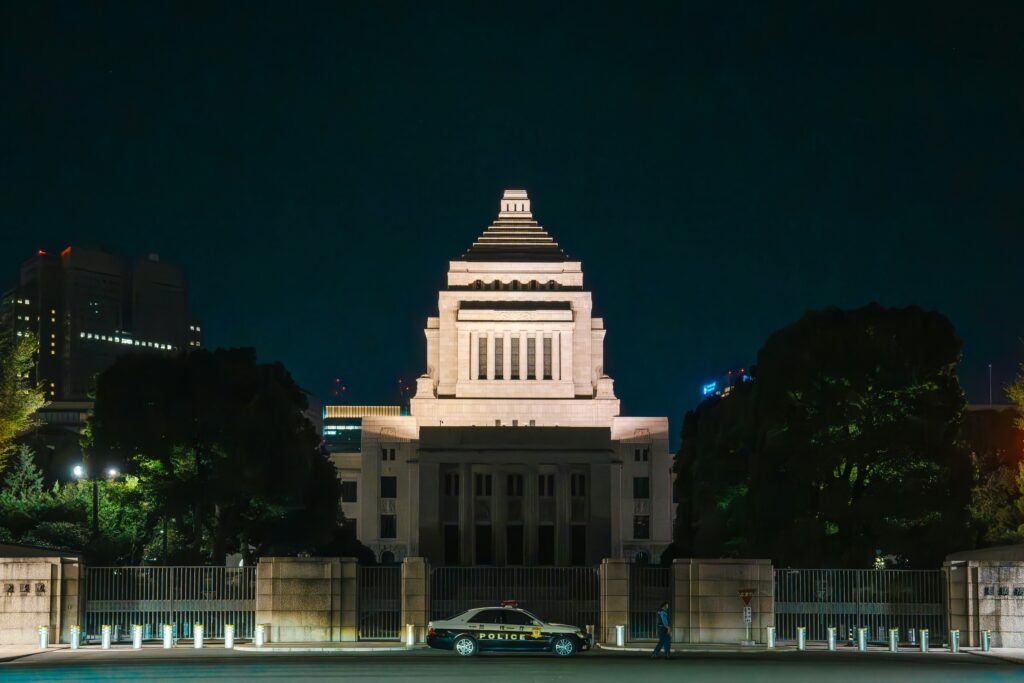
– During a hearing at the Diet on November 7, Japanese Prime Minister Takaichi made a statement regarding Taiwan that was a clear breakaway from previous leaders’ ambiguity over Tokyo’s stance on the issue while revealing Japan’s strategic plans.
– Prime Minister Takaichi outlined a hypothetical situation of a Chinese attack and blockade of Taiwan, saying this would qualify as a “survival-threatening situation” that would enable Japan’s Self-Defense Forces to exercise limited collective self-defense and could join a potential U.S. military response.
– Prime Minister Takaichi on November 10 refused to retract her unprecedented remarks outlining how Japan might respond militarily to a Taiwan crisis, only slightly softened her stance by saying that she has “no intention” of changing the government’s official position.
– On the same day, Japan also condemned a threatening social-media post by China’s consul general in Osaka responding to Prime Minister Sanae Takaichi’s comments, escalating a diplomatic clash that Beijing defended as a reaction to her “dangerous” remarks.
– China on November 14 summoned Japanese ambassador over PM Takaichi’s remarks on Taiwan.
– On the same day, China issued a travel and study warning, advising its citizens against traveling to Japan as the first retaliation after Prime Minister Takaichi’s controversial remarks over Taiwan. Major Chinese airlines offered full refunds in response to the warning.
– Japanese tourism and retail stocks fell sharply after Taaichi’s statement. As a result, Tokyo on November 17 sent a senior foreign ministry official to calm the growing dispute with China and to reassure that its security policy remains unchanged.
Associated News References:
“Japan movie releases postponed in China after Taiwan row,” BBC, November 17, 2025
“Japan to dispatch senior envoy to China, NHK says, as travel warning drives tourism selloff in Tokyo,” CNBC, November 17
“Japan tourism and retail stocks slide after row with China over Taiwan,” BBC, November 17
“China warns citizens not to visit Japan as row over Taiwan heats up,” The Japan Times, November 15
“BREAKING NEWS: China summons Japanese ambassador over PM Takaichi’s remarks on Taiwan,” Kyodo News, November 14
“Japan rebukes Chinese diplomat as Taiwan furore escalates,” Reuters, November 10
“Japan’s New Leader Speaks Out on Defending US in Possible China War,” Newsweek, November 10
“Japan’s Takaichi wades into Taiwan issue, breaking with past governments,” Nikkei Asia, November 9

– Nexperia on November 7 resumed limited chip shipments after China began granting export exemptions following the Trump-Xi trade truce, easing shortages that disrupted automakers like Volkswagen, Honda, and Aumovio. Germany welcomed the de-escalation and continued negotiations between the Netherlands and China.
– It was reported on November 13 that major automakers are working with both the Chinese and European branches of Nexperia on a temporary workaround to bypass the current production halt. Some clients would purchase silicon wafers directly from Nexperia Europe in Hamburg and separately contract Nexperia China Dongguan plant for the final packaging, all while both sides and governments seek a longer-term solution.
– On the same day, Microsoft and Amazon expressed their support for the Gain AI Act, a congressional proposal that would require chipmakers like Nvidia to prioritize U.S. demand before exporting to China, as the companies jockey for advantage in the intensifying AI race.
– China’s largest contract chipmaker SMIC on November 14 warned that a global memory-chip shortage driven by AI demand is making Chinese customers hesitant to place new orders and could constrain car and consumer electronics production in 2026, as major memory suppliers prioritize Nvidia and limit availability of lower-end chips.
– Meanwhile, it was reported on the same day that Chinese tech giant Baidu’s ApolloGo and Alphabet’s Waymo will directly compete in London’s robotaxi market next year, marking the first U.S.–China head-to-head showdown in autonomous ride-hailing as both seek an early lead in Europe.
Associated News References:
“China-U.S. Robotaxi Race Kicks off in U.K.,” The Wall Street Journal, November 14
“China’s SMIC Expects Memory Shortage to Hit Cars, Phones in 2026,” Bloomberg, November 13
“Amazon and Microsoft Back Effort That Would Restrict Nvidia’s Exports to China,” The Wall Street Journal, November 13
“Exclusive: Nexperia customers in talks over workaround to skirt Europe-China chip feud, sources say,” Reuters, November 13
“Some Nexperia chip shipments resume as Germany welcomes ‘de-escalation’,” Reuters, November 9

“US is biggest recipient of Chinese loans, study shows,” Reuters, November 19
“China’s fine wine makes splash with Japanese palates,” Nikkei Asia, November 16
“China Issues Warning to Trump Over Arms Sale to Taiwan,” Newsweek, November 14
“China’s stranded astronauts returning from space station on spacecraft that brought new crew,” Associated Press, November 14
“House Committee on the Chinese Communist Party calls on Columbia to discontinue exchange programs tied to the CCP,” Columbia Spectator, November 13
“China moves into Venezuela as Maduro regime gets Beijing lifeline amid US tensions,” Fox News, November 12
“Why Factories Will Keep Looking for Alternatives to China,” The New York Times, November 12
“How the US overtook China as Africa’s biggest foreign investor,” BBC, November 9
“Trump is hosting Central Asian leaders as US seeks to get around China on rare earth metals,” ABC News, November 6
Recordings for the ICAS 2025 Annual Conference are now available for viewing on the ICAS YouTube page!
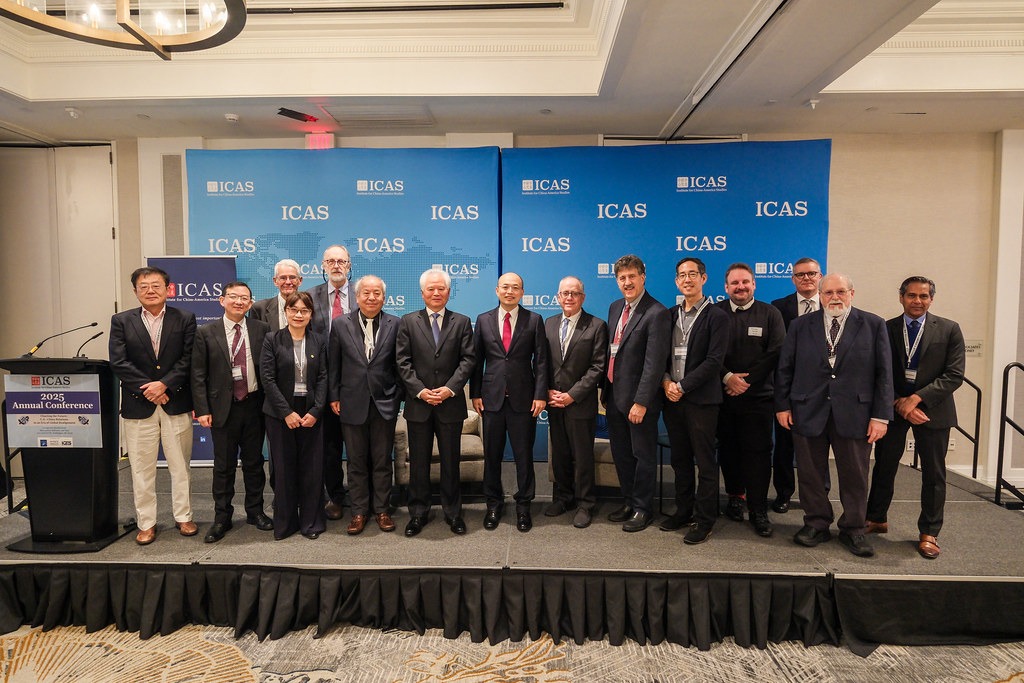
On Thursday, October 30, 2025, ICAS hosted its 2025 Annual Conference in-person at the Georgetown Marriott Hotel in Washington, D.C. This year’s conference, subtitled “Charting the Future: U.S.–China Relations in an Era of Global Realignment,” which included a Keynote, two expert panels and a Luncheon Speech. We are grateful to all of our expert participants and supporters who helped make this year’s conference both productive and engaging!
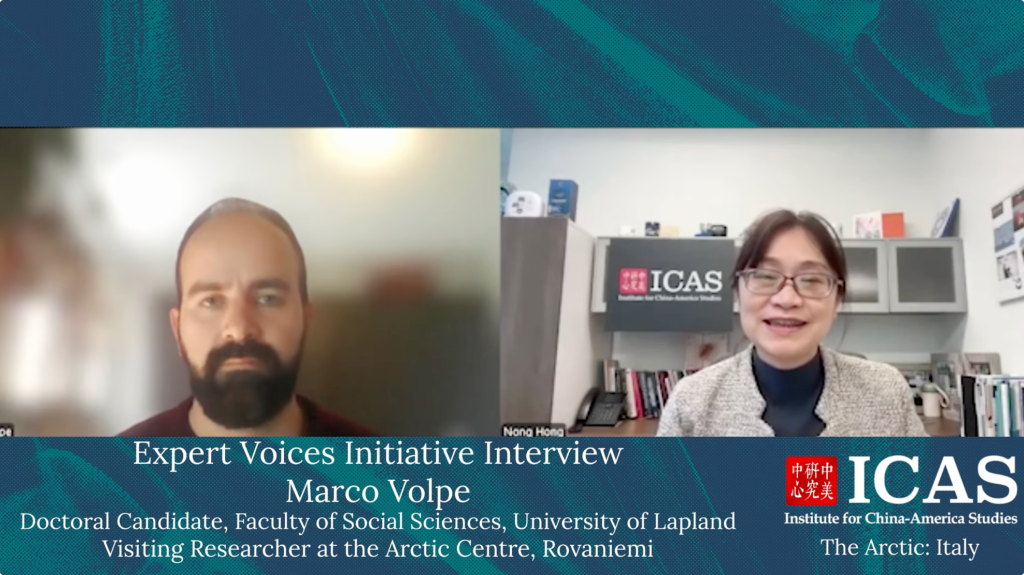
Marco Volpe on the Arctic: Italy
November 12, 2025
ICAS conducted its seventh Arctic-focused ICAS Expert Voices Initiative (EVI) interview series with Mr. Marco Vulpi, a PhD candidate at the University of Lapland and visiting researcher with the Arctic Centre’s international relations team. The discussion examined Italy’s evolving role in the Arctic, emphasizing its science-driven engagement since becoming an Arctic Council observer in 2013, Italy’s longstanding research presence through the Dirigibile Italia station in Svalbard, and its expanding scientific diplomacy and multilateral cooperation. The conversation also explored Italy’s forthcoming Arctic strategy, which is expected to balance continuity in scientific research with greater attention to security dynamics, climate impacts, and shifting geopolitical conditions following the war in Ukraine. Additional themes included Italy’s energy and industrial interests in the High North, its alignment with EU Arctic priorities, its partnerships with Nordic states, and how Arctic actors perceive the engagement of non-Arctic observers such as China, Japan, and South Korea.
A Fragile Thaw in Busan: Cautious Optimism in a Volatile 2026
By Yilun Zhang
November 17, 2025
The meeting between President Xi Jinping and President Donald Trump in Busan, South Korea, offered a welcome pause to the friction that has defined U.S.–China relations in recent months. Against this backdrop, the Institute for China-America Studies (ICAS) convened its 2025 Annual Conference in Washington, bringing together Chinese and American experts—nearly 200 participants online and in person—to discuss the future of this critical bilateral tie.
Both leaders appeared determined to avoid further deterioration and to project a sense of stability to their domestic audiences, particularly for President Trump who claimed to finally strike a mega deal with China…
The Antarctic Deadlock: What the 2025 CCAMLR Meeting Reveals About the Future of Ocean Governance
By Nong Hong
November 14, 2025
When delegates convened in Hobart this October for the 44th Meeting of the Commission for the Conservation of Antarctic Marine Living Resources (CCAMLR), expectations were high. Many hoped that years of negotiation would finally deliver breakthroughs on long-awaited marine protected areas (MPAs)—the Weddell Sea MPA (championed by the EU and Norway), the East Antarctic MPA (advanced by Australia, the EU, and Norway), and the Antarctic Peninsula MPA (jointly proposed by Chile and Argentina)—as well as on enhanced krill-management measures. Yet the meeting concluded without substantive agreements.
Full Post to be released with the November ICAS MAP Handbill
On Monday, November 18, 2025, Senior Fellow Sourabh Gupta was interviewed by CCTV on the global economic impact of the Trump administration’s tariff policy.
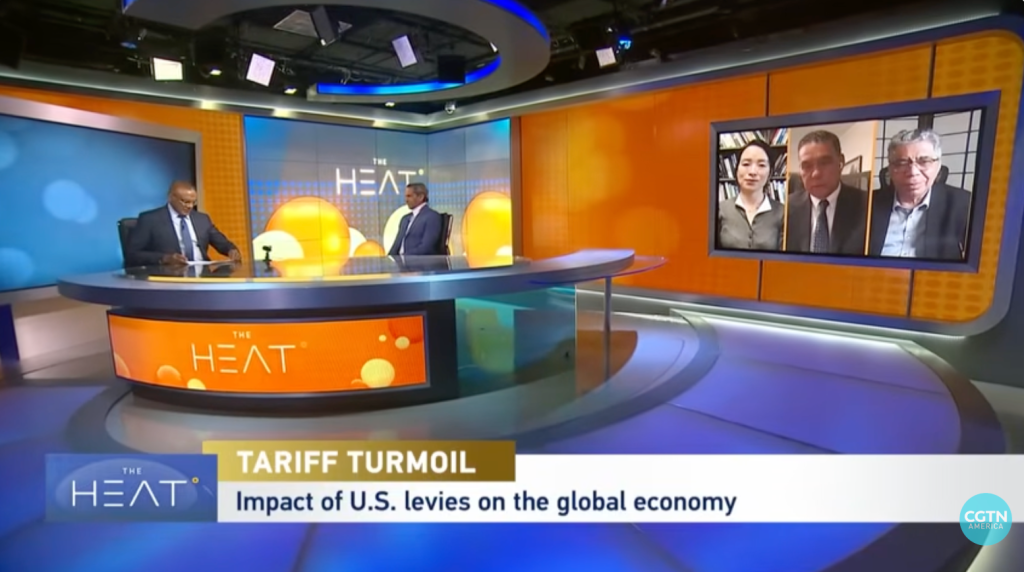
On Monday, November 17, 2025, Senior Fellow Sourabh Gupta was interviewed by CGTN’s The Heat on the global economic impact of the Trump administration’s tariff policy.