The global automotive industry is entering a period of profound and irreversible transformation. Electrification has disrupted long-established industrial hierarchies, enabling new market entrants to challenge incumbent manufacturers and forcing traditional automakers to confront a stark reality: adapt, or be displaced. At the same time, rapid advances in vehicle intelligence, autonomous driving technologies, and shared mobility models are reshaping how automobiles are designed, marketed, and consumed. Cars are increasingly defined not merely as transportation tools, but as consumer products embedded in broader digital and service ecosystems.
These structural shifts have unfolded at a moment when the U.S. automotive industry was already under pressure from intensified global competition. The rapid rise of China’s electric vehicle (EV) sector—supported by scale, supply-chain integration, and sustained industrial policy—has further complicated the outlook for American automakers. While the Biden administration sought to accelerate EV adoption through a combination of climate policy, industrial incentives, and regulatory support, the return of the Trump administration has reintroduced uncertainty into the policy environment surrounding new energy vehicles in the United States. As debates over electrification, hybrid technologies, and market protection intensify, the future trajectory of the U.S. automotive sector has become increasingly difficult to predict.
Background
Against this backdrop, the U.S.-China New Energy Vehicle Project was launched by the Institute for China-America Studies (ICAS) to examine the evolving dynamics of the global automotive transition, with a particular focus on the comparative development paths of the United States and China. The project tracks policy debates, industrial strategies, market responses, and supply-chain realignments related to electric vehicles, hybrid technologies, and broader new energy vehicle ecosystems.
In recent years, hybrid vehicles have often been discussed as a transitional solution amid shifting regulatory priorities and uneven consumer adoption of full electrification. Yet policy inconsistency and strategic uncertainty have left the U.S. automotive industry without a clear, sustainable pathway to compete with Chinese manufacturers. As a result, trade measures—particularly tariffs—have emerged as a primary tool to shield the domestic market. However, the deeply globalized nature of automotive supply chains limits the effectiveness of purely protectionist approaches, underscoring the need for more coherent and durable industrial and policy frameworks.
Through ongoing analysis and regular updates, the U.S.-China New Energy Vehicle Project seeks to provide scholars, policymakers, and industry observers with a structured understanding of how technological change, government policy, and geopolitical competition intersect in shaping the future of the automotive industry. By situating U.S. and Chinese developments within a global context, the project aims to illuminate both the constraints and choices facing the United States as it navigates this critical industrial transition.



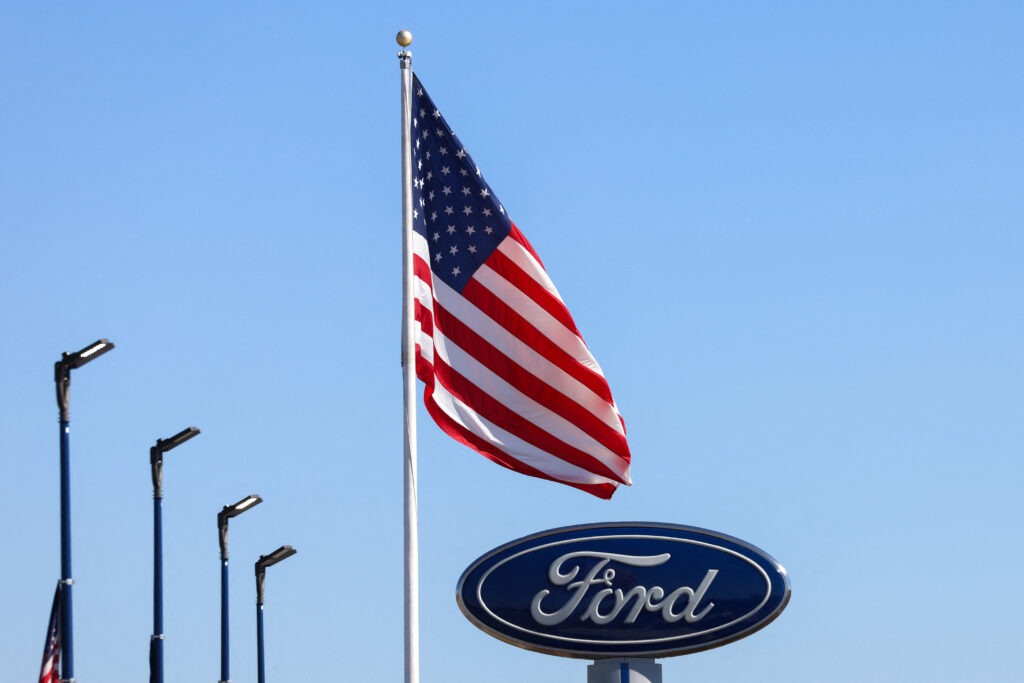

Hybrid Cars Offer America a Greener and Cheaper Road Forward