
ICAS Bulletin (online ISSN 2836-3418, print ISSN 2836-340X) is published every other week throughout the year at 1919 M St NW, Suite 310, Washington, DC 20036.
The online version of ICAS Bulletin can be found at chinaus-icas.org/bulletins/.
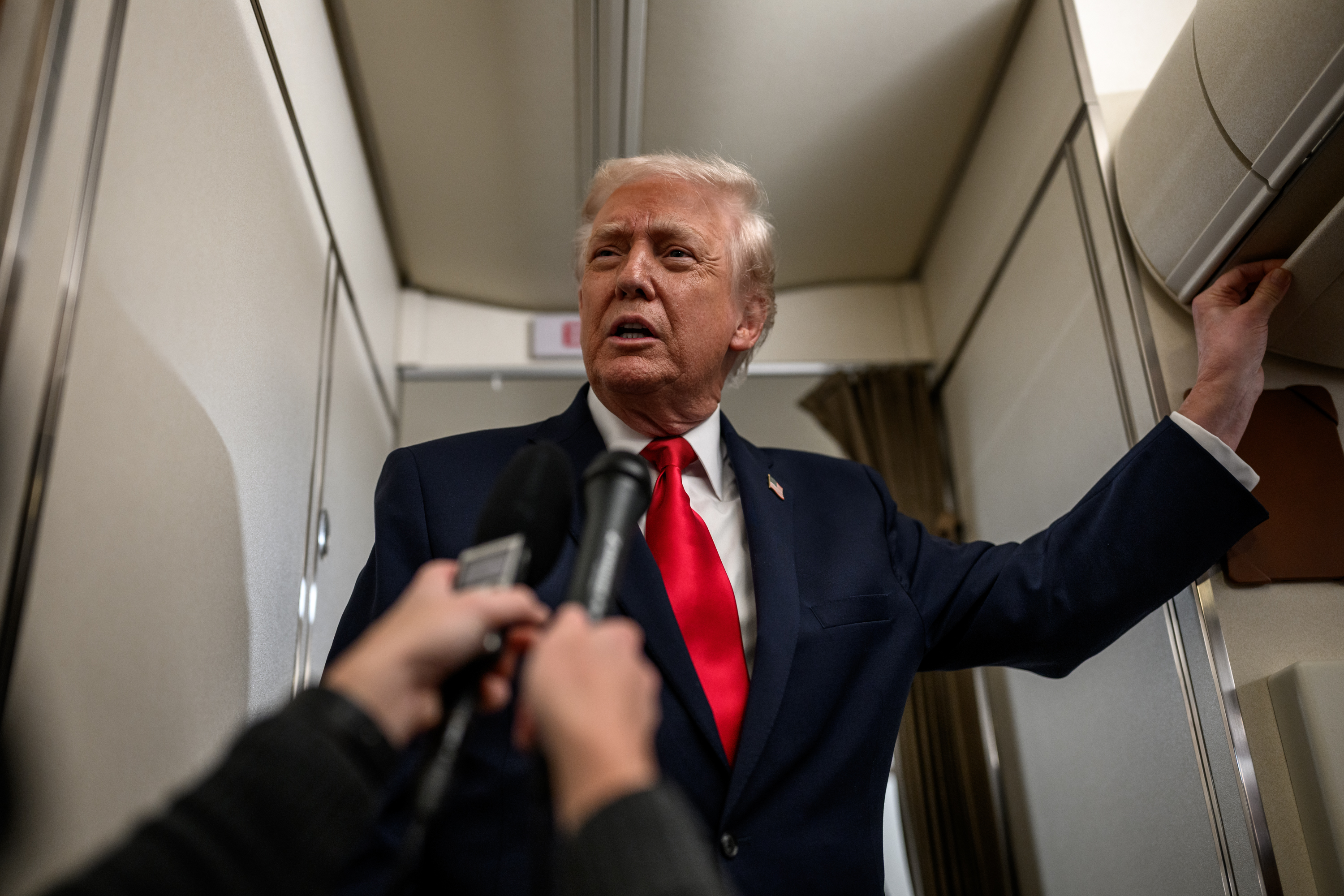
– The White House released its new National Security Strategy (NSS) highlighting President Trump’s “America First” doctrine on December 4. It shifts military focus to the Western Hemisphere and adopts a sharply confrontational stance toward Europe. It also outlines a dual-track approach to China that seeks to contain Beijing’s influence but preserve selective economic ties.
– The new NSS seeks to prevent a conflict with China over Taiwan and the South China Sea by strengthening U.S. and allied military power, emphasizing Taiwan’s strategic importance, and urging partners like Japan and South Korea to increase defense contributions. Simultaneously, it also seeks to maintain a “mutually advantageous economic relationship” with China.
– The releases of the Trump administration’s NSS and National Defense Strategy (NDS) were delayed for weeks due to Treasury Secretary Scott Bessent’s push to soften language on China amid sensitive trade talks.
– The new NSS softens the U.S. stance toward China by downplaying ideological rivalry, reframing the relationship around economics and trade, and easing language on Taiwan. Overall, mentions of China are significantly reduced.
– On December 6, Defense Secretary Pete Hegseth previewed the forthcoming NDS at a defense forum in California by outlining four priorities: defending the homeland, deterring China through strength rather than force, increasing allies’ burden sharing, and expanding the U.S. defense industrial base to uphold peace through strength.
– On December 7, Russia welcomed President Trump’s new NSS as aligning with its own vision by avoiding portraying Russia as a threat, instead criticizing Europe and urging resistance to the EU’s current trajectory.
– China on December 8 warned the U.S. to stop “external interference” over Taiwan after Washington’s NSS emphasized deterring conflict with Beijing. On the same day, Taiwan welcomed the U.S’ approach and reiterated plans to strengthen its own defense.
– On December 11, NATO Secretary General Mark Rutte said the NSS still demonstrates Washington’s commitment to Europe and NATO, even as it shifts focus to the Indo-Pacific and questions alliance expansion; Germany urged greater European defense responsibility in response.
Associated News References:
“NATO chief downplays concerns over new US strategy, affirms American commitment to alliance,” Anadolu Agency, December 11
“China vows to defend sovereignty over Taiwan as Trump unveils security strategy,” Reuters, December 8
“New US security strategy aligns with Russia’s vision, Moscow says,” BBC, December 7
“Hegseth Outlines New National Defense Strategy During Speech at Reagan Library,” U.S. Department of War, December 6
“Trump’s National-Security Strategy Softens Language on China,” The Wall Street Journal, December 6
“Trump national security strategy calls for ‘cultivating resistance’ in Europe and changing US’ role in Western Hemisphere,” CNN, December 5
“Trump unveils strategy to prevent China conflict over Taiwan,” Reuters, December 5
“China debate delayed Trump security strategy,” Politico, December 3

– From December 3-6, French President Emmanuel Macron visited China to seek a more balanced bilateral relationship, marking his fourth presidential visit to Beijing.
– China and France discussed trade and investment, agreeing to increase French exports, expand Chinese investment, and deepen cooperation across sectors from energy to aerospace.
– Macron affirmed the One China policy, and the two leaders exchanged views on Ukraine.
– China and France also agreed to new deals including panda protection.
– President Macron stated in an interview published on December 7 that Europe faces a “life or death” industrial moment as it is squeezed between China and the U.S. He then warned of potential “strong measures” from the EU against China to address the unsustainable trade imbalances, such as tariffs. He also urged Beijing to increase non-predatory investment in Europe, address the current trade surplus, and pursue a mutual truce that rolls back aggressive trade restrictions.
– Germany’s Foreign Minister Johann Wadephul visited China from December 8 to 10 as Berlin seeks dialogue with China and to prepare for Chancellor Merz’s upcoming trip. Wadephul‘s first attempt to visit was canceled at the end of October following the Nexperia dispute.
– Wadephul’s meetings in Beijing began with the Taiwan issue, where he reaffirmed Germany’s adherence to the One China policy while urging that any change to the status quo occur peacefully and by consensus.
– During Wadephul’s visit, China told Germany that Japan’s recent statements and actions related to Taiwan amount to unacceptable military provocation and criticized Japan for exploiting the Taiwan issue despite its World War II history. China praised Germany for its reconciliation with its past after World War II.
– On December 8, Wadepul demanded clarity and new licenses to end uncertainty over Chinese exports of semiconductors and rare earths. China responded that it values Germany’s concerns over the Nexperia crisis, but the Dutch government must halt improper interference in the semiconductor supply chain.
– Germany also sought relief from its growing dependence on Chinese rare earth supplies, securing Beijing’s offer of general export licenses as Berlin reviews its raw material and supply chain vulnerabilities.
Associated News References:
“Germany eyes rare earths during FM’s China visit,” Deutsche Welle, December 10
“Japan threatening us militarily, China tells German foreign minister,” Reuters, December 8
“European industry faces ‘life or death,’ Macron says — and China needs to help,” Politico, December 7
“Macron Warns EU May Hit China With Tariffs Over Trade Surplus,” Bloomberg, December 7
“Germany’s foreign minister travels to China to mend fences,” Deutsche Welle, December 6
“Ukraine, trade, pandas: What China’s Xi and France’s Macron discussed in Beijing,” CNBC, December 4
“Macron heads to China as Europe walks tightrope between rivalry and reliance,” Reuters, December 1
– On December 4, China announced that it is issuing streamlined, year-long “general licenses” to speed up civilian rare earth exports, fulfilling a key commitment from the Trump–Xi meeting even though the broader dual-use licensing regime remains in place.
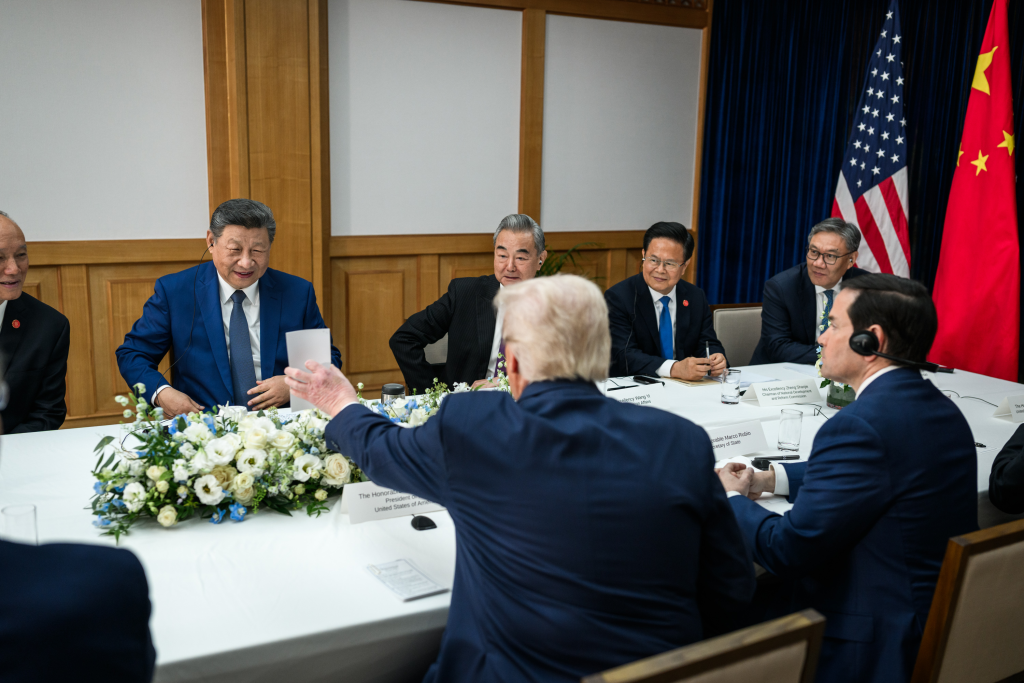
– Chinese Vice Premier He Lifeng, U.S. Treasury Secretary Scott Bessent, and U.S. Trade Representative Jamieson Greer held a video call on December 5 to advance implementation of the Trump-Xi October deal, pledging to expand cooperation, address economic and trade concerns, and sustain stabilization efforts agreed to in Busan.
– As of December 7, Congress has included the Biosecure Act and the FIGHT China Act in the latest version of the National Defense Authorization Act (NDAA) that would bar certain Chinese biotech firms from federally funded contracts and authorize restrictions on U.S. investment in Chinese AI and other sensitive technologies.
– It was reported on December 7 that China’s rare earth exports rose 26.5% in November to 5,493.9 tons, rebounding after the China-U.S. agreement to accelerate shipments amid ongoing supply disruptions caused by earlier export controls.
– USTR Jamieson Greer on December 7 said China is so far complying with recent bilateral trade commitments, including soybean purchases, as both sides work to maintain stable economic ties following the Xi-Trump tariff truce.
– According to data released on December 8, China’s trade surplus exceeded $1 trillion for the first time as November exports rose to Europe, Australia and Southeast Asia while shipments to the U.S. fell nearly one-third amid high U.S. tariffs and ongoing efforts to reroute trade and diversify export markets.
– Following the record trade surplus, on December 9, China’s Premier Li Qiang urged global partners to reject rising protectionism and warned of the damaging effects of proliferating tariffs.
– On December 10, Mexico approved new tariffs of 5 to 50% on over 1,400 Asian imports, most heavily impacting Chinese goods, as President Sheinbaum aims to protect domestic industry. Beijing warned Mexico to reverse what it called unilateral and protectionist measures.
– The Trump administration has accused Mexico of operating as a backdoor for Chinese goods and warned it was tightening control over the Western Hemisphere. Mexico imposed the tariffs to boost domestic manufacturing, reduce its trade deficit with China, and respond to U.S. pressure to curb Chinese supply chains.
Associated News References:
“Mexico Approves 50% Tariffs on Many Chinese Imports,” The New York Times, December 11
“China urges trade partners against tariffs as record surplus stirs tensions,” Reuters, December 9
“China trade surplus tops $1 trillion for first time on non-US growth,” Reuters, December 8
“Chinese Biotech, Investments Are on Track to Face New US Curbs,” Bloomberg, December 8
“US Trade Chief Says China Has Complied With Terms of Trade Deals,” Bloomberg, December 7
“China’s rare earth exports jump in November after Xi-Trump meeting,” Reuters, December 7
“Top US, Chinese Officials Pledge Cooperation on Trade Deal,” Bloomberg, December 5
“China is issuing streamlined licenses for rare earth exports, state media says,” Reuters, December 4
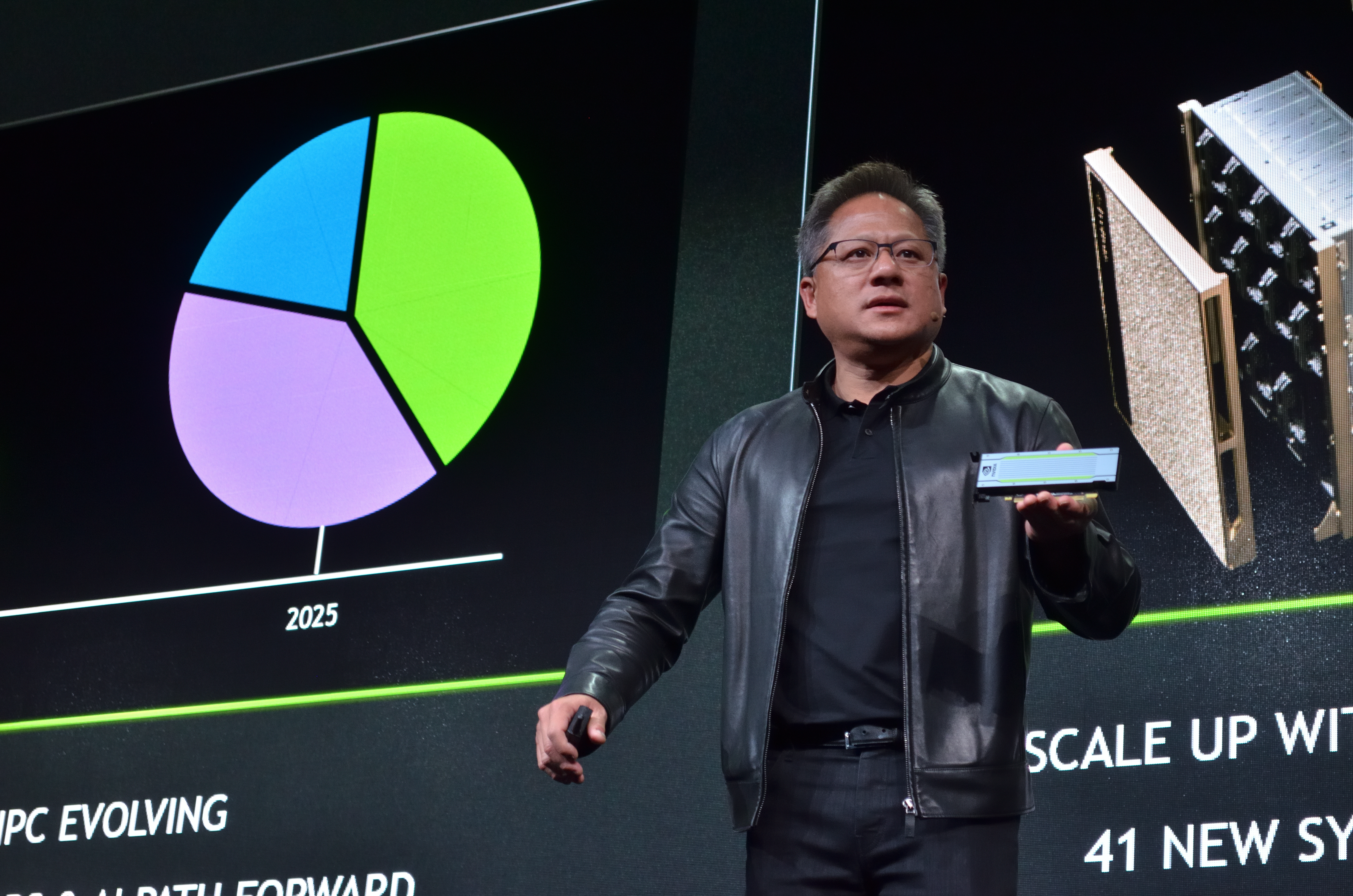
– On December 3, Nvidia CEO Jensen Huang met with President Trump and warned that U.S. chips export restrictions risked ceding the China market, the world’s second-largest AI market, and enabling Chinese firms like Huawei to build an “AI Belt and Road” abroad, arguing the U.S. must keep competing rather than letting China dominate globally.
– On the same day, Jensen Huang’s argument prompted sharp criticism from lawmakers like Sen. Elizabeth Warren who warned that allowing Nvidia’s high-end chips into China would endanger U.S. national security.
– The GAIN AI Act that passed through the Senate in October as part of the 2026 National Defense Authorization Act was left out of the latest draft of the NDAA released on December 5 after facing intense lobbying led by Nvidia and the White House.
– On December 8, President Trump allowed Nvidia to export its H200 chips to “approved customers” in China and other countries with a 25% surcharge paid to the U.S. government. The rule will also apply to other U.S. chipmakers.
– It was reported on the same day that Beijing is considering restricting domestic access to Nvidia’s newly approved-for-export H200 chips by requiring purchase permits.
– China is weighing up to $70 billion in new subsidies and financing to accelerate its domestic chipmaking industry to reduce reliance on U.S. technology.
– U.S. lawmaker John Moolenaar (R-MI) on December 12 demanded Commerce Secretary Howard Lutnick justify President Trump’s decision to allow Nvidia to sell H200 chips to China, warning that reversing earlier export controls could erode U.S. strategic advantages in AI.
– ByteDance and Alibaba have inquired about purchasing Nvidia’s H200 AI chips, and Nvidia is considering expanding production of its H200 AI chips after strong demand from Chinese firms.
– Beijing has yet to approve the purchases as of December 17.
Associated News References:
“Exclusive: Nvidia considers increasing H200 chip output due to robust China demand, sources say,” Reuters, December 15
“US lawmaker demands details on Trump’s decision to sell Nvidia H200 chips to China,” Reuters, December 12
“Exclusive: ByteDance, Alibaba keen to order Nvidia H200 chips after Trump green light, sources say,” Reuters, December 10
“China Prepares as Much as $70 Billion in Chip Sector Incentives,” Bloomberg, December 12
“Exclusive /Trump says Nvidia can sell powerful H200 AI chips to China,” Semafor, December 9
“China to limit access to Nvidia’s H200 chips despite Trump export approval, FT reports,” Reuters, December 9
“Trump’s green light for Nvidia chip sales to China sparks US security concerns,” Reuters, December 8
“Nvidia CEO meets with Trump, talks export controls,” The Hill, December 4, 2025
“Nvidia Scores Win as Congress Rejects Bid to Curb Chip Exports,” Bloomberg, December 3

– In a traditionally busy season for military exercises, China’s Liaoning carrier strike group carried out a far-sea training exercise with around 100 air operations in the international waters near Japan’s southwest islands between December 6 and 7.
– Japan on December 6 sent F-15s to monitor Chinese training near Okinawa, prompting a Chinese J-15 launched from the carrier Liaoning to lock its radar twice onto Japanese aircraft.
– On December 7, Japan condemned the incident, while Australia also expressed deep concern.
– On December 9, Japan launched fighter jets on short notice to monitor Russian and Chinese bombers’ eight-hour joint patrol through nearby airspace.
– On the same day, the U.S. Department of State criticized China for the radar incident, calling the move destabilizing while re-emphasizing the U.S.-Japan alliance.
– After Japan previously denied receiving prior notification of China’s flight drill on December 9, Japanese Defence Minister Koizumi confirmed on December 10 that China had notified Japan in advance about drills involving the aircraft carrier Liaoning.
– The White House avoided taking sides over the recent tensions between China and Japan, and on December 11 said that President Trump can maintain strong alliances with Japan while preserving a working relationship with China.
– China on December 15 imposed sanctions on former Japanese Self-Defense Forces chief Shigeru Iwasaki, due to his violation of the One China principle and interfering in China’s internal affairs after assuming his advisory role to Taiwan.
Associated News References:
“China launches countermeasures against former Japan defense official,” The Japan Times, December 15
“Trump can balance Japan alliance and China despite row, White House says,” The Japan Times, December 12
“China told Japan about air drills but not in enough detail to avoid danger, minister says,” South China Morning Post, December 10
“US backs Japan in dispute with China over radar incident,” Reuters, December 10
“China vows to defend sovereignty over Taiwan as Trump unveils security strategy,” Reuters, December 8
“Japan protests after China military jet locks radar on Japanese aircraft,” Associated Press, December 7
“Chinese carrier holds air drills as Tokyo, Beijing trade barbs,” Reuters, December 7
“Exclusive: China massing military ships across region in show of maritime force, sources say,” Reuters, December 4

“Japan will be without a panda for the first time in 50 years after twins leave Tokyo zoo,” Associated Press, December 15
“China Buys Rare Argentine Wheat Cargo as Milei Trims Tariffs,” Bloomberg, December 15
“China Nears First Investment Decline in 3 Decades After Sharp Monthly Drop,” The New York Times, December 15
“China to fall out of Germany’s top five export destinations for first time since 2010,” Reuters, December 15
“U.S. Forces Raid Ship, Seize Cargo Headed to Iran From China,” The Wall Street Journal, December 12
“Key meeting maps out plan for China’s economic work in 2026,” Global Times, December 11
“Trump to unleash $12B farm rescue as China trade reset hits US growers,” Fox News, December 8
“Nvidia servers speed up AI models from China’s Moonshoot AI and others tenfold,” Reuters, December 3
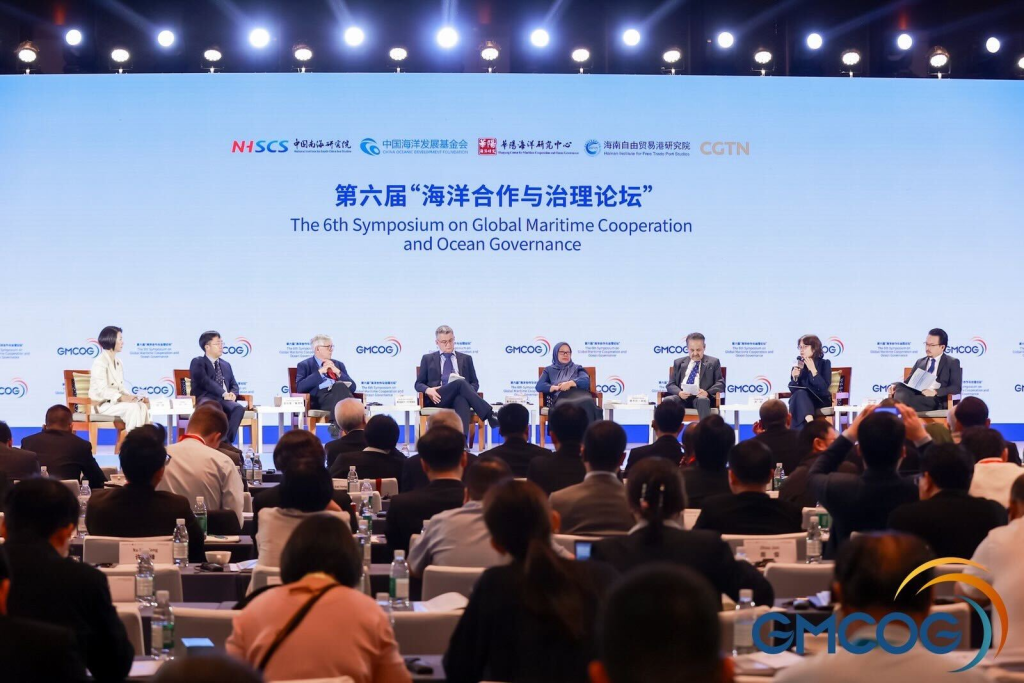
The 6th Symposium on Global Maritime Cooperation and Ocean Governance
Co-Organized by National Institute for South China Sea Studies and Huayang Center for Maritime Cooperation and Ocean Governance
Sanya, China
December 10-12, 2025
Executive Director Dr. Nong Hong, Research Associate Yilun Zhang, and Advisory Board Member Prof. Gordon Houlden attended the 6th Symposium on Global Maritime Cooperation and Ocean Governance held in Sanya, China on December 10-12, 2025.
Dr. Nong Hong presented on the Session 2 Panel titled “Managing Maritime Disputes: Regional Practices and International Experience”. Mr. Yilun Zhang presented on the Session 7 Panel titled “Global Ocean Governance: Models and Pathways”. Prof. Gordon Houlden moderated Session 4 titled “Sustaining Peace in the South China Sea: Geopolitics and the Construction of Regional Order”.
2025 International Symposium on Maritime Dispute Settlement and International Law
December 1, 2025
Beijing, China
Dr. Nong Hong presented a paper titled “Legal and Institutional Challenges in the Governance of the International Seabed (‘the Area’)” at the 2025 International Symposium on Maritime Dispute Settlement and International Law in Beijing on December 1, 2025.

Africa Misread the Just Energy Transition at COP30
By Zhangchen Wang
December 12, 2025
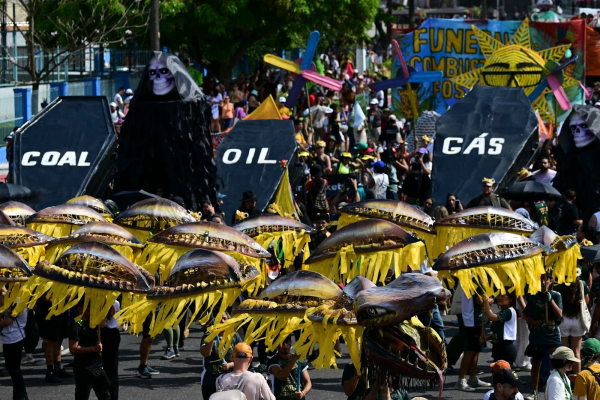
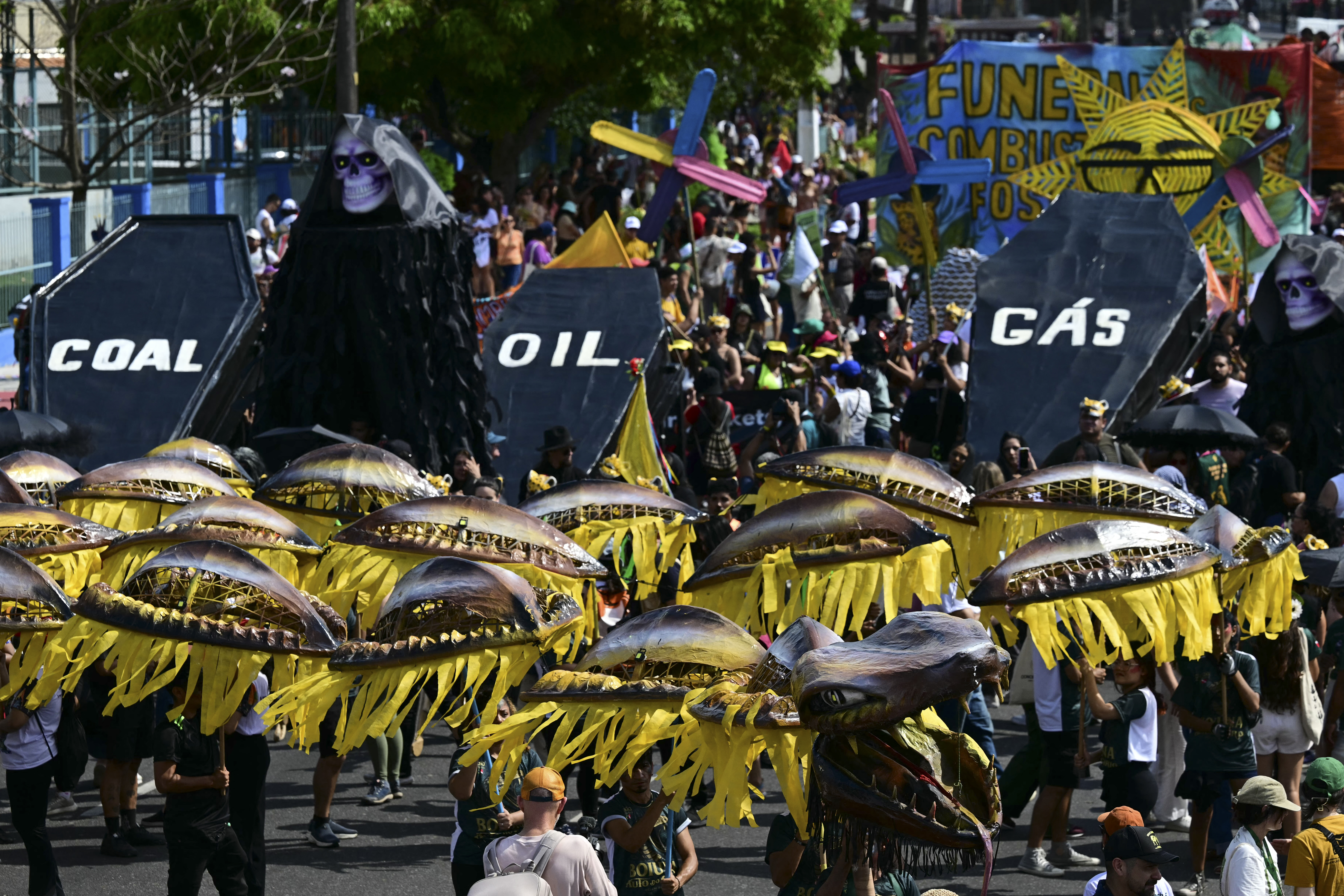
At COP30 in Belém, African negotiators chose to stand apart from one of the summit’s most consequential debates. Under Tanzania’s leadership, the African Group of Negotiators aligned themselves with major oil-producing countries and urged ministers to oppose the inclusion of any language on “transitioning away from fossil fuels” in the conference outcome, framing such a roadmap as a threat to Africa’s development prospects. Their position ultimately contributed to a week-long standoff that ended with fossil fuels being excluded entirely from the final Global Mutirão decision. African countries’ stance may reflect a deep concern over defending their sovereignty, but it was strategically miscalculated to put it in a forceful way…
A Fragile Thaw in Busan: Cautious Optimism in a Volatile 2026
By Yilun Zhang
December 3, 2025
The U.S. and China have come a long way from their tit-for-tat triple digit tariff impositions in the short space of a few months. Indeed, their bilateral trade negotiations appear to be on a stabilizing and constructive track.
On May 12, in Geneva, the Trump administration suspended 24 percentage points of its 34% reciprocal tariff on China for 90 days – in effect, bringing down the tariff rate on China to 30% (10% reciprocal tariffs + 20% fentanyl-related tariffs). Given pre-existing tariffs and exclusions, the average de facto tariff rate today is in the 45% range. For its part, China reduced its countermeasures tariff to 10% and promised to facilitate the flow of export-controlled rare earth elements (REE) and neodymium magnets…
On Tuesday, December 16, 2025, Senior Fellow Sourabh Gupta was quoted by South China Morning Post on the fragile truce in U.S.-China relationship.