

Cover Image Source: “Rainbow pollution” by gambier20, CC BY 2.0
For years, ocean governance has been described in terms of gaps, fragmentation, and chronic under-enforcement. The more revealing story in 2025–2026 is a shift in what is being contested. Across several regimes, the core disputes are moving downstream from drafting norms to building compliance systems. Implementation is becoming observable and therefore political: who pays, who monitors, what counts as compliance, and how capacity and finance are mobilized across uneven capabilities.
The cases below are selected not as an exhaustive survey, but because each turns governance into a test of measurable compliance, cost allocation, and institutional capacity—where legal ambition must be translated into routines, data, and enforcement.
BBNJ: institutional design and capacity-building become operational tests
The first and most visible inflection point is the High Seas Treaty (BBNJ) which is scheduled to enter into force on 17 January 2026, alongside rapidly expanding participation. This transition matters because it pushes high seas governance from aspirational commitments to operational questions: how marine protected areas will be designated and managed; how environmental impact assessments will be standardized; how marine genetic resources and benefit-sharing will be handled; and how capacity-building and finance will be mobilized so that implementation does not become a de facto “club good.” In practice, BBNJ will test whether multilateralism can produce stable compliance expectations under conditions of major-power rivalry and persistent North–South distributional tensions. Put differently, BBNJ’s credibility will be judged less by the elegance of its text than by whether its institutions can make implementation legible, fundable, and enforceable in a politically fragmented system.
Shipping: decarbonization turns standards into burden-sharing politics
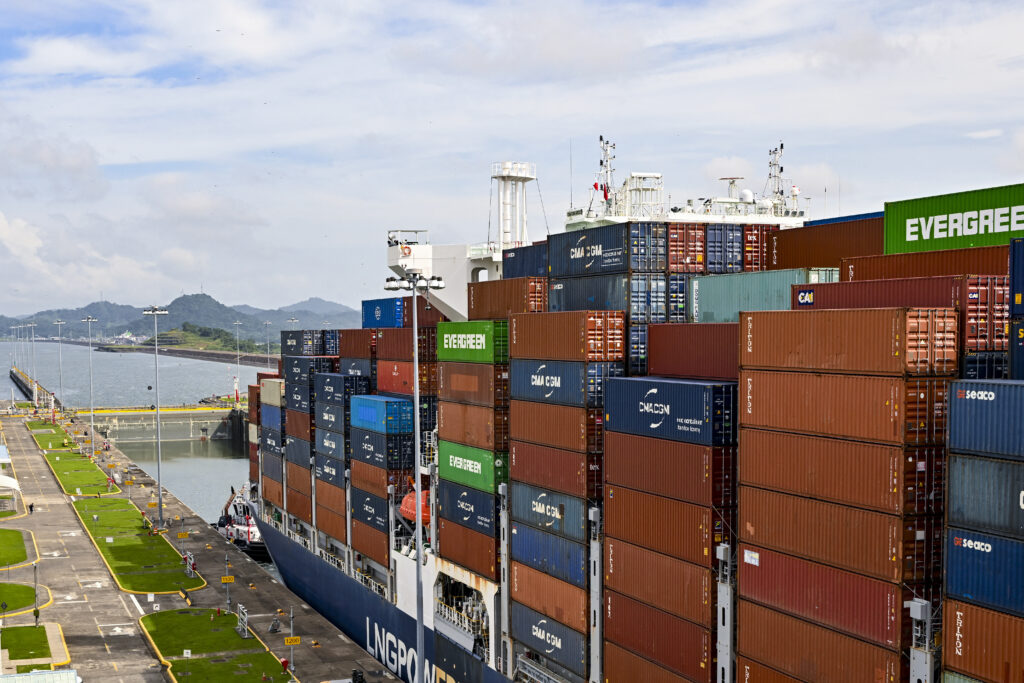
A second turning point is the accelerating “climate–ocean” coupling through shipping decarbonization. The International Maritime Organization has signaled a pathway toward an IMO Net-Zero Framework, with draft amendments moving through technical and political processes toward possible adoption. The governance significance is not rhetorical; it is structural. Once decarbonization is framed in rule-like terms, disputes shift to design and burden-sharing: the stringency and trajectory of standards, the allocation of compliance costs, technology pathways, and differentiated impacts across fleets, ports, and developing coastal states. Shipping, long treated as a sectoral issue, is increasingly an arena where climate goals, energy transition, and competitiveness interact directly with maritime governance.
A useful reminder from shipping governance is that legal ambition only becomes consequential through inspection routines and measurable compliance. Under MARPOL Annex VI and the Ballast Water Management Convention, outcomes hinge less on the existence of rules than on verification capacity, certification practices, and the density of port State control. In other words, the “hard part” of decarbonization and biosecurity is not norm-setting but building infrastructures of measurement, auditing, and enforcement that make evasion costly. If decarbonization is to become durable governance rather than episodic pledging, the decisive variable will be whether standards can be implemented in ways that are monitorable, comparable across jurisdictions, and resilient to competitive pressures.
Fisheries: from recognition to constraint—then to compliance and transparency
Third, fisheries governance is under growing pressure to move from pledge to constraint. The WTO Agreement on Fisheries Subsidies has been framed as a step toward disciplining support linked to IUU fishing and overcapacity—an issue widely acknowledged as politically difficult. Yet implementation is where the real politics begins: how IUU-related conduct is determined; how transparency, notification, and peer review work in practice; and how uneven enforcement capacity affects outcomes. In this sense, fisheries subsidies are becoming a test case for whether “rules on paper” translate into measurable behavioral change, rather than symbolic convergence.
Fisheries governance also offers a clearer illustration of how treaty design can relocate authority to enforceable chokepoints. The FAO Port State Measures Agreement (PSMA) targets IUU fishing not primarily through aspirational commitments, but by operationalizing port inspections, denial of port entry or services, and information exchange. Its effectiveness varies with administrative capacity, intelligence sharing, and the political willingness to apply controls consistently. Hence, subsidy disciplines and port-based enforcement underscore a broader point: fisheries governance increasingly lives or dies on transparency systems, inspection practices, and capacity-building—where the distribution of monitoring capability shapes the distribution of restraint.
Plastics: marine environmental governance becomes supply-chain governance
Fourth, plastics treaty negotiations underscore that marine environmental governance is increasingly supply-chain dependent. Negotiations toward a global instrument on plastic pollution have highlighted debates that extend well beyond waste management: upstream polymers and additives, product design and standards for recyclability, trade-related measures, extended producer responsibility, and the tracking of cross-border waste flows. The eventual effectiveness of any plastics instrument will hinge on what regulatory tools it contains and—critically—how transition costs are distributed among producers, consumers, and states with vastly different regulatory and fiscal capacities. A regime that is ambitious on paper but weak on traceability, enforcement, and finance risks shifting burdens rather than reducing pollution.
The same implementation logic is visible in existing ocean pollution governance. Basel Convention controls on transboundary movements of plastic waste show how trade-facing rules can reshape incentives through classification, notification, and enforcement at borders, yet uneven capacity can displace burdens rather than reduce pollution overall. Meanwhile, the London Convention and London Protocol highlight a different regulatory challenge: governing marine disposal and contested interventions through permitting, precaution, and liability—where scientific uncertainty amplifies disputes over evidence thresholds and responsibility. The plastics debate thus exemplifies implementation politics in its purest form: the hard questions are not only about environmental goals, but about verification, traceability, and who bears compliance costs across the supply chain.
Deep-sea mining: uncertainty governance under strategic and resource pressure.
Fifth, deep-sea mining continues to expose the hardest governance dilemma: managing profound scientific uncertainty under resource and strategic pressure. The International Seabed Authority remains central as the Mining Code continues to be negotiated, while broader political signals, including high-profile national decisions to slow, pause, or reassess seabed mining such as Norway’s, show how domestic legitimacy and risk perceptions can reshape trajectories. The core question is whether global institutions can define acceptable evidence thresholds, monitoring requirements, and liability expectations before large-scale extraction begins, rather than after ecological impacts become difficult to reverse. Deep-sea mining is therefore less a niche sectoral debate than a stress test of whether multilateral institutions can operationalize precaution and accountability when incentives for early mover advantage are strong.
The rise of “implementation politics”
The pattern is clear: ocean governance is moving into an “implementation politics” phase. In this phase, norms and procedures do not automatically stabilize order; instead, they become contested variables alongside capability and power. Data infrastructure, monitoring capacity, finance, and technology transfer are no longer peripheral; they are the mechanisms through which governance becomes real.
The Antarctic Treaty System offers a useful parallel. Under CCAMLR, ecosystem-based conservation and proposals such as large marine protected areas may be argued primarily on scientific grounds, yet outcomes often turn on consensus decision rules, compliance tools, and the distributional politics of fishing access. The Antarctic reminder is straightforward: institutional procedure and enforcement capacity can be as decisive as substantive ambition.

US and China must team up to keep maritime trade routes free and safe