

January 23, 2026
Volume 6
Issue 2
ICAS Trade ‘n Tech Dispatch (online ISSN 2837-3863, print ISSN 2837-3855) is published about every two weeks throughout the year at 1919 M St NW, Suite 310, Washington, DC 20036.
The online version of ICAS Trade ‘n Tech Dispatch can be found at chinaus-icas.org/icas-trade-technology-program/tnt-dispatch/.
What's Been Happening
-1-
Trump Kicks off New Year with Tariff Threats
-1-
In One Sentence
- Tensions between the United States and Europe rose after U.S. President Donald Trump threatened 10% tariffs on eight European allies from February 1 over their opposition to his bid to take over Greenland but he later relented, agreeing to a “framework of a future deal.”
- In his speech at the World Economic Forum in Davos, Trump demanded “immediate negotiations” to acquire Greenland but ruled out using force, saying if Europe doesn’t agree, the U.S. “will remember” it.
- In retaliation against Trump’s Greenland threats, the EU lawmakers suspended the ratification of last year’s U.S.-EU trade deal as European Commission President Ursula von der Leyen called Washington’s demand a “mistake,” but lawmakers have since restored the deal’s consideration following Trump’s deescalation on Greenland.
- On January 12, Trump also threatened to impose a 25% tariff on “any country” doing business with Iran, a move that could affect U.S. trade with China, India, the UAE, the European Union, and others.
- On January 14, Trump imposed a 25% tariff on certain AI chips following a Section 232 probe while providing exceptions for semiconductors required for data centers in the U.S.
Mark the Essentials
- Trump claimed that the “framework” of a deal over Greenland includes the Golden Dome missile defense system deployment and critical minerals.
- Speaking at the World Economic Forum in Davos, French President Emmanuel Macron criticized U.S. tariff threats, saying that “endless accumulation of new tariffs are fundamentally unacceptable” while U.S. Treasury Secretary Scott Bessent advised Europe to “sit back, take a deep breath. Do not retaliate.”
- After issuing the Iran tariff threat, the Trump administration did not follow up with an official order and has appeared to back down after the President claimed that the Iranian regime is no longer killing protesters.
- The new 25% chip tariffs will be applied to China-bound Nvidia H200 chips and would require the shipment to make a detour from Taiwan to the United States first and then be transported to China.
- However, on January 14, Reuters reported that Chinese customs authorities have barred H200 chips from entering China and instructed domestic tech firms not to buy them unless authorized by higher authority on the basis of necessity.
- The Trump administration has delayed new tariffs on critical minerals for 180 days following a Section 232 investigation, putting allies and trade partners on notice to negotiate agreements with the U.S. to secure mineral supply chains and avoid levies.
- China has bought about 12 million tons of U.S. soybeans over the past three months, meeting a key pledge of the Xi-Trump Busan truce truce, with Bessent saying Vice Premier He Lifeng confirmed the purchases and added, “we’re looking to next year’s 25 million tons.”
- China’s economy grew 5.0% in 2025, with the country’s trade surplus reaching a record $1.2 trillion as a 20% fall in exports to the U.S. was compensated by an increase with the rest of the world.
- In Davos, Chinese Vice Premier He Lifeng said that the country doesn’t seek a trade surplus and is willing to be “the world’s market” and “more vigorously” expand imports.
Keeping an Eye On…
A new year, same old shakedowns. With the liberal use of tariffs as industrial policy, followed by a couple of blinks thereafter, welcome to 2026.
On January 12, Trump wrote “effective immediately, any country doing business with the Islamic Republic of Iran will pay a Tariff of 25% on any and all business being done with the United States of America,” on Truth Social. Not a single tariff on any country has been imposed since that date, and the Truth Social post has not been authorized or replicated in any White House or U.S. government document.
On January 14, a Section 232 national security investigation on imports of processed critical minerals and their derivative products found that the U.S. was 100% net-import reliant for 12 critical minerals and 50% or greater net-import reliant for a further 29 critical minerals. With zero leverage, Trump did the unthinkable. He set aside unilateral measures for the time being in favor of initiating a work program with allies and partners to promote the adoption of price floors for trade in these minerals and derivative products. A first-ever critical minerals ministerial is to be convened in early February in Washington, D.C.
Taiwan, Washington’s quasi-ally, was not as lucky. On January 15, President Trump hustled them for $500 billion worth of direct semiconductor investments and credit guarantees in exchange for a reciprocal tariff rate “no more than 15%”, but excludes tariffs on Taiwanese chips destined for U.S. data centers. For those counting, that’s equivalent to $21,740 per Taiwanese national. Of course, a good chunk of these promised commitments will never come to fruition, but who cares? Trump gets to claim success. The Biden administration had managed to incentivize tens of billions of semiconductor manufacturing investments via its CHIPS Act-linked grants and tax credits whilst President Trump plans to gain hundreds of billions of semiconductor manufacturing investments via his reciprocal tariffs. We shall see.
On January 14, Trump issued an executive order imposing immediate 25% additional duties on the import of certain advanced computing chips and derivative products, following the transmittal of a December 2025 Section 232 report on the threat to national security from chip imports. However, let’s not be fooled. These tariffs have little to do with industrial policy or the domestic buildout of the semiconductor supply chain. Rather, they are the cut that the administration will take from Nvidia’s and AMD’s sale of H200 and MI325X chips, respectively, to China. As America’s founders decided that direct export taxes were unconstitutional, the administration has structured the transaction in such a way to take its cut when the fabricated chips are imported from Taiwan for required lab testing prior to their export to China. As for the more favorable license application review policy for export of H200 and MI325X chips to China from presumption of denial to case-by-case review, that was announced by the Commerce Department and followed by a presidential proclamation after.
Finally, on January 17, President Trump took to Truth Social to announce the imposition of tariffs on eight European countries that would be “due and payable until such time a Deal is reached for the Complete and Total purchase of Greenland,” only to revive TACO (Trump Always Chickens Out) chants five days later. Greenland will not be acquired by force or through economic coercion. In fact, it won’t be acquired at all. Truth Social once again proved to be a platform for trash talk and not much else. At no time during the five days when the tariff threat and worse hung over Europe and Greenland did any U.S. government website formally document the threat.
Three weeks into 2026 and the madness has only just begun. Stay tuned!
Expanded Reading
- Trump Backs Off Greenland Tariffs, Citing Framework Deal, Bloomberg, January 21, 2026
- Trump rules out using military force to acquire Greenland in Davos speech, ABC News, January 21, 2026
- E.U. halts approval of U.S. trade deal after Trump’s Greenland tariff threat, NBC News, January 21, 2026
- China tells Davos forum it never pursued trade surplus, vows to import more, Reuters, January 20, 2026
- China’s Soy Purchases Hit 12 Million Tons to Meet US Pledge, Bloomberg, January 19, 2025
- EU scrambles to avert Trump Greenland tariffs, prepares retaliation, Reuters, January 19, 2026
- “The order never came”: Behind the scenes of Trump’s Iran pullback, Axios, January 18, 2026
- China blocks Nvidia H200 AI chips that US government cleared for export – report, Guardian, January 17, 2026
- Trump imposes 25% tariff on imports of some AI chips, Reuters, January 15, 2026
- Trump sets 180-day deadline to counter China’s control of critical minerals, SCMP, January 15, 2026
-2-
EU Goes into Overdrive on Trade; China and Canada Follow
-2-
In One Sentence
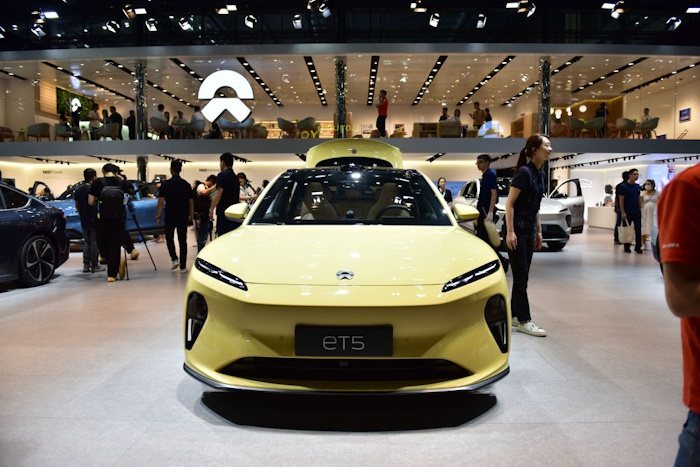
- The European Commission on January 12 said Chinese electric vehicle makers can avoid EU tariffs by offering model-specific minimum price commitments that fully offset subsidy effects, while China welcomed the guidance as a basis for resolving the dispute through dialogue.
- Canada agreed to cut its 100% tariff on Chinese electric vehicles to 6.5% in exchange for sharply reduced Chinese tariffs on Canadian canola seeds, pairing the deal with a capped EV import quota of 49,000 vehicles and expectations of future Chinese investment in Canada’s auto industry.
- EU and Mercosur leaders on January 17 signed a free trade agreement in Paraguay to lower tariffs and expand commerce between the two blocs, with the deal now referred to the European Court of Justice for a ruling on its environmental and consumer health provisions, among others.
- The EU is preparing a proposal to make the phase-out of Chinese-made equipment from critical infrastructure mandatory, potentially forcing telecom and solar networks to remove suppliers such as Huawei and ZTE on risk-based timelines.
Mark the Essentials
- Canadian Foreign Affairs Minister Anita Anand on January 14 said that Canada expects to double its non-U.S. trade over the next 10 years. President Trump’s unpredictable tariffs and shifting U.S. trade posture have made Washington a less reliable partner, forcing Ottawa to diversify its markets with China.
- Trump administration officials criticized Canada’s decision to allow up to 49,000 Chinese EV imports, warning Ottawa would “regret” the deal and emphasizing that those vehicles would be barred from entering the U.S. market.
- On January 20 in Davos, Canadian Prime Minister Mark Carney warned that the “old order” has been ruptured and urged middle powers to unite against great-power economic coercion, while reaffirming Canada’s support for Greenland, Denmark, and NATO’s collective defense commitment.
- The next day, President Trump criticized Prime Minister Carney, saying that Canada “lives because of the United States” and the country should be “grateful”.
- Chinese firms sharply increased use of the euro for cross-border settlements in 2025, with euro-denominated payments rising 22.8% to 1.18 trillion yuan as China-EU trade grew despite escalating geopolitical frictions.
Keeping an Eye On…
According to President Trump and his base, the globalist line of thinking has been an unparalleled disaster for America. Maybe in some ways, maybe not. For most of the other key trade players in the global system, the sentiment is more-or-less the opposite. Witness the flurry of major trade opening and preferential trade liberalization conversations over the past two weeks. More, not less, interdependence is generally the theme, even as countries aim to build supply chain resiliency into the mix and carve out critical infrastructure sectors from trade exchanges.
On January 12, the European Commission issued a Guidance Document on the submission of price undertaking offers in the context of the EU’s anti-subsidy duties on battery electric vehicles (BEVs) from China, suggesting that Brussels and Beijing share a consensus on the pathway forward for expanded access of Chinese BEV exports to the bloc. The Guidance Document appears to reflect a slight easing by Beijing from its previous position that Brussels accept a single minimum import price (MIP) for a wide variety of product models. Each individual manufacturer will now instead furnish an MIP offer. To be fair, three China-based exporters had already offered alternative price undertakings as far back as Fall 2024. The injurious effects of subsidization aside, the EU’s countervailing duties are aimed at buying time for domestic manufacturers to build economies of scale so as to decrease their unit cost of production and survive in the EU marketplace. Protectionist as it may sound, it also means that the price undertaking discussions could be a drawn-out affair. But the bottom line is clear: Chinese BEVs are welcome as competitors within the bloc. Chinese automakers have been outnumbering locals at European auto shows, unlike the case in the U.S. where they are shut out.
From January 15-18, Canada’s Prime Minister Mark Carney paid a successful ‘ice-breaking’ visit to China, striking a preliminary agreement-in-principle that will see Ottawa cut tariffs on Chinese EV’s with 49,000 vehicles qualifying for Canada’s MFN rate of 6.1% (the existing tariff is 100%). In exchange, China is to lower tariffs on Canadian canola seed to 15% from the current 85%, as well as suspend its anti-discrimination levies on Canadian lobsters, crabs, and peas. Long term, the goal is to increase two-way investment in the clean energy, agri-food, and wood products sectors. PM Carney’s pragmatic approach to Beijing follows in the vein of Australia’s Albanese. Conversely, Australian export fate is deeply intertwined with the China market which is not the case with Canadian exports, as they are overwhelmingly North America and U.S. market focused. With the USMCA review process due to kick-in later this June, and with the U.S. side insisting that Canada and Mexico strengthen their rules of origin for industrial goods as well as align tariffs, export controls and investment screening with U.S. tariffs, controls, and rules, Carney will have a tricky balancing act to pull off.
Finally, on January 17, twenty-five years after the start of initial negotiations, the EU signed a trade agreement with the Mercosur trade bloc of Argentina, Brazil, Paraguay and Uruguay, creating one of the world’s largest free trade zones. The deal still needs to be legally vetted by the European Court of Justice but may be provisionally implemented as early as March. The agreement removes import duties on 91% of EU goods exported to the bloc. For Mercosur, the EU is its second largest goods trading partner, behind China and ahead of the U.S.
And the EU may not be done yet. On January 26, EU Commission President von der Leyen and European Council President Costa will stand in as guests of honor at India’s 77th Republic Day celebrations, which is to be followed by a high-level summit the next day where the two sides may manage to cross the T’s and dot the I’s to get their long-negotiated free trade agreement across the line. If successful, the deal would create a gargantuan trade zone.
Trade globalism may not be the unparalleled disaster that President Trump imagines it to be. The Europeans, and many others, certainly think otherwise. But are the powers-that-be within the Beltway listening?
Expanded Reading
- Trump takes aim at Canada after Carney’s Davos speech, The Washington Post, January 21, 2026
- Carney says old world order ‘is not coming back’, BBC, January 21, 2026
- Carney’s China Embrace Widens Gap With US in Trump’s Tariff Era, Bloomberg, January 17, 2026
- EU moves to force the phase-out of Chinese suppliers from key infrastructure, FT reports, Reuters, January 17, 2026
- EU and Mercosur sign trade deal after 25 years of negotiations, Reuters, January 17, 2026
- Canada agrees to cut tariff on Chinese electric vehicles in break with the U.S., CBS News, January 16, 2026
- US says Canada will regret decision to allow Chinese EVs into their market, Reuters, January 16, 2026
- China’s Euro Settlements Jump Most Since 2010 on EU Trade Boom, Bloomberg, January 16, 2026
- Canadian Prime Minister Mark Carney begins landmark 4-day visit to China to mend ties, Associated Press, January 14, 2026
- Trump says USMCA is irrelevant for US, Reuters, January 13, 2026
- EU sets out firm conditions for China EVs to avoid tariffs, Reuters, January 12, 2026
On the Hill
Legislative Developments
- House Ways & Means Committee member Beth Van Duyne (R-TX) introduced the Fair Trade Act of 2026 on January 8. The bill would codify parts of the Trump administration’s tariff approach by mandating additional 15% tariffs on imports from countries with U.S. trade surpluses and 10% tariffs on those with deficits, while allowing the president to reduce rates after consulting Congress.
- On the same day, the House passed a short-term funding “minibus” that boosts FY2026 spending for the EPA, NASA, and the Departments of Energy, Justice, Interior, and Commerce. Independent trade agencies including USTR and the Commerce Department’s Bureau of Industry and Security would also be funded, along with federal science and water programs.
- The House on January 12 passed the Remote Access Security Act amendment 369–22 to give the Commerce Department’s BIS authority to restrict remote cloud access to U.S. chips, aiming to close loopholes that lawmakers say enable China to use American semiconductor technology.
- The House on January 14 passed a $76.6 billion FY2026 two-bill appropriations package funding Financial Services and National Security-State agencies, sending it to the Senate.
- The Senate on January 15 passed an $180 billion, three-bill FY2026 appropriations package combining the Commerce-Justice-Science, Interior-Environment, and Energy-Water funding bills and sent it to President Trump for signature.
- Congress on January 20 released a bipartisan package to fully fund the Departments of Defense, Labor, Health and Human Services, and Homeland Security, but the package is facing major Democratic opposition over Homeland Security provisions that fund ICE with limited accountability measures.
- The House Foreign Affairs Committee on January 21 overwhelmingly advanced the AI Overwatch Act, which would let key congressional committees review and potentially block licenses for advanced AI chip exports to China and other U.S. adversaries. The bill would also ban Nvidia’s top-end Blackwell chips. The White House has expressed opposition to the bill.
- The House still needs to pass spending bills for Defense, Labor-HHS-Education, and Transportation-HUD bills. The Homeland Security appropriations bill has not been finalized or passed yet, and lawmakers are preparing a possible continuing resolution for it if negotiations run past the Jan. 30 deadline.
Hearings and Statements
- Rep. John Moolenaar (R-MI) on January 15 warned that global shortages of high-bandwidth memory used in Nvidia’s H200 chips risk diverting scarce components from U.S. customers to support sales to China, therefore constraining the BIS export approval of the chip.
- The Select Committee on the CCP’s report on January 15 claims China keeps seafood processing costs far below U.S. rivals by combining subsidized Russian fish supplies with tariff exemptions and systematic duty evasion, enabling cheaper exports that undercut U.S. processors and increase U.S. dependence.
- Two House Republicans on January 12 said they will keep pressing South Korea to stop what they call unfair targeting of U.S. tech firms, especially Coupang, as Trade Minister Yeo Han-koo visits Washington to address concerns over Korea’s digital legislation and implementation disputes tied to the 2025 trade and investment deal. Notably, Coupang was involved in a personal data leak of 33 million South Korean users and is looking to shield itself from consequences at home by passing itself off as a U.S. tech firm.
Expanded Reading
- US House panel advances bill to give Congress authority over AI chip exports, Reuters, January 21, 2026
- Congress releases massive funding bill ahead of shutdown deadline as ICE clash looms, NBC News, January 20, 2026
- Six fiscal 2026 spending bills done, six more to go, Roll Call, January 15, 2026
- Memory Shortage to Hit Nvidia China Approvals, US Lawmaker Says, Bloomberg, January 15, 2026
- China’s Fishing Offensive: How China’s Fishing Fleet Monopolizes Food Around the World, The Select Committee on the CCP, January 15
- House passes second spending package with more bills in pipeline, Roll Call, January 14, 2026
- House Legislation Would Codify Additional Tariff on Imports, HKTDC Research, January 14, 2026
- House Passes Bipartisan Legislation to Limit Adversaries’ Remote Access to Critical Technology, The Select Committee on the CCP, January 12, 2026
- Exclusive: South Korea’s Trade Minister Meets U.S. Tech Critics, The Chosun Daily, January 12, 2026
- House passes three-bill spending package with weeks left to avoid a shutdown, Politico, January 8, 2026