

Cover Image: Official White House Photo
On February 20, 2026, the Supreme Court ruled on the legality of the Trump administration’s reciprocal as well as trafficking tariffs in one of the most consequential trade policy cases heard by the court. At issue was the president’s authority under the International Emergency Economic Powers Act (IEEPA) to levy tariffs – of unbounded scope if need be – after declaring a national emergency to address a threat to the nation’s security during peacetime.
The Trump administration had argued that the multi-decades-long and large goods trade deficits constituted “an unusual and extraordinary threat to the U.S.’ national security,” now that these deficits had reached “a tipping point.” In light of the threat to the U.S.’ economy, military preparedness and national security, and based on an expansive reading of his foreign and delegated trade policy powers, the president declared an emergency and imposed IEEPA-authorized tariffs on the U.S.’ trade partners as he saw fit.
The petitioners in Learning Resources, Inc. v. Trump argued that the IEEPA, and specifically its “regulate … importation” language, did not authorize the president to impose tariffs and that by doing so he had exceeded the statutory limits of his authority. Furthermore, a tariff was a tax levied on imported goods and services and that taxing power – without clear congressional authorization – resided with the legislature, not the executive.
The Supreme Court sided with the petitioners. It ruled that IEEPA did not empower the president to impose tariffs because the president, lacking the inherent authority to do so during peacetime, did not obtain congressional authorization. The administration’s claim that the IEEPA-based tariffs were “regulatory tariffs,” not “revenue tariffs,” was also dismissed, given that Congress had never used the word “regulate” to authorize a tax. Furthermore, IEEPA had never been read by previous presidents since its passage to confer tariff-imposition authority, which was a telling indication that the tariffs extended beyond the president’s legitimate reach.
The court’s opinion is considerably more emphatic in its treatment, and takedown, of the president’s authority to impose any tariffs at all utilizing IEEPA’s “regulate … importation” language. The Federal Appeals Court had danced around this question of the IEEPA’s authorities in August 2025, confining itself only to whether the current reciprocal and trafficking tariffs were authorized under IEEPA. It concluded they were not. And the Court of International Trade earlier in May 2025 had read the “regulate … importation” language as providing “limited authority” to impose tariffs but had struck down the president’s reciprocal tariffs on the basis of their unboundedness as well as their lack of compliance with the limitations set by Congress upon the president’s power to respond to balance-of-payments deficits.

The day of reckoning for President Donald Trump’s ‘Liberation Day’ reciprocal tariffs has arrived.
On February 20, 2026, the Supreme Court ruled on the legality of the reciprocal as well as trafficking tariffs in one of the most consequential trade policy cases heard by the court. At issue in Learning Resources, Inc. v. Trump was the president’s authority under the International Emergency Economic Powers Act (IEEPA) to levy tariffs – of unbounded scope if need be – after declaring a national emergency to address a threat to the nation’s security during peacetime. No president has imposed a tariff invoking this authority since the statute’s enactment in 1977. Congress, it bears remembering, is constitutionally vested with the inherent power to regulate foreign commerce. Had the Supreme Court nevertheless affirmed the president’s authority to do so in the case, the ruling would have conferred sweeping powers to the executive over the domestic economy via the tariff lever. Having repudiated the tariffs, the president will now have to scramble to find other delegated statutory authorities, such as Sections 122 and 301 of the Trade Act of 1974 and Section 232(b) of the Trade Expansion Act of 1962, to impose roughly equivalent tariffs on trading partners as well as have to wade into the messy business of litigation while issuing refunds to affected U.S. importers. Pivotal questions of constitutional law and presidential power were on the line.
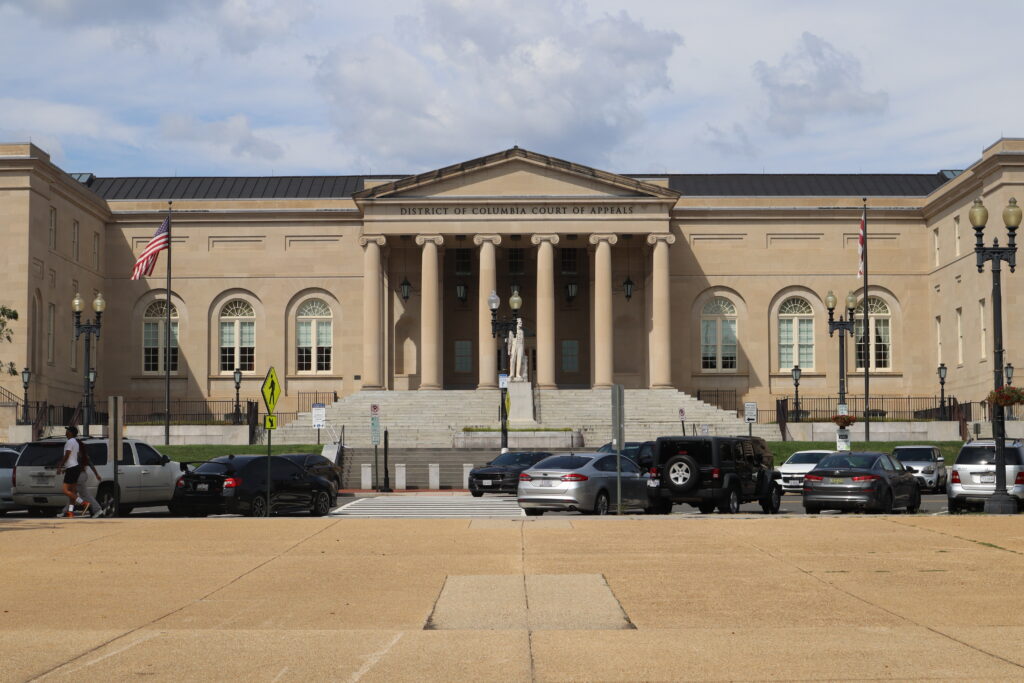
The Trump administration’s submission before the Supreme Court in Fall 2025 and, earlier, before the Court of Appeals for the Federal Circuit this past summer and the U.S. Court of International Trade this past spring, were internally watertight and deceptively simple. The multi-decades-long and large goods trade deficits had ceased to be a mere trade policy matter and constituted “an unusual and extraordinary threat to the U.S.’ national security,” now that these deficits had reached “a tipping point.” By hollowing out the manufacturing base, undermining critical supply chains, and rendering the U.S.’ defense industrial base dependent on foreign adversaries, the persistent deficits constituted a full-blown foreign and national security policy emergency. In foreign and security policy matters, the president enjoys expansive emergency powers, including tariff imposition powers that are codified in IEEPA, to address the threat after declaring a national emergency as set out in the National Emergencies Act. In light of this threat to the U.S.’ economy, military preparedness and national security, the president declared an emergency and imposed IEEPA-authorized tariffs on the U.S.’ trade partners as he saw fit.
On November 5, 2025, the Supreme Court heard oral arguments for and against the administration’s IEEPA-based tariffs. The legitimacy of the emergency declaration and the adequacy of the president’s response to the threat were not at issue; these are nonjusticiable political questions which the court lacked the jurisdiction to consider. The key question – or questions – rather that were deliberated upon, distilled to their essence, were: (a) does the president enjoy the authority to levy tariffs under the International Emergency Economic Powers Act; and (b) if so, does the president enjoy the authority to levy tariffs that are unbounded in scope, amount and duration?
The International Emergency Economic Powers Act (IEEPA) authorizes the president, upon the declaration of a national emergency in peacetime , to “regulate … [the] importation or exportation of … any property in which any foreign country or a national thereof has any interest …” Nowhere in the drafting of the IEEPA does the word “tariff,” or its relative, a “duty” or “tax” appear. The petitioners and their backers argued this was proof that Congress did not intend to delegate this power to the president to impose tariffs when drafting the statute. Congress uses clear and precise terms, after all, when delegating tariff authority, as is the case with trade policy authorities such as Section 338 of the Tariff Act of 1930 and Sections 122 and 301 of the Trade Act of 1974, and imposes specific substantive limitations and procedural guidelines, which are lacking too in the IEEPA case. The president’s power to “regulate … importation” under the IEEPA extends, thus, only so far as non-monetary measures, such as embargoes and quotas, and that the power to tariff (which is a form of taxation) is distinct from the power to regulate, and that the former is not always incident to the latter.
The government rebutted this proposition by arguing that it was the trade policy purpose and outcome, not instrument, that mattered. The phrase “regulate … importation” is a “capacious concept” which encompasses a variety of mechanisms, including tariffs, that could affect import quantities and prices. In Fed. Energy Admin. v. Algonquin SNG, Inc. (1976), the Supreme Court had affirmed that a monetary method, such as a license fee, was just as acceptable as a non-monetary method, such as a quota, to adjust imports. Algonquin had made no specific mention of the word “tariff” or “duty,” yet implied that it was just as relevant a tool to regulate imports. Besides, if IEEPA can authorize a president to institute an embargo against a country or countries, why should it from the standpoint of logic be read as incapable of authorizing a lesser measure, such as a tariff? Doing so would render IEEPA “an implausible statutory doughnut under which the President could take virtually any action, large or small – from total embargoes to small-bore regulatory measures – except tariffs.”
The International Emergency Economic Powers Act was enacted in the broader context of the mid-1970s reevaluation, and reining-in, of the extant WWI-era Trading with the Enemy Act’s (TWEA) expansive delegations of emergency authority to the president to exercise control over private international economic transactions. This delegation had included the authority to impose emergency tariffs under Section 5(b) of TWEA – an authority President Nixon asserted in 1971 to impose a controversial, across-the-board 10 percent import surcharge on all dutiable imports. The petitioners and their backers argued that Congress, by repealing the TWEA and replacing it with the Trade Act of 1974, which for the first time gave the executive explicit authority to revise tariffs in response to “large and serious United States balance-of-payments deficits,” knowingly voided the president’s authority to impose tariffs under a generalized emergency statute like IEEPA for trade deficit purposes. The President’s authority to impose such tariffs was now, to the contrary, cabined by Congress within a non-emergency statute that was procedurally specific, narrower, and time-limited (Section 122 of the Trade Act of 1974). As such, the “regulate… importation” language in IEEPA could not be stretched by the executive to include, let alone justify, an emergency-based tariff, such as the president’s reciprocal tariffs.
The government rejected this contention by noting that the operative language in IEEPA was drawn directly from TWEA and the authorities granted to the president under IEEPA are essentially the same as those under TWEA. Modeled as it was on TWEA, IEEPA’s authorization to “regulate … importation” must thus from the standpoint of continuity encompass the authority to impose tariffs (as was the case in 1971). This does not mean that the Trade Act of 1974, and specifically Section 122 of the Act, is not pertinent. Both IEEPA and Section 122 could coexist in their own spheres, side-by-side. What Section 122 of the Trade Act of 1974 could not do, however, is displace the president’s emergency tariff authority under IEEPA. More to the point, the government argued, Congress was aware at the time of drafting that the Court of Customs and Patent Appeals (CCPA), the appellate court in United States v. Yoshida Intl, Inc. (1975) and the predecessor to the U.S. Court of Appeals for the Federal Circuit, had upheld the Nixon tariffs and, by extension, TWEA’s Section 5(b) “regulate … importation” language to authorize the president to exercise this tariff authority. And Congress proceeded to enact the same language in IEEPA, suggesting that it unambiguously understood the “regulate … importation” language to encompass tariffs. This contemporaneous understanding should also put to rest any quibbling regarding the applicability of the major questions doctrine in this instance. IEEPA-based tariffs cannot be “unheralded” because its “regulate … importation” basis was known, tested and upheld in a court of law. A “measure of skepticism” is not warranted either since in an emergency as well as in a foreign and security policy context, Congress would be expected to confer broad authority to the president.
It has been a cardinal tenet of the Anglo-American constitutional tradition, ever since the Glorious Revolution, that the authority to lay taxes must reside with the people, duly represented in elected bodies at regular intervals. The executive may issue regulations for the efficient administration of the state, including regulations of a monetary nature, but revenue-raising measures that “reach into the pockets” of the people must originate within these elected bodies. In keeping with this axiom, Article I, Section 8 of the Constitution vests Congress with the power to lay and collect taxes, duties, imposts and excises, as well as regulate commerce with foreign nations.
The petitioners and their backers argued that the reciprocal tariff, paid as they substantially are by the American people – consumers, importers and mid-sized firms – and which the president himself has bragged is hauling in a gusher of revenues, violated this cardinal tenet. The executive had, in effect, “without clear congressional authorization, twist[ed] a statute (the International Emergency Economic Powers Act) that nowhere uses the magic words tax or revenue, into a gigantic revenue measure.” Given the president’s inherent lack of authority over tariffs in peacetime, the measure amounted to a sweeping grant of authority far beyond what Congress could plausibly have contemplated when drafting the IEEPA. To do so knowingly and without supplying “an intelligible principle to guide the delegee’s use of delegation” would violate the nondelegation doctrine too, which bars Congress from transferring its legislative power to another branch of government. As a backdoor domestic tax with vast potential to redraw the nation’s economic map, the tariff also implicates the major questions doctrine. The petitioners, furthermore, noted that with the Supreme Court raising the bar in INS v. Chadha (1983), a two-thirds majority was now required in Congress to override the president’s veto and terminate the underlying national emergency. Delegated powers that cannot be retrieved must not be – and could not have been – transferred, in the first place.
The government responded by arguing that the reciprocal tariffs in question were “regulatory tariffs” on foreign imports rather than domestic revenue-raising taxes. The executive’s levying of emergency tariffs under delegated authority sat comfortably within the Anglo-American constitutional tradition so long as the duties were intended for regulatory purposes – as they were in this instance to build out the manufacturing base and alleviate the threat to the U.S.’ economy, military preparedness and national security. Extensive emergency duties can be imposed by the president in the exercise of the delegated authority to regulate foreign commerce. And the sums being generated were incidental to the overall regulatory purpose and not intended to produce revenue, despite the false equivalence drawn between domestic revenue-raising taxes and regulatory tariffs on foreign imports. As for the major questions doctrine and the nondelegation doctrine, respectively, the former had never been applied to the president’s authority to address national security interests, especially in an emergency context, and the latter had been found to be excessive only twice (and that too in a single year) by the Supreme Court in the nation’s history. It was a low bar to surmount. IEEPA-based tariffs, based as they are on the conferral of broad authority as well as an “intelligible principle” – an identifiable policy with built-in limitations – satisfied both doctrines.
Lastly, the petitioners noted that the Court of Customs and Patent Appeals’ acceptance of the emergency balance-of payments tariffs imposed by President Nixon in United States v. Yoshida Intl, Inc. (1975) was premised on their limits in terms of scope, amount and duration. Indeed, the court went out of its way at the time to contrast presidential conduct it found permissible within the power granted by Section 5(b) of TWEA – “a temporary measure calculated to help meet a particular national emergency” that was limited in scope and amount – with conduct it found impermissible under TWEA – “imposing whatever tariff rates [the president] deems desirable”. Doing otherwise would have invoked constitutional infirmities. The current president’s reciprocal tariffs that draw upon TWEA’s Section 5(b) precedent were, by contrast, open-ended and amounted to an unbounded levy in terms of scope, amount and duration. They could not be allowed to stand. The government’s rejoinder to this point continued to draw on its major-questions doctrine and the nondelegation doctrine defenses.
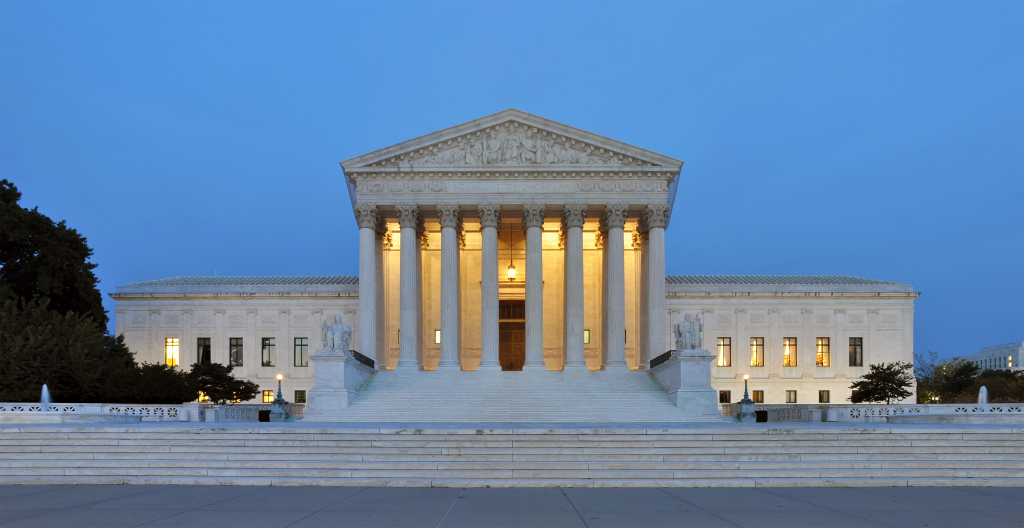
On February 20, 2026, the Supreme Court ruled 6-3 in favor of the petitioners in Learning Resources, Inc. v. Trump, with Chief Justice Roberts delivering the majority opinion. The U.S. Court of Appeals for the Federal Circuit and the U.S. Court of International Trade had earlier sided 7-4 and 3-0 in August 2025 and May 2025, respectively. The court ruled that the International Emergency Economic Powers Act (IEEPA), and specifically its “regulate … importation” language, does not authorize the president to impose tariffs and that by doing so he had exceeded the statutory limits of his authority. Further, the unboundedness of the president’s reciprocal and trafficking tariffs, viewed in their historical and constitutional context and if allowed to stand, would represent a “transformative expansion” of the president’s trade policy authority that is violative of both constitutional structure and common sense. The court’s opinion is considerably more emphatic in its treatment, and takedown, of the president’s authority to impose any tariffs at all utilizing IEEPA’s “regulate … importation” language. The Federal Circuit had danced around this question of the IEEPA’s authorities, confining itself only to whether the current reciprocal and trafficking tariffs were authorized under IEEPA. It concluded they were not. And the Court of International Trade earlier had read the “regulate … importation” language as providing “limited authority” to impose tariffs but had struck down the president’s reciprocal tariffs on the basis of their unboundedness as well as their lack of compliance with the limitations set by Congress upon the president’s power to respond to balance-of-payments deficits.
The Supreme Court’s ruling rests on three overarching points of principle and fact.
First, IEEPA’s grant of authority to “regulate … importation” did not empower the president to impose his reciprocal and trafficking tariffs because the president, lacking the inherent authority to impose tariffs during peacetime, did not enjoy or obtain congressional authorization in their regard. Congress enjoys the prerogative to regulate foreign commerce. When it delegates the authority to the president on tariffs, it consistently uses clear and precise terms such as “duty” in the relevant statute. Even in the case of Fed. Energy Admin. v. Algonquin SNG, Inc. (1976), which the government holds up as an example of broadly delegated authority to “adjust imports” (Section 232(b) of the Trade Expansion Act of 1962) utilizing a monetary tool (license fees, in this instance), the preceding provision of that relevant section – Section 232(a) – had explicitly referred to “duties”. It was natural, thus, to imply that Section 232(b) would authorize duties to adjust imports. IEEPA contains no such reference to “duties” or “tariffs”. To the contrary, the breadth of the delegated authority claimed by the president under IEEPA, i.e., the unbounded ability to impose tariffs on imports “from any country, of any product, at any rate, [and] for any amount of time,” would represent a “transformative expansion” of the executive’s tariff authority on the basis of an ambiguous statute – a classic instance of a major questions case. That such authority in an ambiguous statute, furthermore, could be reined-in only via a veto-proof majority in Congress makes it all the more improbable that Congress, in the context of separation of power principles and the practical understanding of legislative intent, would have purposefully delegated it to the executive. An “extraordinary delegation of Congress’ powers” requires explicit Congressional authorization and the IEEPA and its “regulate … importation” language fails to meet this standard. And as for the government’s proposed emergency and foreign affairs exceptions, they do not lower the bar. Emergency powers in the grasp of the executive, after all, have a tendency to kindle emergencies.
Second, IEEPA-based tariffs are not, and cannot be, “regulatory tariffs” as claimed by the government since Congress has never used the word “regulate” to authorize a tax – a tariff being nothing more than a tax levied on imported goods and services. The government contends that the tariffs in question are “regulatory tariffs,” not “revenue tariffs,” on foreign imports and that the revenues generated are only incidental to their purpose of addressing the national emergency caused by the large and persistent goods trade deficits. However, the power to tax and – by extension, the power to levy a tariff – is distinct from the power to regulate. It does not follow that the power to regulate something includes the power to tax it as a means of regulation. In fact, when Congress addresses both these powers, regulation and taxation, it does so “separately and expressly.” Relevant to IEEPA, the fact that Congress did not grant those authorities separately is evidence that the “regulate” in IEEPA was not meant to include the power to tax (i.e., levy a tariff). The government can point to no statute either in which the power to regulate includes the power to tax. And, therefore, going by an ordinary reading of the words “regulate … importation” in IEEPA, it is most implausible that Congress would have chosen to invisibly delegate its most consequential “birth-right power” – the power to tax – to the executive.
Besides, the plain language of IEEPA authorizes the regulation of both “importation or exportation.” Taxing exports is, however, expressly forbidden by the Constitution per Article I, Section 9, Clause 5. It stands to reason that the same regulatory treatment was meant to be afforded to imports under IEEPA, i.e., Congress did not intend to use the term “regulate” in IEEPA to entail a revenue-raising power (tariffs on imports). For it would be “a wild textual stretch to say that the word ‘regulate’ means ‘regulate for revenue purposes’ for imports but means the exact opposite for exports.” A tariff, it just so happens, is different in kind, not degree, from the other authorities in IEEPA. Though it is less extreme than some of the other prohibitions listed in IEEPA, it does not follow that it lies on the spectrum between the poles. There is no proverbial “odd donut hole” in the statute. It is instead “very clearly … a branch of the taxing power” and the president cannot simply commandeer this authority without explicit congressional authorization.
Finally, IEEPA has never been read by the president since its passage to confer such tariff-imposition authority. In the half-century of the statute’s existence, it has never been invoked by a president to impose a tariff – let alone tariffs of the magnitude of the reciprocal tariffs. This was a telling indication that the tariffs extend beyond the president’s legitimate reach. The one instance of its authorized application furthermore – the Court of Customs and Patent Appeals’ reading of the Trading with the Enemy Act’s (TWEA) “regulate … importation” language in United States v. Yoshida Intl, Inc. (1975) to uphold President Nixon’s limited tariffs – is an insufficient basis to construe that the term’s meaning was “well-settled” in law before its adoption in IEEPA. A “single, expressly limited opinion from a specialized intermediate appellate court” does not suffice to uphold the assumption that Congress intended to incorporate the said judicial definition of “regulate … importation” into the IEEPA at its time of drafting, the court observed. The government’s claim regarding conveyance of the same authority notwithstanding, the bar is higher. Thus, for reasons of a lack of historical precedent, the unsettled basis of TWEA’s “regulate … importation” phraseology, and the breadth of authority now sought to unilaterally impose tariffs of unlimited amount, duration and scope, the International Emergency Economic Powers Act and specifically its “regulate … importation” language cannot be read as authorizing the president to impose tariffs.
In May 2019, during his first term in office, President Trump had announced his intention to invoke the authorities granted by the International Emergency Economic Powers Act to impose a five percent tariff on Mexican imports to stem the illegal migration crisis. The tariff was to be raised to 10 percent in July 2019 and in increments of 5 percent every following month and capped at 25 percent, until the illegal alien crossings were dramatically reduced. It would have been the first instance of the statute’s deployment since its enactment in 1977. Three days prior to the first imposition on June 10, 2019, however, the president was talked out of his tariff plan by his advisors, given its questionable legal basis. He had heeded the advice at the time. Had the president solicited, and heeded, the same advice in Spring 2025 prior to unleashing his ‘Liberation Day’ reciprocal tariffs on all-and-sundry, the president would not be staring at the humiliation meted out to him by a fellow Republican-heavy Supreme Court today. Or have his administration be forced to wade into the messy business of litigating and issuing refunds to affected U.S. importers. Be that as it may, the constitution’s separation of powers doctrine has been handily vindicated.

Xi-Trump summit: what ‘strategic stability’ means for US-China ties