
ICAS Bulletin (online ISSN 2836-3418, print ISSN 2836-340X) is published every other week throughout the year at 1919 M St NW, Suite 310, Washington, DC 20036.
The online version of ICAS Bulletin can be found at chinaus-icas.org/bulletins/.
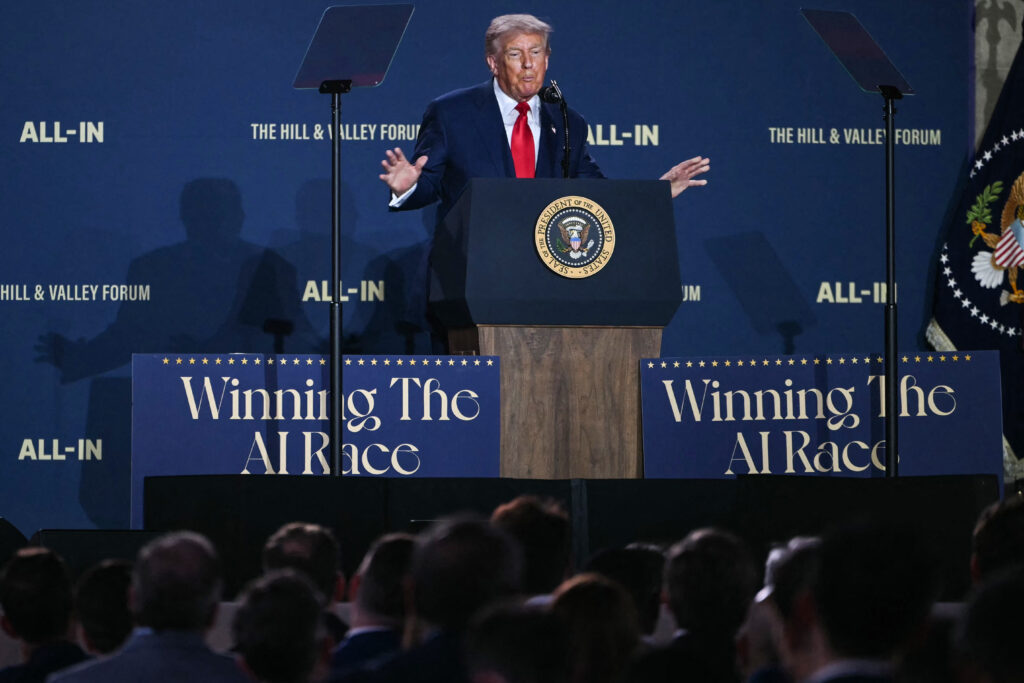
– On June 2, President Trump signed an executive that directed the government to ask leading AI developers to voluntarily submit their most capable models for government cybersecurity tests before they go public.
– On June 5, President Trump also signed a national security memo that called for the military and security agencies to accelerate their use of AI.
– On June 9, it was reported that China is preparing to spend around $295 billion over the next five years on building data centers across the country.
– On June 12, the U.S. government instructed Anthropic, the company behind Claude chatbot, to prevent any foreign national from accessing its latest model, which was “abruptly disabled” soon after. The decision to limit access to Anthropic’s Mythos model was reportedly partly due to suspicions that a China-linked group had accessed the latest model.
– Following the signing of two AI-related documents, on June 5, President Trump said that he is considering taking a government stake in leading AI companies and labs. Later on June 10, President Trump said that he expects top AI companies to agree to “giving back” to the public.
– On June 12, Nvidia denied that Latin America has served as a corridor for restricted AI chips into China. CEO Jensen Huang declined to testify before the Senate Banking Committee over AI security on June 8.
– On June 12, Meta began to dismantle its $2 billion acquisition of Manus, which was ordered to stop by Beijing in April.
– On June 15, Chinese AI model developer Zhipu surged 48% following Washington’s tightening of foreign access to U.S. models.
Associated News References:
“Trump signs order designed to give government early look at powerful AI models,” The Washington Post, June 2
“Trump calls for military to accelerate use of AI while protecting Americans,” AP News, June 5
“Trump says he’s considering government stake in top AI companies,” The Washington Post, June 5
“Nvidia CEO Jensen Huang declines Senate testimony on AI, China and exports,” CNBC, June 8
“China Preps $295 Billion Plan to Fund Nationwide AI Buildout,” Bloomberg, June 9
“Trump says he thinks AI companies will agree to ‘giving back’ to the public,” Reuters, June 10
“Anthropic suspends new AI models after government directive,” NBC News, June 12
“Meta reportedly begins dismantling $2 billion Manus deal on Beijing’s orders,” CNBC, June 12
“Nvidia denies Latin America role in chip smuggling as US-China AI rivalry reaches Brazil,” South China Morning Post, June 12
“White House’s export limits on Anthropic linked to concerns about Chinese access,” Semafor, June 13
“Zhipu surges 33% as Wall Street raises bets on China AI after Anthropic curbs,” CNBC, June 15
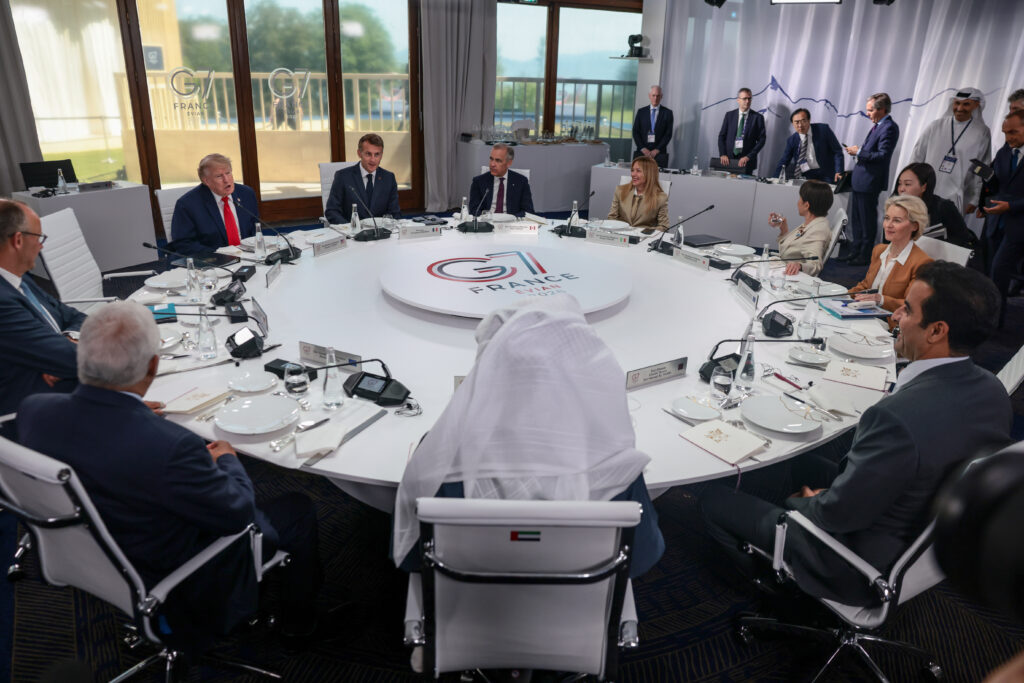
– The 2026 G7 leader summit took place in Evian, France, on June 16. Leaders of the seven wealthy countries, U.S., France, UK, Italy, Germany, Canada, Japan, and non G7 leaders from Ukraine, Egypt, India, Qatar and UAE are set to discuss the Iran situation and war in Ukraine.
– President Trump arrived in France after announcing the cease fire deal with Iran, where he reassured European allies that it “should be successful” and Iran “will not have a nuclear weapon” without revealing any details of the deal.
– On June 16, Ukrainian President Volodymyr Zelenskiy said that the G7 had agreed that Russia was not winning the war in Ukraine, and had discussed additional sanctions to bring Moscow to the negotiation table.
– Prior to the leader summit, President Trump met with President Zelenskiy and suggested that the U.S. could soon reimpose sanctions on Russian oil shipments citing that due to the Iran deal “oil is now flowing.”
– Despite the ongoing trade dispute between EU and China, the G7 featured little talk on China, with only Japanese PM Takaichi briefing leaders on the security situation in the Indo-Pacific region.
– President Trump is also set to meet Indian PM Narendra Modi, as New Delhi is still trying to strike a trade deal with Washington. USTR Greer will travel to India between June 23-24.
– On June 16, President Trump also met with Italian PM Giorgia Meloni on the sideline of the G7 for the first time since the two sides fell into a spat over Trump’s attack on the Pope in April.
Associated News References:
“Ukraine’s Zelenskiy says G7 leaders discussed further sanctions on Russia,” Reuters, June 16
“Trump and Meloni Seek to Bury the Hatchet at G7 After Pope Spat,” Bloomberg, June 16
“Trump signals swift return of sanctions on Russian oil as G7 refocuses on Ukraine,” AP News, June 16
“Trumps calls for Russia deal with Zelenskiy, vague on pressure, ” Reuters, June 16
“Trump touts Iran deal to European allies at G7,” NBC News, June 16
“US Trade Representative Greer to visit India on June 23-24 for talks,” Reuters, June 15
“Trump, G7 split on China strategy,” POLITICO, June 15
“Who Are the Leaders at the G7 Summit in France?,” The New York Times, June 15
“Takaichi briefs G7 on Indo-Pacific, China-related concerns at summit,” Kyodo News, June 15
“China Calls for Greater International Role in Next Iran-US Talks,” Bloomberg, June 16
“China launches experimental satellite tasked with detecting space environment,” Anadolu Jansi, June 16
“US agency removes Chinese toy drones from import ban list,” Reuters, June 16
“Trump Thanks China and Russia, Partners of Iran, for Diplomatic Help,” The New York Times, June 16
“China steps up Ebola monitoring with revised prevention plan,” Reuters, June 16
“DeepSeek Becomes China’s Most Valuable AI Startup After $7.4 Billion Fundraise,” The Wall Street Journal, June 16
“China signs up 26 financial institutions to digital yuan cross-border payment platform,” Reuters, June 16.
“Beijing says it’s ‘strongly dissatisfied’ with Pentagon move against top Chinese tech firms,” CNBC, June 13
“US business group says some critical minerals are ‘nearly unobtainable’ from China,” Reuters, June 11
“China and Hong Kong users unable to access SpaceX website, IPO documents,” Reuters, June 10
“Pentagon expands list of China military-linked firms to include Alibaba, Baidu in fresh blow to diplomatic thaw,” CNBC, June 10
“China re‑centers North Korea ties as nuclear silence reshapes balance,” NPR, June 10
“China’s May shipments to U.S. clock 5-year high growth at 35% as overall exports jump on tech boost,” CNBC, June 9
Three themes stood out in Washington’s policy discourse over the past two weeks. The first concerns the Iran peace deal, of which details have not yet offically been revealed to the public, and its implications for U.S. credibility, alliance management, and the future security architecture of the Gulf. The second centers on artificial intelligence, with discussion intensifying around the White House’s recent executive actions and their impact on innovation, market performance, regulation, and competition with China. The third reflects ongoing efforts to assess the post-Beijing summit trajectory of U.S.-China relations, including the newly proposed concept of “Strategic Stable Relations,” and continued concerns over the possibility of conflict in the Taiwan Strait.
June 4 hosted by CSIS
June 9 hosted by PIIE
June 11 hosted by Stimson Center
June 16 hosted by CNAS
June 16 hosted by FPRI
June 18 hosted by CSIS
June 18 hosted by Asia Society
June 18 hosted by Stimson Center
June 25 hosted by Hudson Institute
June 25 hosted by Cato Institute
June 25 hosted by CSIS
July 1 hosted by CSIS
July 1 hosted by Cato Institute
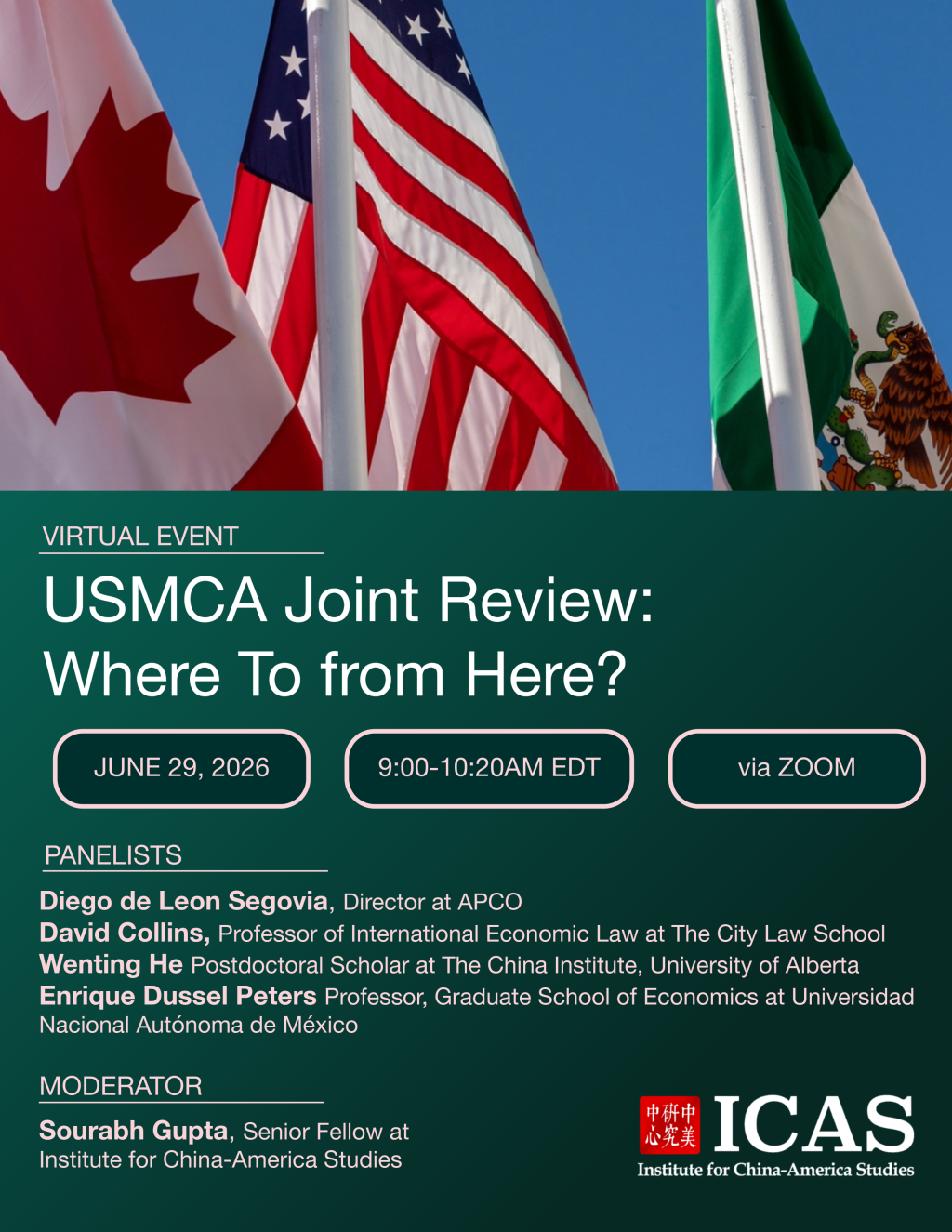
USMCA Joint Review: Where To From Here?
Hosted by ICAS
June 29, 2026
9:00AM-10:20AM
On Monday, June 29 at 9:00AM-10:20AM EDT ICAS will hold a virtual discussion, “USMCA Joint Review: Where To From Here?”, with panelists Diego de Leon Segovia (Director at APCO), David Collins (Professor of International Economic Law at The City Law School), Wenting He (Postdoctoral Scholar at The China Institute, University of Alberta) and Enrique Dussel Peters (Professor, Graduate School of Economics at Universidad Nacional Autónoma de México). Moderating the discussion is Sourabh Gupta, Senior Fellow and Head of the Trade n’ Technology Program at ICAS.
The event will be focused on upcoming developments regarding USMCA. On July 1, 2026, the U.S., Canada and Mexico are due to meet on the sixth anniversary of the agreement’s entry into force for a first joint review of the agreement. The joint review is a novel one, with no precedent for such reviews in prior U.S. FTA’s. The review is an important inflection moment in the short history of the revised – NAFTA revised to USMCA – agreement. If all three parties agree in writing, the USMCA will be automatically extended for sixteen years, with another joint review six years hence. If the parties fail to agree, a tortuous annual negotiating process will lie ahead, with major implications for industries and businesses including those headquartered much beyond North America.
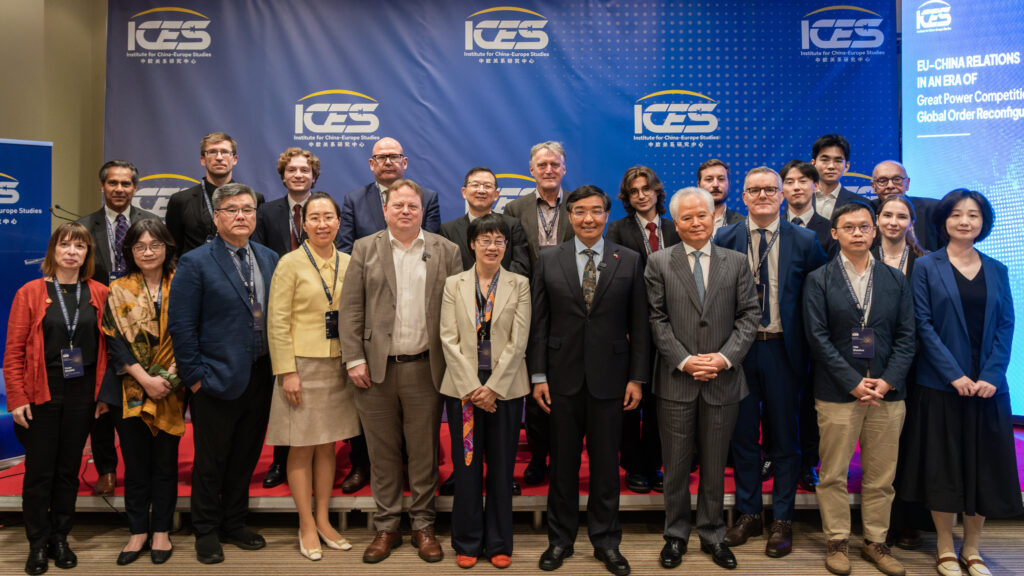
EU-China Relations in an Era of Great Power Competition and Global Order Reconfiguration
June 10-11, 2026
Hosted by the Institute for China-Europe Studies (ICES), the Institute for Security and Development Policy (ISDP), the National Institute for South China Sea Studies (NISCSS) and the Institute for China-America Studies (ICAS)
On June 10–11, 2026, ICAS co-hosted the “EU-China Relations in an Era of Great Power Competition and Global Order Reconfiguration” conference in Brussels, Belgium. The event brought together policymakers, diplomats, and scholars from Europe, China, and the United States to discuss the future of EU-China relations in a rapidly changing international environment.
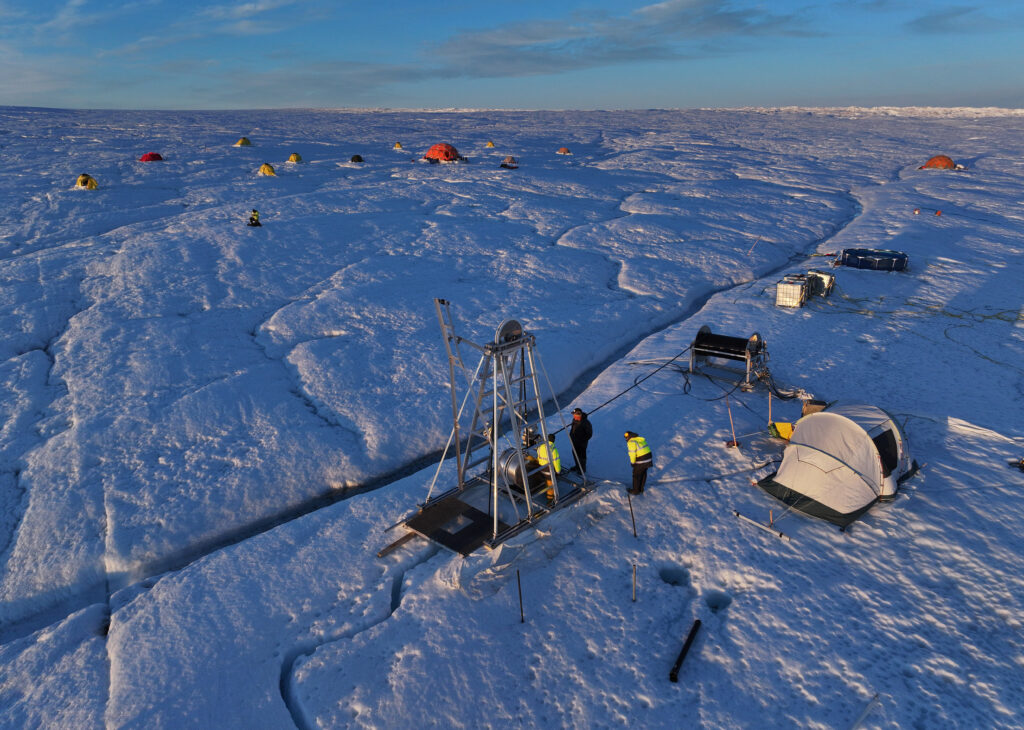
Critical Mineral Is Testing Climate Cooperation From the High Seas to the Arctic
By Zhangchen Wang
June 3, 2026
The entry into force of the Agreement on Biodiversity Beyond National Jurisdiction, widely known as the BBNJ Agreement or the High Seas Treaty, marks an important moment for global ocean governance. It reflects a growing international effort to strengthen the protection and cooperative management of marine spaces beyond national jurisdiction. Yet this moment of conservation arrives alongside another trend that points in a very different direction: the growing interest in the ocean as a potential source of critical minerals for renewable transition.
The clean energy transition is meant to reduce the environmental harms of fossil fuels, but it depends on minerals that must be extracted, processed, transported, and governed…
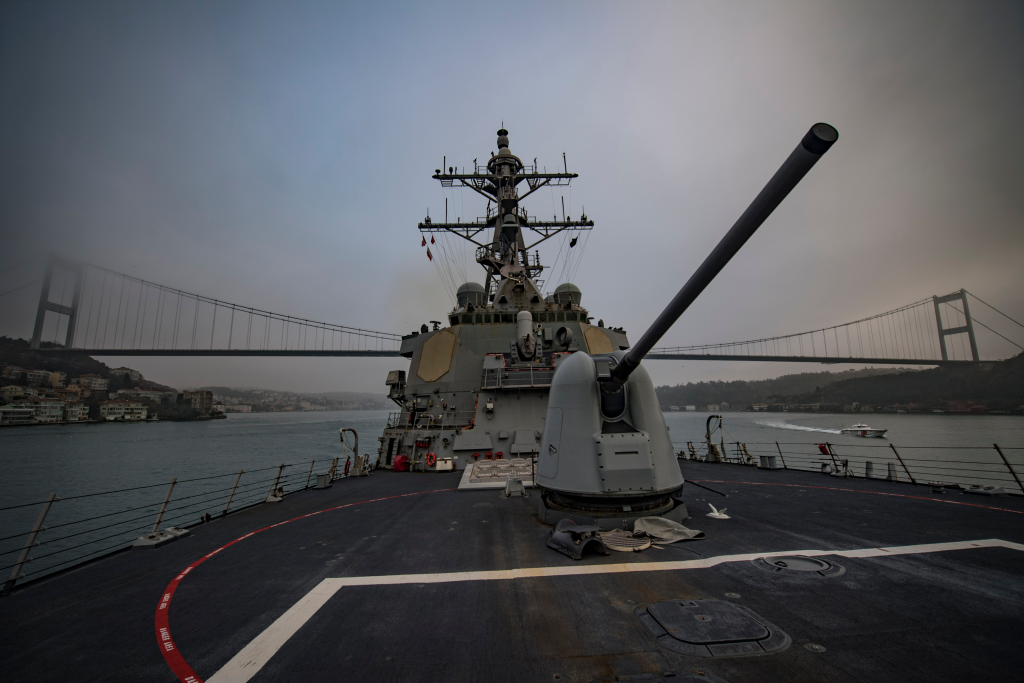
Strategic Waterways Under Pressure Series: The Turkish Straits and the Black Sea: Conditionality by Convention?
By Nong Hong
June 16, 2026
Author’s Note: The Turkish Straits and the Black Sea are included in the Strategic Waterway Under Pressure series because they raise a different question from those posed by Hormuz or Malacca. The issue here is not simply whether the crisis is squeezing passage, but how a special treaty regime structures access when armed conflict reshapes the security environment of the Black Sea region.
The Turkish Straits and the Black Sea require a different analytical vocabulary from the one used for Hormuz or Malacca. The key question is not whether the Montreux Convention makes passage conditional. In important respects, it has always done so. The more consequential issue is how war in the Black Sea has affected the practical value of a formally open but legally differentiated regime of access…
On Tuesday, June 16, 2026, Senior Fellow Sourabh Gupta was quoted in SCMP on U.S.-India Tensions
On Thursday, June 4, 2026, Senior Fellow Sourabh Gupta was quoted in SCMP on Trump-Xi meeting outcomes.