

ICAS Maritime Affairs Handbill (online ISSN 2837-3901, print ISSN 2837-3871) is published the last Tuesday of the month throughout the year at 1919 M St NW, Suite 310, Washington, DC 20036.
The online version of ICAS Maritime Affairs Handbill can be found at chinaus-icas.org/icas-maritime-affairs-program/map-handbill/.
Although the United States and Iran have reached a ceasefire deal and signaled a willingness to continue diplomatic engagement for further negotiations, recent developments suggest that threats to commercial shipping through the Strait of Hormuz are unlikely to disappear in the near term. Throughout the latest round of confrontation, both Washington’s military operations and Tehran’s repeated threats to restrict maritime traffic demonstrated that the security of one of the world’s most important shipping lanes remains closely tied to the broader trajectory of U.S.-Iran relations. While both sides have shown an interest in preventing further escalation, neither has treated the uninterrupted flow of global commerce as the primary driver of its strategic decision-making, leaving commercial shipping vulnerable to renewed disruptions whenever negotiations deteriorate.
More importantly, the Strait of Hormuz increasingly appears to have become a recurring source of diplomatic leverage rather than merely a battlefield. Iran’s repeated use of the waterway as a bargaining tool, alongside ongoing negotiations over its nuclear program, suggests that cycles of maritime disruption and partial reopening could continue even in the absence of large-scale military conflict. For the global shipping industry, this represents a growing strategic challenge. Rather than preparing only for wartime contingencies, shipowners, insurers, and governments may increasingly need to manage prolonged periods of political uncertainty in which the security and accessibility of critical maritime chokepoints fluctuate alongside diplomatic negotiations.
Ships Pull Back Amid Heightened Risk From U.S.-Iran Strikes
June 29 – The New York Times
[Iran, United States]
Traffic through the Strait of Hormuz dropped significantly over the last weekend of the month, as a four-day exchange of attacks between Iran and the U.S. left some shipowners deciding the risk was too great to pass through. Despite this, 22 ships passed through the strait on Sunday, down from 38 on Saturday, according to data from Kpler, a maritime tracking firm. On the previous Wednesday, 74 ships went through.
U.S. and Iran Agree to Halt Days of Fighting Over Strait
June 29 – The Wall Street Journal
[Iran, United States]
The U.S. and Iran have agreed to end days of back-and-forth fighting around the Strait of Hormuz and resume peace talks, said officials from the U.S. and other countries involved in the negotiations. The U.S. offered to hold talks with Iran at a summit in Doha while U.S. President Trump wrote on social media that Iran had requested the meeting and it would take place in the Qatari capital on Tuesday.
Iran Wants Complete Control Of Hormuz For 30 Days, Warns Against Foreign Intervention
June 29 – Marine Insight
[Iran]
Iran dictated that it will have sole control over shipping through the Strait of Hormuz for the next 30 days, warning that any attempt by other countries to intervene could increase tensions and delay full reopening.
Trump accuses Iran of ceasefire breach after Strait of Hormuz attack
June 26 – BBC
[Iran, United States]
President Trump has accused Iran of a “foolish violation” of its truce with Washington after a cargo ship passing through the Strait of Hormuz struck by a projectile on Thursday, although no casualties were reported. In response, the UN’s International Maritime Organization (IMO) paused its planned evacuation of more than 11,000 sailors stranded in the key shipping lane.
Iran rejects UN-backed plan to free ships trapped in strait of Hormuz
June 25 – The Guardian
[Iran, Oman]
Iran has rejected UN-backed plans for the mass evacuation of ships through the Strait of Hormuz, creating a new threat to the free passage of commercial ships through the strait. The proposal, backed by Oman, was potentially the first phase of a broader Omani proposal to consult on setting up a new management of the strait based on voluntary fees, modeled on the Malacca and Singapore strait mechanism.
Ships start sailing through Hormuz under UN evacuation scheme, agency says
June 24 – Reuters
[Iran]
Ships have begun sailing through the Strait of Hormuz under a new scheme by the IMO to evacuate vessels trapped there by the conflict. The initiative, which has taken months to conclude, will enable hundreds of ships stranded in the Gulf to sail through the strait.
Hormuz disruption will continue until 80 mines blocking route are cleared
June 19 – The Guardian
[Iran]
Several vessels began to exit the Gulf through the key maritime chokepoint on Thursday after the signing of a memorandum of understanding (MoU) between the U.S. and Iran. However, shipping is not expected to return to normal for some time. Even if a ceasefire lasted, due to the mines and other obstacles, there are continuing challenges facing global trade.
U.S. and Iran Reach Framework for Peace
June 14 – The New York Times
[Iran, United States]
The U.S. and Iran reached an agreement on Sunday that paved the way for further talks to ultimately end a monthslong war that has killed thousands and rattled the global economy. The deal was expected to open the Strait of Hormuz and lift the U.S. naval blockade on Iranian ports.
Oil tanker CEO sees Hormuz ship traffic quickly increasing if U.S. and Iran reach a deal
June 11 – CNBC
[Iran, United States]
Commercial ship traffic through the Strait of Hormuz is expected to sharply increase if the U.S. and Iran reach a stable agreement that improves security in the strategic sea lane. Some shipping companies have positioned tankers close to the Gulf in order to cash in on a potential reopening of Hormuz.
Iran announces closure of Strait of Hormuz after US attacks
June 10 – Reuters
[Iran, United States]
Iran’s top joint military command announced the closure of the Strait of Hormuz on Thursday, including oil tankers and commercial ships, saying any vessel that will attempt passage will be under fire.
US military shoots down 4 Iranian drones heading toward Strait of Hormuz
June 5 – The Hill
[Iran, United States]
The U.S. military shot down four Iranian one-way attack drones Friday that were heading toward the Strait of Hormuz and posed an imminent threat to maritime traffic, according to the U.S. Central Command (Centcom). The U.S. military then struck Iranian coastal surveillance radar sites in Goruk, a city in Hormozgan province, and on Qeshm Island, an Iranian island in the Strait of Hormuz, to “defend against further attacks.”
Recent military developments across the Indo-Pacific suggest that regional security competition is continuing to broaden beyond a narrow focus on U.S.-China rivalry, the Taiwan Strait, or territorial and maritime disputes in the South China Sea. While the U.S. remains the region’s most important external military actor—and while its alliance and partner coordination continues to be shaped largely by strategic competition with China—regional states are increasingly investing in capabilities that extend beyond immediate coastal defense. Indonesia’s accelerated frigate development, Singapore’s deployment of advanced submarines, Malaysia’s new littoral mission ships, India’s naval deployment to Vietnam, and North Korea’s commissioning of a nuclear-capable destroyer all point to a wider regional shift toward more capable, mobile, and blue-water-oriented maritime forces.
At the same time, multinational exercises and forward deployments are reinforcing this broader trend. Japan’s participation in parachute training in the Philippines’ Batanes province near Taiwan, Canada’s expanded role in RIMPAC, the continued relocation work for U.S. forces in Okinawa, and Chinese aircraft carrier drills east of the Philippines all demonstrate that Indo-Pacific military activity is becoming more geographically dispersed and operationally complex. This does not mean that traditional flashpoints have become less important; rather, they are now embedded in a larger security environment in which more regional and extra-regional actors are developing the ability—and the political willingness—to operate farther from home. As a result, an Indo-Pacific security narrative that began largely around U.S.-China competition may increasingly produce military consequences that extend beyond the region itself.
June 29 – Defence Security Asia
[Indonesia]
Indonesia is accelerating delivery of its first Merah Putih-class frigate, KRI Balaputradewa-322, as Jakarta strengthens blue-water naval capability, Natuna Sea deterrence, and Indo-Pacific maritime-industrial credibility amid intensifying regional strategic competition.
June 28 – Defence Security Asia
[Singapore]
Armed with stealth fuel-cell propulsion and advanced underwater warfare systems, Singapore’s Invincible-class submarines are transforming Southeast Asia’s maritime deterrence equation during a period of intensifying South China Sea disturbances. Built by Germany’s ThyssenKrupp Marine Systems (TKMS), the Type 218SG submarines provide the Republic of Singapore Navy (RSN) with one of the most advanced conventional underwater warfare capabilities currently deployed anywhere in the Indo-Pacific region.
Japan to take part in parachute drill in Philippines’ Batanes near Taiwan under Kamandag Exercise
June 26 – The Times of India
[Japan, Philippines, South Korea, United States]
Japanese Ground Self-Defense Force personnel are set to participate in parachute drop training in the Philippines’ northernmost island province of Batanes, which faces Taiwan. The free-fall jump drill is scheduled to take place later this month under Kamandag, an annual exercise conducted by the Philippine and U.S. Marines. South Korea, Japan, and several additional countries are participating as observers.
Taiwan Drill Simulates Maritime ‘Quarantine’ by China Forces
June 25 – Bloomberg
[China]
Taiwan has held tabletop military exercises to simulate its response to a potential maritime quarantine by Mainland China. The exercise mimicked a scenario in which the Mainland, without imposing a full blockade, demands that domestic and foreign vessels using Taiwan’s ports complete declarations through its customs system. The drills also envisaged Mainland inspecting or detaining vessels under the guise of law enforcement, disrupting Taiwan’s maritime transport.
INS Udaygiri, INS Kavaratti dock in Vietnam as India expands Indo-Pacific Naval presence
June 24 – Defence HQ
[India, Vietnam]
India Navy’s warships, the INS Udaygiri, and INS Kavaratti, arrived at Nha Rong Port on Monday during their operational deployment to the South East Asia region. The deployment underscores the rapidly expanding strategic partnership between India and Vietnam, who upgraded their relationship to Enhanced Comprehensive Strategic Partnership in May of this.
June 24 – Defence Security Asia
[North Korea]
North Korean leader Kim Jong Un has formally commissioned the Choe Hyon, a 5,000-ton guided-missile destroyer capable of carrying nuclear-capable ballistic and cruise missiles. Kim declared that the era of the Korean People’s Navy operating merely as a coastal defense force had ended, while describing the Choe Hyon as evidence that the nuclear arming of the navy was “progressing on schedule” toward becoming a “full-fledged service equipped with strategic means.”
Canada steps up at Rimpac to rebut Trump’s freeriding charge
June 22 – South China Morning Post
[Canada, United States]
Canada is deploying two frigates and a submarine to the world’s largest multinational naval exercise this week, in what analysts describe as both a display of Indo-Pacific seriousness and a pointed rebuttal to Washington’s “freeriding” comments regarding military prowess.
Japan begins landfill work for relocation of US air base in Okinawa
June 17 – Anadolu Agency
[Japan, United States]
Japanese authorities on Wednesday began landfill work in waters off Okinawa as part of a long-delayed project to relocate a U.S. military air base within the southern island prefecture. The work is being carried out in Oura Bay near the Henoko district of Nago, where the government plans to relocate the U.S. Marine Corps Air Station Futenma from the densely populated city of Ginowan.
US carrier Theodore Roosevelt to lead RIMPAC drills this summer in Hawaii
June 10 – Star and Stripes
[United States]
The aircraft carrier USS Theodore Roosevelt will lead America’s participation in the biennial Rim of the Pacific maritime exercise that begins June 24 in Hawaii. A record 31 nations are joining the five-week exercise, which will feature about 40 surface ships, five submarines, 140 aircraft and more than 25,000 personnel, according to the U.S. Navy.
June 8 – Defence Security Asia
[Malaysia]
The Royal Malaysian Navy launched its second Littoral Mission Ship Batch 2 vessel, Raja Laut, in Turkiye. The launch marks a major leap in Royal Malaysian Navy’s combat capability, strengthening Malaysia’s maritime deterrence posture amid intensifying Indo-Pacific naval competition and South China Sea strategic tensions.
Chinese aircraft carrier held drills in east of Philippines, Japan says
June 1 – Reuters
[China, Japan]
The Chinese navy was spotted conducting aircraft carrier drills in the Pacific Ocean east of the Philippines last week, Japan’s defense ministry said on Monday. The Japan Maritime Self-Defense Force confirmed that China’s aircraft carrier Liaoning and accompanying vessels were cruising the waters east of the Philippines’ Luzon island between May 26 and May 28.
Ubotica raises $11 million to scale maritime-intelligence platform
June 23 – Space News
[Ireland]
Ubotica Technologies, an Irish company focused on artificial intelligence for spacecraft, has raised $11 million to expand commercial sales of its maritime-intelligence platform. Using the platform, satellite constellations will be able to detect threats across the oceans, giving much needed security to the maritime ecosystem.
Dutch Company Introduces Maritime Upgrade for Counter-UAS Radar
June 17 – National Defense
[Netherland]
Netherlands-based advanced radar provider Robin Radar announced a major upgrade to its counter-UAS platform IRIS On-The-Move, allowing its 3D drone detection to be used on maritime platforms. The update, called IRIS On-The-Move at Sea, will enable the radar to be used for drone detection in ports, vessels, harbors and maritime infrastructure. Existing IRIS systems will be able to transition between land and sea deployments.
AAC Clyde Space wins ESA contract to complete maritime-monitoring constellation
June 11 – Space News
[EU, United States]
The European Space Agency awarded AAC Clyde Space a 10.9 million euro ($12.6 million) contract to complete development and demonstrate VHF Data Exchange System (VDES) satellites for the Inflection maritime domain awareness program. With the 12-satellite Inflection constellation, AAC Clyde is developing a low-cost approach to detecting, tracking and monitoring maritime vessels, including ships that turn off automated identification system (AIS) transponders.
US approves $1.5 bln sale of maritime helicopters to New Zealand
June 5 – Reuters
[New Zealand, United States]
The U.S. approved the $1.5 billion sale of five Seahawk maritime helicopters to New Zealand, which has pledged to nearly double its military spending as it seeks to boost defense capabilities. New Zealand, a close ally of neighboring Australia, is increasingly deploying across East Asia in support of Western militaries and their partners amid China’s rapid military rise.
Cambodia launches UN-backed process to settle maritime dispute with Thailand
June 2 – Reuters
[Cambodia, Thailand]
On Tuesday, Cambodia announced it had launched a compulsory conciliation process under international law aimed at resolving a long-running maritime boundary dispute with Thailand and informed the United Nations and Bangkok. The move follows a Thai government decision last month to unilaterally terminate a 2001 agreement with Cambodia that provided a framework for negotiations over the disputed area in the Gulf of Thailand where the two countries’ maritime claims overlap.
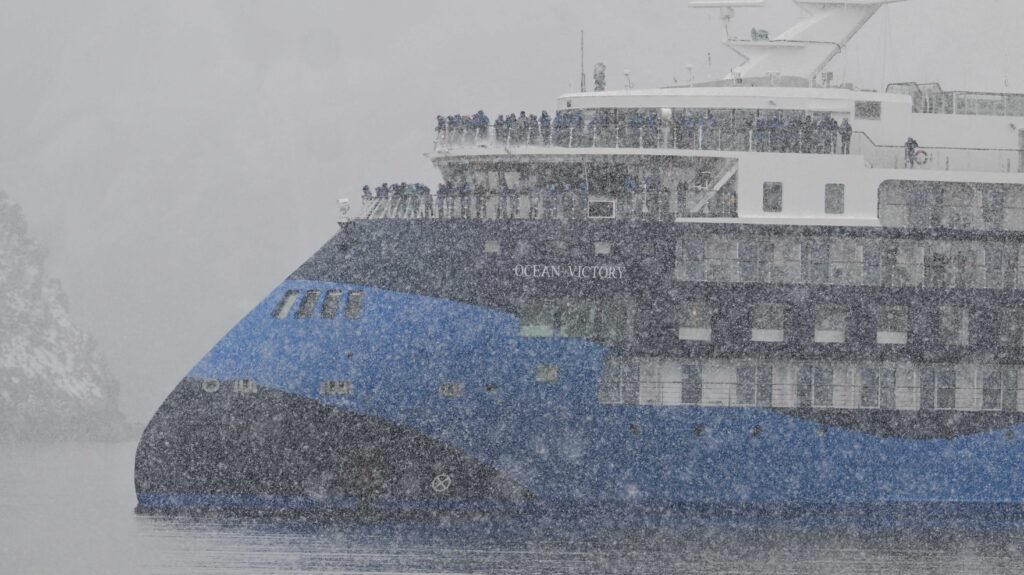
From May 11-21, 2026 in Hiroshima, Japan, the 48th Antarctic Treaty Consultative Meeting failed to produce a finished regulatory regime for Antarctic tourism. However, it did clarify something important: tourism is no longer a peripheral issue for the Antarctic Treaty System. Parties discussed concrete methods for the regulation, management, and monitoring of Antarctic tourism, and agreed to continue these discussions during the intercessional period. ATCM 48 therefore moved the debate beyond general concern and further into the language of governance.
That is real progress, but it should not be overstated. The meeting did not adopt a completed framework, establish binding visitor caps, agree on a tourism fee, or settle how cumulative impacts should be measured across operators, sites, and seasons, nor did it resolve how far Parties are prepared to move from a system that still relies heavily on national permitting and industry coordination toward stronger collective rules. Hiroshima mattered less in terms of solving the tourism question rather than narrowing the focus. The harder question now concerns the kind of governance the Treaty System is prepared to build, and how quickly it is willing to act.
This is where the idea of access governance becomes useful. The debate should not be framed only as visitor management, which asks whether tourists behave properly during a particular landing. The more important question is who may enter, under what conditions, how often, with what evidence of preparedness, and with what contribution to the long-term protection of the places being visited. A voyage can comply with site rules on the day and still add to cumulative pressure that the system is not yet measuring well. The move from visitor management to access governance changes the institutional question itself: from how visitors should behave once ashore to how access should be authorized, conditioned, monitored, and, where necessary, limited over time.
The diplomatic signal from ATCM 48 supports that shift. The same official account of ATCM 48 and CEP 28 placed tourism alongside environmental impact assessment, biosecurity, wildlife disease guidance, monitoring, and climate change. Tourism is no longer being treated as a narrow operational file. It is becoming part of the broader question of how the Antarctic Treaty System adapts to a faster-changing continent under mounting environmental and commercial pressure.
The pressure itself is measurable. According to IAATO’s latest figures, the 2025-26 season recorded 27,217 cruise-only visitors, 85,195 landed visits, and 1,106 deep-field visitors. These numbers remain modest compared with global tourism, but that is the wrong benchmark. Antarctica has a short operating season, limited landing windows, sparse emergency infrastructure, fragile ecosystems, and few sites that can absorb repeated visits without close monitoring. Ordinary tourism benchmarks tell us little. What matters is whether the governance system can identify where pressure is accumulating and respond before site-level vulnerability becomes visible damage.
Concentration matters more than aggregate volume. The Antarctic Treaty Secretariat notes that about 98 percent of tourism voyages occur in the Antarctic Peninsula during the austral summer and that more than twenty Antarctic sites frequently host over 15,000 visitors in a season. This creates an uneven geography of impact. A continent may appear vast and empty, while tourist activity is repeatedly channelled through a small number of landing sites, scenic routes, wildlife colonies, and historic places. The policy problem is therefore spatial and temporal: where visitors go, how often the same sites are used, what activities occur there, and whether repeated visits alter wildlife behaviour, vegetation, historic remains, or the operating environment for science.
This is also why the existing model should be defended and upgraded at the same time. Antarctic tourism is not a legal vacuum. Parties implement the Antarctic Treaty and the Environmental Protocol through domestic permitting systems. The ATCM has adopted measures, resolutions, manuals, and site-specific guidance; the Secretariat maintains official Visitor Site Guidelines; and IAATO has played an important role since 1991 in reporting, coordination, operating discipline, and environmental practice across much of the sector. Together, these arrangements make Antarctic tourism more transparent, more coordinated, and more open to scrutiny than it would otherwise be.
Their value, however, should not obscure their limits. Industry-led coordination, even when embedded in national permitting and Treaty guidance, works best when operators share similar incentives, reputational pressure is strong, activities are relatively predictable, and the scale of use remains manageable. Antarctic tourism is becoming more diverse, more commercially attractive, and more dependent on complex expedition logistics. A governance model built mainly around conduct during visits may not be enough for a sector whose impacts are cumulative and whose costs can fall on the wider Treaty System.
The MV Hondius outbreak offers a useful caution, even though it should not be treated as an Antarctic environmental incident. The outbreak was not caused by Antarctic tourism as such. Yet WHO and national public-health responses showed how a remote expedition itinerary can become a cross-jurisdictional challenge involving passengers, crew, medical evacuation, laboratory investigation, contact tracing, and post-disembarkation monitoring. Tourism can remain part of Antarctica’s human presence, but remote access should be treated as a governance issue in its own right. Once risks extend beyond the vessel, the landing site, or the permitting state, operator-level control is no longer enough.
Climate change compounds this challenge by making access conditions less stable. The Antarctic Peninsula and the surrounding Southern Ocean are not static operating environments. Changes in sea ice, weather, wildlife distribution, disease risk, and landing conditions can alter the vulnerability of a site from one season to the next. A site guideline that is adequate under one ecological or seasonal condition may be too permissive under another. Access governance therefore has to be adaptive. It should allow conditions of entry to tighten, pause, or shift as new monitoring data indicate changing risk.
A stronger framework should make access conditional, revisable, and dependent on demonstrated capacity. At the site level, this could mean more dynamic site-specific caps, rotational closures, seasonal restrictions, and updated visitor guidelines linked to monitoring results rather than fixed assumptions about carrying capacity. At the operator level, it could mean clearer standards for biosecurity compliance, medical screening, onboard surveillance, evacuation planning, insurance, waste handling, and transparent incident reporting. At the system level, it could mean visitor fees or operator contributions dedicated to monitoring, conservation, emergency preparedness, and the maintenance of shared data systems. The common principle is simple: access should expand only when the capacity to govern its consequences expands with it.
This approach is more politically viable than a blanket anti-tourism position. Closing Antarctica to visitors would be difficult to justify, hard to implement, and unlikely to command consensus among Treaty Parties. Carefully managed visits can generate public awareness and support for Antarctic protection. But educational value cannot become a general exemption from governance. A more useful test asks whether each form of access remains consistent with the purposes of the Antarctic Treaty System: peace, science, cooperation, and environmental protection.
ATCM 48 did not solve the tourism question. But it did help redefine it. If the Treaty System can move from visitor management to conditional access, the discussions carried forward from Hiroshima may yet become the basis for a more concrete regulatory turn. If not, commercial momentum may quietly redefine access before Parties agree on what should be protected, who should pay for protection, and when access should be limited. Those questions should be answered before repeated access normalizes Antarctica as a destination, even while it remains exceptional in law.
This issue’s Flagship Analysis was written by Nong Hong, Executive Director at ICAS.
The Northwest Passage is a series of Arctic sea routes that connect the Atlantic and Pacific Oceans through the Canadian Arctic Archipelago. As climate change reduces sea ice and lengthens the summer navigation season, the route has attracted renewed attention as a potentially shorter alternative for certain trans-Arctic voyages. The Northwest Passage is also closely connected with Canada’s northern infrastructure and critical mineral development. If ports, roads, and related corridors are built, the route may help link Canada’s Arctic coastline with inland resource regions, including areas with significant critical mineral potential. With future traffic expected to increase, the Northwest Passage could become part of a regional Arctic logistics system supporting mineral exports and broader strategic access for Canada and its allies.
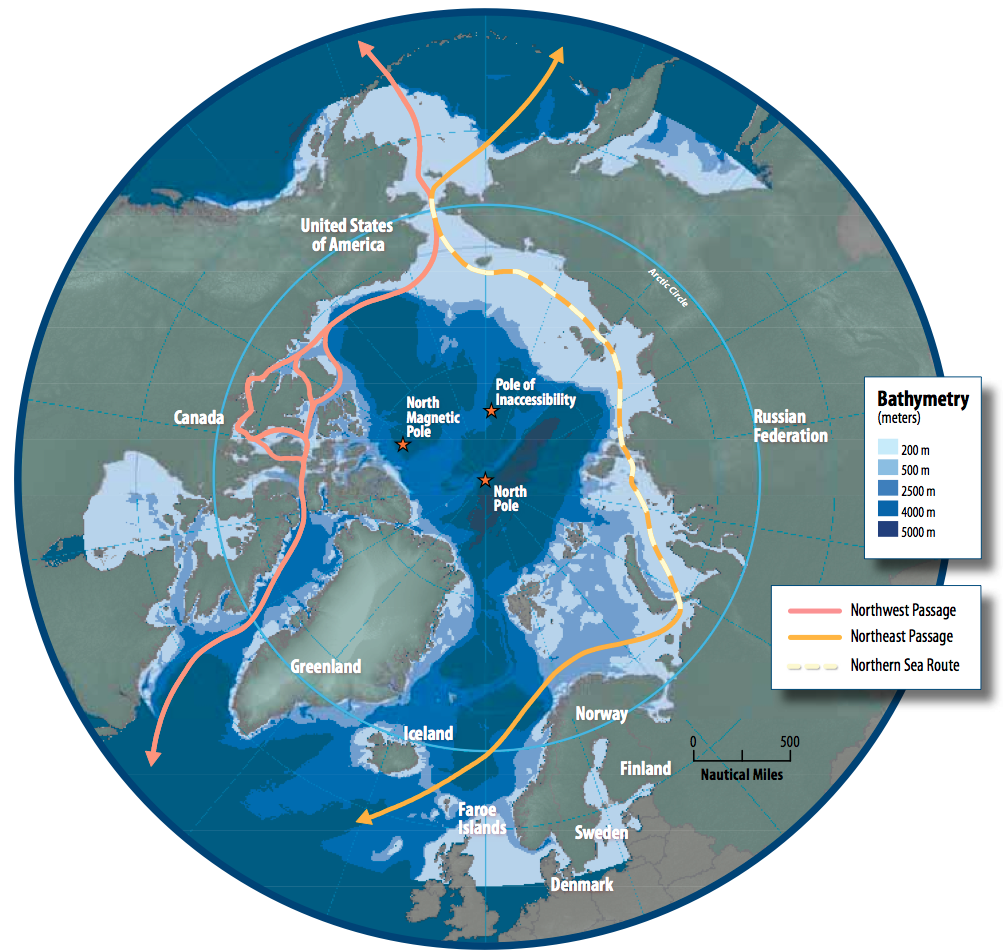
A recent Canadian infrastructure push has brought the Northwest Passage back into the spotlight. Recently, Canada announced a funding of C$50 million for planning and preconstruction work on the Grays Bay Road and Port project in Nunavut. The project includes a proposed deepwater Arctic port at Grays Bay and an approximately 230-kilometer all-season road connecting the port southward toward the Nunavut–Northwest Territories border. It is designed to support northern communities, improve transport reliability from inland to the Arctic, and unlock critical mineral development in the Kitikmeot region.
The maritime significance of the project lies in its attempt to connect land-based mineral development with Arctic sea access. Grays Bay is located in the central Canadian Arctic, near the Northwest Passage, and has often been discussed as a potential gateway between the Canadian North, Arctic shipping routes, and broader North American transport systems. If linked with related corridor proposals, including the Slave Geological Province Corridor and the broader Arctic Economic and Security Corridor concept, the project could eventually help connect the Northwest Passage to the North American highway network.
That makes the project important from two perspectives. From a shipping perspective, an Arctic deepwater is essential if northern routes are to become more than seasonal lines on a map. From a critical minerals perspective, Canada’s northern regions contain critical mineral resources that could support clean energy technologies, large-scale energy storage, and defense supply chains. Without infrastructure, however, those resources remain difficult and expensive to bring to market. Grays Bay therefore links two critical topics that are often treated separately: the future of Arctic shipping and the search for secure critical mineral supply chains. It suggests that the Northwest Passage’s near-term relevance may come less from container shipping and more from regional resource logistics.
The larger significance of this development is that critical minerals may give the Northwest Passage a more concrete economic and strategic purpose. For years, debates about the Northwest Passage have often focused on whether melting ice could turn it into a major global shortcut. Realistically, however, the route is unlikely to become a new Suez Canal anytime soon. Its more plausible future is as a part of a regional Arctic shipping system that plays an especially important role in specific sectors, and critical minerals may become one of the most important of those sectors. This future development potential enhances both the economic and strategic value of Canada’s infrastructure development project.
Meanwhile, there is also a climate governance paradox that is worth noticing. The clean energy transition requires large quantities of critical minerals, and developing new sources could support decarbonization and supply-chain resilience. At the same time, expanding Arctic ports, roads, mining projects, and shipping activity would inevitably bring new environmental pressures to one of the world’s most fragile regions. More vessels could mean higher black carbon emissions, underwater noise, greater accident risks, and possible pollution in areas where search-and-rescue and emergency response capacity remain limited. Infrastructure development also raises questions about Indigenous rights, local consent, and whether northern communities will meaningfully share in the benefits of projects built across their lands and waters. Managing these concerns will be a governance challenge for the Canadian government as the project moves forward.
Geostrategic consideration brings another layer of complexity to this issue. Following the war in Ukraine, the West is hoping for the Northwest Passage to become a more reliable corridor as opposed to the Russian Northern Sea Route. However, unlike the Northern Sea Route—which runs primarily along Russia’s northern coast and has been actively promoted by Moscow for greater international cooperation—Canada considers parts of the Northwest Passage its internal water, while the United States has traditionally viewed it as an international strait. The unresolved legal and political debates are likely to further develop as the United States and its allies seek more secure critical mineral supply chains and may increasingly see Canadian Arctic infrastructure as part of the West’s broader effort to reduce reliance on China-linked processing and supply networks.
That said, the governance and international participation of the Northwest Passage may take years to become a major headline or headache as it is still far from becoming a reliable transportation corridor for now. It continues to face major constraints, including sea ice, limited port infrastructure, and environmental risks. Its future will depend not only on Canada’s infrastructure development, but also on how Canada balances climate protection, pollution control, Indigenous rights, and maritime safety. Because of its strategic value, the route may also become a growing focus of international competition.
This issue’s Spotlight was written by Zhangchen Wang, Research Associate at ICAS.
Government Releases & Other Press Statements
Analyses & Opinions
Other Research
The Turkish Straits and the Black Sea: Conditionality by Convention?
By Nong Hong
June 16, 2026
Author’s Note: The Turkish Straits and the Black Sea are included in the Strategic Waterway Under Pressure series because they raise a different question from those posed by Hormuz or Malacca. The issue here is not simply whether the crisis is squeezing passage, but how a special treaty regime structures access when armed conflict reshapes the security environment of the Black Sea region.
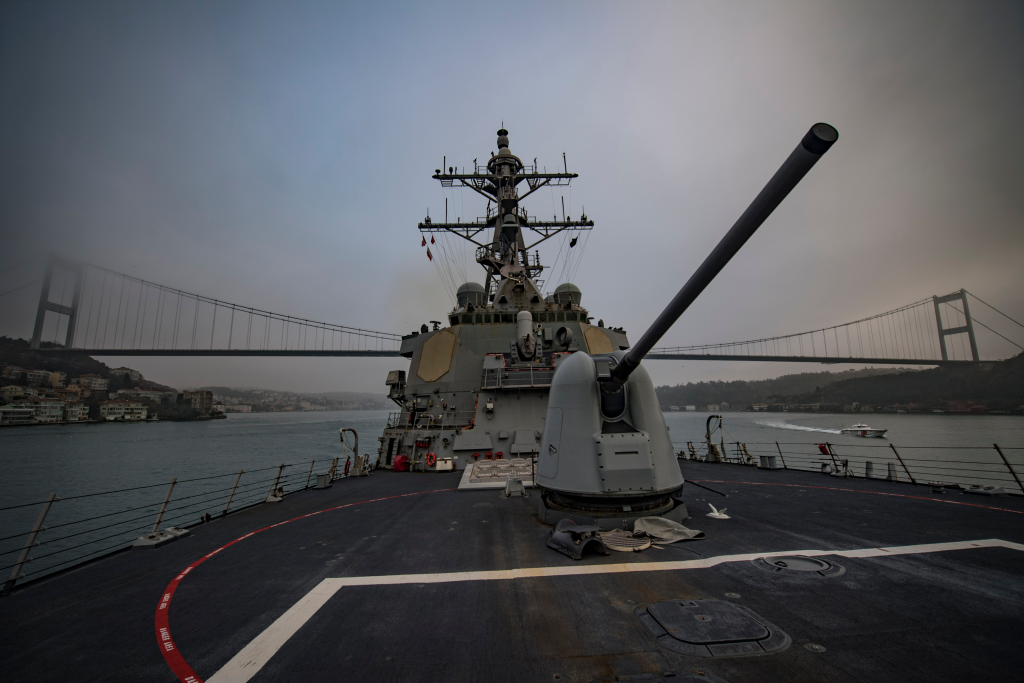
The Turkish Straits and the Black Sea require a different analytical vocabulary from the one used for Hormuz or Malacca. The key question is not whether the Montreux Convention makes passage conditional. In important respects, it has always done so. The more consequential issue is how war in the Black Sea has affected the practical value of a formally open but legally differentiated regime of access.

Beyond the victim-coercion narrative in the South China Sea
By Nong Hong
June 30, 2026
Much contemporary discussion of the South China Sea is organized around a simple structure. A smaller coastal state invokes legal principles and rules-based language in the context of tensions with a larger power, while external actors restate support for international law, freedom of navigation and regional stability.
This structure is easy to communicate and easy to understand. It gives distant audiences a familiar moral vocabulary through which to process maritime incidents that they do not follow closely. But it also compresses a highly layered set of disputes into a stylized account of coercion and resistance that the facts of particular incidents do not always support.