
ICAS Bulletin (online ISSN 2836-3418, print ISSN 2836-340X) is published every other week throughout the year at 1919 M St NW, Suite 310, Washington, DC 20036.
The online version of ICAS Bulletin can be found at chinaus-icas.org/bulletins/.
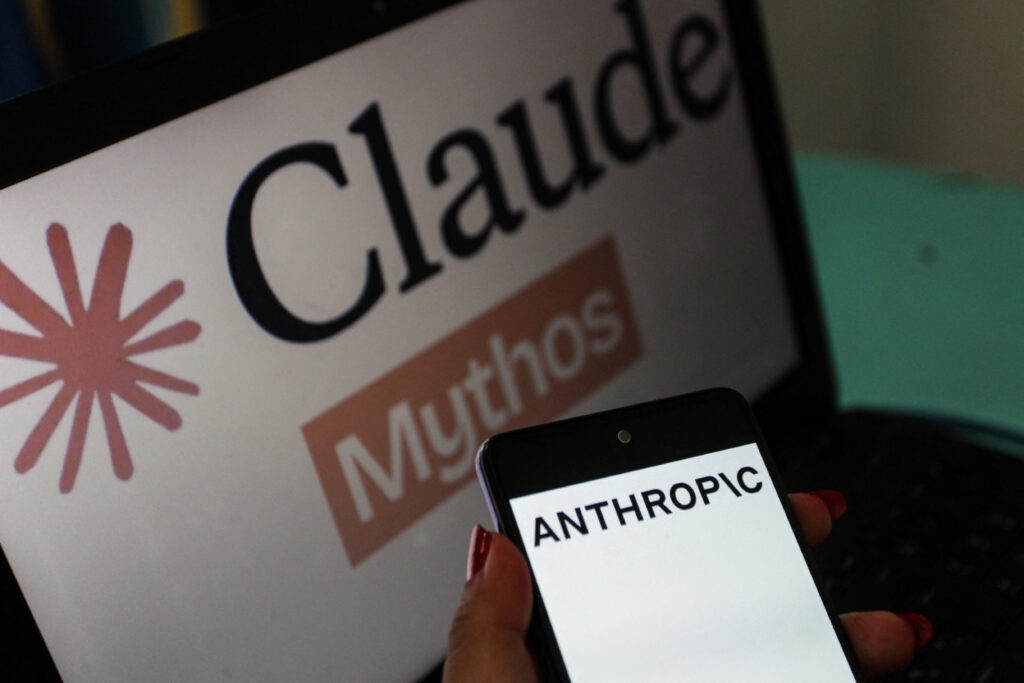
– On July 7, it was reported that Chinese authorities have held meetings with top tech firms to discuss limiting foreign access to China’s frontier AI models. Summoning Alibaba, ByteDance, and Z.ai, the talks emphasized treating frontier AI models as critical national assets, which leaks or thefts could become punishable under national security law.
– This follows U.S.’s recent curbs on Anthropic’s latest Fable and Mythos models, where the Department of Commerce ordered the company to restrict both models from all foreign nationals. The restrictions were lifted on June 30 after Anthropic retrained their safety classifiers.
– On July 8, China’s MIIT warned against Anthropic Claude Code’s backdoor risk that could send user location and identity data to remote servers without consent.
– In response to the increasing adaptation of lower-cost Chinese AI models by U.S. companies, it was reported on July 9 that Congress is looking to curb the trend over ideological and cybersecurity concerns.
– On the hardware front, it was reported on July 8 that China is planning to allow selected AI firms to purchase a limited number of Nvidia’s H200 chips. Capping the purchase at 200,000 chips, this move aims to ease the frontier training bottleneck as Chinese manufacturers catch up.
– Meanwhile, on July 7, reports claim that firms such as DeepSeek are developing their own AI chips to reduce reliance on Nvidia and Huawei chips, advancing China’s technology self-reliance goals.
– Beijing is also imposing new regulations on human-AI interactions. Set to take effect in mid-July, the regulations have already prompted ByteDance and Alibaba to pull their AI companion features.
Associated News References:
“Congress Eyes Growing Use of Chinese AI Models by US Firms”, PYMNTS, July 9
“Why China is Finally Letting AI Firms Buy the Nvidia H200”, South China Morning Post, July 9
“China Issues ‘Backdoor’ Security Alert over Anthropic’s Claude Code”, Reuters, July 8
“Exclusive: Beijing is Looking at Curbing Overseas Access to China’s Top AI Models, Sources Say”, Reuters, July 7
“Exclusive: China’s Deepseek Developing its Own AI Chip, Sources Say”, Reuters, July 7
“ByteDance, Alibaba Pull AI Companions as Beijing Tightens Rules”, Bloomberg, July 5
“US Removes Curbs on Anthropic’s Latest Fable and Mythos AI Models”, Reuters, June 30
– This year’s NATO summit was overshadowed by a mercurial and capricious Trump. On July 7, the President opened the meeting by criticizing NATO allies over defense spending and refusing to join America’s military action in Iran.
– Trump also threatened to withdraw troops unless handed Greenland, justifying this renewal of the Greenland push citing threats from China and Russia.
– However, after a closed-door meeting on July 8, the President’s attitude shifted, signing a joint declaration to strengthen NATO’s collective defense and expressing support for Ukraine.
– Trump also showed affinity towards the summit’s host Turkey. On July 7, he praised the country for being “much more loyal” than other allies and suggested potential sale of F-35 fighters.
– Despite not explicitly mentioning China in the communiqué, NATO Secretary General Rutte launched major initiatives to bolster transatlantic defense industrial cooperation, including a multinational initiative on defence-critical raw materials.
– Rutte also met the Indo-Pacific 4 (IP4) leaders on July 7 to deepen defense-industry and advanced-technology cooperation as a response to growing China-Russia military alignment.
– Regarding Indo-Pacific, China tested its submarine-launched ballistic missile on July 6, hours after Australia and Fiji signed a major defense alliance. The test triggered strong criticism from countries including the U.S., Australia, and New Zealand, claiming that Beijing did not provide sufficient notice before the launch.
Associated News References:
“NATO Survives its Bipolar Summit”, The Economist, July 8
“Trump Takes Aim at ‘Wasted Cause’ Spain and Revives Greenland Claim at Nato Summit”, BBC, July 8
“Trump challenges NATO unity at Turkey summit ”, CNBC, July 8
“Nato, Indo-Pacific 4 Pledge Defence, Tech Boost as Deeper China-Russia Ties Spark Alarm”, South China Morning Post, July 8
“Nato Can’t be ‘Naive’ about China as it Ramps up Military Might, Rutte Claims”, South China Morning Post, July 7
“China Missile Test: What Do We Know And Why Are Countries in the Region Concerned?”, The Guardian, July 7
“Trump says US will lift sanctions on Turkey, heaps praise on Erdogan”, Reuters, July 7

“China approves Apple Intelligence for iPhones, with Alibaba, Baidu emerging as partners”, South China Morning Post, July 15
“China’s DeepSeek to raise fresh capital at $74 billion valuation ahead of onshore IPO, sources say”, Reuters, July 15
“China’s Economy Grows at Slowest Pace in Years”, The New York Times, July 15
“China’s exports ride AI boom as domestic economy struggles”, Reuters, July 13
“Typhoon Bavi Hits China, Causing Evacuations, Floods and Flight Delays”, The New York Times, July 12
“China Successfully Launches, Retrieves Reusable Rocket Booster”, Bloomberg, July 10
“China halts helium exports amid Iran war as it seeks to protect its own supply ”, AP News, July 10
“A Chinese Spacecraft Captures First Image of Quasi-Moon”, The New York Times, July 9
“China and US Target Tariff Reductions on Agricultural Products”, Bloomberg, July 2
“US House committee opens investigation into Merck, AbbVie China drug trials”, Reuters, June 30
Three themes stood out in Washington’s policy discussions over the past week. The first concerns reflections marking America’s 250th anniversary, where commentators examined the resilience of U.S. democracy, the country’s global role, and whether its current political challenges stem from individual leaders or deeper institutional weaknesses. The second centers on the future of NATO and U.S. alliances under President Trump, with analysts debating whether tensions with NATO reflect temporary political friction or a more lasting shift in the transatlantic relationship. And if the decoupling from the United States could signify a shifting world order which could benefit China. Finally, discussions continued to assess the aftermath of the U.S.-Iran conflict, with experts arguing that the unraveling ceasefire has shifted attention from active fighting to the long-term strategic implications for the Strait of Hormuz, global energy security, and regional stability.
July 2 hosted by Hudson Institute
July 2 hosted by Carnegie Endowment for International Peace
July 7 hosted by Stimson Center
July 7 hosted by CSIS
July 8 by US-China Business Council
July 15 hosted by CSIS
July 16 hosted by CSIS
July 17 hosted by Atlantic Council
July 20 hosted by Brookings Institution
July 21 hosted by Stimson Center
July 23 hosted by PIIE
South China Sea Arbitration at 10: State consent, jurisdiction and contested finality
By Nong Hong
July 12, 2026
It’s been 10 years since the Arbitral Tribunal in the South China Sea arbitration, established under the UN Convention on the Law of the Sea (UNCLOS) at the unilateral request of the Philippines, rendered its award on July 12, 2016. It largely favored the Philippines, saying under UNCLOS, “there was no legal basis for China to claim historic rights to resources” in the South China Sea outside of its regular territorial areas recognized under the Convention.
In response, China said it neither accepts nor recognizes the award.
Ten years later, the award remains a frequently invoked but deeply contested point of reference in legal and diplomatic debates. The case reflects persisting disagreement over the proper role of compulsory dispute settlement in disputes shaped by sovereignty, state consent and historical claims.
This commentary was originally released on CGTN on July 12, 2026.
Two Visions of Global Governance in the Age of AI
By Yilun Zhang
July 7, 2026
Since June, artificial intelligence has become the latest focal point of U.S.-China strategic competition—not because of another breakthrough model, but because of a growing dispute over who should have access to advanced AI and how that access should be governed. The latest controversy surrounding Anthropic illustrates this shift. Reports revealed that the company had experimented with identifying China-based users of its coding assistant Claude Code while simultaneously accusing several Chinese AI companies of using “model distillation” to narrow the technological gap with leading American systems. What might once have been viewed as a commercial dispute over intellectual property has increasingly been framed as a matter of national security.
The South China Sea Arbitration Award, A Decade On: Separating Legal Facts From Common Misconceptions
By Yinan Bao
July 6, 2026
July 12, 2026 will mark the 10th “anniversary” of the South China Sea Arbitration Award. Over the past decade, the Award has been widely recognized by Western international law academia as a “significant development” of the law of the sea and its dispute settlement mechanism. A recent commentary written by two Vietnamese scholars, published on June 29, 2026 on the Diplomat also echoed this view. From the Chinese perspective, however, the Award has been heavily criticized as a “political farce” and “not acceptable”. Notwithstanding the sheer differences between Chinese and Western political stances, there are several misconceptions about the Award that need to be clarified. After all, an objective clarification of some of the major misconceptions may serve well for an unbiased evaluation of the Award, even from the Chinese perspective.
Coming Home: Why China’s Engineers Are Leaving America
By Youngseo Kim
July 10, 2026
In December 2024, Wang Huanyu left Apple’s chip development team in Cupertino and flew home to Wuhan. He took with him three years of experience building the processors inside Apple’s most advanced devices and deposited that knowledge into a Chinese university explicitly tasked with reducing China’s dependence on foreign semiconductors. A few months later, Kong Long, who had spent seven years designing wireless chips at Apple, joined Fudan University in Shanghai as a researcher and doctoral adviser.
Their decisions were not isolated. At least 85 scientists and engineers who had been working in the United States joined Chinese research institutions full-time between early 2024 and late 2025, with more than half making the move in 2025 alone. The pattern is accelerating.
On Monday, June 29, 2026, Senior Fellow Sourabh Gupta was among several experts interviewed by CGTN about a report on UNCLOS.
On Friday, July 3, 2026, Senior Fellow Sourabh Gupta was quoted by South China Morning Post on the NATO Summit and Implications for China.
On Saturday, July 11, 2026, Senior Fellow Sourabh Gupta was quoted by South China Morning Post on the nationalist rhetoric in China-India relations.
On Monday, July 13, 2026, Senior Fellow Sourabh Gupta discussed the U.S.-Iran flare up in the Strait of Hormuz on CGTN’s World Insight.
On Tuesday, July 14, 2026, Senior Fellow Sourabh Gupta was quoted by South China Morning Post on the narrowing space for tech transfer between China and the U.S.