
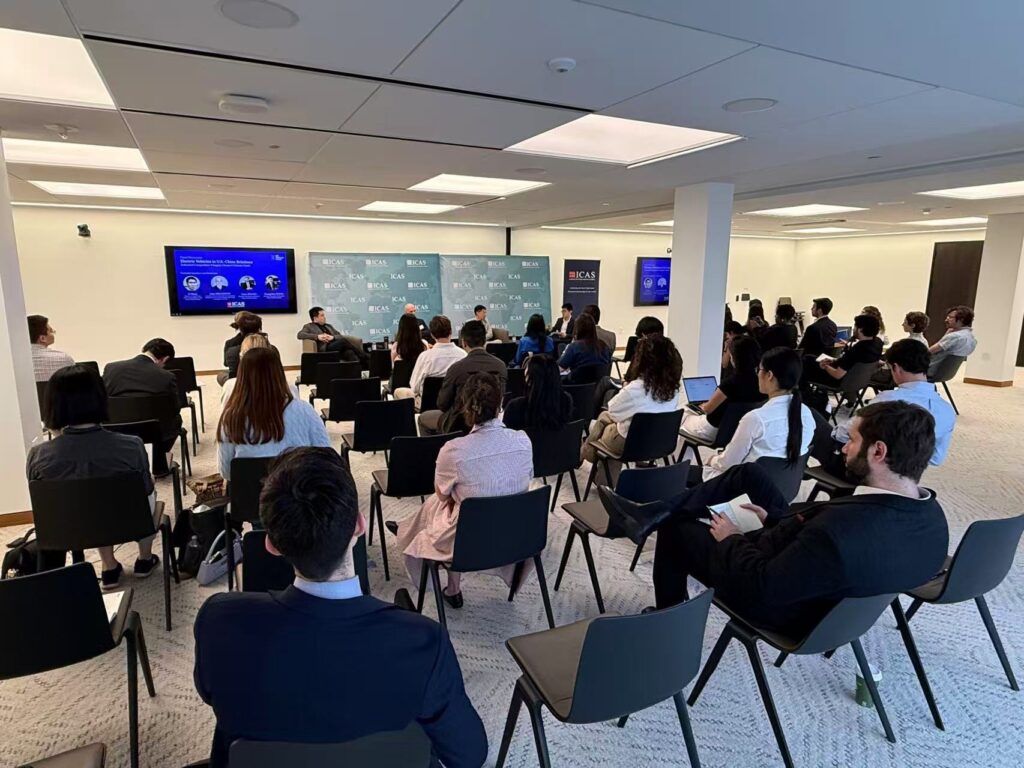
On April 24, The Institute for China-America Studies (ICAS) convened a panel discussion as part of DC Climate Week 2026, titled “Electric Vehicles in U.S.–China Relations: Industrial Competition, Supply Chains, and Climate Goals”. This is also the second consecutive year that ICAS has hosted an event during DC Climate Week. The discussion was grounded in a shared recognition of the critical role of transportation electrification in addressing environmental challenges and reducing emissions. Against this backdrop, the panel explored how electric vehicles serve not only as a tool for climate mitigation but also as a driver of industrial development and economic growth, comparing the trajectories of the United States and China while examining competition and potential avenues for future cooperation.
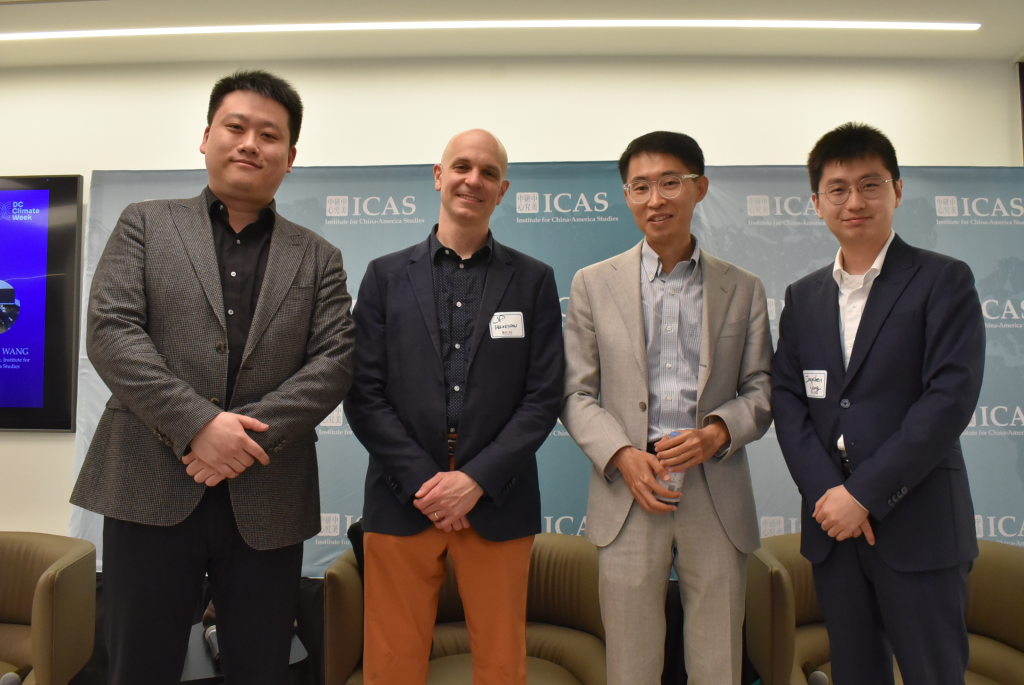
The panel featured LI Shuo (Director of China Climate Hub & Senior Fellow, Asia Society Policy Institute), John HELVESTON (Associate Professor, Department of Engineering Management and Systems Engineering, George Washington University), and Yilun ZHANG (Research Associate, Institute for China-America Studies), and was moderated by Zhangchen WANG (Research Associate, Institute for China-America Studies).
The discussion began by comparing differences in EV adoption and consumer expectations between the United States and China, highlighting how these differences shape market development. Li noted that Chinese EVs are experiencing rapid growth both domestically and internationally, with China maintaining a leading position in key EV technologies such as batteries. While exports to the United States and Europe face barriers, he emphasized that Chinese manufacturers are actively turning toward the Global South as a primary expansion market. At the same time, China is expected to continue strengthening its technological capabilities and consolidating its domestic market while remaining highly competitive globally. Helveston explained that American consumers, having grown up with gasoline vehicles, are more accustomed to internal combustion engines and tend to demand significantly longer driving ranges. This preference is further reinforced by the current lack of extensive charging infrastructure in the United States, making EV adoption more challenging. In contrast, Chinese consumers often enter car ownership at a later stage and are more open to adopting EVs as their first vehicle, accepting shorter ranges due in part to more coordinated infrastructure development. Together, these cultural and structural differences illustrate how distinct historical experiences and infrastructure conditions create fundamentally different EV markets.
The panel also examined the contrasting policy environments shaping EV development in the two countries. Helveston pointed out that the U.S. policy landscape on EV is unstable and highly politicized. Although policies such as the Inflation Reduction Act have provided important support for EV development, changes in political leadership and partisan attitudes have made firms uncertain about whether such support will be sustained over the long term. This uncertainty weakens the confidence needed for major industrial investment, leaving companies caught between expanding EV production and preserving flexibility for a slower transition. All of these made it harder for the United States to build a competitive domestic EV industry. In contrast, Zhang highlighted that China’s EV-related policies are more coherent and better integrated across sectors, including taxation, technology, and charging infrastructure, creating more favorable conditions for sustained growth.
National security concerns emerged as another central theme in the discussion. Zhang argued that, from a political perspective, it is understandable for the United States to exclude Chinese EVs from its market, driven by both trade protection and concerns over security associated with advanced vehicle technologies such as autonomous driving. However, he questioned the long-term sustainability of such an approach, particularly if Chinese firms partner with European manufacturers to access the U.S. market indirectly. He also challenged the extent to which EV supply chain dependencies constitute a true national security threat, describing some of these concerns as “over-securitization.” For example, he suggested that risks associated with batteries may be overstated, as they do not inherently carry the level of strategic vulnerability often assumed. Helveston reinforced this perspective by noting that the United States already faces comparable dependencies in the oil sector, which could be equally categorized as a security concern. Meanwhile, Li added that the United States has already relied on second- or third-tier technologies in sectors such as solar energy, raising the possibility that it may similarly have to accept a less-than-leading position in EV technology. At the same time, speakers acknowledged that China’s dominance in materials processing, technical expertise, and industrial capacity represents a real structural advantage that will be difficult for the U.S. to overcome in the near term.
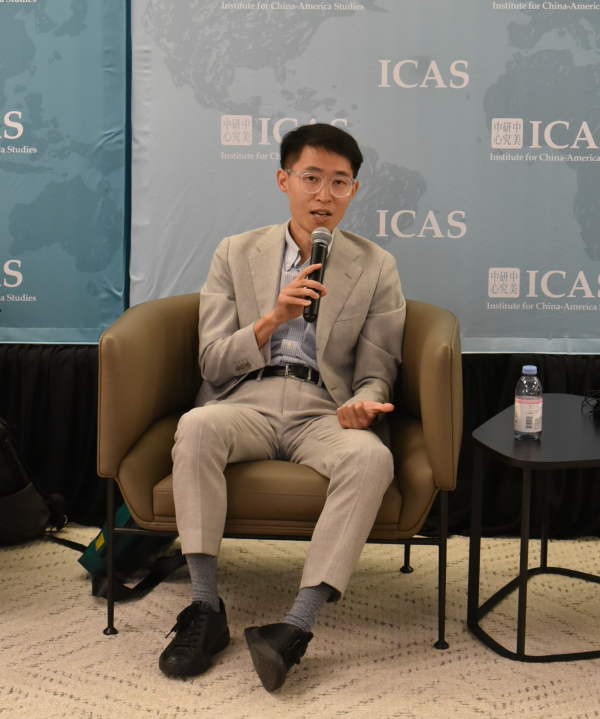

Supply chains and industrial capacity were identified as critical determinants of future EV competition. Helveston emphasized significant gaps in the U.S. ecosystem, including insufficient refining capacity, a lack of workforce training programs, and limited expertise in battery production. These shortcomings constrain the United States’ ability to replicate China’s industrial capabilities and reinforce long-term dependence on external supply chains. Zhang noted that China’s advantages are partly rooted in its natural resource endowment and established industrial base, which are not easily replicated. Li expressed skepticism about large-scale industrial cooperation or joint ventures between the U.S. and China, arguing that an asset-heavy approach would be both risky and politically difficult, particularly in an uncertain global environment. He also pointed out that Chinese firms face high uncertainty and risk when entering the U.S. market given prolonged decoupling trends and geopolitical tensions, not only in terms of market acceptance and sales prospects, but also in the difficulty of establishing a local manufacturing presence due to regulatory, political, and security-related barriers. Therefore, Chinese EV companies have focused on expanding into other regions. Even in cases of potential joint ventures, such as a possible partnership between Ford and Geely, firms appear more inclined to collaborate in third markets—such as in Europe—rather than within the United States.
The technological transformation associated with EV was another key focus of the discussion. Zhang highlighted how EVs enable new forms of “smart” functionality, including advanced software integration, smart driving systems, and enhanced user interfaces, fundamentally reshaping what vehicles can do. Helveston added that EVs are increasingly defined by software rather than traditional engine mechanics, which shifts the competitive landscape toward innovation in digital technologies.

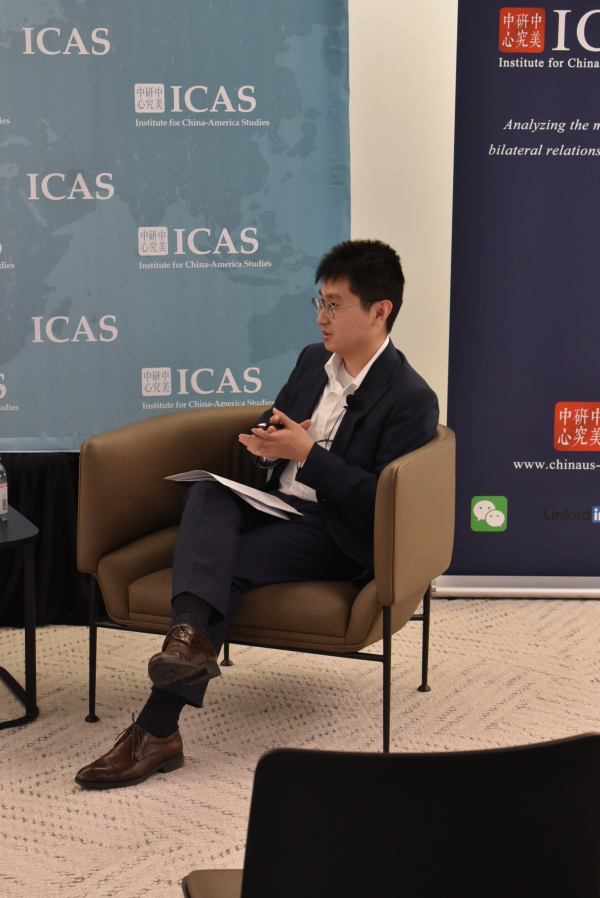
Finally, the panel addressed the broader trajectory of global EV competition and its implications for climate and industrial policy. Li suggested that the United States may ultimately accept a position of technological second-best in certain sectors, drawing parallels to its experience in solar energy. At the same time, he cautioned that Chinese EV firms will continue expanding globally and may eventually reach North America through indirect channels, such as Canada or partnerships with non-Chinese brands. Helveston emphasized that global electrification is an inevitable trend and should not necessarily be viewed as a threat, while also arguing that if the United States seeks to limit Chinese influence, it must invest more seriously in developing its domestic EV industry.
Speakers also noted that while potential high-level political engagements between the two countries may occur in the near future, including a leadership meeting reportedly planned for mid-May, meaningful shifts in the EV sector will take time. Given the deeply entrenched structural issues—ranging from supply chain dependencies to regulatory barriers and broader geopolitical tensions—such high-level engagements are unlikely to produce immediate or significant changes in EV-related policies or market dynamics.
Overall, the event underscored that EV sits at the intersection of climate goals, industrial strategy, and international relations. The evolving dynamics between the U.S. and China will not only determine the future of the EV market, but also influence broader questions about global cooperation and competition in the transition to a low-carbon economy.