
Georgetown Marriott Hotel Metropolitan Ballroom
October 30, 2025
On October 30, the Institute for China-America Studies (ICAS) organized its 2025 Annual Conference in full, well-attended, in-person format at the Georgetown Marriott Hotel in downtown Washington, D.C. Dr. Hong Nong, Executive Director of ICAS, opened the conference and Dr. Wu Shicun, Chairman of ICAS’ Advisory Board, delivered the introductory remarks.
In his heartfelt message, Dr. Wu spoke of the need for patience and dialogue in U.S.-China relations that was anchored in facts, law and mutual respect, so that these two great nations could find a way to compete responsibly, coexist and cooperate for the larger benefit of humanity. He noted how over his rich and long career, he had seen tempers flare, negotiations stall, and optimism fade, yet how trust had slowly been repaired and rebuilt through perseverance, dialogue and professionalism. Dr. Wu held up the waters of the South China Sea as a mirror of the larger U.S.-China relationship. It was a testing ground and barometer of U.S.-China interaction as well as a theater of power competition, yet it was also an arena where regional interdependence coexisted in the most vivid way. Beneath overlapping sovereignty claims and great power politics was a shared sea that connected rather than divided the region. And much like the shared waters of the South China Sea, the U.S. and China were intertwined by linkages of economics and global responsibility. It was indeed the expectation of the world that the two countries would rise above their differences and cooperate on pressing transnational issues, such as climate change, maritime safety, biodiversity, and AI governance, among others. In his introductory remarks, Dr. Wu also implored the two sides to continue placing their faith in the scientific method. Be it the case of marine research and environmental monitoring in the South China Sea or in their broader bilateral interactions, the scientific spirit of collaboration – pragmatic, humanist and apolitical – must continue to be a guiding light.
Dr. Wu’s introductory remarks were followed by the highlight of the conference – the keynote remarks delivered by Mr. Qiu Wenxing, Minister and Deputy Chief of Mission at the Embassy of the People’s Republic of China in the United States. The session was moderated by Professor Gordon Houlden, an ex-senior Canadian diplomat and Director Emeritus of the China Institute at the University of Alberta, Canada.
In his remarks, Minister Qiu began by briefly summarizing the key outcomes of the recent Fourth Plenary Session of the 20th CPC Central Committee, and most notably its recommendations for the next (15th) five-year plan. In this context, he touched on three themes that underlay – and would continue to underline – China’s planning and development objectives.
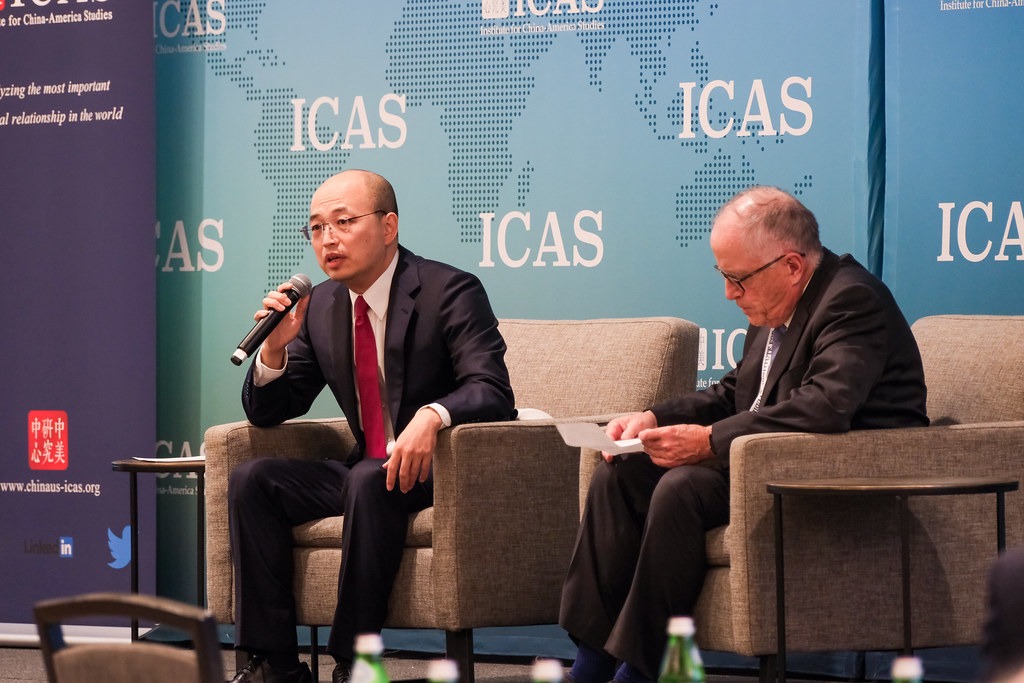
Keynote Dialogue by Minister & DCM Qiu Wenxing, moderated by Dr. Gourden Houlden.
The first was the theme of continuity. Over seven decades and more, China had worked from generation to generation using a single template as its blueprint for realizing modernity and this template, and blueprint, would not change. The second theme was that of certainty. China had confidence in the certainty of its growth prospects and capabilities, having navigated numerous risks and challenges and attained one of the highest growth rates among the major economies. The final theme was that of opportunity. The Chinese economy was like a vast ocean – big, resilient and promising. Further opening-up and the sharing of development opportunities to the U.S. and the world would not change for as far as the eye can see.
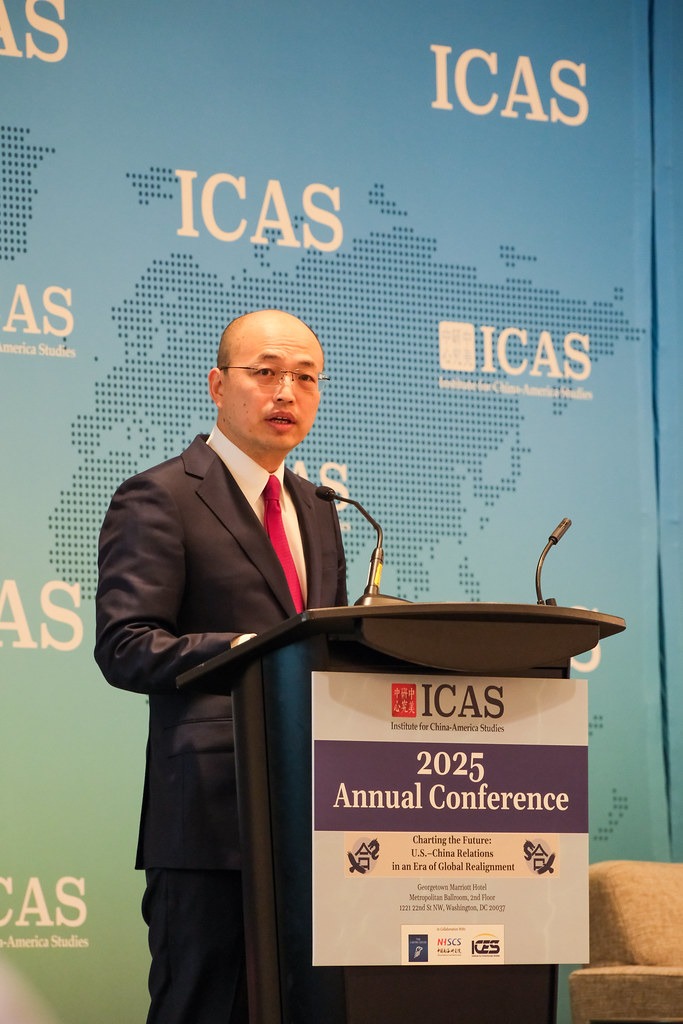
Turning to U.S.-China relations, Minister Qiu noted that his initial assessment of the Trump-Xi meeting in Busan, South Korea was a guardedly positive one. The two presidents appeared to have had a constructive and productive meeting. Although the Taiwan issue was not mentioned in official readouts, its omission does not necessarily mean that it was absent from their private discussions.
He stressed that dialogue was always better than confrontation and that the two countries should maintain communications through various channels and at various levels to enhance mutual understanding. He specifically noted that combating illegal immigration and telecoms fraud, anti-money laundering, AI, and responding to infectious diseases were areas ripe for cooperation. For such bilateral cooperation to come to fruition though, it was important for both countries to adhere to the principles of mutual respect, peaceful coexistence and mutual cooperation.
Finally, Minister Qiu concluded with a couple of policy suggestions for the U.S.-China relationship. First, was the imperative to respect objective facts. There have been recent instances, he noted, where the two countries have come to diametrically opposite policy conclusions despite the reality of a common set of facts. This cannot but help create distrust in the larger relationship. Second, the U.S. immigration authorities must stop the harassment of Chinese students at ports of entry. There continue to be too many egregious instances in this regard, and they do not overall help create a favorable environment for people-to-people understanding.
Finally, China and the U.S. must prioritize stability in their bilateral relationship, including through the buildout of dialogue mechanisms, so that a pathway to mutually beneficial coexistence can be charted out. Both sides should treat each other with respect, find a way to live alongside peacefully, maintain open lines of communication, prevent conflict, cooperate in areas of shared interest, and responsibly manage the competitive aspects of their relationship. The hope at the Chinese end, furthermore, is that the U.S. will be more welcoming of Chinese investment in the country and would offer a fair, predictable and non-discriminatory operating environment for Chinese firms.
The first panel of the ICAS 2025 Annual Conference featured four senior U.S. and Chinese academic and think tank specialists who spoke of the elements, and underlying drivers, of competition in Sino-American relations. There was a consensus among the panelists that the bilateral relationship continues to remain at a difficult juncture, notwithstanding the short-term stabilization afforded by the recent Xi-Trump leaders meeting in Busan, South Korea. The structural, ideological, economic and geopolitical dimensions of the challenge in relations remain unchanged. The return of Donald Trump to the presidency has injected an added degree of instability and capriciousness to bilateral ties and to global order.
On the one hand, President Trump is one of the most powerful presidents that we are witnessing in our lifetimes. On the other hand, the U.S. is suffering a major loss of global influence and a weakening of its alliance system, given Trump’s disrespect for international law and his tendency to treat allies and adversaries alike when it comes to tariffs and sanctions. The net effect has been to somewhat transform the nature of competition between the U.S. and China from being one featuring America and its allies versus China to being a head-to-head one. In this context, it was wondered aloud if Europe could play the role of a stabilizing third force, both in global affairs as well as in China-U.S. ties.
MODERATOR: Liu Yawei (Senior Advisor on China, The Carter Center)
PANELISTS:
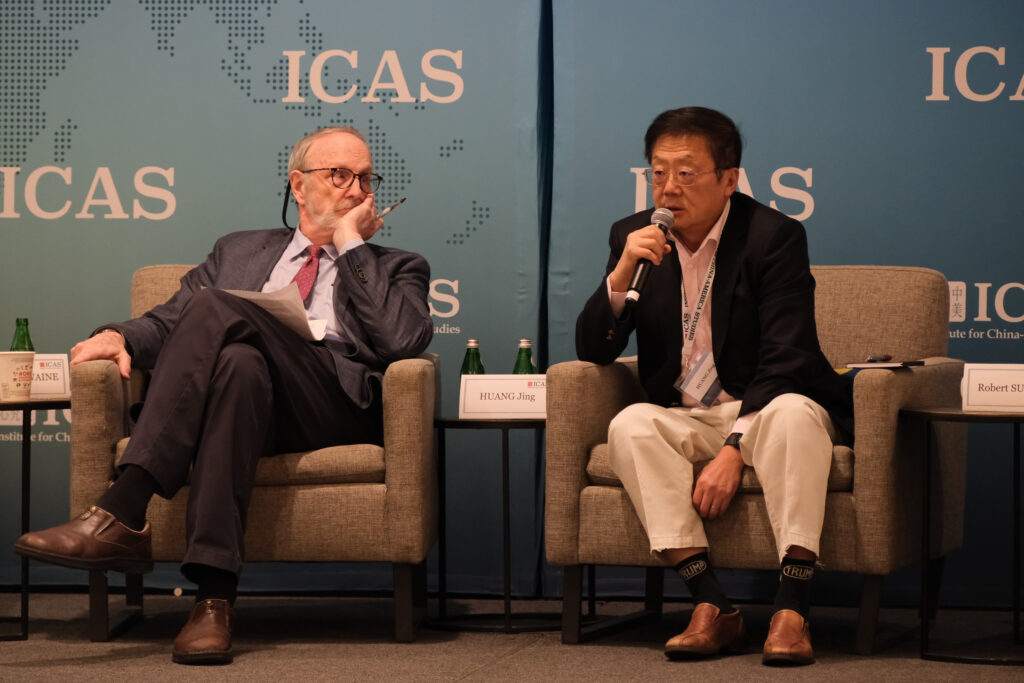
The Taiwan issue emerged in the discussion, as expected, as the number #1 flashpoint in U.S.-China relations. It is by far the only issue that could lead to the outbreak of a major war between Washington and Beijing, leading to incalculable human losses on all sides. As such, the onus was on both sides to tread cautiously. At this time though, the key pillars that have upheld the status quo on Taiwan – the credibility of Washington’s One China policy; the credibility of Beijing’s pledge of peaceful reunification; and the Taiwan authorities’ commitment not to rock the boat of political separation – are eroding. It is necessary therefore for the U.S. and China to invest in building-out civilian-led crisis management mechanisms so that any potential for escalation or spiral of overreaction can be contained at the senior political levels. In this regard, it was also proposed that Washington should weigh the pros and cons of transitioning to a Taiwan Strait policy that limits the military escalation possibilities while at the same time supporting the self-governing island’s political autonomy.
The panel concluded with the insight that the largest challenges faced by both sides were internal. The political divisions in America run deep. The pursuit of rebalancing the Chinese economy on a sustainable new growth trajectory is equally challenging. Whichever side manages to get its house in order will, as such, enjoy a first-mover advantage within the dynamics of their mutually competitive relationship.
The second panel of the ICAS 2025 Annual Conference featured four senior U.S. and Chinese policy practitioners, academics and think tank specialists who spoke of the elements, and underlying drivers, of trade and technology competition – and decoupling – in Sino-American relations. While the locus of technology competition over the past two years or so has shifted to the AI (artificial intelligence) arena, particularly with regard to the development of sophisticated AI chips and the build out of data and compute infrastructure, the return of Donald Trump to the presidency has veritably scrambled the bilateral trading relationship once again. The imposition of reciprocal and fentanyl tariffs on China has reignited bilateral trade tensions. But Trump’s instinct to leverage these tariffs for mercantilist gain in the China market also provides an opportunity for the two sides to arrive at a new modus vivendi on their bilateral trade as well as technology exchanges.
As was pointed out, both sides have leveraged their respective export controls (on chips and chip-design technology by the U.S. side; on rare earths and critical minerals by the Chinese side) to arrive at a rough-and-ready détente for the time being in their burgeoning technology cold war. Whether the détente holds will be a function, both, of making headway in their bilateral trade discussions as well as navigating the treacherous anti-China narrative on exports controls and investment safeguards on Capitol Hill and within the American body politic. There has already been alarm and significant pushback against President Trump’s willingness to sell advanced – albeit scaled down – AI chips to China.
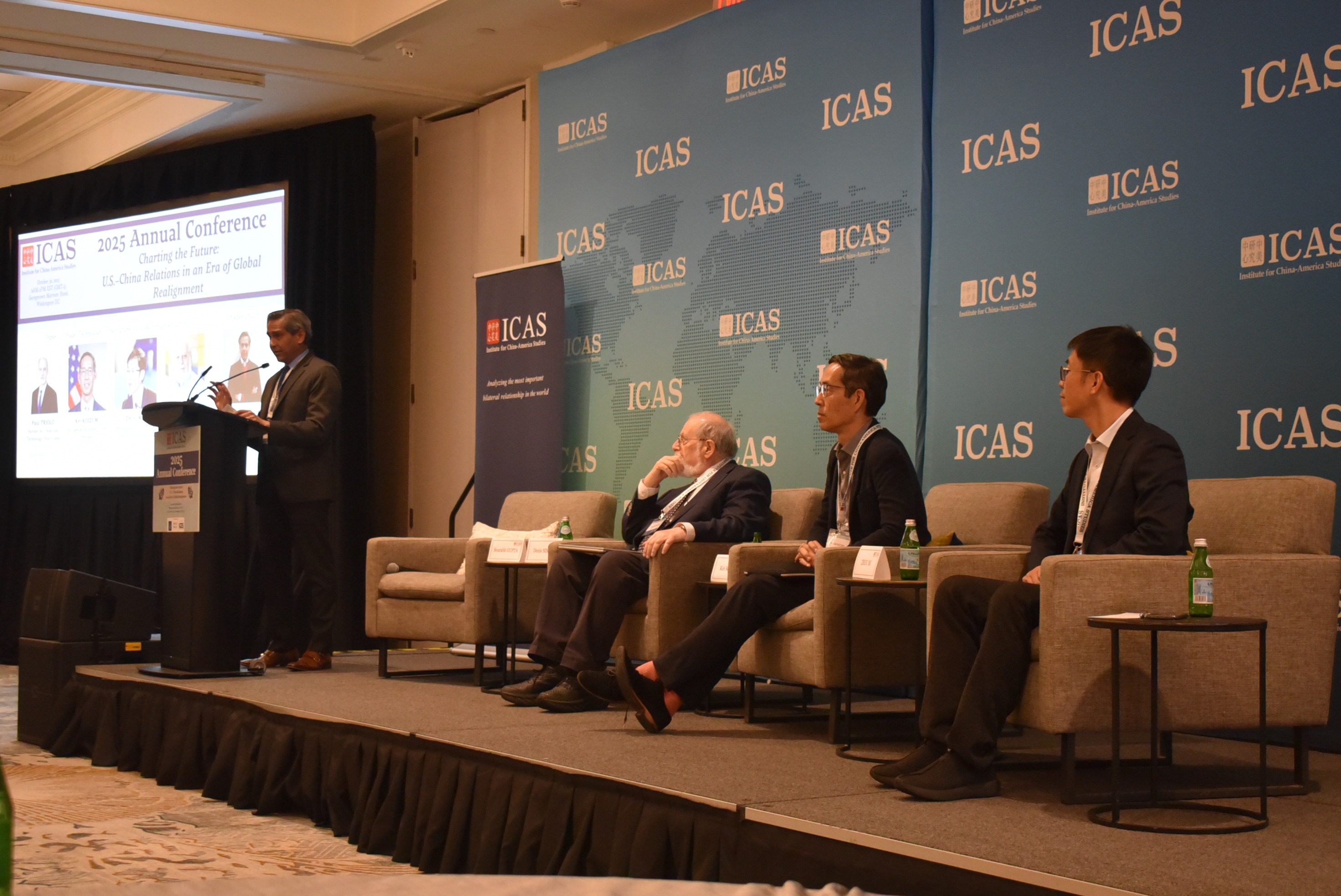
MODERATOR: Sourabh GUPTA (Senior Fellow & Head, Trade ‘n Technology Program, Institute for China-America Studies)
PANELISTS:
At another level, the panelists submitted that China is no longer a rising power. China has in fact risen. Across wide-ranging scientific and technology endeavors, ranging from renewables technologies to space discovery, China has established itself as a peer protagonist and competitor of the U.S. and the West. The re-doubled focus on industrial and technological upgrading in the forthcoming 15th Five Year Plan will further consolidate this peer protagonist standing. It behooves the U.S. and the West, thus, to engage China earnestly in the spirit of open scientific discourse so as to realize mutually beneficial gains.
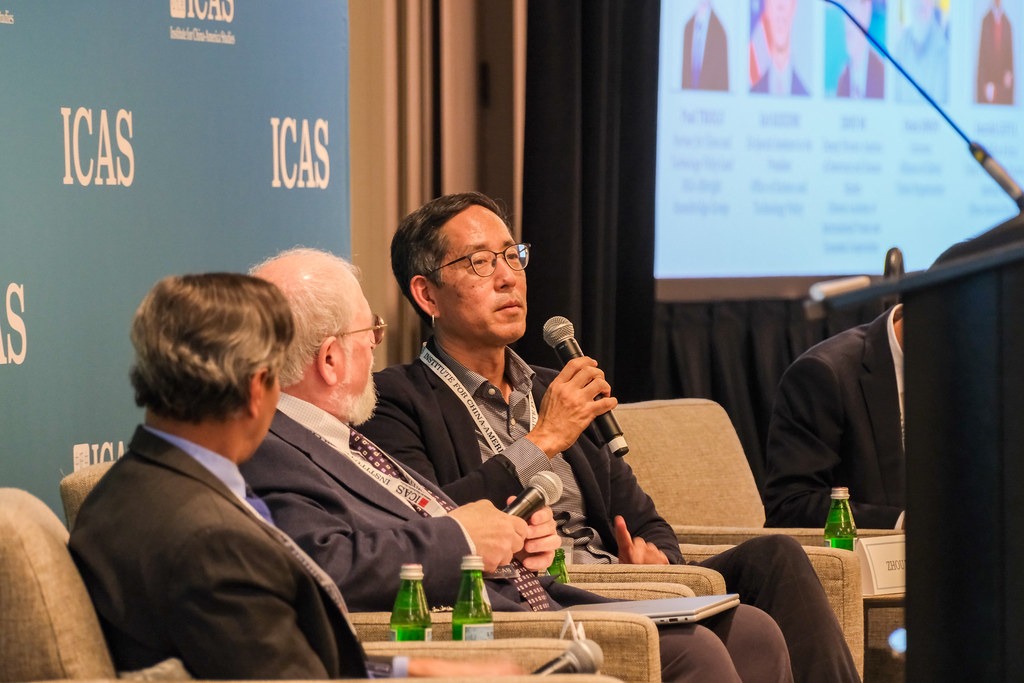
For China will in any case, with or without the U.S. and the West, deepen its S&T and industrial collaborative roots with the Global South. What we are instead observing today in the U.S. is an anxiety and unwillingness to come to terms with China as a ‘risen’ scientific power, which in turn is leading at times to confusing and contradictory policy measures. Witness, for instance, the seemingly successful lobbying by Nvidia and other U.S. AI companies to sell AI chips to Beijing which runs counter to the administration’s own effort, as outlined in its AI Action Plan, to outcompete China in the global AI technology diffusion race.
Finally, the panelists dwelt on the enduring government role in the buildout of AI. China’s government has made no secret of its desire to proactively ensure that AI, as a general purpose technology, achieves wide diffusion in general purposes applications across Chinese society. The U.S. federal government role has been no less consequential. Indeed, most of the basic discoveries and technologies underpinning what we know today as AI emerged from federal government investments in R&D, performed at national labs, universities and companies, that date back decades. The bipartisanship that has characterized the U.S. S&T policy may be coming under strain though, with the Trump team veritably standing many of his predecessor’s AI policy initiatives on their head. Be that as it may, AI will continue to be a transformational aspect of modern-day society and a key locus of U.S.-China competition in the years and decade ahead.
The morning keynote and the two panels was followed by the other highlight of the annual conference – a luncheon dialogue featuring Ambassador David Balton, Senior Fellow at Harvard University Kennedy School’s Belfer Center Arctic Initiative and a former U.S. Ambassador for Oceans and Fisheries, and Dr. Hong Nong, Executive Director of ICAS, and a polar affairs maritime specialist in her own right.
In his remarks, Amb. Balton provided a panoramic overview of the geopolitics and state of play on Arctic policy, touching on topics as wide-ranging as Arctic exceptionalism, Arctic shipping, President Trump’s musing about purchasing Greenland, China’s role in the Arctic, as well as institutionalized interactions featuring the U.S. and China in the Arctic. Amb. Balton was frank in noting that multilateral cooperation in the Arctic region has taken an understandably significant hit following Russia’s invasion of Ukraine in February 2022.
Cooperation with Russia – hitherto, an important and engaged Arctic player within the multilateral framework of the Arctic Council – has essentially ground to a halt on almost every front. Even technical experts of the Council’s working groups are not allowed to meet in-person; they can only meet on a virtual basis. He also emphasized the vital role of the six Permanent Participants, representing international Indigenous Peoples’ organizations, in the work of the Arctic Council. It was his hope, going forward, that a political opportunity to widen the aperture would arise so that some of the productive below-the-political-radar cooperation on polar matters, especially in the Bering Strait region, such as oil pollution, preparedness and response, search and rescue, fisheries, and disaster management could be renewed.
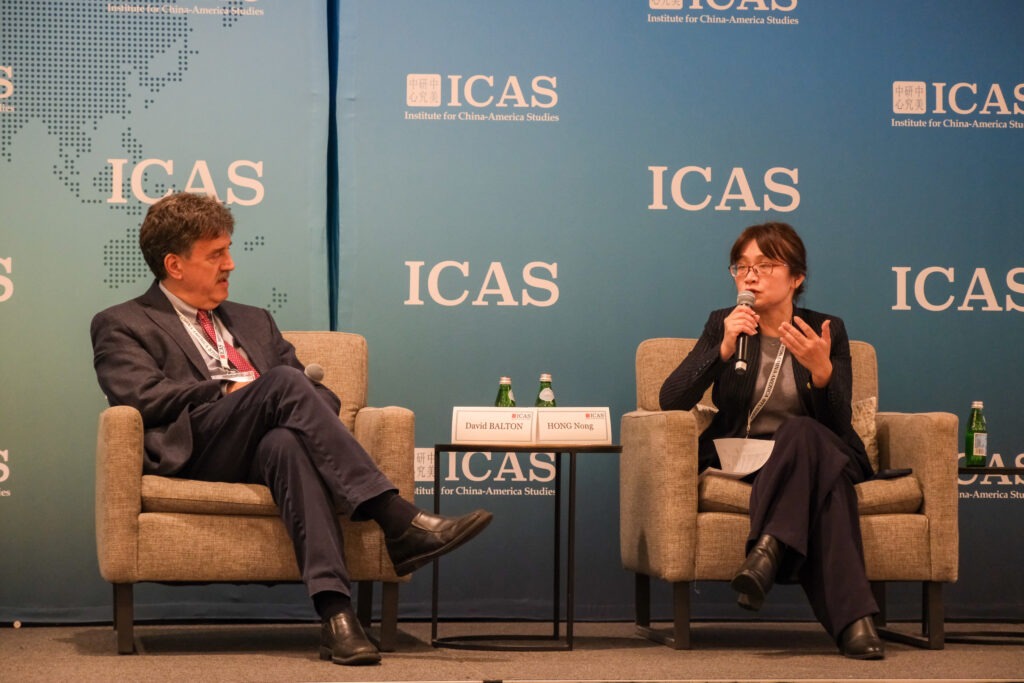
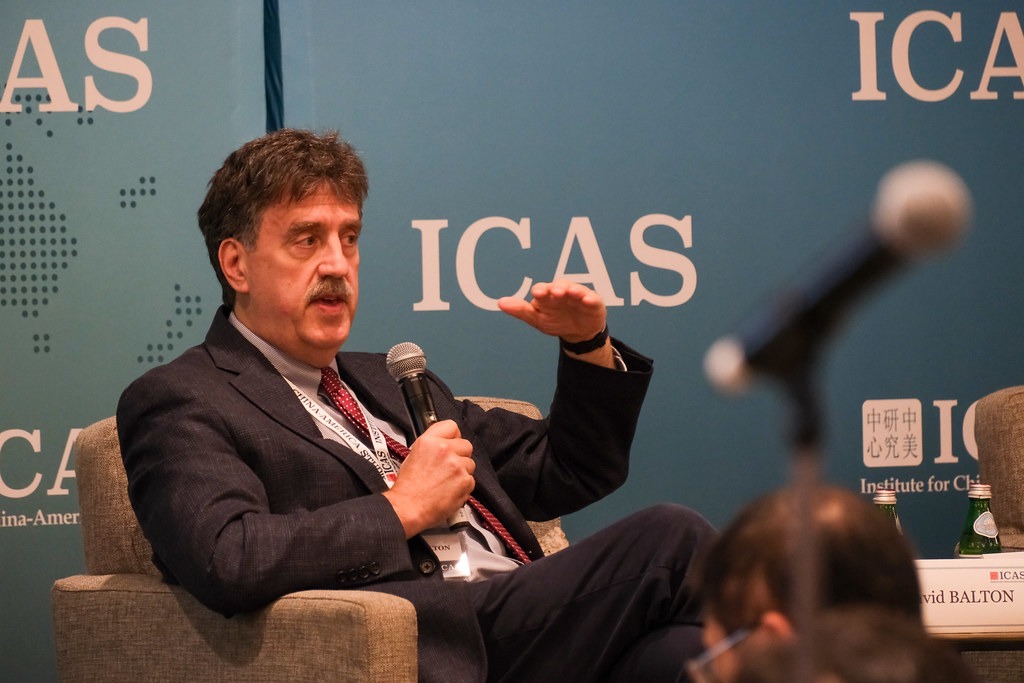
Turning to China’s presence and role in the Arctic, Amb. Balton first rebutted a number of incorrect assumptions. China is not seeking to project power in the Arctic region and control shipping lanes; indeed, the whole debate regarding transpolar shipping has an air of exaggeration to it. Nor is China seeking to load up its investments in the region; to the contrary, these investments have actually been declining. That said, China has indeed become more active in the Arctic region, routinely sending vessels through the Bering Strait and right past the U.S. coastline. Perhaps this could be an opportunity to work out arrangements to ensure that there are no unplanned encounters at sea that could lead to the risk of miscalculation and unintended consequences. The two sides should also explore deepening their cooperation on collaborative scientific research about the Arctic Ocean and its ecosystems. China and the United States, along with a number of other Arctic and non-Arctic states, are currently parties to the Central Arctic Ocean Fisheries Agreement. As such, the two sides already cooperate within a multilateral context and as called for by this agreement, could take their cooperation to the next level by engaging in collaborative scientific research
Ambassador Balton summed up his remarks and the subsequent discussion by observing that the Arctic region has been a relatively peaceful part of the planet. The risk of armed conflict is low, and efforts must be made by all parties to keep matters that way. And the focus should rather be on climate change remediation, given that the Arctic is warming at a rate three or four times as fast as the planet as a whole on average.

The Institute for China-America Studies is an independent nonprofit, nonpartisan research organization dedicated to strengthening the understanding of U.S.-China relations through expert analysis and practical policy solutions.
1919 M St. NW Suite 310,
Washington, DC 20036
icas@chinaus-icas.org
(202) 968-0595
© 2026 INSTITUTE FOR CHINA-AMERICA STUDIES. ALL RIGHTS RESERVED.