
By Jessica L. Martin
Lifting Self-Imposed Restrictions on the U.S.-Taiwan Relationship
Michael R. Pompeo
U.S. Department of State, January 9
“Taiwan is a vibrant democracy and reliable partner of the United States, and yet for several decades the State Department has created complex internal restrictions to regulate our diplomats, servicemembers, and other officials’ interactions with their Taiwanese counterparts. The United States government took these actions unilaterally, in an attempt to appease the Communist regime in Beijing. No more. Today I am announcing that I am lifting all of these self-imposed restrictions.”
US Sending UN Envoy to Taiwan, Sparking Warning from China
Edith M. Lederer
AP News, January 8
U.S. Secretary of State Mike Pompeo said Thursday he is sending U.N. Ambassador Kelly Craft to Taiwan next week to show “what a free China could achieve”, an announcement that sparked sharp criticism from Beijing and a warning that “the United States will pay a heavy price for its wrong action.” Pompeo called Taiwan “a reliable partner and vibrant democracy that has flourished despite CCP (Chinese Communist Party) efforts to undermine its great success.” China’s U.N. Mission said in a statement from its spokesperson that Beijing “firmly opposes” Craft’s visit. It said that “there is only one China in the world and the Taiwan region is an inalienable part of China’s territory.”
Donald Trump’s Final Days
The Editorial Board,
The Wall Street Journal, January 7
“The lodestar of these columns is the U.S. Constitution. The document is the durable foundation protecting liberty, and this week it showed its virtue again. Despite being displaced for a time by a mob, Congress returned the same day to ratify the Electoral College vote and Joe Biden’s election. Congratulations to the President-elect, who will be inaugurated as the Constitution stipulates at noon on Jan. 20.”
Trump’s Deputy National Security Advisor Resigns as Other Top Officials Consider Quitting over Capital Riot
Kaitlan Collins, Vivian Salama, Jake Tapper and Kylie Atwood
CNN, January 7
President Donald Trump’s deputy national security adviser Matt Pottinger resigned Wednesday afternoon in response to Trump’s reaction to a mob of his supporters breaching the US Capitol, a person close to Pottinger confirms to CNN. Pottinger told people there was very little for him to consider, the person said. Several of Trump’s top national security aides — including national security adviser Robert O’Brien — are considering resigning in the wake of his response to a day of chaos and violence, according to multiple sources familiar with their thinking.
Political-Military Dialogue Between Taiwan, U.S. a Success: MOFA
Chen Yun-yu, Matt Yu, Wang Cheng-chung, Kuo Chien-shen and Emerson Lim
Focus Taiwan, January 7
Taiwan and the United States held a virtual discussion Thursday, under their “Political-Military Dialogue,” which was a success, Taiwan’s Ministry of Foreign Affairs (MOFA) said, but it declined to give any details. At a regular press briefing, MOFA spokesperson Joanne Ou (歐江安) said the virtual dialogue started 7:30 a.m. Taipei time and was held successfully. Following the publication of Cooper’s schedule by the State Department, the Chinese government said through its Foreign Ministry spokesperson Hua Chunying it would make the necessary response, based on how the situation developed.
Beijing Rips Trump Order Banning Transactions with 8 Chinese Apps
John Bowden
The Hill, January 6
A spokesperson for China’s foreign ministry on Wednesday accused the U.S. of “bullying” in response to the Trump administration’s move to ban transactions with several apps owned by Chinese firms. The Associated Press reported that Hua Chunying told reporters that the administration’s claims that it was protecting national security were hypocritical, given U.S. intelligence-gathering methods. An Executive Order signed by President Trump on Tuesday banned transactions with Alipay, WeChat Pay and six other apps, arguing that they would allow China’s government access to U.S. consumers’ private information. [Trump’s Executive Order]
NYSE Reverses Course Again, Will Delist Three Chinese Telecom Stocks
Alexander Osipovich
The Wall Street Journal, January 6
The New York Stock Exchange will move forward with delisting three Chinese telecommunications companies targeted by an Executive Order from President Trump, reversing course yet again after the NYSE said earlier this week that it wouldn’t delist them. The NYSE said Wednesday that trading of the U.S.-listed shares of China Mobile Ltd., China Telecom Corp. and China Unicom (Hong Kong) Ltd. would be suspended at 4 a.m. ET on Monday (January 11). Last week, the NYSE said it would delist the three companies to comply with Mr. Trump’s order, only to reverse course on Monday and say that it wasn’t delisting them.
China-US Trade War: Biden Team to Tackle EU Differences and ‘Then Take on Beijing’
Rachel Zhang
South China Morning Post, January 4
The United States aims to end its trade war with European allies and work with them to deal with China’s trade practices, a key official in the upcoming Biden administration said after Beijing and Brussels signed a major investment deal. Jake Sullivan, Biden’s national security adviser, told CNN on Sunday that the new administration in Washington would recognise China as a serious strategic competitor to the US. He also said president-elect Biden would work out the economic differences between the US and its European allies to improve their relations and jointly counter China on multiple fronts, from trade and technology, to the military and human rights.
‘Growing Body of Evidence’ that COVID-19 Leak from Chinese Lab a ‘Credible Possibility,’ Trump Official Claims
Thomas Barrabi
Fox News, January 4
A top Trump administration national security official recently claimed there was a “growing body of evidence” to support the theory that COVID-19 leaked from a Chinese government-run lab in Wuhan. In a recent virtual conference with British lawmakers, Deputy National Security Adviser Matthew Pottinger asserted that officials within China have rejected the theory that the virus originated from a wet market in Wuhan. “There is a growing body of evidence to say that a laboratory leak or accident is very much a credible possibility,” Pottinger said during the call. “Even establishment figures in Beijing have openly dismissed the wet market story.”
US Extends China Military Investment Ban to Subsidiaries
James Politi
Financial Times, December 29
An Executive Order issued by President Donald Trump banning investments in Chinese companies with suspected military ties will apply to “any subsidiary of a Communist Chinese military company,” the US Treasury said on Monday, signalling a tougher interpretation of the crackdown. The Treasury Department added it planned to publicly list subsidiaries subject to the ban that were “50 per cent or more owned” or “determined to be controlled” by the companies suspected of ties with the Chinese military. The clarification followed a heated debate within the Trump administration about the application of the Executive Order signed last month.
U.S. Blacklists Dozens of Chinese Firms Including SMIC, DJI
Alexandra Alper, David Shepardson, Humeyra Pamuk
Reuters, December 18
The United States added dozens of Chinese companies, including the country’s top chipmaker SMIC and Chinese drone manufacturer SZ DJI Technology Co Ltd, to a trade blacklist on Friday. The U.S. Commerce Department said the action against SMIC stems from Beijing’s efforts to harness civilian technologies for military purposes and evidence of activities between SMIC and Chinese military industrial companies of concern. The Department also said it was adding the world’s biggest drone company DJI to the list along with AGCU Scientech; China National Scientific Instruments and Materials, and Kuang-Chi Group for allegedly enabling “wide-scale human rights abuses”.
China is Thriving in the Chaos of the US Presidential Transition
James Griffiths
CNN, January 7
“In recent days, Beijing has struck a major investment agreement with the European Union, one that potentially undermines Washington’s ability to take on China, and launched a major crackdown in Hong Kong, with dozens of activists and lawmakers arrested in a purge that threatens to wipe out the city’s democratic opposition. … Both recent actions by Beijing were symbolic of a China that is both emboldened by its relative strength compared to the rest of the world right now, and keen to take advantage of the current chaos in Washington — one of President-elect Joe Biden’s top advisers had urged Brussels to wait before striking a trade deal, only to see Beijing offer concessions to get it secured sooner. While the US may not have been able to stop either development even in the best of times, that a superpower has been seemingly outmaneuvered will delight many of Washington’s critics in Beijing and elsewhere, who have always felt the US throws its weight around too much internationally.”
Biden Plans to Build a Grand Alliance to Counter China. It Won’t Be Easy.
Bob Davis and Lingling Wei
The Wall Street Journal, January 6
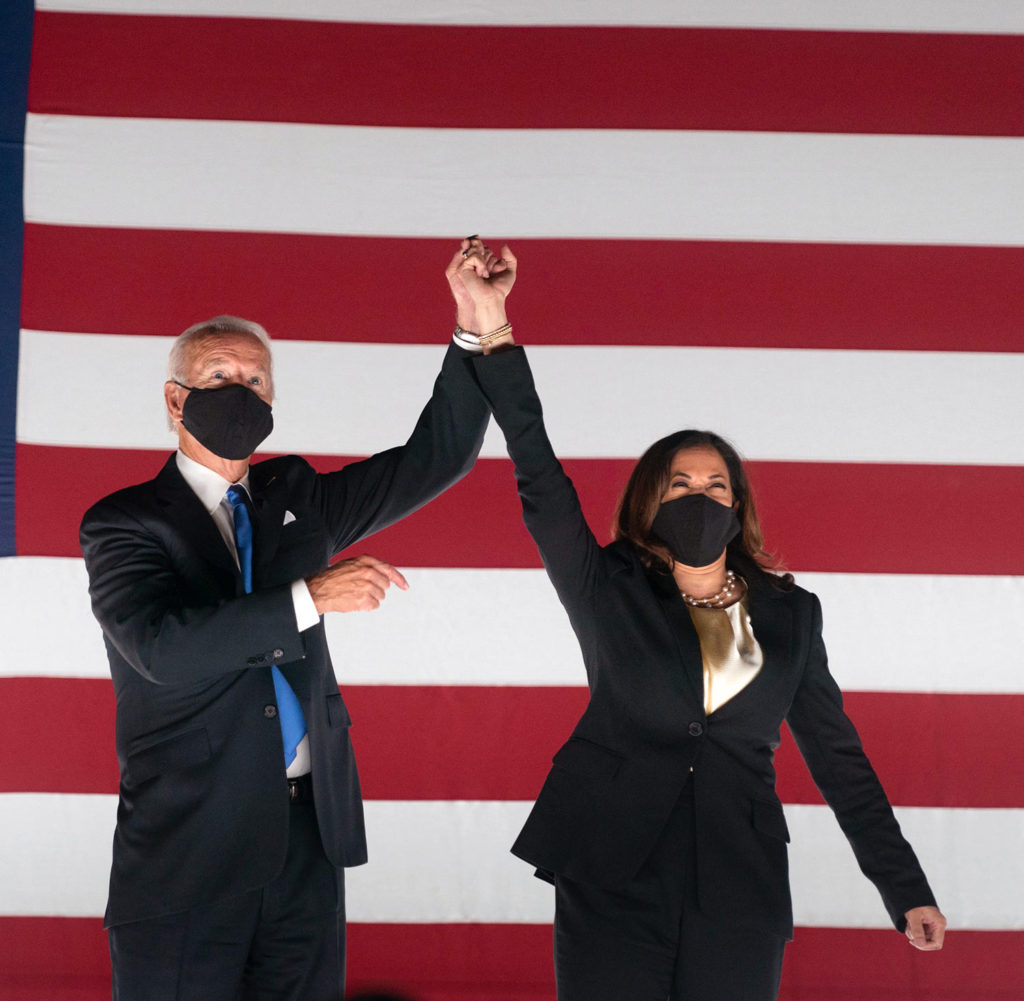
“Given the lure of the vast Chinese market, Mr. Biden could face a tough time convincing allies to sign up for a united front against Beijing. China and the European Union, for instance, recently reached an investment treaty. U.S. allies say they can’t be sure of America’s long-term commitment to an international alliance, given four years of a unilateral approach.”
Avoiding the Climate Canard in US-China Relations
Ryan Hass
Brookings Institution, January 4
“[A]rguments over whether the United States should coordinate with China on climate issues are wrestling with the wrong question.”
“China accounts for over one-quarter of global emissions. To keep the 1.5-degree global average temperature rise and net-zero emission targets in play for mid-century, sharply intensified efforts in the coming years — particularly from China — will be a must. The right question, therefore, is not whether to work with China on climate issues, but rather how best to explore policy coordination with China amidst a relationship that is defined by intensifying competition, and at a time when China is growing more repressive at home and aggressive abroad. To that end, six broad guiding principles could help strike a durable balance:
Meeting the Challenge in Asia
Evan A. Feigenbaum
The National Interest, December 22
“To succeed in Asia, President-elect Joe Biden will need an administration that whines less, competes more, and leverages American strengths in the Asia that actually exists, not the one of its wishes, dreams, and fantasies.”
China Used Stolen Data to Expose CIA Operatives in Africa and Europe
Zach Dorfman
Foreign Affairs, December 21
“The discovery of U.S. spy networks in China fueled a decadelong global war over data between Beijing and Washington.”
[Editor’s Note: This is the first in a three-part series. The second part covers how U.S. intelligence under Barack Obama struggled as Xi Jinping consolidated his power. The third part covers the Donald Trump era and the growing cooperation between Chinese intelligence and tech giants.]
The Importance of a U.S.-Taiwan Bilateral Trade Agreement
Lotta Danielsson
The National Bureau of Asian Research, December 21
“[A]n important facet of the future economic and trade relationship—a potential U.S.-Taiwan Bilateral Trade Agreement (BTA)—appeared to be specifically excluded from the EPPD talks.”
“In fact, while the overall bilateral relationship has demonstrably grown stronger over the last few years, trade has been the major exception.”
“Given the significance of Taiwan as a democratic and rules-based partner for the United States in the Indo-Pacific, it is important for the two sides to find ways to re-engage on trade and to resolve their outstanding trade issues. Negotiating and signing a BTA would be an effective way to move forward.”
Competition with China Could be Short and Sharp
Michael Beckley and Hal Brands
Foreign Affairs, December 17
“The Risk of War Is Greatest in the Next Decade.”
How COVID-19 Affected U.S.-China Military Signaling
Asia Maritime Transparency Initiative, December 17
“AMTI has analyzed public announcements and official reporting from both the United States and China on military activities in the Indo-Pacific between February 1 and November 30, 2020 and compared it to the same period in 2019. The reported events include exercises and trainings, port visits, naval operations, and, in some cases, competitions and exhibitions.”
“The number of qualifying military activities reported by Chinese state media increased by about 50 percent—to 65 in 2020 from 44 in 2019. Like that of China, the level of public military signaling by the United States dropped during the spring and early summer compared to 2019, but that reversed in the latter half of the year. Overall, the number of qualifying events publicly reported by the United States dropped about 15 percent, from 110 in 2019 to 93 in 2020.”
Toxic Politics: China’s Environmental Health Crisis and Its Challenge to the Chinese State
Event by the National Committee on U.S.-China Relations, January 11
China as a Twenty First Century Naval Power
Event by the National Committee on U.S.-China Relations, December 22
Virtual Event: Homeland Security and the China Challenge
Event by the Heritage Foundation, December 21
The International Nuclear Security Forum Launch
Event by the Stimson Center, December 17
Video Event | Partnering in the Indo Pacific
Event by Hudson Institute, December 16
Online Event: Taiwan and the Next U.S. Administration: New Potentials and Opportunities for U.S.-Taiwan Relations
Event by Center for Strategic & International Studies, December 16
U.S.-Japan Relations: Policy Challenges for the Biden Administration (Part 1: National Security and Politics)
Event by Indiana University and Brookings Institution, January 12
The Arctic and World Order
Event by Wilson Center, January 12
Online Event: Taiwan and Indo-Pacific Regional Security Architecture Conference
Event by Center for Strategic & International Studies, January 12-13
Online Event: A Conversation with Former Senator Cory Gardner on the Asia Pacific
Event by Center for Strategic & International Studies, January 13
China’s Soft Power Strategy in the Mediterranean Region
Event by the German Marshall Fund of the United States, January 13
Video Event | India & the U.S.: Strategic Partners for the Future
Event by Hudson Institute, January 15
U.S.-Japan Relations: Policy Challenges for the Biden Administration (Part 2: Economics, Trade, COVID-19, Climate, Infrastructure and Connectivity)
Event by Indiana University and Brookings Institution, January 19
By Jessica L. Martin
As a new administration reevaluates its military priorities and defense holdings abroad, the U.S. military base in Djibouti is one that deserves extra attention.
Djibouti is a small, East African country strategically located on the Horn of Africa. Geographically, it borders the Gulf of Aden and Bab-el-Mandeb Strait that links the Suez Canal and Red Sea of the Mediterranean to the Indian Ocean. Despite its small size and third world nation status, Djibouti’s valuable location has attracted the attention of multiple military powers who have since established semi-permanent or permanent presence along the country’s coast. These powers include the United States, Japan, Italy, France and, most recently, China. Russia has also looked into the country but Djibouti’s government blocked Moscow’s attempts to build a base in 2014, causing Russia to instead announce in November 2020 that it would build a base in neighboring Sudan.
Foreign militaries have valued Djibouti as a strategic stronghold in Africa largely for its location. Having operations in Djibouti not only assists with secure transport through the vital Suez Canal, but also serves as a waypoint that connects U.S. operations in Europe and in the Indo-Pacific. In particular, the United States needs to maintain a strong presence in Djibouti to continue operating globally and to be a deterrent to adversaries—such as terrorists and pirates—who seek to harm the interests of the United States and its allies. China, with its prioritization of trade and increasing desire for global interoperability, holds similar incentives as the United States to establish itself in Djibouti.
The U.S. and China in Djibouti
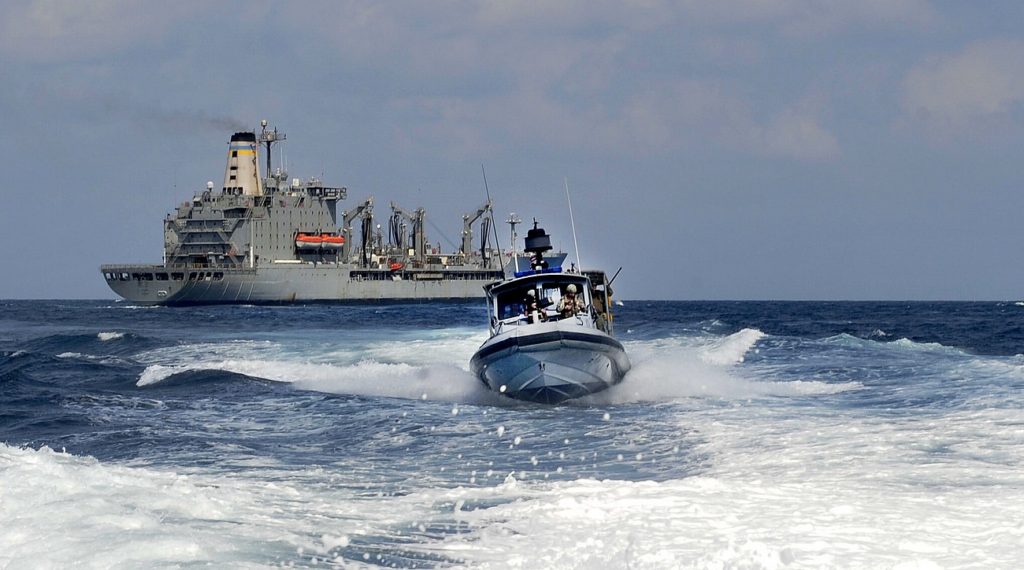
Djibouti is the U.S. Department of Defense home base in Africa, with the U.S. neglecting the remainder of the continent in favor of endeavors elsewhere. Camp Lemonnier, the only permanent U.S. military base in Africa, has been leased by the U.S. from the Djibouti government since 2002 and most notably houses U.S. Africa Command’s (USAFRICOM) Combined Joint Task Force – Horn of Africa (CJTF-HOA). Most of Camp Lemonnier’s operations are related to anti-piracy missions and peacekeeping on the high seas.
With Christopher Miller as Acting Secretary of Defense, will Camp Lemonnier and USAFRICOM begin to receive higher prioritization in military discussions? Will the rapidly, quietly expanding Chinese People’s Liberation Army Navy (PLAN) support base play a factor in the Department of Defense’s interest in Djibouti and the Horn of Africa? If there is no change or effort to cohabitate, will future Pentagon leaders regret the lack of attention to the area as other nations potentially grasp hold of the African continent?
A short 10 kilometers away from Camp Lemonnier lies the Chinese People’s Liberation Army (PLA) Support Base, which officially opened on August 1, 2017 as China’s first and only official overseas military base. Operated by the PLAN, the base takes up a ground area of 0.5 square kilometers and includes a short 400 meter runway, a heliport, and a hospital, among other support features. Like other Chinese defense projects, this Support Base has been undergoing rapid construction efforts that, evidenced from satellite imagery, have continued progressing despite the coronavirus pandemic and are still in development. Most notable of these is the 1,120-foot pier and its 320 meter extension that will reportedly allow dual-sided berthing of large PLAN warships, carriers or submarines. A potential second pier is also suspected, which would vastly expand the capacities of this small support base.
Given its strategic location not only in Africa but in relation to other foreign bases in Djibouti, this PLAN support base and its potential for tipping the balance in foreign presence in Africa deserves heightened attention.
China’s overall interest in the African continent has only grown in the last two decades. This became increasingly apparent as Beijing linked itself to Africa with its Belt and Road Initiative, launched in 2014, and pushed the associated multitude of telecommunications, transportation, and sociocultural infrastructure programs. While Beijing’s specific goals in the Indian Ocean region remain ambiguous, “it is clear that the Chinese leadership is actively pursuing capabilities that would allow it to undertake a range of military missions” far from and close to its shore. This opinion is congruent with China’s long-term push towards building a blue-water Navy and the government-denied rumors in October 2020 the PLAN making camp in the formerly USN-occupied Ream Naval Base in Cambodia.
Djibouti as a Rare Point of Commonality
Djibouti has the potential to become a unique point of cooperation on holistic issues that plague the stability and peace of the international community. At the top of this list of issues is piracy on the high seas and humanitarian operations. Both the U.S. and China—as well as other foreign presences in the Horn of Africa—have vested interests in countering these issues, as Djibouti’s neighbor “Somalia continues to have a reputation as the launching point for terrorism, piracy, people trafficking and smuggling operations.” Piracy has increased exponentially in East Africa in recent decades and inevitably has a negative impact on the international economy. In fact, a majority of the activities currently conducted by foreign militaries in Djibouti revolve around piracy and peacekeeping on the high seas. It could prove mutually beneficial to coalesce on solving these issues, especially seeing how the population of each foreign military is relatively small.
If parties are willing, there is strong potential for a healthy and stable U.S.-China engagement over Africa; especially in the Horn of Africa over security issues related to piracy and global shipping. The minimal number of U.S. inroads into the African continent, the suspicions over Beijing’s intentions for the region, and the high complexity of the African sociopolitical environment are undeniable roadblocks to debate and cooperation that cannot be ignored, but they are not insurmountable.
Djibouti would be a rational proving ground for cooperation between Washington and Beijing for five main reasons: 1) its international representation can invite a sense of accountability, 2) the small size of the parties represented naturally makes a project more manageable, 3) its isolated locale can act as a deterrent against outside influence, 4) its regional issues threaten both the U.S. and China and can provide an outlet for joint programs, and 5) regional stability is crucial to Africa’s future development, which invariably impacts American and Chinese global reputation and credibility. While acknowledging the current bilateral tensions and the low likelihood of a joint partnership at present, the idea of joint operations in Djibouti still deserves merit.
Anti-piracy efforts would be the most rational and natural first choice of joint activity, given its precedence. The PLAN first participated in United Nations-backed anti-piracy missions in the Gulf of Aden in 2008 and has sent more than 30 naval task forces as escorts in the region since. In fact, in December 2014, the U.S. Navy and PLA Navy conducted a joint anti-piracy exercise. While circumstances were widely different in U.S.-China relations six years ago, the blueprints for joint exercises are well-worn in both nations’ militaries and precedence exists for joint U.S.-China military engagement.
Unfortunately, the likelihood of joint exercises with China remain slim at present and will not be likely to increase at a rapid rate, even under a new administration. But if such joint activities are not considered and worked towards, they—and the benefits that come from them—will never arrive. Once the Biden administration lays out its National Security Strategy and National Military Strategy, a case for binational connections in Djibouti over international issues such as piracy should be worthy of consideration and pursuit.
Jessica L. Martin is a Research Assistant at ICAS. This commentary was originally released on November 25, 2020.