
ICAS Bulletin (online ISSN 2836-3418, print ISSN 2836-340X) is published every other week throughout the year at 1919 M St NW, Suite 310, Washington, DC 20036.
The online version of ICAS Bulletin can be found at chinaus-icas.org/bulletins/.
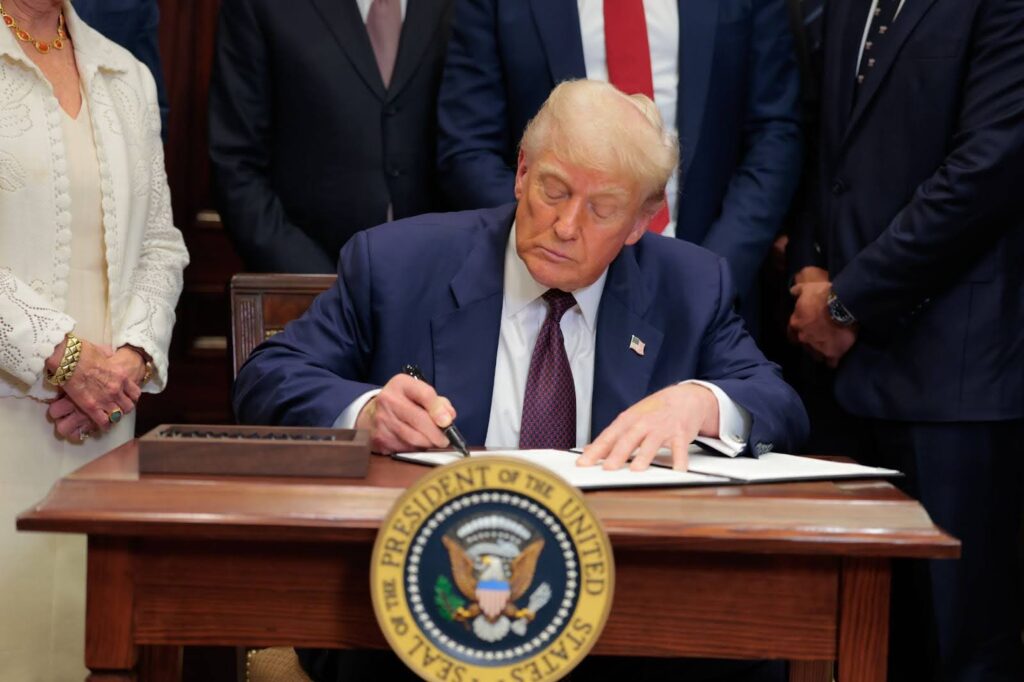
– On August 11, President Trump extended the tariff pause on Chinese goods for another 90 days on the deadline of the previous pause, which is an expected result from the China-U.S. trade talk in Stockholm.
– Hours before singing the executive order, Trump demands China to quadruple its soybean purchase from the U.S. to close the trade gap between the two countries as the trade truce deadline approaches.
– On the other hand, on August 11, it was reported that China seeks the U.S. to relax its export restrictions on high-bandwidth memory chips as part of a potential trade deal.
– Trump remains optimistic about reaching a final trade deal with China, and is willing to visit China before the end of this year only if the deal is struck.
– Despite trade tensions, China’s export in July has increased more than 7% compared to July last year, exceeding market expectations, and imports increased by 4%, contradicting a fall in forecasts.
– Chinese exports to Southeast Asia and the EU grew by 16.6% and 9.2% respectively, with slight decreases in imports from the two regions.
– On the contrary to the overall growth in China’s international trade, both China’s exports to and imports from the U.S. fell, with exports decreasing for the fourth consecutive month on a year-on-year basis.
– Similarly in the U.S., CPI rose 0.2% in July and 2.7% year-on-year with modest tariff impacts, which is below market expectations.
Associated News References:
“Consumer Prices Rise 2.7% Annually in July, Less than Expected Amid Tariff Worries,” CNBC, August 12
“Trump Extends China Tariff Deadline by 90 Days,” CNBC, August 11
“Trump Signs Order Extending China Tariff Truce by 90 Days, White House Says,” Reuters, August 11
“Trump Urges China to Quadruple US Soy Buying, Lifting Prices,” Bloomberg, August 11
“China Wants US to Relax AI Chip-Export Controls for Trade Deal, Ft Reports,” Reuters, August 10
“China’s Exports Top Forecasts as Shippers Rush to Meet Tariff Deadline,” Reuters, August 7
“China’s July Exports Top Expectations, Rising over 7%; Imports Record Biggest Jump in A Year,” CNBC, August 6
“Trump Says He Will Meet China’s Xi if a Trade Deal is Struck,” Reuters, August 5
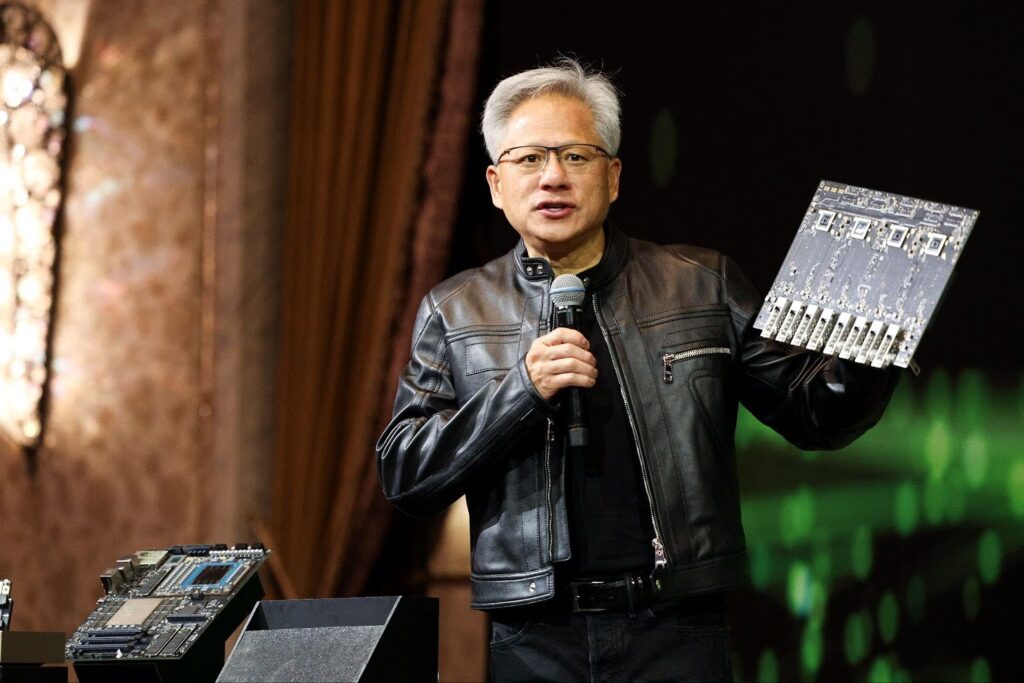
– On August 11, Nvidia and AMD agreed to U.S. president Trump’s demand to pay 15% of their revenue from chip sales to China. Trump had initially demanded 20% from Nvidia but was dropped to 15% after Jensung Huang’s meeting with Trump on August 6.
– When comparing the H20 to the latest AI chip Blackwell, Trump calls the H20 chip old and obsolete, and he “wouldn’t make a deal” with China on Blackwell without any downgrade.
– As Nvidia gets U.S. license for export, on August 10, Chinese authorities state that the H20 chip poses security and environmental concerns, and advise firms to reduce the use of less advanced semiconductors.
– Nvidia rejects the statement over security concerns on the H20 chip in a similar fashion to the previous accusations over “backdoors”.
– Intel’s CEO Lip-Bu Tan met with Trump on August 11 after Trump demanded the CEO to resign on August 7 due to his ties with China in the past.
– Trump’s attitude quickly reversed after the emergency meeting, saying Tan’s “success and rise is an amazing story”.
– Earlier on August 6, Senate Intelligence Committee chair Tom Cotton wrote an open letter to Intel’s board chair over concerns about potential national security risks, given Intel’s role in the Secure Enclave defense program.
– Tan immediately rejected Trump’s accusations by saying that he has always operated within the highest legal and ethical standards, and that Intel is engaging with the administration to provide facts while sharing the president’s commitment to U.S. national and economic security.
Associated News References:
“China Urges Firms to Avoid Nvidia H20 Chips After Trump Ends Ban,” Bloomberg, August 12
“President Trump Calls Intel C.E.O. a ‘Success’ After Meeting,” The New York Times, August 11
“Trump Says He Asked for 20% Cut from Nvidia, Calls H20 An ‘Obsolete’ Chip,” CNBC, August 11
“Nvidia and AMD to Pay 15% of China Chip Sales to US,” BBC, August 11
“Chinese State Media Says Nvidia H20 Chips Not Safe for China,” Reuters, August 11
“Nvidia Claps Back against Chinese Accusations Its H20 Chips Pose A Security Risk,” CNBC, August 10
“Intel CEO Singled Out by Trump to Visit White House on Monday,” The Wall Street Journal, August 10
“US Licenses Nvidia to Export Chips to China, Official Says,” Reuters, August 8
“Intel CEO Responds after Trump Calls for His Resignation,” Associated Press, August 8
“Trump Calls on Intel CEO to Resign Over China Ties,” The Wall Street Journal, August 7
“Trump Eyes 100% Chips Tariff, Exempting Firms That Invest in US,” Bloomberg, August 6
“Trump Meets With Nvidia’s Huang as Semiconductor Tariffs Near,” Bloomberg, August 6
“Exclusive: US Lawmaker Questions Intel CEO’s Ties to China in Letter to Company Board Chair,” Reuters, August 6
“Nvidia Says Its AI Chips Don’t Have A ‘Kill Switch’ after Chinese Accusation,” CNBC, August 5
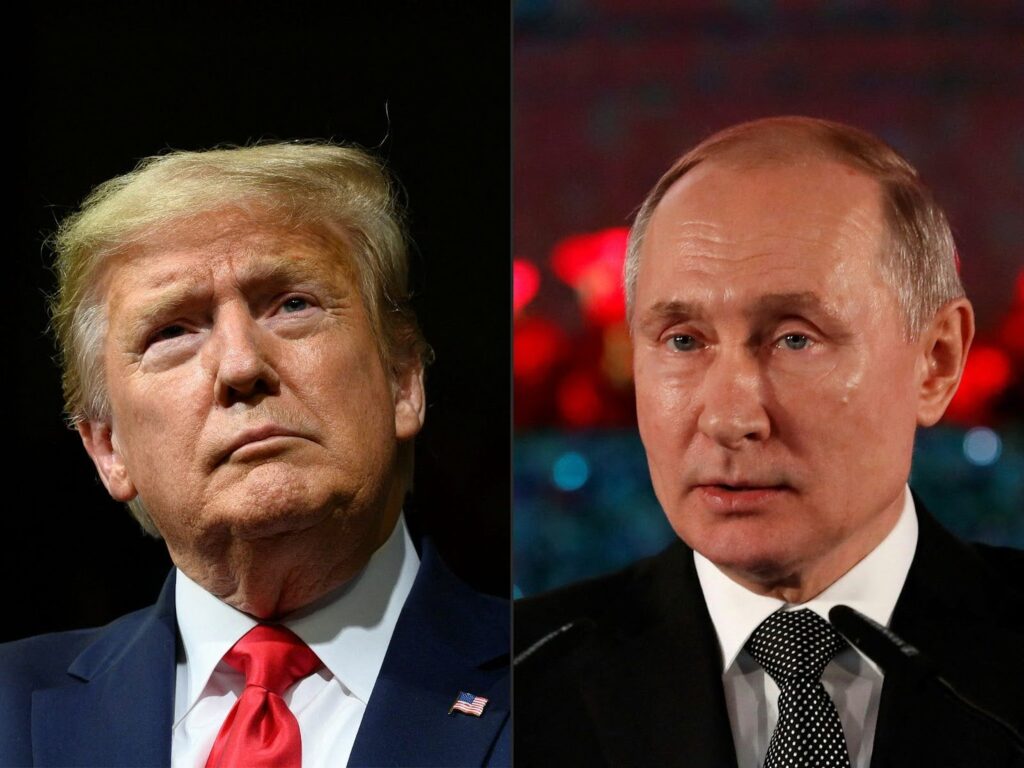
– U.S. President Donald Trump is set to meet Russian President Vladimir Putin in Alaska on August 15, aiming to quickly judge whether a deal can be reached, but without committing to a cease-fire, security guarantees, or continued U.S. military support for Ukraine. Ukraine’s Volodymyr Zelenskyy is not invited.
– Reported on August 11, Trump confirmed “land swapping” will be part of the talks with Putin, also expressing frustration at Zelensky’s requirement for constitutional approval of any such deal.
– Chinese president Xi Jinping reiterates his stance that the Russia-Ukraine conflict should be resolved through peace talks and diplomacy, expressing support for the U.S.-Russia peace talk if it advances a political settlement in a phone call with Putin on August 8.
– Kremlin officials and Russian commentators praised the site selection in Alaska as positive and symbolic, and frame it as an opportunity to strengthen bilateral relations and potentially start a “shared chapter” in the U.S.-Russia history.
– Days before a Trump-Putin meeting, Russian forces have breached Ukraine’s defensive line in Donetsk, threatening key cities and supply routes, as Kyiv rushes reinforcements to the region.
– Earlier on August 5, Zelensky accused Moscow of recruiting foreign mercenaries from China, Pakistan, Tajikistan, Uzbekistan, and African countries, and vowed that Ukraine would respond. Zelensky has made similar accusations before, which China denied.
Associated News References:
“Russians Hail Historic Alaska Ties ahead of Trump-Putin Summit on Ukraine,” NBC, August 12
“Trump Says He’s Going to Alaska to See What Putin ‘Has in Mind’,” The New York Times, August 11
“Trump Says He and Putin Will Discuss ‘Land Swapping’ at Ukraine War Summit,” The Guardian, August 11
“Xi Tells Putin China Welcomes Fresh US-Russia Contacts as Trump Seeks End to Ukraine War,” Reuters, August 8
“China-Russia Trade Hits 2025 High as Trump Hints at 25% Tariff over Russian Oil Import,” Southern China Morning Post, August 7
“Zelensky Says Russia Using Mercenaries from China, Pakistan and Other Countries,” South China Morning Post, August 5

– On August 6, President Trump threatened more punitive tariffs on Russian oil buyers that are similar to the one on India, implying the same could be on China.
– Indian parliament still hopes to continue trade talks with the U.S. as of August 11, even after President Trump announced the 25% tariff on buying Russian oil, now totaling 50%.
– On the contrary, there has been an anti-American sentiment among the Indian public, where business executives and Indian Prime Minister Modi’s supporters call for boycotting American brands and buying local.
– At a gathering in Bengaluru on August 10, Modi urged greater self-reliance, saying that while Indian technology companies make products for the world, it is now time to prioritize India’s needs, without naming any company.
– As tariffs strain the U.S.-India relationship, India is deepening diplomatic and economic engagement with China and Russia.
– Prime Minister Modi will visit China for the Shanghai Cooperation Organisation summit that begins on August 31. Meanwhile as of August 6, Indian National Security Adviser Ajit Doval is on a scheduled visit to Russia to discuss oil purchases.
– China defends its energy and trade ties with Moscow as just and legitimate on August 7, pledging to continue them based on national interests while deepening broader economic and security cooperation with Russia.
– China’s crude oil imports from Saudi Arabia will decline in September to about 1.43 million barrels per day, down from a more than two-year high in August, as major Chinese refiners cut purchases following Saudi Aramco’s second consecutive price hike for Asian buyers.
Associated News References:
“Saudi Crude Oil Supply to China Set to Fall in September, Sources Say,” Reuters, August 11
“In India, Trump’s Tariffs Spark Calls to Boycott American Goods,” Reuters, August 11
“India’s Modi, Brazil’s Lula Speak amid Trump Tariff Blitz,” Reuters, August 7
“Trump Vows More Secondary Sanctions for Russia Oil Buyers are Coming, Including Potentially on China,” CNN, August 7
“India’s Modi to Visit China for First Time in 7 Years as Tensions with US Rise,” Reuters, August 6
“China Pushes back at US Demands to Stop Buying Russian and Iranian Oil,” Associated Press, August 3

– China completed its first round of rehearsal on the weekend of August 9 for the September 3 military parade celebrating the 80th anniversary of victory over Japan in World War II.
– China has invited descendants of the American Flying Tigers to attend the September 2–3 ceremonies marking the 80th anniversary of the end of World War II, using the historic U.S.-China wartime cooperation as a goodwill gesture amid strained bilateral relations.
– Japan also held its ceremonies commemorating the 80th anniversary of U.S. atomic bombing in Hiroshima and Nagasaki on August 9.
– Head of the Taipei Economic and Cultural Representative Office in Japan Lee Yi-yang became the first Taiwan official to attend such an event, where he also shook hands with US ambassador to Tokyo George Glass as the two sides reiterated peace in Asia-Pacific.
– Japanese Prime Minister Shigeru Ishiba has decided not to issue a personal statement on August 15, marking the 80th anniversary of Japan’s surrender in World War II and consider releasing a paper on the topic on September 2 if political conditions allow.
– Diplomatic sources said on August 10 that Chinese vessels fired at least two warning shots at a Japanese Maritime Self-Defense Force destroyer last year when it inadvertently entered Chinese territorial waters near Zhejiang province despite repeated warnings from the Chinese side.
– China insisted that it handles unauthorized entry of foreign military vessels according to its laws, while Japan denied the media report. The Captain of the Japanese destroyer was dismissed for negligence soon after the incident.
Associated News References:
“China Holds Rehearsal for Military Parade Marking 80th End of War Anniversary,” NHK, August 10
“China-Japan Ties are Improving. Could A Taiwanese Official Test That Trend?,” South China Morning Post, August 10
“Japan denies China fired warning shots at destroyer that breached territorial waters,” Star and Stripes, August 12
“Ishiba Unlikely to Make Personal Statement on WWII Anniversary,” The Japan Times, August 3

“Brazil’s Lula, China’s Xi Discuss BRICS, Bilateral Opportunities,” Reuters, August 12
“Cancer Scientist Feng Gensheng Leaves US for China as Trump Cuts Funding,” South China Morning Post, August 12
“China Unveils First-Ever Home-Made Bionic Tibetan Antelope Robot in Hoh Xil Nature Reserve,” Global Times, August 11
“China Creates World’s No. 1 Shipbuilder, Driven by Rivalry With U.S.,” The Wall Street Journal, August 11
“Coast Guard Warns of ‘increased Chinese Research Vessel Activity’ in The US Arctic,” Fox News, August 11
“Solomon Islands Blocks US, China, Taiwan from Pacific’s Top Political Meet,” Reuters, August 8
“US Ethane Curbs Will Make Contracting To China Harder, Energy Transfer Says,” Reuters, August 7
“GM Will Import EV Batteries from China’s CATL Despite Tariffs,” The Wall Street Journal, August 7
“Amtrak NextGen Acela Debuts on August 28,” Amtrak, August 7
“Life-Like Robots for Sale to the Public as China Opens New Store,” BBC, August 7
Captain Anurag Bisen on The Arctic: India
August 6, 2025
India, while a non-Arctic state, has expanded its engagement as a stakeholder in the region since releasing its first Arctic Policy in 2022. This EVI explores India’s strategic, scientific, and economic interests in the Arctic, including its work on climate research, emerging shipping routes, and energy cooperation. The discussion examines India’s deepening collaboration with Russia on Arctic projects, its engagement with the United States and other Arctic states, and its positioning relative to other Asian Observer states such as China.
Shadow Fleets in the Arctic: Uncharted Waters for Governance and Sanctions
By Nong Hong
August 7, 2025
The Arctic is no longer a remote frontier shielded from the geopolitics of oil and sanctions. As Arctic Today recently reported, more than 30 oil tankers linked to Russia’s so-called “shadow fleet” have transited Norwegian waters in 2024 alone, carrying sanctioned crude from Murmansk and other Arctic ports. This activity—designed to circumvent Western sanctions—reveals the fragility of sanctions regimes and the limitations of international ocean governance in addressing coordinated evasion tactics.
OBBB Leaves Iowa Alone, Yet U.S. Climate Policy Still Needs a Better Path
By Zhangchen Wang
August 6, 2025
The passage of the “One Big Beautiful Bill Act” (OBBB) marks a sweeping Republican effort to dismantle much of the Inflation Reduction Act (IRA), America’s most ambitious climate and industrial policy to date. In doing so, the GOP has once again set climate change policies into a partisan battlefield, framing it as another front in a culture war between progressives and conservatives. However, a complete rolling back of the IRA will discourage emission reduction progress and fail to address climate risks to the United States. More importantly, this backward approach ignores the tangible benefits many IRA policies have already delivered—infrastructure, jobs, investment, and lower energy costs—and risks inflicting lasting harm on the very rural communities that Republicans are devoted to championing.
From Ethics to Law: The ICJ’s Advisory Opinion on Climate Obligations of States
By Nong Hong
August 5, 2025
On July 23, 2025, the International Court of Justice (ICJ) issued a landmark advisory opinion, adopted unanimously, on the international legal obligations of states concerning climate change. This long-anticipated decision, requested by the United Nations General Assembly (UNGA) in 2023, and led by a coalition of Pacific island nations spearheaded by Vanuatu, marks a pivotal moment in the legal framing of climate responsibility. For the first time, the ICJ has clarified how existing international law, spanning environmental treaties, customary norms, and human rights obligations, applies to the climate crisis. The opinion brings legal precision to what has long been seen as a domain of political negotiation and moral appeal.
On Saturday, August 9, 2025, Research Associate Yilun Zhang was quoted by South China Morning Post on a rare visit by Taiwan officials to Japan for the Hiroshima peace memorial event.
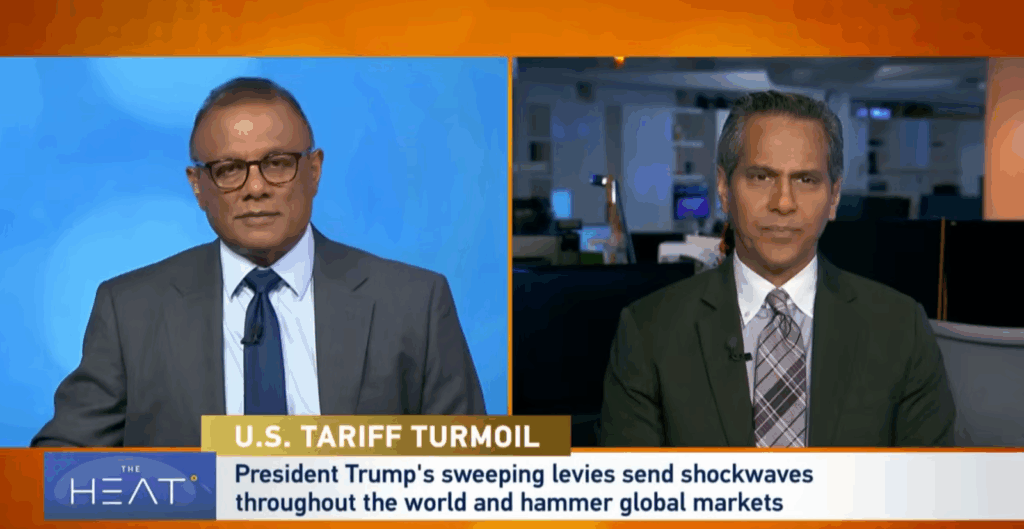
On Monday, August 4, 2025, Senior Fellow Sourabh Gupta was interviewed by CGTN’s The Heat on Trumps firing of BLS Commissioner Erika McEntarfer and Tariffs.
On Friday, August 1, 2025, Senior Fellow Sourabh Gupta was interviewed by CGTN’s The Heat on the increased U.S.-China and Taiwan Strait tensions in the aftermath of Speaker Pelosi’s visit.
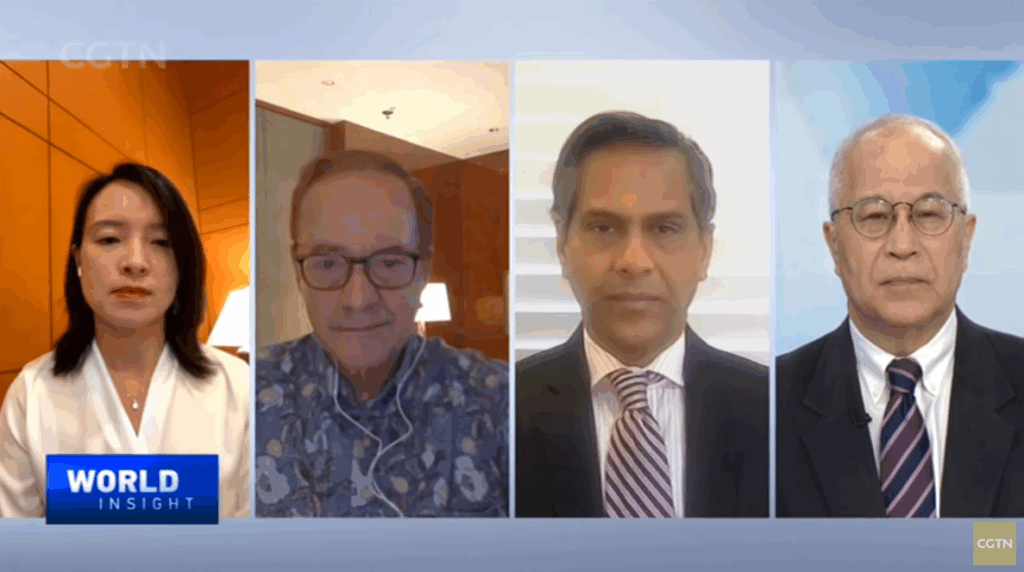
On Tuesday, July 31, 2025, Senior Fellow Sourabh Gupta was interviewed by CGTN’s World Insights on how the third round of negotiations in Stockholm are shaping up.

The Institute for China-America Studies is an independent nonprofit, nonpartisan research organization dedicated to strengthening the understanding of U.S.-China relations through expert analysis and practical policy solutions.
1919 M St. NW Suite 310,
Washington, DC 20036
icas@chinaus-icas.org
(202) 968-0595
© 2026 INSTITUTE FOR CHINA-AMERICA STUDIES. ALL RIGHTS RESERVED.