
ICAS Bulletin (online ISSN 2836-3418, print ISSN 2836-340X) is published every other week throughout the year at 1919 M St NW, Suite 310, Washington, DC 20036.
The online version of ICAS Bulletin can be found at chinaus-icas.org/bulletins/.

– President Xi held a phone call with President Trump on February 4, which Trump described as “excellent,” “long,” and thorough”.
– The call covered trade topics on soybean and energy purchases, and global security issues such as Iran and Ukraine. President Xi made it clear that “the Taiwan question is the most important issue in China-U.S. relations” and must “handle the issue of arms sales to Taiwan with prudence”.
– The phone call serves as preparation for President Trump’s planned visit to China in the first week of April.
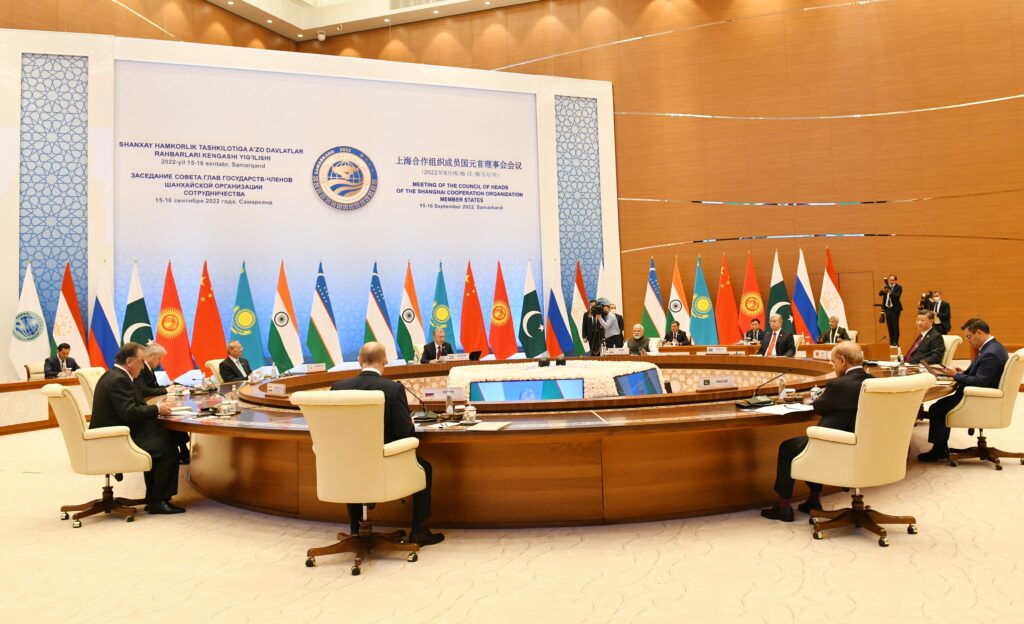
– Hours before the Trump-Xi call, Russian President Vladimir Putin and Chinese President Xi held a video call.
– The call reaffirmed deepening economic and strategic cooperation, coordinated views on relations with the United States, and confirmed Putin’s plans to visit China twice this year.
– The discussion highlighted expanding trade, energy and high-tech ties, shared positions on global issues including Ukraine and Taiwan, and closer coordination amid shifting U.S. and European engagement with Beijing.
– It was reported on February 8 that the Trump administration is considering another arms sale package to Taiwan that might be larger than the previous.
– China expressed its firm opposition to the new package multiple times prior to the Trump-Xi call; the issue might lead to the cancellation of President Trump’s potential visit in April.
– President Trump rejected Russia’s proposal to extend the limits of the expired New START treaty, saying the U.S. should instead pursue a new, modernized arms control agreement that could extend to China. Russia, China, and the United Nations all warned that the lapse heightens global nuclear risks.
– On the same day, China said it regretted the expiration of the New START treaty, and urged the United States to resume strategic stability talks with Russia.
– China declined to onboard the negotiations, and reiterated that it strictly adheres to a self-defence nuclear strategy.
Associated News References:
“Trump-Xi summit set for first week of April,” Politico Pro, February 9
“US Weighing New Taiwan Arms Sale Before Trump-Xi Summit, FT Says,” Bloomberg, February 6
“Trump says he won’t extend nuclear arms treaty with Russia,” Politico, February 5
“China says expiration of US-Russia arms treaty regrettable,” Reuters, February 5
“Trump reports ‘excellent’ call with Xi on trade, Taiwan,” The Hill, February 4
“China’s Xi and Russia’s Putin discuss their growing links, ties with US and global crises,” Associated Press, February 4
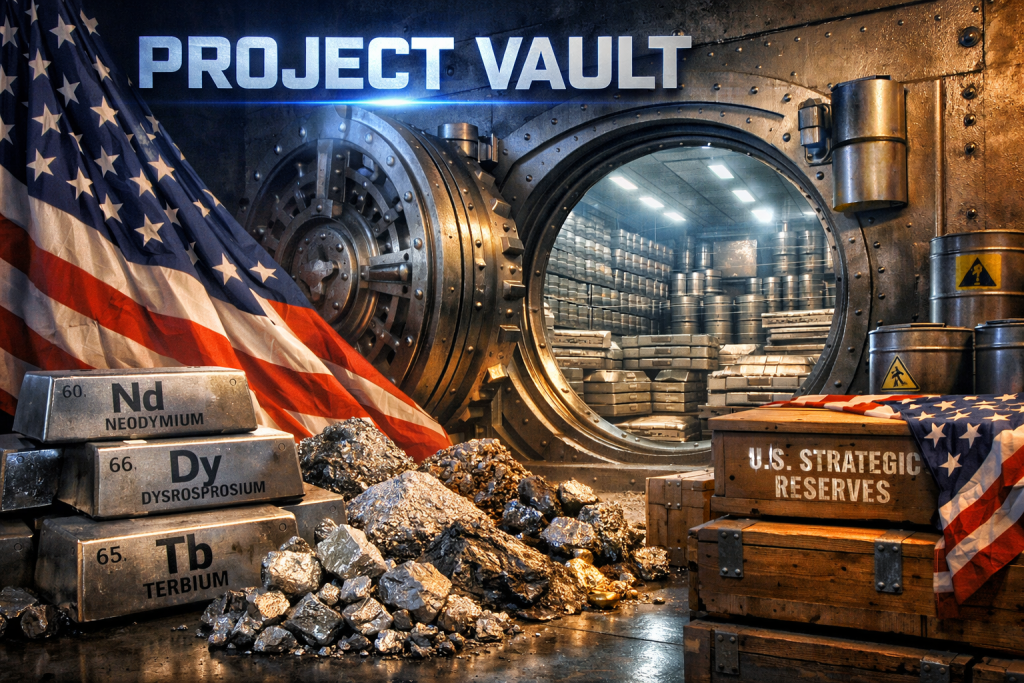
– President Trump on February 2 announced plans for Project Vault, a $12 billion critical-minerals stockpile backed by U.S. Export-Import Bank financing to reduce U.S. reliance on Chinese supplies and support domestic manufacturing. U.S.-listed rare earth minerals stocks surged after the announcement of Project Vault.
– On the same day, Japan successfully conducted a world-first deep-sea drilling test near Minamitorishima to retrieve sediment containing rare earth minerals.
– One day after the announcement of Project Vault, Australia considered introducing a price floor for critical minerals to counter China’s market dominance, attract foreign investment, and boost domestic mining and processing. The move also aligns with recent U.S. and EU efforts to secure critical mineral supply chains.
– One day after the announcement of the U.S.-India trade deal, Indian External Affairs Minister S. Jaishankar met with U.S. Secretary of State Marco Rubio in Washington, DC and formalized cooperation on critical minerals in terms of supply-chain collaboration and de-risking from China.
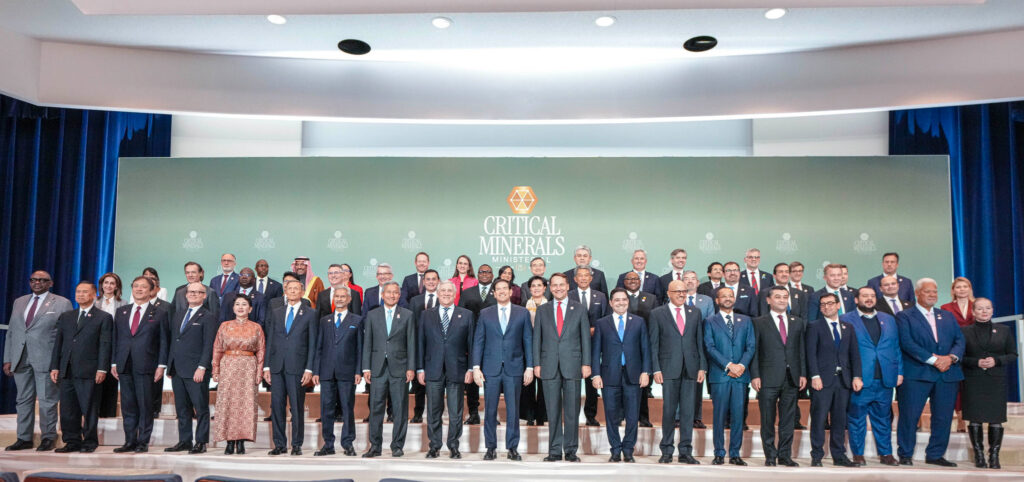
– Secretary of State Marco Rubio hosted the inaugural Critical Minerals Ministerial on February 4 to strengthen critical mineral supply chains with American allies.
– During the Ministerial, Vice President JD Vance said that the Trump administration is pushing to form an allied critical minerals trading bloc with enforceable price floors and preferential trade rules to counter China’s dominance in the market. He urged 54 countries and the EU to join the bloc.
– The Trump administration announced on the same day the U.S. will work with Japan, Mexico, and the EU to develop critical minerals supply chains through joint mining, processing and recycling efforts.
– On February 5, China’s foreign ministry criticized the United States’ plan for a critical minerals trade bloc, warning that small-group rules undermine the international economic and trade order and calling instead for an open and inclusive global trade system.
– Prior to the announcement of Project Vault, the U.S. government stepped up its rare earths production by investing in domestic rare earths mining firms. The investments include $1.6 billion direct investment in USA Rare Earth on January 26, 2026; $400 million direct investment and $150 million loan to MP Materials in July and August 2025; and $1.4 billion public-private partnership with Vulcan Elements and ReElement Technologies in November 2025.
Associated News References:
“China criticises US plan for critical minerals trade bloc,” Reuters, February 5
“White House entices allies with critical minerals plan,” E&E News By Politico, February 4
“U.S. Enlists Mexico, EU and Japan in Its Minerals Race With China,” The Wall Street Journal, February 4
“EU to Offer US Critical Minerals Partnership to Check China,” Bloomberg, February 3
“Australia Weighs Minerals Price Floor to Lure Overseas Funds,” Bloomberg, February 3
“Jaishankar Meets Rubio Ahead of Critical Minerals Ministerial,” South Asian Herald, February 3
“Rare earth miners jump as Trump is eyeing mineral stockpile to reduce China dependence,” CNBC, February 2
“Trump launches $12 billion minerals stockpile to boost US manufacturing, counter China,” Reuters, February 2
“Japan retrieves rare earth-rich mud from seabed to lower reliance on China,” ABC News, February 2
“US, UK, EU, Australia and more to meet to discuss critical minerals alliance,” The Guardian, February 1
“Trump administration invests in another US rare earth miner to loosen China’s grip on supply,” Associated Press, January 26

– Japanese Prime Minister Sanae Takaichi’s Liberal Democratic Party (LDP) and its coalition partner Japan Innovation Party achieved a historic landslide victory in a snap election on February 8.
– Takaichi framed this election as a referendum on her leadership amid critical domestic economic challenges and geopolitical tensions.
– Takaichi’s LDP won a two-thirds majority in the lower-house and the biggest single-party postwar mandate. The lower-house win will allow the LDP to override vetoes by the opposition-controlled upper house.
– Three days ahead of Japan’s general elections, President Trump gave his “total endorsement” to Takaichi in a Truth Social post on February 5. Experts have voiced criticism of Trump’s surprise endorsement, expecting scrutiny in Tokyo. Trump also said Takaichi will visit the White House on March 19.
– After the win, Takaichi thanked President Trump for his endorsement prior to the election, and confirmed her visit to the U.S. He also congratulated her on the “historic two thirds supermajority — the first time since World War Il”.
– Following the election victory, Takaichi wanted to prepare for revising Japan’s pacifist constitution. In Japan, constitutional changes require a two-thirds majority in both the lower and upper houses of the parliament, as well as a majority in a public referendum.
– On geopolitics, Takaichi reiterated that Japan’s alliance with the US is paramount, she also wanted to keep the channel of communications open with China.
– On the same day, China warned Japan against reviving militarism and said its policy toward Japan will not be changed by the Japanese election, urging her to retract her remarks on Taiwan.
Associated News References:
“Japanese PM Pushes Constitutional Revision for Self-Defense Forces,” The Chosun Daily, February 10
“Japan’s Takaichi Seeks Stable China Ties After Election Landslide,” Bloomberg, February 9
“Japan’s Takaichi to pursue conservative agenda after election landslide,” NPR, February 9
“China warns Japan against “militarism” after ruling party’s election win,” Kyodo News, February 9
“Trump congratulates Takaichi on her coalition’s election victory,” NHK World-Japan, February 9
“Trump announces visit from Japanese prime minister,” The Hill, February 5
“Japan’s ruling parties could win over 60% of lower house, Nikkei poll shows,” Nikkei Asia, February 5
“Survey: LDP may ride Takaichi’s popularity to big Lower House win,” The Asahi Shimbun, February 2
“Japan’s lower house dissolved, snap election set for Feb. 8,” Nikkei Asia, January 23
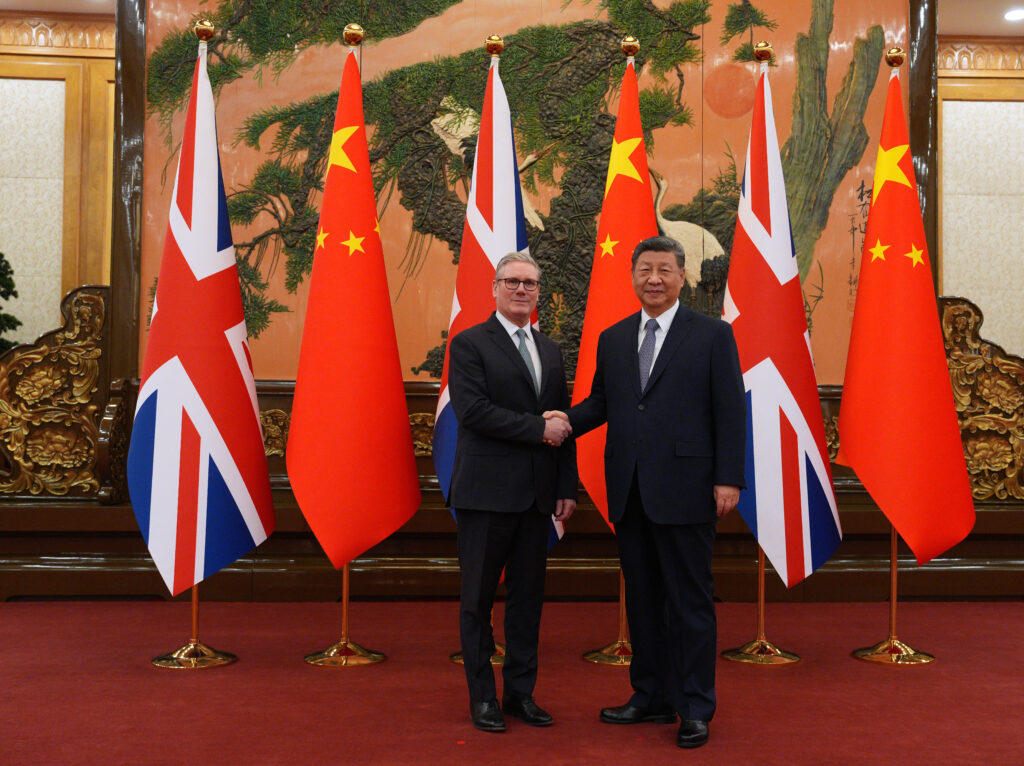
– UK Prime Minister Keir Starmer visited China from January 28-31. He is the first UK Prime Minister to visit China in 8 years, following visits to China made by other world leaders.
– Unsettled by President Trump’s tariffs and foreign policy volatility, U.S. allies including Canada, South Korea, Ireland, Finland, and Britain have re-engaged China as an effort to hedge economic risk and seek greater predictability.
– On January 29, Starmer met President Xi Jinping in Beijing to warm up ties, after successive Conservative governments gradually shifted the UK-China relationship to an “ice age”.
– Starmer and Xi agreed to expand practical cooperation on trade, investment, and technology.
– Both sides announced a new services partnership to support British businesses operating in China, including China’s new 30-day visa-free travel for Britons.
– Following the talks, China agreed to cut tariffs on Scotch whisky from 10% to 5%, a move expected to boost UK exports and deliver an estimated £250 million in value over five years.
– New commercial and investment deals between the UK and China including major investments from British pharmaceutical leader AstraZeneca and China’s Asymchem .
– Prior to Starmer’s visit, on January 20 the UK also approved China’s plan for its new embassy in London, the largest in Europe.
– Following UK’s Starmer and France’s Macron, German Chancellor Friedrich Merz is also set to visit China in the first quarter of 2026.
Associated News References:
“Billions in exports and investment deals secured as PM concludes visit to China,” UK Government, January 30
“China agrees to halve tariffs on UK whisky after Xi-Starmer talks,” Reuters, January 29
“Britain and China hail reset in ties as Starmer seeks ‘sophisticated’ relationship,” Reuters, January 29
“In Beijing, Starmer and Xi Seek a Way Around a Volatile U.S.,” The New York Times, January 29
“Unnerved by Trump, U.S. allies are making nice with China,” NBC News, January 29
“Keir Starmer secures visa-free access to China in services partnership,” Politico, January 29
“UK approves plans for Chinese mega-embassy,” BBC, January 20

– The Munich Security Conference (MSC) issued its 2026 Report titled “Under Destruction” ahead of its meeting from February 13 to 15. The Report warned that President Trump and like-minded leaders are undermining the post-World War II international security order through “wrecking ball politics,” citing U.S. actions that abandon long-standing norms and strain alliances.
– U.S. Ambassador to NATO Matthew Whitaker on February 9 rejected the arguments made in the Report.
– On the same day, EU foreign policy chief Kaja Kallas said the jeering of U.S. Vice President JD Vance at the Winter Olympics reflected European pride and mounting public frustration after repeated critical remarks about Europe by U.S. officials, underscoring strained transatlantic relations ahead of the MSC.
– U.S. Secretary of State Marco Rubio will lead a large U.S. delegation to the MSC, highlighting continued U.S. engagement with Europe despite strained transatlantic ties.
– European Commission Vice President Henna Virkkunen on January 27 warned that Europe’s reliance on foreign technology has become a security risk, arguing for greater tech sovereignty through public procurement and upcoming EU legislation to build domestic capacity in areas such as cloud services, artificial intelligence, and semiconductor chips.
– French authorities on February 3 raided X’s Paris headquarters as part of an expanded criminal investigation into alleged offenses related to X’s algorithms and its AI tool Grok, including antisemitic content and the distribution of child sexual abuse material. The probe is coordinated with Europol and mirrored by parallel inquiries from the European Commission, the UK’s Information Commissioner’s Office, and Ofcom.
– Prime Minister Carney on January 27 insisted that he stands by his Davos remarks that U.S.-driven tariff and trade actions have created a “rupture” in the global order.
Associated News References:
“Rubio to attend Munich Security Conference amid frayed Translantic ties,” Reuters, February 9
“Trump Is a Global ‘Wrecking Ball,’ European Security Experts Say,” The New York Times, February 9
“Olympics crowd showed ‘European pride’ by booing JD Vance, EU top diplomat says,” Politico, February 9
“Paris police raid X offices as part of expanded criminal probe,” The Washington Post, February 3
“Carney says almost nothing is normal in the US, trade pact review starting soon,” Reuters, January 28
“EU tech chief sounds alarm over dependence on foreign tech,” Politico, January 27
“China’s Alibaba launches AI model to power robots as tech giants talk up ‘physical AI’,” CNBC, February 10
“Nvidia Warns Trump Administration That China Chip Rules Would Wreck Export Plan,” The Wall Street Journal, February 5
“US drone makers seek Asia sales as China threat rises,” Reuters, February 5
“China to resume cross-strait water tourism with Taiwan,” Anadolu Agency, February 4
“Trump says US will have ‘very substantial’ response if Canada enacts trade deal with China,” Reuters, February 2
“China’s teapots buy Iranian oil to replace Venezuelan supply, sources say,” Reuters, February 2
“China’s factory activity grows at fastest pace since October, private survey shows, beating official reading,” CNBC, February 1
“Germany closer to US than China despite recent tensions, foreign minister says,” Reuters, February 2
“WTO panel backs China in case against US clean energy subsidies,” Reuters, January 30
“Trade deficit soared 94% in November and was higher than a year ago, despite tariff efforts,” CNBC, January 29
China’s Three Transformations for National Rejuvenation
By Sourabh Gupta
February 8, 2026
The quarter century mark into the 21st century is a propitious moment to take stock of the remarkable progress of the Chinese economy.
At the turn of the century, China was a USD 1.2 trillion economy (measured in current USD), barely 12 per cent of the size of the U.S. economy. Twenty-five years later, as the National Bureau of Statistics’ recent estimates of GDP denote, China’s USD 20 trillion economy is two-thirds the size of the U.S. economy. And there is still tremendous room for catch-up growth. Its more adverse demographics notwithstanding, there is ample pent-up growth awaiting release in the on-going transitions from state to market and from rural to urban…

An amended version of this commentary was originally released on China Daily website on February 8, 2026.
Project Vault and the Upstream Turn in U.S.–China Competition
By Yilun Zhang
February 5, 2026
On February 2, the Trump administration unveiled Project Vault, a $12 billion initiative to establish a strategic reserve of rare earths and other critical minerals. The administration’s new initiative arrives at a moment when U.S.–China relations appear tactically stable, with President Trump’s widely expected April trip to Beijing, and potentially three more leaders summits in 2026. Yet Project Vault itself underscores that bilateral stability does not equate to strategic relaxation. Regardless of whether it will succeed, Project Vault represents the Trump administration’s aim at undermining China’s immediate leverage in future trade negotiations…
Close Encounters in the Gulf: Why Rules and Communication Matter
By Nong Hong
February 4, 2026
On February 3, two reported encounters—one in the air domain near a U.S. carrier and another involving a merchant vessel in the Strait of Hormuz—were widely framed as fresh indicators of rising friction between the United States and Iran. Read together, they offer a useful reminder of a recurring dynamic in Gulf security: close-range interactions at sea and in the air are seldom “just” tactical. They are also signals about resolve, operational boundaries, red lines, and negotiating posture. Precisely because signaling is often the point, however, misinterpretation can become the trigger. When drones and fast boats operate at close range, ambiguity can grow faster than commanders can confirm intent. Even when neither side seeks escalation, compressed timelines and incomplete information narrow decision space, making outcomes depend heavily on judgment under pressure rather than deliberate strategy…
RIC in 2026: What It Can and Cannot Do
By Nong Hong
February 2, 2026
From a global governance perspective, the Russia–India–China (RIC) structural framework is less a vehicle for alignment than a tool for keeping channels open as multilateral institutions become harder to use for genuine problem-solving. RIC is neither an alliance nor a treaty-based body; it is a deliberately light platform that helps three major powers exchange assessments when broader forums become increasingly polarised and procedural. That lightness explains its durability through repeated geopolitical shocks, but it also defines its ceiling: RIC can facilitate dialogue and selective coordination, yet it cannot override structural divergences—most notably the China–India strategic rivalry and the asymmetric pressures Russia faces from the West…
Wave of Visits to Beijing Signals Hedging but not Pivoting
By Yilun Zhang
February 2, 2026
During this winter, Beijing has emerged as a convenient setting for the cautious reheating of diplomatic ties.
Over just a little more than a month, Prime Minister Keir Starmer of the United Kingdom, Prime Minister Mark Carney of Canada, President Lee Jae-myung of South Korea, and President Emmanuel Macron of France—all close allies of the United States—have visited China, signaling varying degrees of recalibration in their respective bilateral relationships with Beijing…
On Sunday, February 8, 2026, Senior Fellow Sourabh Gupta was interviewed by CGTN on China-Japan relations.
On Saturday, February 7, 2026, Senior Fellow Sourabh Gupta was quoted by South China Morning Post on Middle Powers and the role of China.
On Tuesday, February 3, 2026, Senior Fellow Sourabh Gupta was quoted by South China Morning Post on Russia-related tariffs under the new U.S.-India trade deal.
On Tuesday, January 27, 2026, Senior Fellow Sourabh Gupta was quoted by South China Morning Post on Trump’s midterm momentum on trade.
On Thursday, January 15, 2026, Senior Fellow Sourabh Gupta was quoted by China Daily on the year ahead.


The Institute for China-America Studies is an independent nonprofit, nonpartisan research organization dedicated to strengthening the understanding of U.S.-China relations through expert analysis and practical policy solutions.
1919 M St. NW Suite 310,
Washington, DC 20036
icas@chinaus-icas.org
(202) 968-0595
© 2026 INSTITUTE FOR CHINA-AMERICA STUDIES. ALL RIGHTS RESERVED.