
ICAS Bulletin (online ISSN 2836-3418, print ISSN 2836-340X) is published every other week throughout the year at 1919 M St NW, Suite 310, Washington, DC 20036.
The online version of ICAS Bulletin can be found at chinaus-icas.org/bulletins/.
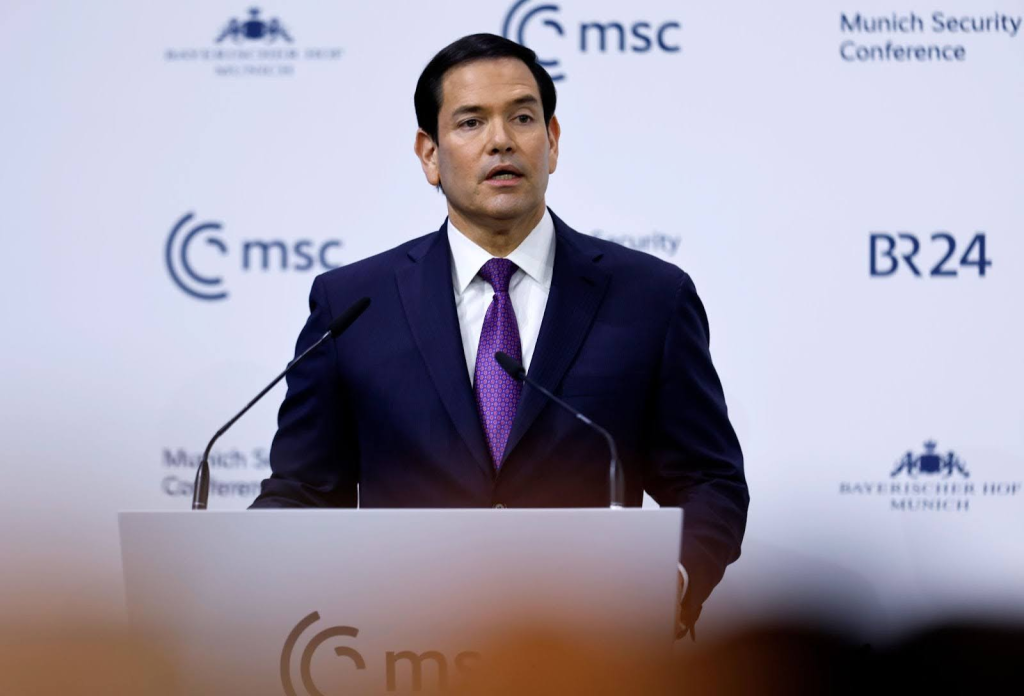
– The 2026 annual meeting of the Munich Security Conference (MSC) took place from February 13 to 15 in Munich, Germany.
– Chinese Foreign Minister Wang Yi and Secretary of State Marco Rubio met on the sidelines of the MSC on February 13. Minister Wang urged expanded cooperation and reduced tensions with the U.S. Both sides described the meeting as constructive despite ongoing disputes ahead of the planned April Trump-Xi summit.
– Minister Wang spoke at the MSC on February 14, and urged the U.S. during his conversation at the MSC to pursue pragmatic cooperation rather than “knee-jerk” decoupling or actions over Taiwan that could trigger conflict, noting mixed signals from Washington despite recent positive engagement.
– Minister Wang also met with Chancellor Merz on February 14 ahead of Merz’s planned visit to China on February 24. The two sides reaffirmed support for multilateralism and the UN-centered international order, pledged to deepen China-Germany economic and strategic cooperation, and expressed mutual backing for high-level exchanges, free trade, and the One-China policy.
– German Chancellor Friedrich Merz was the first European leader to speak at MSC 2026. His speech on February 13 echoed Prime Minister Carney’s speech at the World Economic Forum, stating that the postwar rules-based order “no longer exists”, and Washington cannot go it alone. He reaffirmed Europe’s commitment to Ukraine and urged the continent to strengthen its own security and self-defense capabilities.
– In his speech, Chancellor Merz also mentioned that Germany has begun confidential talks with France on a European nuclear deterrent within NATO’s framework.
– On the same day, Merz was joined by French President Emmanuel Macron. President Macron said in his speech that Europe must become a more assertive geopolitical power by reshaping its Cold War-era security architecture.
– Secretary Rubio spoke just before Minister Wang on February 14. He outlined a Trump-aligned foreign policy centered on national sovereignty, opposition to mass migration, economic nationalism, strong military power, and Western civilizational identity.
– Secretary Rubio’s speech took a turn from Vice President JD Vance’s remark last year, and had a softer tone on Europe as he stressed the common heritage between the U.S. and Europe when speaking against mass migration. He received a standing ovation.
Associated News References:
“German Chancellor Friedrich Merz Meets with Wang Yi,” Global Times, February 16
“Win-win, not zero-sum, China’s Wang Yi tells US’ Marco Rubio in Munich talks,” South China Morning Post, February 15
“Rubio delivers MAGA’s foreign policy doctrine in Munich,” Axios, February 15
“Rubio Stresses Shared History to Europeans but Warns of ‘Civilizational Erasure’ in Munich,” The New York Times, February 14
“Rubio, Wang Yi manage US-China great power rivalry in Munich even as core tensions linger,” South China Morning Post, February 14
“China’s top diplomat warns against ‘knee-jerk’ calls for decoupling,” Reuters, February 14
“Merz warns Munich Security Conference freedom ‘is no longer a given’ in stark remarks,” Euronews, February 13
“Rubio meets China’s Wang Yi in Munich ahead of possible Trump-Xi summit,” Reuters, February 13
“Merz, Macron eye new European security framework amid US reset,” Reuters, February 13
– The White House confirmed on February 20 the date of President Donald Trump’s much-anticipated visit to China to be from March 31 to April 2. China has yet to confirm the state visit.
– President Trump on February 16 said he is discussing potential future U.S. arms sales to Taiwan with President Xi and will decide on the sale soon.
– On February 18, the arms sales to Taiwan was delayed as the Trump administration weighs pressure from the Chinese government and concerns that approving the sale could disrupt Trump’s April summit in Beijing.
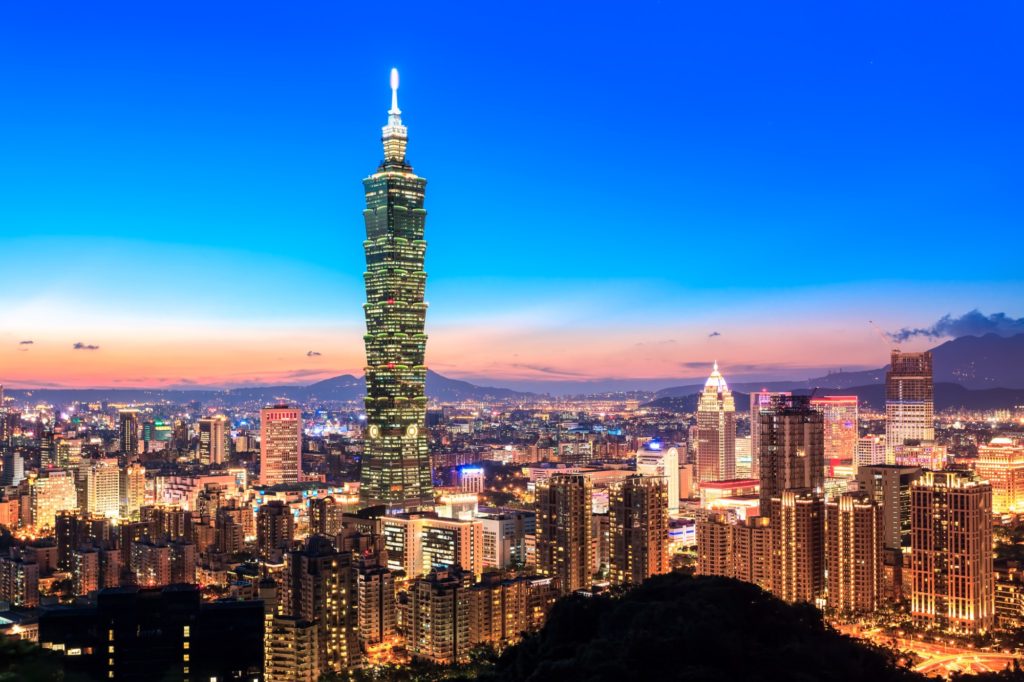
– The U.S. and Taiwan signed a reciprocal trade agreement on February 12 that lowers U.S. tariffs on Taiwanese goods to 15%, and Taiwan will remove or reduce the current 99% tariff on U.S. goods.
– The trade deal expands market access for U.S. industrial and agricultural exports, with Taiwan planning to purchase $84 billion worth of U.S. goods from 2025 to 2029, including liquefied natural gas, crude oil, and aircraft and power equipment. It also commits Taiwan to stronger alignment with Washington on export controls, investment security, labor, and environmental, and supply chain resilience measures.
– After the IEEPA tariff ruling, President Trump on February 21 accused Taiwan of “stealing” the U.S. chip industry, renewing the semiconductor sector unease.
– Taiwan confirmed on February 23 that Taipei is working with Washington to preserve the 15% tariff terms and preferential treatment already secured under recent trade deals despite the U.S. Supreme Court’s ruling, expressing confidence the agreements will remain in place.
Associated News References:
“Taiwan seeks US assurances tariff deal terms will not change,” Reuters, February 24
“Trump renews attack on Taiwan’s chip sector after US Supreme Court tariff ruling,” South China Morning Post, February 22
“Trump to travel to China next month, with US tariffs in focus,” Reuters, February 20
“U.S. Arms Sale to Taiwan in Limbo Amid Pressure Campaign From China,” The Wall Street Journal, February 18
“Trump claims he’s ‘talking’ about Taiwan arms sales with China’s Xi,” The Japan Times, February 17
“Taiwan ‘will not escalate, but will not yield’ to Chinese intimidation, foreign minister warns,” Fox News, February 16
U.S. signs trade deal with Taiwan, lowering tariffs to 15%, while Taipei to boost American goods purchases, CNBC, February 12
– After the first round of indirect nuclear talks in Oman between Iran and the U.S. on February 6, a second round of talks was held on February 17 in Geneva. A third round is scheduled for February 26; it continues to be indirect, in Geneva, and mediated by Oman.
– On February 6, Trump signed an executive order threatening to impose additional tariffs on countries that “directly or indirectly” trade with Iran, expanding its maximum pressure strategy against Tehran.
– The order did not specify a tariff rate, though President Trump had earlier threatened 25% additional tariffs on Iranian trade partners, with the White House saying he is holding Iran “accountable for its pursuit of nuclear capabilities, support for terrorism, ballistic missile development, and regional destabilization.”
– On February 17, Iran and the U.S. reached a preliminary understanding on key “guiding principles” in nuclear talks in Geneva. Iran reported “good progress”, though a full agreement remains distant. Officials said further proposals are expected as disputes over enrichment, missiles, and sanctions persist.
– International Atomic Energy Agency (IAEA) General Director Rafael Grossi said on February 18 that most of Iran’s enriched nuclear material remains intact despite last year’s U.S. strikes, stressing the urgency of a diplomatic deal while noting no current evidence of weaponization.
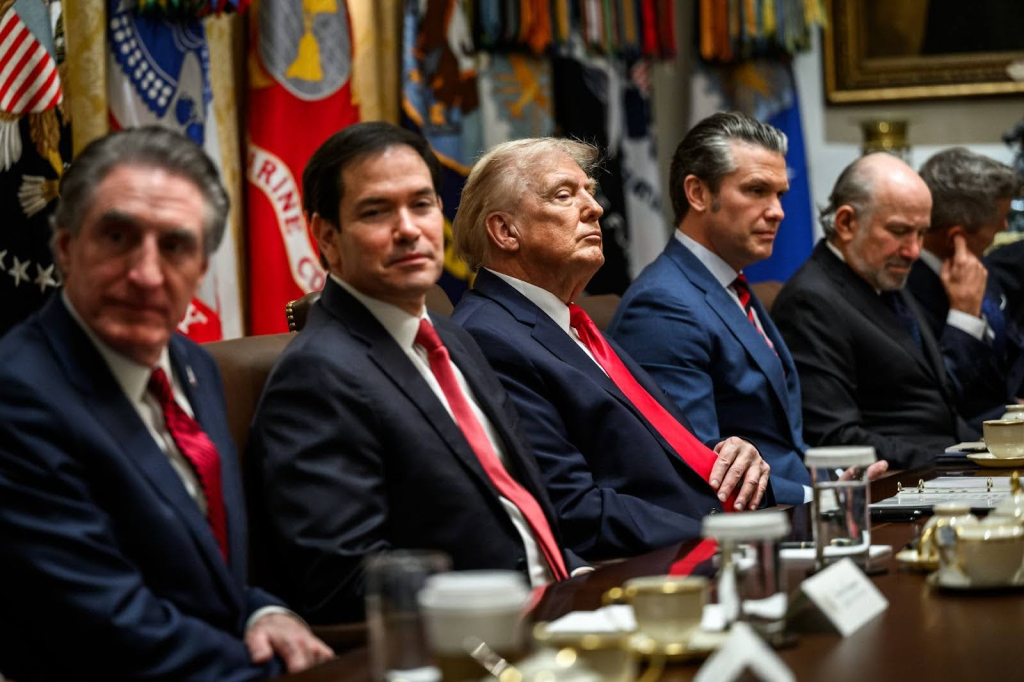
– On February 19, President Donald Trump warned Iran it has about 10 days to reach a “meaningful” nuclear deal or face consequences, as the U.S. ramps up its military presence in the Middle East. Washington continues to demand limits on Iran’s enrichment and missile programs while oil prices rise and Russia calls for restraint.
– It was reported on February 22 that President Trump is weighing an initial targeted strike on Iran to pressure it into abandoning nuclear enrichment, with the possibility of a broader campaign aimed at toppling its leadership if diplomacy fails, even as both sides debate a last-minute proposal allowing limited enrichment for medical purposes to avert military conflict.
– Iran on February 23 reiterated its commitment to a diplomatic solution on its nuclear programme while warning that any U.S. military strike would be treated as an act of aggression and met with a forceful response.
– It was reported on February 24 that Iran is close to finalizing a deal with China to purchase supersonic CM-302 anti-ship cruise missiles that would significantly boost its naval strike capabilities amid heightened U.S. military deployments near its coast.
– As of February 24, the U.S. has stationed more than 150 aircrafts and two aircraft carriers to Europe and the Middle East since nuclear talks with Iran stalled, assembling one of its largest regional military buildups in decades.
Associated News References:
“Exclusive: Iran nears deal to buy supersonic anti-ship missiles from China,” Reuters, February 24
“Over 150 U.S. aircraft sweep into Europe, Middle East as Trump mulls strikes,” The Wall Street Journal, February 24
“Iran says ready for talks but will defend itself against US aggression,” Al Jazeera, February 23
“Trump Considers Targeted Strike Against Iran, Followed by Larger Attack,” The New York Times, February 22
“Iran hails ‘encouraging signals’ from US before nuclear talks on Thursday,” Al Jazeera, February 22
“Trump presses Iran to make ‘meaningful’ deal, appears to set 10-day deadline,” Reuters, February 19
“Iran nuclear material “still there, in large quantities,” IAEA chief says, calling for urgent deal with U.S.,” CBS News, February 19
“Iran says ‘good progress’ made in nuclear talks with US in Geneva,” Al Jazeera, February 18
“US increases military pressure on Iran as countries discuss a deal,” CNN, February 17
“Iran foreign minister says progress made in nuclear talks with US in Geneva,” Reuters, February 17
“Iran says progress made in nuclear talks as supreme leader warns Trump over military buildup,” NBC News, February 17
Trump threatens tariffs for countries trading with Iran, BBC, February 7, 2026
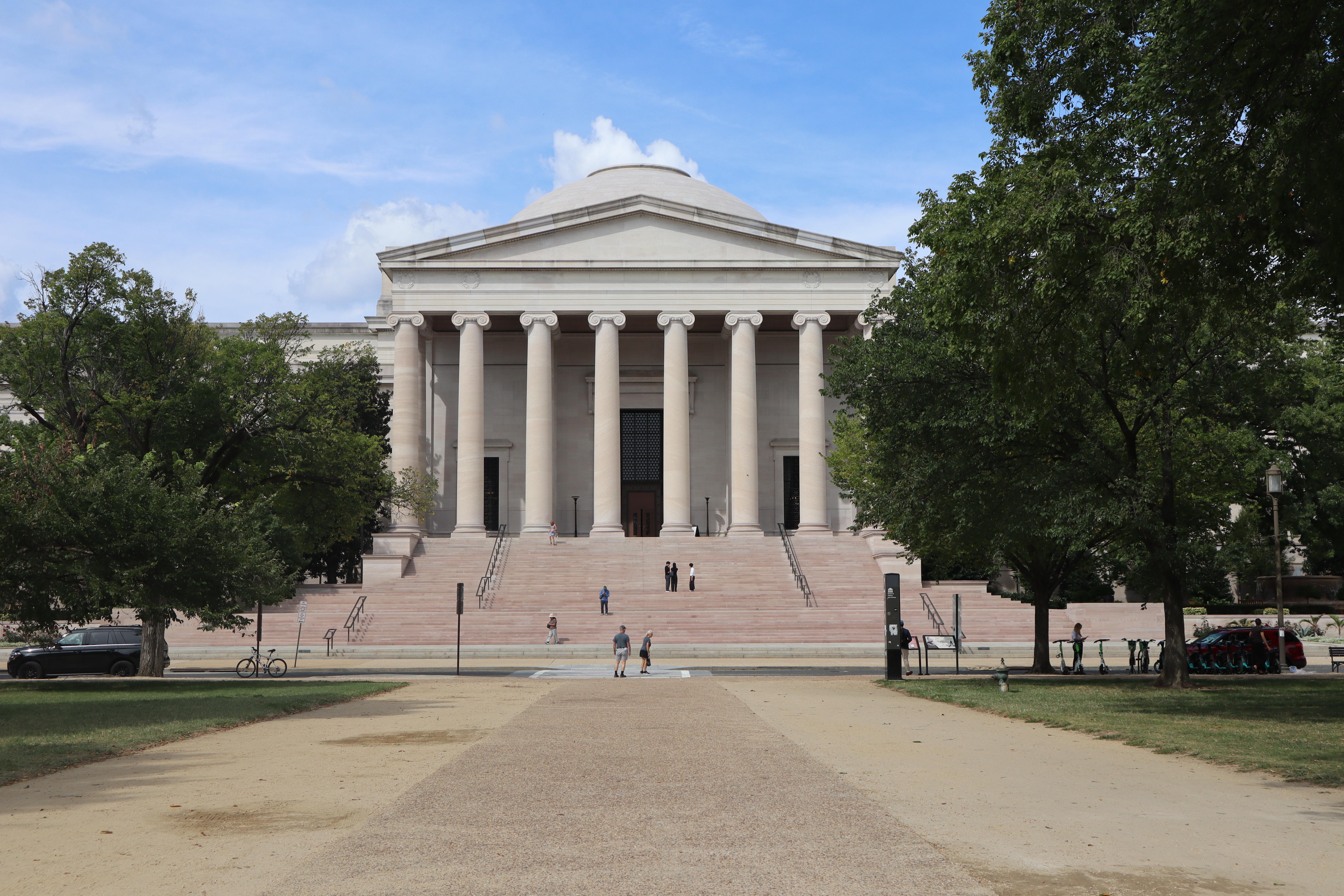
– The Supreme Court on February 20 ruled 6–3 that the International Emergency Economic Powers Act (IEEPA) does not authorize President Trump to impose his liberation day and subsequent tariffs under declared national emergencies. The ruling invalidated most of his global tariff program, but left sector-specific tariffs intact.
– More than $175 billion in IEEPA-based tariffs could be subject to refunds after the ruling, potentially triggering large repayment claims against the U.S. Treasury.
– Hours after the Supreme Court ruling, President Trump signed a Proclamation invoking section 122 of the Trade Act of 1974 to impose a 10% tariff on imports from around the world for 150 days, starting from February 24. The countries with free trade agreements with the U.S. and a wide range of goods are exempt from the new global tariff.
– On the next day, Trump said in a Truth Social post that he is increasing the 10% global tariff to 15%, while the Trump administration is still working on legal justification for the 5% increase.
– U.S. Customs and Border Protection announced on February 22 that it will stop collecting President Trump’s IEEPA-based tariffs starting from February 24, 2026.
– On the same day, Treasury Secretary Scott Bessent was elusive on the process of issuing refunds when asked during a press conference.
– China’s Ministry of Commerce said on February 23 that it is fully assessing the ruling, urged Washington to remove unilateral trade measures, and warned that continued tariff conflict between the two countries is harmful as Trump moves to impose new duties.
– The U.S. finalized a trade agreement with Argentina on February 5. The agreement would eliminate tariffs from both sides on goods including medicines, medical devices, and chemicals. Both sides agreed to cooperate on enforcing export controls on sensitive dual use items and enhance engagement in combating unfair trade practices of third countries.
– The U.S. and India reached an interim trade agreement on February 5 that lifts certain U.S. national security tariffs on Indian steel, aluminum, copper derivatives, and aircraft parts in exchange for India reducing tariffs and non-tariff barriers on U.S. goods and committing to $500 billion in U.S. purchases over five years, as both sides pursue a broader bilateral trade pact.
– The U.S. signed a trade deal with Bangladesh on February 9, finalizing a tariff rate of 19% on Bangladeshi imports and also securing exemptions for textiles manufactured with American material. Bangladesh will provide preferential market access for U.S. industrial and agricultural goods and ease non-tariff barriers by accepting American vehicle safety and emissions standards.
– The Office of the USTR on February 13 announced that the US and Ecuador have “substantially concluded negotiations” on a trade agreement after months of negotiations, and are expected to sign a trade deal in the “coming weeks.”
Associated News References:
“Trump administration ending collections on tariffs deemed illegal,” The Hill, February 23
“China assessing US Supreme Court tariff ruling; says “fighting is harmful”,” Reuters, February 22
“Trump Says He Will Raise Global Tariff to 15 Percent,” The New York Times, February 21
“US Supreme Court strikes down Trump’s global tariffs,” Reuters, February 20
“Supreme Court strikes down bulk of Trump’s tariffs,”
The Hill, February 20
“Trump to impose new 10 percent tariff on all countries after Supreme Court decision,” The Hill, February 20
“Exclusive: Supreme Court tariff ruling makes over $175 billion in US revenue subject to refunds, Penn-Wharton estimates,” Reuters, February 20
“United States and Ecuador ART Negotiations,” Office of the United States Trade Representative, February 13
“US and Bangladesh strike new trade deal – key terms of
the agreement,” The Times of India, February 10
“US, India unveil interim trade framework, move closer to broad pact,” Reuters, February 6, 2026
“Argentina and US sign a major trade deal to slash tariffs and boost a political alliance,” Associated Press, February 5
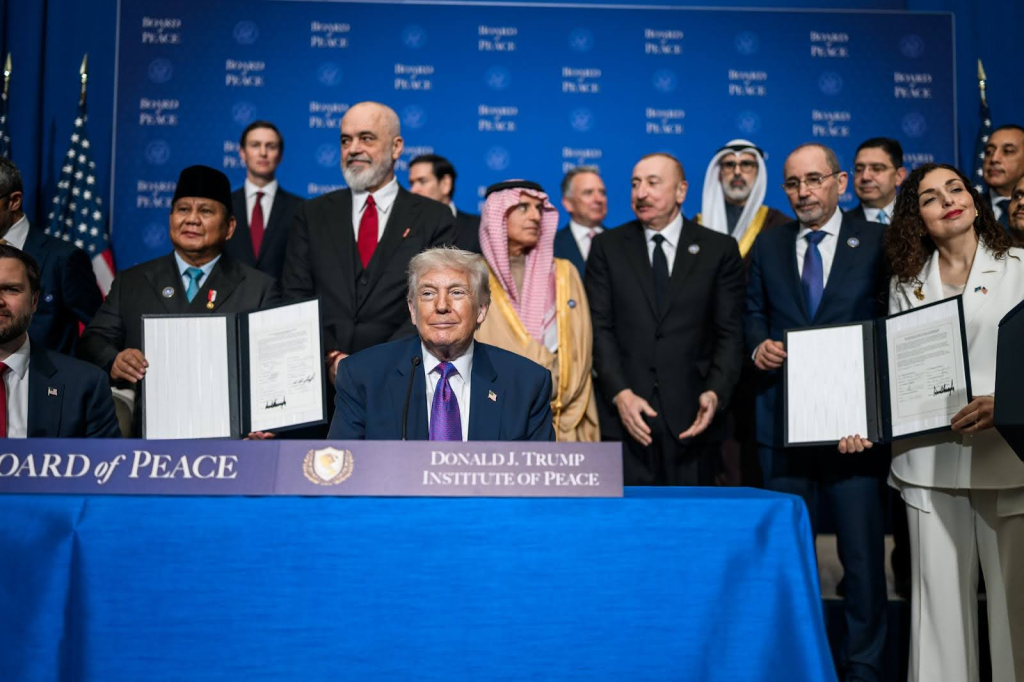
– The Board of Peace held its first gathering on February 19 in Washington, DC. Although the inaugural meeting of the Board centers around the topic of post-war rebuilding in Gaza, there was no Palestinian representation.
– Among the 40 attendees are about 20 member states, and observers from the EU, Austria, Croatia, Finland, Germany, Greece, Italy, the Netherlands, Norway, Poland, Slovakia, and Switzerland. Members mostly feature regional forces in the Middle East, while U.S. allies in Europe have largely shied away from it. Hungary and Bulgaria were the only two EU members to formally join.
– President Trump appointed himself as the lifelong chairman of the Board, and declared it to be “the most prestigious board ever put together.”
– The Board focused on advancing the next phase of the Gaza ceasefire, pledging $7 billion in reconstruction funds plus a $10 billion U.S. commitment, outlining plans for a U.N.-authorized stabilization force and a multi-year rebuilding strategy for Gaza. However, the source of the U.S. commitment remains undisclosed.
– The meeting also discussed broader ambitions to address other global conflicts and warned of possible action against Iran if negotiations fail.
– Sen. Edward Markey (D-MA.) urged Secretary of State Marco Rubio to cancel or limit President Trump’s Board of Peace, calling it a power grab that sidelines the U.N. and concentrates authority in Trump’s hands. He raised concerns about its structure, oversight, and reported invitations to leaders such as Putin and Lukashenko.
– Japan has postponed a decision on joining President Trump’s Board of Peace, citing concerns it could undermine the U.N. while reviewing details with the U.S. Tokyo sent only an observer to the first meeting.
– Amnesty International urged the EU to ensure the Board of Peace centers Palestinian’s rights, warning the body could sideline the U.N., weaken accountability, and undermine international law if not aligned with human rights standards.
Associated News References:
“Amnesty International urges EU to demand Board of Peace prioritizes Palestinians’ rights,” Jurist News, February 24
“Japan pushes back decision on joining Trump’s Board of Peace,” The Japan Times, February 24
“Massachusetts senator urges Rubio to ‘cancel or curtail’ Board of Peace,” JNS, February 23
“Trump gets his Board of Peace, even as bigger countries steer clear,” Politico, February 19
“Trump vows $10 billion from U.S. for his Board of Peace as he leans into global role,” NBC News, February 19
“The Board of Peace,” The New York Times, February 19
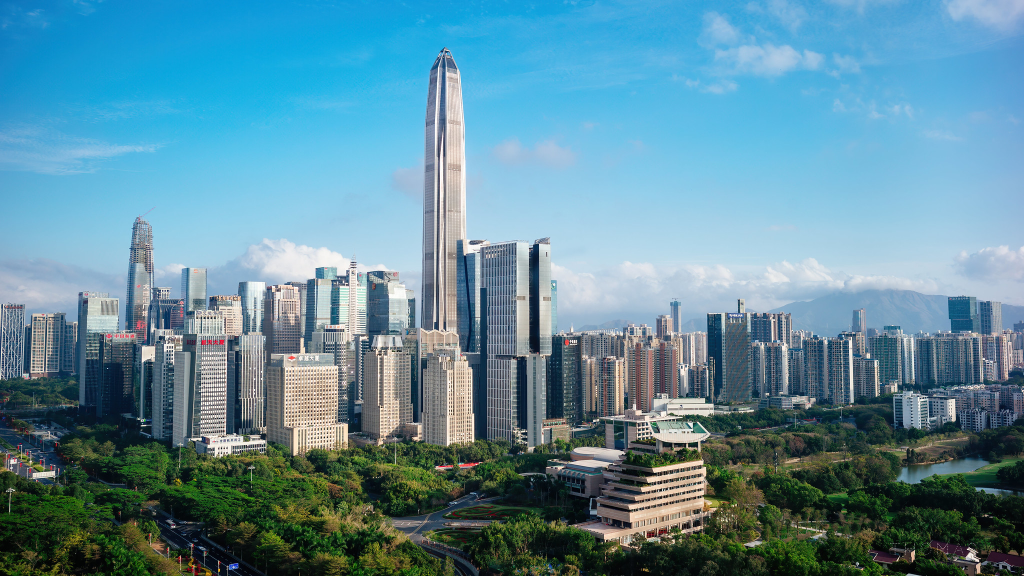
“Exclusive / Data reveals scale of US allies’ China hedge under Trump,” Semafor, February 24
“Olympian Eileen Gu responds to JD Vance’s comments suggesting she should represent U.S.,” The New York Times, February 21
“Trump’s claim of Chinese and Russian ships near Greenland ‘not supported by facts’,” South China Morning Post, February 18
“In letter to Iowa friends, Xi offers reassurance over Sino-American exchanges,” Reuters, February 18
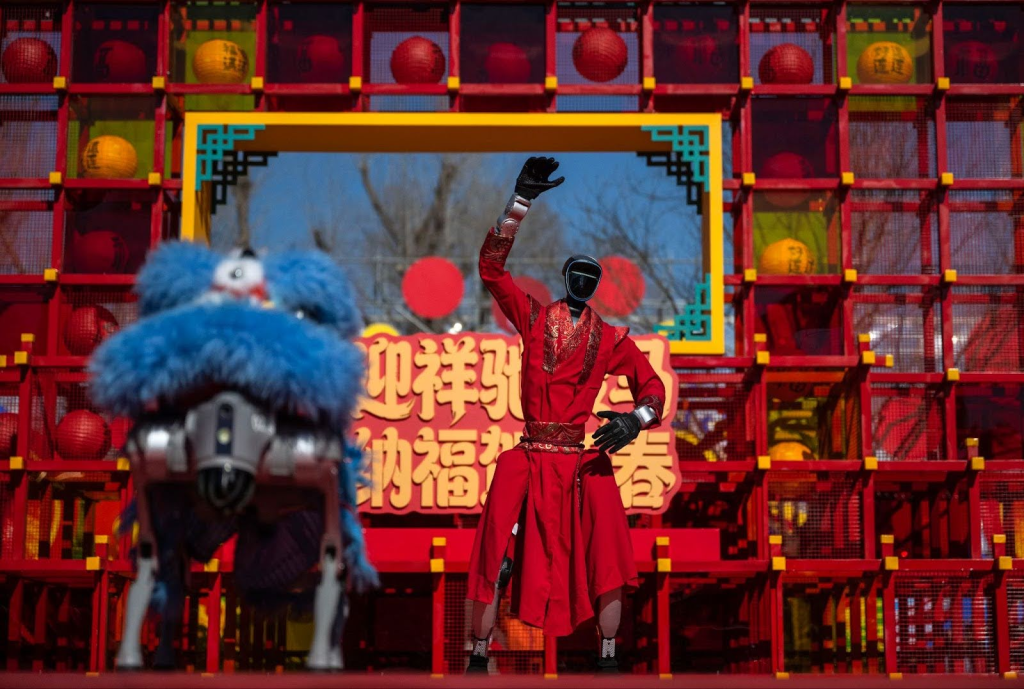
“China’s humanoid robots take center stage for Lunar New Year showtime,” NBC News, February 17
“USA men’s curling falls to China after one bad end,” NBC Olympics, February 17
“Ford CEO discusses potential joint ventures for Chinese automakers in the U.S.,” CBT News, February 17
“Vance speaks out on Eileen Gu’s decision to compete for China instead of US in Olympics,” Fox News, February 17
“Nexperia to receive $60 million loan from Invest International to boost chip output,” Reuters, February 16
“China says semiconductor supply chain stability is top priority after Dutch ruling on Nexperia,” Reuters, February 13
“China to Provide Humanitarian Energy Aid to Ukraine Amid Russian Strikes,” Kyiv Post, February 13
“US warns China costing Peru its sovereignty,” The Hill, February 12
“China Bought Some Venezuelan Oil From the US, Wright Says,” Bloomberg, February 12
“US pushes AI funding, fisheries tech at APEC amid China rivalry,” Reuters, February 12
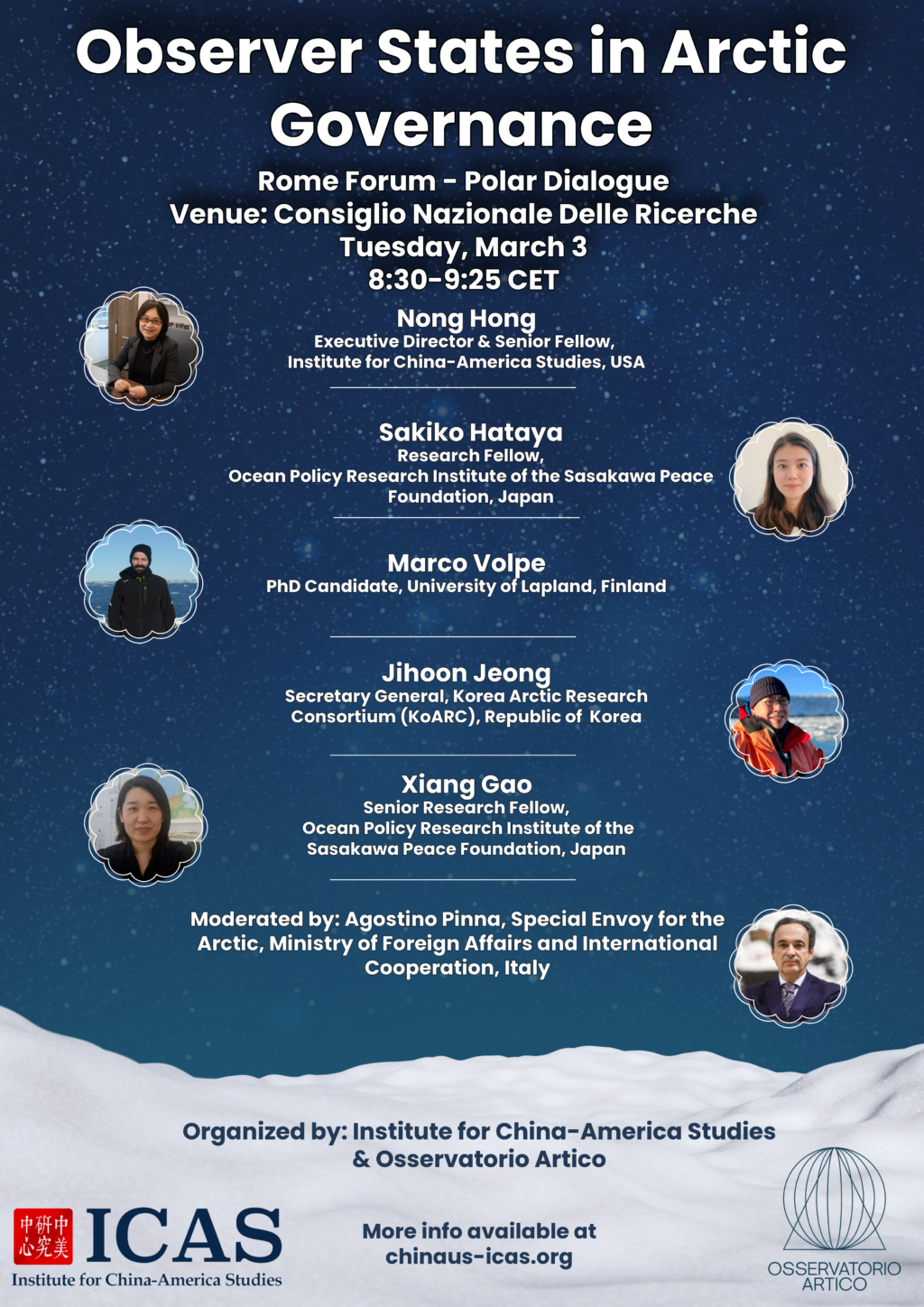
Observer States in Arctic Governance
Hosted by ICAS x Osservatorio Artico
March 3, 2026
8:30 AM – 9:25 AM CET
ICAS is proud to host an event in conjunction with Osservatorio Artico titled “Observer States in Arctic Governance” in Roma, Italy on Tuesday, March 3 at the Consiglio Nazionale Delle Ricerche.
Featured speakers will be Dr. Nong Hong, Executive Director and Senior Fellow at ICAS, Sakiko Hataya and Xiang Gao from the Ocean Policy Research Institute of the Sasakawa Peace Foundation, Marco Volpe from the University of Lapland, and Jihoon Jeong of the Korea Arctic Research Consortium. The panel will be moderated by Agostino Pinna, Special Envoy for the Arctic in the Ministry of Foreign Affairs and International Cooperation.
Shadow Banking with Chinese Characteristics: Financial Reform Amid Property Crisis
By Rían Knighton
February 23, 2026
On February 3, Qiushi, a Chinese Communist Party flagship journal, published a speech by President Xi Jinping reaffirming the country’s commitment to becoming a global financial power through the “acceleration of a modern financial system with Chinese characteristics.” Although delivered in January 2024, the speech arrives amid declining global confidence in Western financial institutions and renewed scrutiny of China’s domestic economy. President Xi’s vision emphasizes currency strength, resilient institutions, risk control, and a system oriented toward public welfare rather than speculative capital…
Tariffs After the Court: Narrower Options and Shifting Incentives in U.S.–China Trade
By Yilun Zhang
February 25, 2026
The U.S. Supreme Court’s recent decision to strike down President Donald Trump’s tariffs imposed under the International Emergency Economic Powers Act (IEEPA) marks a significant judicial constraint on executive trade authority. By a 6–3 vote, the Court ruled that the administration’s “fentanyl” and “reciprocal” tariff orders exceeded the powers delegated by Congress under the 1977 statute, which permits the president to regulate commerce during foreign-triggered national emergencies. The ruling invalidated a sweeping set of tariff measures targeting China, Canada, Mexico, and most U.S. trading partners…
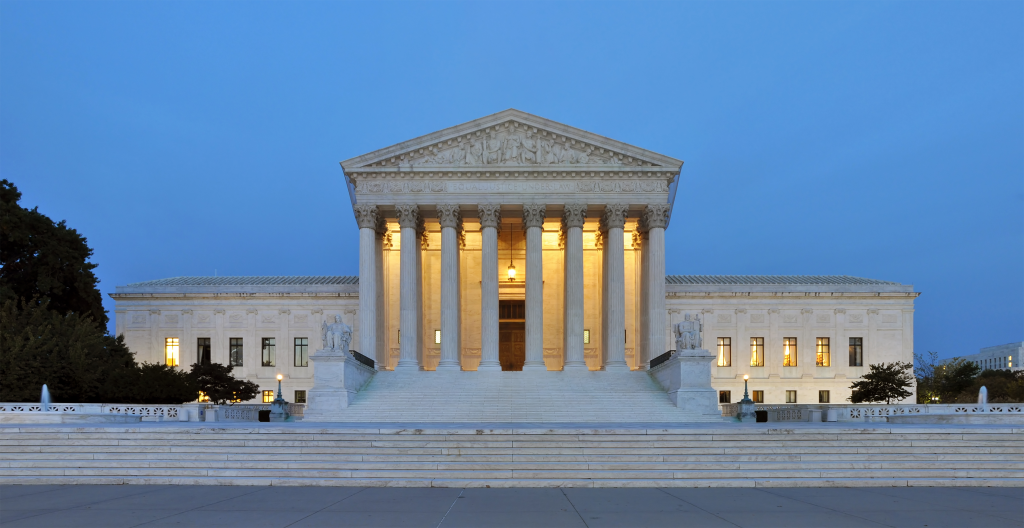
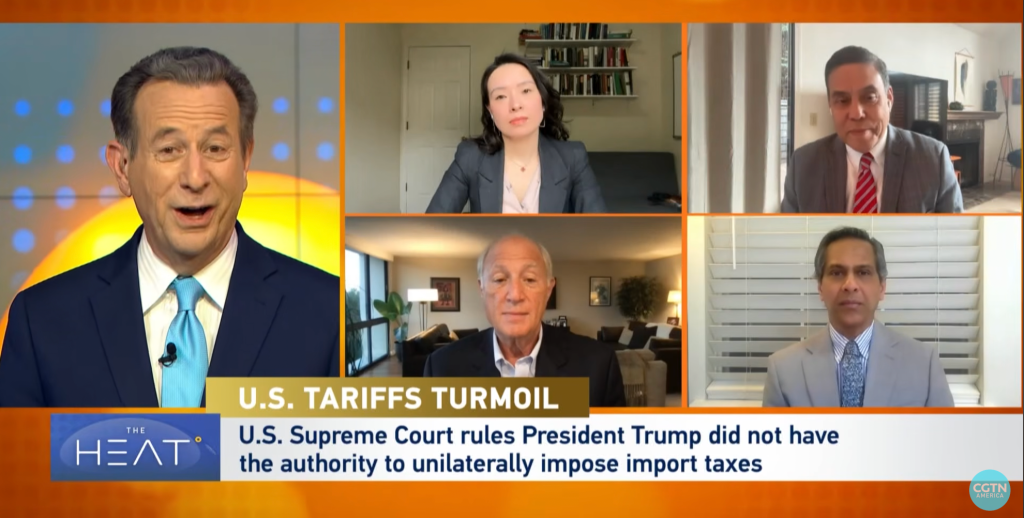
On Saturday, February 21, 2026, Senior Fellow Sourabh Gupta was interviewed by CGTN’s The Heat on overturning of Trump Tariffs.
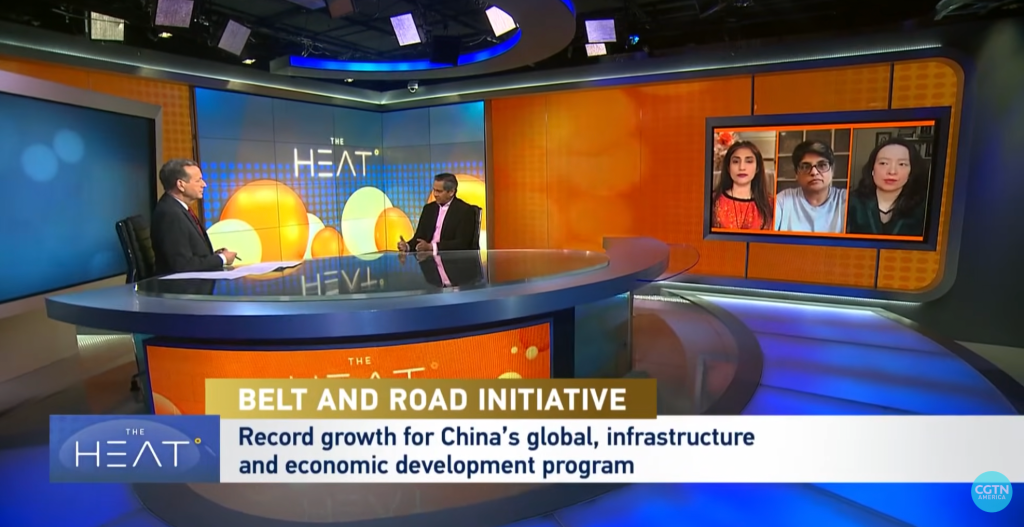
On Wednesday, February 18, 2026, Senior Fellow Sourabh Gupta was interviewed by CGTN’s The Heat on The Belt and Road Initiative.
The Institute for China-America Studies is an independent nonprofit, nonpartisan research organization dedicated to strengthening the understanding of U.S.-China relations through expert analysis and practical policy solutions.
1919 M St. NW Suite 310,
Washington, DC 20036
icas@chinaus-icas.org
(202) 968-0595
© 2026 INSTITUTE FOR CHINA-AMERICA STUDIES. ALL RIGHTS RESERVED.