

ICAS Bulletin (online ISSN 2836-3418, print ISSN 2836-340X) is published every other week throughout the year at 1919 M St NW, Suite 310, Washington, DC 20036.
The online version of ICAS Bulletin can be found at chinaus-icas.org/bulletins/.
– On December 18, TikTok CEO Shou Zi Chew announced that the company had signed an agreement to divest its U.S. entity into a joint venture, aligning with the deal as outlined in September 2025.
– The US investor group Oracle and private equity firm Silver Lake, as well as Abu Dhabi-based investment firm MGX, will collectively own 45% of the U.S. TikTok operations with ByteDance keeping a 19.9% stake and affiliates of existing ByteDance investors holding 30.1%.
– According to Chew, the newly formed entity “TikTok USDS Joint Venture LLC” would be “responsible for U.S. data protection, algorithm security, content moderation and software assurance.”
– The Chinese Ministry of Commerce reacted to the deal on December 25, saying it hopes that “relevant parties can reach a solution regarding TikTok that complies with Chinese laws and regulations and achieves a balance of interests.”
– Meta on December 29 announced its acquisition of the Chinese-founded AI startup Manus as part of Meta’s efforts to integrate advanced AI across its products. Manus launched the world’s first AI agent that requires less prompting in March 2025. The company was founded in China but later moved its headquarters to Singapore.
– China’s Commerce Ministry on January 8 said it is investigating whether Meta’s acquisition of Manus violated Chinese technology-export and outbound-investment rules that require government approval for exporting certain interactive AI systems, since Manus was founded and owned by Chinese entities.
Associated News References:
“China Is Investigating Meta’s Latest A.I. Acquisition,” The New York Times, January 8
“Meta Buys AI Startup Manus for More Than $2 Billion,” The Wall Street Journal, December 30
“China says it hopes firms seek lawful, balanced solutions over TikTok deal,” Reuters, December 25
“TikTok’s deal to divest US operations fails to satisfy China hawks,” Semafor, December 19
“Scoop: TikTok signs deal for U.S. unit after yearslong saga,” Axios, December 18
“TikTok Signs Agreements With Investors in Step Toward Avoiding a U.S. Ban,” The New York Times, December 18

– Early January 3, the United States conducted large-scale military actions in Venezuela and captured President Nicolás Maduro and his wife, Celia Flores. President Maduro met with a Chinese envoy to reaffirm ties with Beijing just hours before his capture.
– After the attack, Trump downplayed concern arising from the meeting by saying his good relationship with Xi meant “there’s not going to be a problem” and that China would still “get oil.”
– On January 3, China strongly condemned the U.S. attack on Venezuela as a violation of international law and Venezuela’s sovereignty.
– Brazil, Chile, Mexico, and Russia also voiced strong condemnation, with Cuba and Nicaragua closely monitoring the crisis; the UK declined to comment. Germany and the EU were brief on their varied stances on U.S. military action in Venezuela.
– The Trump administration on January 5 issued demands to Venezuela’s interim leadership that more oil exports be allowed only if Venezuela cuts economic ties with China, Russia, Iran, and Cuba and agrees to work exclusively with the U.S. on oil sales.
– The U.S. seized two Venezuela-linked tankers on January 7, including one sailing under Russia’s flag, prompting sharp condemnation from China and escalating tensions with Russia.
– On January 7, Trump said the U.S. expects to run Venezuela and control its oil “for years,” describing direct U.S. oversight of the country’s resources as long-term and “very profitable” while offering no timeline for relinquishing control.
– It was reported on the same day that Chinese independent refiners are expected to shift from Venezuelan supplies to heavy crude from Iran and Russia, buffered in the near term by roughly 75 days of Venezuelan oil already in floating storage.
– U.S. Energy Secretary Chris Wright on January 8 said Washington will permit limited Chinese commercial involvement in Venezuela but will not permit Beijing to gain major influence, emphasizing that the United States must remain the dominant partner while U.S. oil companies expand their roles there.
– Vitol on January 8 obtained a preliminary U.S. special license to negotiate 18-month imports and exports of Venezuelan oil and is now working to finalize the terms.
– Vitol and Trafigura on January 12 have begun talks with Indian and Chinese refiners to sell Venezuelan crude for a March delivery under U.S. marketing arrangements that aim to restart Venezuela’s halted exports, while also rushing to secure shipping and logistics for those sales.
Associated News References:
“Vitol, Trafigura offer Venezuelan oil to Indian, Chinese refiners for March delivery, sources say,” Reuters, January 12
“Exclusive: Vitol gets preliminary US license to begin negotiations on Venezuelan oil imports and exports, four sources say,” Reuters, January 8
“US, China can balance roles in Venezuela, US energy chief says,” Reuters, January 8
“Trump Says U.S. Oversight of Venezuela Could Last for Years,” The New York Times, January 8
“US seizes Russian-flagged tanker, another tied to Venezuela as Trump widens oil push,” Reuters, January 8
“Chinese refiners expected to replace Venezuelan oil with Iranian crude, traders say,” Reuters, January 7
“Trump demands Venezuela kick out China and Russia, partner only with US on oil: Exclusive,” ABC News, January 6
“U.S. strikes in Venezuela trigger regional and global alarm,” NPR, January 4
“Trump confirms US strike in Venezuela, says President Nicolás Maduro has been ‘captured’,” Fox News, January 3
“Maduro met Chinese envoy hours before US capture from Caracas as Beijing slams operation,” Fox News, January 3

– North Korea fired two ballistic missiles during a military drill on January 4, just hours before South Korean President Lee Jae-Myung’s January 4-7 visit to China. North Korea said the drill was to test its hypersonic weapon system.
– Ahead of President Lee’s visit to China, he emphasized in a CCTV interview on January 2 that Seoul respects the One-China policy, values China as a reliable neighbor, and aims to clear past misunderstandings to elevate the relationship to a new stage.
– After meeting with President Xi, President Lee on January 5 called for a “new phase” of Korea-China relations focused on restoring ties, expanding economic cooperation, and coordinating on regional stability, while both leaders agreed to resume dialogue with North Korea and manage differences through consultation.
– South Korea and China signed 14 MOUs and a cultural artifact agreement covering industrial exchanges, technology, environmental, transportation, startup, and IP cooperation.
– President Lee on January 7 said that he asked President Xi to mediate with North Korea and support a phased approach to freeze North Korea’s nuclear and missile programs.
– On January 6, China banned exports of dual-use goods to Japan to prevent their potential military use, including heavy rare earths and magnets, prompting Japan to lodge a strong protest and demand withdrawal of the measure.
– Head of Asia Oceanian Affairs at Japan’s Foreign Ministry, Masaaki Kanai, urged China to withdraw the trade curbs, saying that a measure exclusively targeting Japan deviates from international practice.
– On the same day, Japanese lawmaker Hei Seki visited Taiwan and claimed it to be an independent country.
– China on January 7 opened an anti-dumping investigation into Japanese dichlorosilane imports after the price of the product fell sharply.
– During an interview on the same day, Trump said it is “up to” Xi what China does on Taiwan but warned he would be “very unhappy” with any change to the status quo, adding that he does not believe Xi will move against the island while he remains president through 2029.
– One day before meeting with Japanese Prime Minister Sanae Takaichi, President Lee said in an interview with NHK aired on January 12 that a dispute between China and Japan was not desirable for regional peace, adding that Seoul would not meddle in the ongoing row.
– President Lee and Prime Minister Takaichi agreed during their meeting on January 13 to strengthen bilateral cooperation across security, technology, and economic resilience while reaffirming their shuttle diplomacy framework to deepen trust and stabilize Korea-Japan relations.
Associated News References:
“Japan, South Korea vow stronger ties amid China challenge,” Deutsche Welle, January 13
“South Korea president says Japan-China dispute not desirable for regional peace,” Reuters, January 12
“Trump says Venezuela does not give China a Taiwan precedent, but ‘it’s up to’ Xi,” Reuters, January 8
“China Deprives Japan of Rare-Earths Supply, Escalating Dispute,” The Wall Street Journal, January 8
“Japan opposition lawmaker Seki visits Taiwan after sanctioned by China,” Japan Today, January 7
“China announces another new trade measure against Japan as tensions rise,” ABC News, January 7
“South Korean leader says he asked China’s Xi to act as mediator on North Korea issues,” Associated Press, January 7
“China bans exports to Japan of dual-use goods that could enhance Tokyo’s military power,” Associated Press, January 6
“Korea’s Lee, in Beijing, says he seeks full restoration of China ties in 2026,” Reuters, January 5
“Korea, China sign 14 MOUs on cooperation in technology, environment, other areas,” The Korea Times, January 5
“North Korea says latest missile tests involve hypersonic weapons system,” Associated Press, January 5
“North Korea fires ballistic missiles, condemns US strikes on Venezuela,” Reuters, January 4
“South Korean president visits China following Beijing’s rising tensions with Japan over Taiwan,” Associated Press, January 4
– The FY2026 NDAA was signed into law on December 18, 2025 and includes the Comprehensive Outbound Investment National Security Act of 2025 (the COINS Act) and the BIOSECURE Act.
– The COINS Act creates a statutory outbound investment control requiring U.S. persons to notify or avoid certain financial transactions with “covered foreign persons” in countries and regions of concern involving advanced or sensitive technologies, coming into effect no later than March 2027.
– The COINS Act is a significant expansion of the Treasury Department’s Outbound Investment Security Program in terms of technologies, geographic areas, and the definition of covered foreign persons. It adds high-performance computing, supercomputing, and hypersonic systems to the list of covered technologies, in addition to semiconductors and microelectronics, quantum information technologies, and artificial intelligence. It also extends the previous “countries of concern” from China to now include Cuba, Iran, North Korea, Russia, and Venezuela under the Maduro regime.
– The BIOSECURE Act imposes government-wide restrictions on “biotechnology companies of concern”, with the goal of barring U.S. federal agencies from procuring equipment and services from the designated entities.
– In addition to listing entities that are subject to the control of China and other countries of concern, the law also targets firms on the existing Department of Defense list of “Chinese military companies” that have a sufficient biotechnology nexus.
– On December 31, the Trump administration postponed planned tariff hikes on upholstered furniture, kitchen cabinets and vanities to Jan 1, 2027, while keeping existing 25% duties in place.
– On January 5, The FCC banned new imports of foreign-made drones and components from the U.S. market by adding foreign drone companies to the FCC’s “Covered List” of entities deemed to “pose an unacceptable risk to the national security of the United States”.
– Multiple Chinese companies such as Huawei, ZTE, China Telecom (Americas) and China Mobile International USA are already within the Covered List.
– The ban came after the 2025 National Defense Authorization Act passed by Congress in 2024 mandated a security review of equipment produced by DJI, Autel, and other foreign drone makers by December 23, 2025.
– On January 12, President Trump abruptly imposed a 25% tariff on goods from any country doing business with Iran, but did not detail how the new tariff will be imposed in regards to existing ones. The new tariff prompted strong condemnation from China, who vowed to safeguard its interests.
– G7 finance ministers and partner countries agreed on January 12 to accelerate efforts to reduce reliance on China for critical minerals by developing alternative supply chains. In response, China defended its position to maintain a stable global mineral market.
– On the same day, Japan launched a month-long deep-sea mission to lift rare-earth-rich mud near Minamitori Island.
Associated News References:
“Trump announces 25 percent tariff on countries that trade with Iran,” The Washington Post, January 13
“G7 agrees to speed up reduction of reliance on China for rare earths,” Kyodo News, January 13
“Japan sets sail on rare earth hunt as China tightens supplies,” Reuters, January 12
“White House delays new tariffs on furniture, kitchen cabinets and vanities,” ABC News, January 1, 2026
“President Signs New Outbound Investment Law,” Akin, December 24
“The BIOSECURE Act Becomes Law in the United States,” Arnold & Porter, December 23
“FCC bans new DJI Chinese drones, citing national security,” The Washington Post, December 23
“US bans new foreign drone models in a blow to Chinese giant DJI,” CNN, December 23
“President Trump Signs FY2026 National Defense Authorization Act Into Law,” Rick W. Allen, December 18
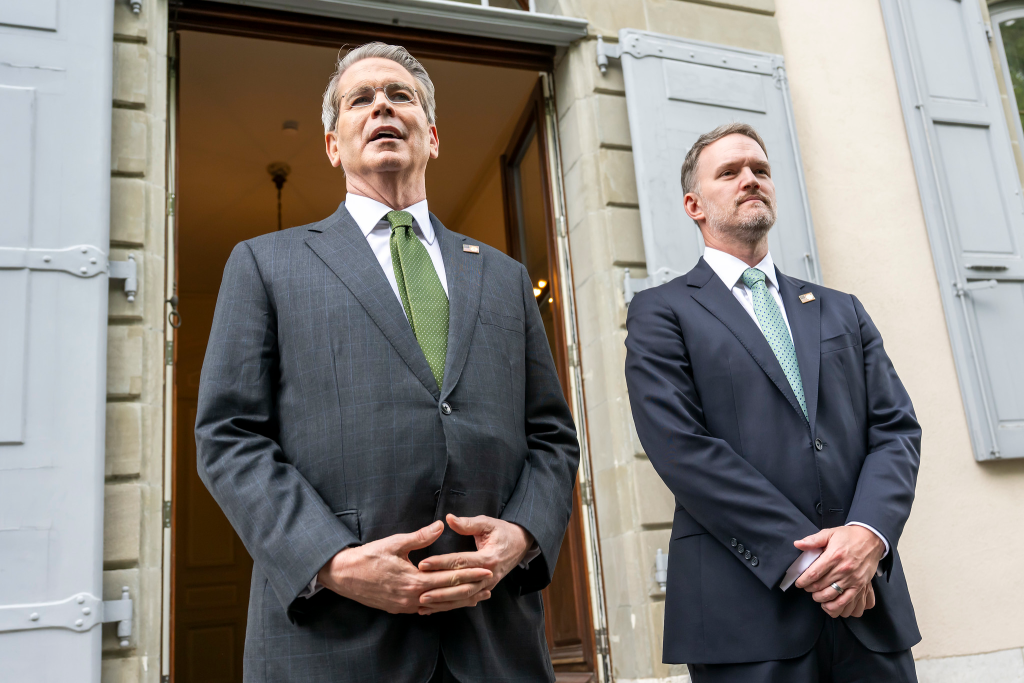
– On December 23, the Office of the US Trade Representative released the findings of a year-long Section 301 investigation of China’s semiconductor sector that began in December 2024.
– The investigation accused Beijing of employing “unreasonable and discriminatory” practices, alleging that China relies on “sweeping non-market policies,” and its industrial plans target “every major segment of the semiconductor supply chain,” including fabrication, design, assembly, testing, and packaging.
– Despite accusations, USTR delayed any additional tariffs for now. The new tariff is set at an initial rate of 0% which is set to rise in June 2027 to an undetermined amount, and would be stacked on top of the existing 50% tariffs.
– President Trump on January 2 ordered the U.S.-registered company HieFo to reverse its 2024 $2.9 million acquisition of Emcore’s chip assets due to national security concerns. President Trump’s national security accusations are due to one of HieFo’s two founders being a Chinese national.
– On January 7, China instructed some tech firms to pause Nvidia H200 orders while it weighs conditions for allowing the chip’s import and moves toward mandating domestic AI chip purchases.
– A Dutch court hearing on January 14 will decide whether to launch a formal investigation into Nexperia’s management or lift measures against its Chinese shareholder. The dispute, which has severely disrupted the auto industry, is causing both the Dutch and China-based arms of the company to prepare for a future apart by expanding non-Chinese production or securing alternative wafer supplies.
Associated News References:
“Dutch Court Weights Next Steps in Fight Over Chipmaker Nexperia,” Bloomberg, January 14
“Europe and China’s Feud Over Chips Is Reaching a Breaking Point,” Bloomberg, January 12
“China asks tech firms to halt orders for Nvidia’s H200 chips, Information reports,” Reuters, January 7
“Trump blocks chips deal, cites security, China-related concerns,” Reuters, January 2
“US delays announcement of China chip tariffs until 2027,” Reuters, December 23
“China says US shouldn’t use other countries as ‘pretext’ to pursue its interests,” ABC News, January 12
“Nordics reject Trump’s claim of Chinese and Russian ships around Greenland, FT reports,” Reuters, January 11
“Airborne wind power system generates 385 kWh at 2,000 meters in maiden flight: developer,” Global Times, January 11
“Disney CEO meets top Chinese official as ‘House of Mouse’ navigates US‑China tensions,” Reuters, January 9
“Trump’s Venezuela Oil Grab Pushes Chinese Refiners to Canada,” Bloomberg, January 8
“China’s Forex Reserves Rose in December as Yuan Debate Mounts,” The Wall Street Journal, January 7
“Carney to Visit China to Talk Trade With Xi as US Tariffs Hit Growth,” Bloomberg, January 7
“China buys more US soybeans, total purchases approach 10 million tons,” Reuters, January 6
US-China Outlook 2026: Navigating Competition, Cooperation, and Global Implications
Hosted by ICAS x World Salon
January 15, 2026
12:00PM-1:20PM EST
ICAS will host a virtual event on the outlook of the U.S.-China relations after the first year of the Second Trump Administration. Moderating the panel is ICAS’ Sourabh Gupta, and panelists include Dr. Robert Sutter (Elliott School of George Washington University), Dr. Zhiqun Zhu (Bucknell University), and Dr. Yawei Liu (The Carter Center). Click on RSVP today to register see a complete list of questions and register on Zoom.
From Rules to Bargains
By Nong Hong
January 12, 2026
In the first week of 2026, three very different headlines landed virtually on top of each other: Washington publicly revived talk of acquiring Greenland, raising immediate questions inside the transatlantic alliance; the United States launched a major operation in Venezuela that sparked an unusually sharp debate about its legality under the UN Charter; and Kyiv’s partners in Paris discussed “security guarantees” and postwar recovery at the same time that reconstruction estimates—now widely cited at around $524 billion—hang over every negotiation…
From Text to Practice: The Rise of Implementation Politics in Ocean Governance
By Nong Hong
January 7, 2026
For years, ocean governance has been described in terms of gaps, fragmentation, and chronic under-enforcement. The more revealing story in 2025–2026 is a shift in what is being contested. Across several regimes, the core disputes are moving downstream from drafting norms to building compliance systems. Implementation is becoming observable and therefore political: who pays, who monitors, what counts as compliance, and how capacity and finance are mobilized across uneven capabilities…


Managing Maritime Disputes Today: A Three-Pillar Framework for a Crowded Maritime Century
By Nong Hong
December 29, 2025
Maritime disputes today sit at the intersection of law, geopolitics, economics, and security. From the South China Sea to the Arctic, the Eastern Mediterranean, the Gulf of Guinea, and the Red Sea, states face overlapping jurisdictional claims, intensifying competition over energy and seabed resources, and a growing mix of non-traditional security risks in increasingly crowded waters. Yet persistence does not inevitably mean escalation. Practice suggests that the most effective approaches combine three interlocking pillars: a credible legal baseline grounded in international law, including the UN Convention on the Law of the Sea (UNCLOS), genuine political will to manage risk and absorb compromise, and adaptive regional and bilateral mechanisms that operationalize the UN Charter’s commitment to the peaceful settlement of disputes…
Will Viet Nam’s Balancing Act Persist in 2026?
By Rían Knighton
December 22, 2025
Despite tight rope walking between the two largest economies in the world, Viet Nam has become one of the clear winners of the U.S.-China trade war. With Q3 GDP rounding out at 8%, the Asian Development Bank (ADB) cites an expected 6.7 percent GDP projection, while the United Overseas Bank (UOB) claims 7.7 percent for the year. As tariffs and geopolitical mistrust fractured global supply chains, manufacturers seeking alternatives to China poured investment into the underdog nation…

On Saturday, January 3, 2026, Senior Fellow Sourabh Gupta was quoted by South China Morning Post on China-Japan row.
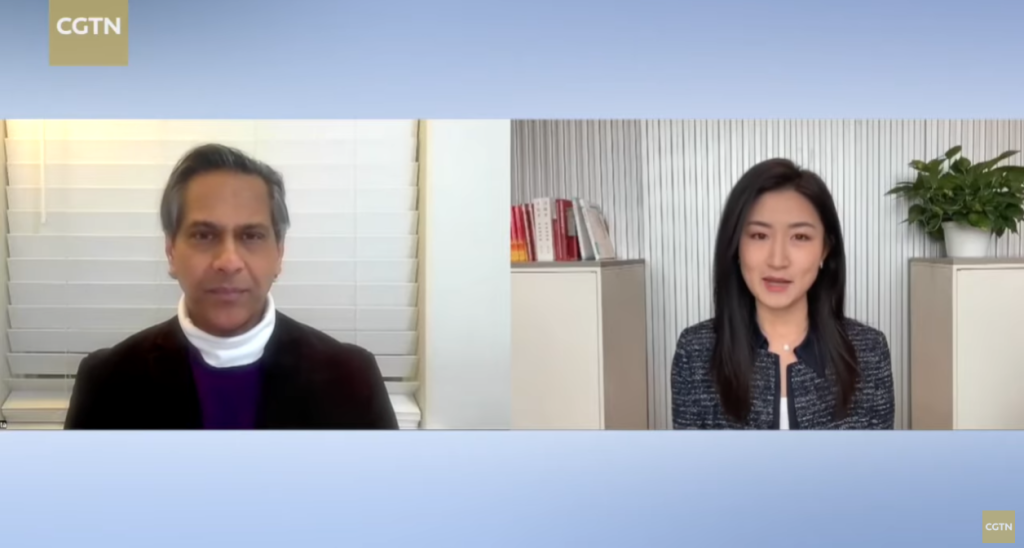
On Wednesday, December 31, 2025, Senior Fellow Sourabh Gupta was interviewed by CGTN America on CGTN’s 2025 Year in Review.
On Monday, December 29, 2025, Senior Fellow Sourabh Gupta was quoted by China Daily on the state of the U.S. in 2025.
On Sunday, December 28, 2025, Senior Fellow Nong Hong was featured by CGTN’s The Point on managing maritime disputes.
On Saturday, December 27, 2025, Senior Fellow Sourabh Gupta was quoted by South China Morning Post on Taiwan arms deal.
On Thursday, December 18, 2025, Senior Fellow Sourabh Gupta was quoted by South China Morning Post on Trump’s new National Security Strategy.
On Wednesday, December 17, 2025, Research Associate Yilun Zhang was quoted by South on “capital decoupling” from China in new NSS.
On Wednesday, December 17, 2025, Senior Fellow Sourabh Gupta was interviewed by CGTN on China’s Hainan Free Trade Port.


The Institute for China-America Studies is an independent nonprofit, nonpartisan research organization dedicated to strengthening the understanding of U.S.-China relations through expert analysis and practical policy solutions.
1919 M St. NW Suite 310,
Washington, DC 20036
icas@chinaus-icas.org
(202) 968-0595
© 2026 INSTITUTE FOR CHINA-AMERICA STUDIES. ALL RIGHTS RESERVED.