
ICAS Bulletin (online ISSN 2836-3418, print ISSN 2836-340X) is published every other week throughout the year at 1919 M St NW, Suite 310, Washington, DC 20036.
The online version of ICAS Bulletin can be found at chinaus-icas.org/bulletins/.

– The 2026 World Economic Forum (WEF) Annual Meeting took place at Davos, Switzerland from January 19-23.
– China’s Vice Premier He Lifeng spoke at the WEF on January 19. Premier He said China does not deliberately pursue trade surpluses and wants to be “the world’s market” by expanding imports.
– Canadian Prime Minister Mark Carney spoke on January 20, warning that the “old” rules-based international order built on American hegemony is gone, and urged middle powers to unite for multilateralism and freedom of trade. His speech received a standing ovation from world leaders.
– On January 6, European leaders of France, Germany, Italy, Poland, Spain, the UK, and Denmark jointly reaffirmed that Greenland belongs to its people and Denmark, stressed that Arctic security must be upheld collectively through NATO and international law, and rejected any threats to sovereignty or changes to borders by force.
– President Trump spoke at Davos on January 21, publicly renewing his demand for U.S. ownership of Greenland as a “small ask” for security reasons but ruled out the use of force.
– On the same day, he met with NATO Secretary-General Mark Rutte. President Trump said they reached a preliminary framework on Greenland without an agreement for U.S. ownership, but with “total access” and mineral rights. Further negotiations on the issue are to follow with Denmark and Greenland.
– Secretary Rutte said on January 22 that his discussion with President Trump involved a collective NATO approach to securing the Arctic, including Greenland, to prevent Russia and China from gaining economic or military access there.
– On the sidelines of the WEF on January 22, President Trump held a signing ceremony for his new “Board of Peace,” unveiling it as a major U.S.-led peacebuilding body.
– The invitations to join the ceremony were sent to more than 50 world leaders, including Russia. More than 25 countries have accepted invitations, including Israel, Saudi Arabia, Qatar, the UAE, Egypt, and Turkey.
– Major European allies such as France, Norway, and Sweden have declined or raised reservations; meanwhile Germany, the U.K., and Italy remain noncommittal.
– President Trump on January 22 withdrew the invitation to Canada to join his new Board of Peace after Prime Minister Carney criticized the U.S.-led international order and tariffs during his speech.
– A leaked draft resolution revealed on January 26 shows the Board of Peace is planning a U.S.-backed governing authority with full legislative, executive, and judicial control over Gaza, aiming to administer and “deradicalize” the territory under President Trump’s direct oversight with limited Palestinian participation.
Associated News References:
“Exclusive: Leaked “Board of Peace” Resolution Outlines U.S.-Led Plan to Rule Over Gaza,” Drop Site, January 26
“Trump rescinds Canada’s invite to join his Board of Peace amid feud with Carney,” ABC News, January 23
“NATO’s Rutte says Arctic talks with Trump will focus on keeping Russia, China out,” Reuters, January 22
“Trump hosts signing ceremony for Board of Peace in Davos despite reservations from key allies,” ABC News, January 22
“US negotiating ‘total access’ to Greenland, Trump tells Maria Bartiromo,” Fox Business, January 22
“Carney says old world order ‘is not coming back’,” BBC, January 21
“Trump says Greenland framework with NATO involves mineral rights for U.S.,” CNBC, January 21
“China Defends Growth Model at Davos, Aims to Be ‘World’s Market’,” Bloomberg, January 20
“European leaders rally behind Greenland in face of renewed US threat,” Reuters, January 6

– President Trump on January 26 threatened to raise tariffs on South Korean automobiles, auto parts, lumber, pharmaceuticals, and other goods from 15% to 25%, accusing Seoul of failing to ratify a July trade agreement and criticizing its new digital regulations. Currently, no tariffs have been imposed.
– Amid Trump’s tariff threats over Greenland, the European Union has decided to delay a vote that would lower tariffs on some U.S. goods to uphold the EU-U.S. trade agreement.
– As both struggle to maintain positive trade relations with the U.S., the EU and India struck a landmark free trade agreement on January 27, with India agreeing to cut high tariffs on European products. In turn, the EU agreed to improve access for Indian firms and offer duty-free or preferential quotas for Indian steel while easing concerns around the EU’s carbon border tax.
– On January 15, Taiwan welcomed a new trade deal with the U.S. that cuts tariffs on Taiwanese goods to 15%, cuts tariffs on Taiwanese semiconductors, and offers tariff exemptions in exchange for major investment commitments in U.S. semiconductors; China protested the agreement.
– U.S. Treasury Secretary Scott Bessent met with China’s Vice Premier He Lifeng on the sidelines of the WEF on January 19. Bessent confirmed that China is meeting its trade commitments on soybean purchases and resumed rare earth magnet flows. The meeting helped set the stage for a possible Trump-Xi summit in Beijing in April. Secretary Bessent also said that the two presidents are likely to meet 4 times in 2026.
– U.S. Trade Representative Jamieson Greer said on January 20 that there would be a possible new round of trade negotiations between the U.S. and China.
– During Canadian Prime Minister Carney’s speech at the World Economic Forum on January 20, he expressed strong opposition to the U.S. February 1 tariffs tied to President Donald Trump’s Greenland push.
– Shortly after his meeting with NATO Secretary-General Mark Rutte on January 21, President Trump announced that the February 1 tariffs on European countries will be cancelled.
Associated News References:
“EU and India close ranks against Trump and Xi to seal trade deal,” Politico, January 27
“Trump threatens to increase tariffs on South Korea,” Politico, January 26
“EU Parliament delays decision to unfreeze US trade deal,” Politico, January 26
“Canada PM Carney strongly opposes US tariffs over Greenland,” Reuters, January 20
“China hits growth goal after exports defy US tariffs,” BBC, January 19
“Schatz says US ‘absolutely rolled’ by China-Canada trade deal,” The Hill, January 16
“Taiwan hails its ‘best’ trade deal with US, as China protests,” AP News, January 16
“China’s annual trade surplus hits a record $1.2 trillion, even as exports to U.S. decline by 20%,” CNBC, January 14
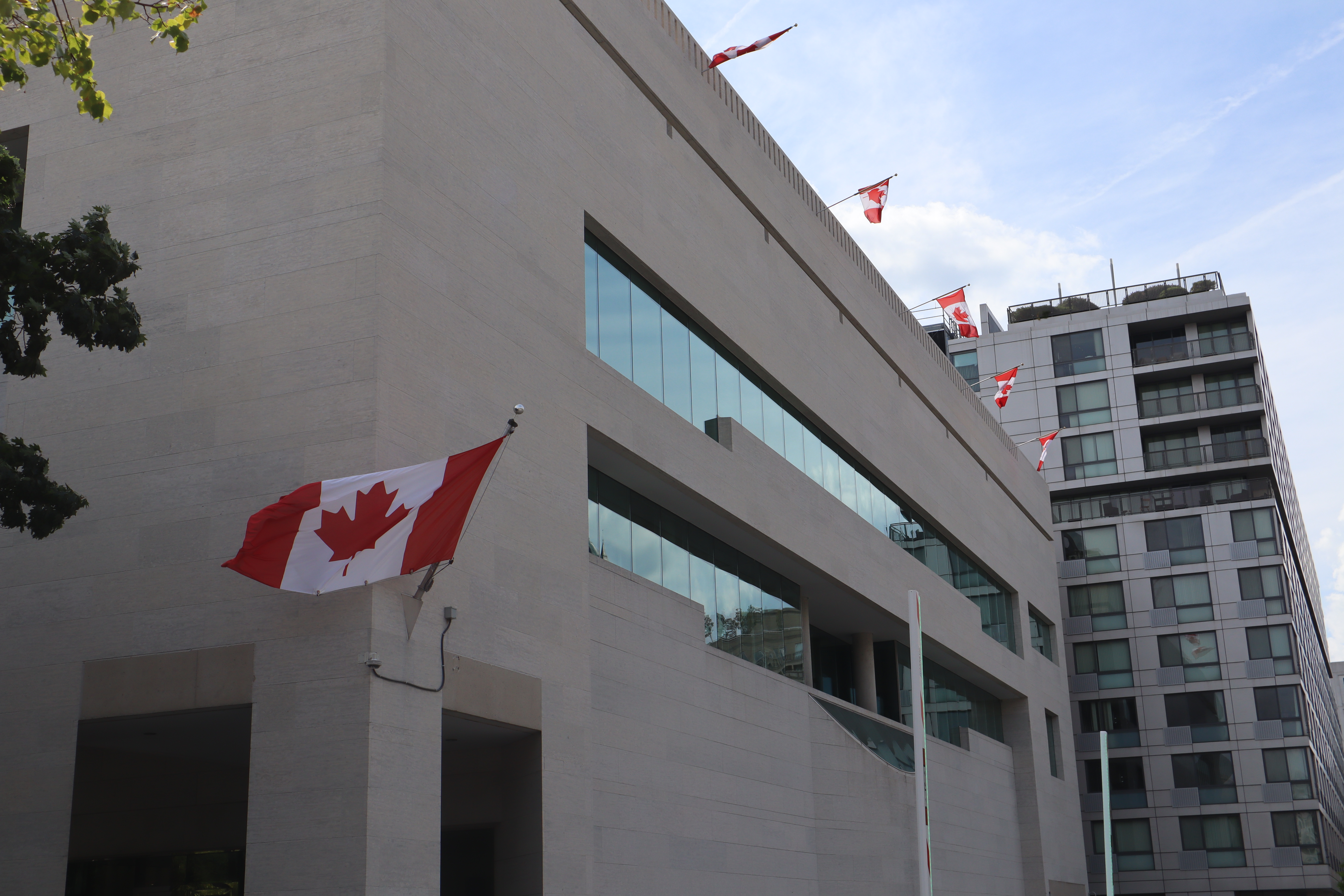
– Canadian Prime Minister Carney visited China from January 14-17. He is the first Canadian Prime Minister to visit China in 8 years.
– As a result of the visit, Canada will allow a cap of 49,000 Chinese electric vehicles (EV) into the Canadian market at the tariff rate of 6.1%, a drop from the previous 100% tariff matched with the U.S.
– In exchange, starting from March 1, China will lower tariffs on Canadian canola seed from a combined rate of 85% to 15%, meanwhile Canadian canola meal, lobsters, crabs, and peas will not be subject to relevant anti-discrimination tariffs at least till the end of 2026.
– On January 16, President Trump acknowledged and voiced his support for Canada’s trade deal with China.
– On the same day, Trump administration officials criticized Canada’s decision to lower the EV tariffs, warning Ottawa it would “regret” the deal and emphasizing that those vehicles would be barred from entering the U.S. market.
– Canadian Foreign Affairs Minister Anita Anand on January 14 said that Canada expects to double its non-U.S. trade over the next 10 years, as President Trump’s unpredictable tariffs and shifting U.S. trade posture have made Washington a less reliable partner, forcing Ottawa to diversify its markets with China.
– During his meeting with Premier Li Qiang on January 15, Prime Minister Carney said that the Canada-China partnership sets the two countries up for a “new world order”. On the same day, he also met several major Chinese firms including Alibaba, China National Petroleum Corp (CNPC), and Contemporary Amperex Technology (CATL).
– After Prime Minister Carney’s meeting with President Xi Jinping on January 16, the leaders released a joint statement outlining the pillars of the “new strategic partnership”; clean energy and climate, finance, expanding trade in agriculture and food, commitment to multilateralism and strengthening global governance, deepening public security and safety, and strengthening cultural exchanges.
– China on January 20 lifted its ban on Canadian beef imports following Prime Minister Carney’s visit and broader agricultural trade easing.
– President Trump on January 24 threatened to impose a 100% tariff on all Canadian goods if Canada formalizes a trade deal with China.
– Prime Minister Carney on January 26 said President Trump’s tariff threat is negotiation posturing ahead of the USMCA review, stressing that Canada’s recent tariff adjustments with China do not constitute a free trade agreement and therefore do not trigger the pact’s penalties.
Associated News References:
“Carney links Trump’s latest tariff threat to negotiations on CUSMA,” CBC, January 26
“Trump threatens 100% tariff on Canada if it makes a deal with China,” ABC News, January 24
“Canadian beef heads to China following Carney’s visit,” Reuters, January 21
“Carney’s China Embrace Widens Gap With US in Trump’s Tariff Era,” Bloomberg, January 17
“Canada turns to China as Trump’s tariffs and threats bring foes together,” NBC News, January 16
“Prime Minister Carney forges new strategic partnership with the People’s Republic of China focused on energy, agri-food, and trade,” Prime Minister of Canada, January 16
“Canada Breaks With U.S. to Slash Tariffs on Some Chinese Electric Vehicles,” The New York Times, January 16
“Canadian prime minister hails renewed relations with China during his Beijing visit,” Associated Press, January 15
“Canadian Prime Minister Mark Carney begins landmark 4-day visit to China to mend ties,” Associated Press, January 14

– The House on January 14 passed a $76.6 billion FY2026 two-bill appropriations package funding Financial Services and National Security-State agencies, sending it to the Senate.
– The Senate on January 15 passed an $180 billion, three-bill FY2026 appropriations package combining the Commerce-Justice-Science, Interior-Environment, and Energy-Water funding bills and sent it to President Trump for signature.
– Congress on January 20 released a bipartisan package to fully fund the departments of Defense, Labor, Health and Human Services, and Homeland Security. But it is facing major Democratic opposition over Homeland Security provisions that fund ICE with only limited accountability measures due to the fatal shooting in Minneapolis.
– The House on January 22 approved its final slate of fiscal 2026 appropriations bills, passing a three-bill minibus that funds the departments of Defense, Transportation, Housing and Urban Development, Health and Human Services, Labor, Education and other related agencies. The DHS funding was passed separately with strong Democratic opposition by a separate vote of 220-207.
– On January 7, an ICE agent shot and killed a U.S. citizen, Renee Good, during an immigration crackdown in Minneapolis, Minnesota. Another fatal incident occurred in Minneapolis on January 24 where multiple ICE agents beat then shot U.S. citizen and ICU nurse, Alex Pretti, approximately 10 times.
– The second fatal shooting has prompted Senate Democrats to oppose any funding package that includes the Department of Homeland Security. The Senate reconvenes on the evening of January 27, leaving only 4 days to pass the FY 2026 budget ahead of the January 30 deadline, sharply raising the likelihood of a partial government shutdown.
– On January 26, Gregory Bovino was removed as Border Patrol “commander at large” and reassigned to California after the Minneapolis shootings by agents under his command.
Associated News References:
“Greg Bovino Loses His Job,” The Atlantic, January 26
“Second fatal Minneapolis shooting puts Congress on verge of shutdown,” The Hill, January 25
“Man shot dead by federal immigration officers in Minneapolis,” NPR, January 24
“House passes final government funding bills in milestone, overcoming Democratic DHS opposition,” The Hill, January 22
“Congress releases massive funding bill ahead of shutdown deadline as ICE clash looms,” NBC News, January 20
“Six fiscal 2026 spending bills done, six more to go,” Roll Call, January 15
“House passes second spending package with more bills in pipeline,” Roll Call, January 14
“ICE officer kills a Minneapolis driver in a deadly start to Trump’s latest immigration operation,” Associated Press, January 7
– On January 14, U.S. lawmakers and former officials sharply criticized the Trump administration’s decision to approve Nvidia H200 AI chip sales to China, warning it could undermine U.S. AI leadership and bolster Beijing’s military capabilities despite new export “guardrails.”
– On the same day, it was reported that Chinese authorities have ordered domestic companies to stop using cybersecurity software from more than a dozen U.S. and Israeli firms over national security concerns. Chinese customs also barred Nvidia’s H200 AI chips from entering China, and authorities have instructed domestic tech firms to avoid buying them except under limited circumstances.
– It was reported on January 15 that China is drafting rules to cap and allocate Chinese firms’ purchases of foreign advanced AI chips like Nvidia’s H200, allowing limited approvals as early as the end of January while requiring companies to justify its import and maintain procurement of domestic alternatives.
– However, reports on January 23 claim that Chinese regulators have given Alibaba, Tencent, and ByteDance in-principle approval to prepare orders for Nvidia’s H200 AI chips.
– On January 15, President Trump signed a new, narrow 25% tariff effective on certain foreign-made AI chips imported into the U.S. solely for re-export.
– On the same day, Rep. John Moolenaar (R-MI) warned that global shortages of high-bandwidth memory used in Nvidia’s H200 chips risk diverting scarce components from U.S. customers to support sales to China, therefore constraining the BIS export approval of the chip.
– The House Foreign Affairs Committee on January 21 advanced the “AI Overwatch Act”, which would let key congressional committees review and potentially block licenses for advanced AI chip exports to China and other adversaries. This would also ban Nvidia’s top-end Blackwell chips, despite White House opposition against the bill.
– Nvidia CEO Jensen Huang visited China as part of a recurring tradition for the past two years to celebrate Chinese new year with employees and business partners. He was first spotted in Shanghai on January 23, with plans to travel to Beijing, Shenzhen, and Taiwan.
Associated News References:
“Nvidia CEO tours Shanghai amid fresh signs of China thaw,” South China Morning Post, January 24
“China Tells Alibaba, Tech Firms to Ready Nvidia H200 Orders,” Bloomberg, January 23
“US House panel advances bill to give Congress authority over AI chip exports,” Reuters, January 21
“Memory Shortage to Hit Nvidia China Approvals, US Lawmaker Says,” Bloomberg, January 15
“Trump’s greenlight for Nvidia AI chips to China draws fire from lawmakers, former officials,” Reuters, January 15
“China drafting purchase rules for Nvidia H200 chips,” Nekki Asia, January 15
“US and Taiwan reach trade deal, with semiconductor chips and China in focus,” Reuters, January 15
“Exclusive: Beijing tells Chinese firms to stop using US and Israeli cybersecurity software, sources say,” Reuters, January 14
“Trump Imposes Limited Tariffs on Foreign Semiconductors,” The New York Times, January 14

“Chinese scientists shrink semiconductor chip into fibre as thin as human hair,” South China Morning Post, January 22
“China Lagging in AI Is a ‘Fairy Tale,’ Mistral CEO Says,” Bloomberg, January 22
“China distances itself from Greenland issue but warns against US dependence,” Reuters, January 21
“Ford, China’s BYD in Talks for Hybrid-Vehicle Batteries After EV Market Flames Out,” The Wall Street Journal, January 15
“Chinese Universities Surge in Global Rankings as U.S. Schools Slip,” The New York Times, January 15
“Venezuelan oil exports to China set to drop as US blockade limits cargoes,” Reuters, January 14
Canada eases EV tariffs on China with quota system, opening new market access
By Yilun Zhang
January 28, 2026
Canadian Prime Minister Mark Carney’s recent visit to China has resulted in a rare and tangible adjustment in China–Canada economic relations, including Ottawa’s decision to reduce tariffs on Chinese electric vehicles from 100 percent to 6.1 percent and to allow a limited number of Chinese EVs into the Canadian market each year.
In a North American environment where Chinese EVs remain effectively excluded from the United States and face mounting political scrutiny elsewhere, the announcement naturally drew attention…
CBAM’s Rulemaking Power and Global Implications
By Zhangchen Wang
January 27, 2026
The European Union’s Carbon Border Adjustment Mechanism (CBAM) is a climate-related trade measure designed to address carbon leakage. At a basic level, it obliges importers of certain carbon-intensive goods to quantify and report embedded emissions—and, as the system matures, to purchase CBAM certificates linked to EU carbon prices. Yet CBAM’s most consequential feature lies elsewhere: it is not merely a policy tool for climate change, but a rulemaking mechanism that turns carbon emission accounting into an enforceable component of international trade. By defining how embedded emissions must be measured and translated into monetary obligations at the border, CBAM is redefining what qualifies as legitimate carbon data and credible trade compliance…
Carney’s Visit Brings A Narrow Window for Chinese EVs in North America
By Yilun Zhang
January 23, 2026
Canadian Prime Minister Mark Carney’s recent visit to China marked the most substantive thaw in China–Canada relations since the fallout of the Meng Wanzhou affair. While the trip produced a range of symbolic gestures, one outcome stood out for its material clarity: Ottawa’s decision to allow up to 49,000 Chinese electric vehicles (EVs) into the Canadian market annually and to slash tariffs on Chinese EVs from 100 percent to 6.1 percent. In a North American context defined by Washington’s relentless effort to keep Chinese EVs out, this move has inevitably attracted outsized attention—not only from EV manufacturers, but also from policymakers watching the evolving balance within the continent’s trade architecture…
The Greenland myth: why invasion talk misleads
By Nong Hong
January 20, 2026
US President Donald Trump’s remark that Russia or China could “occupy Greenland” has pulled the territory back into the centre of global geopolitics. The phrase is rhetorically potent but strategically imprecise. It frames Greenland as an object to be seized, when the more consequential contest is about alliance governance, early warning and sensing, long-horizon Arctic connectivity, and the rules that shape future resource development…
This commentary was originally released in ThinkChina on January 20, 2026.
Greenland’s stress test of Nato will ripple beyond the Arctic
By Nong Hong
January 18, 2026
Talk of the United States acquiring Greenland has often been dismissed as rhetorical provocation. But the latest escalation is harder to wave away. President Donald Trump said it would be “unacceptable” if the US did not control Greenland only hours before Vice-President J.D. Vance hosted the Danish and Greenlandic foreign ministers.
When territorial language is paired with senior-level diplomacy, it forces allies to draw public red lines, narrows the space for quiet crisis management, and turns what might have been a bargaining posture into a credibility contest…
This commentary was originally released in South China Morning Post on January 18, 2026.
On Thursday, January 22, 2026, Senior Fellow Sourabh Gupta was quoted by AA on Trump’s response to China’s Arctic Ambition.
On Tuesday, January 20, 2026, Senior Fellow Nong Hong was interviewed by CGTN’s The Point with Liu Xin on the first year of Trump 2.0.


The Institute for China-America Studies is an independent nonprofit, nonpartisan research organization dedicated to strengthening the understanding of U.S.-China relations through expert analysis and practical policy solutions.
1919 M St. NW Suite 310,
Washington, DC 20036
icas@chinaus-icas.org
(202) 968-0595
© 2026 INSTITUTE FOR CHINA-AMERICA STUDIES. ALL RIGHTS RESERVED.