
ICAS Bulletin (online ISSN 2836-3418, print ISSN 2836-340X) is published every other week throughout the year at 1919 M St NW, Suite 310, Washington, DC 20036.
The online version of ICAS Bulletin can be found at chinaus-icas.org/bulletins/.
– On October 9, The Chinese Commerce Ministry and customs authority announced several new export restriction rules through various statements.
– The Chinese government expanded its export control list to 12 to include five additional rare earth elements, impose export licensing for foreign companies using Chinese materials or equipment, restrict exports tied to advanced semiconductors and defense applications, and require case-by-case approval for 14-nanometer and more advanced chip technologies, with the new measures taking effect between November 8 and December 1.
– China will require export licenses for specific artificial diamond micropowders, single crystals, wire saws, and grinding wheels, citing national security concerns over materials vital for semiconductor and defense manufacturing. Beijing’s new export controls also include certain lithium-ion batteries, key manufacturing equipment, and artificial graphite anode materials.
– China defended its export controls, asserting that they are in “accordance with the law to better safeguard world peace and regional stability.” Beijing purports to remain open to “strengthen dialogue” and exchanges with all countries.
– Treasury Secretary Scott Bessent on October 15 termed rare earth controls as not just a US-China issue but a “China vs the world problem”, and warned of a group response from G7 countries. Bessent claimed that “bureaucrats in China cannot manage the supply chain or the manufacturing process for the rest of the world.”
– China’s Ministry of Commerce on October 16 rejected U.S. accusations that its rare earth export controls target the world, saying the measures are aimed at ensuring compliance and security, with plans to speed up licensing reviews and create a green channel.
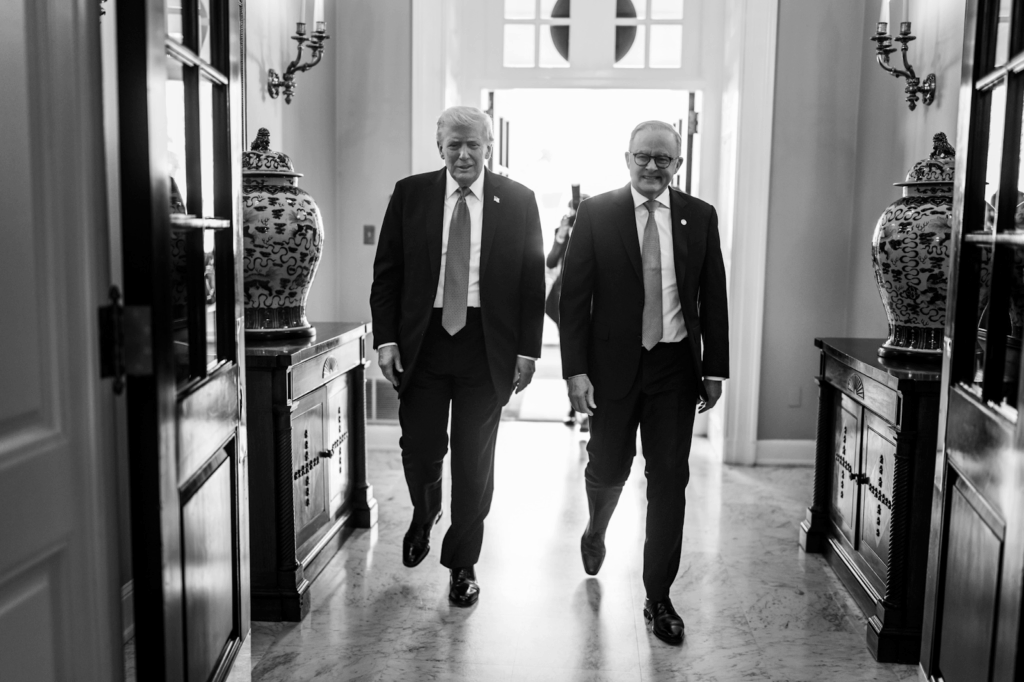
– On October 20, President Trump and Australian Prime Minister Albanese signed an $8.5 billion critical minerals agreement to boost joint mining and processing projects and reduce reliance on China.
– European Trade Commissioner Sefcovic on October 21 said he invited Chinese Commerce Minister Wang Wentao to Brussels for urgent talks on China’s rare earth export curbs, adding that both sides agreed to engage under the EU-China export control dialogue to resolve the issue and avoid further escalation.
Associated News References:
“EU trade chief to meet Chinese counterpart to discuss rare earths,” Reuters, October 21
“Trump, Australia’s Albanese sign critical minerals agreement to counter China,” Reuters, October 21
“China accuses U.S. of deliberately causing panic over rare earth controls, says it is open to talks,” CNBC, October 16
“‘Unnecessary panic’: China rebukes US officials’ comments on rare earths,” South China Morning Post, October 16
“Greer, Bessent blast China’s rare earths curbs, urge Beijing not to implement them,” Reuters, October 15
“G-7 Set to Discuss Joint Response to China Curbs on Rare Earths,” Bloomberg, October 15
“China announces artificial diamond export curbs set to take effect day before US tariff truce deadline,” Reuters, October 9
“China curbs rare earth exports, raising stakes before Trump-Xi talks,” NPR, October 9
“China steps up control of rare-earth exports citing ‘national security’ concerns,” The Guardian, October 9
“China outlines more controls on exports of rare earths and technology,” AP News, October 9
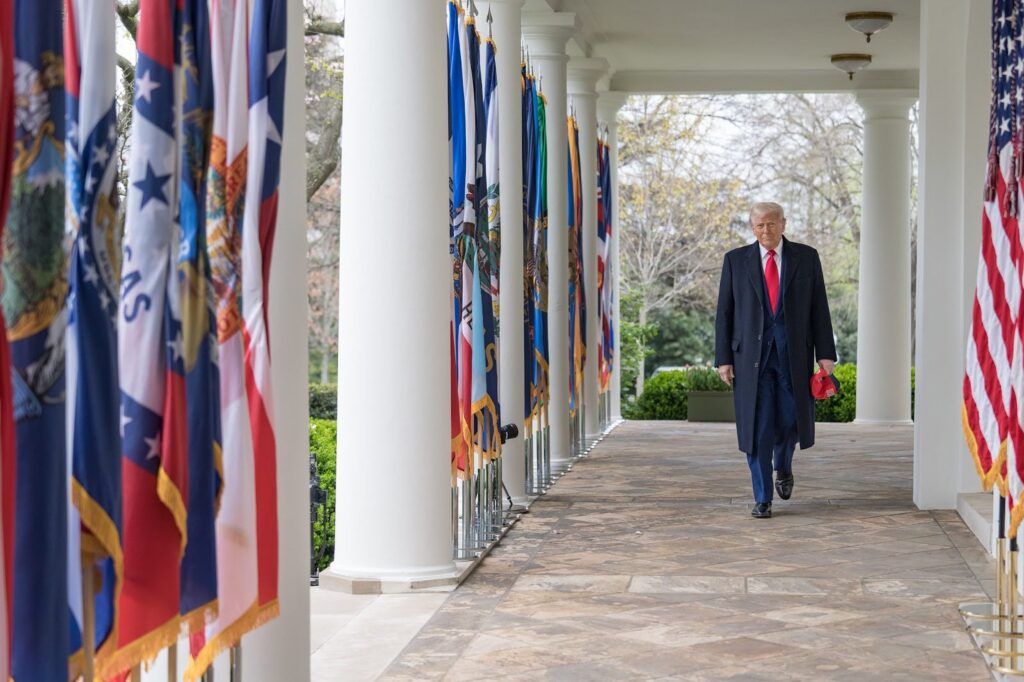
– A new round of trade war is underway between China and the U.S. as President Trump threatened on October 10 to impose additional 100% tariffs on Chinese imports starting November 1.
– President Trump also threatened to cancel his meeting with President Xi Jinping in retaliation for Beijing’s latest export controls on rare earths.
– Retail and trade experts warned on October 13 that President Trump’s tariffs on Chinese imports during the holiday shopping season could raise prices, unsettle consumer demand, and disrupt retail supply chains despite most holiday inventory already being in the U.S.
– President Trump on October 14 blamed China for “purposefully” not buying U.S. soybean and termed it an “economically hostile act” for negotiating purposes, threatening to retaliate by terminating business with China on “cooking oil and other elements of trade.” Although, the move would have little real impact since Chinese used cooking oil exports to the U.S. represent only a small, symbolic trade flow.
– On the same day, U.S. Trade Representative Jamieson Greer said whether the 100% tariffs on Chinese imports will be implemented Nov. 1 “depends on Beijing’s next move”.
– Despite President Trump’s threat to cancel the meeting, Greer confirmed on October 14 that the Trump-Xi meeting in Korea during the APEC is still scheduled to take place.
– On October 17, President Trump admitted that his new 100% tariff on Chinese imports would not be realistic in the long term.
– During a meeting with Australian Prime Minister Albanese on October 20, President Trump said he plans to visit China “fairly early next year” following his upcoming meeting with President Xi at the APEC summit.
– President Trump said on October 21 that he expects to reach a “good” but fair trade deal with President Xi at their planned meeting, while acknowledging the talks could still be canceled amid rising tensions over rare earths, tariffs, and other trade disputes.
Associated News References:
“Trump Sees Successful Xi Meeting, But Allows It Might Not Happen,” Bloomberg, October 21
“Trump says he plans to visit China ‘fairly early next year‘,” CBS News, October 20
“Trump tells Maria Bartiromo Democrats ‘made one mistake’ with government shutdown,” Fox News, October 17
“US retailers brace for impact as Trump’s 100% China tariffs loom,” Reuters, October 16
“Trump targets China cooking oil trade – but sales were already tanking,” Reuters, October 15
“Greer: Xi-Trump meeting still on the calendar,” Politico, October 14
“Trump trade rep says new 100% tariff on China depends on Beijing’s next move,” CNBC, October 14
“China says it will ‘fight to end’ after US said it was trying to hurt world economy,” The Guardian, October 14
“China warns US of retaliation over Trump’s 100% tariffs threat,” The Guardian, October 12
“China’s New Weapon in US Trade Talks: Batteries,” Bloomberg, October 11
“Trump ratchets up US-China trade war, promising new tariffs,” Reuters, October 11
“Trump announces extra 100% tariff on Chinese goods starting next month,” CBS News, October 10
– As of October 8, Brazil’s soybean exports are set to reach a record 102.2 million tons by the end of October, driven by surging Chinese demand amid the U.S.-China tariff war. With American producers largely shut out of the Chinese market, Brazil has become Beijing’s top supplier, shipping nearly 80% of its soybeans to China this year.
– On October 15, the U.S. announced plans to double its financial support for Argentina to $40 billion through public and private funding, drawing bipartisan criticism as China expands its soybean trade with Buenos Aires. The move highlights Washington’s bid to counter Beijing’s growing influence in Latin America.
– Venezuela asked the UN Security Council on October 15, to declare recent U.S. strikes off its coast illegal and to reaffirm respect for national sovereignty. The request came after Washington confirmed CIA authorization for covert operations in Venezuela.
– On October 15, Treasury Secretary Scott Bessent affirmed Washington’s pursuit of a $40 billion financing package for Argentina ahead of its October 26 elections. This package, framed as support for President Milei and a bid to deter left-wing shifts in Latin America, underscores the Trump administration’s preference for using financial leverage rather than military intervention in the region.
– Finance Minister Carlos Fernandez said on October 16 that Paraguay is deepening economic ties with Brazil to mitigate fallout from the U.S.-China trade dispute. Facing U.S. tariffs and limited access to China due to its Taiwan ties, Paraguay is promoting “South to South” trade and courting data center investments to diversify its fast-growing economy and reduce its deficit by 2026.
– China deepened its economic footprint in Argentina through soybean purchases, lithium investments, and railway exports, intensifying competition with Washington’s new financial commitments to Buenos Aires.
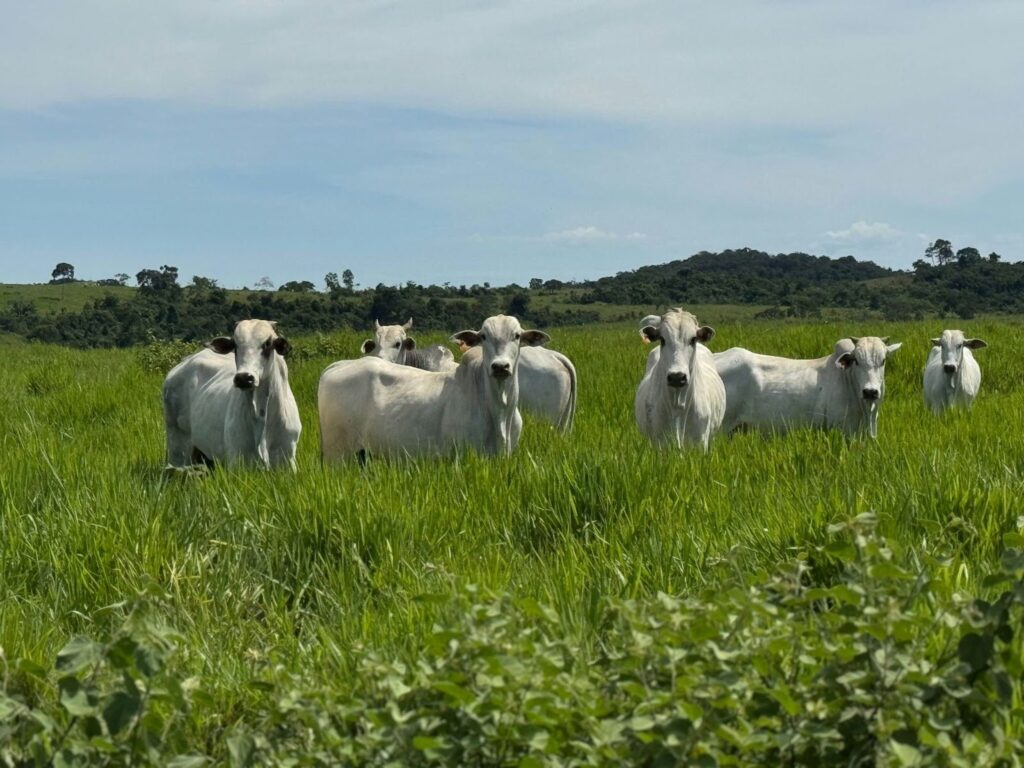
– China’s Tianjin Meat Association on October 21 committed to purchasing 50,000 tons of deforestation-free Brazilian beef by June 2026 under a new certification protocol launched by Brazilian NGO Imaflora. The move strengthens Brazil’s trade ties with China as Beijing reduces purchases from U.S. suppliers and promotes cleaner supply chains.
Associated News References:
“China to buy Brazil’s deforestation-free beef, says NGO,” Reuters, October 21
“Paraguay Bets on Brazil to Help Weather US-China Trade Spat,” Bloomberg, October 16
“US is working on doubling aid to Argentina to $40 billion by tapping private funding sources,” AP News, October 16
“Venezuela asks UN Security Council to say US strikes illegal,” Reuters, October 16
“Bessent says US considers doubling aid to Argentina by tapping outside funding,” Politico, October 15
“Argentina in superpower duel as China buys soybeans, US dangles billions,” Nikkei Asia, October 8
“Brazil’s soybean exports to hit record as US out of market, Chinese demand strong,” Reuters, October 8
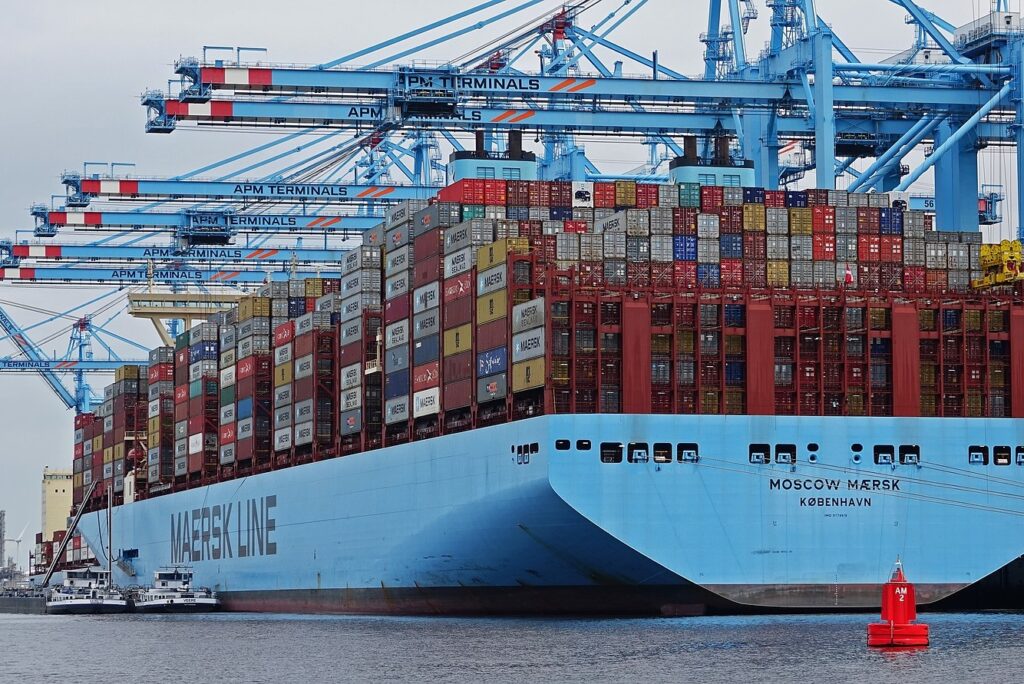
– New U.S. and Chinese port fees that took effect on October 14 are disrupting global cargo flows and pushing up freight rates, as ship operators reroute vessels to avoid the levies. The reciprocal measures have tightened ship availability, raised transpacific shipping costs, and risk higher consumer prices amid escalating trade tensions.
– Hong Kong announced it will not impose special port fees on vessels from any country, distancing itself from the escalating U.S.-China maritime dispute. While Beijing began charging U.S. ships in retaliation for American levies, Hong Kong reaffirmed its separate customs regime and commitment to remain a free port without tariffs.
– Freight rates for supertankers surged as U.S.-China port fee hikes and U.S. sanctions on a key Chinese oil terminal disrupted trade routes. China’s retaliatory port fees raised shipping costs by millions per voyage, while vessels diverted from sanctioned ports added to congestion and volatility across Asia’s energy trade.
– The U.S. and China imposed reciprocal port fees on October 14, escalating trade tensions into the maritime sector. China exempted Chinese-built ships and sanctioned South Korea’s Hanwha Ocean for aiding U.S. probes, while analysts warned the tit-for-tat measures could distort global freight flows and deepen supply chain disruption.
– The U.S. began charging new port fees on Chinese ships to counter Beijing’s dominance in commercial shipbuilding and revive America’s own industry. The measure, which also applies to non-Chinese carriers using Chinese-built vessels, could cost China’s COSCO up to $1.5 billion next year. Supporters say the fees promote fair competition, while critics warn they will raise supply-chain costs and have limited impact on revitalizing U.S. shipyards.
– On October 14, China began collecting new port fees on U.S.-linked vessels, clarifying exemptions for Chinese-built and repair-bound ships. The move, a countermeasure to Washington’s port levies on Chinese vessels, adds another layer to the widening trade confrontation, as President Trump announced new tariffs and export controls in response.
Associated News References:
“China, US port fees disrupt cargo flows, push up rates,” Reuters, October 17
“Hong Kong Won’t Impose Special Port Fees Despite US-China Spat,” Bloomberg, October 17
“Supertanker freight rates up sharply as US-China trade war envelops ports,” Reuters, October 15
“US, China roll out tit-for-tat port fees, threatening more turmoil at sea,” Reuters, October 15
“U.S. Starts Charging Chinese Ships to Dock at Its Ports,” The New York Times, October 14
“China begins charging port fees for US ships, exempts China-built ones,” Reuters, October 13

– China on October 13 blocked the Nexperia China branch from exporting products in response to the Dutch seizure of Nexperia headquarters in the Netherlands.
– Nexperia is a Chinese-owned chipmaker located in the Netherlands that produces about 40% of the world’s automotive transistors and diodes, and is caught between the escalating U.S.-China tech and trade tensions.
– Nexperia’s Chinese parent company Wingtech was added to the US Commerce Department’s trade blacklist in 2024. The Trump administration expanded the rules in September to include subsidiaries of blacklisted companies.
– The government of Netherlands on September 30 seized Nexperia to prevent the firm from being added to Washington’s entity list and rising U.S. pressure to remove its Chinese CEO back on June 12.
– The seizure is a result of the Netherlands invoking the Goods Availability Act that allows the Dutch government to take control of any entity if identified as a potential national security issue
– Nexperia on October 13 accused its ousted CEO Zhang Xuezheng of spreading false claims that its Chinese branch now operates independently, as the company faces internal division and escalating trade tensions after Beijing blocked its exports and condemned the Dutch government’s intervention.
– European automakers warned on October 16 that the Dutch government’s seizure of Nexperia risks halting chip supplies vital to car production and could severely disrupt Europe’s automotive manufacturing within a week if not swiftly resolved. Volkswagen, BMW, and Bosch are among the companies in the auto industry whose supply networks were affected.
– Nexperia China branch claimed independence on October 18, and said employees in China can disregard any orders from the Dutch headquarters.
– Dutch Economy Minister Karremans said on October 19 that he will meet with a Chinese counterpart within days to resolve the Nexperia dispute, emphasizing that the Dutch intervention was to prevent technology transfers, not to side with the U.S., as both countries face mutual dependence on the chipmaker’s automotive supply chain.
– Nexperia reaffirmed on October 20 that its employees in China remain on payroll and company systems after its Chinese unit claimed independence, and blamed suspended CEO Zhang Xuezheng for unauthorized actions.
Associated News References:
“Chipmaker Nexperia Says Ousted CEO Spreading ‘Falsehoods’,” Bloomberg, October 20
“Dutch minister will meet with China official about seizure of chipmaker Nexperia,” Reuters, October 19
“Nexperia says Chinese unit operating as usual as tensions with the Netherlands run high,” Reuters, October 18
“Automaker group warns Nexperia chip supply issue could quickly disrupt US production,” Reuters, October 16
“European carmakers fear for production in dispute over chipmaker Nexperia,” Reuters, October 16
“Dutch seizure of Nexperia followed US pressure over Chinese CEO,” Reuters, October 14
“Minister of Economic Affairs invokes Goods Availability Act,” Government of the Netherlands, October 12

“USTR Greer, Treasury’s Bessent heading to Malaysia for talks with Chinese counterparts,” Reuters, October 22
“Bitcoin Falls After Confusing U.S.-China Signals,” Barron’s, October 22
“Wall Street Split on What Trump-Xi Talks Mean for Chinese Stocks,” Bloomberg, October 21
“Trump claims China ‘doesn’t want to’ invade Taiwan,” Politico, October 20
“Canada offers tariff relief to some steel, aluminum products from US, China,” Reuters, October 20
“Trump affirms support for nuclear sub deal,” Politico, October 20
“China willing to restart dialogue with Canada at all levels, foreign minister says,” Reuters, October 17
“China’s Wang Yi meets Blackstone CEO amid rising trade tensions,” Investing, October 16
“China Targets Qualcomm, US Ships as Xi and Trump Seek Leverage,” Bloomberg, October 10
“Trump proposes barring Chinese airlines from flying over Russia on US routes,” Reuters, October 10
“Gold’s Record Rally Is Helping China Challenge Trump and the Dollar,” Bloomberg, October 9
“Pentagon nominee backs Trump call on 10% Taiwan defense spending,” Reuters, October 8
“China says Taiwan president is ‘prostituting’ himself, after interview lauding Trump,” Reuters, October 8
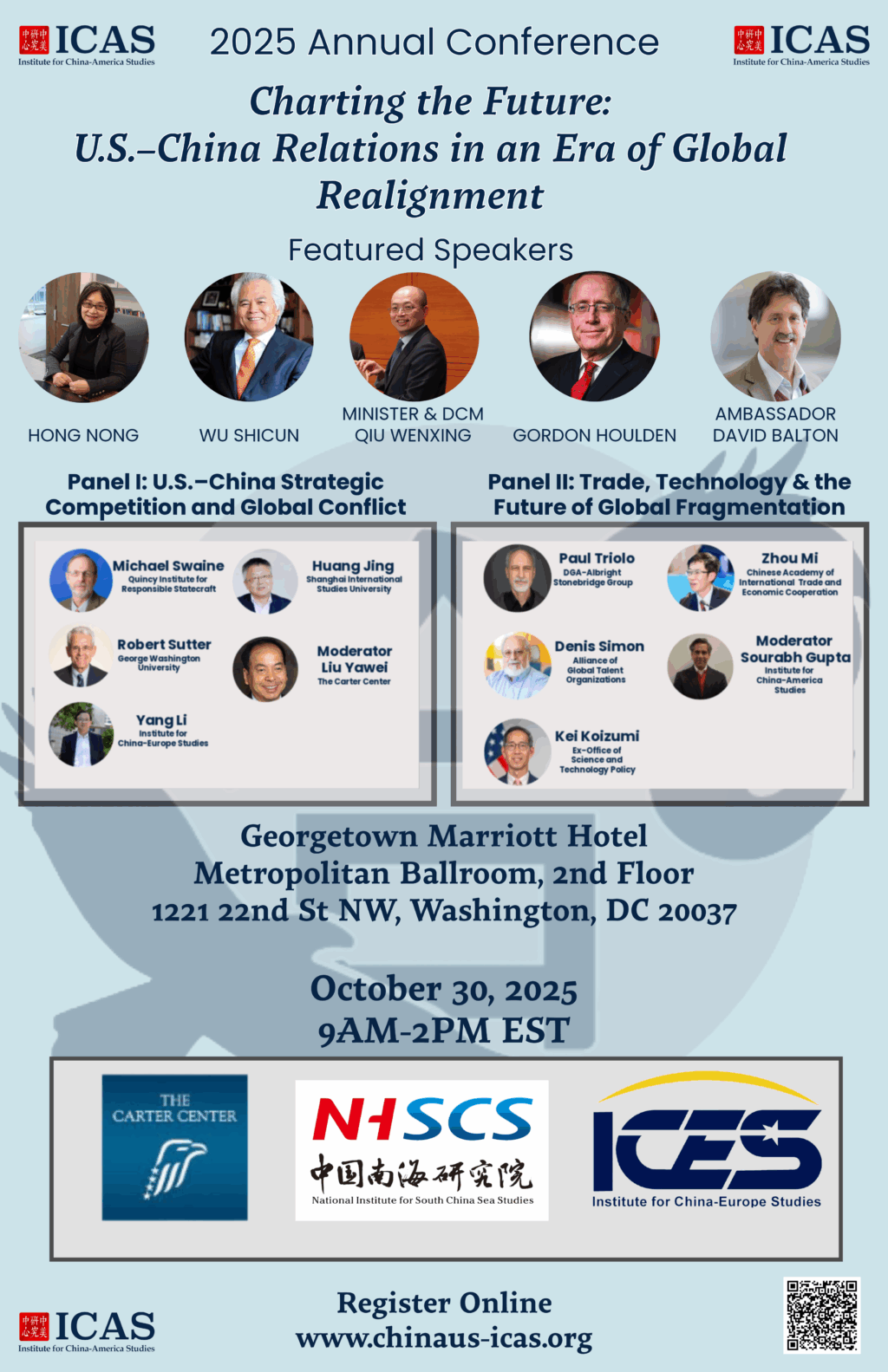
Charting the Future: U.S.–China Relations in an Era of Global Realignment
Hosted by ICAS
October 30, 2025
9:00AM-2:00PM
ICAS will hold its 2025 Annual Conference in-person at the Georgetown Marriott Hotel in Washington, D.C. on Thursday, October 30!
Featuring a keynote by Minister & DCM Qiu Wenxing (Embassy of the People’s Republic of China in the United States), a luncheon speech by Ambassador David Balton (Harvard Kennedy School’s Belfer Center Arctic Initiative), and two expert panels, this year’s conference will assess the evolving U.S.–China relationship amid global realignment, shifting power dynamics, and the early months of the Second Trump Administration. Lunch will be provided to registered guests.

Evolving U.S.-China Relations in an Era of Geo-Political Tensions: Historical and Contemporary Perspectives
Hosted by Center for Asian Studies, The University of Texas at Dallas
October 16, 2025
7:30PM
The 13th Annual Anlin Ku Lecture features Dr. Denis Simon, a distinguished fellow at the Institute for China-America Studies, on “Evolving U.S.-China Relations in an Era of Geo-Political Tensions: Historical and Contemporary Perspectives.”
Over the last decade, the U.S.-China relationship has moved in a decidedly contentious direction. The tensions largely have been driven by pronounced changes in the geopolitical environment as well as changes in the trade and investment relations between the two countries.
China’s Arctic Relations: Strategic Competition & Pragmatic Cooperation
Hosted by ICAS, Beijing Center for International Dialogue
October 16, 2025
9:40AM-10:35AM
ICAS presented a breakout session at the 2025 Arctic Circle Assembly in Reykjavik, Iceland on October 16 in conjunction with the Beijing Club for International Dialogue to discuss China’s Arctic ambitions.
Special thanks to our own Dr. Nong Hong, Executive Director and Senior Fellow at ICAS, as well fellow panelists Prof. Henry Lee of the Harvard Kennedy School’s Arctic Initiative, Dr. Rasmus Gjedssø Bertelsen of UiT The Arctic University of Norway, and Dr. Irina Strelnikova of HSE University. The breakout session was moderated by Ms. Han Hua of Beijing Club for International Dialogue.
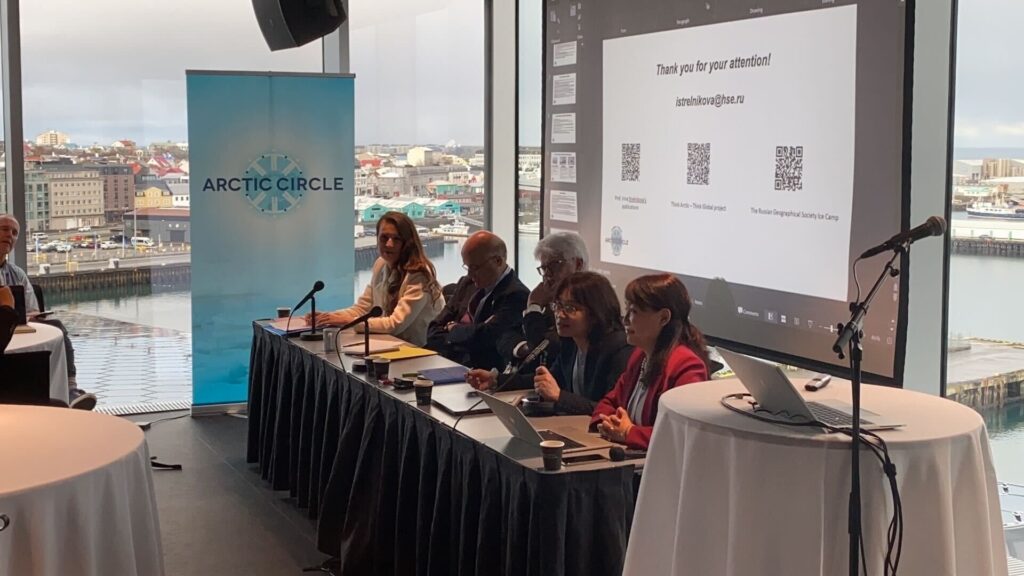
On Wednesday, October 22, 2025, ICAS’ Arctic Assembly Breakout Session was mentioned by Brasil247 on a broader increase in Asia’s Arctic presence.
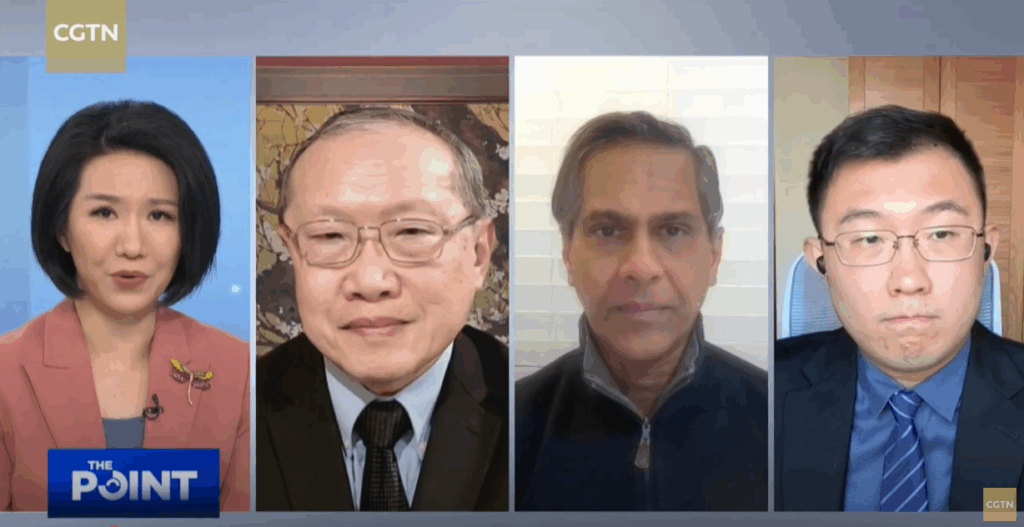
On Monday, October 20, 2025, Senior Fellow Sourabh Gupta was interviewed by CGTN’s The Point with Liu Xin on China’s 15th Five-Year Plan.
On Friday, October 17, 2025, Senior Fellow Nong Hong was mentioned by CGTN Europe on China-Russia Collaboration at Arctic Circle Assembly 2025.
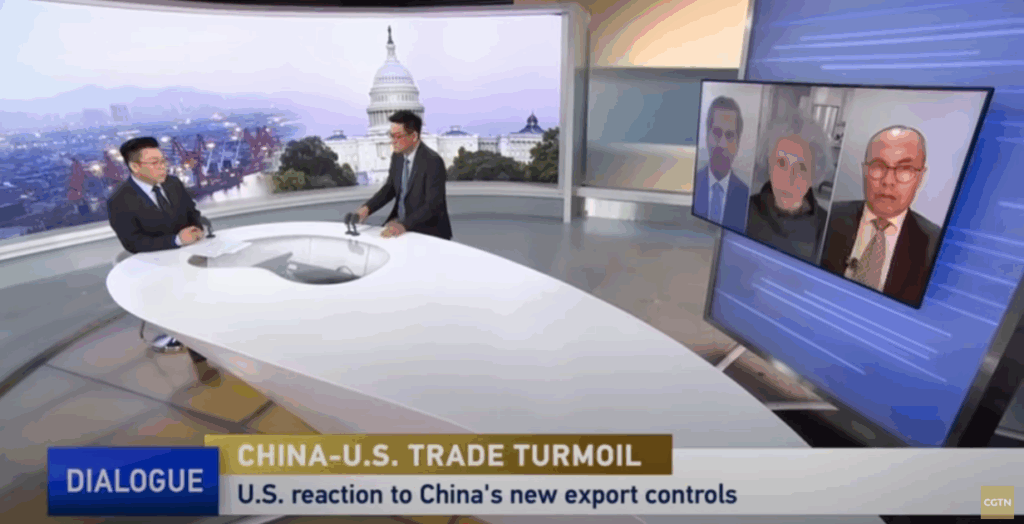
On Wednesday, October 15, 2025, Senior Fellow Sourabh Gupta was interviewed by CGTN’s Dialogue on the return of U.S. trade tensions.

The Institute for China-America Studies is an independent nonprofit, nonpartisan research organization dedicated to strengthening the understanding of U.S.-China relations through expert analysis and practical policy solutions.
1919 M St. NW Suite 310,
Washington, DC 20036
icas@chinaus-icas.org
(202) 968-0595
© 2026 INSTITUTE FOR CHINA-AMERICA STUDIES. ALL RIGHTS RESERVED.