
ICAS Bulletin (online ISSN 2836-3418, print ISSN 2836-340X) is published every other week throughout the year at 1919 M St NW, Suite 310, Washington, DC 20036.
The online version of ICAS Bulletin can be found at chinaus-icas.org/bulletins/.
– On September 12, China announced its newest carrier, the Fujian, transited the Taiwan Strait en route to the South China Sea, underscoring Beijing’s military buildup and tensions with Washington.
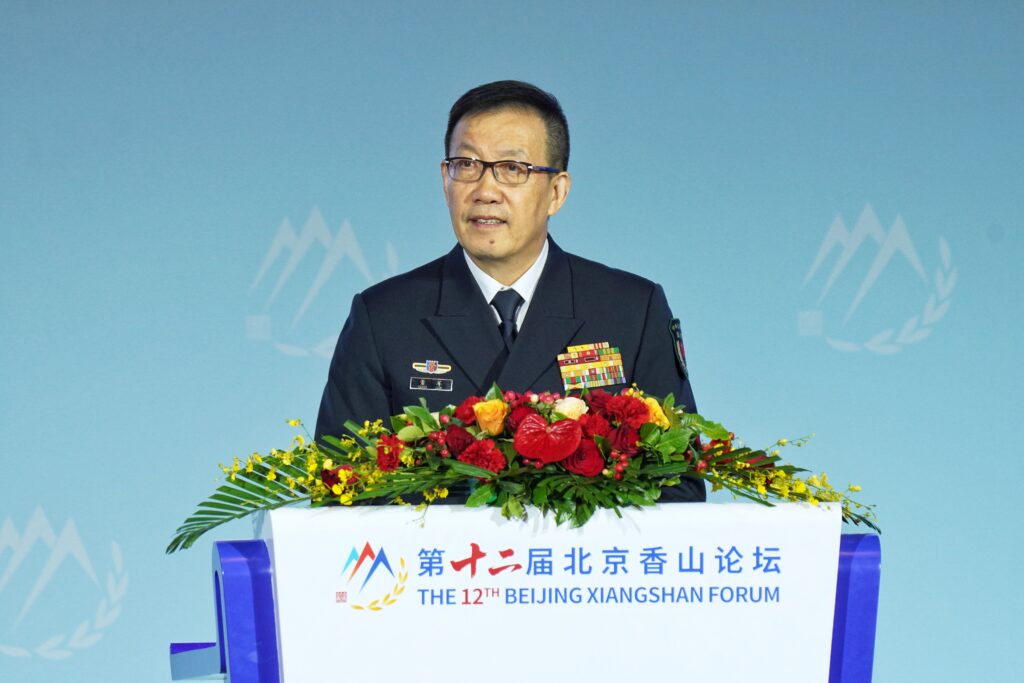
– At the Xiangshan Forum from September 17-19, China’s Defense Minister Dong Jun warned against a “law of the jungle” world, touting Beijing’s military as a force for peace while vowing never to allow Taiwanese independence.
– Singapore and Malaysia also voiced their concerns from the region, amid heightened tension between China and the U.S. despite ongoing diplomacy.
– In early September, the newest National Defense Strategy from the Second Trump Administration reportedly advised less focus on combating ideological adversaries such as China or Russia, marking a stark contrast to the 2018 strategy of China deterrence in the midst of ongoing trade war.
– On September 9, high-level calls between U.S. Secretaries Marco Rubio, Pete Hegseth, and their Chinese counterparts signaled groundwork for a possible Trump–Xi meeting. The talks were “constructive”; Washington stressed it doesn’t seek conflict, mostly focusing on tariffs, Taiwan, and keeping communication channels open.
Associated News References:
“China Hardens Military Stance Against U.S. With Nuclear Weapons and Tough Talk,” The Wall Street Journal, September 18
“China’s defence minister urges greater unity to avoid ‘law of the jungle’,” Reuters, September 18
“China’s defense minister renews threats to take over Taiwan as he opens security forum,” AP News, September 18
“U.S-China calls stoke expectations that Trump may soon meet Xi,” The Washington Post, September 11
“US, China Envoy Talks Clear Path for Potential Trump-Xi Meeting,” Bloomberg, September 11
“Pentagon plan prioritizes homeland over China threat,” Politico, September 5
– A bipartisan U.S. House delegation visited Beijing September 21–25 to press for better communication on trade, fentanyl, and military ties days after Trump and Xi spoke by phone and agreed to meet at the October 31–November 1 APEC summit in South Korea.
– U.S. and China held trade talks in Madrid, Spain, from September 14 to 15, including senior U.S. and Chinese officials U.S. Treasury Secretary Scott Bessent, U.S. Trade Representative Jamieson Greer, Chinese Vice Premier He Lifeng, and top trade negotiator Li Chenggang.
– The Madrid talk focused on tariffs, export controls, a preliminary framework on the divestiture of TikTok, and U.S. pressure on China to curb purchases of Russian oil.
– According to Bessent, a preliminary framework deal was reached for TikTok’s divestiture from ByteDance that would transfer the platform to U.S.-controlled ownership, with President Trump saying that he and President Xi Jinping will finalize the framework deal on September 19.
– On September 19, Trump said he and Xi approved a deal to sell TikTok’s U.S. operations to American investors during a call, extended the ban deadline to December, and agreed to meet at the October APEC summit.
– One day after Trump’s announcement on the TikTok deal, China reiterated its original stance that it welcomes market-based negotiations over TikTok’s U.S. ownership. Key questions on the final deal remain unresolved.
Associated News References:
“In rare visit to China, U.S. lawmakers urge better communication amid tensions,” NBC News, September 23
“China Sticks To Its Stance on TikTok’s US Future After Trump Call,” Reuters, September 20
“Trump and Xi Discuss Future of TikTok in US,” BBC, September 19
“Attention shifts to U.S.-China tariffs after TikTok deal ‘framework’ agreed,” CNBC, September 15
“U.S. and China Resume Talks on Tariffs and TikTok,” The New York Times, September 15
“China launches probes targeting US semiconductors ahead of Madrid trade talks,” AP News, September 14
China Targets Nvidia Over 2020 Deal, Straining Trade Talks, Bloomberg, September 15, 2025
”US, China Reach Framework Deal on Tiktok; Trump and Xi To Speak on Friday,” Reuters, September 15
”U.S. and China Conclude Talks With ‘Framework’ on TikTok Sale,” The New York Times, September 15, 2025
“U.S. Reaches Outline of Deal With China Over TikTok,” The Wall Street Journal, September 15
“Trump to Speak to Xi Friday With TikTok Framework Reached,” Bloomberg, September 15, 2025
“US Penalizes Two Chinese Companies That Acquired
Tools for Chipmaker SMIC,” Reuters, September 12, 2025
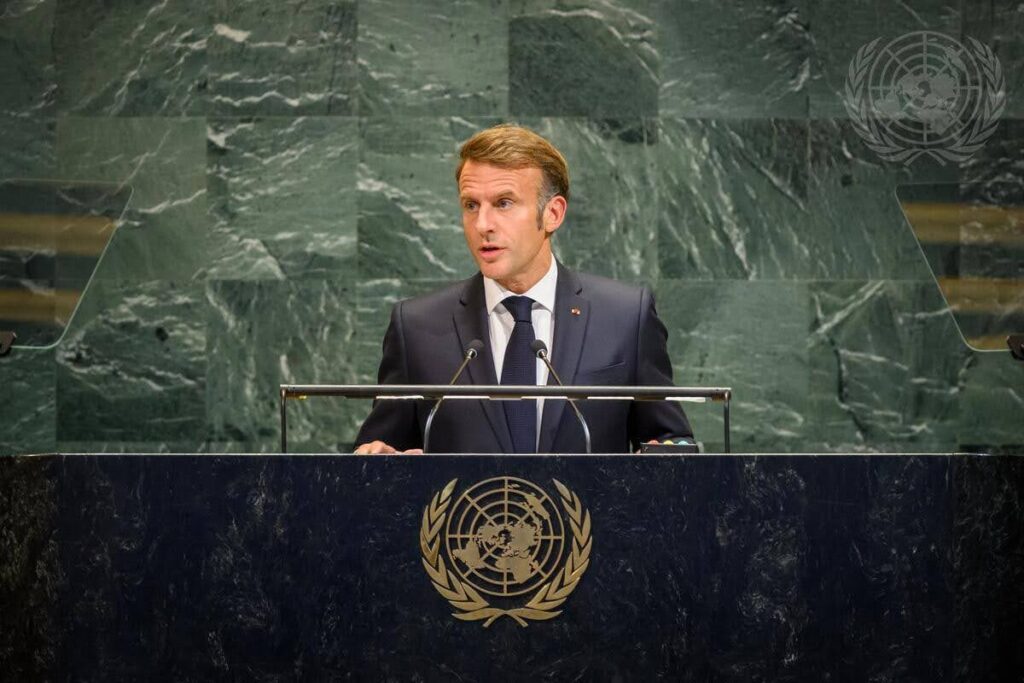
– Representatives from all 193 UN member states and two observer delegations are gathering in New York for the 80th U.N. General Assembly (UNGA80) from September 22–27 amid wars in Ukraine, Gaza, and Sudan, a deepening budget crisis, and questions about the organization’s relevance.
– Chinese Premier Li Qiang is attending the UNGA80 to deliver China’s views on global and domestic issues, participate in China-hosted events including the Global Development Initiative meeting, and meet with UN and world leaders to reaffirm support for the UN’s mission and strengthen multilateral cooperation.
– Palestinian statehood dominated early discussions, while Israel’s Prime Minister Netanyahu rejected the prospect of Palestinian statehood.
– Issues such as climate change, gender equality, and AI governance are also key discussion points.
– Britain, Canada, Australia, and Portugal formally recognized Palestinian statehood on September 21, the eve of the UN General Assembly, with leaders citing the move as necessary to revive the two-state solution and pressure Israel over Gaza.
– France formally recognized the state of Palestine before the general debate on September 22, framing the move as part of a broader Gaza “day after” plan backed by 142 countries and aimed at reviving the two-state solution, securing Hamas’s political isolation, and pressing Palestinian leaders to hold elections and reform governance.
– French President Emmanuel Macron during the speech on recognizing Palestinian statehood also noted that others would be joining France in recognizing Palestinian statehood, including Andorra, Malta, Luxembourg, Belgium, Monaco and San Marino.
– President Trump addressed the Assembly on September 23 and questioned the UN’s purpose, criticizing its inaction, claiming the UN is funding illegal migration into the US, while claiming credit for ending seven global conflicts since returning to office.
– President Trump also demanded Hamas to immediately release the remaining 20 hostages from the Oct. 7 attacks, and called for an urgent cease-fire and negotiations to end the Gaza war.
– Secretary General António Guterres is pushing a UN80 reform plan to cut budgets and staff by up to 19% in an effort to stabilize the organization, though liquidity problems remain urgent.
Associated News References:
“Trump at United Nations: US funding cuts, Gaza War and Global Showdowns,” Fox News, September 23
“France Recognizes Palestinian State Amid Widespread Anger at Israel’s War In Gaza,” CNN, September 22
“U.N. Gathers Amid Its 80th Anniversary and a ‘Free Fall’,” The New York Times, September 21
“Britain, Australia, Canada and Portugal Recognize a Palestinian State,” The New York Times, September 21
“Premier Li Qiang To Attend General Debate of 80th Session of UN General Assembly,” China Daily, September 19
“Voices of The World Gather at the UN: What You Need To Know about UNGA80,” United Nations, September 18

– The U.S. Department of Commerce added 32 entities to its trade blacklist on September 12 in order to restrict their access to U.S. technology, including two Chinese firms that served as buyers of U.S. chipmaking equipment for SMIC and Shanghai Fudan Microelectronics.
– China’s Ministry of Commerce launched anti-discrimination and anti-dumping investigations into U.S. chip policies a day before U.S.-China trade talks in Madrid, warning Washington to halt sanctions and export controls while the two sides discuss tariffs, TikTok, and efforts to maintain their tariff truce.
– China’s Ministry of Commerce condemned the U.S. on September 13 for adding Chinese firms to its export control list, accusing Washington of abusing national security to pursue unilateralism and vowing to take necessary measures as bilateral trade talks begin in Spain.
– Shortly after the U.S. blacklist, China’s Ministry of Commerce opened an anti-dumping investigation into American-made analog IC chips produced by Texas Instruments and Analog Devices, while also launching an anti-discrimination probe into U.S. restrictions on China’s chip sector.
– China’s State Administration for Market Regulation (SAMR) on September 15 issued a preliminary finding that Nvidia had violated anti-monopoly rules related to its 2020 acquisition of Mellanox Technologies, a supplier of networking equipment. The probe on Nvidia began in December 2024.
– The Cyberspace Administration of China ordered Chinese companies Alibaba, ByteDance, and others to cancel Nvidia RTX Pro 6000D chip orders, escalating China’s push to curb reliance on U.S. AI chips and increasing pressure ahead of Trump–Xi trade talks.
– After the Chinese ban, Nvidia CEO Jensen Huang said he is “disappointed” and the company will remain patient as Washington and Beijing work out “larger agendas”.
– Nvidia announced on September 18 that it will invest $5 billion to acquire a roughly 4% stake in Intel and collaborate on developing PC and data-center chips, a partnership that boosts Intel’s finances and lets Nvidia tap into Intel’s CPU ecosystem.
– Nvidia announced on September 22 that it will invest up to $100 billion in OpenAI to build at least 10 gigawatts of data center capacity powered by its chips, in a staged cash-for-equity deal that secures OpenAI as a key Nvidia customer and strengthens their partnership amid surging global demand for AI infrastructure.
Associated News References:
“Nvidia, OpenAI Make $100 Billion Deal to Build Data Centers,” Bloomberg, September 22
“Nvidia CEO Huang caught between US, China’s ‘larger agendas’,” Reuters, September 17
“Speaker Johnson Says China Is Straining U.S. Relations With Nvidia Chip Ban,” CNBC, September 17
“China Orders Firms to Stop Buying Nvidia AI Chip, FT Says,” Bloomberg, September 17
“Nvidia Boss ‘Disappointed’ by Reported China Chip Ban,” BBC, September 17
“Nvidia Broke Antitrust Law, China Says, as Tensions With U.S. Mount,” The New York Times, September 15
“MOFCOM Condemns US Putting Chinese Firms on ‘Entity List’, Vows to Safeguards Enterprises’ Rights, Interests,” Global Times, September 13, 2025
“China Launches Discrimination and Dumping Probes into US Chips Ahead of Trade Talks,” Reuters, September 13
“US Penalizes Two Chinese Companies That Acquired Tools for Chipmaker SMIC,” Reuters, September 12, 2025
– On September 19, the EU, under U.S. pressure, moved up its planned ban on Russian Liquid Natural Gas (LNG) imports by a year to January 2027, a proposal now under negotiation among member states.
– On September 19, the European Commission proposed its 19th sanctions package on Russia, including the aforementioned LNG ban, tighter financial and export controls targeting entities in China and India, and measures against those involved in abducting Ukrainian children. The plan still requires unanimous EU approval.
– On September 15, China’s Ministry of Commerce denounced U.S. calls for G7 and NATO tariffs over Russian oil imports as “unilateral bullying,” warning it would take all necessary measures to protect its interests and urging disputes be resolved through dialogue.
– On September 15, Treasury Secretary Scott Bessent said the U.S. won’t impose tariffs on Chinese goods over Russian oil purchases unless Europe does the same, urging allies to cut Moscow’s revenues while criticizing European buyers. He pointed to progress with India after recent U.S. tariffs and said Washington may pursue tougher sanctions and use frozen Russian assets to support Ukraine.
– Trump urged the EU to impose tariffs of up to 100% on China and India for buying Russian oil, a proposal Europe is wary of as it balances sanctions enforcement with its own energy and trade ties.
– On September 12, G7 finance ministers discussed new ways to tighten pressure on Russia, including possible sanctions and tariffs on countries deemed to be enabling Moscow’s war in Ukraine, according to a Canadian statement following their meeting.
Associated News References:
“After Trump pressure, EU aims to bring forward Russian LNG import ban,” Reuters, September 19
“What’s in the EU’s proposed 19th package of Russia sanctions,” Reuters, September 19
“China To Take ‘All Necessary Measures’ To Protect Interests: MOFCOM on US Call for G7, NATO tariffs over Russian Oil Imports,” Global Times, September 15
“Bessent says US won’t hit China with tariffs over Russian oil unless Europe goes first,” Reuters, September 15
“G7 finance ministers discuss possible sanctions, tariffs on supporters of Russia’s war,” Reuters, September 12
“Trump’s pressure on Europe to slap 100% tariffs on India and China raises eyebrows,” CNBC, September 11
“Bessent Says Aircraft Engines, Chemicals Could Be Leverage in US-China talks,” Reuters, September 24
“US lawmakers talk up big Boeing deal during China visit,” Reuters, September 23
“China to Forego Special and Differential Treatment in Future WTO negotiations,” Reuters, September 23
“Why Trump wants the U.S. to ‘get back’ the Bagram Airfield from the Taliban,” NBC News, September 19
“China Lifts Wells Fargo Banker’s Exit Ban in US Trade
Talks,” Bloomberg, September 17
“How China Is Weathering the Trade War With Trump,” The New York Times, September 16
“US Says China Spreads ‘False’ World War Two Narratives To Pressure Taiwan,” Reuters, September 15
“The American Farmers China Is Using as a Trade-War Bargaining Chip,” The Wall Street Journal, September 11
“Britain’s Octopus Energy Partners with Chinese Wind Turbine Maker,” Reuters, September 11
“Top Chinese and US Envoys’ Talks Pave Way for Xi, Trump Meeting,” Bloomberg, September 10
“Hegseth Tells China in First Call That US is Not Seeking Conflict,” Reuters, September 10
Soft Consensus, Hard Stalemates: Institutional Dilemma in Antarctic Governance
By Nong Hong
September 16, 2025
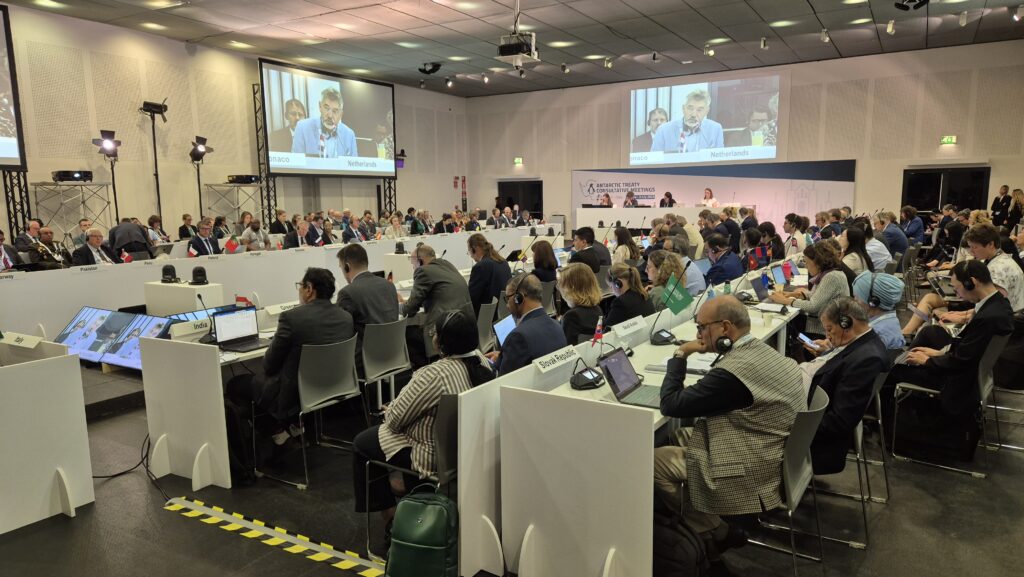
The Antarctic Treaty System (ATS) has long served as the cornerstone of Antarctic governance, designed to preserve the continent for peaceful purposes, scientific cooperation, and environmental protection. Established with the entry into force of the Antarctic Treaty in 1961, and later expanded through instruments such as the 1991 Protocol on Environmental Protection to the Antarctic Treaty (Madrid Protocol) and the 1980 Convention on the Conservation of Antarctic Marine Living Resources (CAMLR Convention), the ATS embodies a unique model of international collaboration in a geopolitically sensitive region…
What Scarborough nature reserve plan means for South China Sea
By Nong Hong
September 24, 2025
China’s decision to establish a national nature reserve at Scarborough Shoal – known as Huangyan Island in China and Panatag Shoal in the Philippines – has hit regional headlines as the plan involving the contested South China Sea feature swiftly became a diplomatic flashpoint.
Approved by China’s State Council and announced by the National Forestry and Grassland Administration, the plan covers some 3,500 hectares of ecologically sensitive reef and waters, divided into “core” and “experimental” zones. China frames it as part of efforts to protect biodiversity, ensure the sustainable use of marine resources and meet international conservation commitments.

This commentary was originally released by South China Morning Post on September 24, 2025.
Fault line eraser: The SCO is renewing the promise of a UN-centered, multi-civilizational multilateralism
By Sourabh Gupta
September 11, 2025
Eighty years ago, China and the Soviet Union fought shoulder to shoulder with their wartime ally, the United States, to liberate Asia from the scourge of Japanese fascism.
China was the first country to resist fascist aggression following Imperial Japan’s brazen occupation of Northeast China in 1931, as then US president Franklin Roosevelt himself later acknowledged. From August 1939, when the Soviet Union entered into non-aggression pacts with Germany, to December 1941, when the US finally joined the fight after the Japanese attack on Pearl Harbor, China bore the main responsibility of resisting Japanese aggression in Asia…
On Monday, September 22, 2025, Senior Fellow Sourabh Gupta was quoted by China Daily on the future of negotiations post Trump-Xi Call.
On Tuesday, September 16, 2025, Senior Fellow Sourabh Gupta was quoted by South China Morning Post on China’s New Global Governance Initiative.
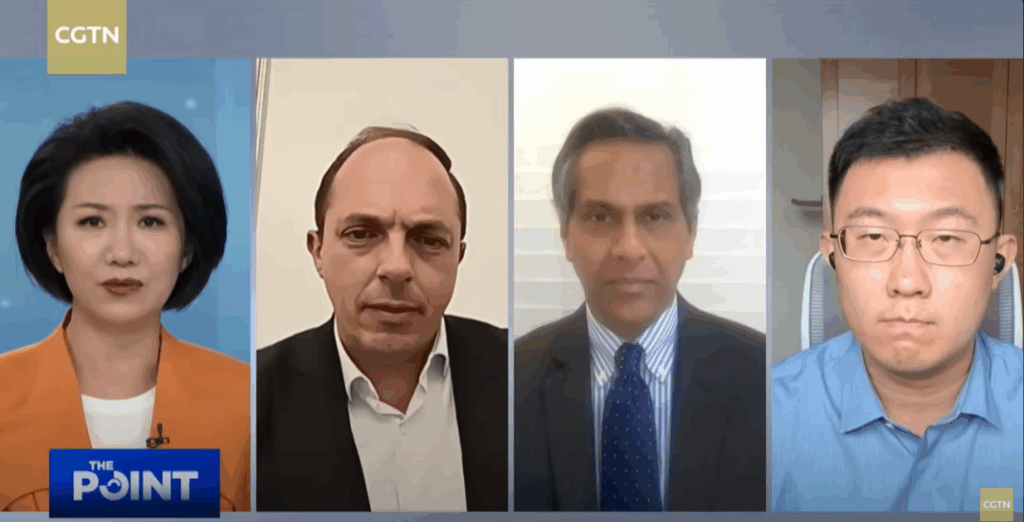
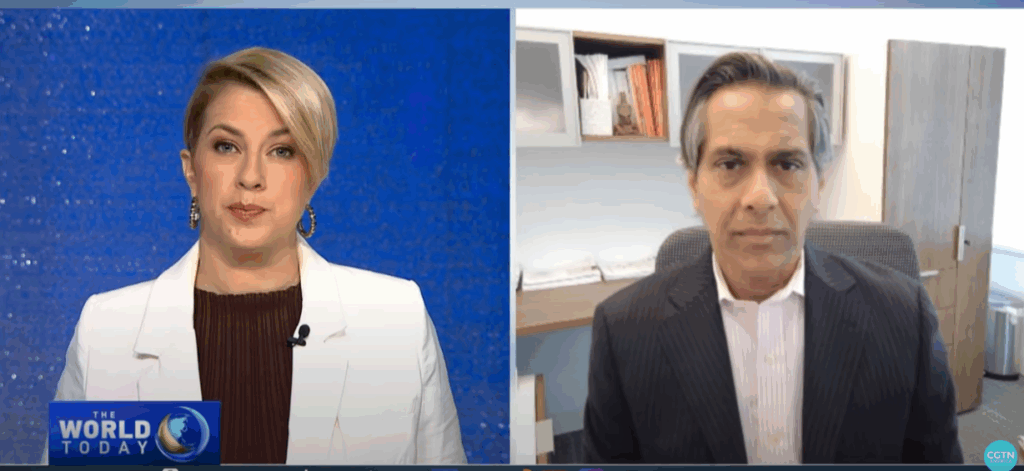
On Saturday, September 13, 2025, Senior Fellow Sourabh Gupta was interviewed by CGTN’s The Point on U.S.’ call for G7 to implement 100% tariffs on China and India.
On Tuesday, September 9, 2025, Senior Fellow Sourabh Gupta was interviewed by CGTN’s The World Today on BRICS meeting on trade and tariffs.
On Tuesday, September 9, 2025, Senior Fellow Sourabh Gupta was quoted by South China Morning Post on BRICS virtual meeting.
The Institute for China-America Studies is an independent nonprofit, nonpartisan research organization dedicated to strengthening the understanding of U.S.-China relations through expert analysis and practical policy solutions.
1919 M St. NW Suite 310,
Washington, DC 20036
icas@chinaus-icas.org
(202) 968-0595
© 2026 INSTITUTE FOR CHINA-AMERICA STUDIES. ALL RIGHTS RESERVED.