ICAS Maritime Affairs Handbill (online ISSN 2837-3901, print ISSN 2837-3871) is published the last Tuesday of the month throughout the year at 1919 M St NW, Suite 310, Washington, DC 20036.
The online version of ICAS Maritime Affairs Handbill can be found at chinaus-icas.org/icas-maritime-affairs-program/map-handbill/.
India and Japan Enhance Maritime Collaboration in Shipbuilding
December 27 – Maritime Fairtrade
[India, Japan]
During a bilateral meeting in Norway, Minister Sarbanada Sonowal and Minister Terada Yoshimich initiated a significant step to enhance maritime cooperation between India and Japan. These discussions included shipbuilding, port digitization, green port initiatives, maritime training, and the development of Smart Islands in Indian regions.
China and Japan Trade Accusations Over Maritime Intrusions
December 26 – Maritime Fairtrade
[China, Japan]
Tensions between China and Japan have intensified recently over both nations accusing each other of territorial violations, particularly over the Senkaku Islands. Chinese officials have accused Japan of violating its territorial waters, while Japan claims that Chinese vessels have been encroaching on Japanese waters. Both countries have growing concerns over territorial claims and resource competition.
US rejects claims of Indo-Pacific retreat, says aid is being recalibrated to counter China
December 16 – South China Morning Post
[United States, China, Philippines]
On December 15, senior U.S. officials rejected claims that Washington is retreating from the Indo-Pacific, saying foreign assistance is being recalibrated toward targeted partnerships focused on maritime security, infrastructure, and military financing to counter China’s influence. Officials highlighted support for allies such as the Philippines, particularly in the South China Sea, as evidence of continued U.S. strategic commitment to the region.
Russian bombers join Chinese air patrol near Japan as Tokyo-Beijing tie strains
December 10 – Reuters
[Russia, China, Japan]
Russia and China conducted joint long-range bomber patrols near Japan on December 9, prompting Tokyo to scramble fighter jets to monitor the flight, heightening concerns over deepening military coordination between Moscow and Beijing. Japanese officials described the operation as a show of force that adds pressure on Japan’s regional security environment amid rising tensions over China’s military activity near Taiwan.
China MSA holds first maritime emergency drills in Taiwan Shoal
December 7 – CGTN
[China, Taiwan]
On December 6, China’s Maritime Safety Administration conducted its first emergency search-and-rescue and law-enforcement drills in the Taiwan Shoal, followed by patrol and enforcement operations across the central Strait. Beijing said the exercises were aimed at strengthening maritime regulation, vessel safety, and navigation order in the area.
Chinese Coastal Bulker Grounds and Breaks Up off Fuzhou
December 7 – The Maritime Executive
[China]
On December 3, the Chinese coastal bulk carrier Hua De 858 ran aground on a shoal in Xinghua Bay near Fuzhou, breaking apart after departing Tangshan and transiting south through the Haitian Strait, according to Chinese maritime safety authorities. The crew was rescued without injury.The vessel, which operated solely in domestic trade, subsequently disappeared from AIS tracking.
Australia on high alert as PLA Navy flotilla in Philippine Sea sails south
December 5 – South China Morning Post
[Australia, China]
In the first week of December, China deployed a PLA Navy flotilla led by the Type 075 amphibious assault ship Hainan into the Philippine Sea, prompting Australia to place forces on alert and dispatch a P-8 maritime patrol aircraft to monitor the operation. Satellite imagery confirmed the presence of the Hainan, a Type 055 destroyer (Yanan), and a Type 903A replenishment ship (Luomahu), reviving security concerns in Canberra following China’s recent circumnavigation of Australia.
NSA Doval, Thai Foreign Minister Phuangketkeow discuss maritime security, threats of online scams
December 3 – The Tribune
[India, Thailand, Myanmar, Cambodia]
On December 3, India’s National Security Advisor Ajit Doval met with Thai Foreign Minister Sihasak Phuangketkeow in New Delhi to discuss expanding bilateral cooperation, with a focus on maritime security and countering transnational threats such as online scam networks. The talks also addressed broader regional issues including stability in Myanmar and border demining cooperation between Thailand and Cambodia, reflecting shared security concerns in Southeast Asia.
Japanese and Chinese Coast Guard Face Off in Disputed Island Chain
December 2 – The Maritime Executive
[Japan, China]
On December 2, Japanese and Chinese coast guard vessels confronted each other near the disputed Senkaku/Diaoyu Islands after a Japanese fishing boat entered the area, with both sides issuing conflicting accounts over whether the vessel was expelled or protected. The incident underscores rising tensions in the East China Sea as China increases coast guard patrols and Japan adopts a firmer stance on maritime sovereignty.
Philippines and France hold maritime drills in ‘strategic location’
December 1 – Naval News
[France, Philippines]
From November 26 to 28, the Philippines and France conducted joint Maritime Cooperative Activity drills in the Celebes Sea off eastern Mindanao, aimed at enhancing interoperability and maritime domain awareness in a strategically important shipping corridor. The exercises reflect France’s expanding security engagement in the Indo-Pacific and the Philippines’ broader effort to deepen defense partnerships amid heightened regional maritime tensions.
Recent developments across the Indo-Pacific highlight a period of intensified strategic signaling, particularly in contested maritime and air domains involving regional actors. In Northeast Asia, interactions between China and Japan have become more frequent around the Senkaku Islands (Japanese) or Diaoyu Dao (Chinese), with each side reporting maritime activities by the other in nearby waters. The regional environment has also been shaped by joint long-range bomber patrols by Russia and China in the vicinity of Japan.
Mainland China has also expanded its operational activity closer to Taiwan. The Maritime Safety Administration’s emergency search-and-rescue and law enforcement drills in the Taiwan Shoal reflect a continued effort to normalize a Chinese presence in the Taiwan Strait. While officially framed as safety-oriented, such activities form part of a broader pattern in which civilian and administrative functions operate in ways that blur the line between civilian regulation and strategic control.
Further south, naval activities in and around the Philippine Sea have drawn attention from multiple regional actors. China deployed a PLA Navy flotilla into the area, while Australia monitored the movement as part of its routine situational awareness efforts. At the same time, the Philippines continued maritime patrols and coordination activities in the South China Sea in response to ongoing regional frictions. U.S. officials reiterated their commitment to alliance obligations, including support for the Philippines, within the framework of existing security arrangements.
Regional responses to these pressures continue to diversify. India and several Southeast Asian partners have emphasized cooperation on maritime security and transnational threats, while European actors such as France have expanded their Indo-Pacific engagement through joint maritime drills with the Philippines. These developments show a wider pattern of multilateral participation in regional security-related activities.
Overall, the Indo-Pacific security environment continues to be shaped by interactions among major powers, increased activity in contested domains, and expanding coordination among regional and extra-regional actors. Maritime spaces remain an important arena for these interactions, with individual incidents often occurring within a broader strategic context involving deterrence, alliance frameworks, and regional governance arrangements.
Ukraine Intensifies Strikes on Oil Operations in Black Sea and Caspian
December 22 – The Maritime Executive
[Ukraine, Russia]
On December 22, Ukraine’s Defense Intelligence Unit confirmed Ukraine’s intensified round of drone strikes on Russia’s oil operations. The strikes took place on the strategic port of Taman which is a critical transhipment port for Russia to maintain its operations in oil and other cargoes.
IMO Secretary-General Calls For Restraint From Targeting Innocent Seafarers In Black Sea
December 17 – Marine Insight
[Russia, Ukraine, Black Sea]
The Secretary-General of the International Maritime Organization (IMO) called on all parties to show restraint and warned that the situation has become dangerous for civilian shipping. The Secretary General stressed that commercial shipping should not be utilized as a tool in geopolitical disputes and that the IMO remains dedicated to supporting international shipping within the region.
Turkey says it downs uncontrolled drone that approached from Black Sea
December 16 – Reuters
[Türkiye, Ukraine, Russia, NATO]
The Türkiye defence ministry confirmed that they shot down an uncontrolled drone that was approaching the country’s airspace from the Black Sea. This incident follows escalation in the Black Sea after Russian attacks on Ukrainian ports that damage Turkish cargo vessels.
Maritime security in Black Sea under serious threat: Erdoğan
December 16 – Hürriyet Daily News
[Türkiye, Russia, Ukraine]
Turkish President Recep Tayyip Erdoğan called the recent escalations in the Black Sea seriously threatening to maritime security. Türkiye has urged both Russia and Ukraine to refrain from expanding the war to the Black Sea and Erdoğan stressed targeting commercial and civilian vessels would not benefit anyone.
Ukraine strikes Russian submarine with ‘Sub Sea Baby’ drone
December 16 – Naval News
[Ukraine, Russia]
On December 15th, the Security Service of Ukraine (SBU) reported that it struck a submarine at the Russian naval base at Novorossiysk through a joint operation with the 13th Main Directorate of Military Counterintelligence of the SBU and the Ukrainian Naval Forces. In this operation Ukraine used a new type of unmanned maritime drone called the “Sub Sea Baby” drone that is capable of remaining submerged during the attack run.
Russia damages Turkish-owned vessels in attack on Ukrainian ports
December 13 – Al Jazeera
[Russia, Ukraine, Türkiye]
On December 12, Russian forces attacked two Ukrainian ports on the Black Sea, damaging three Turkish-owned commercial vessels. These strikes are viewed as retaliation for recent Ukrainian attacks on Russian linked vessels and ships within the Black Sea.
Ukraine disables ‘shadow fleet’ vessel with sea drones in Black Sea
December 10 – Reuters
[Ukraine, Russia]
On December 10, Ukrainian sea drones hit and disabled a tanker involved in trading Russian oil as it sailed through a Ukrainian exclusive economic zone in the Black Sea. This attack marks the third one in two weeks on vessels that are part of Russia’s “shadow fleet”.
Black Sea Shipping Costs Surge After Ukrainian Drones Hit Two Tankers
December 3 – Marine Insight
[Black Sea, Ukraine, Russia, Türkiye]
War insurance costs for ships sailing to the Russian or Ukrainian Black Sea ports or terminals have spiked again as the conflict in Ukraine spills into the sea. This rise in costs is largely due to two tankers being struck by Ukrainian naval drones while sailing towards the Russian port Novorossiysk.
Romania Destroys Sea Baby Drone Spotted in the Black Sea
December 3 – The Maritime Executive
[Romania,
The Romanian Navy destroyed a maritime drone they identified as a “Sea Baby” as part of their ongoing efforts to monitor the Black Sea and ensure safe transit for commercial ships. Along with Türkiye and Bulgaria, Romania established a joint operation known as the Black Sea Mine Countermeasures Task Force to monitor the Black Sea for dangers.
Türkiye ready to take lead in Black Sea security, say diplomatic sources
December 3 – Anadolu Agency
[Türkiye, Russia, Ukraine]
Following the attacks against commercial vessels in the Black Sea in late November, Türkiye has reiterated warnings against the expansion of the Russia-Ukraine war across the Black Sea. Türkiye continues to support negotiations between the two countries and play a leading role in key issues surrounding the Black Sea.
The Black Sea is becoming an increasingly prominent focal point, shaped significantly by the ongoing Russia–Ukraine conflict, as rising military activity and diplomatic tensions continue to affect the region.
Over the past month, Ukraine has intensified efforts to disrupt Russia’s maritime supply chains through drone strikes targeting Russian oil operations in the Black Sea. However, these actions and the broader escalation of military operations have raised serious concerns about the safety of civilian and commercial vessels. In response, the Secretary-General of the International Maritime Organization (IMO) has urged both Russia and Ukraine to exercise restraint in the Black Sea. These incidents highlight growing risks to international shipping, as commercial vessels are increasingly exposed to conflict-related dangers, contributing to a sharp rise in war-risk insurance costs for ships transiting the region.
In response, several Black Sea littoral states have adjusted their defensive measures related to commercial shipping routes. These actions are taking place amid continued military activity and diplomatic engagement in the region. As tensions continue to escalate, Türkiye has emerged as a key diplomatic actor in the region. President Recep Tayyip Erdoğan has expressed concern over rising threats to maritime security, echoing the IMO’s warnings against targeting commercial vessels and calling for restraint to prevent the conflict from expanding further. At the same time, Türkiye has remained engaged in negotiations between Russia and Ukraine while enhancing its own defense capabilities, seeking to prevent further destabilization.
Trump orders ‘blockade’ of sanctioned oil tankers leaving, entering Venezuela
December 17 – Reuters
[United States, Venezuela]
On December 16, U.S. President Donald Trump ordered a “total and complete blockade” of sanctioned oil tankers entering and leaving Venezuela, sharply escalating pressure on President Nicolás Maduro’s government and targeting its primary source of revenue. The announcement raised oil prices, triggered legal and international backlash, and intensified regional tensions as Washington expanded its military presence near Venezuelan waters.
Severe Weather Disrupts Shipping in the North Atlantic
December 16 – The Maritime Executive
[Atlantic]
In mid-December, a rapidly intensifying bomb cyclone in the North Atlantic forced transatlantic shipping to divert southward as winds reached 80 knots and wave heights exceeded 50 feet, disrupting major sea lanes east of Newfoundland and south of Greenland. The extreme weather caused multiple maritime incidents around the British Isles, including vessel groundings, rescue operations, and supply disruptions to coastal and island communities.
Colombia Seeks Direct Maritime Route with Ghana to Boost Trade
December 14 – Modern Ghana
[Colombia, Ghana]
On December 12, Colombian Vice President Francia Márquez Mina announced plans to establish a direct maritime shipping route between Colombia and Ghana during an official visit to the Ghana Ports and Harbours Authority, aiming to deepen trade and investment ties between Latin America and West Africa. The proposal includes a memorandum of understanding between ports in both countries to formalize cooperation in port development, logistics, and maritime trade.
U.S. Seizes Tanker off Venezuela
December 11 – The Maritime Executive
[Venezuela, United States]
On December 9-10, U.S. forces seized a sanctioned oil tanker in international waters off the coast of Venezuela as part of Washington’s expanded enforcement campaign against Venezuelan and Iranian oil trade. U.S. authorities later confirmed the vessel was a stateless Very Large Crude Carrier (VLCC) operating within the shadow fleet and carrying a valuable oil cargo at the time of interdiction.
December 9 – High North News
[Norway]
On December 5, 2025, Norway said it would acquire two additional German-built Type 212CD submarines, expanding its fleet to six amid rising Russian activity in the North Atlantic and Barents Sea. Officials said the move would strengthen deterrence, maritime surveillance, and NATO security in the High North.
Navy, Palantir Announce $448M ‘Ship OS’ AI Tool for Shipbuilding and Repair
December 9 – USNI News
[United States]
On December 9, 2025, the U.S. Navy announced a $448 million partnership with Palantir to deploy an AI-driven “Ship OS” platform to improve shipbuilding and maintenance efficiency. Early pilot programs, especially in the submarine industrial base, have sharply reduced planning and material review times, according to Navy officials.
Russian Navy Flotilla Conducts Exercises in the Red Sea
December 7 – The Maritime Executive
[Russia, Red Sea]
A Russian Pacific Fleet flotilla that previously exercised with Myanmar’s navy has entered the Red Sea, raising the possibility it may transit the Suez Canal and monitor U.S.–Israeli naval drills. The deployment also suggests the ships could later participate in joint exercises with Chinese and Iranian forces in early 2026.
Historic Defense Agreement between Norway and the UK
December 5 – High North News
[Norway, United Kingdom]
Norway and the United Kingdom signed a landmark defense agreement that deepens military integration, strengthens NATO’s northern flank, and expands British forces’ role in Norway’s defense. The pact includes closer naval cooperation, joint frigate development, enhanced anti-submarine operations, and expanded surveillance and drone capabilities in the North Atlantic and the High North.
Maritime disputes today sit at the intersection of law, geopolitics, economics, and security. From the South China Sea to the Arctic, the Eastern Mediterranean, the Gulf of Guinea, and the Red Sea, states face overlapping jurisdictional claims, intensifying competition over energy and seabed resources, and a growing mix of non-traditional security risks in increasingly crowded waters. Yet persistence does not inevitably mean escalation. Practice suggests that the most effective approaches combine three interlocking pillars: a credible legal baseline grounded in international law, including the UN Convention on the Law of the Sea (UNCLOS), genuine political will to manage risk and absorb compromise, and adaptive regional and bilateral mechanisms that operationalize the UN Charter’s commitment to the peaceful settlement of disputes. These pillars offer a practical blueprint for managing—though not necessarily resolving—maritime disputes in an era of uncertainty.
International Law as the Foundation
International law remains the essential anchor for managing maritime disputes. UNCLOS offers the most widely accepted framework for maritime zones, delimitation, and the rights and obligations of states at sea—and its practical value is visible in a series of landmark outcomes.
Consider delimitation. In Maritime Delimitation in the Black Sea and Bangladesh/Myanmar, courts and tribunals clarified long-contested boundaries and reduced legal uncertainty. The Bangladesh v. India award similarly settled delimitation questions—while also illustrating that even “successful” decisions can leave technical coordination issues (including “grey areas”) that states must manage in practice.
UNCLOS tools can also work beyond adjudication. The first-ever compulsory conciliation under UNCLOS—the Timor Sea Conciliation—helped pave the way for the 2018 Maritime Boundaries Treaty between Timor-Leste and Australia, demonstrating how legal process can narrow asymmetries and unlock negotiated outcomes. Likewise, the ITLOS Special Chamber’s judgment in Ghana/Côte d’Ivoire fixed a politically sensitive hydrocarbon boundary and required practical adjustments to existing offshore blocks—an implementation task that can be as consequential as the line itself.
In the Arctic, international law supplies a stabilizing architecture even amid geopolitical strain. Russia, Norway, Denmark, and Canada have all pursued extended continental shelf claims through the Commission on the Limits of the Continental Shelf (CLCS).
At the same time, law is not static. Where treaty rules are sparse, technologically stressed, or politically contested, states increasingly rely on a mix of customary law, institutional interpretation, and evolving practice—for example, debates over sea-level rise and baselines, the responsibilities and potential liability exposure linked to deep-seabed mining sponsorship in the ITLOS Seabed Disputes Chamber advisory opinion (2011), and the governance of emerging technologies such as autonomous shipping in the IMO’s work on Maritime Autonomous Surface Ships (MASS). Even in areas where UNCLOS does contain core rules—such as submarine cables—changing threat environments and infrastructure dependence are pushing states toward new operational and policy adaptations.
Still, law alone rarely guarantees compliance. The 2016 South China Sea arbitral award addressed some legal questions, but debates over process and implementation remain politically contested. Meanwhile, recurring India–Sri Lanka fishing incidents in the Palk Bay—despite settled boundary agreements and diplomatic references to “traditional fishing rights,” as reflected in Limits in the Seas No. 66 and India’s MEA parliamentary reply (2009)—underscore a recurring lesson: adjudication and legal clarification can define rights, but they do not automatically resolve the political and operational frictions that drive incidents at sea. International law is foundational—but it needs political acceptance and practical mechanisms to shape behavior.
Political Will and the Myth of State Hierarchy
If law provides structure, political will provides momentum. Many maritime disputes persist not because legal tools are absent, but because the political incentives for resolution are misaligned.
The 2010 Norway–Russia Barents Sea Agreement is a telling exception. After nearly four decades of stalemate, the parties reached a settlement once both recognized the mutual benefits of legal clarity and resource cooperation. Political will—expressed through compromise, restraint, and sustained dialogue—converted a frozen dispute into a cooperative framework, as widely noted in contemporary analysis of the deal’s significance.
In practice, sovereign equality serves as an important baseline for maritime dispute management. Treating parties as legal equals can help keep negotiations focused on rules, procedures, and workable trade-offs rather than assumptions about relative power or legitimacy. This consideration is particularly salient in the South China Sea, where perceptions of asymmetry can shape negotiating dynamics, and in the Eastern Mediterranean, where overlapping narratives and energy-related developments have added layers of complexity among Greece, Türkiye, Cyprus, Egypt, and Israel.
Political will also has a domestic dimension. It often depends on how governments frame maritime issues at home—how they communicate legal positions, manage public expectations, and invest in maritime legal literacy among officials and the public—because these factors can affect a state’s room to negotiate and implement arrangements.
A frequently cited example is the implementation of the 2014 Bay of Bengal award in the India–Bangladesh context, where official statements indicated an intention to proceed in accordance with the decision and to maintain cooperative relations.
In the Red Sea, recent security pressures have underscored the practical challenges of coordination in a highly contested environment. Alongside national measures, multinational naval initiatives—such as Operation Prosperity Guardian and the EU’s EUNAVFOR ASPIDES—have functioned as interim security arrangements, illustrating that even where legal principles are clear, operational stability often depends on sustained political coordination among relevant actors.
Adaptive and Flexible Regional and Bilateral Solutions
Because maritime disputes vary widely in their historical, strategic, and economic contexts, no single model fits all cases. In practice, effective dispute management often combines regional frameworks, bilateral negotiation, operational risk-reduction tools, and (where feasible) joint development arrangements tailored to local conditions.
In the Arctic, cooperation through the Arctic Council—especially in scientific and environmental work and practical cooperation frameworks—has remained institutionally relevant, with project-level activities gradually resuming even amid geopolitical strain.
In Southeast Asia, ASEAN and China’s ongoing negotiation of a South China Sea Code of Conduct represents an attempt to build a regional process for managing incidents and expectations even while sovereignty disputes persist. At the operational level, encounter-management tools such as the Code for Unplanned Encounters at Sea (CUES) can help reduce miscalculation risks during unplanned naval interactions.
In the Indian Ocean, maritime domain awareness (MDA) and coastal surveillance partnerships—including India’s cooperation with island and littoral partners such as Maldives, Mauritius, and Sri Lanka—are often used to improve information-sharing and coordination for tasks like fisheries monitoring and search-and-rescue support.
In the Gulf of Guinea, regional security coordination has been pursued through the Yaoundé Architecture and the associated Yaoundé Code of Conduct (2013). This illustrates how, where piracy and transnational maritime crime are central concerns, shared security governance can become a primary mechanism for stabilizing contested maritime spaces.
The Caspian Sea offers a different approach. The 2018 Convention on the Legal Status of the Caspian Sea created a bespoke regional legal regime that draws on familiar law-of-the-sea concepts while incorporating provisions tailored to the five littoral states. While not all questions have been settled, the Convention has provided a framework for continued seabed delimitation discussions and practical resource cooperation among Russia, Iran, Kazakhstan, Azerbaijan, and Turkmenistan.
In the Caribbean, states have used a mix of adjudication and negotiation to manage overlapping claims. The ICJ judgment in Nicaragua v. Colombia (2012) clarified maritime entitlements despite political tensions, and other regional disputes have likewise been addressed through international adjudication, including Guyana v. Suriname and Barbados v. Trinidad and Tobago (2006).
Bilateral tools remain indispensable. Joint development zones (JDZs) allow states to set aside sovereignty questions while cooperating on shared resources. Examples include the long-standing Malaysia–Thailand Joint Development Area, the Japan–Republic of Korea JDZ, China–Vietnam fisheries cooperation arrangements in the Gulf of Tonkin, and renewed China–Philippines discussions on hydrocarbon cooperation reflected in the China–Philippines Joint Statement (2023).
Inland access disputes also illustrate creative bilateralism. Under UNCLOS Part X, landlocked states have a right of access to and from the sea, and the practical content of that access is typically implemented through transit and port-access arrangements negotiated with transit states—showing how treaty design and bilateral cooperation can mitigate complex geographic constraints.
Taken together, these regional and bilateral models suggest that adaptability—not doctrinal uniformity—is often central to effective dispute management.
Managing, Not Solving
Maritime disputes are likely to remain enduring features of the international system, shaped by geography, history, and strategic competition. Yet they can often be managed responsibly through a three-pillar approach that integrates international law, political will, and adaptive regional and bilateral mechanisms. Stability at sea does not require perfect legal solutions; it more often depends on combining legal clarity with political pragmatism, and pairing long-term cooperation with practical, near-term risk-reduction tools.
In an era of intensifying maritime competition, risk is more likely to be contained when states treat ocean governance not as a zero-sum contest, but as a multi-layered process of continual negotiation, operational discipline, and institutional adaptation. The aim is not only to settle disputes where possible, but to manage them day to day—so that states can coexist, cooperate when interests align, and maintain predictability across increasingly complex maritime spaces.
This issue’s Flagship Analysis was written by Nong Hong, Executive Director at ICAS.
The development of the Hainan Free Trade Port has been years in the making and reflects China’s broader strategy of using designated zones to pilot institutional reforms. From the outset, Hainan was not envisioned as another industrial cluster but as a regulatory and administrative laboratory—one capable of testing more open tax regimes, streamlined mobility rules, digital-trade frameworks, and service-sector liberalization. As external demand becomes less predictable, and as China’s new Five-Year Plan emphasizes internal circulation and institutional upgrading, Hainan’s role as an experimentation space has grown more salient.
At the same time, the island’s geography has always given the project a dual purpose. Located on key South China Sea shipping lanes, Hainan sits at the intersection of domestic development and regional maritime strategy—as close to Southeast Asia’s emerging production centers as it is to China’s coastal consumer markets. As global shipping becomes increasingly shaped by resilience concerns and U.S.–China competition over logistics and industrial policy, Hainan provides Beijing with the opportunity to anchor a southern logistics node that complements, rather than duplicates, the roles of China’s traditional coastal hubs.

On December 18, 2025, Hainan formally entered its island-wide independent customs operation, completing a transition from a preferential policy zone to a distinct customs territory. The island is now operating under its new regime. The customs closure is more than a procedural milestone, it marks Hainan’s move from planning to activation, establishing the regulatory boundary necessary for the Free Trade Port to exercise genuine autonomy in tariff, mobility, and trade administration. Earlier in November, Chinese President Xi Jinping visited Hainan to once again stress the importance of adopting high standards for building the Hainan Free Trade Port, highlighting the core value of this new development to China’s continued reform and opening up.
This shift occurs at a moment of intensified structural competition between the United States and China. Tariff schedules, outbound-investment reviews, tech restrictions, and congressional legislation have reshaped the bilateral economic landscape into one defined by legal codification and strategic rivalry. Simultaneously, supply chains across Asia are reorganizing as Southeast Asian economies absorb more labor-intensive manufacturing, while China remains the principal consumer market for many of the goods produced there.
In this environment, Hainan’s activation carries strategic weight. It is not designed to replicate the technological ecosystem of the Greater Bay Area, nor to compete with Shenzhen’s innovation-driven industries. Instead, it offers Beijing a more flexible maritime interface—one capable of supporting trade reconfiguration, regional integration, and value-added processing within a stable institutional framework.
As Hainan begins operating under its new customs regime, its long-term significance will hinge on how effectively the island aligns its economic ambitions with the realities of China’s regional development architecture. Geography remains its clearest comparative advantage. Unlike Hong Kong, Singapore, Yangshan, or the bonded zones of Shanghai, Hainan’s free-trade regime extends across an entire island, providing far larger contiguous areas for bonded storage, processing, and logistics operations. This scale creates possibilities that denser, space-constrained ports cannot easily replicate.
But this advantage also defines the boundaries of what Hainan should not attempt to do. High-tech manufacturing, advanced electronics, and R&D-intensive clusters remain structurally anchored in the Pearl River Delta, where dense supplier networks, mature capital ecosystems, and concentrated human capital create an agglomeration effect that cannot be reproduced on Hainan. Pushing the Free Trade Port into a role already occupied by Shenzhen would not only dilute its purpose but also hinder its ability to leverage the strengths it genuinely possesses.
Hainan’s more realistic—and strategically coherent—trajectory lies in logistics, maritime commerce, and value-added processing. This positioning aligns closely with evolving regional production patterns. As manufacturing continues migrating into Southeast Asia and as China increasingly consumes at home what is produced across the region, Hainan serves as a natural maritime interface: close enough to Vietnam, Malaysia, and Indonesia to consolidate flows, and equally proximate to China’s coastal markets for redistribution. Its large bonded areas and unified tariff system give it structural advantages as a hub for reprocessing, re-export, and import substitution.
This south-facing function also complements the west-facing inland role of Chongqing. Together, the two cities form a dual-gateway system into Southeast Asia—Chongqing via overland corridors and Hainan via maritime routes. For industries such as consumer goods, home appliances, and textiles—many of which now operate on a “produce in Southeast Asia, sell in China” basis—Hainan’s logistics capacity fits naturally into this emerging configuration.
Still, geography and policy design alone cannot guarantee success. The durability of Hainan’s institutional environment—its regulatory transparency, administrative predictability, and openness—will determine whether these advantages translate into sustained activity. Periods of geopolitical strain often slow reform momentum, and the temptation to redirect Hainan into politically favored but economically unsuitable industries will remain. Maintaining clarity of purpose will therefore be essential.
The trajectory of U.S.–China economic relations will also shape the Free Trade Port’s evolution. In a more adversarial environment, Hainan may function as a buffer for managing trade risk and experimenting with supply-chain redesign. In a more stable environment, it could emerge as a platform for regional engagement in logistics, services, and maritime commerce. In both scenarios, the island’s development will be inseparable from the broader strategic landscape.
This issue’s Spotlight was written by Yilun Zhang, Research Associate at ICAS.
Government Releases & Other Press Statements
Analyses & Opinions
Other Research
The 6th Symposium on Global Maritime Cooperation and Ocean Governance
December 10-12, 2025
Sanya, China
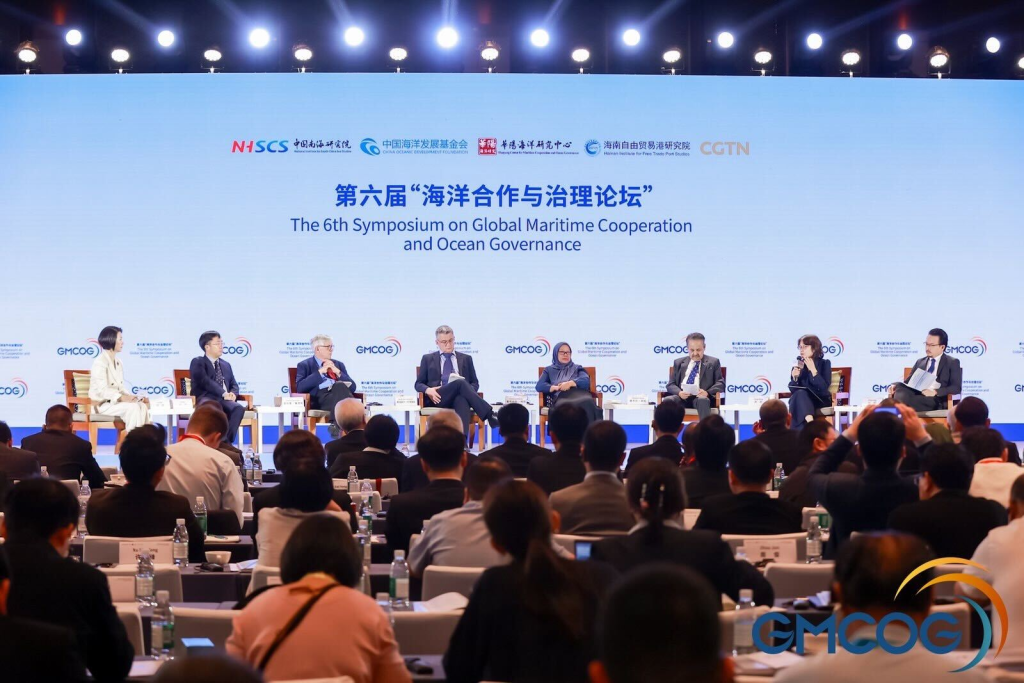
From December 10-12, 2025, Executive Director Dr. Nong Hong, Research Associate Yilun Zhang, and Advisory Board Member Prof. Gordon Houlden attended the 6th Symposium on Global Maritime Cooperation and Ocean Governance held in Sanya, China. This event was co-organized by China National Institute for South China Sea Studies, and Huayang Center for Maritime Cooperation and Ocean Governance. Over 300 participants from around 30 countries and regions were present at the symposium.
At the event Nong Hong presented on the Session 2 Panel regarding “Managing Maritime Disputes: Regional Practices and International Experience,” Yilun Zhang was on the Session 7 Panel titled “Global Ocean governance: Models and Pathways”, and Gordon Houlden moderated Session 4 about “Sustaining Peace in the South China Sea: Geopolitics and the Construction of Regional Order.”

The Institute for China-America Studies is an independent nonprofit, nonpartisan research organization dedicated to strengthening the understanding of U.S.-China relations through expert analysis and practical policy solutions.
1919 M St. NW Suite 310,
Washington, DC 20036
icas@chinaus-icas.org
(202) 968-0595
© 2026 INSTITUTE FOR CHINA-AMERICA STUDIES. ALL RIGHTS RESERVED.