
ICAS Maritime Affairs Handbill (online ISSN 2837-3901, print ISSN 2837-3871) is published the last Tuesday of the month throughout the year at 1919 M St NW, Suite 310, Washington, DC 20036.
The online version of ICAS Maritime Affairs Handbill can be found at chinaus-icas.org/icas-maritime-affairs-program/map-handbill/.
“Finnish Police Finish Investigation Recommending Charges For Eagle S Tanker”
June 13 – The Maritime Executive
[Finland]
Finnish investigators concluded their probe into undersea cable damage, officially suspecting the crew of tanker Eagle S of aggravated criminal mischief and interference with telecommunications after dragging an anchor over 100 km that damaged cables. The case has heightened regional concerns, prompting increased patrols and NATO support for undersea infrastructure protection.
“Oceans Protection Treaty Could Take Effect From January, Macron Says”
June 9 – Reuters
[France]
French President Emmanuel Macron said the Ocean Protection Treaty could take effect on January 1, 2026, as it nears the required 60 ratifications. The treaty, approved in 2023, aims to protect marine biodiversity in areas beyond national jurisdiction.
“EU, Southeast Asia Aim To Boost Security For Undersea Cables”
June 9 – DW
[Vietnam,EU]
Heavily reliant on limited cables, Vietnam is seeking investment without being forced to choose between China and the U.S. The Southeast Asian country is prompting calls for EU support as Brussels launches a Cable Security Action plan that reallocates nearly €1 billion for surveillance and repair capacity to strengthen global cable resilience.
“Greece To Lobby Egypt Against Haftar Endorsing Turkey-Libya Maritime Deal”
June 4 – Middle East Eye
[Greece, the Mediterranean]
Greece plans to lobby Egypt to discourage Libya’s eastern administration from ratifying the 2019 Turkey-Libya maritime deal. Athens views the agreement as violating its maritime rights and wants Cairo to use its influence to prevent its endorsement. Greek officials fear Haftar backing the deal could escalate tensions in the Eastern Mediterranean.
“Singapore, France Ink Maritime Partnership Agreement”
June 3 – Baird Maritime
[Singapore, France]
Singapore and France have signed an enhanced maritime partnership to strengthen cooperation in decarbonisation, digitalization, cybersecurity, innovation, and training. The agreement builds on a 2021 memorandum and includes pilot projects such as developing a bio-methane supply chain and certification framework.
“Australia To Boost Aerial Surveillance Of Pacific For Illegal Fishing Fleets”
June 13 – Reuters
[Australia]
Australia will invest A$477 million to expand aerial surveillance over Pacific Island waters, targeting illegal fishing activities. Australia’s actions include support for a new maritime monitoring center in Fiji and providing patrol boats.
“Beijing Tells China Ships In Strait Of Hormuz To Phone Home, Flags ‘shipping Safety’”
June 23 – South China Morning Post
[China, Strait of Hormuz]
China’s Ministry of Transport, via the China Shipowners’ Association, has instructed all domestically registered vessels transiting the Strait of Hormuz, Gulf of Oman, and Persian Gulf to check in daily with the government amid the escalating conflict between Israel and Iran.
“Europe Sees Its Own Ports As Vulnerable In Standoff With Russia”
June 20 – The Wall Street Journal
[Europe, Russia]
Europe is treating key ports as strategic defense assets, bolstering infrastructure—such as ports in Poland, Latvia, and Lithuania—for rapid troop deployments amid rising tensions with Russia. Enhanced cybersecurity for ports and undersea cables, plus a planned Black Sea Maritime Security Hub, are central to the infrastructure investment.
“US Deploys Aircraft Carrier USS Nimitz Over Iran-Israel Conflict”
June 16 – Newsweek
[Middle East, U.S.]
The aircraft carrier USS Nimitz has canceled its scheduled port visit to Vietnam and has been redirected from the South China Sea toward the Middle East in response to rising tensions between Israel and Iran. U.S. officials have not confirmed its final destination but emphasized readiness amid regional instability.
“North Korea Claims Warship Launch Successful On Second Try”
June 13 – BBC
[North Korea]
North Korea relaunched its 5,000-ton destroyer Kang Kon less than a month after it capsized in May, with Kim Jong Un and his daughter overseeing the event. State media claimed the ship was fully restored. Kim vowed to build two more destroyers of the same class, calling the setback no obstacle to military modernization.
“Pentagon To Review US Role In AUKUS Submarine Pact”
June 11 – POLITICO
[U.S., Australia]
The Pentagon is reviewing the U.S. role in the AUKUS pact with Australia and the U.K., covering submarines and hypersonic weapons, to align with Trump’s “America First” policy. Led by Elbridge Colby, the review questions U.S. capabilities and its ability to supply subs to Australia. Australia has pledged $3 billion to U.S. shipyards, while allies remain supportive.
“USS George Washington’s Quiet Departure Coincides With Chinese Naval Activity In Pacific”
June 10 – Stars and Stripes
[West Pacific]
The USS George Washington departed Yokosuka Naval Base on June 10 for its first full patrol since returning last year, following sea trials from May 25 to June 4. The deployment comes amid heightened Chinese naval activity, with aircraft carriers Liaoning and Shandong operating simultaneously in the West Pacific.
“China’s Liaoning And Shandong Aircraft Carriers Sail Beyond Second Island Chain”
June 10 – South China Morning Post
[China, The Marianas]
Both of China’s two aircraft carriers, the Liaoning and Shandong, conducted exercises in the western Pacific beyond the second island chain, marking an unprecedented deployment. The drills aimed to test far-sea defences and joint operational capabilities, and were declared to be “routine and lawful” by Chinese officials. The Liaoning sailed further east than Guam for the first time, while both carrier groups were escorted by major warships.
“New Zealand Looking At New Ways To Grow Security Ties With Japan, Defense Chief Says”
June 9 – Japan Times
[Japan, New Zealand]
New Zealand Defence Minister Judith Collins told media at the Shangri‑La Dialogue that Wellington is seeking new ways to deepen security cooperation with Japan. She emphasized that the effort focuses on practical, mission-driven partnerships as part of their annual defence agenda. This initiative reflects New Zealand’s intent to bolster regional defence ties through concrete collaboration.
“Chinese Ship Runs Aground Off Philippines-Occupied Island In The Disputed South China Sea”
June 8 – AP News
[South China Sea]
A Chinese ship ran aground near the Philippine-occupied Thitu Island in the South China Sea during stormy weather. Philippine coast guard and military personnel were deployed to offer assistance under international maritime law. The grounded vessel was later pulled free by other Chinese ships.
“Philippines and US Hold Joint Maritime Drills For Seventh Time”
June 5 – The Straits Times
[U.S., The Philippines]
The Philippines and the United States held their seventh joint maritime drills off Occidental Mindoro and Zambales. The exercises were conducted under the 1951 Mutual Defense Treaty and the Visiting Forces Agreement. The drills were held away from disputed areas in the South China Sea.
“Shipping Groups Avoid The Strait Of Hormuz To Reduce Exposure After U.S. Strikes On Iran”
June 23 – CNBC
[U.S., Iran]
Shipping traffic through the Strait of Hormuz is declining as tensions rise following U.S. strikes on Iranian nuclear sites. Major shipping groups have placed vessels on standby or limited time in the Gulf, while some others remain active but cautious. Although container activity continues, risk assessments are constant and insurance costs are rising. Iran’s parliament has backed closing the strait, escalating concerns over global energy supply disruptions.
June 16 – Dry Bulk
[Global]
Inmarsat Maritime has signed an agreement with Pacific Basin Shipping Limited, one of the world’s leading dry bulk carrier owners, to install its NexusWave connectivity service on five Handysize and Supramax dry bulk vessels. The service offers unlimited data, high-speed global coverage, and over 99.9% availability to support both crew welfare and business operations.
“Container Shipping At Risk As Middle East Tensions Rise After Israeli Strikes On Iran”
June 14 – Global Trade Magazine
[Middle East]
Tensions in the Middle East following Israeli strikes on Iran have raised concerns over the safety of container shipping in the region. The UK Maritime Trade Operations warned of potential escalation, though no direct threats to commercial vessels have been reported. Key routes like the Strait of Hormuz could be affected and non-state actors such as the Houthis may pose risks if conflict expands.
“Texas Shipyard Deal Would Bring Arctic Icebreakers Trump Seeks”
June 11 – The Wall Street Journal
[U.S., Canada]
Canada’s Davie Shipbuilding plans to buy shipyard sites in Galveston and Port Arthur, Texas, from Gulf Copper & Manufacturing, investing $1 billion to produce Arctic icebreakers. The deal supports President Trump’s push to revitalize U.S. shipbuilding and Arctic readiness. It also aligns with a recent Canada-Finland-U.S. icebreaker collaboration agreement.
“US Passes Bills For Cargo Preference And Maritime Security To Support US Ports”
June 10 – Maritime Gateway
[U.S.]
The U.S. House passed two bipartisan bills—H.R. 2390 and H.R. 252—aimed at boosting maritime security and reducing foreign adversary influence on U.S. ports. H.R. 2390 allows federal funds to replace port cranes with Chinese hardware, addressing potential cyber‑security threats. H.R. 252 bars entities linked to China, Russia, North Korea, or Iran from owning or operating ports covered by maritime security plans. The legislation also requires that all Department of Transportation cargo be carried on U.S.-owned, U.S.-crewed vessels, strengthening the U.S.-flag fleet.
“Explosion And Fire Hit Singapore-Flagged Container Ship Off Southern Indian Coast”
June 9 – AP News
[Singapore, India]
The Singapore-flagged container ship MV Wan Hai 503 caught fire after multiple explosions off India’s southern coast near Kerala, Southern India. The blaze occurred about 88 nautical miles from the port of Beypore. Among its 22 total crew members, 18 were rescued, while 4 remain missing. The Indian Coast Guard and Navy have launched search and firefighting operations after the incident.
“USTR Modifies LNG Rules, Car Carrier Fees In Planned 301 Actions”
June 9 – World Trade Online
[U.S., China]
The U.S. Trade Representative (USTR) has revised its proposed trade actions targeting China’s shipbuilding practices, seeking public feedback by July 7. Key changes include dropping a rule that could suspend liquidized natural gas export licenses and shifting car carrier port fees to a net tonnage-based system to ease implementation. USTR also proposes exempting U.S.-owned or U.S.-flagged vessels in the Maritime Security Program from these fees.
“Tariff-Fueled Surge In Container Shipping Rates Shows Signs Of Peaking”
June 5 – Reuters
[Global Shipping]
Container shipping rates surged after the U.S.–China tariff pause on May 12, with the World Container Index rising 41% and Shanghai–Los Angeles rates up 57%. Rates remain below pandemic highs, and future trends depend on demand, tariffs, and legal outcomes. A slowdown is expected later in 2025.
“Cargo Ship Carrying Electric Vehicles Burns Off Alaska”
June 5, 2025 – The New York Times
[North Pacific, U.S.]
The cargo ship Morning Midas caught fire about 300 miles southwest of Adak, Alaska, while carrying around 3,000 vehicles, including 70 electric and 680 hybrid models. All 22 crew members were safely evacuated to another merchant vessel. The ship remains afloat and is being monitored via satellite.
“Pacific Islands Countries Push For Action At UN Ocean Conference”
June 20 – The Diplomat
[South Pacific]
Pacific Island nations made a strong push at the UN Ocean Conference in Nice, urging global action and financial support to address their urgent climate and ocean challenges. Leaders from countries including Micronesia, Fiji, Kiribati, Palau, and Tuvalu highlighted the security risks posed by warming seas and rising costs of adaptation and called for more funding and an international treaty on sea-level rise to protect maritime boundaries.
“Iberdrola France Promotes Sustainable Solutions For The Maritime Economy In France”
June 13 – Iberdrola
[France]
Iberdrola France, a renewable energy provider company, is funding sustainable maritime initiatives in the Bay of Saint-Brieuc. Three projects won support through the programme: biodegradable aquaculture nets, efficient boats for small-scale fishing, and biological alternative bait. These initiatives aim to reduce emissions, support local resources, and encourage responsible fishing.
“At UN Conference, Countries Inch Toward Ocean Protection Goal”
June 14 – The New York Times
[United Nations]
Over 20 new marine protected areas were announced at the UN Ocean Conference in France, advancing the global goal to protect 30% of the ocean by 2030. Countries including Chile, Tanzania, and French Polynesia pledged new protections, while France proposed stronger limits on bottom trawling.
“DNV: 15% Of Shipboard Carbon Emissions Will Be Captured With CCS by 2050”
June 12 – The Maritime Executive
[Global]
Det Norske Veritas, a global quality assurance and risk management company, forecasts that around 15% of carbon emissions from ships could be captured using onboard carbon capture and storage (CCS) systems by 2050. These systems focus on post-combustion capture, separating CO₂ from exhaust gases and storing it onboard until offloading. The maritime industry is exploring CCS as a transition solution while alternative fuels develop.
“UK’s Prince William Calls For Urgent Action To Protect Oceans”
June 8 – Reuters
[UK, United Nations]
Prince William urged world leaders and businesses to take immediate action to protect the oceans, citing threats from warming waters, plastic pollution, and overfishing. The call came just before the U.N. Ocean Conference in France, which aims to secure ratifications for a biodiversity protection treaty.
“International Maritime Organization’s Historic Agreement To Decarbonise Shipping”
June 2 – International Bar Association
[Global]
The International Maritime Organization has adopted a global framework to achieve net-zero emissions from shipping around 2050. It includes mandatory fuel standards and a carbon pricing system, with higher fees for greater emitters. Revenues will support a Net-Zero Fund for decarbonization and aid to vulnerable countries.
“Costa Rica, France Launch Blue Carbon Initiative Ahead Of UN Oceans Summit”
May 30 – The Tico Times
[France, Costa Rica]
Costa Rica and France have launched a blue carbon initiative ahead of co-hosting the UN Oceans Summit in Nice. The project, backed by the French Development Agency, funds conservation of coastal ecosystems—mangroves, seagrasses, and salt marshes—key to capturing carbon.
The USS Chester W. Nimitz (CVN-68) is the lead ship of the Nimitz-class nuclear powered aircraft carrier built by the United States Navy. Commissioned in 1975, the ship has a displacement of over 100,000 tons, making it the largest commissioned warship in the world at the time. During actions, the aircraft carrier becomes a moving airfield for around 80 aircraft and the home for more than 5,000 sailors. The naval air wing aboard contains multiple types of aircraft, including fighter jets, electronic warfare aircraft, airborne early warning aircraft, helicopters, and cargo planes. In operation, the carrier, along with the embarked air wing, is capable of multi-role missions in complicated contexts. In any given deployment, the ship, along with the other nine in its class, functions not just as a military platform. It is also a powerful and mobile symbol of American strategic reach and readiness, designed for the purpose of claiming ocean controls during great power competitions and regional conflicts in the Cold War context.
A regular deployment of USS Nimitz usually lasts around 6 months into regions where it is needed with a fleet of escort vessels and supply ships, forming a task force known as the “Carrier Strike Group” (CSG). The USS Nimitz has experienced 22 deployments spanning the 50-year long period of its operational life. It has participated in major U.S. military engagements across multiple regions, including the Iranian Hostage Crisis in 1979, the Gulf War in 1991, and sustained naval missions in support of the War on Terror throughout the 2000s and 2010s. It was also deployed into the West Pacific multiple times between 1988 and 2023, and the South China Sea in 2022. From the Middle East to the West Pacific, the USS Nimitz has served as a forward-deployed instrument of American military power, delivering both deterrence and combat capability where needed most.
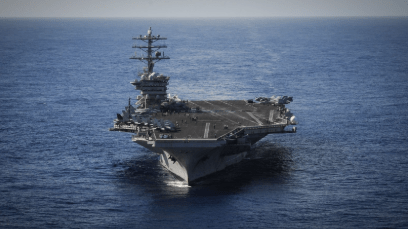
On March 26, 2025, the USS Nimitz, leading its Carrier Strike Group, left San Diego for its 23rd deployment towards the Indo-Pacific region. This is expected to be the final active deployment of the 50-year old vessel. Following this seven-months period, the USS Nimitz is expected to move towards Norfolk, Virginia, for its planned deactivation and decommissioning in 2026.
In May 2025, coinciding with the Shangri-La dialogue, the carrier was reported to be sailing in the South China Sea. According to the U.S. Navy officials, the ship is “doing more than ever to strengthen peace, stability, and deterrence across the Indo-Pacific”.
Reacting to USS Nimitz’s final deployment in the Indo-Pacific Region, particularly its activity near the South China Sea where China has disputed claims with its neighbors, the Chinese government has responded with deep condemnation. On May 31, the People’s Liberation Army’s Southern Theater Command stated that the carrier’s actions have “seriously violated China’s sovereignty and security, undermined regional peace and stability, and violated international law and basic norms governing international relations”.
On June 16, the USS Nimitz canceled its previously scheduled port call to Vietnam and was redeployed to the Middle East in response to the escalating conflict between Israel and Iran.
The final deployment of USS Nimitz to the Indo-Pacific region marks a symbol for the U.S. military commitment in the region. The ship’s cruises in the contested waters such as the South China Sea have added more friction to the already strained U.S.-China relations. Especially given the context of such a deployment coincides with the 2025 Shangri-La dialogue where the debates between the U.S. and China over maritime security and ocean governing structures being a central theme. As the U.S. minister of defense Pete Hegseth said in his remarks, to maintain the regional status quo “requires strength”. The presence of USS Nimitz during the region’s most important strategic dialogue, in this case, has enhanced the U.S. military assertiveness along with its political attitude in the region through its combat capabilities.
On the other hand, the USS Nimitz’s redeployment to the Middle East should also be understood in the context of the United States’ long-standing political and military support for Israel. Redirecting the Nimitz—originally deployed to the Indo-Pacific—was a clear reflection of these priorities. The shift also illustrates how the U.S. continues to navigate competing strategic theaters, often recalibrating its deployments in response to crises involving its key regional interests.
Furthermore, it is noticeable that the USS Nimitz has reached the end of its intended 50-year service life and is scheduled for decommissioning following this final mission. Nevertheless, despite the ship’s age, its continued forward deployment reflects a broader context of the U.S. ‘s pressing need to maintain its military existence in multiple regions around the globe. Under such circumstances, the Nimitz remains engaged in the kind of operations it was originally designed for—exercising maritime presence and control amid great power competition and regional instability, even as the ship approaches the end of its service life.
This issue’s Spotlight was written by Letong Qian, Part time Research Assistant at ICAS.
Government Releases & Other Press Statements
Analyses & Opinions
Other Research

ICAS MAP program is launching ‘The Tracking Ocean Governance series’, an initiative dedicated to documenting and contextualizing major developments in global ocean governance as they occur. As the world enters a pivotal phase of ocean diplomacy—shaped by shifting legal frameworks, evolving maritime strategies, and the escalating urgency of climate and biodiversity challenges—this series offers timely, event-driven updates. It responds to key milestones such as international conferences, treaty ratifications, institutional reforms, and emerging maritime policies. By combining expert analysis with factual tracking, Tracking Ocean Governance series aims to enhance understanding, promote transparency, and support informed dialogue among policymakers, scholars, and ocean stakeholders worldwide. The series commences with an entry by Dr. Nong Hong, offering perspectives on the 2025 UN Ocean Conference.
Charting the Blue Future: Reflections on the 2025 UN Conference in France
By Nong Hong
June 24, 2025
Held from June 9 to 13, 2025, in Nice, France, the Third United Nations Ocean Conference (UNOC3) convened at a critical juncture for global ocean governance. Facing mounting pressure from climate change, rampant overfishing, accelerating biodiversity loss, and the emerging challenges of deep-sea mining, the conference brought together world leaders, scientists, civil society, and the private sector. Under the unifying theme of “Accelerating action and mobilizing all actors to conserve and sustainably use the ocean,” and jointly hosted by France and Costa Rica, this pivotal event sought to renew political momentum for fully implementing Sustainable Development Goal 14 (Life Below Water) and accelerate the ratification and enforcement of newly adopted international frameworks. The urgency was palpable, especially as the 2024 Sustainable Development Goals Report revealed that only 16% of the SDG targets are on track for achievement by 2030—while SDG 14 is among the goals showing the least progress…
Continue reading: https://chinaus-icas.org/research/charting-the-blue-future-reflections-on-the-2025-un-ocean-conference-in-france/
ICAS Expert Voices Initiative Interview with Rasmus Gjedssø Bertelsen
On June 4, 2025, Dr. Nong Hong conducted an in-depth discussion with Dr. Rasmus Gjedssø Bertelsen, a leading Arctic expert from Norway. This EVI explores how Norway navigates its dual priorities of security and sustainability, manages relations with Arctic and non-Arctic actors, and positions itself within the evolving Arctic governance landscape.
Watch the interview: https://www.youtube.com/watch?v=mO_-TkGYyL4
Learn More & Explore the EVI Archive: https://chinaus-icas.org/media/expert-voices-initiatives/

ICAS Expert Voices Initiative Interview with Dr. Irina Strelnikova
On April 29, 2025, Dr. Nong Hongonducted an in-depth discussion with Dr. Irina Strelnikova, a leading Arctic expert from Russia. This EVI examines how Russia is adapting its Arctic policies, managing its bilateral and multilateral relationships, and navigating challenges related to governance, security, and cooperation in a complex and rapidly changing Arctic environment.
Watch the interview: https://www.youtube.com/watch?v=EBO57P8JUvc
Learn More & Explore the EVI Archive: https://chinaus-icas.org/media/expert-voices-initiatives/

A Test for the Future of Global Ocean Law
by Nong Hong
June 2, 2025
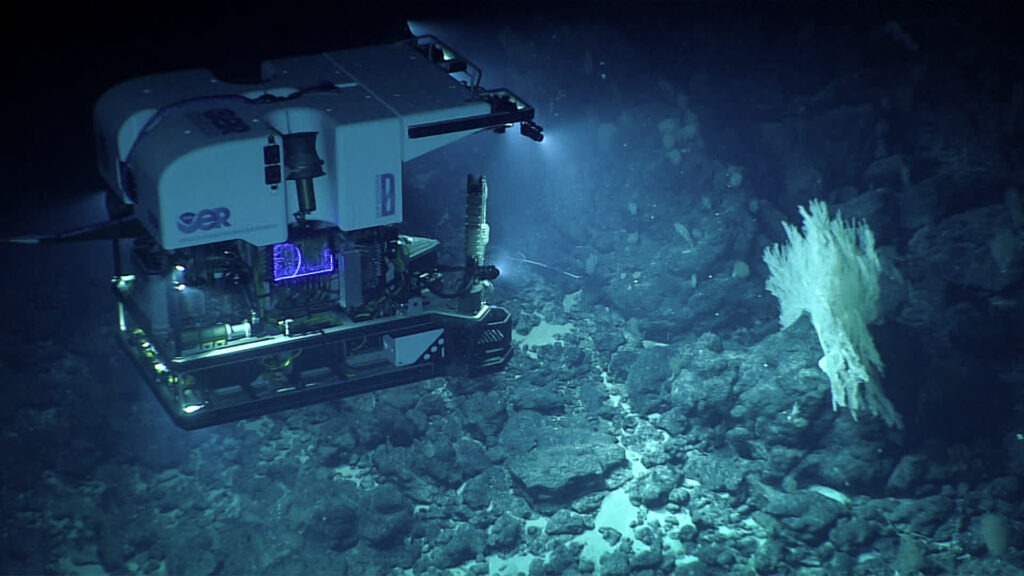
The trajectory of deep-sea mining remains uncertain. The U.S. and China represent opposite ends of the governance spectrum — one unilateral and rapid, the other multilateral and cautious. Whether these paths will converge or remain in tension is unclear.
U.S. President Donald Trump issued an executive order in April authorizing government agencies to grant commercial licenses to companies seeking to mine in areas beyond national jurisdiction — meaning the ocean floor. This marked a significant shift in U.S. ocean policy, emphasizing national interest and access to critical minerals. The move reinforced longstanding U.S. concerns over the regulatory authority of the International Seabed Authority (ISA) and intensified global competition around the governance of the seabed — a space considered the common heritage of humankind…
Russia’s Arctic Bet: Can Asia Deliver on NSR Ambitions?
by Nong Hong
June 24, 2025
Russia’s ambitions to expand the global utilization of the Northern Sea Route (NSR) have re-emerged in global discourse with Rosatom forecasting a 50% rise of foreign vessel traffic through its Arctic corridor. The announcement, made despite ongoing Western sanctions and regional instability caused by the war in Ukraine, reflects Moscow’s strategic bid to recast the Arctic as a new maritime frontier dominated by Russian infrastructure and legal control. With climate change gradually opening northern waters and China, India, and other Asian powers eyeing polar routes for faster Asia-Europe trade, the NSR seems poised for a new era. Yet, critical questions remain: Can Russia truly turn the NSR into a viable global shipping lane? And if so, at what cost? While the NSR offers potential savings in distance and fuel, its operational, political, legal, and environmental challenges are far from being addressed. Russia’s unilateralist strategy risks turning this strategic corridor into a geopolitical fault line rather than a connective artery…
This article was originally published by the Diplomat:
UK’s Chagos deal puts spotlight on strategic contest in the Indian Ocean
by Nong Hong
May 28, 2025
Once seen as a relic of colonialism, the Chagos Archipelago has evolved into a flashpoint in global strategic competition
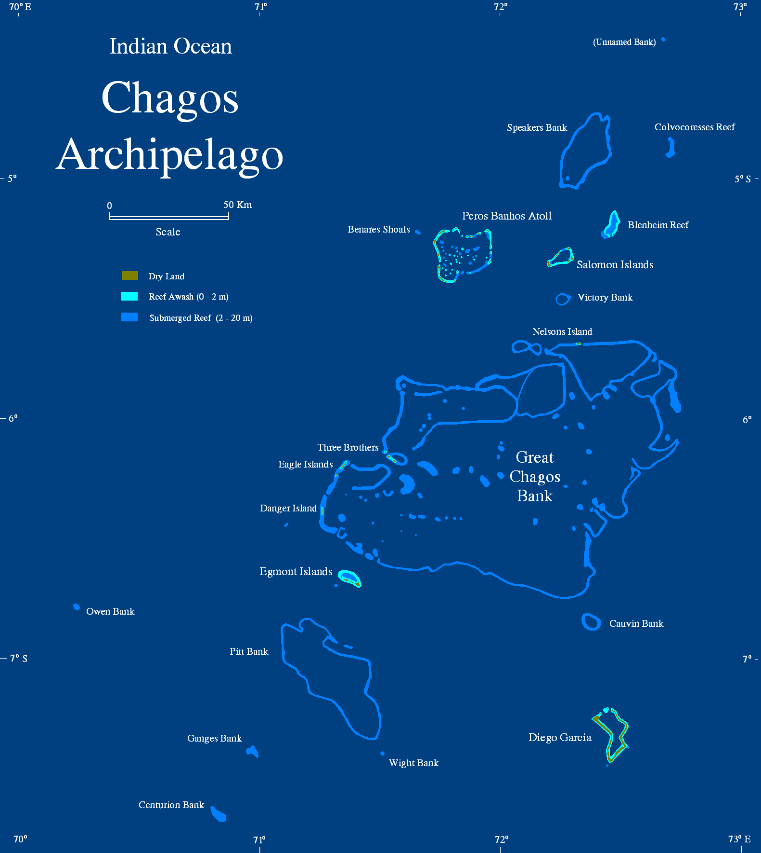
Decades of dispute over the Chagos Archipelago in the Indian Ocean, rooted in colonial history and international legal challenges, have been addressed after the United Kingdom agreed to transfer sovereignty of the islands to Mauritius. Under the May 22 deal, the UK retains a 99-year lease on the UK-US military base on Diego Garcia, the largest of the islands…

The Institute for China-America Studies is an independent nonprofit, nonpartisan research organization dedicated to strengthening the understanding of U.S.-China relations through expert analysis and practical policy solutions.
1919 M St. NW Suite 310,
Washington, DC 20036
icas@chinaus-icas.org
(202) 968-0595
© 2026 INSTITUTE FOR CHINA-AMERICA STUDIES. ALL RIGHTS RESERVED.