
Managing Maritime Disputes Today: A Three-Pillar Framework for a Crowded Maritime Century

Cover Image Source: Unsplash
- Maritime Studies
- Global
Maritime disputes today sit at the intersection of law, geopolitics, economics, and security. From the South China Sea to the Arctic, the Eastern Mediterranean, the Gulf of Guinea, and the Red Sea, states face overlapping jurisdictional claims, intensifying competition over energy and seabed resources, and a growing mix of non-traditional security risks in increasingly crowded waters. Yet persistence does not inevitably mean escalation. Practice suggests that the most effective approaches combine three interlocking pillars: a credible legal baseline grounded in international law, including the UN Convention on the Law of the Sea (UNCLOS), genuine political will to manage risk and absorb compromise, and adaptive regional and bilateral mechanisms that operationalize the UN Charter’s commitment to the peaceful settlement of disputes. These pillars offer a practical blueprint for managing—though not necessarily resolving—maritime disputes in an era of uncertainty.
International Law as the Foundation
International law remains the essential anchor for managing maritime disputes. UNCLOS offers the most widely accepted framework for maritime zones, delimitation, and the rights and obligations of states at sea—and its practical value is visible in a series of landmark outcomes.
Consider delimitation. In Maritime Delimitation in the Black Sea and Bangladesh/Myanmar, courts and tribunals clarified long-contested boundaries and reduced legal uncertainty. The Bangladesh v. India award similarly settled delimitation questions—while also illustrating that even “successful” decisions can leave technical coordination issues (including “grey areas”) that states must manage in practice.
UNCLOS tools can also work beyond adjudication. The first-ever compulsory conciliation under UNCLOS—the Timor Sea Conciliation—helped pave the way for the 2018 Maritime Boundaries Treaty between Timor-Leste and Australia, demonstrating how legal process can narrow asymmetries and unlock negotiated outcomes. Likewise, the ITLOS Special Chamber’s judgment in Ghana/Côte d’Ivoire fixed a politically sensitive hydrocarbon boundary and required practical adjustments to existing offshore blocks—an implementation task that can be as consequential as the line itself.
In the Arctic, international law supplies a stabilizing architecture even amid geopolitical strain. Russia, Norway, Denmark, and Canada have all pursued extended continental shelf claims through the Commission on the Limits of the Continental Shelf (CLCS).
At the same time, law is not static. Where treaty rules are sparse, technologically stressed, or politically contested, states increasingly rely on a mix of customary law, institutional interpretation, and evolving practice—for example, debates over sea-level rise and baselines, the responsibilities and potential liability exposure linked to deep-seabed mining sponsorship in the ITLOS Seabed Disputes Chamber advisory opinion (2011), and the governance of emerging technologies such as autonomous shipping in the IMO’s work on Maritime Autonomous Surface Ships (MASS). Even in areas where UNCLOS does contain core rules—such as submarine cables—changing threat environments and infrastructure dependence are pushing states toward new operational and policy adaptations.
Still, law alone rarely guarantees compliance. The 2016 South China Sea arbitral award addressed some legal questions, but debates over process and implementation remain politically contested. Meanwhile, recurring India–Sri Lanka fishing incidents in the Palk Bay—despite settled boundary agreements and diplomatic references to “traditional fishing rights,” as reflected in Limits in the Seas No. 66 and India’s MEA parliamentary reply (2009)—underscore a recurring lesson: adjudication and legal clarification can define rights, but they do not automatically resolve the political and operational frictions that drive incidents at sea. International law is foundational—but it needs political acceptance and practical mechanisms to shape behavior.
Political Will and the Myth of State Hierarchy
If law provides structure, political will provides momentum. Many maritime disputes persist not because legal tools are absent, but because the political incentives for resolution are misaligned.
The 2010 Norway–Russia Barents Sea Agreement is a telling exception. After nearly four decades of stalemate, the parties reached a settlement once both recognized the mutual benefits of legal clarity and resource cooperation. Political will—expressed through compromise, restraint, and sustained dialogue—converted a frozen dispute into a cooperative framework, as widely noted in contemporary analysis of the deal’s significance.
In practice, sovereign equality serves as an important baseline for maritime dispute management. Treating parties as legal equals can help keep negotiations focused on rules, procedures, and workable trade-offs rather than assumptions about relative power or legitimacy. This consideration is particularly salient in the South China Sea, where perceptions of asymmetry can shape negotiating dynamics, and in the Eastern Mediterranean, where overlapping narratives and energy-related developments have added layers of complexity among Greece, Türkiye, Cyprus, Egypt, and Israel.
Political will also has a domestic dimension. It often depends on how governments frame maritime issues at home—how they communicate legal positions, manage public expectations, and invest in maritime legal literacy among officials and the public—because these factors can affect a state’s room to negotiate and implement arrangements.
A frequently cited example is the implementation of the 2014 Bay of Bengal award in the India–Bangladesh context, where official statements indicated an intention to proceed in accordance with the decision and to maintain cooperative relations.
In the Red Sea, recent security pressures have underscored the practical challenges of coordination in a highly contested environment. Alongside national measures, multinational naval initiatives—such as Operation Prosperity Guardian and the EU’s EUNAVFOR ASPIDES—have functioned as interim security arrangements, illustrating that even where legal principles are clear, operational stability often depends on sustained political coordination among relevant actors.
Adaptive and Flexible Regional and Bilateral Solutions
Because maritime disputes vary widely in their historical, strategic, and economic contexts, no single model fits all cases. In practice, effective dispute management often combines regional frameworks, bilateral negotiation, operational risk-reduction tools, and (where feasible) joint development arrangements tailored to local conditions.
In the Arctic, cooperation through the Arctic Council—especially in scientific and environmental work and practical cooperation frameworks—has remained institutionally relevant, with project-level activities gradually resuming even amid geopolitical strain.
In Southeast Asia, ASEAN and China’s ongoing negotiation of a South China Sea Code of Conduct represents an attempt to build a regional process for managing incidents and expectations even while sovereignty disputes persist. At the operational level, encounter-management tools such as the Code for Unplanned Encounters at Sea (CUES) can help reduce miscalculation risks during unplanned naval interactions.
In the Indian Ocean, maritime domain awareness (MDA) and coastal surveillance partnerships—including India’s cooperation with island and littoral partners such as Maldives, Mauritius, and Sri Lanka—are often used to improve information-sharing and coordination for tasks like fisheries monitoring and search-and-rescue support.
In the Gulf of Guinea, regional security coordination has been pursued through the Yaoundé Architecture and the associated Yaoundé Code of Conduct (2013). This illustrates how, where piracy and transnational maritime crime are central concerns, shared security governance can become a primary mechanism for stabilizing contested maritime spaces.
The Caspian Sea offers a different approach. The 2018 Convention on the Legal Status of the Caspian Sea created a bespoke regional legal regime that draws on familiar law-of-the-sea concepts while incorporating provisions tailored to the five littoral states. While not all questions have been settled, the Convention has provided a framework for continued seabed delimitation discussions and practical resource cooperation among Russia, Iran, Kazakhstan, Azerbaijan, and Turkmenistan.
In the Caribbean, states have used a mix of adjudication and negotiation to manage overlapping claims. The ICJ judgment in Nicaragua v. Colombia (2012) clarified maritime entitlements despite political tensions, and other regional disputes have likewise been addressed through international adjudication, including Guyana v. Suriname and Barbados v. Trinidad and Tobago (2006).
Bilateral tools remain indispensable. Joint development zones (JDZs) allow states to set aside sovereignty questions while cooperating on shared resources. Examples include the long-standing Malaysia–Thailand Joint Development Area, the Japan–Republic of Korea JDZ, China–Vietnam fisheries cooperation arrangements in the Gulf of Tonkin, and renewed China–Philippines discussions on hydrocarbon cooperation reflected in the China–Philippines Joint Statement (2023).
Inland access disputes also illustrate creative bilateralism. Under UNCLOS Part X, landlocked states have a right of access to and from the sea, and the practical content of that access is typically implemented through transit and port-access arrangements negotiated with transit states—showing how treaty design and bilateral cooperation can mitigate complex geographic constraints.
Taken together, these regional and bilateral models suggest that adaptability—not doctrinal uniformity—is often central to effective dispute management.
Managing, Not Solving
Maritime disputes are likely to remain enduring features of the international system, shaped by geography, history, and strategic competition. Yet they can often be managed responsibly through a three-pillar approach that integrates international law, political will, and adaptive regional and bilateral mechanisms. Stability at sea does not require perfect legal solutions; it more often depends on combining legal clarity with political pragmatism, and pairing long-term cooperation with practical, near-term risk-reduction tools.
In an era of intensifying maritime competition, risk is more likely to be contained when states treat ocean governance not as a zero-sum contest, but as a multi-layered process of continual negotiation, operational discipline, and institutional adaptation. The aim is not only to settle disputes where possible, but to manage them day to day—so that states can coexist, cooperate when interests align, and maintain predictability across increasingly complex maritime spaces.
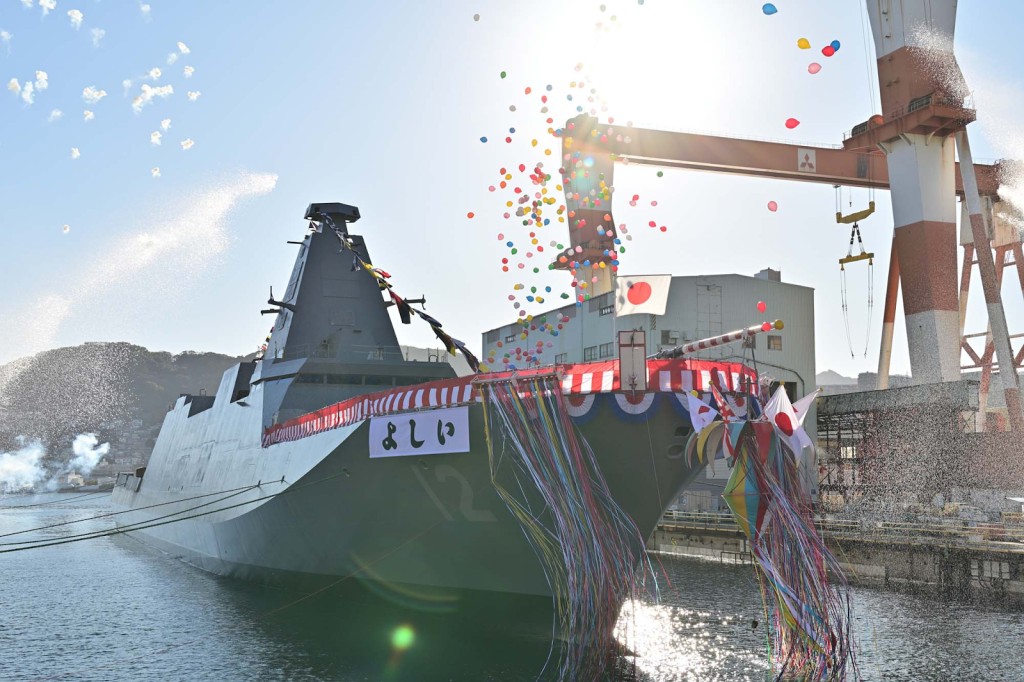


Close Encounters in the Gulf: Why Rules and Communication Matter