
COMMENTARY BY:

Cover Image Source: Secretary of Defense Pete Hegseth and Philippine President Ferdinand Romualdez Marcos, Jr. stand for the playing of the U.S. and Philippines national anthems at the Pentagon, Washington, D.C., July 21, 2025. (DoD photo by U.S. Navy Petty Officer 1st Class Alexander Kubitza)
- Global Politics, Maritime Studies
- China, South Asia
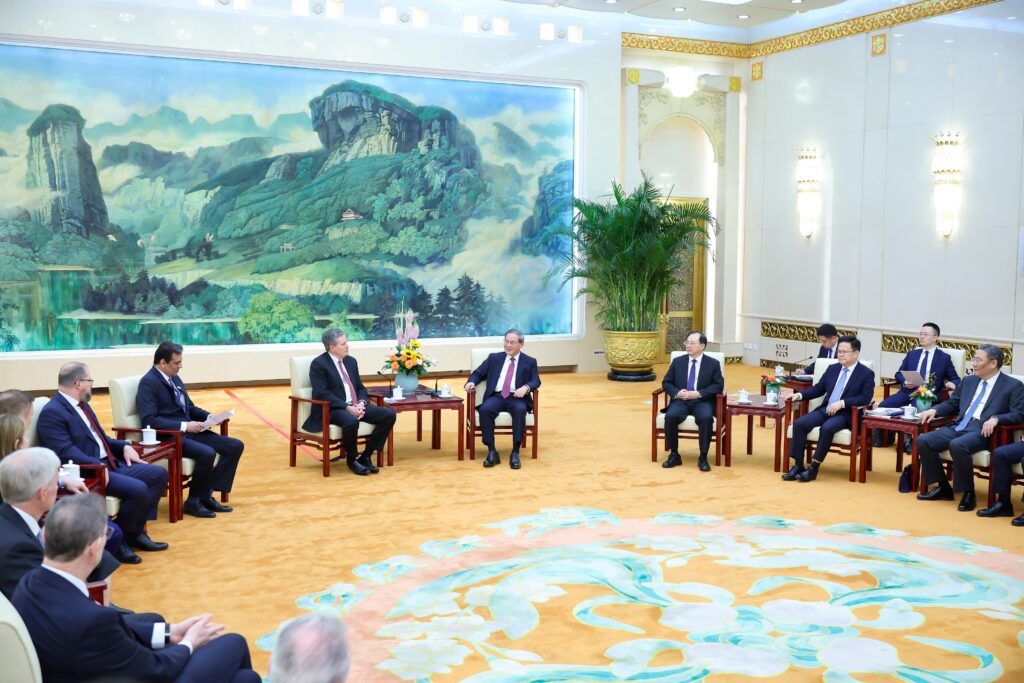
President Ferdinand Marcos Jr.’s declaration that the Philippines is “resetting” ties with China is not a knee-jerk reaction. It is a calculated pragmatic move to strengthen national resilience and promote Philippine security in the face of global energy crisis, regional tensions, and worsening great power rivalry. This reset is a strategic opportunity—one that builds on past engagements and seeks to secure a better future for the Philippines.
Energy Security as Strategic Necessity
The Philippines is confronting an energy emergency. Rising global oil prices, driven by Middle East instability caused by US-Iran war, have placed enormous strain on the Philippine economy. China, with its vast energy networks and continued imports of Iranian crude, offers a stabilizing partner. By resetting ties, Marcos Jr. is diversifying energy sources, reducing vulnerability to external shocks, and ensuring Filipinos have access to affordable and reliable energy.
This is not dependency—it is resilience. In a volatile world, Manila must expand its options, and China can provide one of the most viable lifelines.
Lessons from Arroyo and Duterte
History has demonstrated that engagement with China can yield benefits. President Gloria Macapagal Arroyo welcomed Chinese investments in infrastructure and energy, laying the groundwork for cautious cooperation. President Rodrigo Duterte went further, opening doors for loans and investments in order to support Philippine infrastructure development.
Marcos Jr.’s reset can be more balanced and flexible. Unlike Duterte’s dramatic pivot, he can frame engagement with China as part of a broader restructuring of global relations. He can seek guarded cooperation with China without abandoning alliance with the US while sustaining strategic partnerships with other nations. This is an independent foreign policy in practice.
The South China Sea: Security Through Dialogue
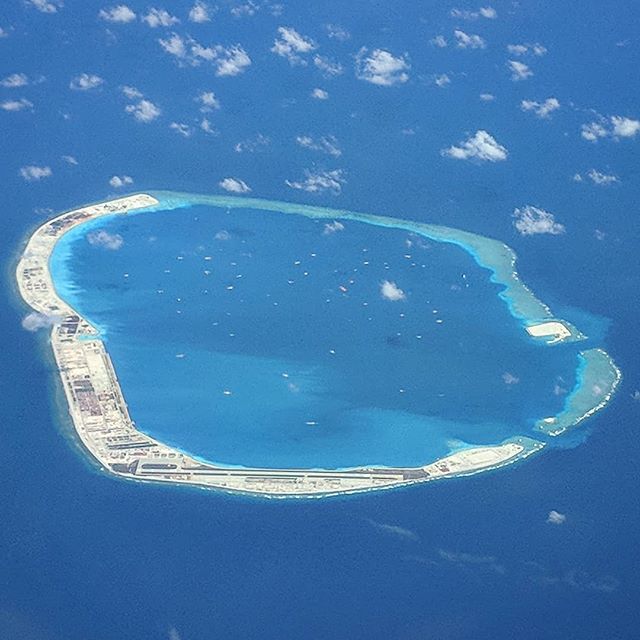
The South China Sea remains a sensitive security issue in Philippines-China relations. Resetting ties with China does not mean surrendering sovereignty; it means managing disputes through direct dialogue and sincere consultation. Cooperation in fisheries, maritime safety, and joint energy exploration can transform the South China Sea from a flashpoint of conflicts into a zone of peace and shared prosperity.
By emphasizing dialogue over confrontation, Marcos Jr. can effectively reduce risks of escalation, strengthening Philippine resilience, and contributing to regional stability.
Domestic Gains and Strategic Depth
Skepticism at home remains and is natural. But the benefits of renewed cooperation are promising and tangible. Despite sea disputes, China remains one of the Philippines’ largest trading partners and a key source of investment in infrastructure, technology, and agriculture. Resetting ties creates practical opportunities for jobs, growth, and development that directly benefit ordinary Filipinos.
At the same time, engagement with China adds strategic depth to Philippine foreign policy. It ensures that Manila is not overly reliant on any single partner, strengthening its ability to navigate global uncertainties.
A Strategic Gamble Worth Taking
Every reset carries risks, but the potential rewards are significant. If successful, Marcos Jr.’s reset with China can secure energy supplies, attract investment, and foster regional stability. The Philippines cannot afford isolation in a world defined by interdependence. Engagement with China is not a show of weakness—it is in fact an expression of strength.
Marcos Jr. is not abandoning alliances; he is broadening options. He is not capitulating; he is recalibrating for pragmatic considerations. This is the essence of smart diplomacy.
Diplomacy is about building bridges, not walls. Marcos Jr.’s reset with China is a bold move that recognizes the realities of global power shifts. By choosing cooperation over confrontation, the Philippines can safeguard sovereignty, reduce security risks, and unlock new opportunities for inclusive growth.
This is not just a reset—it is a strategic opportunity to promote Philippine security in an anarchic world.
Dr. Rommel Banlaoi is Director of Philippines-China Studies Center and President of Philippine Society for International Security Studies.
The Xiangshan Forum and the South China Sea: No Major Escalation but No Lasting Stability