
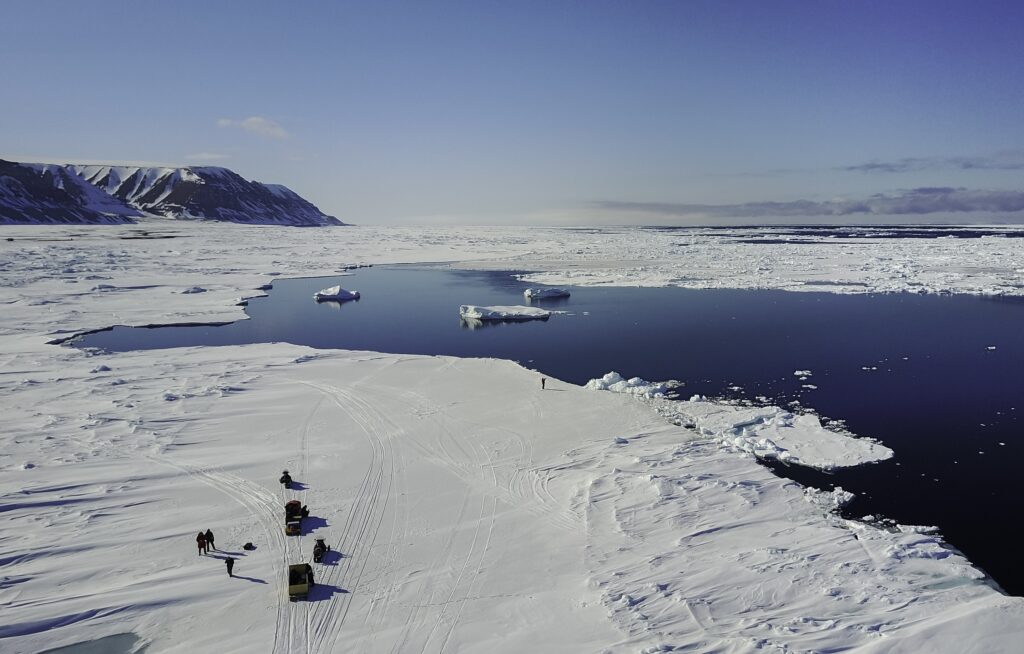
Cover Image Source: International Seabed Authority | ISA via Flickr
From 9–19 March 2026, the International Seabed Authority (ISA) Council meets in Kingston, Jamaica, following the Legal and Technical Commission (LTC) session held 23 February–6 March (largely behind closed doors). The ISA’s 31st Session effectively operates in two stages: a March negotiating window and a July decision window. That sequencing matters because it creates a practical test of institutional credibility: can the ISA still produce a workable multilateral rulebook before deep-sea mining governance normalizes into parallel, fragmented pathways?
A recent Wall Street Journal analysis captures this pressure point in plain terms: after decades of effort, the ISA is still struggling to finalize an exploitation code while commercial interest rises and some actors explore “go-it-alone” options—an environment in which delay can weaken perceptions of the ISA as the central rule-setter.
The core issue is no longer “whether mining,” but “who writes the rules”
The ISA’s mandate under UNCLOS rests on a basic bargain: resources in “the Area” (the seabed beyond national jurisdiction) are part of the common heritage of humankind, and exploitation—if it proceeds—requires international rules, including benefit-sharing and environmental safeguards. When rulemaking lags behind industrial ambition, the political economy shifts. Instead of industry waiting for governance, governance is pushed into a reactive posture—trying to catch up with realities created elsewhere.
Public debates often frame deep-sea mining as a binary choice: proceed or pause. ISA negotiations reveal something more structural. The institution is trying to translate high-level principles into a working system that answers four practical questions: who may mine, under what conditions, who benefits, and who enforces. Those questions define credibility—and explain why the Mining Code remains difficult.
Three governance gates the ISA must align
The March Council meeting sits at the intersection of three interlocking governance gates: environmental thresholds, benefit-sharing, and compliance/enforcement. If these do not align, the Code risks becoming either politically contested, operationally weak, or both.
Gate 1: Environmental thresholds (science gaps vs. “permission to proceed”)
The environmental debate is not simply “protect the ocean.” It is about how protection becomes enforceable: baseline data requirements, monitoring systems, compliance triggers, emergency stop mechanisms, and liability/repair provisions. The practical question is whether precaution can be translated into clear decision rules—rather than remaining aspirational language.
Gate 2: Benefit-sharing (common heritage must be legible in money terms)
Benefit-sharing is the political heart of ISA legitimacy, especially for many developing states. It is also a difficult design problem: the system must be transparent, administratively feasible, and resilient against price cycles and corporate structures. Without a credible formula, the common-heritage promise risks becoming rhetorical rather than distributive.
Gate 3: Compliance and enforceability (who inspects, who sanctions, who stops)
Rules without credible enforcement create perverse outcomes: compliant operators internalize costs while freeriders gain advantage. This gate concerns the machinery—inspection approaches, reporting, sanctions logic, and the institutional roles that make oversight meaningful.
These three gates also explain why “just finalize something” is not necessarily progress. A code that accelerates licensing but leaves enforcement vague—or sets benefit-sharing principles but under-specifies environmental triggers—can produce the worst of both worlds: rushed activity and contested legitimacy.
Interest-group fault lines shaping where each gate lands
The Mining Code is being negotiated through coalition politics as much as through technical drafting. Different interest groups prioritize different definitions of “responsible mining”—and disagree on who should bear the costs of proving it.
The “certainty coalition”
This coalition prioritizes predictability: a clear pathway from exploration to exploitation, stable technical standards, and a licensing process that makes investment and industrial planning possible. It is most visibly associated with sponsoring states whose contractors have clear commercialization incentives—such as Nauru, which triggered the ISA’s “two-year rule” to press for regulatory clarity and Tonga, which has maintained sponsorship arrangements linked to a contractor pursuing future exploitation pathways.Similar incentives are also visible in sponsoring-state profiles such as Kiribati, listed by the ISA as the sponsoring state for a national contractor. Their core argument is procedural: long delays do not freeze ambition—they redirect it. If the ISA cannot provide a timely rulebook, actors will increasingly seek alternative authorizations, alternative standards, and alternative venues.
At the same time, this coalition faces a legitimacy hurdle. Calls to accelerate rulemaking are easily interpreted—fairly or not—as “green-light first, refine later,” which energizes counter-coalitions that see acceleration as a governance risk rather than a governance solution.
The “pause/precaution coalition”
This coalition argues that the ISA cannot credibly define acceptable mining until science and governance capacity catch up with industrial ambition. The claim is not simply “protect the ocean,” but “do not institutionalize a regulatory green light when baseline knowledge is still thin and impacts may be irreversible.” In Europe, this position has been voiced by Germany, which has stated it will not sponsor deep-sea mining “until further notice” and Denmark, which has announced support for a precautionary pause. Similar caution is visible in Spain’s parliamentary support for a “precautionary pause” in international waters.
Strategically, this coalition pushes debate away from abstract environmental concern and toward regulatory design: baselines, monitoring, and decision triggers that can halt activity if harms exceed thresholds. Its central worry is path-dependence—once commercial operations begin, reversals become politically and legally difficult.
The “distribution coalition”
For many developing states, benefit-sharing is not a technical annex but a primary metric of ISA legitimacy—and therefore a core bargaining chip. This logic is especially visible in group positions such as the African Group, which has repeatedly emphasized equitable benefit-sharing in ISA deliberations, and in broader UNCLOS-based framing that requires taking “particular consideration” of developing states’ interests. The distribution debate quickly turns technical (what is levied, how revenue is pooled, how it is allocated, how to avoid double taxation), but the underlying issue is political: whether global-commons governance can still deliver tangible redistributive outcomes under commercial pressure.
The “institutional credibility coalition”
This coalition focuses on enforcement, integrity, and procedural credibility. Its core concern is that a Mining Code without real compliance capacity would create a race-to-the-bottom dynamic: operators that internalize monitoring and reporting costs become less competitive, while weakly governed pathways look more attractive.
The Council’s March discussions—including whether inspectors should be able to conduct unannounced inspections—show how far negotiations have moved into governance machinery. Oversight NGOs such as the Deep Sea Conservation Coalition and The Pew Charitable Trusts have pushed integrity questions onto the agenda through submissions hosted on the ISA website, including calls for more formal scrutiny of contractor compliance and reporting obligations. While specific allegations may be contested, the broader effect is to place institutional credibility at the center of rulemaking. For an institution like the ISA, perceived enforcement weakness is not merely a technical gap—it can become a strategic vulnerability.
Seen through these interest-group lenses, March is unlikely to “finish” deep-sea mining governance. What it can do is narrow options and force clarity on three fronts: whether environmental safeguards are being defined in enforceable terms or left as aspirational language; whether benefit-sharing is moving toward a workable formula or remains a political placeholder; and whether the compliance architecture is becoming operational or staying largely procedural and vague. The ISA’s session design effectively makes March a convergence phase and July a decision phase. In March, the most plausible outcome is a narrower set of bracketed choices; in July, those bracketed choices turn into political trade-offs—or deferred decisions that amplify fragmentation pressures.
Deep-sea mining governance is sometimes treated as a niche issue. It is not. The ISA process has become a live test of whether a multilateral institution can set rules for an emerging industry before fragmented practice begins to define the industry for itself. The March Council meeting shows why that is difficult: not because the text is complicated, but because coalitions disagree on what “responsible” should mean—certainty, precaution, equity, or enforceability—and on who should bear the burden of proof.
If the ISA can align the three gates into an executable package, 2026 may be remembered as the year the deep sea entered a new era with a credible rulebook. If it cannot, deep-sea governance may follow a familiar trajectory: activity first, rules later—legitimacy contested throughout.

The Institute for China-America Studies is an independent nonprofit, nonpartisan research organization dedicated to strengthening the understanding of U.S.-China relations through expert analysis and practical policy solutions.
1919 M St. NW Suite 310,
Washington, DC 20036
icas@chinaus-icas.org
(202) 968-0595
© 2026 INSTITUTE FOR CHINA-AMERICA STUDIES. ALL RIGHTS RESERVED.


Rome’s Arctic Message: Observer Participation and Competing Greenland Narratives