

Commercial shipbuilding has long been regarded as one of the foundational industries supporting global maritime commerce. Unlike naval shipbuilding, which is closely tied to national defense, commercial shipbuilding traditionally developed according to international market demand, comparative production costs, and the availability of industrial resources. As globalization accelerated following the Cold War, shipbuilding capacity gradually concentrated in East Asia, where integrated manufacturing bases, competitive labor costs, and expanding export industries enabled regional shipbuilders to dominate global commercial vessel production. Over time, commercial shipbuilding came to be viewed largely as a commercial enterprise rather than a strategic industry.
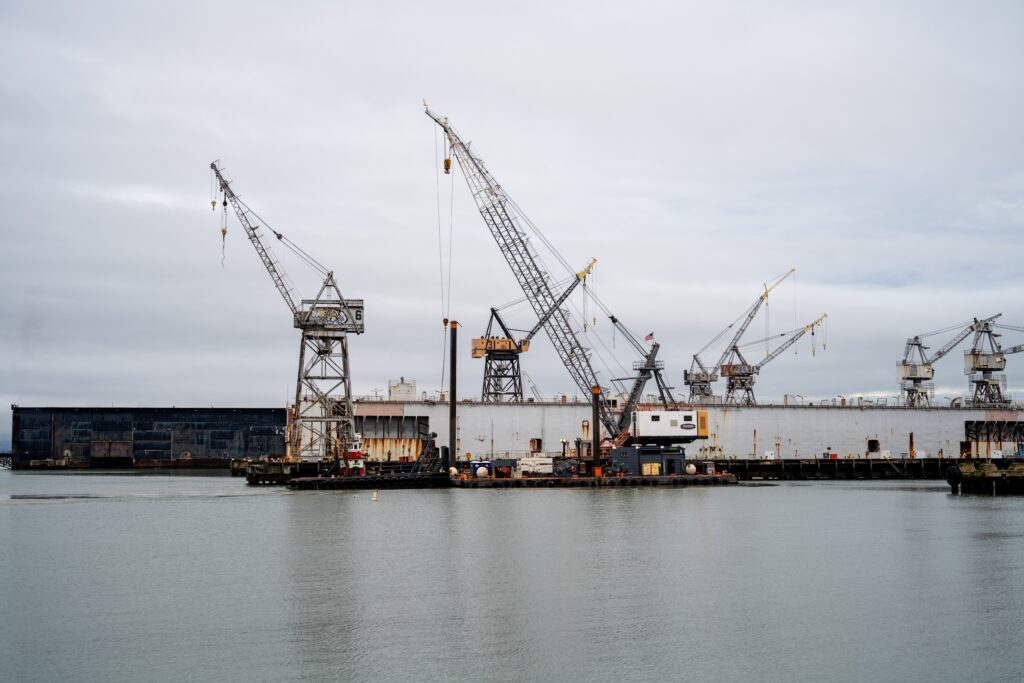
That perception has begun to change. A combination of structural developments—including the aging of the global merchant fleet, the expansion of liquefied natural gas (LNG) transportation, tightening environmental standards, and heightened concerns over supply-chain resilience—has renewed international attention on commercial shipbuilding. Increasingly, governments are viewing shipbuilding not only as an industrial sector, but also as an important component of economic security, maritime resilience, and long-term industrial competitiveness.
This shift has also broadened how commercial shipbuilding itself is understood. Rather than focusing solely on shipyards and vessel output, policymakers are increasingly recognizing the importance of the wider maritime industrial base that supports continuous ship production. Supplier networks, steel manufacturing, marine equipment producers, maritime finance, ports, logistics, engineering expertise, and skilled labor all contribute to the long-term competitiveness of a country’s shipbuilding sector. As a result, discussions surrounding commercial shipbuilding have increasingly expanded beyond questions of annual production to encompass the broader industrial ecosystem that enables sustained maritime manufacturing.
Recent developments suggest that Washington’s renewed interest in commercial shipbuilding is already moving beyond policy discussion toward industrial implementation. In Congress, lawmakers have continued advancing legislation aimed at revitalizing the U.S. maritime industrial base through expanded financing mechanisms, workforce development, and incentives for domestic shipbuilding. On July 23, Representatives Mike Kelly (R-PA- and Nathaniel Moran (R-TX) introduced the Shipbuilding Investment and Workforce Act, marking the latest push to address the issues. The growing legislative activity reflects bipartisan recognition that rebuilding commercial shipbuilding will require long-term investment rather than short-term trade measures alone.
At the same time, the United States is increasingly pursuing shipbuilding cooperation with close allies. On July 23, Washington and Seoul formally launched the Korea–U.S. Shipbuilding Partnership Center (KUSPC), which will serve as the operational hub for the $150 billion Make American Shipbuilding Great Again (MASGA) initiative. Beyond facilitating investment, the partnership includes workforce training, joint research and development, shipyard modernization, supply-chain cooperation, and technology exchange, highlighting that rebuilding American shipbuilding capacity is increasingly viewed as an allied industrial effort rather than a purely domestic undertaking.
The emphasis on workforce development has also become increasingly prominent. On July 28, Huntington Ingalls Industries (HII), the largest military shipbuilder in the United States, announced expanded training initiatives aimed at developing the next generation of shipyard workers through apprenticeship programs and partnerships with educational institutions. Together, these developments illustrate that Washington’s shipbuilding agenda is evolving beyond concerns over production capacity alone toward rebuilding the broader industrial capabilities necessary to sustain both commercial and naval shipbuilding over the long term.
Commercial shipbuilding is increasingly becoming a focal point of U.S.-China strategic competition, but much of the current debate reflects broader concerns than commercial market share alone. In Washington, commercial shipbuilding is now frequently discussed alongside naval shipbuilding, sealift capacity, supply-chain resilience, and defense industrial preparedness. As the distinction between commercial and military maritime capacity becomes increasingly blurred, China’s continued dominance in global commercial shipbuilding is often interpreted not simply as an economic issue, but as a potential long-term strategic vulnerability. Whether such concerns are fully justified remains open to debate, but they are likely to continue shaping U.S. maritime policy and congressional priorities in the years ahead.
At the same time, the growing focus on China’s shipbuilding capacity also reflects a broader shift in how governments evaluate industrial competitiveness. Rather than viewing commercial shipbuilding solely through the lens of current production or market efficiency, policymakers are increasingly emphasizing industrial resilience, future production capacity, and the ability to sustain maritime industries over time. As commercial shipping continues to underpin global trade while also supporting military logistics and sealift requirements, debates over shipbuilding are likely to extend well beyond trade competition and increasingly become part of wider discussions surrounding economic security, industrial policy, and long-term strategic competition.
This Spotlight was originally released with Volume 5, Issue 7 of the ICAS MAP Handbill, published on July 30, 2026.
This issue’s Spotlight was written by Yilun Zhang, Research Associate at ICAS.

Maritime Affairs Program Spotlights are a short-form written background and analysis of a specific issue related to maritime affairs, which changes with each issue. The goal of the Spotlight is to help our readers quickly and accurately understand the basic background of a vital topic in maritime affairs and how that topic relates to ongoing developments today.
There is a new Spotlight released with each issue of the ICAS Maritime Affairs Program (MAP) Handbill – a regular newsletter released the last Tuesday of every month that highlights the major news stories, research products, analyses, and events occurring in or with regard to the global maritime domain during the past month.
ICAS Maritime Affairs Handbill (online ISSN 2837-3901, print ISSN 2837-3871) is published the last Tuesday of the month throughout the year at 1919 M St NW, Suite 310, Washington, DC 20036.
The online version of ICAS Maritime Affairs Handbill can be found at chinaus-icas.org/icas-maritime-affairs-program/map-handbill/.