
Rome’s Arctic Message: Observer Participation and Competing Greenland Narratives

Cover Image Source: “Colosseum, Rome (Italy)” by Stefan Wloch, CC BY-SA 2.0
- Arctic Studies
- Global, The Arctic
The Arctic Circle Rome Forum – Polar Dialogue: From Glaciers to Seas (Rome, March 3–4, 2026) was not simply another polar science meeting. Hosted at Italy’s National Research Council (CNR) headquarters, it brought together participants from over 40 countries across governments, research institutions, Indigenous communities, and civil society—an unusually broad mix for a forum held outside the Arctic region itself. The organizers framed the discussions around five keywords—science, diplomacy, security, education, and research—which are a concise snapshot of where Arctic governance is heading: toward a blended space where knowledge production, geopolitical risk, and institutional design increasingly sit in the same room.
Rome also mattered as a venue. Italy’s institutions presented the Forum as part of a wider “three Poles” lens (Arctic, Antarctic, and glaciers/cryosphere more broadly), explicitly connecting polar change to global systems and to non-polar societies. This matters because it offers a pragmatic pathway for non-Arctic stakeholders to justify sustained engagement without framing every Arctic conversation as a direct geopolitical contest. In short, Rome’s message was that the Arctic is now a global governance problem, and non-Arctic actors are reorganizing their participation accordingly.
Why the “observer” question is becoming the governance question
My own participation at Rome took the form of a focused side event—“Observer States in Arctic Governance”—co-hosted by ICAS and Osservatorio Artico. The timing itself was telling: the session sat in the early morning block of Day 1, alongside panels on mineral resources, Indigenous sovereignty, and Svalbard as a laboratory. That adjacency captures the practical shift underway. Observer-state participation is no longer treated as a peripheral diplomatic footnote; it is increasingly discussed as a governance design issue that touches the core questions of knowledge, legitimacy, and operational cooperation.
The Arctic Council’s observer category was originally built to widen the circle of engagement while preserving the Council’s member-state core. But the post-2022 environment of fragmented cooperation, sanctions regimes, heightened security concerns, and competing narratives about science and strategic infrastructure has sharpened a basic dilemma: how can non-Arctic participants contribute meaningfully without eroding political trust, and how can Arctic institutions benefit from extra capacity without creating new vulnerabilities? Rome offered a candid setting to address this dilemma not as theory, but as a set of practical choices about projects, standards, transparency, and accountability.
Observers’ role: from “permission to attend” toward “capacity to contribute”
A useful way to read the Rome Forum is that it showcased two different “languages” of Arctic participation—both legitimate, but often in tension.
First language: capacity and public goods. This is the cooperative register: observers are valued when they provide measurable contributions—data, instruments, monitoring, funding, training, logistics support, or scientific outputs that reduce uncertainty and improve shared situational awareness. Rome’s agenda leaned heavily into this register through multiple sessions on observation, modeling, and research infrastructures.
Second language: risk and resilience. This is the security register: observers are evaluated through screening questions—dual-use concerns, critical infrastructure sensitivities, strategic dependencies, disinformation risks, and the possibility that scientific engagement can be instrumentalized. The Forum’s explicit inclusion of “security” as a headline theme, and sessions that connected research to geopolitical turbulence, reflected this reality.
The governance challenge is not to pick one language and discard the other, it is to build a workable interface between them. That interface usually takes the form of standards-based research practices, clearer project disclosure, stronger data governance, and more predictable participation pathways so that “capacity” can be recognized without ignoring risk. In this sense, the observer debate is becoming a litmus test for whether Arctic governance can remain open enough to solve complex scientific and environmental problems while becoming robust enough to survive strategic distrust.
Italy’s own positioning at Rome implicitly reinforced this logic. In public remarks and interviews around the Forum, Italian officials emphasized the importance of investing in research, connecting Arctic change to wider systems (including the Mediterranean), and balancing security, science, and economic objectives while also presenting Italy as a dialogue-capable, institutionally reliable partner. Whether one agrees with every framing, the underlying point is clear: for a non-Arctic observer, credibility increasingly rests on being able to demonstrate steady contributions and rule-respecting behavior, not simply interest.
Greenland as a mirror: how one place hosts multiple narratives at once
Greenland-related debates at Rome did not appear only as “Greenland panels.” They surfaced as narratives which often pull policy conclusions in different directions.
One narrative is the resource-and-security storyline: “Time to Mine? – Security Perspectives,” for example, framed Arctic mining through a security lens, with speakers from Nordic and European universities—a reminder that research institutions are increasingly part of broader strategic conversations, not merely local stakeholders. This narrative tends to emphasize critical minerals, investment screening, strategic dependencies, and the ways extractive decisions can reshape Arctic geopolitics.
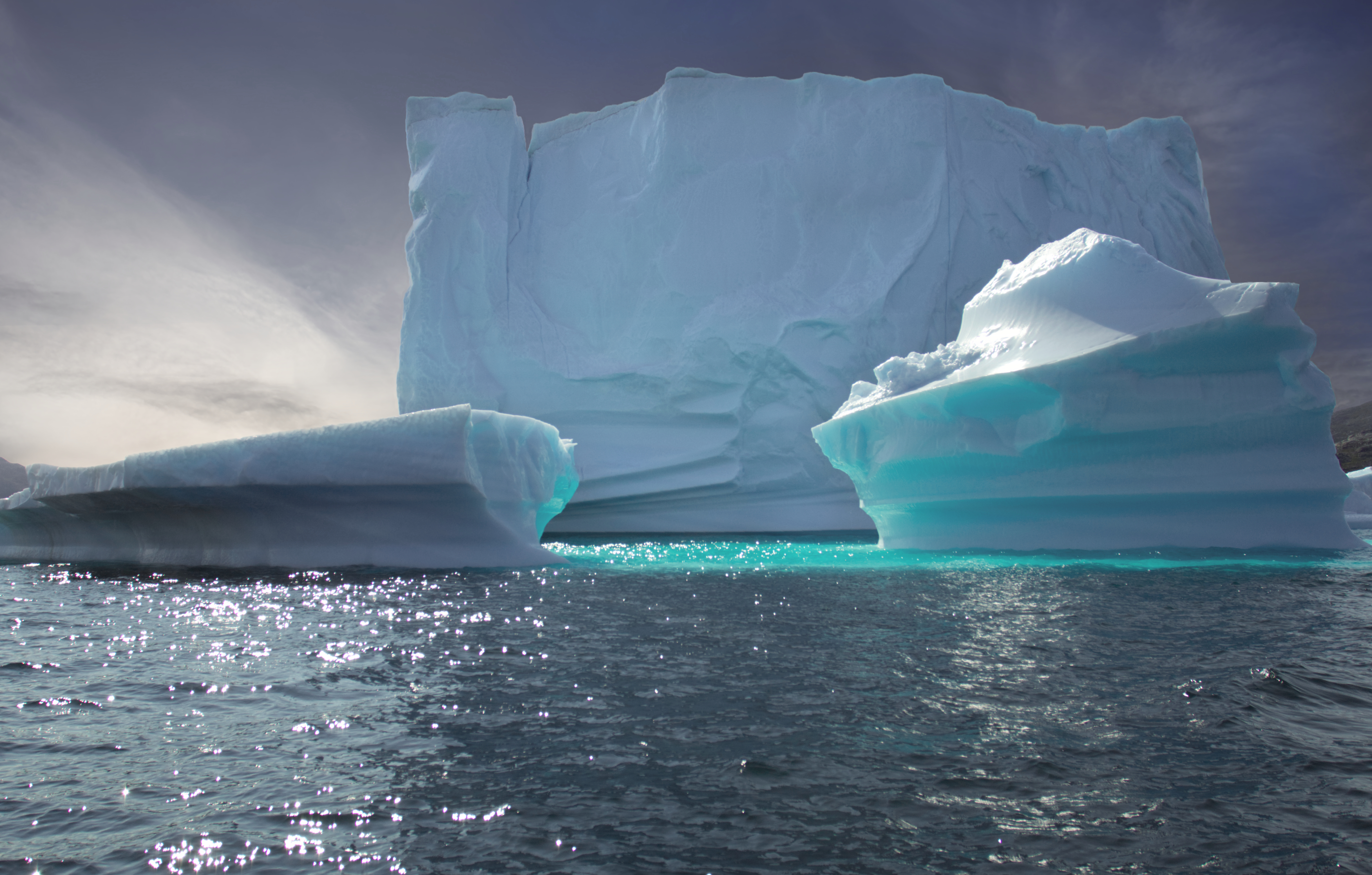
A second narrative is the cryosphere-and-global-systems storyline: Greenland’s ice sheet appeared in technical discussions on observation and modeling, including a talk explicitly on monitoring Greenland ice sheet dynamics. Here, Greenland is less a “prize” and more a planetary indicator—central to sea-level rise, ocean circulation, and global climate risk. Policy implications then tilt toward data sharing, monitoring continuity, and scientific cooperation as a form of risk management.
A third narrative is the governance-and-legitimacy storyline, which runs through discussions of Indigenous sovereignty and institutional participation. Rome’s program placed Indigenous sovereignty and observer governance in the same morning block—an arrangement that, intentionally or not, underscores that “who gets to speak for the Arctic” is not only a state-centric question. When Greenland is discussed purely as a strategic geography, governance legitimacy becomes harder; when Greenland is discussed as a community and a polity with agency, cooperation becomes more complex but also more credible.
These narratives coexist, and the friction among them is exactly what makes Greenland such a revealing test case. The policy temptation is to simplify: to treat Greenland as either climate science, or minerals, or sovereignty. Rome suggested the opposite lesson: durable cooperation requires acknowledging that these layers are inseparable—and designing participation rules that can hold them together without collapsing into either securitized exclusion or naïve openness.
What Rome ultimately clarified
Two practical takeaways stand out.
First, the “observer space” is where institutional innovation is most urgently needed. The Arctic Council and the broader Arctic governance ecosystem will continue to rely on non-Arctic capacity especially in research, monitoring, education, and technology. Rome’s turnout and packed agenda reflected that demand. The question is whether participation pathways can be made sufficiently transparent, predictable, and standards-driven to keep cooperation credible under geopolitical stress.
Second, credibility now comes from steady capacity, not episodic symbolism. This is where Italy’s hosting mattered: it showcased how a non-Arctic state can use institutions (research councils, ministries, universities, and structured forums) to create continuity of engagement and to signal reliability. For observers—including China and Asian stakeholders more broadly—the strategic implication is straightforward: influence will increasingly be earned through reproducible contributions (data, methods, infrastructure, training, and rule-compatible projects) and through demonstrated respect for Arctic governance norms, rather than through one-off high-visibility gestures.
Rome did not resolve the Arctic’s hardest disagreements. But it did something more foundational: it made visible the architecture of tomorrow’s debate—a debate less about whether non-Arctic actors should be present, and more about how their presence can be structured so that cooperation remains both possible and legitimate.
Close Encounters in the Gulf: Why Rules and Communication Matter