

The Strait of Hormuz is a critical maritime choke point bound by Iran, Oman, and the United Arab Emirates, connecting the Persian Gulf to the Arabian Sea. Chokepoints such as the Strait of Hormuz are narrow channels along widely used routes and when impassable, can result in substantial supply delays, a rise in shipping costs, and broader economic instability. As the only sea passage from the Persian Gulf to the open sea, it is one of the world’s most strategically significant transit routes for global energy flows.
The Strait of Hormuz is a crucial area. According to the U.S. Energy Information Administration (EIA), in 2024, around 20 million barrels per day, or about 20% of the global petroleum liquids, passed through the strait. Hormuz is also a critical channel for importers of food, medicines, and technological supplies to the Middle East.
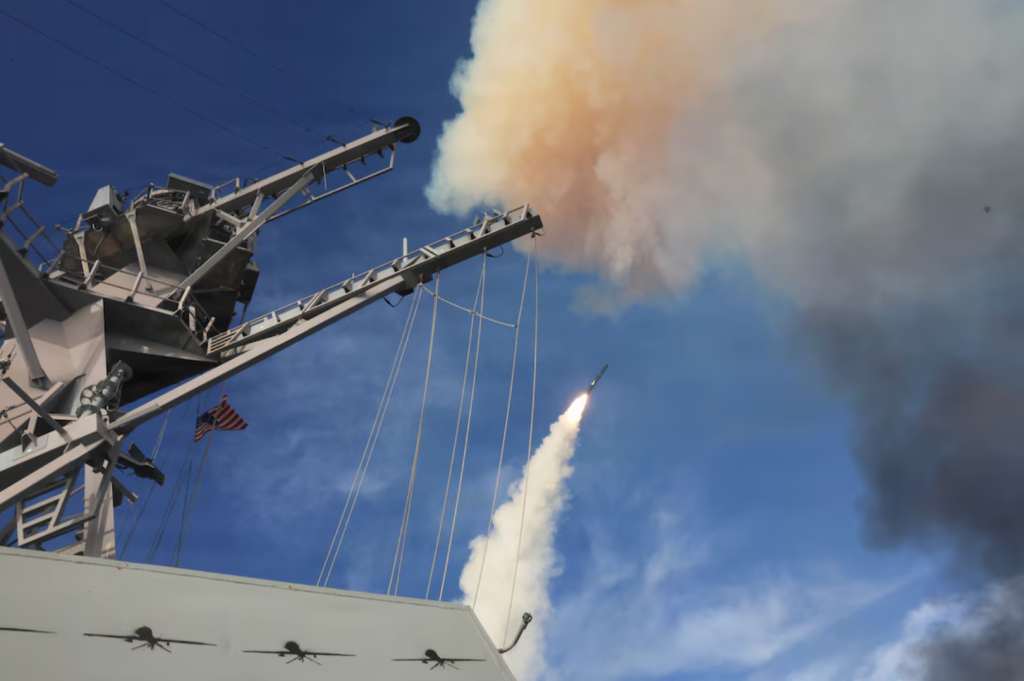
Beyond its economic importance, the Strait of Hormuz holds significant geopolitical value. Iran occupies an influential position along the strait because it controls much of the northern coastline and sits opposite Oman’s Musandam Peninsula at the narrowest part of the passage. As a result, Hormuz has long been a focal point of maritime developments and strategic signaling by regional and external powers.
Tensions between Iran, the U.S., and Israel escalated in early 2026 due to failed nuclear negotiations and military buildup within the region. On February 28, the United States and Israel carried out joint military strikes on Iran under “Operation Epic Fury”, with the stated objective of overthrowing Iran’s regime and crippling Iran’s nuclear and missile capabilities. In a televised statement, President Donald Trump claimed Iran was continuing to develop its nuclear program and missiles that had the capability to reach the U.S. In response, Iran launched retaliatory missile and drone attacks on U.S. military bases in the Middle East and Israel. An estimated 1500 people have been killed, including Iran’s Supreme Leader Ali Khamenei, with his son, Mojtaba Khamenei, succeeding him. This leadership change introduces additional uncertainty to Iran’s decision-making process.
On March 2, a senior Islamic Revolutionary Guard Corps (IRGC) adviser stated that the Strait of Hormuz was closed, warning that any vessel passing through would be attacked. These actions marked a shift from coercive signaling to active intervention, significantly affecting and increasing risks for international shipping and energy transport.
The global economic consequences of these disruptions became rapidly apparent. By March 8, benchmark Brent crude oil prices had surged past $100, their highest levels in four years, resulting in immediate supply concerns. This price escalation underlined the sensitivity of global energy markets to the instability in critical chokepoints. By the end of March, analysts with UN Trade and Development began to identify a critical temporal threshold, cautioning that failure to reopen the strait could further severe global energy shortages.
The conflict has entered its fourth week with continued reports of missile strikes, drone attacks, and maritime incidents across the region. This crisis has led many to characterize it as the most significant disruption to global energy supply since the 1970s energy crisis, when Arab countries imposed an embargo against Western nations and triggered widespread fuel shortages and global oil prices surging.
The Strait of Hormuz conflict will continue to have profound effects for global supply chains. Higher fuel costs have led to increased transportation expenses for maritime shipping, aviation, and contributed to inflationary pressures worldwide. Additionally, shipping insurance has jumped about 5% for vessels operating in or near the Gulf and some carriers have either rerouted or suspended operations altogether. These adjustments will further strain global shipping capacity and extend delivery timelines.
Energy-dependent economies in Asia, including Japan, South Korea, and India, would face acute exposure, potentially forcing reliance on strategic reserves or more expensive alternative suppliers. Furthermore, the implications for global supply chains extend beyond energy markets into various sectors. The International Rescue Committee warned that the combined closure of the Strait of Hormuz and regional airspace will severely constrain humanitarian logistics, impeding the delivery of essential goods including food, medicine, and emergency aid.
The evolving crisis surrounding the Strait of Hormuz highlights the intersection of geopolitical conflict and economic interdependence. As military escalation threatens the stability of this vital chokepoint, the risks extend far beyond the immediate region, affecting global energy security, trade flows, and supply chain resilience. The extent of disruption will depend on the duration and intensity of the conflict, as well as the ability of international actors to ensure freedom of navigation and prevent further escalation.
This Spotlight was originally released with Volume 5, Issue 3 of the ICAS MAP Handbill, published on March 31, 2026.
This issue’s Spotlight was written by Jules Montanez, ICAS Part Time Research Assistant Intern.
Maritime Affairs Program Spotlights are a short-form written background and analysis of a specific issue related to maritime affairs, which changes with each issue. The goal of the Spotlight is to help our readers quickly and accurately understand the basic background of a vital topic in maritime affairs and how that topic relates to ongoing developments today.
There is a new Spotlight released with each issue of the ICAS Maritime Affairs Program (MAP) Handbill – a regular newsletter released the last Tuesday of every month that highlights the major news stories, research products, analyses, and events occurring in or with regard to the global maritime domain during the past month.
ICAS Maritime Affairs Handbill (online ISSN 2837-3901, print ISSN 2837-3871) is published the last Tuesday of the month throughout the year at 1919 M St NW, Suite 310, Washington, DC 20036.
The online version of ICAS Maritime Affairs Handbill can be found at chinaus-icas.org/icas-maritime-affairs-program/map-handbill/.