

Research Associate
Manager, Trade ‘n Technology Program
Cover Image Source: Joe Ravi, CC 3.0
The U.S. Supreme Court’s recent decision to strike down President Donald Trump’s tariffs imposed under the International Emergency Economic Powers Act (IEEPA) marks a significant judicial constraint on executive trade authority. By a 6–3 vote, the Court ruled that the administration’s “fentanyl” and “reciprocal” tariff orders exceeded the powers delegated by Congress under the 1977 statute, which permits the president to regulate commerce during foreign-triggered national emergencies. The ruling invalidated a sweeping set of tariff measures targeting China, Canada, Mexico, and most U.S. trading partners. Yet the deeper significance of the Court’s decision lies less in its legal reasoning than in its political timing. The ruling arrived just weeks before Trump’s expected late-March visit to China and at a moment when midterm electoral considerations are beginning to sharpen. While the president retains meaningful tariff tools, the calculus surrounding their use is shifting.
The White House moved quickly to project continuity rather than retreat. Within days, the administration activated Section 122 of the Trade Act to impose a 10%global tariff, conflicting with earlier statements that the rate could rise to 15%. Officials indicated that further adjustments remain possible. On the surface, the episode suggested that legal setbacks would not derail Trump’s broader trade strategy. Tariffs, it seemed, would continue to serve as a central instrument of economic statecraft.
IEEPA had offered the administration unusual flexibility. It allowed for broad, rapid, and across-the-board tariff actions framed under the language of national emergency. The authority was not tied to specific industries, lengthy investigative processes, or narrowly defined statutory triggers. Its utility lay precisely in its speed and scope.
Without IEEPA, Trump’s tariff arsenal becomes more procedurally complex. Section 122 allows temporary tariffs of up to 15%, but only for 150 days unless extended by Congress. Section 301 investigations—such as those related to Phase-One deal fulfillment, intellectual property or fentanyl—require formal review processes and defined legal findings. Section 232 tariffs depend on national security determinations tied to specific sectors, such as semiconductors or pharmaceuticals. Section 338 permits duties of up to 50% against countries found to discriminate against U.S. commerce, but such measures carry significant diplomatic and political costs.
None of these tools is unusable. In fact, taken together, they provide ample authority for targeted escalation. But they are slower, narrower, and more visible. Escalation remains legally feasible—but it is procedurally noisier and politically less elegant.
The Court’s ruling also intersects with an evolving diplomatic calendar. The White House has confirmed that Trump plans to travel to China on March 31 for a three-day visit. Beijing has adopted a more cautious tone, stating only that both sides remain in communication regarding the trip. As in past high-level engagements, trade is expected to feature prominently in the discussions.
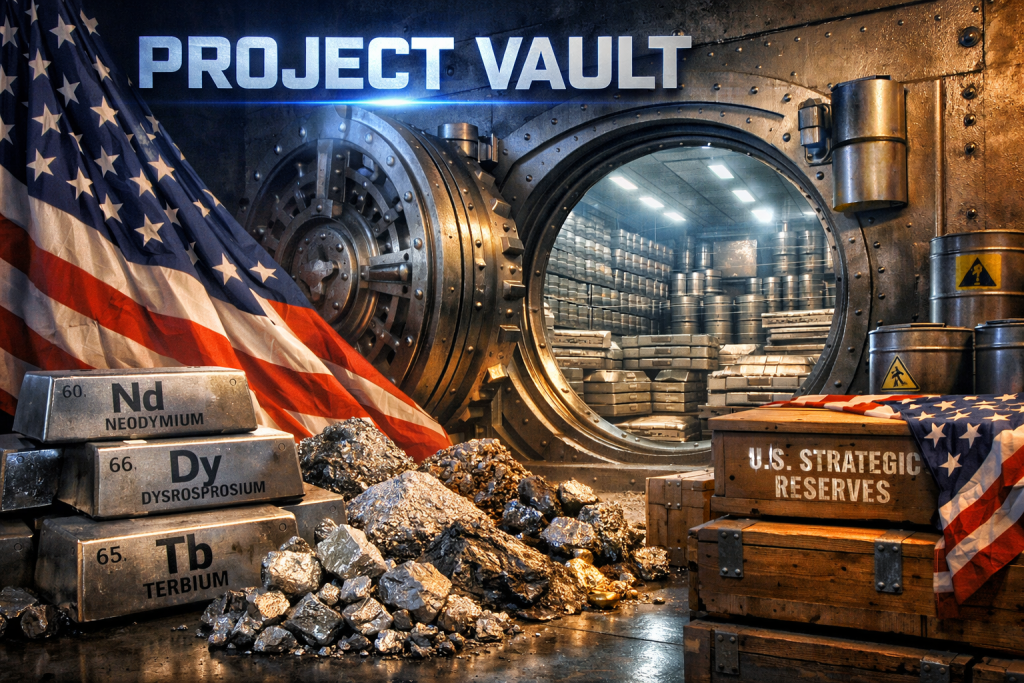
The visit follows months of tentative stabilization after the leaders’ meeting in Busan last October, where both sides agreed to a temporary trade truce. That détente sidestepped sensitive issues such as Taiwan but left unresolved structural disputes over tariffs, export controls, and technology restrictions. In recent weeks, additional complexities have emerged, including tensions over U.S. arms sales to Taiwan and the strategic leverage Beijing retains through rare earth supply chains.
For Trump, the China visit represents both opportunity and risk. A visible breakthrough—such as expanded Chinese purchases of U.S. agricultural products—could provide a politically useful narrative heading into the second half of the year. Yet overt escalation immediately before such a visit would complicate the optics of diplomacy. The president’s approach has long been transactional: tariffs as leverage, concessions as deliverables. The question is whether escalation now enhances or diminishes that leverage.
The answer increasingly depends on domestic political realities. A recent study by the Federal Reserve Bank of New York found that nearly 90% of the cost of the 2025 tariffs has been borne by U.S. importers and consumers. The finding directly challenges the administration’s longstanding assertion that foreign exporters absorb most tariff costs.
The White House reacted sharply. Economic adviser Kevin Hassett described the paper as “an embarrassment” and suggested that its authors should be disciplined. Whether one agrees with the Fed’s methodology or not, the episode underscores a broader point: tariff incidence has become politically sensitive.
In an environment where consumer affordability dominates voter concerns, the perception that tariffs function as a tax on American households carries electoral implications. Inflation has remained above the Federal Reserve’s target, and although recent data releases have been uneven, for American consumers, price sensitivity is unlikely to diminish. Implementation of any of Trump’s above-mentioned tariffs on China—particularly those that could extend to retail goods—risk amplifying those concerns.
If tariffs are increasingly viewed not as instruments of strategic competition but as contributors to domestic price pressures, their political utility narrows. “Tough on China” rhetoric may resonate symbolically, but voters often evaluate economic policy through the lens of grocery bills and consumer electronics rather than geopolitical rivalry.
This dynamic does not eliminate the appeal of firmness. Trump continues to frame trade imbalances as a national emergency and to argue that tariffs revive domestic manufacturing. His administration has signaled that investigations under Sections 301 and 232 remain active options. Moreover, some analysts note that existing China-specific tariffs rest on more durable statutory foundations than the now-invalidated IEEPA measures, meaning that relative tariff rates across countries could shift in ways that indirectly increase pressure on Beijing.
But escalation carries diminishing marginal returns. Broad-based tariff threats risk alienating allied trading partners and complicating supply-chain diversification efforts. They may also reinforce narratives that the United States is destabilizing global trade governance. For a president heading toward midterm elections, the electoral payoff of further confrontation is uncertain.
Diplomatic stabilization, by contrast, offers a different kind of dividend. Even modest agreements—such as expanded agricultural purchases or targeted tariff suspensions—could be framed domestically as pragmatic victories. They would also reduce the risk of renewed tit-for-tat retaliation in sensitive sectors, including rare earth minerals and advanced technology components.
The Supreme Court’s ruling did not dismantle Trump’s trade strategy. Tariff authority remains substantial. But the incentive structure surrounding its use has changed. Without the expansive umbrella of IEEPA, escalation becomes more incremental and more procedurally constrained. At the same time, consumer-price sensitivity and midterm calculations weigh more heavily on political decision-making.
As Trump prepares for his China visit, the central question is no longer whether additional tariffs are possible. It is whether additional escalation is politically optimal. A strategy built on confrontation may still be available. Yet in the current domestic environment, visible stabilization could yield greater electoral returns than renewed volatility.
Escalation remains an option. Restraint, however, may prove just as consequential.

The Institute for China-America Studies is an independent nonprofit, nonpartisan research organization dedicated to strengthening the understanding of U.S.-China relations through expert analysis and practical policy solutions.
1919 M St. NW Suite 310,
Washington, DC 20036
icas@chinaus-icas.org
(202) 968-0595
© 2026 INSTITUTE FOR CHINA-AMERICA STUDIES. ALL RIGHTS RESERVED.
What global firms should take note of after U.S. Supreme Court’s ruling on Trump’s tariffs