
Cover Image Credit: “Port of Los Angeles” by Rennett Stowe, CC BY 2.0
Within days of Washington unveiling its long-expected port fees for Chinese-linked vessels, Beijing answered with reciprocal fees on U.S.-flagged ships calling at Chinese terminals. On paper, the numbers are already appalling. The U.S. is estimated to collect an annual tariff bill of $34 million. In practice, the move is also a sharp reminder that the most operational layers of global trade—pilots, berths, quay cranes, invoices—are now fair game in a contest that once played out at higher altitudes. The U.S.-China trade dispute is increasingly turning into a structural clash that puts global supply chain stability at high risk.
The timing further defeats hope for trade stabilization. Ever since London and Madrid talks, American and Chinese negotiators have been trying to inch forward on a familiar menu: fentanyl tariffs, soybean purchases, rare earths control, and tech export control. Message from both capitals also signals that the dialogue is back, even if trust is not. President Trump even repeatedly signaled that a deal with Beijing is near, hinting at his upcoming trip to Asia for the APEC summit, where he will meet his Chinese counterpart in-person.
However, recent disputes over American expansion of entity list and China’s subsequent rare earths control expansion has left the world in shock as President Trump followed up with his 100% tariffs threat.
The tik-for-tat port fee further worsens the outlook of U.S.-China trade relations. It tells markets that the plumbing of trade can be tightened or loosened on political timelines, and that even when top-level atmospherics brighten, the ground truth at ports can darken with little warning.
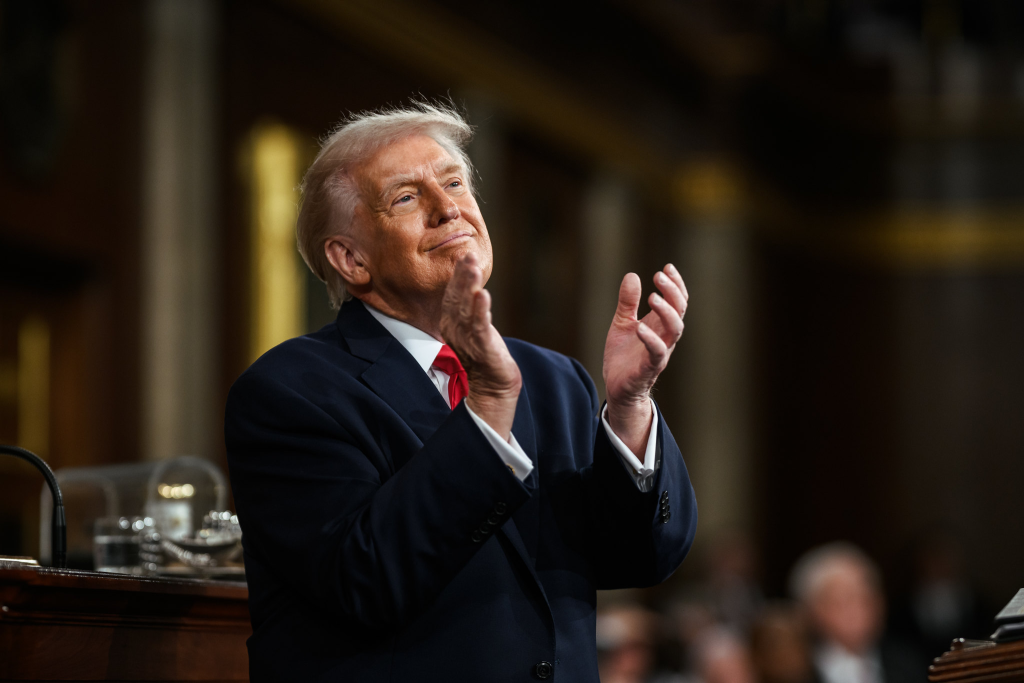
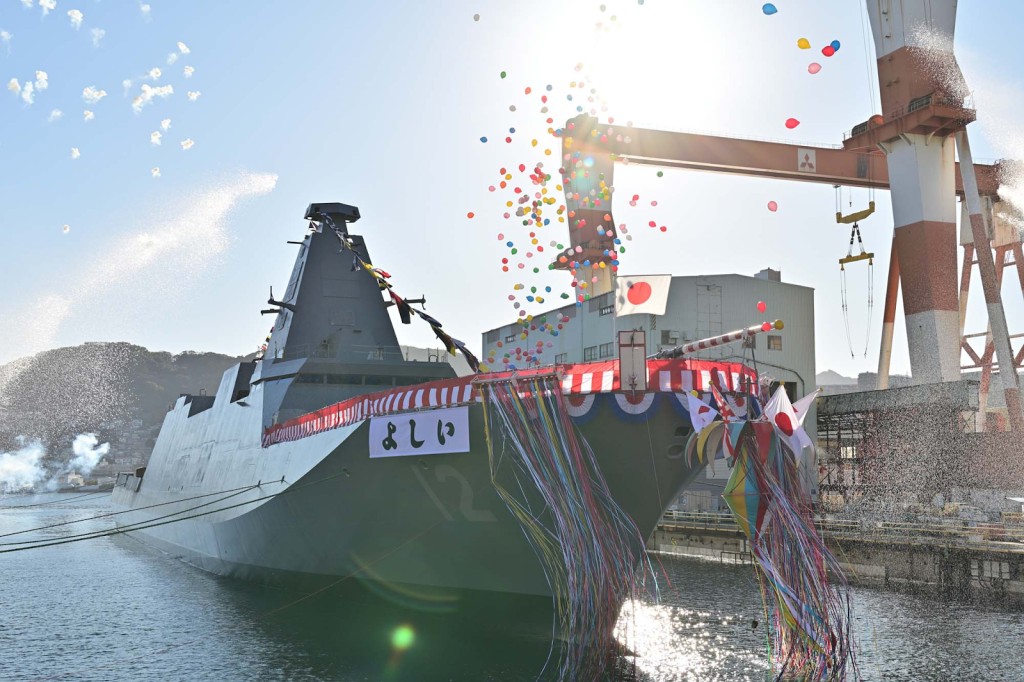
This is not simply escalation for its own sake. It is a window into the way economic statecraft is being redesigned in Washington. Since returning to office, Trump has presented shipbuilding as the symbolic core of a national revival, a story line legislatively reinforced by the Big Beautiful Bill’s mix of tax cuts and strategic spending pouring into shipbuilding. In Trump’s speeches, shipyards stand in for sovereignty; dry docks double as proof of reindustrialization. The difficulty—acknowledged quietly across the maritime sector—is that the United States builds a tiny fraction of the world’s commercial tonnage, and at a cost that makes civilian competitiveness unrealistic in the medium term. Faced with this stubborn arithmetic, the administration has reached for a more theatrical instrument: if you cannot outbuild competitors, you can at least out-bill them.
Port fees function neatly in that role. They are visible, administratively portable, and rhetorically defensible under the banner of “external revenue.” They create the impression of parity—America “charging back” against Chinese unfair trade practices—without forcing the hard choices that real industrial revival would require. For domestic audiences primed to equate friction with strength, a fee schedule is a quicker headline than a shipyard modernization program.
The irony of history is that it keeps coming back. Just a week before the port fee spat, the Trump administration blocked the Net Zero shipping emissions framework at the International Maritime Organization, citing it discriminated against the U.S. shipbuilding industry and labeled it “global green new scam tax on shipping.” While one week later, Trump hits China with “red-tape tax” that does not necessarily brings the U.S shipbuilding industry any real improvement – so long as they continue to rely on like-minded shipbuilding partners such as Japan and South Korea.
The political scaffolding for this approach has been years in the making. The Biden administration initiated the Section 301 investigation on China’s shipping and shipbuilding industry, while also put out, for the first time, the message that China’s port operations and equipment are threats to the U.S. Washington think tanks and congressional legislation have rehabilitated the “China port network” thesis—a view that Chinese-backed terminals abroad, from Gwadar to Panama, possess latent dual-use potential and therefore warrant suspicion even when they perform mundane commercial tasks. The evidentiary basis is uneven, but its policy utility is clear. If ports are reclassified as strategic hardware, measures that would otherwise look like protectionism suddenly acquire a national-security halo. Fees become “defensive tools,” restrictions morph into “risk mitigation,” and the burden of proof shifts to commercial operators to demonstrate innocence rather than for governments to prove harm.
A third layer completes the picture: market choreography. The Trump administration’s economic method has long favored the management of expectations over the manipulating market emotions. The instruments vary—tweets (or Truths), tariffs, waivers, hints of enforcement—and the target shifts from consumer tech to semiconductors to logistics. But the dance is familiar: create uncertainty, let prices fluctuate and risk premiums rise, then ease the pressure just enough to claim stewardship and claim achievement. Maritime shipping is exceptionally responsive to this choreography. The moment insurers model higher port costs or route delays, premia adjust; the moment carriers price turbulence into schedules, freight rates ripple through to retailers and, ultimately, to consumers. A port fee spat is, in that sense, a low-cost way to put a finger on the inflationary pulse—without having to make, or fund, structural investments.
For global trade, the costs accumulate quietly. Shipping is the circulatory system of the real economy; it moves iron ore and soybeans as surely as it moves holiday gifts and replacement parts. A few dollars at the berth rarely break a voyage, but the compounding effect of politicized charges, tightened inspections, and reinsurance haircuts does. Large carriers may buffer the shocks with network optimization; small exporters and developing markets cannot. And with both China and the U.S. imposing reciprocal port fees, there is no question that the U.S. consumers will pay for the final cost, just like for many other Trump tariffs..
The industry-level consequences will not be evenly distributed. In shipbuilding, orders are likely to continue clustering in East Asia, with procurement choices shaped not just by price and quality but by perceived political safety. In port governance, terminal operators will find themselves navigating not only customs codes but geostrategic checklists, as investment committees re-rate assets by exposure to U.S.–China policy swings. And in maritime finance, the rebranding of ports and carriers as “strategic actors” will raise the cost of capital, complicating refinancing cycles for otherwise healthy assets and accelerating the retreat of long-horizon private capital from the sector.
None of this precludes tactical progress at the negotiating table. It is entirely possible that working groups on opioids, soybean, rare earths and tech will produce deliverables that allow the White House to declare momentum. But the structure is moving in the opposite direction. Economic pragmatism, once the ballast of the bilateral relationship, no longer guarantees when the White House leans on spectacle to demonstrate resolve. The port-fee spat is a stress test for future global supply chain disruption: it reveals which parts of the system can be exploited further to achieve trade targets that can otherwise not be accomplished.
The uncomfortable truth for Washington is that escalation in maritime logistics is a poor substitute for rebuilding capacity. U.S. shipyards are too few, too old, and too expensive to benefit meaningfully from protective friction; exporters are too embedded in global schedules to welcome discretionary delay at foreign docks; and consumers are too price-sensitive to treat shipping volatility as costless politics.
If the administration genuinely wishes to revive American shipbuilding, the answer lies not in fee schedules or rhetorical parity but in sustained investment and modernization. Rebuilding the industrial base demands patient capital, workforce renewal, and cooperation with—rather than coercion of—international partners. The United States cannot tariff or tax its way back to maritime strength; it must design it. A policy that raises uncertainty at the pier may win a headline, but it weakens the supply chain resilience that any true industrial renaissance depends on.
Beijing’s challenge is different. It must ring-fence commercial conduct from security narratives without appearing naïve about real risks. That argues for doubling down on multilateral venues—IMO technical committees, standard-setting bodies, port state control regimes—where reciprocity is rules-based rather than retaliatory. It also argues for insulating shipping finance and marine insurance from the next wave of sanctions drift by diversifying credit channels and underwriting pools, so that political shocks do not automatically become liquidity shocks.
The prudent path forward is restraint—boring, quiet, rules-bound restraint. Supply chain stability, not symbolic confrontation, is the foundation of economic credibility for both Washington and Beijing, and for every economy that sails between them. In an era already strained by post-pandemic recovery, canal bottlenecks, and regional conflicts, maritime stability must again be treated as a global public good rather than a policy weapon.
Yet the political calendar rarely rewards prudence. As the 2026 midterms approach, “tough on China” remains a bipartisan reflex, and instruments like port fees are tempting precisely because they are legible to voters and reversible by administrators. The risk, therefore, is not a sudden crisis but the normalization of chronic coercions—frictions that slowly corrode the predictability on which global logistics depends.
When ports become frontlines, the ships still sail—but the rhythm of trade changes. Schedules stretch, capital hesitates, and the quiet efficiencies that once made globalization affordable begin to erode. Talks may continue and statements may reassure, yet the world will have absorbed a new lesson: that even the quay can be a battleground.
In the end, the case for restraint is not moral but mechanical. Shipping remains humanity’s cheapest way to move matter across distance—and its most fragile link in the production chain. If the world wants reliable manufacturing, stable prices, and durable trade, it must defend the infrastructure of interdependence. A fee here, a fee there, and soon the ballast is gone—the vessel still looks seaworthy, the wheel still visible, but the course no longer holds.

The Institute for China-America Studies is an independent nonprofit, nonpartisan research organization dedicated to strengthening the understanding of U.S.-China relations through expert analysis and practical policy solutions.
1919 M St. NW Suite 310,
Washington, DC 20036
icas@chinaus-icas.org
(202) 968-0595
© 2026 INSTITUTE FOR CHINA-AMERICA STUDIES. ALL RIGHTS RESERVED.

What global firms should take note of after U.S. Supreme Court’s ruling on Trump’s tariffs