
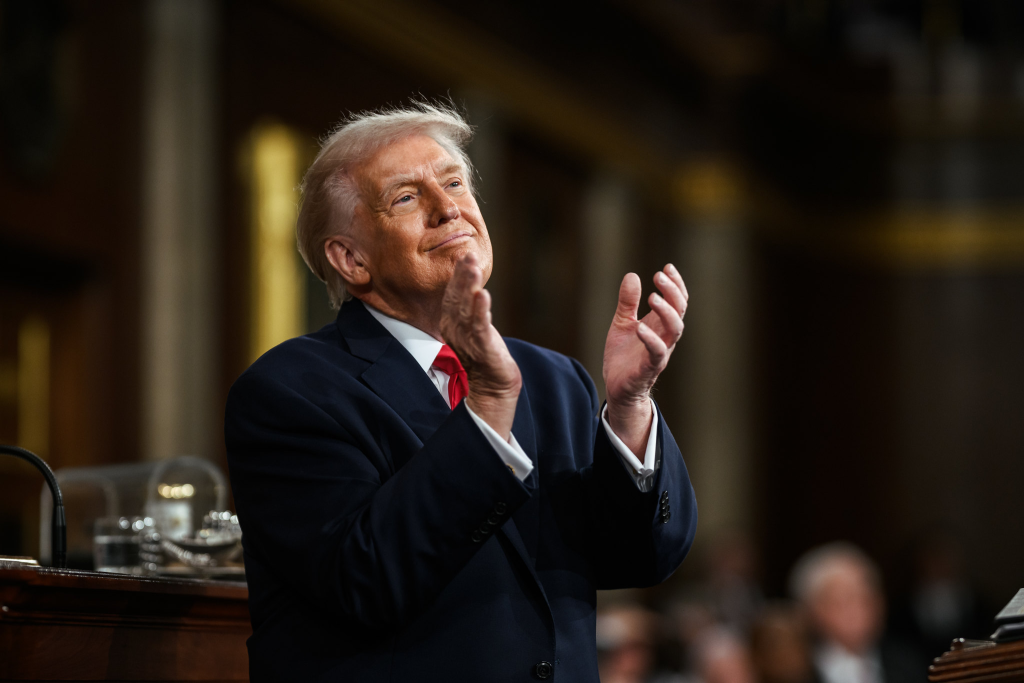

Cover Image Source: Royalty Free via Getty Images
The U.S. Supreme Court’s recent 6–3 ruling that President Donald Trump’s tariffs imposed under the International Emergency Economic Powers Act (IEEPA) were unlawful has triggered widespread discussion about whether U.S.–China trade tensions may now ease. The Court determined that IEEPA, a 1977 statute allowing the president to regulate commerce during foreign-triggered national emergencies, does not authorize the imposition of tariffs. Because the ruling declared the IEEPA-based “fentanyl” and “reciprocal” tariffs unlawful from the outset, many observers interpreted the decision as a structural weakening of the Trump administration’s trade leverage.
Such a conclusion, however, would be premature.
IEEPA had provided the administration with unusual flexibility. It enabled rapid, broad-based tariff actions framed under the language of national emergency, without lengthy investigations or industry-specific findings. Its removal narrows procedural options, but it does not eliminate tariff escalation. President Trump still retains multiple statutory instruments that can be deployed if the White House chooses to maintain pressure.
Section 122 of the Trade Act permits temporary tariffs of up to 15 percent for 150 days to address balance-of-payments concerns. The administration has already activated this authority to impose a 10 percent global tariff, with statements indicating it may rise to 15 percent. While the 150-day limit requires congressional extension for continuation, Section 122 allows immediate, across-the-board action in the short term.
Section 301 investigations remain available for issues such as intellectual property, compliance with prior trade commitments, or fentanyl-related concerns. Although procedurally slower, Section 301 tariffs can be durable and sector-specific once imposed. Section 232 allows tariffs based on national security determinations, and investigations into semiconductors and pharmaceuticals are already underway. Tariffs under this authority could directly affect technology supply chains. Section 338, though never used before, permits duties of up to 50 percent against countries deemed to discriminate against U.S. commerce. While politically sensitive, it remains legally available.
Taken together, these authorities mean that tariff risk has not disappeared. It has merely become more segmented and more procedurally structured. For Chinese exporters, the legal setback under IEEPA does not eliminate exposure to renewed or targeted tariffs in strategic sectors. The instruments are narrower than IEEPA, but they are still powerful enough to sustain pressure if Washington sees political advantage in doing so.
The Supreme Court’s ruling has also opened the door to potential refunds of IEEPA tariffs already paid. According to government data, importers had deposited approximately $129 billion in estimated duties under the IEEPA framework as of December 2025. Because the Court ruled that IEEPA does not authorize tariffs at all, companies that paid those duties now have a legal basis to seek recovery.
Before the ruling, the U.S. Department of Justice assured courts that it would reliquidate entries and issue refunds if the tariffs were declared unlawful. Courts relied on those assurances in declining to pause the tariffs during litigation, reasoning that businesses would not suffer irreparable harm because refunds would remain available.
However, recent statements by President Trump and Treasury Secretary Scott Bessent suggest that refunds may not be automatic. Trump has said the issue may “have to get litigated for the next two years,” while Bessent indicated the matter could take “weeks or months” to resolve. The administration has emphasized that refunds would occur only after a “final and unappealable decision,” language that could allow for further procedural delays.
Under U.S. customs law, the refund process depends heavily on whether imports have been “liquidated” or remain unliquidated. Many entries may still be pending liquidation, which could allow for adjustments if courts confirm the tariffs were unlawful. But entries already liquidated may require importers to file formal protests within strict statutory deadlines. If protests are denied, companies may need to pursue litigation in the U.S. Court of International Trade. That process can be lengthy and costly. Smaller and medium-sized enterprises, especially those that used simplified informal entry procedures, may face greater practical barriers to recovery.
Even where refunds are eventually granted – given that Congress Democrats are on the move to see that happen – payments would be made to the importers who directly paid the duties, not to downstream distributors or end consumers. Whether any recovered funds are passed through supply chains will be determined by commercial negotiations, not by automatic policy design.
For Chinese firms, the refund debate matters in two ways. First, it may affect ongoing pricing discussions with U.S. buyers who are seeking to recover past tariff costs. Second, the prolonged and uncertain litigation environment reinforces that legal victory does not necessarily translate into immediate commercial normalization.
The broader political context also remains fluid. President Trump is expected to potentially visit China in late March, and trade discussions are likely to feature prominently. A short-term stabilization—such as expanded agricultural purchases or limited tariff adjustments—remains possible. Yet any stabilization would likely be tactical rather than structural. The administration continues to frame trade imbalances as a national emergency and to argue that tariffs support domestic manufacturing.
At the same time, domestic economic pressures are shaping the debate. A recent study by the Federal Reserve Bank of New York found that nearly 90 percent of the cost of the 2025 tariffs was borne by U.S. importers and consumers. The White House strongly criticized the study, but the political sensitivity surrounding tariff incidence illustrates the domestic constraints facing further escalation. Consumer price concerns and electoral calculations may influence how aggressively remaining tariff authorities are used.
For Chinese exporters and supply chain operators, three conclusions are clear. Tariff volatility remains elevated despite the Court’s ruling. Sector-specific risks, particularly in technology-intensive and strategic industries, persist under Sections 301 and 232. And the legal process surrounding refunds is likely to be prolonged and procedurally complex. For other major U.S. trading partners, the implications are similarly mixed. Countries such as Japan and South Korea, which have reached framework understandings with Washington and pledged expanded investment in the United States, may find greater room to negotiate the pace and implementation of those commitments now that IEEPA-based pressure has been curtailed. Yet the underlying leverage has not disappeared. Meanwhile, Canada and the European Union remain exposed to tariff threats under alternative statutory authorities, meaning that the broader environment of uncertainty in U.S. trade policy continues to affect global supply chains. Especially for the EU, who has an unease with the U.S. over its digital service tax plan, may sooner or later reexperience the tariff threats from Washington.
The post-IEEPA landscape is narrower but not stable. For Chinese enterprises engaged in U.S. trade, the prudent assumption is not that tariff risk has ended, but that it has become more differentiated and legally structured. Strategic planning should account for continued policy volatility, possible short-term diplomatic stabilization, and the likelihood that legal and commercial adjustments will unfold gradually rather than suddenly.
The Supreme Court closed one chapter of tariff escalation. It did not close the book on U.S.–China trade friction.

The Institute for China-America Studies is an independent nonprofit, nonpartisan research organization dedicated to strengthening the understanding of U.S.-China relations through expert analysis and practical policy solutions.
1919 M St. NW Suite 310,
Washington, DC 20036
icas@chinaus-icas.org
(202) 968-0595
© 2026 INSTITUTE FOR CHINA-AMERICA STUDIES. ALL RIGHTS RESERVED.
Tariffs After the Court: Narrower Options and Shifting Incentives in U.S.–China Trade