
ICAS Bulletin (online ISSN 2836-3418, print ISSN 2836-340X) is published every other week throughout the year at 1919 M St NW, Suite 310, Washington, DC 20036.
The online version of ICAS Bulletin can be found at chinaus-icas.org/bulletins/.
– U.S. President Donald Trump said on September 19 that he expects to meet Chinese President Xi Jinping on the sidelines of the Asia-Pacific Economic Cooperation (APEC) Leaders’ Meeting in Gyeongju, South Korea, from October 31 to November 1.
– Prior to the announcement on the TikTok deal, the White House Press Secretary Karoline Leavitt on September 20 said that out of the seven seats on the board of the new entity, six would be held by American citizens.
– On September 23, Chinese Premier Li Qiang called for partnership with American business leaders at the UN General Assembly.
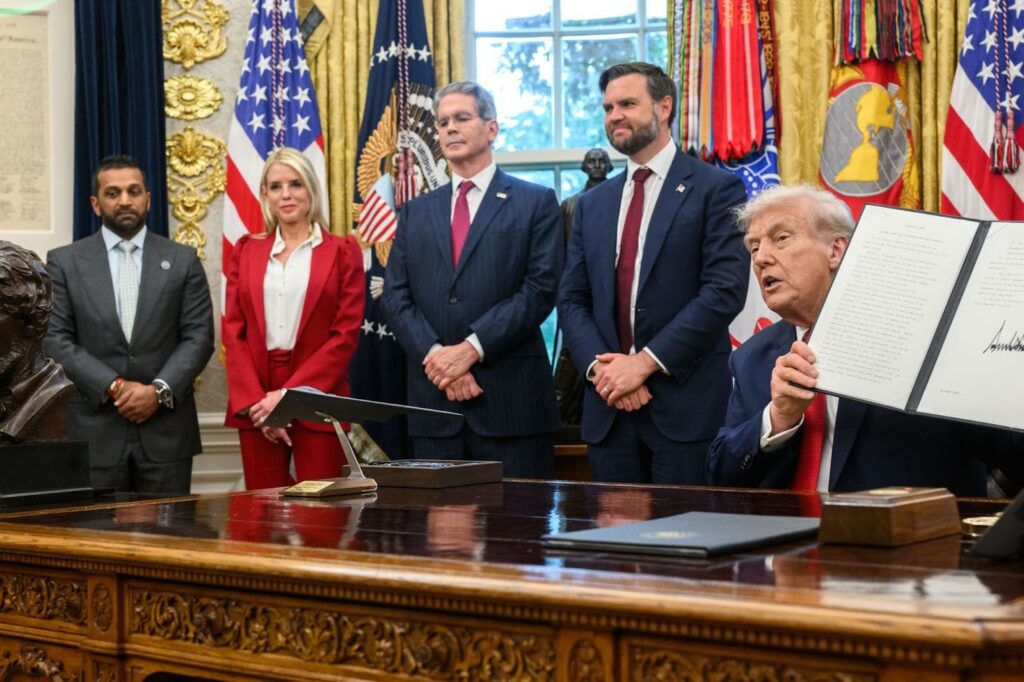
– On September 25, Trump signed an Executive Order that approved a deal to keep TikTok operating in the United States by creating a ‘TikTok US Data Security Joint Venture’ to be valued at $14 billion, and provides 120 days to finalize the arrangement.
– According to Trump, a group of investors, including private-equity firm Silver Lake, Oracle’s Larry Ellison, media moguls Rupert and Lachlan Murdoch, and the CEO of computer maker Michael Dell are expected to control around 50% of the stake, and 30% would be held by existing shareholders of ByteDance. ByteDance, the owner of TikTok U.S., would control “less than 20% of the entity” but collect over 50% of the profits from the platform’s operations.
– According to the White House, TikTok’s new entity would lease a copy of the algorithm from Chinese owner ByteDance, provide oversight and security, and retain control over all U.S. user data.
– On September 26, China’s Foreign Ministry Spokesperson Guo Jiakun responded to Trump‘s announcement on TikTok, saying that China respects the company’s wishes. He urged the U.S. to “provide an open, fair and non-discriminatory business environment for Chinese enterprises to invest in the United States.”
– On September 28, Vice President JD Vance asserted that the arrangement had “successfully separated this company from TikTok global,” adding that it would ensure that the “algorithm is not being used as a propaganda tool by a foreign government.”
Associated News References:
“JD Vance ‘Confident’ the U.S. Has ‘Successfully Separated’ TikTok from China Parent Company ByteDance,” CNBC, September 28
“ByteDance to Get About 50% of TikTok US Profit Under Trump Deal,”, Bloomberg, September 26
“China Reacts to Trump’s $14B TikTok Takeover,” Newsweek, September 26
“US-China Thaw Gains Momentum With TikTok Deal, Diplomatic Push,” Bloomberg, September 25
“TikTok’s Algorithm to be Licensed to US Joint Venture Led by Oracle and Silver Lake,” Associated Press, September 23
“Trump to Meet Xi in South Korea, Visit to China to follow,” The Hill, September 19
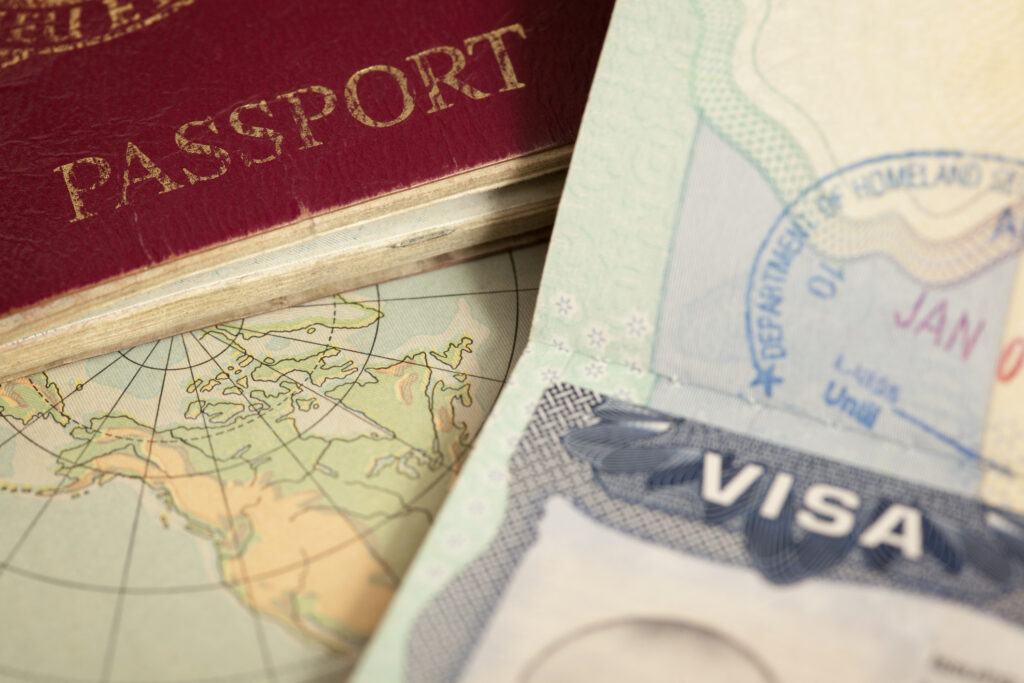
– Trump announced on September 17 a new $100,000 fee for H-1B visa applications as part of an effort to curb legal immigration and prioritize U.S.-born workers, a move that officials say targets tech companies but faces questions over implementation and legality.
– The White House clarified on the day after that Trump’s new $100,000 H-1B visa fee will only apply to new applicants outside the U.S. and not to current visa holders, despite widespread confusion following the announcement.
– U.S. Senators Chuck Grassley (R-IO) and Dick Durbin (D-IL) reintroduced a bipartisan bill to reform the H-1B and L-1 visa programs, proposing higher wage and hiring standards, stricter eligibility, and required public job postings to curb alleged employer abuses following the Trump administration’s new $100,000 H-1B fee.
– On October 1, China’s K visa, which was announced in August, took effect. It allows young foreign Science, Technology, Engineering, and Mathematics (STEM) graduates to work in China or live there without a job offer, marking Beijing’s latest move to attract global tech talent amid rising U.S.–China visa and trade tensions.
– The new H-1B visa fee disproportionately impacts India as Indian nationals account for 71% of approved H-1B visa holders in 2024. The policy threatens to curb the flow of Indian tech talent long vital to U.S. innovation and education, which could further strain U.S.–India relations by undermining economic, educational, and immigration ties.
Associated News References:
“H-1B visa shake-up crushes the American dream for Indian students,” NBC News, October 2
“China’s New K Visa Beckons Foreign Tech Talent as US Hikes H-1B Fee,” Reuters, September 29
“US Senators Reintroduce Bill To Reform H-1B, L-1 Visa Rules as Trump Fee Fuels Scrutiny,” Reuters, September 29
“White House Tries To Tamp Down Corporate Panic for High-Skill Visa Holders after Last-Minute Overhaul,” Politico, September 20
“Trump To Announce $100k Fee for H-1B Specialty Visas,” Politico, September 19
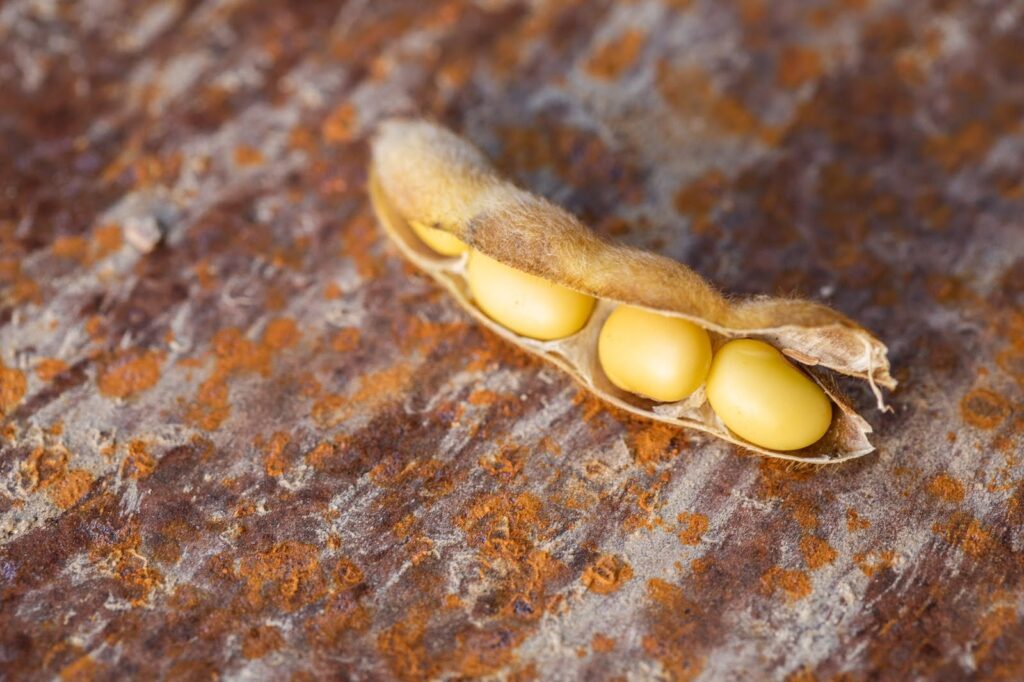
– As of September 28, China still has not purchased any U.S. soybeans since May, and has been pivoting towards South American suppliers such as Brazil and Argentina.
– After Argentina temporarily suspended its soybean export tax on September 22, China bought at least 10 cargoships of Argentine soybean weighing 65,000 tons for November shipment on the day after, a move that further sidelined U.S. farmers from their top export market.
– On September 23, Trump said he plans on a $20 billion U.S. financial rescue package for Argentina to support President Javier Milei’s market-liberal reforms and stabilize the peso.
– A leaked text exchange on the same day revealed that U.S. Agriculture Secretary Brooke Rollins warned Treasury Secretary Scott Bessent that China’s rapid purchase of Argentine soybeans, enabled by Washington’s planned bailout for Buenos Aires, was “highly unfortunate” because it would further depress U.S. soy prices and strengthen Beijing’s leverage.
– The American Soybean Association on September 24 condemned the Trump administration’s plan to bail out Argentina after the country waived export taxes and sold 20 shiploads of soybeans to China, warning that the move deepens U.S. farmers’ losses amid collapsing prices and ongoing Chinese tariffs while urging the administration to secure an immediate soybean trade deal with China.
– China’s Commerce Ministry on September 24 urged the U.S. to lift the “unreasonable tariffs” to create conditions for expanding bilateral trade, saying progress on soybean purchases depends on Washington’s actions as trade talks remain stalled and Chinese buyers continue sourcing from South America.
– Republican senators announced on September 30 after a briefing with U.S. Ambassador to China David Perdue that Beijing does not plan to resume purchases of American farm goods anytime soon as exports dry up, aid remains uncertain, and frustration grows among Trump’s rural supporters ahead of the 2026 midterm elections.
– Trump posted on Truth social on October 1, saying that he would confront President Xi at the upcoming APEC summit over China’s refusal to buy U.S. soybeans out of “negotiating reasons only”.
– On October 5, Trump is preparing a major aid package for U.S. soybean farmers hurt by China’s ongoing boycott of American soybeans using tariff revenue to support farmers, while Washington is still seeking a trade deal with Beijing.
– U.S. soybean farmers who are unable to sell to China due to ongoing tariffs, are scrambling to find alternative buyers in smaller markets like Nigeria, Vietnam, and Bangladesh, but these efforts have failed to replace lost Chinese demand, leaving farmers facing steep losses, low prices, and worsening economic pain across rural America.
Associated News References:
“US Soybean Farmers, Deserted by Big Buyer China, Scramble for Other Importers,” Reuters, October 3
“Trump Plans Aid Package for US Soybean Farmers While Seeking Trade Deal with China,” Associated Press, October 5
“Trump Vows to Confront China Over Refusal to Buy US ‘Soybeans,” Bloomberg, October 1
“Trump Says China’s Xi Using Soy as Negotiation Tactic Ahead of Talks,” Reuters, October 1
“US Lawmakers Give Up on China Resuming Crop Purchases for Now,” Bloomberg, September 30
“Candid Photo of Scott Bessent’s Phone Reveals Administration’s Concern about Two Key Trump Policies,” CNN, September 30
“China Weaponizes Ag Imports To Target Trump and US Farmers,” Politico, September 28
“China Signals That Purchases of US Soybeans Hinge on Tariff Removal,” Reuters, September 25
“ASA Responds to Argentina Soybean Actions,” American Soybean Association, September 24
“US Ready To Support Argentina with $20 Billion Swap Line, Bessent Says,” Reuters, September 24
“Exclusive: China Buys Argentine Soybeans after Tax Drop, Leaving US Farmers Sidelined,” Reuters, September 23
– Warning of rising tensions, Russian Foreign Minister Sergey Lavrov told the UN General Assembly on September 27 that any Western aggression would trigger a “decisive response,” condemning NATO airspace violations and U.S. military actions near Venezuela while signaling Moscow’s willingness to maintain dialogue with Washington.
– The U.S. rejected proposals for international AI oversight at the UN, stressing national sovereignty over global regulation. China and others backed the UN’s new Global Dialogue on AI Governance to coordinate global cooperation.
– UN sanctions on Iran will be reinstated after a Russia-China bid to delay them failed. The E3 said Tehran ignored nuclear concerns, while Iran accused the U.S. and Europe of betraying diplomacy. The renewed sanctions restore bans on arms sales, uranium enrichment, and missile activity.
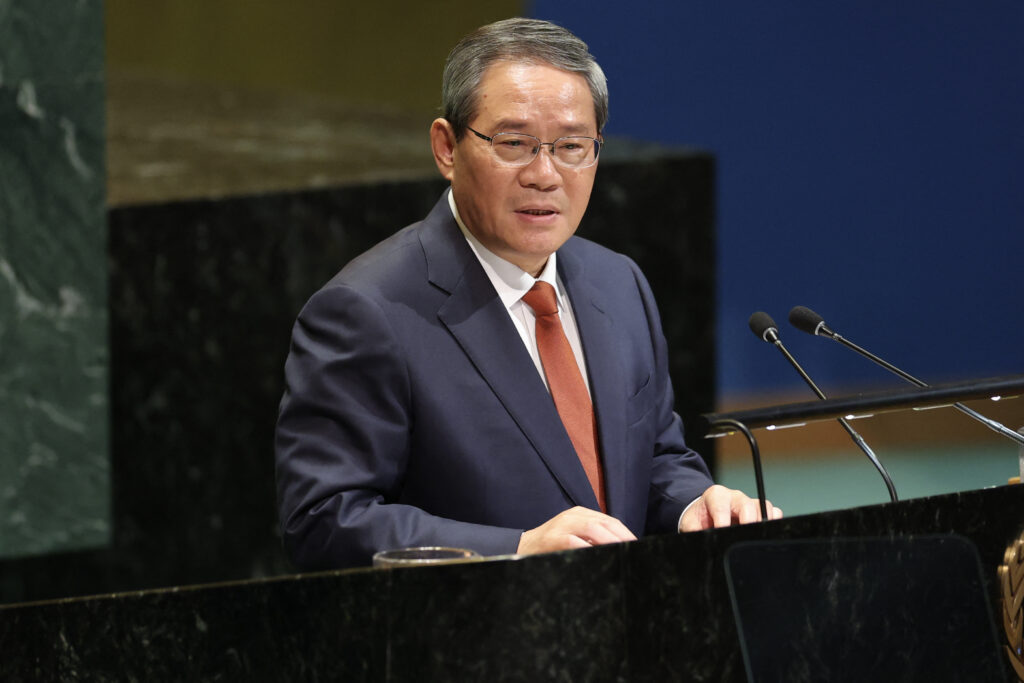
– At the U.N. General Assembly on September 26, Chinese Premier Li Qiang sought to position Beijing as a defender of global order and multilateralism, contrasting China’s openness with what he called rising U.S. unilateralism under Trump. Li emphasized China’s role in peace efforts and climate action while calling on developing nations to “oppose bullying and hegemony.”
– Trump praised Brazil’s President Lula despite tariff tensions and announced a $20 billion U.S. swap line to stabilize Argentina’s peso, a move seen as strategically tied to cooperation on minerals, technology, and potential export controls on Chinese-linked sectors. Canada and Mexico also agreed to deepen trade ties ahead of the USMCA review.
– China set its first absolute emissions-cut target at 7–10% below peak by 2035 and pledged to multiply wind and solar capacity, with Xi urging stronger climate action, implicitly criticizing U.S. retreat from the Paris Agreement. Despite new pledges from the EU, Australia, and others, the world remains off track for the 1.5°C goal ahead of COP30 in November 2025.
Associated News References:
“Russia tells West: any aggression will be met with ‘decisive response’,” Reuters, September 28
“U.S. rejects international AI oversight at U.N. General Assembly,” NBC News, September 27
“UN sanctions on Iran loom after vote to delay fails,” Reuters, September 27
“China’s Premier Seeks to Cast Beijing as Defender of International Order,” The New York Times, September 26
“UNGA Deals Latin America Some Surprises,” Foreign Policy, September 26
“China leads nations with new climate plans, defying US climate denial,” Reuters, September 25
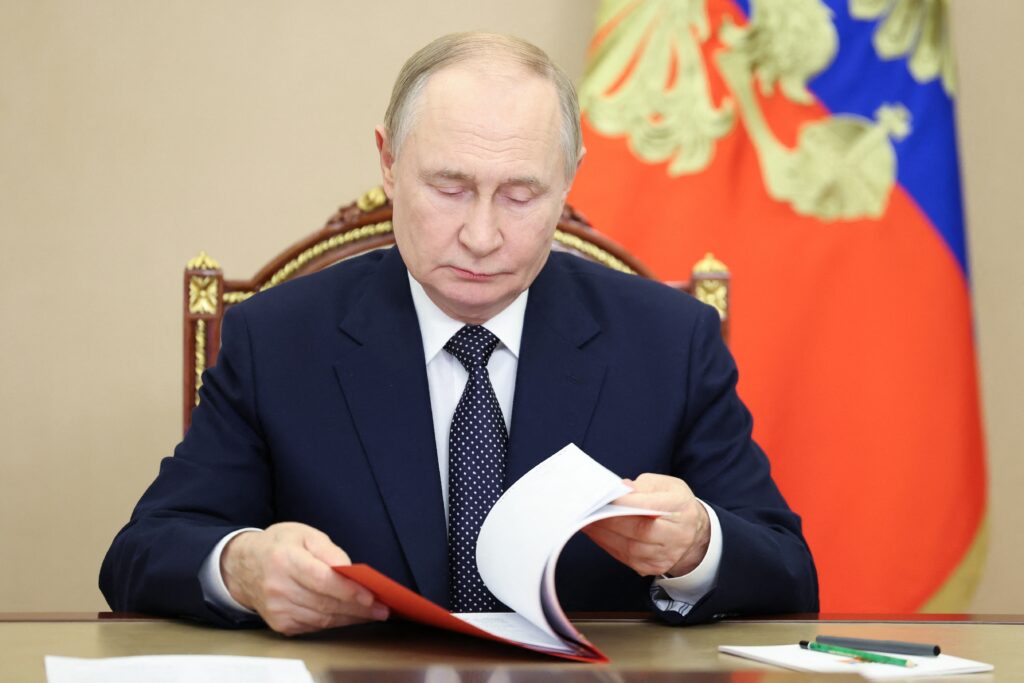
– On October 6, the Kremlin welcomed Trump’s support for extending the New START nuclear treaty, raising hopes of preserving the last major U.S.–Russia arms pact before its February 2026 expiration. President Putin, who first proposed the extension in September, called it vital for stability and suggested future talks could include China, though Beijing has declined.
– On October 3, the Philippines welcomed a U.S. Senate resolution reaffirming the Mutual Defense Treaty and condemning China’s aggression in the South China Sea. The measure urges Trump to take necessary actions to support Manila amid rising maritime confrontations, underscoring Washington’s continued security commitment to its regional ally.
– Amid ongoing reports of Sino-Russian cooperation, Ukraine’s intelligence agency alleged on October 4 that China was sharing satellite data to aid Russian missile strikes in Ukraine, including at sites with foreign investment.
– On September 29, Trump said the U.S. is “trying” to retake Afghanistan’s Bagram Air Base, but analysts warned the Taliban and China would prevent any U.S. return given Beijing’s deepening influence and mining interests in the country.
– On September 29, the Pentagon urged U.S. defense contractors to significantly increase missile production, focusing on 12 key systems to address stockpiles and improve readiness for a potential conflict with China.
Associated News References:
“Kremlin welcomes Trump’s comments to extend nuclear arms pact,” ABC News, October 6
“US Senators Reaffirm Defense Treaty in Warning to China,” Newsweek, October 6
“China provides intelligence to Russia on Ukraine targets, Ukrainian intelligence says,” Reuters, October 5
“China won’t let Trump take Bagram Air Base back from the Taliban without a fight, expert warns,” Fox News, September 29
“Pentagon urges missile makers to double output for potential China conflict, WSJ reports,” Reuters, September 29
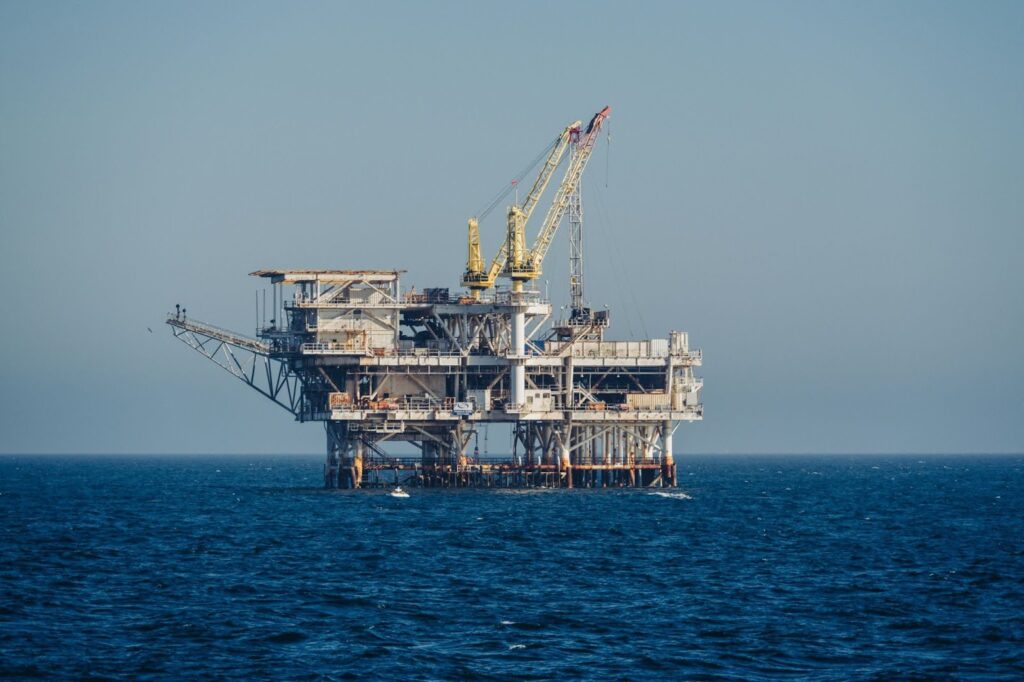
“IEA Trims Renewables Outlook as US Policy Shifts And China Auction Reforms Weigh,” Reuters, October 7
“World Bank Raises China Growth Forecast To 4.8% Despite U.S. Trade Tensions,” CNBC, October 7
“Mercedes-Benz Third Quarter Sales Drop, Dragged By China and US,” Reuters, October 7
“China Plays to Trump’s Soft Spot for Offering Investments in the US,” Bloomberg, October 6
“US FCC To Vote To Tighten Restrictions on Chinese Telecom Equipment,” Reuters, October 6
“Exclusive: China’s Banks Lend To Saudi Gas Project While Its Funds Sit out of Blackrock-Led Deal, Sources Say,” Reuters, October 2
“Taiwan rejects U.S. proposal for ’50-50′ chip production, says trade talks focused on tariffs,” CNBC, October 2
“China Opens World’s Highest Bridge, Breaking Its Own Record,” NBC News, September 29
“Under Trump, US cedes its share of China’s beef market to Australia,” Reuters, September 29
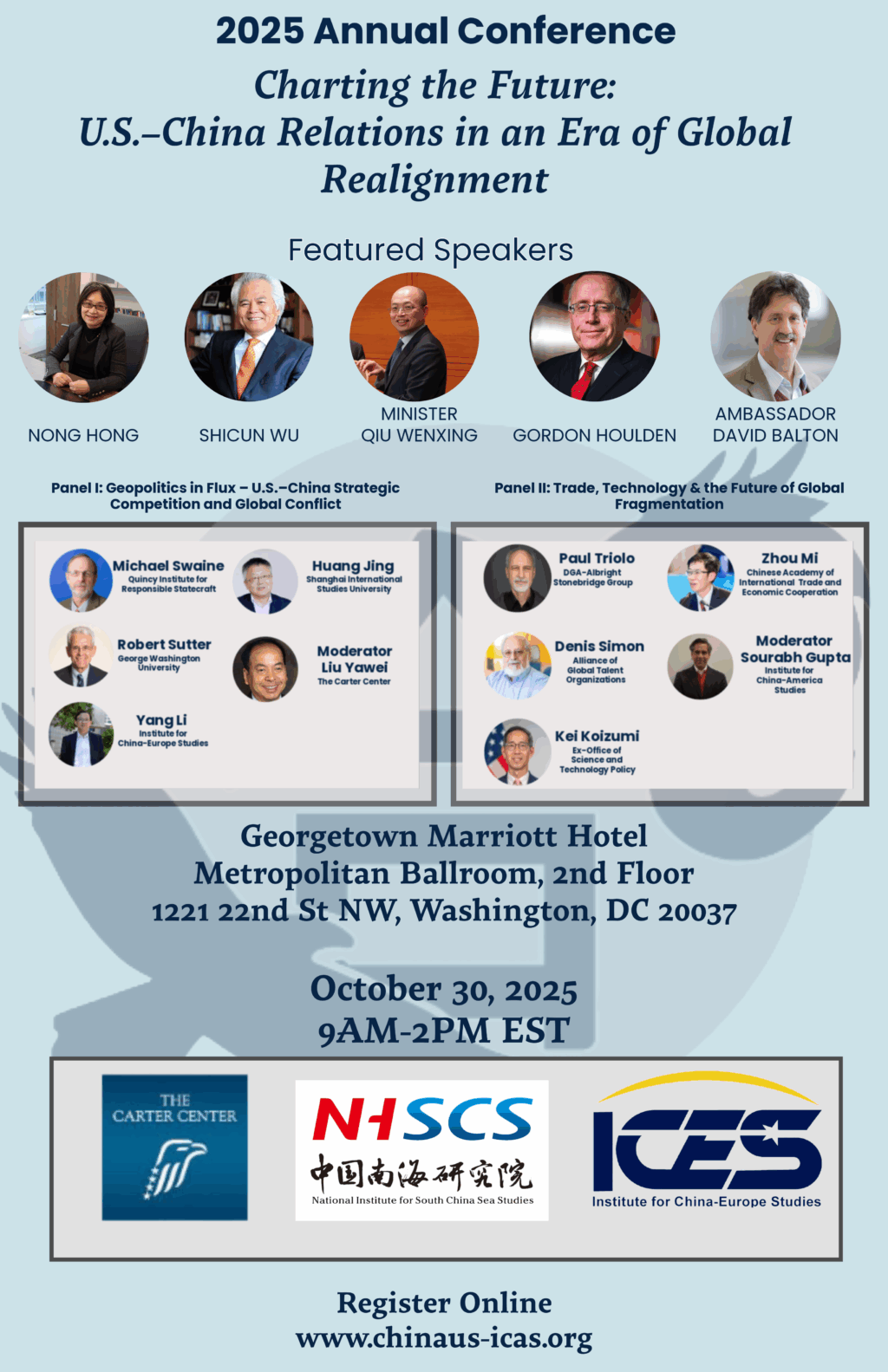
Charting the Future: U.S.–China Relations in an Era of Global Realignment
Hosted by ICAS
October 30, 2025
9:00AM-2:00PM
ICAS will hold its 2025 Annual Conference in-person at the Georgetown Marriott Hotel in Washington, D.C. on Thursday, October 30, 2025!
Featuring a keynote by Minister Qiu Wenxing (Embassy of the People’s Republic of China in the United States), a luncheon speech by Ambassador David Balton (Harvard Kennedy School’s Belfer Center Arctic Initiative), and two expert panels, this year’s conference will assess the evolving U.S.–China relationship amid global realignment, shifting power dynamics, and the early months of the Second Trump Administration. Lunch will be provided to registered guests.
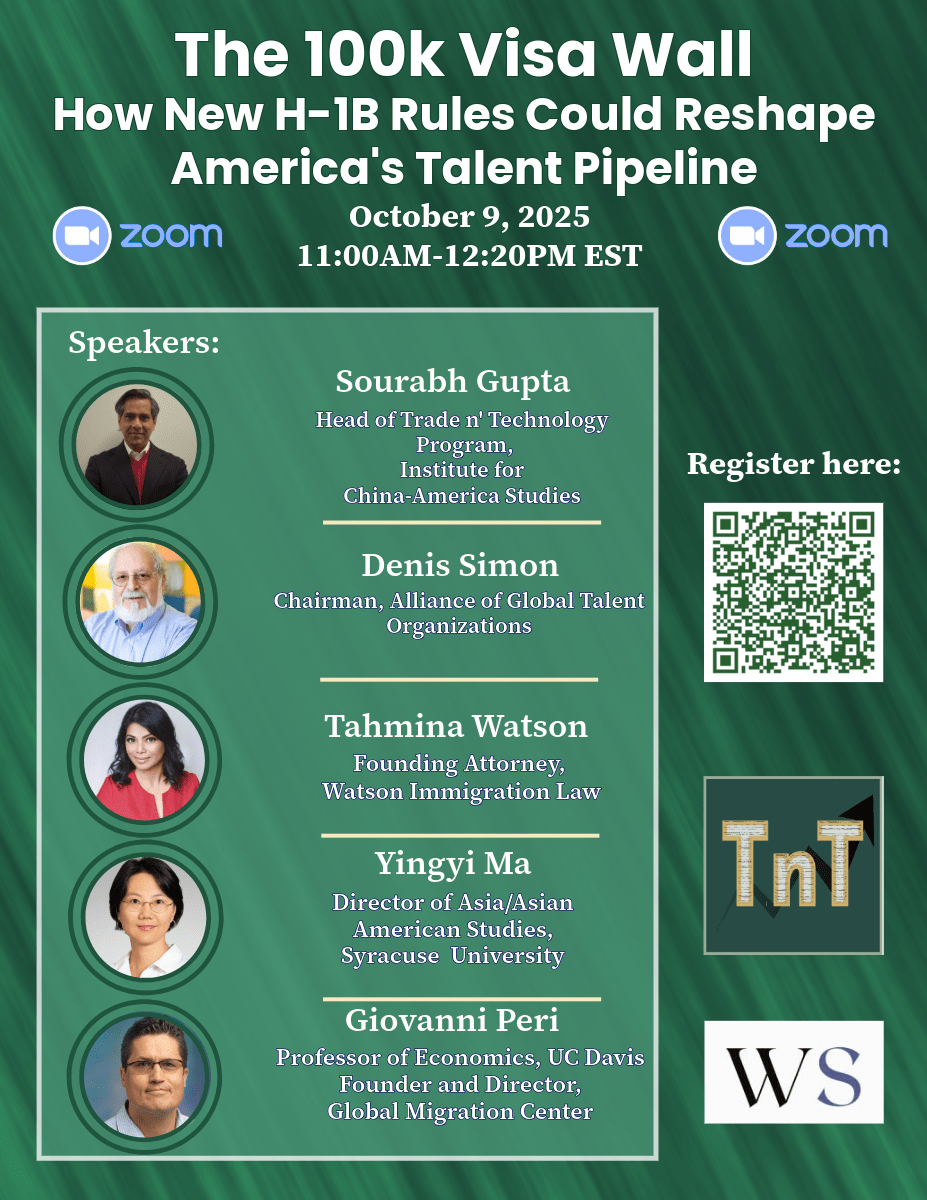
The 100k Visa Wall: How New H-1B Rules Could Reshape America’s Talent Pipeline
Hosted by ICAS x World Salon
October 9, 2025
11:00AM-12:20PM
On Thursday, October 9, ICAS x World Salon is proud to host an online discussion about the change in status quo of H-1B visas. This discussion will feature Mr. Sourabh Gupta as Moderator, and Dr. Denis Simon, Ms. Tahmina Watson, Dr. Yingyi Ma, and Dr. Giovanni Peri.
Over the past several decades, the H-1B visa program has served as a key pathway for bringing highly skilled professionals into the U.S. workforce, particularly in technology, engineering, and research. It has enabled companies to fill critical gaps, support innovation, and strengthen global competitiveness. However, the program has also long been criticized for potential misuse, wage suppression, and lack of transparency. Comparisons between its benefits and risks have become even more salient in today’s tight labor markets and evolving geopolitical competition.
The 100k Visa Wall: How New H-1B Rules Could Reshape America’s Talent Pipeline
Hosted by ICAS x World Salon
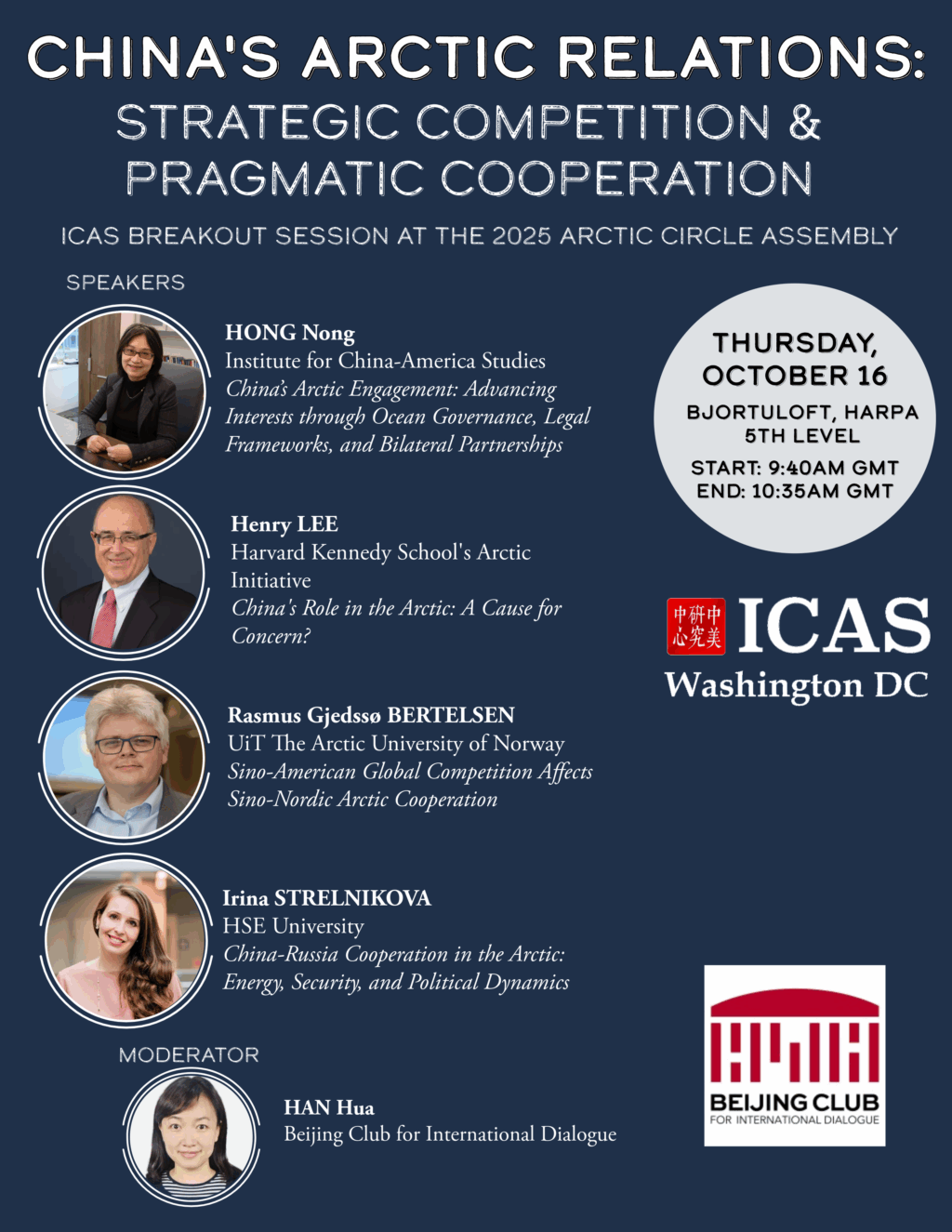
October 16, 2025
9:40AM-10:35AM GMT
ICAS is proud to present this breakout session at the 2025 Arctic Circle Assembly in Reykjavik, Iceland at the Harpa Concert Hall and Conference Center in conjunction with the Beijing Club for International Dialogue to discuss China’s Arctic ambitions.
Featured speakers will be Dr. Nong Hong, Executive Director and Senior Fellow at ICAS, Prof. Henry Lee of the Harvard Kennedy School’s Arctic Initiative, Dr. Rasmus Gjedssø Bertelsen of UiT The Arctic University of Norway, and Dr. Irina Strelnikova of HSE University. The breakout session will be moderated by Ms. Han Hua of Beijing Club for International Dialogue.
How State-Backed Investment Shapes the New Resource Diplomacy
By Nong Hong
October 7, 2025
On October 6, Reuters reported that the Trump administration is considering converting a US$50 million Defense Production Act grant into an equity stake in Critical Metals Corp, the company developing Greenland’s Tanbreez rare earth project. Washington had previously supported the mine through defense grants and export–import loans. Now, it is exploring a direct government shareholding—potentially up to 8 percent—marking a notable shift in how the United States approaches resource competition, from funding research to buying strategic leverage…
Can Multilateralism Survive Deep Seabed Mining Race?
By Nong Hong
September 26, 2025
The deep seabed is becoming a new arena of great power competition. China has consolidated its role as the largest contractor in the International Seabed Authority, while the United States, under President Donald Trump, is moving toward unilateral licensing. These developments highlight the growing tension between national approaches and multilateral governance…
On Friday, September 26, 2025, Senior Fellow Sourabh Gupta was quoted by South China Morning Post on Chinese Premier Li Qiang’s visit on sidelines of UNGA.
On Tuesday, September 23, 2025, Senior Fellow Sourabh Gupta was interviewed by CGTN America’s The World Today on UN General Assembly.