Its significance lies not in any denial of competition, but in the effort to place competition within a more explicit set of political limits and strategic expectations.
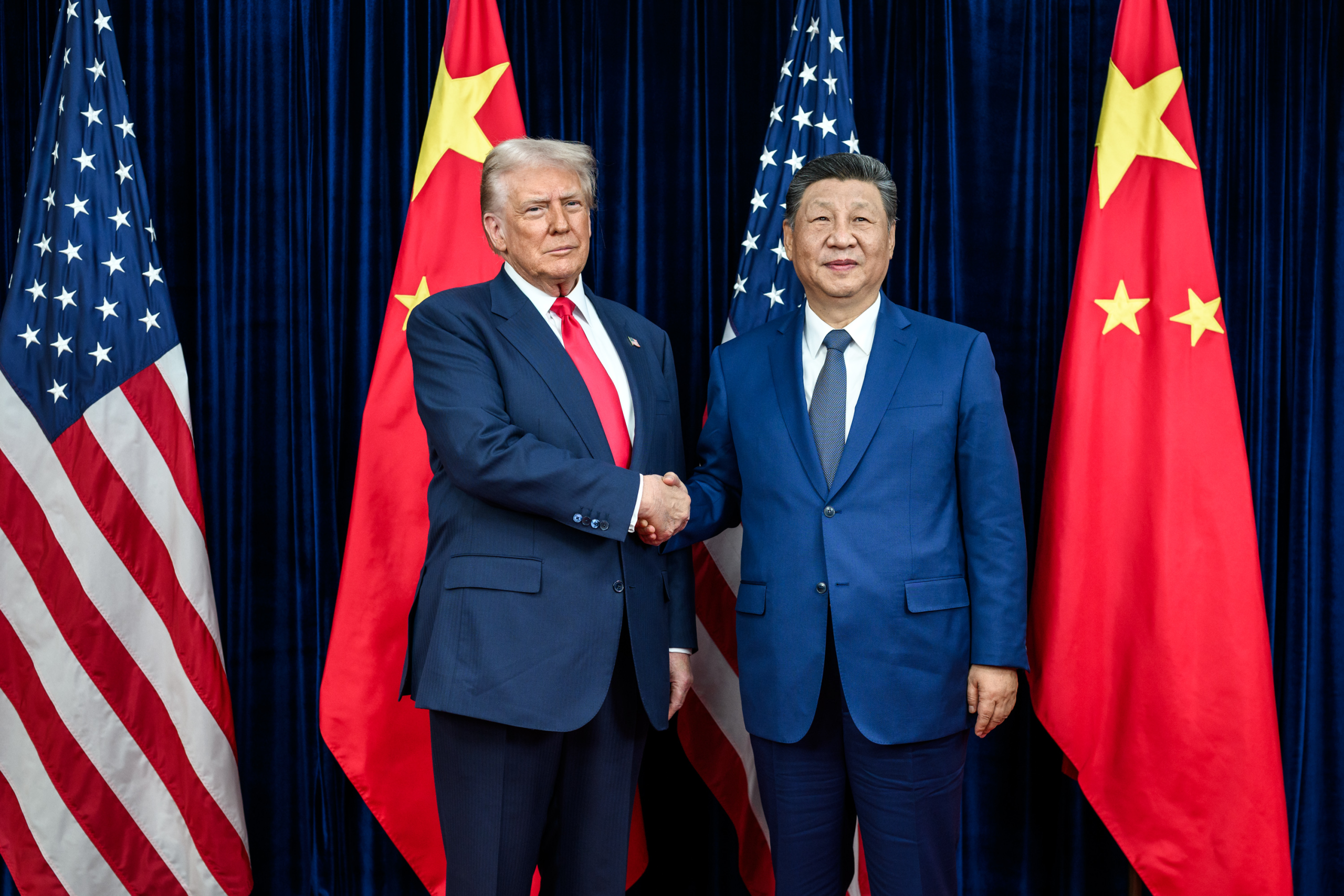
This is also one reason the summit could carry significance beyond its immediate outcomes. Discussion in Washington has frequently approached Trump’s China diplomacy in transactional terms, with particular emphasis on visible gains, leader-level engagement and tactical advantage.
Reporting around the summit broadly reflected that orientation. In one account of the US readout, the emphasis fell on market access,
agricultural purchases, the Strait of Hormuz and possible Chinese purchases of US energy. Another summary suggested a similar focus on concrete outcomes and the reduction of immediate risk rather than on a broader conceptual framing of the relationship.
That contrast matters insofar as the language used to describe the relationship could also influence how subsequent actions are interpreted. This is especially relevant in relation to Taiwan, which figured prominently in Xi’s message. In one account of the exchange, Xi warned that
mishandling Taiwan could place the relationship in serious difficulty.
The point is analytically important because it indicates that any discussion of “
strategic stability” in the bilateral relationship is likely to be judged, in practice, by its implications for those issues that Beijing associates most closely with its core interests. If the formulation is to acquire practical meaning rather than remain purely rhetorical, Taiwan is likely to be among its earliest and most consequential tests.
Seen in this light, the Chinese formulation appears to have both a stabilising and a frame-setting dimension. It is stabilising insofar as it reflects a desire to reduce volatility at a time of wider geopolitical strain, economic uncertainty and
persistent strategic suspicion.
At the same time, it is also concerned with how the bilateral relationship is conceptually organised. Rather than leaving the relationship to be understood primarily through
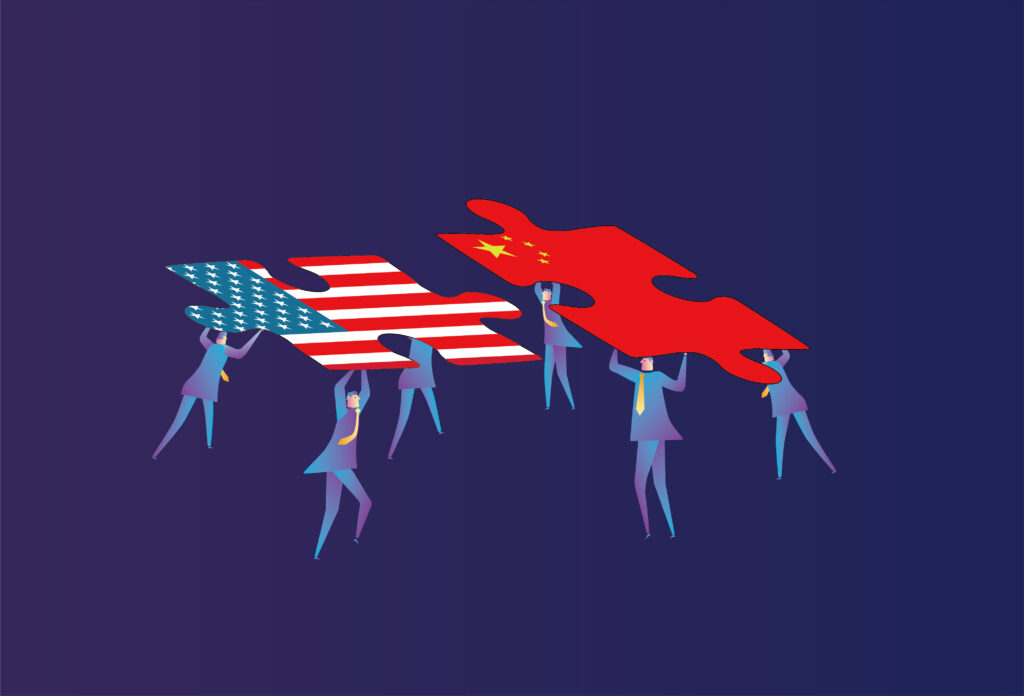
issue-specific bargaining, the formulation points towards a broader framework within which such bargaining would take place under more explicit political limits.
That formulation should not be overstated. A phrase in a summit readout does not by itself create a durable framework. Washington did not publicly adopt the formula in equivalent terms, and there is little reason to assume the US foreign policy bureaucracy will internalise it simply because Beijing has proposed it.
Even so, the formulation is not without significance. It establishes a reference point that may subsequently be used to interpret whether later developments are seen as consistent with the
spirit of the summit.
The significance of this language will become clearer only if it begins to shape how subsequent tensions are understood. The most immediate test is likely to come over Taiwan, but
export controls, sanctions and technology restrictions are also likely to serve as indicators of whether the two sides attach similar meaning to “strategic stability”.
This matters not only for Beijing and Washington, but also for governments and markets
across the region. In this sense, the formulation matters less as a declaratory phrase than as a possible reference point against which later actions will be interpreted by both sides and by third parties.
The divergence also matters because the two sides appear to attach different operational meanings to stability. For Washington, the term is closely tied to
concrete outcomes and the management of immediate risk. For Beijing, it is more closely associated with the longer-term political framing of the relationship. Whether those two approaches can remain compatible will be one of the key tests of the summit’s significance.
The more important question, therefore, is not whether the two leaders have discovered a new harmony or whether the summit resolved the structural sources of rivalry; it did neither. It is whether “constructive strategic stability” becomes a meaningful reference point in how subsequent disputes are interpreted by Beijing, Washington and the wider region.
If that occurs, the significance of the meeting will lie less in any immediate easing of competition than in its role in clarifying what each side understands stability to require and where those understandings remain fundamentally at odds.
This article was originally published on South China Morning Post on May 17, 2026.


The Missing Capital and Investment Dimension in U.S.-China Economic Stabilization