

ICAS Maritime Affairs Handbill (online ISSN 2837-3901, print ISSN 2837-3871) is published the last Tuesday of the month throughout the year at 1919 M St NW, Suite 310, Washington, DC 20036.
The online version of ICAS Maritime Affairs Handbill can be found at chinaus-icas.org/icas-maritime-affairs-program/map-handbill/.
Recent developments across the Indo-Pacific, from expanded Quad maritime surveillance initiatives and U.S. missile deployments in Japan and the Philippines, to South Korea’s historic submarine voyage across the Pacific and multinational maritime security drills focused on protecting commercial shipping, demonstrate that military and maritime activities in the region continue to intensify despite the temporary stabilization in U.S.-China relations following President Trump’s visit to China earlier this month. While the U.S. military presence in the Indo-Pacific remains substantial, the ongoing Iran conflict and growing uncertainties surrounding the Trump administration’s alliance policies are also encouraging regional partners to strengthen their own strategic capabilities and diversify their security options. At the same time, countries such as Japan and the Philippines are taking increasingly active roles in regional security affairs, further deepening operational coordination with the United States.
Meanwhile, the Taiwan Strait and the South China Sea remain among the region’s most volatile flashpoints. The continuation of missile deployments, joint exercises, and expanding alliance coordination indicates that geopolitical tensions in these waters are evolving beyond a purely bilateral U.S.-China competition. As more regional actors become directly involved, the risks of miscalculation and unintended escalation may become increasingly difficult for Washington and Beijing alone to manage. Furthermore, disruptions linked to the Iran conflict and concerns over global maritime chokepoints are reinforcing the Indo-Pacific’s importance as a critical hub for international shipping and supply chains. This trend is likely to accelerate the involvement of both regional and extra-regional powers in Indo-Pacific maritime affairs, making the preservation of strategic balance and regional stability increasingly challenging in the years ahead.
Quad ministers announce new Indo-Pacific initiatives on maritime security and energy
May 26 – The Washington Post
[Australia, India, Japan, United States]
Foreign ministers from Australia, India, Japan, and the U.S. announced new initiatives on maritime security, port infrastructure and energy to boost cooperation among the Quad nations. U.S. Secretary of State Marco Rubio announced a new Indo-Pacific maritime surveillance initiative to integrate the four countries’ surveillance capabilities and strengthen real-time information sharing across the region.
Korean submarine makes historic Pacific crossing as Seoul eyes Canada’s $39.6b deal
May 26 – The Korea Herald
[Canada, South Korea]
South Korea’s 3,000-ton ROKS Dosan Ahn Chang-ho arrived at Canadian Forces Base Esquimalt in Victoria, British Columbia after travelling over 14,000 kilometers from Jinhae via Guam and Hawaii. It marked the first trans-Pacific voyage ever undertaken by a South Korean submarine. The voyage comes as South Korean companies are actively competing for the $39.6 billion worth Canadian Patrol Submarine Project.
Exercise Bell Buoy boosts collective maritime security capabilities
May 25 – Indo-Pacific Defense FORUM
[Australia, Canada, Ecuador, France, New Zealand, Philippines, Singapore, South Korea, United Kingdom, United States]
Hosted by the Royal New Zealand Navy (RNZN) at Devonport Naval Base, the 10-day Exercise Bell Buoy included maritime trade operators (MTO) from Australia, Canada, Ecuador, France, the Philippines, Singapore, South Korea, the United Kingdom and the U.S. The exercise aims to prepare for potential scenarios concerning threats to merchant shipping in the Indo-Pacific.
Navy’s only permanently deployed carrier begins annual Indo-Pacific patrol
May 23 – Stars and Strips
[United States]
The aircraft carrier USS George Washington steamed out of Tokyo Bay on Saturday to start its six-month patrol, which typically includes a brief return to Yokosuka around the halfway point for rest, repair, and resupply. This year’s patrol begins as the Navy faces operational strain from the war with Iran. Two aircraft carriers — the USS Abraham Lincoln and USS George H.W. Bush — and the amphibious assault ship USS Tripoli are operating near the Arabian Sea.
US to send Typhon, Himars missile systems to Japan for drills amid China tensions
May 21 – South China Morning Post
[Japan, United States]
The U.S. military will deploy its Typhon midrange missile launcher and High Mobility Artillery Rocket System (HIMARS) rocket system to southwestern Japan next month for joint exercises with the Self-Defence Forces. The systems will be deployed to the Maritime Self-Defence Force’s Kanoya Airbase in Kagoshima prefecture during the Valiant Shield and Orient Shield joint exercises between June and September. HIMARS can carry up to six rockets with a range of about 300km. After the joint exercises, the Typhon and HIMARS systems will move to a U.S. military base in Japan for storage.
Australia to Extend Life of Collins-Class Submarine as Bridge to Aukus
May 19 – Bloomberg
[Australia, United Kingdom, United States]
One of the Australian military’s oldest submarines will begin a refurbishment process as part of government efforts to ensure ongoing undersea naval power until the expected arrival of U.S.-built nuclear vessels some time next decade.
HIMARS to be deployed to islands
May 11 – Taipei Times
[United States, Taiwan]
An HIMARS rocket is set to be deployed to Penghu County and Dongyin Island in Lienchiang County (Matsu). The aim was to force the People’s Liberation Army to retreat at least 100 kilometers from the coastline. Taiwan has been procuring HIMARS and Army Tactical Missile Systems (ATACMS) from the U.S. in batches. Once all batches have been delivered, Taiwan would possess 111 HIMARS units and 504 ATACMS, which have a range of 300 kilometers.
India to build strategic outpost near key shipping lane in Indo-Pacific
May 8 – Defense News
[India]
India is moving forward with a nine billion infrastructure project to bolster its military footprint on the Great Nicobar Island which sits near one of the world’s most critical shipping arteries. The project is attracting attention as disruptions to shipping in the Strait of Hormuz following the U.S.-Iran-Israel conflict brings attention to other vulnerable maritime chokepoints.
Japan fires Type 88 anti-ship missile in Philippine exercise
May 7 – Naval News
[Japan, Philippines, United States]
The Japanese troops launched two Type 88 anti-ship missiles during the 2026 Balikatan exercise at a ship target 75km in the South China Sea. This marks the first time Japanese combat troops were deployed on Philippine soil since World War II following the ratification of a reciprocal access agreement on September 11, 2025.
Green Berets Deploy Ship-Killing Drone in Luzon Strait Maritime Strike Exercise
May 3 – USNI News
[Philippines, United States]
U.S. forces used unmanned surface vessels equipped with explosive charges against a maritime target in the Luzon Strait. This deployment of drones marks the latest debut of new U.S. capabilities to the Philippines as tensions within the South China Sea continue to rise.
US Army fires Tomahawk missile from new Typhon launcher during Philippines drill
May 5 – Defense News
[Philippines, United States]
The U.S. Army’s Pacific 1st Multi-Domain Task Force and the Philippine Army Artillery Regiment have test-fired a Tomahawk cruise missile from the Typhon launcher in the central Philippines and had successfully hit a target around 600 kilometers away in Nueva Ecija. The Tomahawk missile launch was during part of the Balikatan annual joint drills between American and Filipino Troops.
Italian Navy in the Pacific with MPCS Bande Nere to test ballistic missile defence
May 3 – Naval News
[Italy]
On May 3, 2026, the Italian Navy ‘s fourth Thaon di Revel-class Multi-purpose Combat Ship, ITS Giovanni delle Bande Nere (P 434), departed Taranto Naval Base for an Indo-Pacific deployment. The ship will then sail to Guam to assumedly take part in activities with U.S. Armed Forces. Then, it will go to Honolulu, Hawaii, to participate in the two major international exercises. After, it will travel to the Japan Maritime Self-Defense Force (JMSDF) naval base in Yokosuka near Tokyo, conducting exercises with it before finally arriving in Ho Chi Minh City, Vietnam.
Recent developments in and around the Strait of Hormuz — from the near-collapse of commercial shipping traffic and renewed U.S. naval escort operations, to Iran’s expansion of its operational definition of the strait and the establishment of a new shipping control agency — demonstrate that the ongoing Iran crisis remains far from resolved despite continued discussions surrounding a potential peace framework. While military confrontations between the United States and Iran continue to shape the immediate security environment, regional and external actors are increasingly seeking ways to prevent further escalation and restore stability to one of the world’s most critical maritime chokepoints. Calls for greater diplomatic involvement from countries such as India, alongside discussions among European powers regarding future multinational maritime security arrangements, reflect growing international concern that prolonged instability in the Gulf could generate broader disruptions to global trade and energy markets.
At the same time, the current crisis highlights the increasing difficulty of balancing military deterrence, commercial shipping security, and geopolitical competition in the region. Attacks on commercial vessels, rising insurance costs, electronic interference, and the slowing movement of tanker traffic all demonstrate how quickly insecurity in the Strait of Hormuz can affect global logistics and energy flows. Meanwhile, Iran’s attempts to institutionalize greater control over maritime transit, including through selective regulation and expanded security authority, have intensified concerns over the long-term politicization of access through the strait. Such concerns surrounding strategic maritime chokepoints are also likely to extend beyond the Gulf to other critical waterways such as the Strait of Malacca, where questions regarding regional states’ management authority and external powers’ freedom of navigation operations may increasingly collide. In this context, tensions between coastal states seeking greater control over surrounding waters and extra-regional powers emphasizing navigational freedoms could become more pronounced, especially when maritime governance measures are perceived as exceeding internationally accepted legal norms. As uncertainty surrounding a sustainable ceasefire or political settlement continues, more countries are likely to deepen their diplomatic, naval, and economic involvement in global maritime chokepoint security affairs, further complicating efforts to preserve strategic balance and maritime stability in the years ahead.
Strait of Hormuz Traffic Fades to a Crawl After Supertankers Exit
May 27 – Bloomberg
[Iran, United States]
Shipping activity through the Strait of Hormuz has nearly come to a standstill, with just a handful of vessels — most with Iranian affiliations — making the crossing on May 26. Only two ships entered the Persian Gulf, while a Chinese fuel tanker appeared to stall midway through its outbound journey.
U.S. Navy Is Guiding Ships Through Strait of Hormuz
May 26 – The Wall Street Journal
[Iran, United States]
American naval forces have returned to shepherding commercial vessels through the Strait of Hormuz after weeks of turmoil tied to mounting friction between Washington and Tehran. Officials say warships are now helping coordinate transit through the most dangerous stretches of the route, aiming to calm global energy markets rattled by rising insurance premiums, detours, and threats to civilian vessels in the Gulf.
US carries out ‘self-defense strikes’ around the Strait of Hormuz
May 26 – CNN
[India, Iran, United States]
Secretary of State Marco Rubio urged India to step up its diplomatic engagement to help prevent the U.S.-Iran standoff from spiraling further. Rubio pointed to India’s standing as a regional heavyweight with connections to multiple parties in the dispute. The appeal reflects widening international anxiety that the Hormuz crisis could ripple outward, threatening trade routes and energy supplies well beyond the Gulf.
Iran Establishes New Shipping Control Agency Amid Hormuz Crisis
May 23 – PBS NewsHour
[Iran, United States]
Iran announced the creation of a new state agency responsible for overseeing and regulating shipping activity in and around the Strait of Hormuz. Iranian officials stated that the body would coordinate maritime security and manage vessel transit permissions while Tehran reviews a possible peace framework with the U.S. Skeptics warn the move could give Iran formal mechanisms to grant or deny passage selectively, deepening fears that the strait may become a tool of political leverage.
Tensions flare near Strait of Hormuz as a ship is seized and another is sunk
May 15 – NPR
[Iran]
Commercial operators navigating the Strait of Hormuz are facing a deteriorating environment marked by increased military presence, electronic disruption, and deep uncertainty about safe passage. Shipping operators and maritime analysts warn that instability is disrupting logistics planning and contributing to higher transportation and insurance costs. The ongoing situation highlights the vulnerability of global energy and trade flows to prolonged insecurity in strategic maritime chokepoints.
Iran’s Seizure of Chinese Security Ship Shows Its Favors for Friends Have Limits
May 16 – The Wall Street Journal
[China, Iran]
Iran impounded a support vessel belonging to a Chinese private security company near the Strait of Hormuz, suggesting Tehran will not permit armed escorts even for ships connected to a significant international partner. It was the first known seizure of a private-security vessel since the start of the war. Owner Sinoguards Marine Security said Iranian authorities impounded the ship Thursday, the same day President Trump held a summit with President Xi Jinping in Beijing.
Iran now defines Strait of Hormuz as far larger zone, IRGC officer says
May 12 – Reuters
[Iran]
Iran has expanded its definition of the Strait of Hormuz into a “vast operational area” far wider than before the war. The strait is now defined as a strategic zone stretching from the city of Jask in the east to Siri Island in the west, describing it as “a vast operational area,” according to a senior officer in the Islamic Revolutionary Guard Corps (IRGC) Navy.
South Korea condemns attack on cargo ship in Strait of Hormuz, vows response
May 11 – Reuters
[Iran, South Korea, United States]
South Korea strongly condemned an attack on a Korean-operated cargo vessel in the Strait of Hormuz, calling it an unjustified assault on commercial shipping and signaling possible retaliatory action once responsibility is confirmed. The incident highlights the growing risks to international maritime traffic as the Hormuz crisis continues.
Strait of Hormuz Remains Effectively Blocked After Naval Skirmishes
May 9 – The New York Times
[France, Iran, United Kingdom, United States]
Traffic in the Strait of Hormuz remained throttled on Saturday, after naval skirmishes between U.S. and Iranian forces in recent days heightened tensions in the vital shipping route. As tensions rose between the United States and Iran, other countries appeared to be taking steps to address the crisis in the Strait of Hormuz, including Britain and France who are planning for a “multinational coalition” to ensure safe passage for ships in the strait once the conflict ends.
U.S. sinks 7 small Iranian boats as Iran launches attacks on UAE and ships in Strait of Hormuz
May 5 – CBS News
[United States, Iran]
American and Iranian forces traded strikes near the Strait of Hormuz even as diplomatic channels remained open around a possible peace arrangement. The developments underscore the fragile balance between military escalation and ongoing efforts to stabilize one of the world’s most important shipping corridors.
Trump announces a pause on US escorts of ships in Strait of Hormuz
May 5 – Politico
[Iran, United States]
Donald Trump announced on his social media that “Project Freedom”, U.S. efforts to escort commercial ships through the Strait of Hormuz, would be paused while the U.S. and its allies pursue an agreement with Iran. This announcement comes only days after the announcement of “Project Freedom”.
Venture Fund Launches $200 Million Bet on U.S. Maritime Revival
May 27 – The Wall Street Journal
[United States]
Warehouse giant Prologis and the American Bureau of Shipping will anchor a $200 million venture-capital fund betting on a U.S. revival in maritime and logistics. The nonprofit American Bureau of Shipping is a classification society that sets and enforces technical safety standards for ships and offshore structures.
USA to examine SMRs for commercial shipping
May 8 – World Nuclear News
[United States]
The U.S. Department of Transportation’s Maritime Administration agency launched a program to develop small modular reactors (SMR) for use in commercial shipping. The agency has put forth a Request for Information and is seeking collaboration on how to build SMRs capable of reducing overall costs and powering more efficient travel.
Turkey Plan For Maritime Areas May Fuel Mediterranean Tensions
May 8 – Bloomberg
[Turkey]
Turkey is preparing to submit a bill to parliament to assert maritime jurisdiction in disputed areas of the Aegean and Mediterranean Seas. The draft law aims to solidify Turkey’s claims and officially declare ownership to potential natural gas resources, according to people familiar with the matter. Turkey’s potential claims could risk renewing tensions with European Union member states Greece and Cyprus over offshore gas reserves and maritime jurisdiction areas.
Spain Plans Rigorous Quarantine for Hantavirus Cruise Passengers
May 8 – The Maritime Executive
[Spain]
The expedition cruise ship Hondius is under way for the Canary Islands, where she expects to disembark passengers and crewmembers under an exceedingly rare circumstance: an outbreak of hantavirus, normally spread by rats but – in this case – transmissible between people. Spain is willing to receive the ship and grant port of refuge, but with strict conditions. On arrival, all of those disembarking will be transferred for mandatory quarantine at the Gómez Ulla Central Defense Hospital in Madrid. They will be confined to single rooms and checked regularly for signs of fever. No visitors will be allowed. To determine who is infected, each person will be administered a PCR test on arrival and once again seven days later.
Philippines says China vessel conducting ‘illegal’ research near gas-rich Reed bank
May 7 – Reuters
[Phillipines, China]
The Phillipines accused China of conducting unauthorized marine scientific research near Reed Bank in the South China Sea, calling it a violation of Philippine sovereign rights under international law. Beijing rejected the accusation, insisting the vessel was conducting legitimate research in waters it considers under its jurisdiction.
Indonesia Says Iranian Tankers Have Legal Right of Passage in Lombok Strait
May 5 – The Maritime Executive
[Indonesia, Iran]
Following reports of two Iranian-flagged crude oil tankers transiting through the Lombok Strait, Indonesia officials stated that they were aware of the reports and cited the right of free passage. Foreign Ministry spokesperson Ynonne Mewengkang stated that they believe these Iranian vessels “are exercising their right of passage in accordance with international law.” The U.S. is concerned that these vessels are attempting to get past the U.S.-imposed blockade on the strait through this passage.
Spanish Intercept Ship “Completely Stuffed” with Record Cocaine Load
May 5 – The Maritime Executive
[Spain]
Guardia Civil intercepted a general cargo ship that was “completely stuffed” with between 30-45 tonnes of illegal drugs. Due to the amount onboard, authorities believe that many small boats and ports will need to be involved in the operation.
Thailand scraps 2001 maritime territory deal with Cambodia after years of deadlock
May 5 – AP News
[Cambodia, Thailand]
Thailand terminated a 2001 Memorandum of Understanding with Cambodia that provided a bilateral framework for resolving overlapping maritime territorial claims. The termination of this agreement comes after a deterioration of relations and armed combat between Thailand and Cambodia last year.
US, Argentina conduct bilateral maritime engagement in Atlantic Ocean
May 5 – BAIRD Maritime
[Argentina, United States]
Argentina and the U.S. conducted bilateral maritime exercises as part of the US Naval Forces Southern Command’s Southern Seas 2026 deployment in the Atlantic Ocean. Training conducted during this exercise included communication drills, a live-fire gunnery exercise, and air defence exercises.
Maritime risks remain high in Strait of Hormuz despite US Navy escorts: IMO
May 5 – S&P Global
[International Maritime Organization, Iran, United States]
The International Maritime Organization (IMO) has urged shipowners to remain on high alert in the Strait of Hormuz amid industry warnings that vessels are still exposed to Iranian attacks despite the US’ Operation Project Freedom. While welcoming the effort, which could reduce the plight of crew members on ships, an IMO spokesperson said security situations remain volatile and that “we continue to urge ships in the area to exercise maximum caution.”
South Korea’s Arctic shipping strategy: New ports and governance legislation
May 4 – High North News
[South Korea]
South Korea took a significant step toward positioning itself as a key player in emerging Arctic shipping routes as the “Special Act on the Development of the Arctic Sea Route and the Designation and Development of Key Ports” passed a subcommittee. This legislation outlines a framework for South Korea to leverage its geographical position and shipbuilding to become a hub for future polar trade.
May 4 – Korea JoongAng Daily
[South Korea, China]
South Korea’s Coast Guard increased surveillance and enforcement efforts after around 100 Chinese fishing vessels were spotted gathering near the Northern Limit Line (NLL). In recent years, the scale of Chinese fishing activity has steadily increased near South Korean territorial waters. Officials stated that they would respond strongly if any violations were confirmed in South Korean waters.
Indian Navy chief calls on Myanmar’s Defence Minister, discusses regional stability and security
May 4 – The Hans India
[India, Myanmar]
Chief of the Naval Staff (CNS) Admiral Dinesh K Tripathi met with Myanmar’s Defence Minister General Htun Aung in Naypyidaw to discuss bilateral ties between the two countries. These discussions focused on strengthening navy-to-navy cooperation and existing defence structures. Additionally, both officials spoke about issues related to enhancing training cooperation and future areas of collaboration.
Navy Strengthens Maritime Security, Enhances Capacity to Combat Sea Pirates
May 4 – This Day
[Nigeria]
The Nigerian Navy’s Central and Eastern Naval Commands embarked on Exercise Fleet Sentinel, a joint operation aimed at strengthening maritime security within national and regional waters. This exercise follows the successful conclusion of Exercise Obangame Express 2026, a multinational maritime security operation involving maritime forces from West and Central Africa and Europe.
Sweden Boards and Detains Falsely-Flagged Tanker off Trelleborg
May 3 – The Maritime Executive
[Sweden]
Sweden’s coast guard has boarded and detained a Russia-facing shadow fleet tanker in the Baltic, part of a campaign of interventions to impede tankers that evade Western sanctions. The vessel that was detained was a sanctioned tanker under the name Jin Hui. The vessel’s pattern of travel indicated a high likelihood of commercial voyages serving charterers outside Russia.
Yemen reports hijacked oil tanker headed for Somalia
May 2 – Al Jazeera
[Somalia, Yemen]
Yemen’s Coast Guard reported that it is attempting to recover an oil tanker, the M/T Eureka, that was hijacked off the coast and is heading towards Somalia. This is the fourth attack to take place near Somalia in recent weeks with pirate activity within the region on the rise.
Recent developments in the Arctic point to a subtle but important shift. The region is no longer defined only by who is present but, increasingly, by who has the capacity to operate, govern, finance and shape outcomes there.
Allied live-fire exercises off Andoya in northern Norway, along with Canada’s renewal of its Arctic patrol fleet, South Korea’s legislative push on Arctic shipping, renewed energy interest in Greenland, Norway’s effort to preserve expertise on Russia and the emerging case for a Canada-Nordic defense and governance alliance all suggest that Arctic politics are entering a new phase. This is not simply a story of militarization. It is a broader story of capability politics.
For much of the post-Cold War period, Arctic governance was framed through the language of cooperation, scientific exchange, environmental protection and institutional restraint. The Arctic Council embodied that approach, keeping military security outside its formal mandate while providing a platform for circumpolar cooperation. That framework has not disappeared, but the conditions around it have changed.
Russia’s war in Ukraine, NATO enlargement to include Finland and Sweden, concern over critical infrastructure and renewed interest in Arctic shipping and resources have all pushed Arctic actors to think less in terms of symbolic presence and more in terms of operational capacity.
The Mjolner 2026 exercise off Andoya illustrates this shift. The exercise ran from May 1 to May 8 and involved around 2,500 soldiers from Norway, Germany, Denmark, the Netherlands and Belgium, with eight naval vessels from Norway, Germany and Denmark operating at sea. Its focus on credible air and missile defense in the Norwegian Arctic was especially revealing. The point is not only the scale of the exercise, but what it revealed about the changing security logic in the High North.
European allies are increasingly integrating northern Norway, the Barents Sea, the North Atlantic and Russian Northern Fleet activity into a broader northern-flank security framework.
Yet the Arctic should not be reduced to a simple story of militarization. Military capability is only one dimension of this emerging competition. The deeper trend is that states are investing in the practical tools needed to make Arctic strategies credible. The decisive question is whether a state can deploy ships, maintain situational awareness, support communities, manage emergencies, finance projects, shape legal frameworks and provide public benefits.
Canada’s launch of the CCGS Donjek is a clear example. As Canada’s first Coast Guard Arctic and offshore patrol ship, the vessel translates Arctic sovereignty into practical governance capacity through fisheries enforcement, search and rescue, scientific research, humanitarian operations, community support and sovereignty patrols. But hardware is only one side of the story. The proposed Canada-Nordic defense and governance alliance points to another form of capability: strategic coordination. The idea is to link deterrence, infrastructure resilience, economic security, legal standards and northern and Indigenous partnerships into a more coherent Arctic framework. In other words, capability now means not only assets in the field, but also the institutional architecture that allows Arctic middle powers to act collectively.
South Korea offers a different but equally revealing example. It is not an Arctic state, yet it is moving to position itself in the emerging Arctic shipping economy through legislation, port planning and governance design. That reflects concern about supply-chain resilience and geopolitical risk in traditional maritime corridors. Geography still matters, but capability increasingly determines relevance. Non-Arctic stakeholders do not need to claim Arctic identity in order to have Arctic interests. They can participate through shipping, research, technology, environmental protection, logistics and supply-chain planning.
Resource development in eastern Greenland adds another layer to this politics of capability. An American energy company has raised $70 million to fund two exploration wells in Jameson Land, a remote and largely undrilled basin on Greenland’s eastern coast. The Arctic is often discussed through the language of climate vulnerability and energy transition, yet interest in hydrocarbons and critical minerals has by no means disappeared.
This creates a governance dilemma. Arctic development may bring investment and infrastructure to remote communities, but it also raises difficult questions about environmental risk, local consent, regulatory capacity and the credibility of climate commitments.
Norway’s response to Russia’s designation of the Norwegian Barents Secretariat as an “undesirable organization” points to another form of capability: knowledge. Norwegian officials have stressed the importance of preserving expertise on Russia and retaining the capacity to navigate possible cooperation with independent Russian actors. In a region where geography enforces proximity even when politics produces distance, the ability to understand Russia remains essential. Deterrence requires military capacity, but stability also depends on institutional memory, technical expertise and carefully managed communication channels.
These developments suggest that the Arctic is moving from a period of competition by physical presence to one of capability. In the earlier phase, attention often focused on who had issued Arctic strategies, opened research stations, joined forums, sent delegations or announced interest in Arctic shipping and resources. In the new phase, declarations matter less than implementation. Capability now includes military readiness, icebreaking and patrol capacity, port infrastructure, financing tools, legal planning, scientific data, environmental monitoring, knowledge of Russia and the ability to provide public benefits.
This shift has important implications for China, which is not a polar state. But it is a legitimate stakeholder in Arctic shipping, climate research, energy transition and global maritime governance. Its Arctic interests do not rest on sovereignty claims, but on interdependence.
Changes in Arctic ice conditions affect the global climate system. Debates over Arctic shipping shape the long-term prospects for maritime connectivity between Asia and Europe. Arctic energy and mineral projects have implications for global supply chains. And the way the Arctic is governed matters for the credibility of international law and multilateral cooperation.
For China, the goal should not be to pursue Arctic presence for its own sake. A more constructive approach would be to contribute capabilities that are credible, non-threatening and oriented toward public goods. This means strengthening polar science, climate data collection, environmental monitoring, safer shipping practices, emergency-response cooperation and support for rules-based governance. South Korea’s example is useful in this regard: Arctic relevance can be built through ports, shipping, legislation and industrial capacity rather than through claims of identity.
But this logic should not be read only as a lesson for non-Arctic actors. If capability-building by Arctic states and their allies becomes merely a tool of exclusion, the Arctic risks hardening into a closed strategic club. Capabilities are necessary, but they should reinforce governance rather than replace it.
The Arctic’s future will be shaped less by formal claims of presence than by the practical capacity to operate and govern in a difficult environment. That capacity is increasingly measured through concrete tools: ships and ports, data and standards, financing and environmental safeguards, diplomatic channels and coordinating frameworks. The region is not entering a simple new Cold War, but it is moving into a harder and more operational phase in which capability is becoming the currency of influence.
For China, the most prudent path is responsible participation grounded in public goods rather than claims of geopolitical entitlement. That offers a more credible foundation for long-term influence than presence alone.
This issue’s Flagship Analysis was written by Dr. Nong Hong, Executive Director at ICAS.
For decades, China’s rise as a global trading power was built upon an international maritime system largely secured by others. As the world’s largest trading nation, one of the largest shipbuilders, and a leading provider of shipping and logistics services, China benefited enormously from stable sea lanes stretching from the Persian Gulf to the South China Sea. Yet as Beijing’s commercial footprint at sea has expanded, so too have the risks associated with protecting it.
Today, China’s maritime interests are no longer limited to coastal waters or nearby regional routes. Chinese commercial shipping, energy imports, overseas port investments, and maritime logistics networks now span nearly every major chokepoint in the global economy, including the Strait of Hormuz, the Bab el-Mandeb, the Strait of Malacca, and the Suez Canal. Approximately 20 percent of the world’s oil trade passes through the Strait of Hormuz alone, including a substantial share of China’s imported energy supplies. In this sense, maritime security has gradually transformed from a peripheral strategic concern into a core component of China’s economic security.
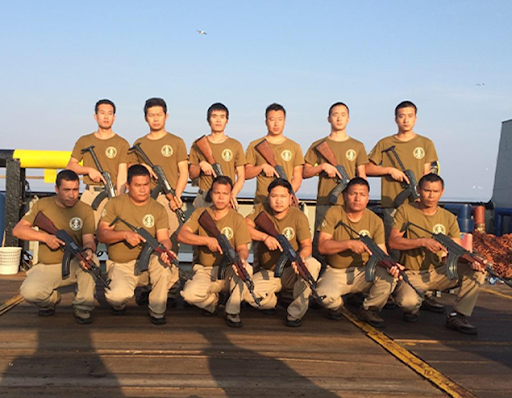
The turning point for many Chinese policymakers and shipping firms came during the anti-piracy operations off Somalia in the late 2000s. Following repeated pirate attacks in the Gulf of Aden, China launched its first long-term overseas naval escort missions in 2008 under the framework of anti-piracy operations. These missions marked one of the first moments in which Beijing was forced to directly confront the security dimension of globalization. For years, China had operated as one of the largest beneficiaries of global trade routes without needing to actively secure them. The piracy crisis exposed the reality that global commerce could not always rely on abstract notions of international stability or assume that maritime security would indefinitely remain a free public good.
At the same time, the anti-piracy era also accelerated the emergence of Chinese private maritime security companies (PMSCs). Unlike state naval deployments, which are expensive and politically sensitive, private maritime security firms offered Chinese shipping companies a more flexible and commercially oriented means of risk mitigation. These firms gradually began providing services ranging from onboard security teams and route assessments to voyage risk analysis, escort coordination, and maritime crisis management.
However, the development of China’s maritime security industry has differed substantially from Western models.
Western private maritime security firms, particularly those emerging from the United States and the United Kingdom following the wars in Iraq and Afghanistan, evolved into heavily armed and highly professionalized organizations deeply connected to broader national security ecosystems. Many Western PMSCs employed former special forces personnel, operated floating armories, and maintained robust rules of engagement designed for hostile environments. In practice, some evolved into quasi-military extensions of broader Western security architectures abroad.
China’s maritime security sector developed under very different political and legal constraints. Chinese law traditionally imposes strict restrictions on private weapons ownership and limits the scope of private military activity. Equally important, Beijing has long remained cautious about the political symbolism associated with overseas private military contractors, particularly given Western narratives frequently portraying China’s overseas activities as precursors to military expansion.
As a result, Chinese maritime security firms have generally adopted a lower-profile and less militarized operational model. Rather than emphasizing force projection or heavily armed deterrence, many focus on compliance, risk management, voyage coordination, and defensive support services. This distinction has become increasingly important as Chinese shipping interests expand into politically unstable and conflict-prone regions.
In many ways, China today faces a dilemma common to rising maritime powers throughout history: commercial globalization is increasingly generating security obligations that can no longer be entirely outsourced. Yet Beijing remains reluctant to fully adopt the alliance-centered and militarized maritime security structures historically associated with Western naval powers.
This tension became particularly visible in May 2026, when Iranian authorities seized a support vessel linked to Hong Kong-registered Sinoguards Marine Security near the Strait of Hormuz. The incident marked the first known seizure of a private-security-related vessel since the beginning of the latest U.S.-Iran conflict and drew significant attention because the vessel was connected to a Chinese maritime security company operating in one of the world’s most strategically sensitive waterways.
The seizure was notable not only because it involved a Chinese-linked company, but because it revealed the limits of commercial alignment in maritime security affairs. Despite China’s relatively close economic relationship with Iran and Beijing’s importance as a buyer of Iranian oil, Tehran nevertheless appeared unwilling to tolerate the presence of foreign-linked maritime security operations in the vicinity of the Strait of Hormuz.
The incident also highlighted a key distinction between Chinese maritime security firms and many Western counterparts. Reports surrounding the seizure suggested that the vessel and its operators offered little visible resistance during the encounter. While some observers interpreted this as evidence of weakness, the reality may reflect the fundamentally different operational logic underpinning Chinese maritime security firms.
Unlike heavily armed Western private maritime security contractors, firms such as Sinoguards have generally evolved around a model emphasizing de-escalation, legal compliance, and low political visibility. Sinoguards itself, established in 2013 during the height of anti-piracy security demand, presents itself as a neutral maritime security and risk management company rather than a military contractor. Its operations reportedly involve multinational personnel and internationally oriented commercial structures rather than direct integration into a state military apparatus.
This relatively restrained operational profile contrasts sharply with the image often associated with Western maritime security firms operating in conflict zones. In many Western security models, heavily armed contractors and floating armories became normalized features of maritime protection operations during the post-9/11 era. By comparison, Chinese maritime security firms have generally avoided overt militarization and instead adopted a lower-profile approach focused on risk mitigation rather than coercive presence.
The implications of the seizure quickly extended beyond a single vessel. Within days, reports emerged indicating that commercial traffic through the Strait of Hormuz had slowed significantly. Some tankers delayed transits, while a Chinese fuel tanker reportedly paused mid-voyage before continuing its route. The incident underscored a broader reality: China is no longer a distant observer of instability in critical maritime chokepoints. Its shipping networks, energy imports, and commercial interests are now directly exposed to disruptions in the global maritime order.
The broader regional context further amplified these concerns. Amid escalating tensions surrounding Iran and the Strait of Hormuz, President Donald Trump publicly called on countries including China, Japan, South Korea, France, and the United Kingdom to participate in maritime security operations protecting the strait. Trump argued that countries dependent on Hormuz shipping routes should assume greater responsibility for securing them and warned that Washington would “remember” countries unwilling to participate.
Yet China showed little indication of joining a U.S.-led maritime security coalition.
This hesitation was significant. On the surface, China possesses clear economic incentives to maintain open sea lanes in the Persian Gulf. However, participation in a U.S.-led naval security framework would also carry substantial strategic and political implications. Joint patrols, coordinated rules of engagement, and alliance-style maritime policing operations would effectively place China within a broader U.S.-defined maritime security architecture — something Beijing has historically sought to avoid.
As China’s global maritime footprint continues to expand, Beijing will likely face growing pressure to assume a larger role in securing critical sea lanes. The challenge, however, is that China’s commercial interests are now expanding faster than its overseas security architecture.
For years, many Western analysts interpreted developments such as China’s overseas logistics facility in Djibouti as evidence that Beijing was rapidly constructing a globally militarized maritime network modeled after the United States. Yet the behavior of Chinese maritime security firms in places such as the Strait of Hormuz suggests a more cautious and restrained trajectory.
If China were seeking to replicate the traditional Western model of maritime dominance, recent events in the Persian Gulf might have looked very different. Chinese maritime security operations would likely involve more visible armed deterrence, broader naval integration, and more assertive responses to interference at sea. Instead, Chinese firms continue to operate with relatively limited visibility, restrained operational profiles, and an apparent preference for avoiding escalation.
This does not necessarily mean China lacks the capability to expand its maritime security presence more aggressively in the future. Rather, Beijing appears to prefer a model centered on securing commercial access while minimizing the political visibility associated with overseas military expansion.
This distinction matters because it reflects a broader difference between competing maritime security philosophies.
The traditional U.S.-led maritime order has historically emphasized alliance structures, naval dominance, freedom of navigation patrols, and the active policing of strategic waterways. In contrast, China’s current approach appears more focused on preserving stable commercial access while avoiding deep entanglement in regional security conflicts and alliance systems.
In other words, China increasingly seeks to secure the route rather than control the sea.
However, this approach may become progressively more difficult to sustain as geopolitical instability spreads across critical chokepoints. The wars and crises affecting the Red Sea, the Strait of Hormuz, and other strategic waterways are demonstrating that shipping lanes can no longer be treated as politically neutral commercial spaces. Instead, they are becoming increasingly intertwined with broader strategic competition, regional conflicts, sanctions enforcement, and security rivalries.
The seizure of the Sinoguards-linked vessel ultimately revealed more than a single maritime incident. It exposed the growing tension between China’s expanding global commercial interests and its still-evolving maritime security model.
As Beijing continues to emerge as one of the world’s largest maritime stakeholders, the central question may no longer be whether China will expand its overseas maritime security role, but rather what kind of maritime security power China ultimately intends to become.
This issue’s Spotlight was written by Yilun Zhang, Research Associate at ICAS.
Government Releases & Other Press Statements
Analyses & Opinions
China-Russia Cooperation in the Arctic: Patterns, Constraints, and Policy Implications
By Nong Hong
April 30, 2026
The Arctic is undergoing rapid transformation as climate change accelerates sea-ice retreat, expands seasonal navigability, and increases global interest in the region’s energy resources, shipping routes, and strategic significance. In this evolving environment, cooperation between China and Russia has attracted growing international attention. While Russia is an Arctic coastal state with extensive jurisdiction and infrastructure in the region, China has gradually expanded its Arctic engagement through investment, scientific research, and participation in regional governance mechanisms…
Strategic Waterways Under Pressure Series: “The Strait of Malacca: Conditionality Contained?”
By Nong Hong
May 11, 2026
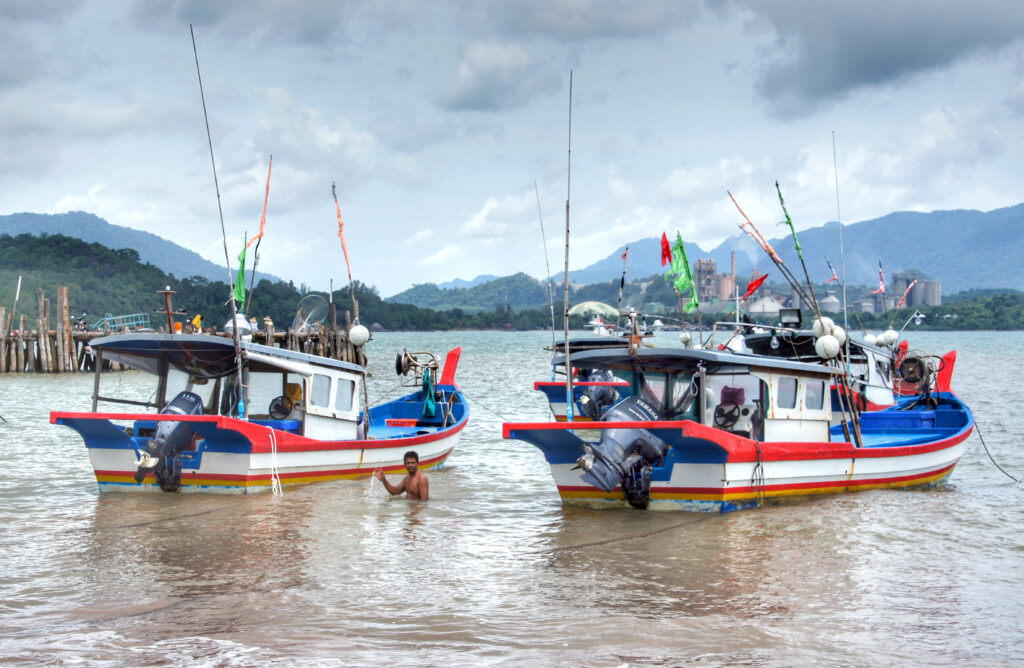
The Strait of Malacca shows how a strategic waterway can remain legally open while operating under real and sustained pressure. Its challenge is not formal closure or acute coercive disruption, but the gradual accumulation of operational, security, environmental, and political constraints. Heavy traffic, piracy and sea robbery risks, environmental vulnerabilities, and coastal-state sensitivities all shape how passage is managed. Yet these pressures have not displaced the legal and operational framework of transit passage. Malacca therefore helps clarify an important distinction for this series: conditional passage does not mean that a waterway is merely dangerous, congested, or closely managed…