

ICAS Maritime Affairs Handbill (online ISSN 2837-3901, print ISSN 2837-3871) is published the last Tuesday of the month throughout the year at 1919 M St NW, Suite 310, Washington, DC 20036.
The online version of ICAS Maritime Affairs Handbill can be found at chinaus-icas.org/icas-maritime-affairs-program/map-handbill/.
Renewed tensions over the 2016 arbitration award show that the South China Sea remains marked by deep disagreements and significant uncertainty. The recent encounters at Second Thomas Shoal and Scarborough Shoal demonstrate how quickly a maritime confrontation can escalate into an incident involving injuries, diplomatic protests, and increased military activity. None of the parties would benefit from a crisis that expands beyond their control or becomes more militarized. This makes sustained communication and effective crisis-management mechanisms increasingly important. As the Philippine and Chinese foreign ministers acknowledged, keeping communication channels open and managing tensions are necessary first steps toward preventing miscalculation and creating space for a more stable relationship.
The ASEAN meetings offered some grounds for cautious optimism, particularly through the reported progress toward a South China Sea Code of Conduct. However, the depth of the current disagreements means that expectations of a rapid or permanent solution are unrealistic. An effective regional framework will likely have to emerge gradually, through rules and practices that the relevant parties can broadly accept and implement. The role of outside actors also matters, as actions may intensify tensions and further complicate an already difficult process of reconciliation At the same time, the recent multinational rescue operations offer a useful reminder that cooperation remains possible even amid strategic competition. Search-and-rescue coordination, maritime safety, environmental protection, and other forms of practical cooperation could provide relatively less contentious opportunities to build trust and gradually support broader conflict-management efforts.
Survivors rise to 48 with more missing after Vietnamese ship sinks in South China Sea
July 28 – AP News
[Vietnam, the Phillipines, China]
The Vietnamese cargo vessel Khoi Nguyen 18 sank late Saturday near Fiery Cross Reef in the contested Spratly Islands with Chinese, Philippine, and Vietnamese rescuers saving 48 and continuing the search for 14 remaining sailors. Under a United Nations maritime safety treaty signed by Vietnam, the ship is required to keep AIS transponders on at all times, although the ship was last detected in March via AIS.
Korean Container Ship Rescues Tug Crewmembers in South China Sea
July 27 – The Maritime Executive
[South Korea, Indonesia]
A Korean container ship helped rescue four crewmembers from the Indonesian tug, AOM 787, off the coast of the Riau Islands in the South China Sea. The Shanghai Voyager spotted the survivors’ signal flares and Indonesian SAR responders met the ship to bring four crew members safely ashore.
George Washington CSG in the South China Sea After Philippine-Chinese Clashes
July 27 – U.S. Naval Institute News
[The Philippines, U.S.]
The USS George Washington Carrier Strike Group entered the South China Sea after a series of confrontations between Chinese and Philippine forces. The U.S. officials described the deployment as support for freedom of navigation and for treaty ally Manila.
Philippine President Slams China in Veiled Rebuke in His State of The Nation Speech
July 27 – AP News
[The Philippines]
In his state of the nation speech, Philippine President Ferdinand Marcos Jr. said his government would continue defending the 2016 South China Sea arbitration ruling through peaceful and legal means. Although he did not name Beijing directly, his remarks were widely interpreted as a rebuke of China.
Philippines, Japan, US Complete Exercises in South China Sea
July 26 – Bloomberg
[The Philippines, Japan, U.S.]
The Philippines, Japan and the United States conducted joint naval and air exercises in the South China Sea from July 21 to 25, which the Philippine military said demonstrated their partnership and commitment to freedom of navigation and overflight in the West Philippine Sea. The drills took place amid renewed confrontations between the Philippines and China. China also carried out its own patrols and accused the exercises of undermining regional peace and stability.
Asean Sees Progress on South China Sea Code, Targets Year-End Conclusion
July 24 – CNA
[ASEAN]
ASEAN foreign ministers said negotiations on a South China Sea Code of Conduct had made “significant progress” and expressed hope that an effective and substantive agreement consistent with international law and UNCLOS could be concluded by the end of the year. The ministers also reaffirmed the importance of maintaining peace, stability and freedom of navigation, while Philippine Foreign Secretary Maria Theresa Lazaro said the recent confrontations would form part of continued discussions.
Rubio says China’s actions in the South China Sea are ‘disturbing’
July 23 – Reuters
[U.S., China, the Philippines]
On the sidelines of the ASEAN meeting in Manila, U.S. Secretary of State Marco Rubio described China’s actions in the South China Sea as “disturbing” and reaffirmed Washington’s defense commitments to the Philippines.
China, Philippines Clash Again at Scarborough Shoal, A Day after Wang Yi Warning
July 23 – South China Morning Post
[The Philippines, China]
China’s coast guard said it expelled two Philippine government vessels near Scarborough Shoal after accusing them of entering waters under Chinese jurisdiction despite repeated warnings. The incident followed Chinese Foreign Minister Wang Yi’s warning that the Philippines would face “bitter consequences” if it provoked Beijing with outside support.
Philippine, Chinese Foreign Ministers Trade Protests over South China Sea Encounter
July 22 – Reuters
[The Philippines, China]
The foreign ministers of the Philippines and China exchanged formal protests during the ASEAN meeting in Manila over the confrontation at Second Thomas Shoal. Philippine Foreign Secretary Maria Theresa Lazaro condemned what she described as unacceptable actions against Filipino personnel, while Chinese Foreign Minister Wang Yi accused Philippine personnel of ramming Chinese law enforcement vessels and said bilateral relations were at a crossroads. Despite their opposing accounts of the incident, the two sides also discussed keeping communication channels open, managing tensions and seeking practical ways forward.
Philippines, China Summon Each Other’s Envoys over South China Sea Incident
July 21 – Reuters
[The Philippines, China]
Philippine President Ferdinand Marcos Jr. summoned China’s ambassador in Manila after Beijing called in the Philippine ambassador, as both governments accused the other of provoking a confrontation at Second Thomas Shoal. China said Philippine boats rammed a Chinese patrol vessel and personnel attacked coast guard officers, while the Philippine military rejected Beijing’s account as false and maintained that its personnel did not initiate the confrontation.
China, Philippines Trade Accusations over South China Sea Encounter
July 20 – Reuters
[The Philippines, China]
China and the Philippines traded accusations following a confrontation near Second Thomas Shoal. The Philippine military said Chinese coast guard personnel struck the sailor, while China said Philippine personnel ignored warnings, rammed a patrol boat and attacked Chinese officers first.
14 Nations And The EU Reaffirm 2016 Ruling Invalidating China’s Claims in South China Sea
July 12- AP News
[The Philippines, China, U.S.]
Fourteen countries, including the United States, the United Kingdom and the Philippines, as well as the European Union, reaffirmed that the 2016 South China Sea arbitration ruling is final and legally binding and said it found no legal basis for China’s expansive maritime claims based on historic rights. China rejected the ruling, arguing that the tribunal infringed on its sovereign rights and that Beijing does not accept third-party dispute settlements imposed upon it.
Beijing Hits Out as Us-Led Coalition Marks 10th Anniversary of South China Sea Ruling
July 12- South China Morning Post
[The Philippines, China, U.S.]
China described U.S.-led military deployments and activities by outside powers as the primary threat to peace and stability in the South China Sea, responding to the 14-country statement. Beijing reiterated that it does not recognize the tribunal or its decision, and also protested to Japan after Tokyo criticized China’s refusal to accept the ruling.
Philippines Commemorates 2016 South China Sea Ruling Rejected by Beijing
July 10- AP News
[The Philippines, China]
The Philippines commemorated the tenth anniversary of the 2016 South China Sea arbitration ruling, describing the decision as legally binding and comparing it to a lighthouse for countries facing coercion and competing maritime claims. China continued to reject the decision as illegal, null and void, maintaining that it does not affect Beijing’s sovereignty claims or its determination to defend its maritime rights and interests.
Developments in July highlighted the Arctic’s growing strategic dimension, with resource access, security coordination and shifting alliances receiving greater attention alongside scientific cooperation and environmental concerns. Russia continues to expand its Arctic presence by relying on northern shipping routes to maintain energy exports despite sanctions and geopolitical pressure, while the European Union has responded by targeting Russian Arctic-linked vessels and infrastructure as part of broader efforts to limit Moscow’s economic and military capabilities. At the same time, the United States and its allies are increasing their Arctic readiness through exercises such as the USCGC Stone and Norwegian vessel Hopen interoperability drill. However, NATO unity faces new challenges amid President Donald Trump’s renewed calls for U.S. control of Greenland and threats to reduce American military commitments in Europe have created tensions with allies such as Denmark and Spain. These disputes demonstrate how Arctic strategy is becoming intertwined with broader questions about alliance reliability and burden-sharing within NATO.
Beyond military competition, the Arctic is also emerging as a center for scientific discovery, economic opportunity, and cautious geopolitical engagement. New research expeditions, including Norway’s exploration of previously unfilmed underwater mountains and ecosystems, highlight how much of the Arctic remains unknown. Meanwhile, China’s growing Arctic presence has raised concerns in Washington, particularly after U.S. Coast Guard monitoring of Chinese research vessels operating near the Bering Sea and Arctic region. Although these vessels operated within international legal boundaries and did not violate navigation rules, their activity caused broader concerns about China’s expanding scientific and strategic interests in the Arctic. As nations such as Japan and Korea strengthen their Arctic policies, shipping routes, and research capabilities, the region is becoming a complex arena where cooperation, competition, environmental responsibility, and military preparedness must coexist.
PanStar Prepares for South Korea’s First Arctic Container Voyage to Europe
July 29 – gCaptain
[South Korea]
South Korea is preparing its first commercial container voyage to Europe via the Northern Sea Route, marking a significant step toward establishing Arctic shipping as a viable alternative to traditional routes through the Suez Canal. Strong interest from exporters reflects growing confidence in the route’s commercial potential, although its long-term success will depend on overcoming challenges related to seasonal ice conditions, infrastructure, geopolitical risks, and coordination with Russia for Arctic transit.
USCGC Stone and Norwegian Vessel Hopen Complete Arctic Interoperability Exercise
July 28 – Ocean News and Technology
[Norway, U.S.]
The U.S. Coast Guard cutter USCGC Stone and Norwegian Coast Guard vessel Hopen completed an Arctic interoperability exercise focused on improving coordination, maritime response capabilities, and operational familiarity between allied forces. The drill is part of a broader effort through the Arctic Coast Guard Forum to strengthen cooperation among Arctic nations as competition and shipping activity in the region expand.
Russia Drives Up Oil Flows Through Arctic to Maintain High Exports
July 28 – Bloomberg
[Russia, Egypt]
Russia is adapting its oil shipping routes as geopolitical risks disrupt traditional maritime pathways, with Arctic routes and Egyptian ports becoming increasingly important for maintaining exports. These alternative routes help Moscow reduce dependence on vulnerable chokepoints like the Red Sea.
Researchers explored underwater mountains in the Arctic that no one had ever filmed before
July 28 – Science Norway
[Norway]
Scientists explored previously unfilmed Arctic seamounts and hydrothermal vent ecosystems, revealing a deep ocean environment with far greater biodiversity than previously documented. The expedition adds scientific evidence to debates over deep-sea mining, showing that many Arctic seabed areas remain poorly understood and may contain fragile ecosystems worth protecting.
EU blacklists more Russian Arctic vessels
July 27 – The Barent Observer
[EU, Russia]
The EU’s latest sanctions package includes more than 100 banks and crypto operators, several oil refineries, and more than 50 military-industrial entities, expanding pressure on Russian Arctic-linked shipping, including vessels involved in the Northern Sea Route and energy transport. The decision shows that Arctic infrastructure and commercial networks have become part of the broader economic struggle surrounding Russia’s war effort and access to strategic resources.
Coast Guard Monitors Chinese Vessels in the Arctic
July 20 – U.S. Department of War
[U.S., China]
The U.S. Coast Guard tracked Chinese research vessels traveling through the Bering Sea toward the Arctic, reflecting growing concern over China’s expanding presence in the region. While the ships’ activities were conducted within areas where international navigation rights apply, the operation shows that Washington increasingly views Arctic activity through a national security lens.
Trump renews call for control over Greenland amid threats to pull all troops from Europe
July 10 – Shipping Telegraph
[Greenland, U.S.]
Speaking at the NATO summit, President Donald Trump affirmed U.S. interest in Greenland as a strategic Arctic location, linking the island to concerns about Russian and Chinese activity. However, he introduced a new threat: removing U.S. soldiers from Europe. The controversy highlights a broader Arctic competition in which security priorities, alliance relationships, and sovereignty concerns are increasingly overlapping.
U.K., Partners Commit to ‘Persistent Maritime Presence’ to Counter Russia in High North
July 9 – USNI News
[United Kingdom]
The U.K.-led Joint Expeditionary Force will commit to a persistent maritime presence in the High North, North Atlantic, and Baltic in response to the environment being increasingly defined by undersea competition, vulnerability of seabed infrastructure, grey zone coercion, electronic warfare and cyber disruption and the proliferation of low-cost autonomous systems, specifically to counter Russia’s increasing activities.
Trump turns on Spain and demands Greenland as NATO summit exposes cracks
July 8 – Defense News
[Greenland, U.S., Spain]
President Donald Trump criticized Spain over defense spending and cooperation while renewing calls for U.S. control of Greenland, creating friction with both Spain and Denmark. Calling Madrid a “terrible partner”, this comes after Spain refused to let the U.S. use its airspace or bases for the Iran war.
Japan to revise its Arctic policy as region’s geopolitical importance grows
June 30 – Japan Times
[Japan]
Japan is updating its Arctic strategy for the first time since 2015 as the region becomes increasingly important for security, shipping routes, and resource access and plans to position the Arctic research ship Mirai II as an international research platform. The move reflects Tokyo’s concern over expanding Russian and Chinese activity in the Arctic and signals a stronger emphasis on international cooperation, scientific research, and strategic maritime capabilities.
Finland closes airspace, restricts maritime traffic near Russia over drone risk
July 28 – Defense News (Reuters)
[Finland]
Finland closed a section of airspace and restricted maritime traffic near the Russian border after stray Ukrainian drones repeatedly entered NATO airspace this year. The move reflects Helsinki’s broader hardening toward suspicious activity in its waters, a posture shaped in part by earlier incidents in which Chinese-flagged vessels, including the Yi Peng 3 and Newnew Polar Bear, were implicated in severing Baltic Sea cables and pipelines.
Saudi FM receives phone call from Jordanian Deputy PM and FM
July 28 – Saudi Gazette
[Saudi Arabia, Jordan]
Saudi and Jordanian foreign ministers discussed regional security and freedom of maritime navigation as part of a wider round of Gulf diplomacy amid Iran-linked attacks on shipping. The push to safeguard Hormuz and Red Sea navigation carries real stakes for China, which relies heavily on Gulf crude and stands to face higher energy costs if instability persists.
Latin American Maritime Leaders Hold Historic Summit
July 28 – Mirage News
[Guatemala, Latin America]
Senior maritime officials from across Latin America met in Guatemala City for the first-ever joint regional meeting of maritime administrations, hosted by the IMO to strengthen governance and cooperation. The push toward unified regional maritime standards comes as China has steadily expanded its port and shipping-line presence in Latin America, most notably through Peru’s Chancay port, giving these coordination efforts added long-term relevance.
First port signs up to US initiative on maritime SMRs
July 27 – World Nuclear News
[U.S.]
The Port of Long Beach has become the first U.S. port to join a federal initiative exploring the use of small modular reactors (SMRs) to power commercial vessels, port operations, and other maritime infrastructure. The agreement reflects growing interest in nuclear technology as a means of reducing emissions and improving energy security in the maritime sector, while positioning the United States to compete in the development of next-generation shipping technologies.
Stranded seafarers remain trapped as Hormuz shipping stalls
July 23 – UN News
[Strait of Hormuz]
Thousands of seafarers stranded aboard commercial vessels in and around the Strait of Hormuz, where ongoing regional conflict has left many unable to return home after their contracts ended, are facing shortages of food, water, and wages while enduring severe psychological stress, underscoring the human cost of disruptions to global shipping.
Tankers make sharp U-turns after Houthi shipping threat
July 21 – BBC Verify
[Yemen, Saudi Arabia]
At least seven to eight tankers reversed course near Yemen after the Houthis announced a “maritime embargo” against Saudi ports, a route now central to Saudi exports since Hormuz’s closure. Two of the diverted ships were China-linked – the Liu Jiang Kou and the Hong Kong-flagged New Prime – and analysts warn that further disruption would force Saudi oil bound for Asia, including China, onto a far longer and costlier route around Africa.
Maritime Accident at the Port of Souda
July 21 – Cyprus Shipping News
[Greece]
A passenger ferry and a Ro-Ro cargo ship collided while departing Souda port in Crete, prompting a departure ban on both vessels pending investigation. The incident is a domestic Greek port-safety matter with no Chinese vessels or interests involved, underscoring that not every maritime story in this cycle ties back to Beijing.
Over 500 Rohingya feared dead after two boats sink
July 17 – Taipei Times
[Myanmar]
Two boats carrying an estimated 500 people of the Rohingya Muslim ethnic minority are believed to be dead after contact was lost with both ships in late June, during peak periods of monsoons and poor weather. Steep cuts to U.S. foreign aid and military violence have made remaining in the western state of Rakhine untenable for many Rohingya.
Hormuz Sees Traffic Bump Despite Ongoing Iranian Attacks
July 10 – USNI News
[Strait of Hormuz]
Commercial shipping through the Strait of Hormuz has begun to recover modestly following a ceasefire, but traffic remains well below normal levels as ongoing Iranian attacks and persistent security risks continue to discourage many operators. The increase in transits suggests cautious confidence is returning to the region, though elevated insurance costs, operational uncertainty, and the threat of renewed violence continue to constrain a full recovery.
It’s been 10 years since the Arbitral Tribunal in the South China Sea arbitration, established under the UN Convention on the Law of the Sea (UNCLOS) at the unilateral request of the Philippines, rendered its award on July 12, 2016. It largely favored the Philippines, saying under UNCLOS, “there was no legal basis for China to claim historic rights to resources” in the South China Sea outside of its regular territorial areas recognized under the Convention.
In response, China said it neither accepts nor recognizes the award.
Ten years later, the award remains a frequently invoked but deeply contested point of reference in legal and diplomatic debates. The case reflects persisting disagreement over the proper role of compulsory dispute settlement in disputes shaped by sovereignty, state consent and historical claims.
One reason is that the award did not address, and could not have addressed, the question of territorial sovereignty over islands and reefs in the South China Sea. The tribunal repeatedly maintained that it was dealing only with the interpretation and application of UNCLOS, not sovereignty or maritime delimitation as such. Yet critics of the award have long argued that many of the submissions made by the Philippines cannot be meaningfully separated from those excluded issues. In disputes so closely tied to territorial title and boundary-making, it is not easy to maintain the line between interpreting UNCLOS and indirectly prejudging matters beyond its scope.
This concern is connected to the principle of state consent. UNCLOS provides for compulsory procedures in certain circumstances, but within a framework shaped by state consent and carefully negotiated limitations. It reflects a balance between the availability of third-party procedures and the continuing autonomy of states, including through the optional exceptions in Article 298. China made such a declaration in 2006 with respect to, among other things, maritime delimitation and historic bays or titles. From this perspective, the objection has centered on the use of compulsory procedures in a case that China views as inseparable from issues lying beyond its consent.
China’s position should not be reduced to a blanket rejection of compulsory dispute settlement in maritime affairs. A more accurate understanding is that it has taken a conditional view: Such procedures must rest on the consent of the parties, stay within the jurisdictional limits established by the applicable legal framework, and be assessed in light of their implications for regional peace and stability.
Seen in this way, the South China Sea arbitration is best understood not as evidence of a categorical Chinese opposition to adjudication, but as a case that highlights the conditions under which third-party mechanisms are regarded as legitimate or destabilizing.
The arbitration also raises a broader concern: Legal proceedings with contested jurisdictional foundations can take on a political function beyond dispute settlement itself, shaping international narratives and influencing public opinion. The concern here is not with recourse to legal process as such, but with the risk that proceedings lacking fully accepted jurisdiction may be invoked less to resolve disputes than to secure diplomatic leverage and narrative advantage.
Beyond the procedural issues, the case also revived debate over the relationship between the UNCLOS as treaty law and historic rights as part of general international law. The tribunal took the view that claims of historic rights incompatible with the Convention’s maritime zone regime could not survive unless specifically preserved by UNCLOS. That approach, however, has been criticized as overly restrictive, particularly in a semi-enclosed sea with a long history of navigation, administration and competing legal narratives. Historical claims require legal scrutiny, but their significance cannot be understood solely through the contemporary law of exclusive economic zones.
The same issue arises in debates over the nine-dash line. Public discussion outside the region often treats the line as China’s claim to complete sovereignty over all waters enclosed by it. China’s position, however, has been that the line relates to sovereignty over the features in the South China Sea and to historic rights in relevant waters, alongside the maritime entitlements generated under UNCLOS.
This debate cannot be separated from the broader historical and legal framework through which China approaches the dispute. China’s claims are supported by a substantial body of historical evidence and legal practice, including long-standing activity in the South China Sea, postwar recovery arrangements, official maps, diplomatic statements, administrative acts and domestic legislation. This explains why China and other critics of the award regard the arbitration as an incomplete and ultimately unsatisfactory vehicle for addressing the issues at stake. From that perspective, the award did not simply interpret the Convention; it also narrowed a historically and politically complex dispute into a form more amenable to adjudication than to genuine settlement.
Ten years on, the arbitration may still be invoked by some as an interpretation of UNCLOS, but it did not produce accepted legal finality. It remains a reminder of the risks that arise when compulsory procedures are used in disputes bound up with sovereignty, delimitation, and contested historical claims.
The broader lesson is straightforward. International adjudication and arbitration can clarify legal questions, but they cannot always resolve disputes rooted at once in law, history and geopolitics. In such cases, the legitimacy of the process matters as much as the substantive reasoning offered in its support. A decade later, the South China Sea dispute still reminds us that durable solutions depend not only on legal argument, but also on consent, restraint, and a continuing commitment to peace and stability through dialogue and negotiation.
This issue’s Flagship Analysis was written by Nong Hong, Executive Director at ICAS.
Commercial shipbuilding has long been regarded as one of the foundational industries supporting global maritime commerce. Unlike naval shipbuilding, which is closely tied to national defense, commercial shipbuilding traditionally developed according to international market demand, comparative production costs, and the availability of industrial resources. As globalization accelerated following the Cold War, shipbuilding capacity gradually concentrated in East Asia, where integrated manufacturing bases, competitive labor costs, and expanding export industries enabled regional shipbuilders to dominate global commercial vessel production. Over time, commercial shipbuilding came to be viewed largely as a commercial enterprise rather than a strategic industry.
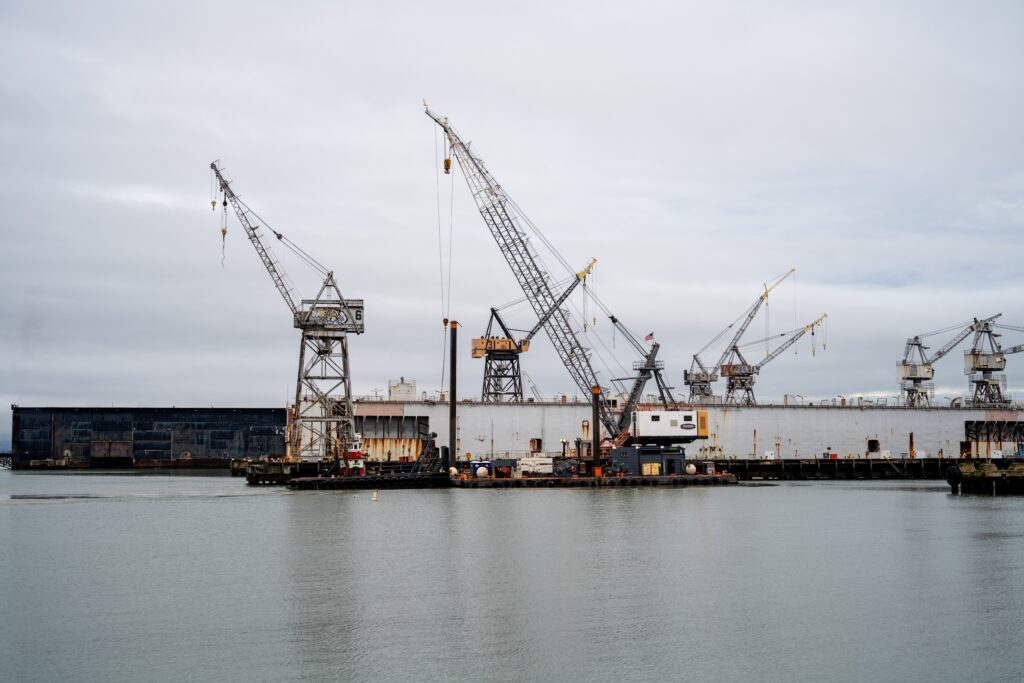
That perception has begun to change. A combination of structural developments—including the aging of the global merchant fleet, the expansion of liquefied natural gas (LNG) transportation, tightening environmental standards, and heightened concerns over supply-chain resilience—has renewed international attention on commercial shipbuilding. Increasingly, governments are viewing shipbuilding not only as an industrial sector, but also as an important component of economic security, maritime resilience, and long-term industrial competitiveness.
This shift has also broadened how commercial shipbuilding itself is understood. Rather than focusing solely on shipyards and vessel output, policymakers are increasingly recognizing the importance of the wider maritime industrial base that supports continuous ship production. Supplier networks, steel manufacturing, marine equipment producers, maritime finance, ports, logistics, engineering expertise, and skilled labor all contribute to the long-term competitiveness of a country’s shipbuilding sector. As a result, discussions surrounding commercial shipbuilding have increasingly expanded beyond questions of annual production to encompass the broader industrial ecosystem that enables sustained maritime manufacturing.
Recent developments suggest that Washington’s renewed interest in commercial shipbuilding is already moving beyond policy discussion toward industrial implementation. In Congress, lawmakers have continued advancing legislation aimed at revitalizing the U.S. maritime industrial base through expanded financing mechanisms, workforce development, and incentives for domestic shipbuilding. On July 23, Representatives Mike Kelly (R-PA- and Nathaniel Moran (R-TX) introduced the Shipbuilding Investment and Workforce Act, marking the latest push to address the issues. The growing legislative activity reflects bipartisan recognition that rebuilding commercial shipbuilding will require long-term investment rather than short-term trade measures alone.
At the same time, the United States is increasingly pursuing shipbuilding cooperation with close allies. On July 23, Washington and Seoul formally launched the Korea–U.S. Shipbuilding Partnership Center (KUSPC), which will serve as the operational hub for the $150 billion Make American Shipbuilding Great Again (MASGA) initiative. Beyond facilitating investment, the partnership includes workforce training, joint research and development, shipyard modernization, supply-chain cooperation, and technology exchange, highlighting that rebuilding American shipbuilding capacity is increasingly viewed as an allied industrial effort rather than a purely domestic undertaking.
The emphasis on workforce development has also become increasingly prominent. On July 28, Huntington Ingalls Industries (HII), the largest military shipbuilder in the United States, announced expanded training initiatives aimed at developing the next generation of shipyard workers through apprenticeship programs and partnerships with educational institutions. Together, these developments illustrate that Washington’s shipbuilding agenda is evolving beyond concerns over production capacity alone toward rebuilding the broader industrial capabilities necessary to sustain both commercial and naval shipbuilding over the long term.
Commercial shipbuilding is increasingly becoming a focal point of U.S.-China strategic competition, but much of the current debate reflects broader concerns than commercial market share alone. In Washington, commercial shipbuilding is now frequently discussed alongside naval shipbuilding, sealift capacity, supply-chain resilience, and defense industrial preparedness. As the distinction between commercial and military maritime capacity becomes increasingly blurred, China’s continued dominance in global commercial shipbuilding is often interpreted not simply as an economic issue, but as a potential long-term strategic vulnerability. Whether such concerns are fully justified remains open to debate, but they are likely to continue shaping U.S. maritime policy and congressional priorities in the years ahead.
At the same time, the growing focus on China’s shipbuilding capacity also reflects a broader shift in how governments evaluate industrial competitiveness. Rather than viewing commercial shipbuilding solely through the lens of current production or market efficiency, policymakers are increasingly emphasizing industrial resilience, future production capacity, and the ability to sustain maritime industries over time. As commercial shipping continues to underpin global trade while also supporting military logistics and sealift requirements, debates over shipbuilding are likely to extend well beyond trade competition and increasingly become part of wider discussions surrounding economic security, industrial policy, and long-term strategic competition.
This issue’s Spotlight was written by Yilun Zhang, Research Associate at ICAS.
The research reviewed this month points to two broad dynamics shaping the maritime security landscape in July 2026. The renewed debate surrounding the 2016 the South China Sea Arbitration Award again prompted a sharp diplomatic clash: a 14-nation joint statement reaffirmed the ruling’s legal force, while Beijing reiterated its position that the award lacked binding force, on the grounds of absent state consent and other legal objections to the tribunal’s jurisdiction and proceedings.. The deeper story, however, lies beneath the rhetorical exchange. China’s sustained maritime activities at Scarborough Shoal and its July 6 submarine-launched ballistic missile test from the South China Sea into the Pacific, the first such launch into international open waters, signal that the Indo-Pacific maritime contest now extends from coast guard operations to nuclear deterrence posturing. In the Arctic, July’s research and policy development highlighted a different pattern of competition. The Northern Sea Route’s commercial promise remains constrained by infrastructure gaps and Russia’s managed-access strategy, even as expanding Sino-Russian energy cooperation continues to deepen the route’s strategic significance, and NATO’s Nordic members have responded by quietly deepening minilateral security coordination in the High North. The analyses, official statements, and data-driven assessments below were selected for their analytical depth, institutional credibility, and direct relevance to the evolving US-China maritime competition.
South China Sea
Arctic
Other Research
Strategic Waterways Under Pressure Series: The Bering Strait: Managed Openness at the Arctic Gateway
By Nong Hong
July 17, 2026
Author’s Note: The Bering Strait belongs in the Strategic Waterways Under Pressure series because it shifts the focus from dramatic closure scenarios to a different kind of pressure. This case examines how a narrow Arctic gateway remains open while facing growing operational, environmental, and social pressures.
As Arctic shipping becomes increasingly viable, the Bering Strait is emerging as a critical test case for Arctic governance. The central concern is not the formal possibility of closure, but whether this narrow and environmentally fragile international strait can remain functionally accessible as vessel traffic increases while emergency-response capabilities remain limited.