

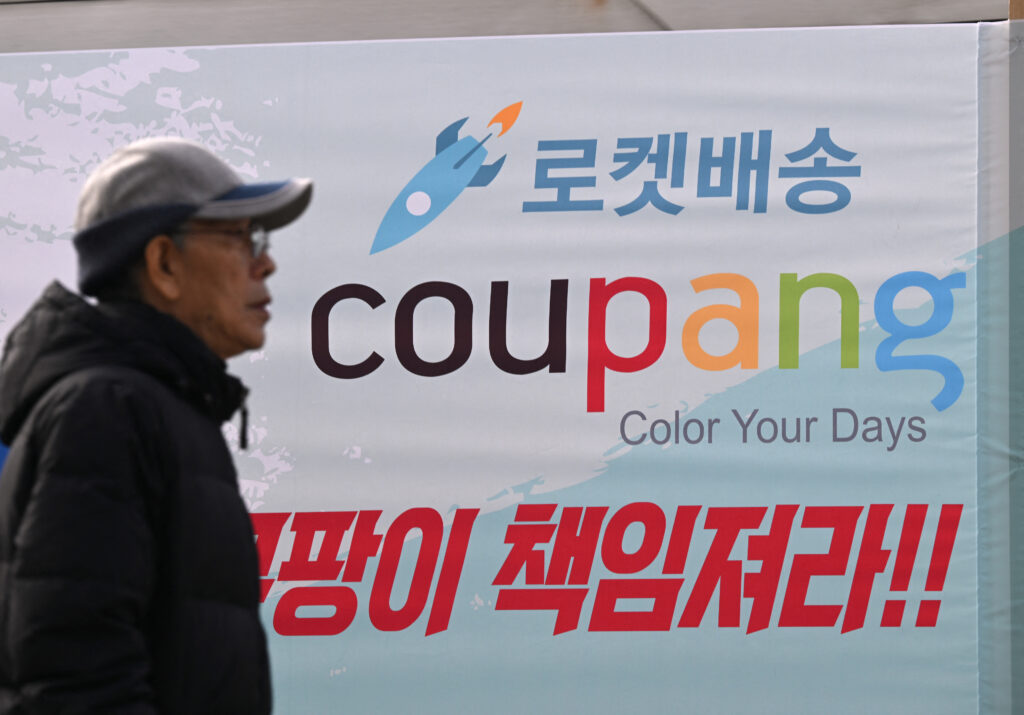
Cover Image: A general view shows the logo of South Korean online delivery service Coupang, at a building housing the headquarters of Coupang in Seoul on December 9, 2025. South Korean police raided the Seoul headquarters of e-commerce giant Coupang on December 9, over a recent data leak believed to have affected almost two-thirds of the country’s population. (Photo by Jung Yeon-je / AFP via Getty Images)
In July 2026, two seemingly unrelated events in Washington told the same story twice. The House Judiciary Committee released a staff report describing a “whole-of-government assault” on Coupang, a U.S.-incorporated e-commerce company, while the House Armed Services Committee advanced an amendment barring federal funding for warships built in the Korean shipyards Washington had spent a year courting.
The two disputes are mirror images of a single structure. Korea’s enforcement against Coupang follows from Korean domestic politics, its chaebol-regulation tradition and privacy-law enforcement; the stalling of shipbuilding cooperation follows from American domestic politics, district-level shipyard jobs and appropriations rules. Each government is serving its own constituency rather than a shared alliance objective.
The corrosive element is not that domestic politics takes priority, but that each capital describes the same dynamic in asymmetric moral terms. Washington frames Seoul’s regulation as discriminatory targeting while treating its own shipbuilding protectionism as ordinary budgeting; Seoul frames its measures as neutral due process while dismissing the procedural concerns U.S. firms raise.
The measurable record shows this is a narrative problem rather than a policy one. Despite months of congressional pressure over Coupang, Korea received the same tariff treatment as Japan and Switzerland in the July 2026 forced-labor Section 301 action. That the policy result placed Korea on par with peers, even as each capital perceives itself as aggrieved, points to perception rather than the tariff record as the driver.
The friction plays out on the larger stage of U.S.-China strategic competition. Washington asks Seoul to serve as an industrial and digital counterweight to China while seeking greater influence over the domestic governance that makes Korea a capable partner. A Korea, uncertain whether its regulatory decisions will trigger a bilateral crisis, becomes a more hesitant partner, not a more cooperative one.
Business disputes have rarely risen to the level of high politics in the U.S.-Korea alliance. The controversy surrounding Coupang has become an exception, and its escalation reveals how readily a regulatory enforcement case can migrate into the core of an alliance relationship. What began as the Korean government’s response to a data breach at the country’s largest e-commerce platform has, within months, drawn in the U.S. Congress, the White House, the Office of the U.S. Trade Representative, and eventually Korea’s National Security Council.
This brief argues that the Coupang dispute, and the parallel friction over shipbuilding cooperation, are best understood not as evidence of bad faith on either side but as a structurally predictable collision between two governments each answering to its own domestic audience. The corrosive element is not the underlying policy but the asymmetric vocabulary each capital uses to describe the other. The stakes extend well beyond a single enforcement action: they touch the submarine cooperation, enrichment rights, and industrial partnerships that both governments have staked on the alliance, and the broader contest with China that frames them.
Economic
Security
The Coupang and shipbuilding disputes unfold against this backdrop: a relationship in which a regulatory enforcement case and a naval-industrial promise sit at the same table as submarine cooperation and enrichment rights.
Korea’s actions against Coupang follow a domestic logic Washington has largely failed to read. In November 2025 a former employee accessed Coupang customer data. Korean authorities assessed exposure at more than 37 million individuals, while Coupang put confirmed extraction at roughly 3,000 accounts. The discrepancy is not a factual dispute so much as a difference in legal standard: both Korean and U.S. practice typically measure breach severity by what an attacker could reach, not only what was ultimately taken. Seoul counts potential exposure; Coupang counts confirmed extraction. Seoul has rejected the discrimination charge, maintaining that its measures followed Korean privacy and consumer-protection law without regard to nationality.
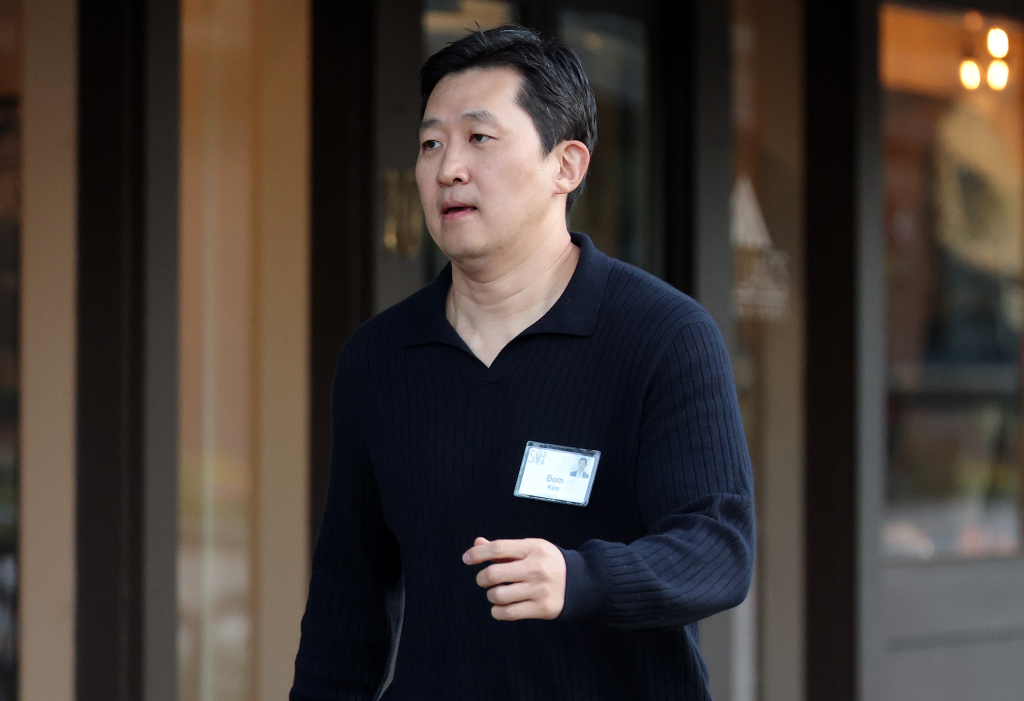
The penalties that followed, a fine of roughly $410 million and the Fair Trade Commission’s move to name founder Bom Kim as the group’s controlling shareholder, are best understood through an institution unfamiliar to most American readers. Korea’s same-person (dongilin) designation identifies the individual who effectively controls a business group and attaches disclosure and related-party transaction obligations to that person and their relatives. It was built in the 1980s to stop founding families from extracting private benefit through opaque cross-shareholdings, and it carries criminal exposure for filing violations. Naming an American citizen under a framework designed for Korean conglomerates is precisely what Washington finds objectionable. From Seoul’s side, exempting a dominant platform from that framework because its founder holds a U.S. passport would be the departure from precedent, not the application of it.
Nor is the government acting against public sentiment. In late July, Korea’s parcel-delivery union and five parties, including the ruling Democratic Party and four smaller progressive and labor-aligned parties, held a joint press conference accusing Coupang of using U.S. lobbying to evade unresolved commitments on courier overwork. A survey that same week found 63.9 percent of respondents viewed Coupang’s U.S. lobbying as an improper attempt to influence Korean regulation, 47.3 percent sided with the Fair Trade Commission’s designation against 33.2 percent who sided with the court that suspended it, and 64.5 percent said their view of the company had worsened over the past year. That the pressure runs from organized labor through the governing coalition, and not merely from regulators, is what makes relief for Coupang expensive for any Korean government, whatever the courts eventually decide.
The U.S. response has been narrated as principled alliance management. Examined closely, it began as a domestic contest that private capital set in motion. Coupang’s U.S. investors, Greenoaks and Altimeter, holding equity valued at more than $1.5 billion, petitioned USTR under Section 301 in January 2026 and filed notice of intent to arbitrate under the Korea-U.S. Free Trade Agreement, framing Seoul’s conduct as an assault on “an innovative American competitor to the apparent benefit of domestic and Chinese companies.” Coupang itself spent more than $1 million lobbying Congress in early 2026. From there the escalation followed familiar channels: House Judiciary Republicans subpoenaed the company in February and published their report on July 1. Notably, USTR’s Jamieson Greer told lawmakers the administration had not concluded Korea’s actions rose to a national-security concern. The gradient runs from investors, who are most aggressive, through Congress, to an executive branch that is markedly more cautious. The loudest domestic voice, not the most considered one, set the public frame.
The legal text is where those competing frames meet. Article 11.3 of the trade agreement guarantees investors treatment no less favorable than domestic counterparts “in like circumstances,” and permits distinctions grounded in “legitimate public welfare objectives.” The phrase “like circumstances” is where the dispute actually lives. Coupang defends itself as an American company, incorporated in Delaware and listed in New York, yet it earned roughly 96 percent of its 2025 revenue in Korea and holds the largest share of the Korean e-commerce market, ahead of domestic rival Naver. Washington argues the enforcement amounts to de facto discrimination against a U.S. firm. Seoul argues that a platform this dominant in the Korean market, and this embedded in it, is not “in like circumstances” with the smaller foreign entrants to which it is compared. The provision defines neither the phrase nor the comparison. That silence is not a drafting oversight so much as the space into which each capital’s politics has expanded.
American shipbuilding politics display the identical structure in reverse. Seoul pledged $150 billion toward U.S. shipbuilding as part of the November 2025 trade and investment deal, and both governments have since built institutional scaffolding around it: an MOU earlier this year and, in July, the Korea-U.S. Shipbuilding Partnership Center in Washington. Political support is not the constraint. Procedure is.
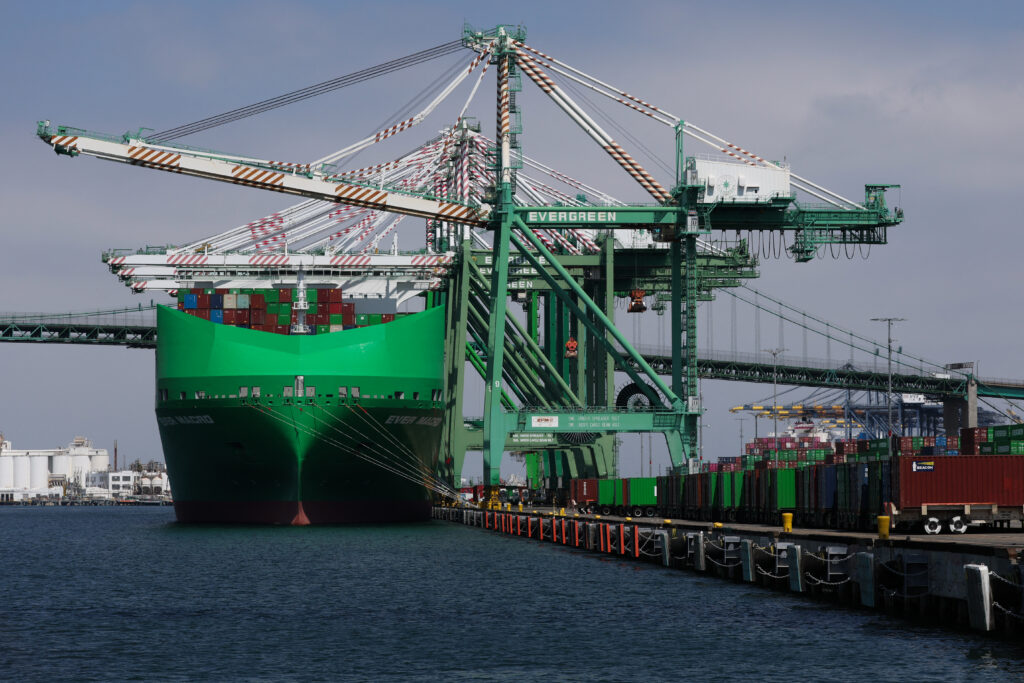
An amendment advanced by a member whose district includes Maine’s Bath Iron Works would bar FY2027 funding for combat vessels built abroad; it cleared the House Armed Services Committee in July. Visa channels for Korean engineers remain stalled in the same House Judiciary Committee that issued the Coupang subpoena. Procurement rules, interagency coordination, financing, and technology-sharing restrictions continue to slow implementation. Representative Ami Bera named the mechanism plainly at a Washington forum in July: a member from a shipyard-free district can advocate building “where needed,” but one from Connecticut or Virginia “would have to be far more cautious.”
This is the United States doing what it accuses Korea of doing, and Seoul has begun saying so publicly. At the partnership center’s opening in July, Korea’s industry minister said the country was ready to execute the $150 billion commitment and asked Washington for three things in return: clear and sustained demand, strong incentives, and an alliance-friendly regulatory environment. The request is notable for its vocabulary. Seoul is asking the United States for precisely what Washington accuses Seoul of denying American firms. The difference is not in the conduct. It is in the label each government reaches for: Washington describes its own constraints as democratic budgeting, and Korea’s as discriminatory targeting.
The most revealing fact in the dispute is one neither capital has absorbed. Despite months of congressional pressure over Coupang, Korea has not been singled out in the tariff outcome. When the Supreme Court struck down the emergency-powers tariffs in February 2026, the 15 percent ceiling negotiated in November became inoperative, and after a temporary global duty under Section 122, Section 301 became the operative authority. In the July forced-labor action, Korea received the same treatment as Japan and Switzerland: rather than a flat surcharge, covered goods face a top-up to a 12.5 percent minimum, inclusive of most-favored-nation rates. A separate investigation into structural excess capacity remains open and could still change that picture.
Hold those facts against the rhetoric. Seoul perceives itself as the target of coordinated pressure; Washington perceives Seoul as failing to honor its commitments. Yet on the measurable dimension, tariff treatment relative to regional peers, Korea has been handled as a peer rather than as a delinquent. Korean trade analysts have noted that the Coupang dispute could yet become leverage to hold Korea at 15 percent while peers move lower, a possibility Seoul is now negotiating against. That the concern is prospective rather than realized only sharpens the point: the friction is being driven by anticipated intent, not by the tariff record to date. It is about the stories each government tells its own public, and the ease with which those stories are mistaken for the other side’s intent.
The stakes of that misreading are not confined to trade. Korea’s national security adviser has publicly acknowledged that the Coupang issue affects security consultations with Washington, and Seoul convened an unusual National Security Council standing-committee session in July, recalling its ambassador from Washington for cross-ministry consultations. A regulatory enforcement case is now shaping the atmosphere around submarine cooperation and enrichment discussions. That is what makes the vocabulary consequential rather than merely unfortunate.
The China dimension is the frame that gives the dispute its stakes. Congressional appropriators justified pressure on Korea partly on the ground that Korean platform regulation might advantage competitors domiciled in China. The shipbuilding partnership is explicitly a hedge against Chinese maritime capacity. Washington is asking Seoul to serve as an industrial and digital counterweight while simultaneously seeking greater influence over the domestic economic governance that makes Korea a capable partner. A Korea that is uncertain whether its regulatory decisions will trigger a bilateral crisis is a more hesitant partner, not a more cooperative one.
What is at stake, as the Coupang case is now being debated in Washington, is less the outcome of one enforcement action than whether each government can distinguish the other’s constraints from its intentions. Both capitals are currently conducting this dispute in public: a committee report answered by a presidential press remark, an investor petition answered by a regulatory defense. Public exchange is precisely the format in which neither side can concede, because every statement is heard first by the domestic audience that must ratify it.
The task, then, is to move these questions out of press conferences and into technical channels. Two steps are modest and available. First, the parties could task the trade agreement’s existing consultative machinery, whose first post-deal session Washington canceled in December 2025 over digital-enforcement concerns, with a narrow technical question: what constitutes “like circumstances” for platform enforcement. Not a renegotiation, simply an agreed reference point that lets the next case be argued on evidence rather than in press releases. Second, Washington should stop measuring Korea’s shipbuilding pace against the speed of Japan’s broader investment commitments. Japan’s package relies largely on government-backed loans and guarantees that can be committed without fresh legislative action; Korea’s draws substantially on public funds that require National Assembly appropriation before disbursement. Reading Korea as slower therefore mistakes a difference in fiscal structure for a difference in resolve, the same misreading this brief has traced throughout.
Neither step resolves the domestic politics on either side, and neither is meant to. The more immediate task is narrower: to stop domestic constraint from being read as bad faith. Alliances are not usually lost to disagreement. They are worn down by the accumulated conviction, on both sides, that the other could have chosen differently and simply declined to.

South Korea’s Arctic Trial and the New Politics of Northern Shipping