

Research Associate
Manager, Trade ‘n Technology Program
Cover Image Source: Royalty Free Getty Images
As Chinese President Xi Jinping prepares for his September 23–25 visit to the United States, Washington and Beijing are giving greater substance to the economic framework announced at their May summit. The Board of Trade has acquired a concrete agenda: identifying non-sensitive goods that can be traded on relatively balanced terms. The Board of Investment remains less clearly defined operationally. This asymmetry exposes a distinction that trade agreements cannot resolve alone: the conditions governing what countries buy and sell are not necessarily those governing what their companies can finance, own, or build.
The imbalance was apparent. Prior to Trump’s visit to China, it was reported that the trade proposal was more developed. By September, U.S. Trade Representative Jamieson Greer was describing work on a balanced list of non-sensitive goods. Investment coordination was therefore already on the bilateral agenda months before China’s latest financial announcements, but trade had acquired the more concrete public work program.
China’s September 10 financial policy briefing clarifies the capital issues behind that agenda. Central bank Deputy Governor Lu Lei rejected currency depreciation as a means of gaining trade advantage. Foreign exchange regulator Li Bin, meanwhile, anticipated further expansion of outward and inward investment. These statements concern distinct dimensions of economic relations. A position addressing exchange-rate tensions does not settle the rules governing the capital supporting overseas commercial activity.
The investment direction is not new. In June, State Administration of Foreign Exchange (SAFE) head Zhu Hexin outlined further facilitation of cross-border capital allocation and greater regulatory predictability. Read alongside the earlier bilateral discussions, September’s announcements suggest continuity between facilitating overseas business at home and discussing investment conditions abroad. They do not guarantee uninterrupted annual growth in outward investment. They establish a policy direction whose interaction with American restrictions remains relevant regardless of fluctuations in capital flows.
The connection is particularly concrete in intermediate goods. Financial regulator Cong Lin outlined support for their export, overseas warehouses, and cross-border e-commerce. Such businesses may require distribution facilities, inventory financing, or local production. A trade arrangement can establish the treatment of a component without determining whether its supplier can own assets or participate in enterprises serving the American market. Selling into a supply chain and acquiring a position within it are different transactions.
Consider a Chinese supplier selling components to an American manufacturer. Permission to import them does not automatically authorize the supplier to acquire equity, governance rights, or access to sensitive technology. The Committee on Foreign Investment in the United States (CFIUS) reviews certain foreign-control transactions and specified non-controlling investments. The questions therefore extend beyond whether the product itself is sensitive. Trade stabilization leaves these ownership and control questions unresolved.
Treasury Secretary Scott Bessent’s May description of the Board of Investment acknowledged this distinction. He envisaged identifying investments unlikely to raise security concerns and signaling proposals Washington was not prepared to accept. That is an account of preliminary communication, not an established exemption from CFIUS. Although CFIUS offers consultation and transaction-specific review, a company’s inquiry differs from bilateral discussion of recurring obstacles and changing policy boundaries. The unresolved question is how the proposed forum would connect these functions. Whether a minority stake, revised governance rights, or limits on technology access would address a concern cannot be inferred from a product’s eligibility for trade.
Commodity markets reveal another intersection. Securities regulator Li Chao called for broader futures offerings and greater influence over commodity prices. In August, USTR welcomed new critical mineral pricing benchmarks, linking them to long-term investment and sourcing decisions. Futures markets and project financing are not interchangeable, but pricing expectations affect whether mines and processing facilities attract capital. These initiatives create a concrete subject for examining how financial arrangements interact with competing supply-chain objectives.
China also pairs facilitation with control. Li Bin emphasized stronger supervision and macroprudential management of cross-border flows. Consequently, the regulatory questions run in both directions: approval in a recipient market does not settle funding and repatriation conditions in the source country. An investment framework would operate alongside these different systems, rather than assuming that either side’s domestic authorization satisfies the other’s requirements.
Technology makes the overlap particularly visible. Li Bin proposed expanding cross-border financing facilitation for technology enterprises. Meanwhile, American outbound investment rules prohibit or require notification of certain transactions involving covered semiconductor, quantum, and artificial intelligence activities connected to China. These policies do not necessarily regulate identical transactions. Nevertheless, financing that supports technological development under one framework may encounter security restrictions under another. AI safety discussions address a different problem from the regulatory treatment of technology investment.
This distinction matters because capital commits resources over time. A shipment transfers goods; investment can create ownership and productive capacity lasting decades. Factories, mineral processing plants, and data centers require financing before producing anything. Uncertainty about permissible ownership, technology access, or future regulatory treatment can affect a project before a dispute becomes public. In third countries, projects combining Chinese equipment with American financing or technology could also encounter overlapping restrictions, extending the issue beyond direct bilateral investment.
The summit’s corporate engagement does not resolve these questions. It was reported that Nvidia chief executive Jensen Huang is expected to attend the White House dinner. Such contacts can generate substantive discussions and agreements, but an invitation does not confer investment access, and a commercial announcement does not complete regulatory review. Their relevance to economic stabilization depends partly on the conditions under which any resulting commitments can proceed.
The missing capital dimension is therefore not an absence of investment activity or an announced mechanism. It is the unresolved connection between publicly stated capital policies and the arrangements intended to stabilize the relationship. The lack of a detailed investment framework does not cause competing industrial and security priorities. It leaves less clarity about how their intersections would be addressed within the bilateral structure already announced. A dispute could emerge even while both sides comply with a trade agreement, because that agreement never settled the investment question in the first place.
The difference between an announcement and an operating forum is observable: responsible agencies, a defined remit, procedures for raising concerns, and an explanation of its relationship with existing regulators. These details would establish what participants could expect without implying automatic approvals or the removal of security restrictions. They would also distinguish routine clarification from disputes requiring higher-level attention. A forum might clarify a disagreement without resolving it; that would still differ from leaving its jurisdiction and procedures unspecified.
As the Board of Trade becomes more concrete, its progress cannot demonstrate that investment coordination is advancing alongside it. Trade arrangements concern the terms on which goods change hands; the capital agenda concerns who finances and owns the capacity producing them, and what happens when rules conflict. Additional purchases and executive meetings do not answer those questions. The Board of Investment’s announced role places them within the stabilization agenda. Its operational development would show how far that agenda extends beyond trade.
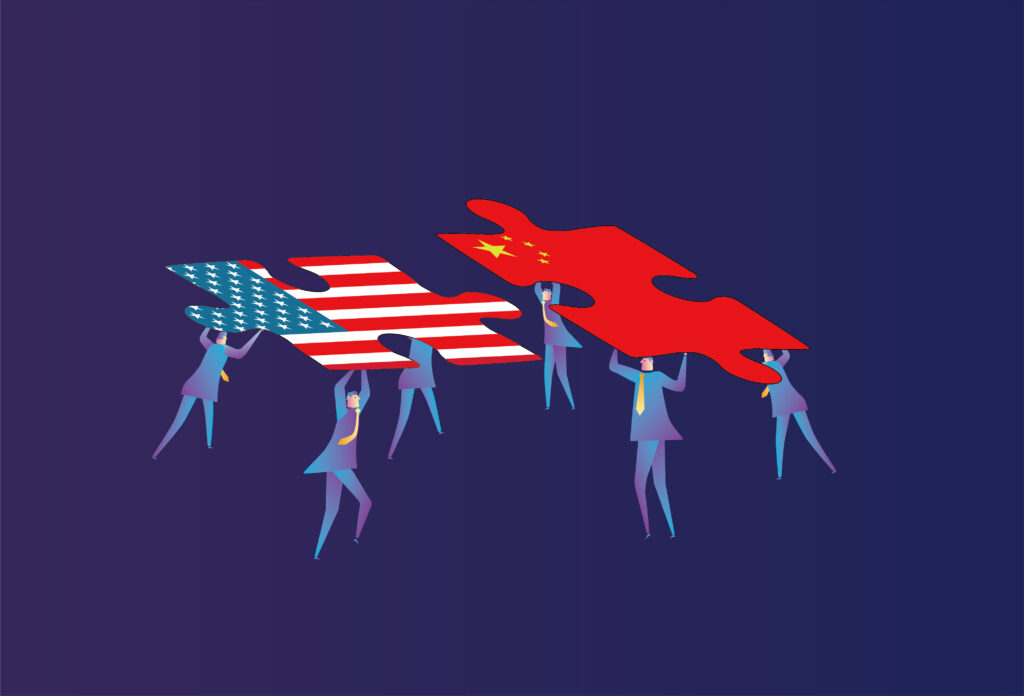

Forging ‘Constructive Strategic Stability based on Fairness and Reciprocity’