

El Niño is a recurring climate phenomenon marked by unusually warm surface waters across the central and eastern equatorial Pacific. This warming weakens trade winds and shifts rainfall patterns across large parts of the world. El Niño events generally occur every two to seven years, last between nine and twelve months, and reach their peak intensity between November and February. Their effects vary by region, but commonly include drought, heavy rainfall, heatwaves, and changes in tropical storm activity.
For global shipping, the main risk comes from the weather disruptions that El Niño can generate across maritime routes, ports, and the inland infrastructure connected to them. El Niño tends to increase tropical storm and hurricane activity in the eastern and central Pacific, which can disrupt maritime transport by forcing vessels to change course and ports to suspend operations. Drought caused by El Niño can lower water levels in navigable rivers and canals, restricting the number or size of vessels they can accommodate. El Niño can also affect agricultural and fishery production. These effects do not occur everywhere or at the same time, but together they can increase shipping safety risks, reduce operational efficiency, and raise transportation costs across the shipping industry.
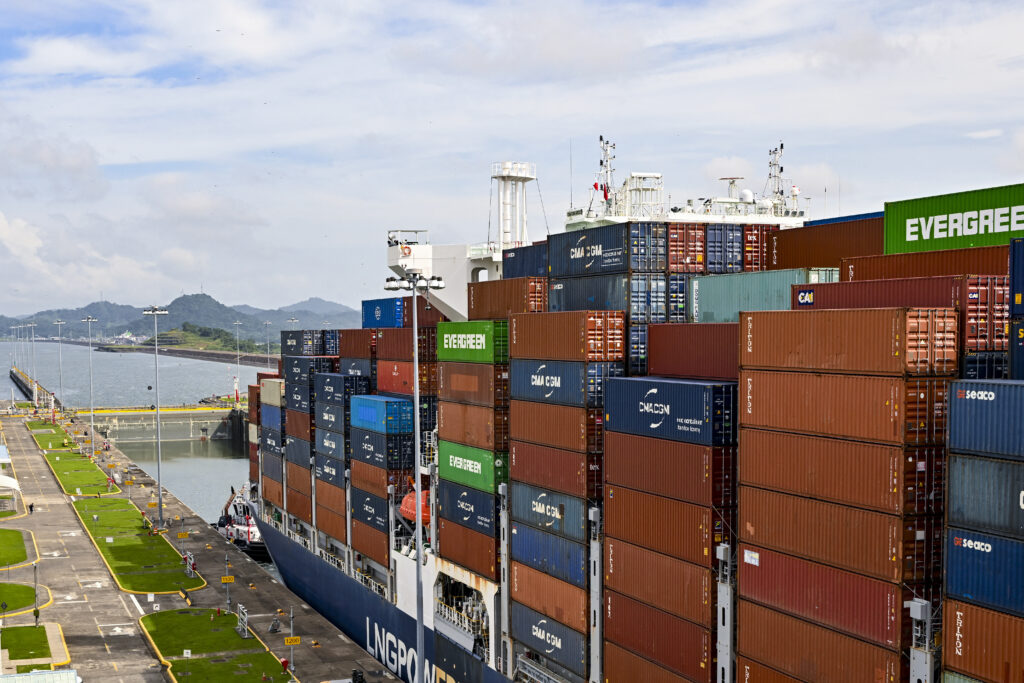
The clearest and most direct maritime impact of El Niño occurs at the Panama Canal, whose operations depend on freshwater from Gatún and Alajuela Lakes. When El Niño leads to reduced rainfall and falling reservoir levels, the Panama Canal Authority may need to reduce the number of vessels allowed to pass through or lower maximum draft limits, requiring ships to carry less cargo. Since the canal handles approximately 5% of world trade and connects around 1,700 ports in 160 countries, these operational restrictions can significantly reduce available capacity through the canal, particularly on its major trade routes between Asia and the U.S. East and Gulf coasts.
On September 10, the U.S. National Oceanic and Atmospheric Administration (NOAA) substantially raised its expectations for the developing 2026–2027 El Niño, estimating a greater than 90% chance that it will become “very strong” during the Northern Hemisphere fall and winter. The developing event had even been described as a “Super El Niño.”
The effects are already visible at the Panama Canal. Between May and August, El Niño-related dry conditions left rainfall in the canal watershed 34% below the historical average, while inflows into its reservoir system were 44% below normal. In response, the Panama Canal Authority reduced the number of available daily transit slots to 34 in early September and then to 32 beginning September 15. The Authority has also lowered the maximum authorized draft for Neopanamax vessels from the normal 50 feet to 48 feet, forcing some vessels to carry less cargo.
These restrictions are arriving at a time when demand for canal access is already unusually high. Disruptions in and around the Strait of Hormuz have constrained Middle Eastern energy shipments, prompting international buyers to reroute cargoes and seek more oil and gas from alternative suppliers, including those in the Americas. In April, as curtailed traffic through Hormuz boosted demand for U.S. supply, U.S. LPG exports reached a record 3.3 million barrels per day.
As Asian demand for alternative energy supplies became more urgent, cargoes moving from the U.S. Gulf and the wider Atlantic basin to Asian markets began using the Panama Canal more frequently. Under normal market conditions, many crude shipments would instead travel on fully loaded very large crude carriers around South Africa’s Cape of Good Hope. The urgent need to secure supplies has made Asian buyers more willing to use smaller or partially loaded tankers and pay the additional cost of the shorter Panama route, increasing the number of tankers and gas carriers competing for limited transit slots. For example, in September, an LPG carrier reportedly paid more than $5 million as an auction premium for a single canal reservation.
El Niño’s direct effects on shipping are regional rather than global. Its effects vary substantially by region, depending on how changes in rainfall, storms, and temperature interact with local geography and infrastructure. As a result, its effects may remain limited across much of the global shipping network while becoming particularly severe at exposed chokepoints such as the Panama Canal.
The current pressure on the canal also demonstrates how climate and geopolitical risks can reinforce one another. Although disruptions in the Middle East remain the primary driver of the current rise in transit premiums and freight costs, El Niño is tightening Panama Canal capacity at precisely the wrong time. Geopolitical disruption is redirecting more energy cargoes toward the canal, while drought is reducing the number of vessels it can accommodate. By adding another constraint to an already disrupted shipping network, El Niño will place further upward pressure on international shipping costs and delivered energy prices, potentially intensifying inflationary pressures across the global economy.
The key period for assessing whether El Niño will cause more severe disruption to the Panama Canal and the wider shipping market will be late 2026 and early 2027. The current El Niño is expected to peak between November 2026 and January 2027, with China expecting the largest on record, overlapping with Panama’s December-to-April dry season. The existing restrictions are a response to below-normal rainfall, but they are also intended to preserve water ahead of potentially more difficult conditions. If El Niño remains strong and reservoir inflows continue to decline during the dry season, the current measures may prove to be only an early warning of more severe constraints. The Panama Canal Authority is already projecting a 5% decline in transits in 2027. The full impact of El Niño on Panama Canal operations is probably yet to come.
This Spotlight was originally released with Volume 5, Issue 9 of the ICAS MAP Handbill, published on September 30, 2026.
This issue’s Spotlight was written by Zhangchen Wang, ICAS Research Associate.
Maritime Affairs Program Spotlights are a short-form written background and analysis of a specific issue related to maritime affairs, which changes with each issue. The goal of the Spotlight is to help our readers quickly and accurately understand the basic background of a vital topic in maritime affairs and how that topic relates to ongoing developments today.
There is a new Spotlight released with each issue of the ICAS Maritime Affairs Program (MAP) Handbill – a regular newsletter released the last Tuesday of every month that highlights the major news stories, research products, analyses, and events occurring in or with regard to the global maritime domain during the past month.
ICAS Maritime Affairs Handbill (online ISSN 2837-3901, print ISSN 2837-3871) is published the last Tuesday of the month throughout the year at 1919 M St NW, Suite 310, Washington, DC 20036.
The online version of ICAS Maritime Affairs Handbill can be found at chinaus-icas.org/icas-maritime-affairs-program/map-handbill/.