ICAS Maritime Affairs Handbill (online ISSN 2837-3901, print ISSN 2837-3871) is published the last Tuesday of the month throughout the year at 1919 M St NW, Suite 310, Washington, DC 20036.
The online version of ICAS Maritime Affairs Handbill can be found at chinaus-icas.org/icas-maritime-affairs-program/map-handbill/.
An increased sense of awareness of the multifaceted nature of climate change has generated renewed engagement in regional and international institutional policy to address its adverse effects on the health of oceans across the globe. This month, the levers of organizing bodies under the system of global ocean governance have begun to reveal the intricacies behind approaches to the urgency of protecting aquaculture. The European Union has demonstrated a willingness to lead in strengthening institutional support for increasing ocean observations, by launching the OceanEye alliance with Canada, whereby the interconnectedness between maritime transport mechanisms and ocean biodiversity can be better understood. This collaboration is just one example of a broader trend toward more reliable systems and processes supported by emerging technologies to better protect marine life and promote more responsible use of oceans as a whole.
The socioeconomic implications of climate change have not only become the nexus for recent negotiations between global ocean governing bodies, but also instructive in how they reveal the nature of issues facing both ocean life and vulnerable human populations. Existing means of fishing, such as seabed trawling, is receiving new attention based on how it weakens the seafloor’s ability to capture carbon in the Irish Sea. Additionally, assessing the implementation of preventative measures for emergencies on ships at sea has called for deeper analysis into the effectiveness of alternative marine fuels such as methanol. Both of these cases are instances where researchers have identified current uses of technology at sea shape the nature of interaction between humans and ocean systems. Not only is our role in the sanctity of marine ecosystems being considered with more seriousness and rigor, but so too are the effects on human populations who bear the brunt of rising sea levels. This is exemplified by the Asian Development Bank’s commitment to more funding for ASEAN countries’ populations along coasts and the Food and Agriculture Organization of the United Nations’ report outlining the detriments of plastic pollution on food and plant systems. Conversely, there is hesitation towards this newfound sense of responsibility demonstrated by the issuing of permits to domestic deepsea mine in the Pacific Ocean and international opposition to fish subsidy proposals, both of which demonstrate the collective struggle at a regional, national, and international level that ocean governance is not without its challenges.
World Leaders Approve New Declaration to Tackle Rising Sea Levels”
September 25 – RTT News
[Globe]
Heads of State and Government have collaborated with high-level representatives at the General Assembly and have officially approved the UN Declaration on Sea Level Rise to provide assistance to countries most at risk of adverse rising sea level effects. The report utilizes an interdisciplinary framework across economic, legal, and social dimensions in order to develop long-term cooperation between countries to mitigate such effects.
September 25 – Environment coastal & offshore
[European Union, Canada]
Environmental and marine-focused organizations such as the Intergovernmental Oceanographic Commission (IOC) of UNESCO and the World Meteorological Organization (WMO) have co-sponsored an emerging alliance known as “OceanEye”, officially launched by the President of the European Commission and the Prime Minister of Canada, and led by the Global Ocean Observing System (GOOS). This alliance will focus on strengthening institutional and financial support for ocean observations supporting data and research initiatives around the world to better understand maritime transport mechanisms, ocean industries, marine biodiversity, and the protection of coastal communities. The platform is operated by about 64 countries.
“NEC building 1-petabit-capacity subsea cable for Meta”
September 25 – The Japan Times
[United States, Japan, France]
The Japanese Nippon Electric Company will develop the technology required to build a subsea cable that will run 7,000 kilometers between the United States and France across the Atlantic Ocean. The subsea cable, known as “Petal”, is owned by Met Platforms and is set to be the first subsea cable to have two cores, which will double the data capacity to 125,000 gigabytes per second.
“US shrimp group urges equal marine mammal standards for foreign fisheries”
September 24 – IntraFish
[United States]
The Southern Shrimp Alliance (SSA) is seeking the help of the National Marine Fisheries Service (NMFS) to revise their enforcement of import provisions under the Marine Mammal Protection Act. Although the NMFS is planning to update the program’s import provisions, the SSA and other associations have submitted formal complaints that standards pertaining to marine mammal conservation to foreign fisheries that supply seafood to U.S. markets are not high enough. These restrictions affect about 240 fisheries in 46 countries.
“100 countries in: High Seas Treaty nears universal ratification”
September 24 – Oceanographic
[United Nations, Globe]
The High Seas Treaty has officially reached more than 100 signatories during the UN General Assembly meeting, despite only needing 60 signatories. The treaty addresses the overlapping nature between climate change, biodiversity loss, and pollution through its legal framework to protect marine life.
“FAO Outlines Risks of Plastic Pollution to Food Safety, Calls for One Health Policy Approach”
September 23 – Food Safety Magazine
[Globe]
The Food and Agriculture Organization of the United Nations (FAO) has produced a technical report identifying the interdisciplinary nature of the risks associated with plastic pollution on food, animal, and plant systems. Titled “Plastic Pollution in Agrifood Systems and One Health: Impact Pathways and Policy Implications”, the report calls on stronger coordination through the One Health approach—a collaborative, multisector framework for identifying optimal conditions for food safety—to reduce plastic pollution and identify sufficient alternatives in the process.
“MO R&D Forum advances global preparedness for alternative fuel pollution incidents”
September 23 – Ship Management International
[Singapore, Globe]
Singapore’s Maritime and Port Authority, with key support from China, hosted the “IMO Research and Development Forum” to examine the effectiveness of alternative marine fuels such as methanol, ammonia, and biofuels as strategies for responding to emergencies on ships. By recognizing the collective responsibility of governments and industries for the health of the ocean, one key outcome of the forum is to focus on the implementation of preventative measures.
“SeaSTORE Scientists Measure Trawling’s Impact on Irish Sea Carbon Storage”
September 22 – Ocean News & Technology
[Ireland, UK]
“SeaSTORE”, a research initiative funded by the Natural Environment Research Council is planning to address gaps in research pertaining to the environmental impacts of seabed trawling on carbon storage along the bottom of the Irish Sea. The initiative is led by universities such as the University of Bangor and Imperial College London. Although researchers and scientists understand that the fishing practice has effects on the release of CO2 into the atmosphere, there has yet to be a comprehensive assessment as to just how much is being released.
“ADB unveils $6-B ASEAN blue economy initiative”
September 22 – Daily Tribune
[Southeast Asia]
The president of the Asian Development Bank (ADB) announced during the 58th Association of Southeast Asian Nations Economic Ministers meeting the company’s commitment to conservation of fisheries and aquaculture under the ASEAN Blue Economy Initiative. The initiative will commit up to $6 billion from 2026 to 2030 to support not only restoration of Southeast Asian countries’ marine life, but investment conditions and coastal infrastructure of these countries’ blue economies as well.
“Australia, U.S. Bolster Pacific Island Nations’ Maritime Enforcement”
September 22 – Eurasia Review
[Pacific Island Nations, Australia, United States]
Australia and the United States announced a significant increase in aid to Pacific Island nations during the 2026 Pacific Islands Forum in Palau (PIF). The contents of this aid primarily pertain to security, with Australia pledging about $430 million towards combatting drug smuggling through increased aerial surveillance and border training. The United States pledged about $150 million, with $17 million of this total towards IUU fishing deterrence, such as national laws and policies and an increase in training mechanisms for compliance officers.
“Indonesia and China expand Blue Economy and Marine Governance Ties”
September 21 – Aktualita Co.
[China, Indonesia]
The 2026 Global Ocean Development Forum held in Qingdao, China, focused on the intertwinement of ocean governance and maintenance of sovereign territory. Ministers from both China and Indonesia have agreed that they see eye to eye on a number of marine issues including spatial planning, ecosystem protection, and marine technology and are prepared to discuss further implementation of collaborative frameworks between the two countries.
“FAO opens Adriatic unit to strengthen fisheries management”
September 18 – Global Seafood Alliance
[Croatia, Globe]
The General Fisheries Commission for the Mediterranean (GFCM) has opened a new fisheries unit in Croatia to support scientific research cooperation between six Adriatic countries. Italy, Albania, Bosnia and Herzegovina, Croatia, Montenegro and Slovenia are collectively facing pressures from the growing demand for aquatic resources and climate change. This new fisheries unit is spearheaded by the FAO and will focus on the implementation of solutions such as stock assessments, coordinated management and conservation efforts, and general data collection.
“UNU Macau and the Blue Institute Sign MOU on Digital Technologies and the Blue Economy”
September 16 – UNU Macau
[Macau, Seychelles]
The United Nations University Institute in Macau and the Blue Institute in Seychelles have signed a Memorandum of Understanding (MoU) to work closely on policy research on ocean health. The scale of the research will extend from the regional and national to a global level in a plethora of policy areas such as marine conservation and digital technologies for sustainable development.
“China hosts 23 Cook Islanders for deep-sea resource training”
September 15 – Cook Island News
[China, Cook Islands]
China’s Ministry of Commerce hosted a program in Hangzhou and Changsha in coordination with the Cook Islands Seabed Minerals Resources to train 23 representatives and government officials from the Cook Islands in order to strengthen the island’s knowledge and capacity of deep-sea resource management and scientific research.
“US Administration Targets Deepsea Mining Permits”
September 15 – Mining Digital
[United States]
In order to find a new source of critical minerals such as nickel, cobalt, and copper, the United States government will begin to issue permits to mining companies to deepsea mine in the Clarion-Clipperton Zone. Although the United Nations Convention on the Law of the Sea (UNCLOS) administers regulations on deepsea mining in international waters, the United States is not a signatory of the agreement and will continue to focus on the region situated between Hawaii and Mexico.
“WSC Urges Governments to Close Lithium Battery Cargo Safety Gap at IMO”
September 14 – Shipping Telegraph
[Globe]
The World Shipping Council (WSC) has submitted a proposal calling on governments around the world to adopt more stringent policy on regulations of the transport of lithium batteries due to the growing number of cargo fires at sea. As transports in lithium batteries across oceans have increased exponentially from 2020 to 2025, so too have the risk of cargo fires, necessitating a call to action led by the WSC and support from other industry organizations.
“WTO talks to recommence as US, Indonesia, India oppose current fish subsidies proposals”
September 10 – Seafood Source
[Globe, United States, India, Indonesia]
The United States, Indonesia, and India have—for differing reasons—rejected a plan introduced by the World Trade Organization (WTO) to end subsidies that lead to overcapacity and overfishing. Each country’s reasoning for their rejection is slightly different, with fishing playing a significant role in Indonesia and India’s economies. The WTO has until 2029 to ratify “Fish 2”—the second version of the WTO’s deal—or else the first version will become nullified.
“Europe project tests new approach to measuring pressures on fisheries”
September 9 – National Fisherman
[Europe, Pacific Islands]
A project known as the “GES4SEAS” united 21 organizations from 15 countries to develop new technologies to discover and manage technologies that treat climate change and the human populations that experience them, as interdependent forces. The research was primarily drawn from spatial technology such as “Tikta” which combined socioeconomic data with spatial statistics. The project was conducted across 11 sites in both European waters and French Polynesia.
“EU Confirms BBNJ Rules to Protect Fisheriers Mandate”
September 9 – The Fishing Daily
[EU, Globe]
Representatives from the EU convened to confirm the unanimous implementation of the Biodiversity Beyond National Jurisdiction (BBNJ) agreement adopted by the United Nations in 2023. The BBNJ works to enforce the legally binding agreement to comprehensively manage commercial fish stocks and marine ecosystems shared between nations across specific regions. In order to move from the legal agreement to kickstart operations, the European Commission also announced a conference in March of 2027 to establish co-operating processes between regional fisheries management organizations and BBNJ bodies.
“OceanMind Launches Syndra to Drive Global Marine Enforcement”
September 9 – The Fishing Daily
[Southeast Asia, Globe]
The U.K.-based non-profit OceanMind, has announced a new initiative known as “Syndra” to aid Southeast Asian countries such as Cambodia, Thailand, and the Philippines in their efforts to actualize their ocean governance ambitions. The initiative seeks to strengthen cooperation between national authorities, regional bodies, and technical agencies by identifying and modernizing communication processes and joint oversight frameworks over shared marine ecosystems.
“FAO Members Celebrate 10th Anniversary of Landmark Fisheries Treaty”
September 8 – Global Agriculture
[Italy, Globe]
At their headquarters in Rome, the FAO hosted a celebration commemorating the 10th anniversary of the legal enforcement of the Port State Measures Agreement (PSMA). Aimed at targeting illegal, unreported, and unregulated fishing, the agreement is the first of its kind, fostering the participation of 110 FAO Members represented by 86 participating countries, and a panel discussion with ministers from major countries. Deterrence of vessels from engaging in illegal aquaculture activity has resulted in over 22,000 annual inspections by the PSMA.
“IMO Concludes Next Round of Net-Zero Discussions Still Divided”
September 4 – The Maritime Executive
[Globe]
Member states of the International Maritime Organization (IMO) conveyed for a number of working sessions to address strategies to implement decarbonization through alternative and largely renewable resources. Although the organization seeks to reach a consensus on their approach by the end of 2026, a handful of states such as the United States and Saudi Arabia have continued to reject efforts to develop an adequate “Net Zero” system, further delaying the process to working sessions in the coming months.
“No mention of U.S.-China ship taxes in trade truce”
September 28 – Freight Waves
[United States, China]
A trade truce titled the “Busan Agreement”, and agreed upon by the United States and China, has been extended until January 2027. However, fees on all China-linked and China-built vessels entering U.S. ports are set to resume on November 10th 2026. If the entry-port fees are not suspended, there would be service fees placed on all Chinese-owned vessels, vessels operated by Chinese companies, and Chinese-built ships operated by non-Chinese carriers. Although port fees are also placed on U.S.-linked vessels by China have also been suspended, U.S. measures uniquely affect foreign-linked vessels as well.
“Shipping traffic via Strait of Hormuz stays below 10-day average, data shows”
September 22 – Reuters
[Globe]
Shipping containers transiting the Strait of Hormuz continue to decrease in volume as the U.S.-Iran conflict wages on. Initial data revealed that vessel count was at one point after the war had begun, that 15 vessels would transit every 10 days, down from an average 26 per 10 days. This figure has steadily decreased from four to just three a day currently.
“Caribbean Basin Crude Oil Exports Jump 45%”
September 22 – Maritime Logistics News
[Bahamas, Globe]
Just like the increase in exports from the Red Sea area due to rerouting away from the Strait of Hormuz, the Caribbean Basin is also currently experiencing an increase in the total number of crude oil leaving its ports. There has been an increase in the Basin’s share of global exports from 3.9% in 2025 to 6.1% in 2026, largely due to Venezuela and Guyana’s participation in exports. It is estimated that about 790,000 barrels are exported per day, with increased volumes heading towards the U.S. and India, and a decrease in volume towards China.
“Taiwan holds first joint military drills using attack drones ahead of Trump-Xi summit in the US”
September 18 – AP News
[China, United States, Taiwan]
Taiwan has conducted military drills featuring a number of attack drones ahead of the U.S.-China summit on September 24th. The drills were conducted in Pingtung county, and presented anti-air, anti-ship, and anti-landing missiles as well.
“Modi, Putin agree to boost India-Russia partnership on eve of BRICS summit”
September 12 – Nikkei Asia
[India, Russia]
India and Russia have decided to fortify relations through discussions on energy and defense due to shipping and trade disruptions as a result of recent maritime activity. India is one of Russia’s biggest importers of oil while Russia’s share of crude imports has risen 51% this summer. Bilateral trade between the two countries was about $70 billion from 2024 to 2025, with the two countries stating that they would like to increase their trade target to $100 billion by 2030.
“Argentina to file criminal case against oil company operating in Falklands”
September 8 – BBC
[Argentina, UK]
The oil company, Navitas Petroleum, is set to be criminally charged by the Argentine government for their maritime presence off the coast of the Falkland Islands. In the vicinity of the islands located in the south-west region of the Atlantic Ocean, is an oil-drilling project known as Sea Lion, of which the aforementioned Navitas Petroleum has a 65% stake in. The Argentine government’s focus on the oil company is part of a larger dispute over the Falkland Islands with the UK dating back to the 1980s.
“Panama Canal considering more cuts in transits due to El Niño”
September 8 – The Japan Times
[Panama, United States, China]
Following the declaration of a national emergency in Panama due to El Niño causing a drought, the head of the Panama Canal Authority has announced that there is a strong possibility additional measures may be implemented. The drought has affected the amount of water needed to fill the canal from its source reservoirs, estimating a reduction in the maximum number of ships able to cross from 36 to 32 by mid-September.
“Japan’s hypersonic subs bring it closer to the nuclear edge”
September 2 – Asia Times
[Japan, China]
Plans to develop underwater hypersonic missiles have been added to Japan’s fiscal year 2027 budget request by Japan’s Ministry of Defense. This request follows the larger intention of bolstering the country’s counterstrike expertise, including arming underwater vehicles (UUVs) with long-range strike weapons and more crewed platforms.
“Diesel Jumps to Four-Month High With Supply Squeeze Worsening”
September 1 – Bloomberg
[Globe, Strait of Hormuz]
The essential fuel, diesel, rose to its highest recorded price as the global economy is further strained, raising concerns for the price of inflation on basic commodities. The leading global benchmark for financial contracts on oil products has risen to 4.2%, their highest level since April. Both strikes on oil refineries in the Persian Gulf and Russia continue to hinder global diesel shipments.
August 31 – MI News Network
[Singapore, United States, Thailand]
The Nimitz-class USS Abraham Lincoln (CVN-72) has passed through the Singapore strait on its way to Thailand after being at sea for more than 250 days straight. The U.S. government has denied that the ship is being stationed for military purposes in conjunction with Thailand, but instead for replenishment of the ship and its crew after a grueling deployment at sea. The USS George Washington (CVN-73) is set to replace the USS Abraham Lincoln from the U.S. Central Command.
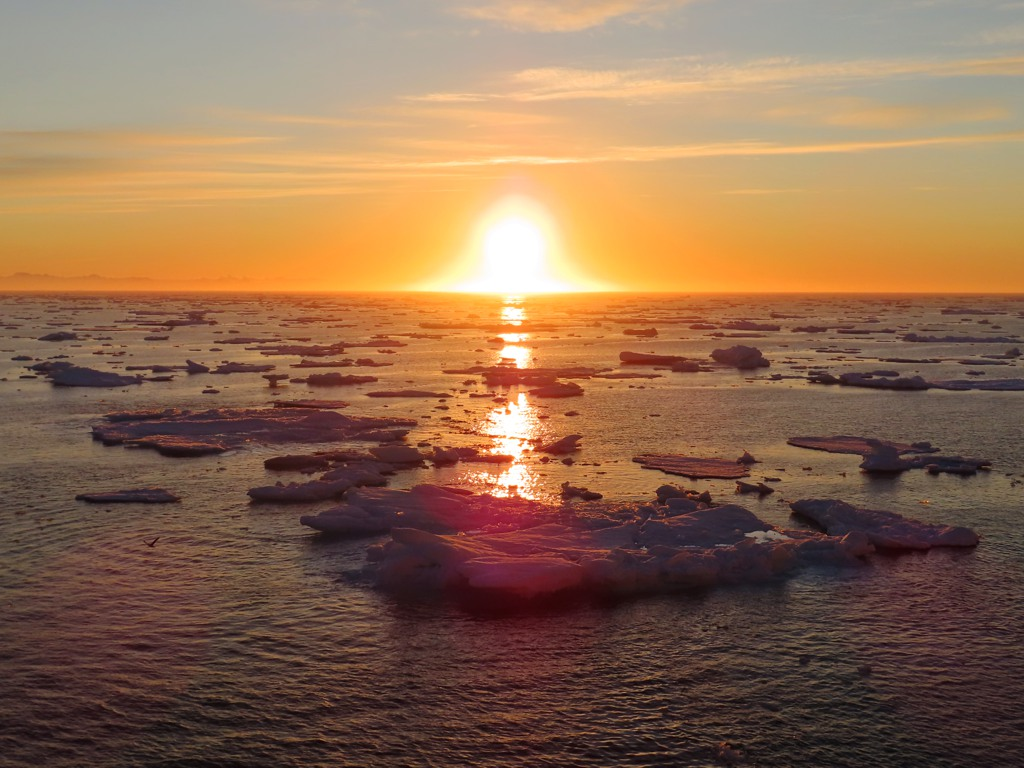
The Sept. 22 agreement between the United States, Denmark and Greenland brings military access and economic activity into a broader Arctic security framework. It amends the 1951 Agreement on the Defense of Greenland and subsequent arrangements, including the 2004 Igaliku Agreement. It will take effect after the required diplomatic notification of completed parliamentary procedures. Its significance lies in how defense commitments will increasingly shape investment access and Greenland’s development choices.
The 1951 agreement reflected Greenland’s Cold War role in the defense of the island and the region of the North Atlantic Treaty Organization, given its position between North America and the Soviet Union. The new agreement retains the geographic logic but extends U.S. military access. It allows the United States to modernize and expand operations at Pituffik Space Base, to establish additional defense areas at Narsarsuaq and Mestersvig subject to mutually agreed arrangements and to propose further sites. It also grants broad access for U.S. military aircraft, vessels and forces, with provisions for undersea access and unmanned installations.
The agreement covers counter-espionage, military installations by third countries and foreign investment in sensitive sectors. It explicitly links Greenland to the defense of the North American continent, including the planned Golden Dome missile-defense system. These provisions extend the island’s strategic role into decisions about infrastructure, technology and resources.
Denmark and Greenland have accepted this more permanent U.S. military role while maintaining that sovereignty is non-negotiable. The agreement reaffirms the sovereignty and territorial integrity of the Kingdom of Denmark and recognizes the Greenlandic people’s right to self-determination. It transfers no sovereignty to the United States. Expanded strategic access offers a way to address Washington’s security concerns within those limits.
Under the Greenland Self-Government framework, foreign, defense and security policy cannot be transferred from the Realm to Greenland; constitutional authority remains with the Danish government and parliament. The framework also provides for Greenlandic participation in foreign-policy matters directly affecting the island. The new agreement requires consultation and mutual agreement on implementation details for additional U.S. defense areas, giving Greenland a role in decisions about its territory.
The agreement also seeks to preserve these arrangements despite any future change in Greenland’s political status. It has no end date and requires Denmark and Greenland to ensure that an independent Greenland remains in NATO and assumes relevant defense obligations. This leaves the right to seek independence intact while seeking continuity in the island’s strategic alignment. Formal sovereignty and strategic discretion are therefore distinct questions. Greenland’s future political status could change without a corresponding reopening of its security relationships.
For NATO, the agreement calls for stronger Arctic planning, presence, exercises and intelligence cooperation. Greenland has belonged to NATO through Denmark since the founding of the alliance. However, the agreement itself is trilateral, and its value to NATO will depend on how Washington exercises its new rights. Access that is coordinated with allied planning could strengthen missile warning, surveillance and maritime awareness along the alliance’s northern approaches, as well as support the defense of the North Atlantic.
European governments may be less receptive if Washington presents these rights as a basis for unilateral strategic control. Recent disputes over Greenland have revealed tensions between U.S. security demands and European concerns about sovereignty and autonomy. The agreement’s effect on transatlantic relations will depend as much on its implementation as on its terms.
The European Union’s growing role in Greenland is primarily economic. On Sept. 7, the EU and Greenland announced a €200 million partnership package for connectivity, sustainable energy, critical raw materials and other development priorities. This suggests a possible division of labor, with NATO and the United States concentrating on defense and the EU supporting economic resilience and development. Investment screening shows how readily those responsibilities can overlap.
The agreement links access to Greenland’s sensitive sectors to the security relationships of investors’ home countries. It restricts investors from states outside NATO, in NATO partnerships or the EU from obtaining control, significant influence or access to non-public information that could threaten national security or public order in particularly sensitive sectors, including critical infrastructure and resource extraction. Exceptions require agreement by the three parties that the activities would not threaten national security or public order. Greenland is to implement the provisions through investment screening in cooperation with Denmark, whose authorities will consult closely with Washington.
Washington and Brussels share concerns about foreign investment, vulnerable supply chains and critical infrastructure. They may differ over how broadly to define a security risk. If Washington favors a restrictive approach to Chinese participation while European or Greenlandic authorities seek exceptions for particular projects, disagreements could emerge within the consultation process. The question is how much practical room that process leaves for Greenland’s economic priorities.
For China, the significance lies in the growing role of security alignments in determining the terms of economic participation. Chinese companies considering projects in sensitive sectors could face uncertainty over whether an exception is politically achievable, even where commercial prospects are attractive. That uncertainty may discourage participation before a formal rejection occurs. Clear criteria for exceptions would help distinguish specific security concerns from a broader policy of excluding Chinese involvement.
Such scrutiny is changing how Arctic economic projects are assessed. Mines, ports, telecommunications, subsea cables and energy projects all face questions about strategic dependence, supply-chain resilience and investors’ geopolitical affiliations, alongside commercial and environmental considerations.
A narrower pool of investors could also impose costs on Greenland. If Washington and its European partners expect the island to limit certain sources of capital, they should offer commercially viable alternatives that reflect local priorities. The EU package provides a basis for assessing whether such support can materialize. Timely financing, local employment and meaningful consultation would help establish whether expanded security cooperation also improves the development options available to Greenlandic society.
This agreement is consistent with aspects of the Trump administration’s 2025 National Security Strategy, which calls for a Western Hemisphere free from hostile foreign control of key assets and for continued U.S. access to strategically important locations. It describes this policy as a “Trump corollary” to the Monroe Doctrine. The Greenland agreement applies a similar logic by linking military access with strategic infrastructure, supply-chain protection and scrutiny of investments from outside the specified security partnerships.
Greenland’s legal history and NATO ties limit its usefulness as a model elsewhere. Comparable questions nevertheless arise around the Panama Canal and strategic infrastructure across the Western Hemisphere. With the meetings between presidents Xi Jinping and Donald Trump in Washington, the Greenland agreement highlights a broader challenge for bilateral relations: how to address security concerns while preserving space for economic engagement. The agreement’s credibility will depend on clear limits to investment restrictions, workable alternatives for development and meaningful Greenlandic participation in decisions.
This issue’s Flagship Analysis was written by Nong Hong, Executive Director and Senior Fellow at ICAS.
El Niño is a recurring climate phenomenon marked by unusually warm surface waters across the central and eastern equatorial Pacific. This warming weakens trade winds and shifts rainfall patterns across large parts of the world. El Niño events generally occur every two to seven years, last between nine and twelve months, and reach their peak intensity between November and February. Their effects vary by region, but commonly include drought, heavy rainfall, heatwaves, and changes in tropical storm activity.
For global shipping, the main risk comes from the weather disruptions that El Niño can generate across maritime routes, ports, and the inland infrastructure connected to them. El Niño tends to increase tropical storm and hurricane activity in the eastern and central Pacific, which can disrupt maritime transport by forcing vessels to change course and ports to suspend operations. Drought caused by El Niño can lower water levels in navigable rivers and canals, restricting the number or size of vessels they can accommodate. El Niño can also affect agricultural and fishery production. These effects do not occur everywhere or at the same time, but together they can increase shipping safety risks, reduce operational efficiency, and raise transportation costs across the shipping industry.
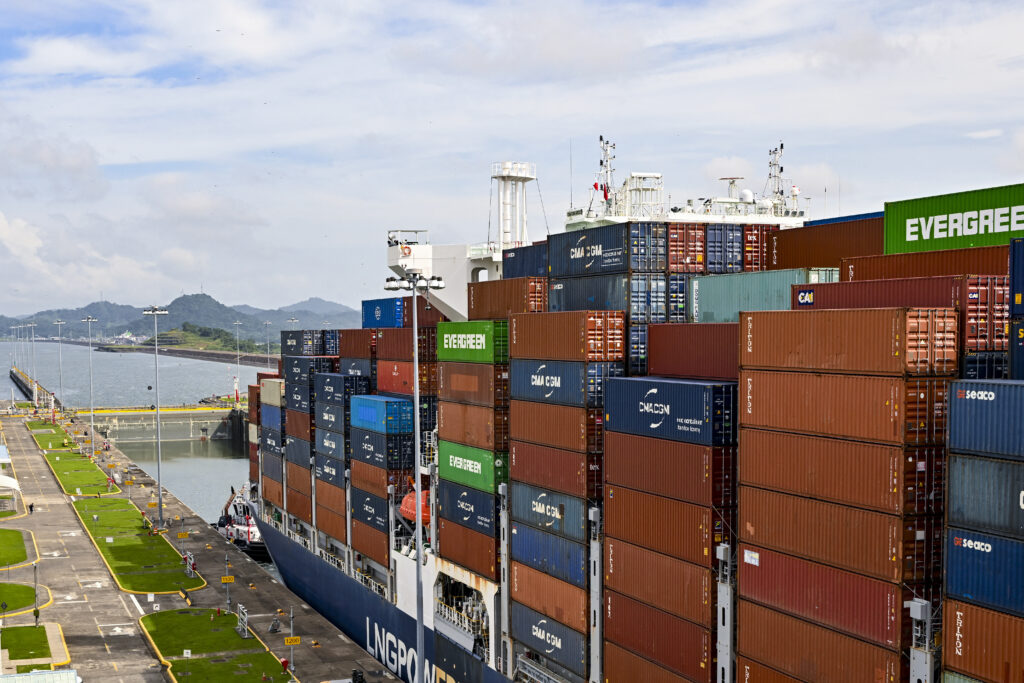
The clearest and most direct maritime impact of El Niño occurs at the Panama Canal, whose operations depend on freshwater from Gatún and Alajuela Lakes. When El Niño leads to reduced rainfall and falling reservoir levels, the Panama Canal Authority may need to reduce the number of vessels allowed to pass through or lower maximum draft limits, requiring ships to carry less cargo. Since the canal handles approximately 5% of world trade and connects around 1,700 ports in 160 countries, these operational restrictions can significantly reduce available capacity through the canal, particularly on its major trade routes between Asia and the U.S. East and Gulf coasts.
On September 10, the U.S. National Oceanic and Atmospheric Administration (NOAA) substantially raised its expectations for the developing 2026–2027 El Niño, estimating a greater than 90% chance that it will become “very strong” during the Northern Hemisphere fall and winter. The developing event had even been described as a “Super El Niño.”
The effects are already visible at the Panama Canal. Between May and August, El Niño-related dry conditions left rainfall in the canal watershed 34% below the historical average, while inflows into its reservoir system were 44% below normal. In response, the Panama Canal Authority reduced the number of available daily transit slots to 34 in early September and then to 32 beginning September 15. The Authority has also lowered the maximum authorized draft for Neopanamax vessels from the normal 50 feet to 48 feet, forcing some vessels to carry less cargo.
These restrictions are arriving at a time when demand for canal access is already unusually high. Disruptions in and around the Strait of Hormuz have constrained Middle Eastern energy shipments, prompting international buyers to reroute cargoes and seek more oil and gas from alternative suppliers, including those in the Americas. In April, as curtailed traffic through Hormuz boosted demand for U.S. supply, U.S. LPG exports reached a record 3.3 million barrels per day.
As Asian demand for alternative energy supplies became more urgent, cargoes moving from the U.S. Gulf and the wider Atlantic basin to Asian markets began using the Panama Canal more frequently. Under normal market conditions, many crude shipments would instead travel on fully loaded very large crude carriers around South Africa’s Cape of Good Hope. The urgent need to secure supplies has made Asian buyers more willing to use smaller or partially loaded tankers and pay the additional cost of the shorter Panama route, increasing the number of tankers and gas carriers competing for limited transit slots. For example, in September, an LPG carrier reportedly paid more than $5 million as an auction premium for a single canal reservation.
El Niño’s direct effects on shipping are regional rather than global. Its effects vary substantially by region, depending on how changes in rainfall, storms, and temperature interact with local geography and infrastructure. As a result, its effects may remain limited across much of the global shipping network while becoming particularly severe at exposed chokepoints such as the Panama Canal.
The current pressure on the canal also demonstrates how climate and geopolitical risks can reinforce one another. Although disruptions in the Middle East remain the primary driver of the current rise in transit premiums and freight costs, El Niño is tightening Panama Canal capacity at precisely the wrong time. Geopolitical disruption is redirecting more energy cargoes toward the canal, while drought is reducing the number of vessels it can accommodate. By adding another constraint to an already disrupted shipping network, El Niño will place further upward pressure on international shipping costs and delivered energy prices, potentially intensifying inflationary pressures across the global economy.
The key period for assessing whether El Niño will cause more severe disruption to the Panama Canal and the wider shipping market will be late 2026 and early 2027. The current El Niño is expected to peak between November 2026 and January 2027, with China expecting the largest on record, overlapping with Panama’s December-to-April dry season. The existing restrictions are a response to below-normal rainfall, but they are also intended to preserve water ahead of potentially more difficult conditions. If El Niño remains strong and reservoir inflows continue to decline during the dry season, the current measures may prove to be only an early warning of more severe constraints. The Panama Canal Authority is already projecting a 5% decline in transits in 2027. The full impact of El Niño on Panama Canal operations is probably yet to come.
This issue’s Spotlight was written by Zhangchen Wang, Research Associate at ICAS.
Competing Narratives in the Arctic
Hosted by ICAS & The Fletcher School of Law and Diplomacy, Tufts University
October 9, 2026
16:05-17:00
On October 9, ICAS and The Fletcher School of Law and Diplomacy at Tufts University will cohost the breakout session “Competing Narratives in the Arctic” at the 2026 Arctic Circle Assembly in Reykjavik, Iceland. Competing power narratives are reshaping how the Arctic is understood and contested through the lenses of security, development, science, sovereignty, and rules-based governance. Bringing together perspectives from the United States, China, Europe, Russia, and Indigenous communities, this session will examine how different understandings of the Arctic translate into concrete policy choices and institutional outcomes. It will also explore how external narratives affect Arctic residents, Indigenous rights, local priorities, and the broader legitimacy of Arctic governance. By looking beyond state-centric perspectives, the discussion aims to highlight the gap between external strategic framing and the lived realities of communities in the region.
The Xiangshan Forum and the South China Sea: No Major Escalation but No Lasting Stability
by Nong Hong
September 18, 2026
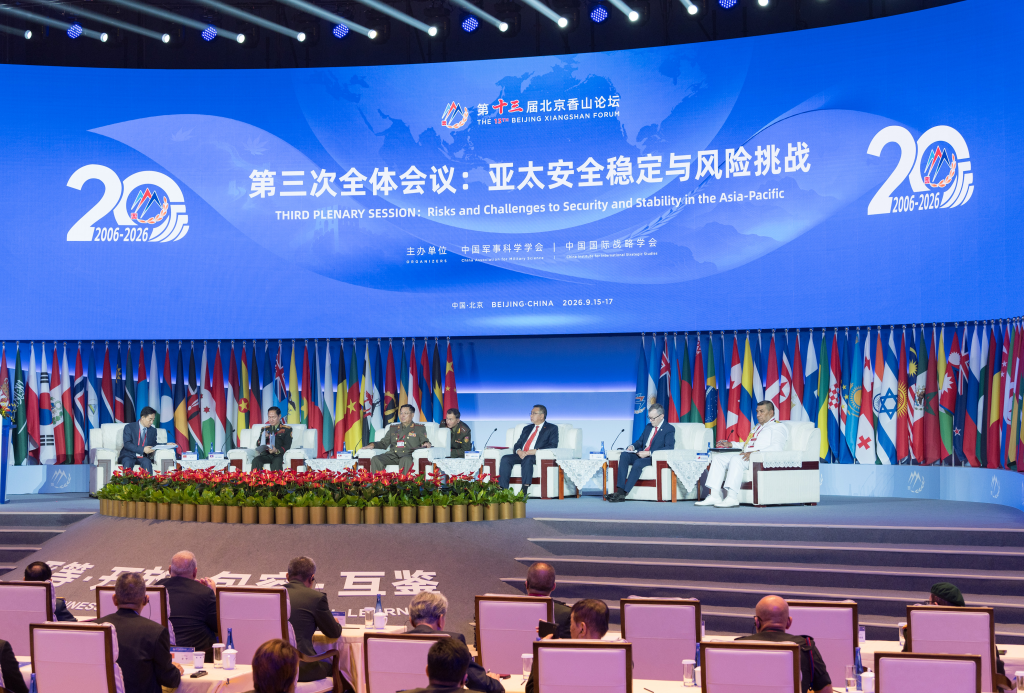
The 13th Beijing Xiangshan Forum closed on 17 September after bringing together around 2,000 official representatives, scholars and observers from more than 100 countries, regions and international organisations. Its discussions on strategic stability, Asia-Pacific security and maritime governance returned to the same problem: how to manage intensifying competition while keeping dialogue open.