

ICAS Bulletin (online ISSN 2836-3418, print ISSN 2836-340X) is published every other week throughout the year at 1919 M St NW, Suite 310, Washington, DC 20036.
The online version of ICAS Bulletin can be found at chinaus-icas.org/bulletins/.
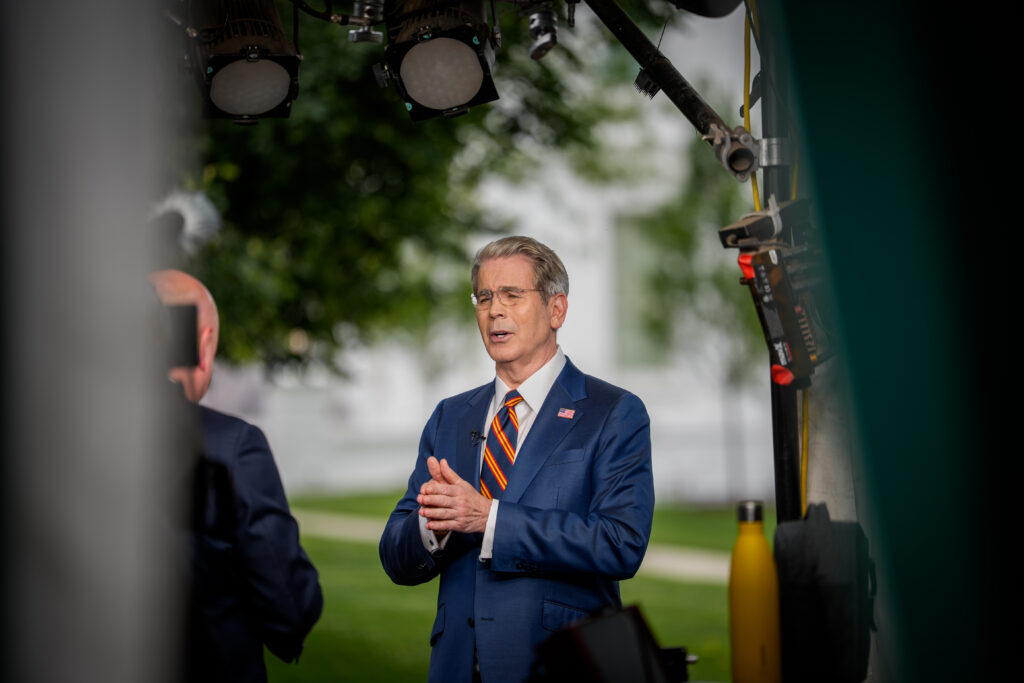
– On July 30, China’s Vice Premier He Lifeng held a video call with U.S. Treasury Secretary Scott Bessent and Trade Representative Jamieson Greer. The two sides discussed implementing important consensus reached during the May Trump-Xi meeting. Despite recent trade tensions which were brought up by both sides during the call, the overall message landed on cooperation and strategic stability.
– On August 1, it is reported that US Senator Steve Daines is expected to return to China ahead of Xi Jinping’s September state visit to help finalize the agenda.
– On August 5, reports say that the FBI has forged unprecedented law-enforcement partnership with China and Russia, with Director Kash Patel calling them “new and dynamic relationships”.
– Meanwhile, reports on August 6 suggest that Pentagon policy chief Elbridge Colby still struggles to secure a Beijing visit amid tensions over U.S. arms sales to Taiwan. However, Randy Schriver, chair of the recent U.S.-China Economic and Security Review Commission delegation, said that Chinese officials are working to arrange separate visits with Colby and Defense Secretary Pete Hegseth.
Associated News References:
“Chinese vice premier holds video call with U.S. treasury secretary, trade representative,” Xinhua, July 30
“Exclusive | Trump envoy Steve Daines to return to Beijing as US and China lock in Xi summit agenda,” South China Morning Post, August 1
“EXCLUSIVE: Under Patel, FBI forges unprecedented law enforcement ties with China, Russia,” Reuters, August 5
“Pentagon policy chief can’t get invited to Beijing”, POLITICO, August 6
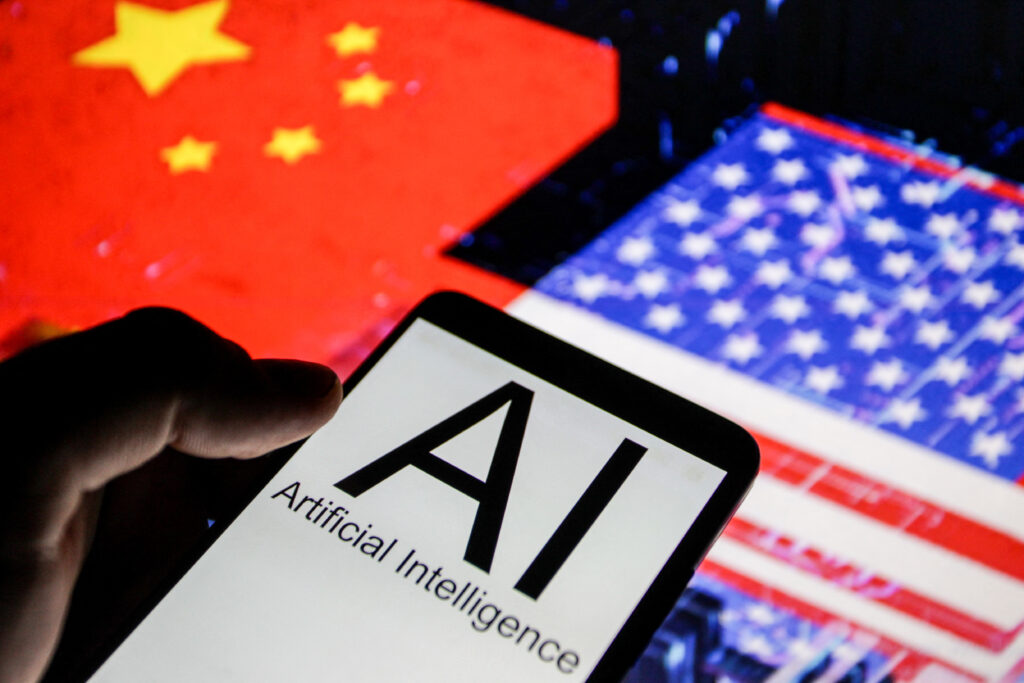
– Hugging Face CEO said on August 3 that China is winning the AI race with open models and could catch up to the U.S. frontier labs as early as this year. He attributed China’s success to its open collaboration ecosystem, and warned that the U.S. risks falling behind by “building in silos”.
– On August 3, Alibaba unveiled its largest AI model, Qwen 3.8-Max. Meanwhile, DeepSeek’s latest V4-Flash, released on July 31, offers a cut-throat pricing that is 100 times cheaper than Claude Fable 5. Both products showcase China’s commitment and capability to develop open-weight models.
– China is also strengthening its domestic semiconductor ecosystem. On August 3, the State Council introduced a revised regulation on integrated circuit layout designs, aiming to safeguard exclusive design rights, foster innovation, and increase oversight of overseas rights transfers.
– On August 4, it was reported that the Federal Communications Commission (FCC) is drafting a ban on U.S. imports of new models of Chinese data center components, citing potential security risks. Potentially published and taking effect later this year, this move signifies another U.S. supply chain de-risking.
– On the same day, President Trump accused China of fueling the growing nationwide, bipartisan opposition to AI data centers, arguing that Beijing wants to slow U.S. infrastructure development as the two countries compete for AI leadership.
Associated News References:
“Hugging Face CEO Says China is Winning The AI Race With Open Models,” CNBC, August 3
“Alibaba unveils its largest AI model yet, DeepSeek’s latest model is ultra-low cost,” Reuters, August 3
“China strengthens IP protection on integrated circuit layout design,” China Daily, August 3
“EXCLUSIVE: Trump administration drafting ban on Chinese data center devices, sources say,” Reuters, August 4
“Trump claims China is fuelling resistance to AI data centres in the US,” South China Morning Post, August 5

– Following recent crises in the South China Sea, the Philippines, Japan, and the U.S. completed joint defense exercises from July 21 to 25. The Philippine Coast Guard also participated in the recently concluded RIMPAC for the first time, joining a record participation of 30 nations.
– Meanwhile, China-Phillippines tensions continue to intensify. On July 30, Beijing criticized Manila for “flagrantly infringing” on Chinese sovereignty after the Philippines formally submitted a bid to the United Nations to extend its seabed rights in the South China Sea.
– China followed the accusation with joint naval and air drills near the disputed Scarborough Shoal on August 1 and issued new rules for its nature reserve around the shoal to ban unauthorized fishing, mining, and coral harvesting.
– Taiwan’s Defense Minister acknowledged the extent of the island’s military collaboration with the U.S. to a small group of reporters on July 31. This rare recognition happened amid President Trump’s uncertain commitment and China’s mounting pressure. Claiming that Taiwan has learned much “practical combat experience” from the U.S., the Minister added that Taiwan’s plan for potential conflict with China does not include U.S. military intervention.
– Japan also sharpened its focus on China in its new defense white paper, to which Beijing responded on August 5 by accusing Tokyo of exaggerating China as a threat and making “unwarranted comments” about Taiwan.
– Regional security competition coincided with growing questions over U.S. military preparedness. Reports on August 4 suggested that the war with Iran has nearly exhausted the U.S. stockpile of long-range precision missiles including Army Tactical Missile Systems (ATACMS) and Precision Strike Missiles (PrSM), raising concerns about the future of the war, as well as Washington’s capacity to sustain other potential conflicts.
– Meanwhile on August 5, the Pentagon is reportedly drafting a new nuclear weapons strategy to prepare for potential conflicts with China or Russia, shifting from reliance on long-range strategic missiles to tactical, shorter-range nuclear options. While intended to create more credible nuclear threats, this shift also threatens to lower the threshold for nuclear use.
– Separately, the Trump administration recently stepped up efforts to reduce U.S. reliance on China for critical minerals. On August 6, the Commerce Department announced a one-year ban on exports of tungsten scrap and battery waste starting August 27 to boost domestic recycling.
– On August 7, Trump promised more than USD 3 billion critical minerals investments spanning mining, batteries, magnets, and workforce. The package includes USD 400 million for an Australian scandium project capable of replacing current Chinese supply, highlighting Washington’s push to shift critical mineral supply chains toward domestic and allied sources.
Associated News References:
“Philippines, Japan, US Complete Exercises in South China Sea”, Bloomberg, July 26
“China accuses Philippines of ‘flagrantly infringing’ on sovereignty in seabed claim,” South China Morning Post, July 30
“U.S., Allies Put Frictions Aside, Showing China Combined Naval Might,” WSJ, July 31
“PLA and coastguards stage South China Sea drills days after Philippine territorial bid,” South China Morning Post, August 1
“Deep U.S. Ties With Taiwan are Surviving Pressure From China—and Trump,”WSJ, August 4
“Exclusive: US has Used ‘Virtually All’ of its Long-Range Precision Missiles During Iran War, Sources Say”, Reuters, August 4
“Pentagon Drafting a New U.S. Nuclear Strategy in Case of Regional War With China or Russia, Sources Say”, NBC News, August 5
“China Complains to Japan Over Defence White Paper, Foreign Ministry Says”, Reuters, August 5
“Trump Admin Blocks Tungsten, Battery Waste Exports to Boost US Minerals Supply,” Reuters, August 6
“Trump Touts $3 Billion in Minerals Projects to Counter China”, Bloomberg, August 7
“Australian Rare Earth Miner Surges After U.S. Department of Defense Investment,” CNBC, August 10
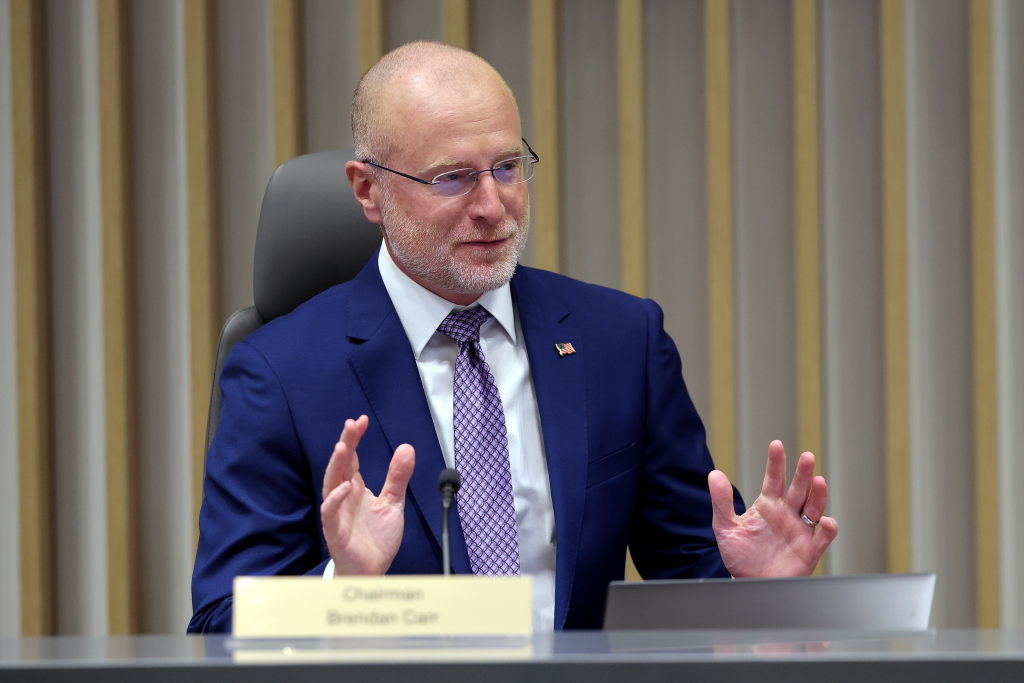
– On July 28, FCC updated its Cover List to include two additional categories: robots and inverters. According to an FCC statement, the restrictions aim to curb national security risk, bolster U.S. AI buildout, and safeguard the U.S. supply chain.
– During the video call with U.S. top trade officials on July 30, Vice Premier He Lifeng voiced “serious concern” over recent U.S. trade restrictions including the new tariffs and FCC bans, whereas Bessent emphasized Washington’s expectation for Beijing to “fully meet its commitments on rare earths and U.S. agricultural products”. Both sides also discussed implementation of the Trade and Investment Boards, and the exchange was “candid, in-depth, and constructive” overall.
– However, just a day later on July 31, the U.S. added 43 new Chinese companies to the UFLPA Entity List, the largest single expansion since the act was first signed into law in 2021.
– Beijing quickly opposed the new sanctions on August 1, with the Ministry of Commerce denying forced labor accusations and accusing Washington of undermining diplomatic progress immediately after trade talks.
– On August 5, China responded to the FCC ban and UFLPA blacklisting with a series of countermeasures against the U.S. including controls on drone exports and a ban on dealings with six American entities.
– Importantly, among the countermeasures was Beijing’s first-ever national security investigation into foreign trade, whereas previous investigations were mainly driven by economic reasons. This investigation targets imported printers and photocopiers.
– Commenting on the package of retaliation, the Ministry of Commerce called it “generally restrained” and signalled Beijing’s willingness to keep bilateral relations on track. This may suggest that the tit-for-tat escalation was intended more as a warning than a broader rupture in relations.
– Beijing reportedly sought new conditions for its agreement to purchase 200 Boeing aircrafts, one of the few tangible outcomes of the May Trump-Xi meeting.
– On August 7, the White House also announced a 15% tariff and a price floor for imported solar products, set to take effect on December 4.
– On August 3, adding to the 4 million tons purchased previously this year, the USDA confirmed that Chinese buyers purchased nearly half a million tons of U.S. soybeans. The purchases were done amidst a drop in prices, with most of the deals completed by the state-owned Sinograin. These deals signify China’s adherence to its soy bean purchase commitment ahead of the September meeting.
– On August 4, General Motors and China’s SAIC Motor extended their decadeslong Chinese joint venture by another 20 years to 2047, a notable long-term commercial commitment despite worsening geopolitical tensions and the declining position of traditional Western automakers in China.
Associated News References:
“‘Falling apart’: Trump’s Boeing deal hits turbulence with Beijing,” POLITICO, July 22
“Trump administration bans new Chinese humanoid robots, to protect US AI buildout,” Reuters, July 28
“China’s He Lifeng raises trade restriction concerns in call with Bessent and Greer, Xinhua reports,” Reuters, July 30
“Chinese vice premier holds video call with U.S. treasury secretary, trade representative,” Xinhua, July 30
“US officials pressed China on rare earths, farm goods commitments, Bessent says,” Reuters, July 31
“US bars imports from 43 more companies over China’s alleged forced labor involving Uyghurs,” Reuters, July 31
“China hits back at US forced labour blacklist as ‘classic act of coercion’,” South China Morning Post, August 1
“GM, Chinese automaker extend joint venture for 20 years despite geopolitical tensions with U.S.,” CNBC, August 4
“China’s US Retaliation Raises Stakes Without Derailing Summit,” Bloomberg, August 5
“Beijing investigates imported office equipment in response to US sanctions: why it matters,” South China Morning Post, August 6
“US imposes 15% tariff on polysilicon in pushback against China,” Nikkei Asia, August 7
“Exclusive: SpaceX Moves to Keep Chinese Nationals, Parts out of Supply Chain,” Nikkei Asia, July 30
“Commerce Department Quietly Announces 7 New Equity Stakes in Private Companies,” The Hill, July 30
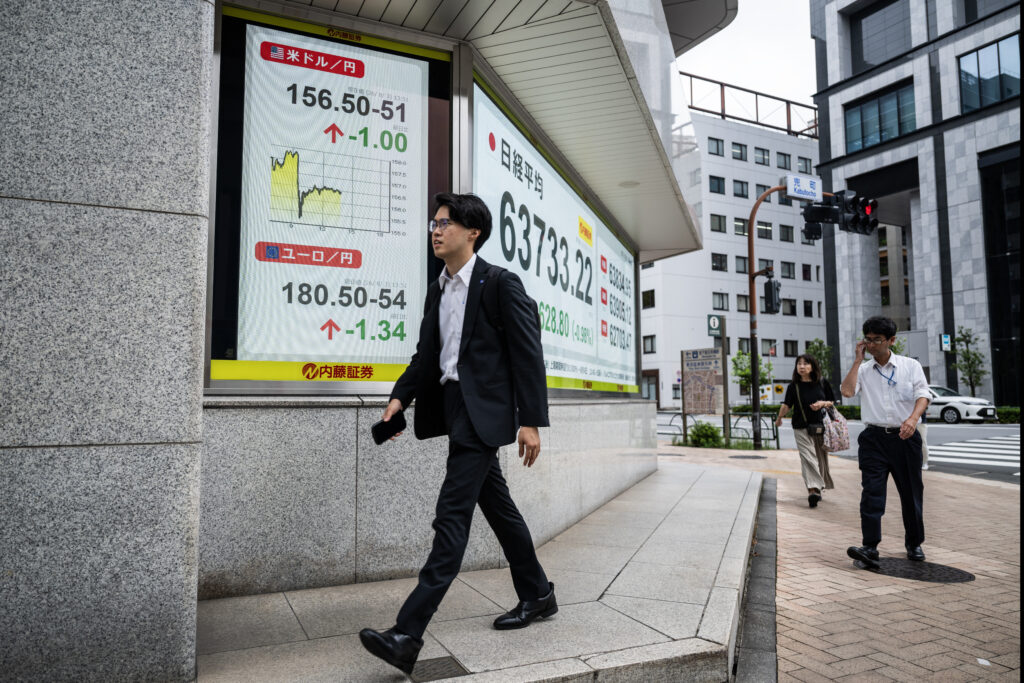
“Here’s Why the US is Helping Prop Up the Japanese Yen,” New York Times, August 3
“China Launches Cybersecurity Review into Palo Alto Networks,” Bloomberg, August 6
“Yen Erases Half of Intervention Gains as Traders Test Bessent,” Bloomberg, August 9
“China Hits US, Mexican Pecans With Preliminary Anti-Dumping Curbs,” South China Morning Post, August 10
“China Says Long March 7A Rocket Launch Failed After Flight Anomaly”, Reuters, August 10
“Zhu Rongji, Former Premier Who Pushed China to a Market Economy, Dies at 97,” New York Times, August 12
Two themes stood out in Washington’s China policy discussions over the past week. The first centered on the direction of U.S. geoeconomic policy. Regarding President Trump’s new tariffs, analysts are questioning their economic and legal foundations and warning that they could raise costs at home, undermine supply-chain diversification, and alienate allies needed to compete with China. As for Washington’s investments in critical minerals, experts broadly welcome efforts to reduce dependence on China yet question whether project-level funding alone can build a durable and commercially viable domestic supply chain. The second theme focused on the rapidly evolving U.S.-China AI race. As Chinese open-weight models narrow the technological gap, commentators questioned how the United States can preserve its lead and whether openness or tighter controls offer the better strategy. At the same time, the debate increasingly extended beyond the technological race itself, with analysts examining how AI adoption and productivity gains could solve structural challenges ranging from U.S. fiscal pressures to weaknesses in China’s domestic economy, thus translating leadership in AI into broader economic and geopolitical power.
July 29 hosted by ASPI
July 29 hosted by IIF
July 30 hosted by CSIS
July 31 hosted by USCBC
August 4 hosted by CSIS
August 4 hosted by Hudson Institute
August 4 hosted by USCBC
August 13 hosted by Hudson Institute
August 18 hosted by CSIS
August 19 hosted by PIIE
August 29 hosted by Atlantic Council
September 9 hosted by Council on Foreign Relations
Beyond the Mining Code: The ISA’s Search for Institutional Credibility
By Nong Hong
August 7, 2026
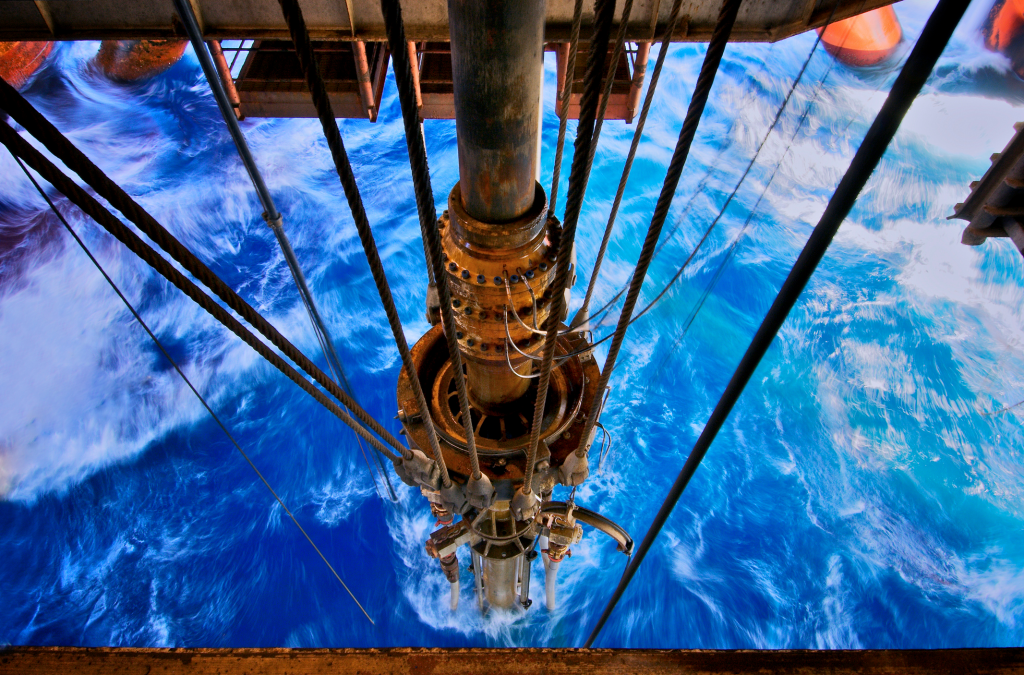
The International Seabed Authority’s meetings in Kingston concluded on 31 July with the Mining Code once again dominating much of the discussion. Progress in the negotiations remains important, but the session also revealed a quieter change in the Authority’s role. Attention is increasingly shifting to whether the Authority can provide the institutional foundations needed for any future decision on commercial exploitation to command confidence.
Beyond Shipyards: Commercial Shipbuilding and China-U.S. Maritime Competition
By Yilun Zhang
August 11, 2026
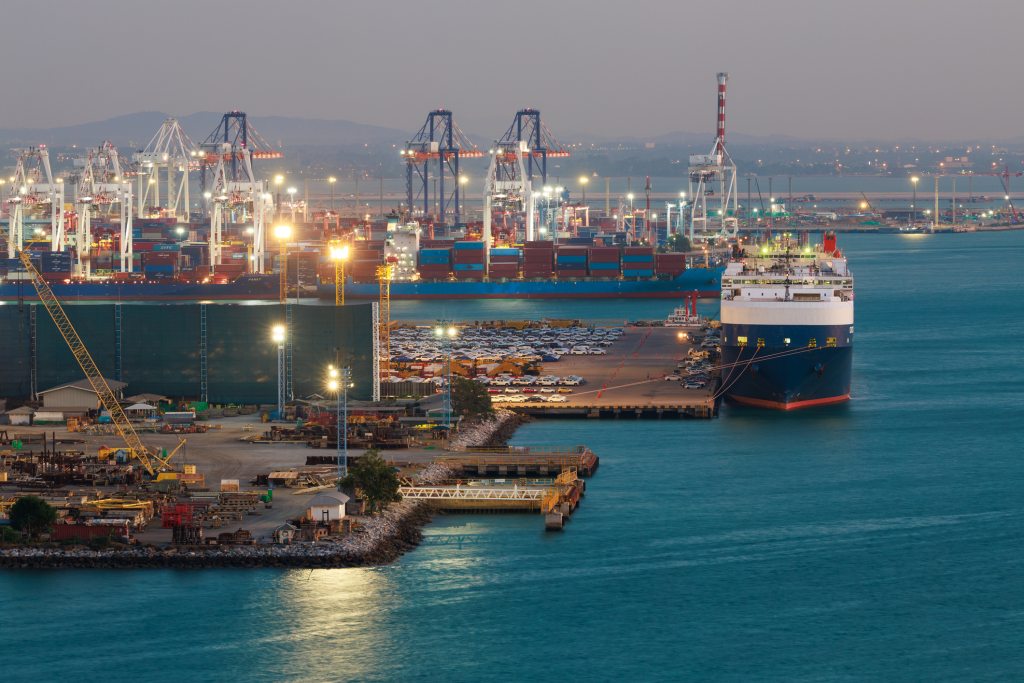
For much of the post-Cold War era, commercial shipbuilding occupied only a limited place in international strategic discussions. As globalization deepened and manufacturing became increasingly internationalized, commercial vessels were widely regarded as products of market competition, built where production costs, financing, and industrial efficiency proved most competitive. While naval shipbuilding remained closely associated with national defense, commercial shipbuilding was generally viewed as a mature global public industrial good rather than a strategic asset. The most immediate driver is the changing demand for commercial vessels themselves.
Financing Resilience: Rethinking How China Pays for Natural Disasters
By Emma Ding
August 10, 2026
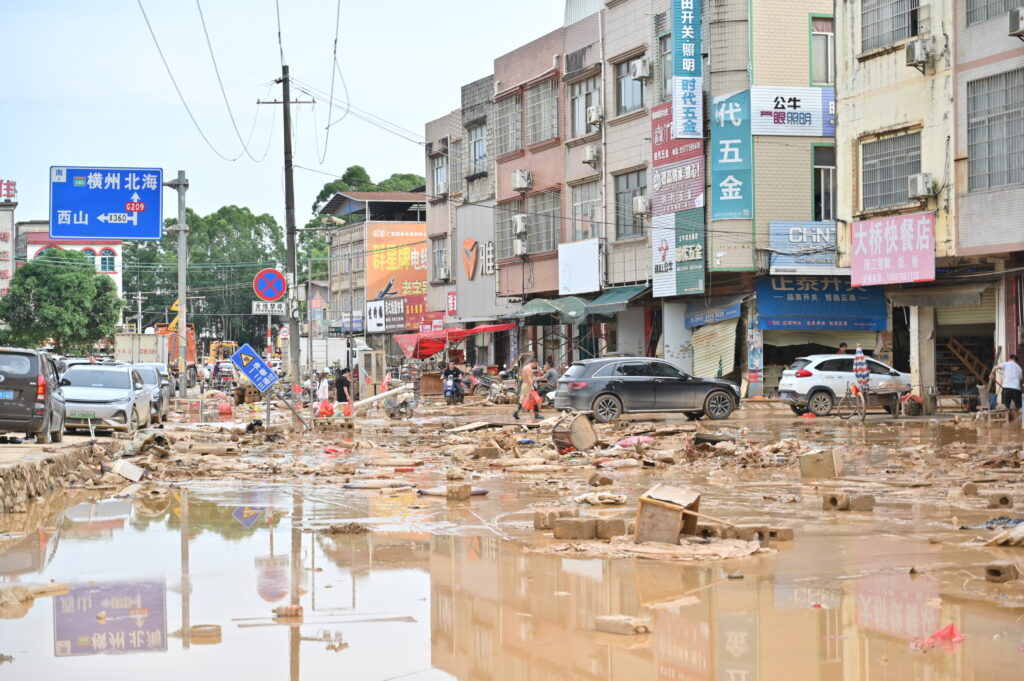
In July, Typhoon Bavi and Typhoon Maysak impacted multiple regions across China, forcing the relocation of more than 1.7 million people in Zhejiang, breaching reservoirs and triggering severe flooding in Guangxi, with subsequent storms increasing rainfall in northern China by nearly 30%. As the tragic Miyun floods that claimed the lives of 31 residents in an elderly care home last year and the 2024 Typhoon Yagi that cost billions of RMB in damage to Hainan’s fisheries remain vivid in public memory, this year’s disasters serve as another reminder that climate risks are becoming increasingly severe, frequent, and erratic. Floods alone are estimated to cost China roughly 1% of GDP each year, with indirect losses through supply-chain disruptions and economic dislocation adding significantly to the total burden.
On Thursday, August 6, 2026, Senior Fellow Sourabh Gupta was quoted in SCMP on China’s countermeasures toolkit.