

Cover Image: Industrial cargo port with gantry cranes loading a container ship, showcasing the maritime transport industry and global trade operations in a major shipping hub. (Photo via Getty Images)
Commercial shipbuilding has re-emerged as a strategic industry. An aging global fleet, evolving energy transportation, supply-chain resilience, and renewed industrial policy are together driving sustained demand for commercial shipbuilding over the coming decade.
Commercial shipbuilding should be understood as an industrial ecosystem rather than a shipyard industry. Long-term competitiveness depends not only on shipyards, but also on integrated supplier networks, maritime finance, skilled labor, ports, logistics, and sustained commercial demand that together support continuous production.
China’s leadership in commercial shipbuilding reflects decades of ecosystem development through industrial expansion, market competition, and policy consolidation, rather than any single policy instrument. While government support has played an important role, China’s competitive advantage today is reinforced by a mature industrial ecosystem that continues to attract commercial orders from global shipowners.
Current debates over Chinese “overcapacity” cannot be separated from expectations about future global shipping demand. As the world enters a major fleet renewal cycle, assessments of industrial capacity increasingly depend on whether governments prioritize current market conditions or long-term resilience and future commercial requirements.
Recent U.S. initiatives seek not only to reduce dependence on China but also to rebuild the industrial ecosystem capable of sustaining future commercial shipbuilding capacity, suggesting that long-term competitiveness will depend on where future orders, investment, and maritime industrial capabilities are concentrated.
For much of the post-Cold War era, commercial shipbuilding occupied only a limited place in international strategic discussions. As globalization deepened and manufacturing became increasingly internationalized, commercial vessels were widely regarded as products of market competition, built where production costs, financing, and industrial efficiency proved most competitive. While naval shipbuilding remained closely associated with national defense, commercial shipbuilding was generally viewed as a mature global public industrial good rather than a strategic asset. The most immediate driver is the changing demand for commercial vessels themselves. Commercial shipbuilding has re-emerged as a prominent issue in discussions of economic security, industrial competitiveness, and U.S.-China strategic competition, prompting renewed attention from governments, industry, and policymakers alike.
The renewed interest in commercial shipbuilding reflects broader changes taking place across the global maritime economy. The world’s commercial fleet is entering a significant renewal cycle as aging vessels approach retirement, new environmental standards accelerate demand for cleaner and more efficient ships, and disruptions to global shipping routes have reinforced concerns over supply-chain resilience. At the same time, expanding energy exports—including liquefied natural gas (LNG) and crude oil—have increased demand for specialized commercial vessels, while governments have begun to reconsider the strategic importance of maintaining domestic industrial capabilities once largely left to market forces. These developments have elevated commercial shipbuilding from a traditional manufacturing sector to an increasingly important component of global trade, energy security, and industrial resilience.
Against this backdrop, China’s continued expansion in commercial shipbuilding has drawn growing international attention. Over the past two decades, Chinese shipbuilders have developed an extensive industrial base that today accounts for the majority of global shipbuilding output and an even larger share of new commercial orders. At the same time, Washington has placed unprecedented emphasis on rebuilding America’s maritime industrial capacity. Recent initiatives—including the Section 301 investigation into China’s maritime, logistics, and shipbuilding sectors, the America’s Maritime Action Plan, and a series of congressional proposals supporting commercial shipbuilding, maritime financing, workforce development, and shipyard investment—illustrate a broader shift in U.S. policy.
Much of the current discussion has centered on China’s market share, industrial policies, and the implications of growing strategic competition. While these issues remain important, they represent only part of a much broader transformation. Commercial shipbuilding is being reshaped simultaneously by changes in global shipping demand, energy transportation, industrial policy, and the evolving structure of the maritime economy itself. Looking ahead, the central challenge is no longer simply identifying where ships are built, but understanding how maritime industrial ecosystems are being reshaped—and how that transformation is redefining the future geography of global commercial shipbuilding.
Commercial shipbuilding has regained strategic importance because the global maritime economy is entering a period of structural transition.

One of the most significant changes is the approaching renewal of the global commercial fleet. A large proportion of the world’s merchant vessels were built during the rapid expansion of global trade in the 2000s and are now approaching the end of their operational lives. According to Allianz’s Safety and Shipping Review 2026, the average age of the global fleet has continued to increase, while roughly one-quarter of the world’s container ships are now more than twenty years old. At the same time, increasingly stringent environmental regulations, technological advances, and the transition toward lower-emission fuels are accelerating demand for newer and more efficient vessels. Rather than representing routine replacement, these developments point to a sustained renewal cycle that is likely to shape commercial shipbuilding demand throughout the coming decade.
The composition of global shipping demand is also changing. The continued growth of liquefied natural gas (LNG) and crude oil exports has increased demand for specialized tankers and gas carriers, while evolving trade patterns continue to reshape demand across multiple categories of commercial vessels. For the United States, this trend carries particular significance. As the country strengthens its position as a major exporter of LNG and crude oil, maritime transportation becomes an increasingly important component of national economic competitiveness. Empowered by “drill, baby, drill,” energy exports depend not only on production capacity, but also on the availability of commercial vessels capable of transporting those commodities to global markets.

These structural changes have also altered how governments think about maritime industrial capacity. The COVID-19 pandemic, disruptions in the Red Sea and the Strait of Hormuz, and continued geopolitical instability have highlighted the vulnerability of globally concentrated supply chains and reinforced the importance of resilient transportation networks. At the same time, the prospect of a prolonged fleet renewal cycle has shifted attention from today’s shipbuilding output toward tomorrow’s production capacity. The central question is no longer simply how many ships are currently being built, but whether enough industrial capacity exists to build the next generation of commercial vessels required by an expanding and evolving global maritime economy. Understanding this shift is essential for explaining why commercial shipbuilding has re-emerged as a strategic priority—and why competition is increasingly focused not only on existing market share, but also on the future location of global ship orders and maritime industrial investment. Explaining this shift requires looking beyond shipbuilding output itself. The more fundamental question is what actually determines long-term competitiveness in commercial shipbuilding.
One reason commercial shipbuilding is often misunderstood is that discussions frequently focus on shipyards themselves. Measures of competitiveness are commonly reduced to annual output, market share, or the number of vessels delivered. While these indicators capture the scale of production, they reveal relatively little about the industrial foundations that make sustained shipbuilding possible. A modern commercial vessel represents the final product of a far broader manufacturing system, one that extends well beyond the boundaries of a shipyard.
Commercial shipbuilding depends upon the coordination of numerous industries operating simultaneously. Steel producers supply specialized marine-grade materials; manufacturers produce engines, propulsion systems, electronics, navigation equipment, and thousands of individual components; financial institutions provide long-term credit for both shipbuilders and shipowners; classification societies, insurers, ports, and logistics providers support the commercial operation of vessels throughout their service life. Equally important are the skilled workforce, engineering capabilities, research institutions, and supplier networks that enable production to expand or adapt as market demand changes. Shipyards assemble ships, but the competitiveness of commercial shipbuilding is ultimately determined by the strength and integration of the industrial ecosystem surrounding them.
This broader perspective also helps explain why commercial shipbuilding has become increasingly difficult to rebuild once industrial capacity declines, in the case of the United States, for example. Individual shipyards can be expanded or modernized through investment, but rebuilding an entire maritime industrial ecosystem requires restoring supplier networks, attracting skilled labor, developing engineering expertise, strengthening maritime finance, and creating sufficient demand to sustain production over many years. These components evolve gradually and reinforce one another over time, creating advantages that cannot easily be replicated through short-term industrial policies alone. As a result, commercial shipbuilding is characterized by strong path dependence: countries that maintain continuous production tend to deepen their industrial capabilities, while those experiencing prolonged decline often find recovery considerably more difficult.
Viewing commercial shipbuilding through the lens of an industrial ecosystem also places current policy debates into a broader context. Discussions surrounding subsidies, industrial policy, or market concentration often focus on individual policy instruments. Yet these measures derive much of their significance from the broader ecosystem they seek to support. Financing programs, workforce development, supplier investment, research and development, port infrastructure, and stable commercial demand are not separate policy objectives; together they form the institutional and industrial foundations upon which commercial shipbuilding depends. China’s rise is perhaps the clearest example of how such an ecosystem develops over time.
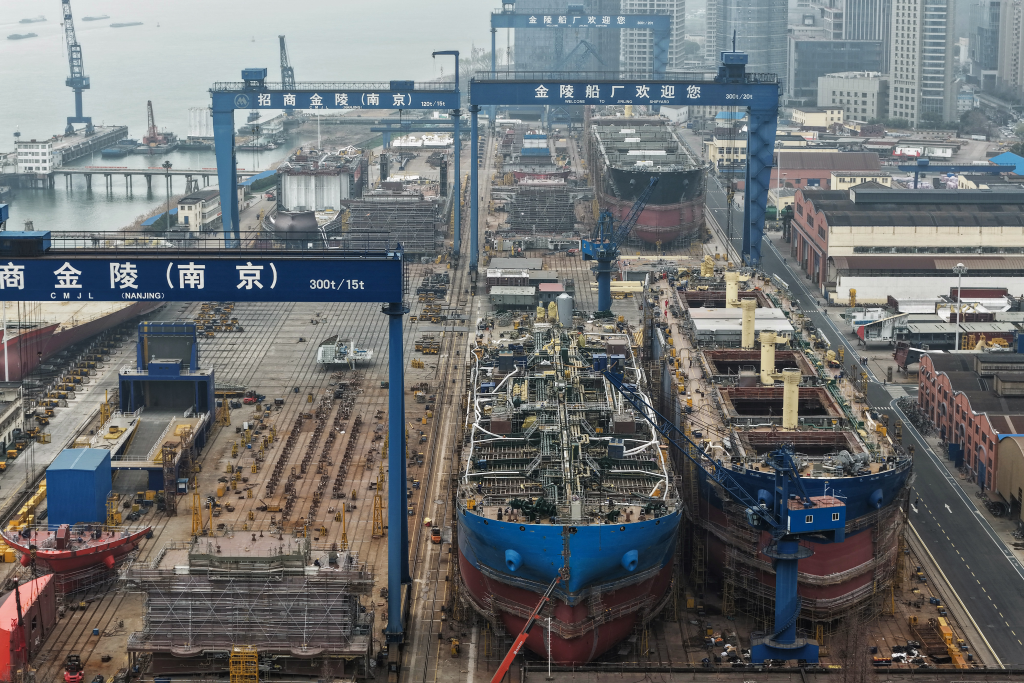
China’s emergence as the world’s leading commercial shipbuilding nation was neither an overnight achievement nor the product of any single policy instrument. Rather, it reflects decades of industrial expansion, market competition, policy adjustment, and institutional consolidation. While state support undoubtedly played an important role, China’s current position cannot be understood solely through the lens of subsidies, as often portrayed in contemporary policy debates. Its competitiveness today rests on the gradual development of an integrated maritime industrial ecosystem capable of supporting large-scale commercial production.
The foundations of this ecosystem were laid during the rapid expansion of China’s manufacturing sector in the early 2000s, when growing steel production, export-oriented industrialization, and increasing participation in global trade created favorable conditions for commercial shipbuilding. Government support accelerated investment in shipyards and related industries, while foreign partnerships and technology transfers helped improve engineering capabilities and production standards. At the same time, China’s growing role in global trade generated sustained domestic demand for shipping services, reinforcing investment across ports, logistics, and maritime infrastructure.
This expansion, however, was neither smooth nor uniformly efficient. Research on China’s shipbuilding policies suggests that early rounds of industrial support encouraged the entry of numerous smaller producers, resulting in fragmented capacity and declining profitability across parts of the industry. Rather than producing an immediately efficient industrial structure, the initial expansion revealed many of the challenges associated with large-scale industrial policy. Subsequent consolidation, particularly after the global financial crisis, shifted policy emphasis toward strengthening larger and more competitive shipbuilding groups while reducing excess fragmentation. Financial support, export credit, and investment increasingly became concentrated among firms capable of sustaining large commercial orderbooks and continuous production.
Over time, this process produced advantages extending well beyond individual shipyards. China’s shipbuilding industry today benefits from dense supplier networks, large-scale steel production, specialized marine equipment manufacturers, experienced engineering and technical workforces, established maritime financing mechanisms, and extensive port and logistics infrastructure. Equally important, these capabilities reinforce one another. A large orderbook supports continuous production, continuous production sustains supplier investment and workforce development, while industrial scale lowers production costs and encourages further commercial orders. Rather than representing isolated competitive advantages, these mutually reinforcing relationships have gradually evolved into an industrial ecosystem that is difficult to replicate within a short period of time.
The results are increasingly reflected in the global marketplace. Chinese shipbuilders account for the majority of global commercial shipbuilding output and an even larger share of new ship orders, while more than 90% of completed vessels are delivered to overseas customers. This distinction is significant. China’s shipbuilding industry is supported by state policies, but its scale is also sustained through continued participation in international markets. Global shipowners continue to place orders with Chinese shipyards not simply because of production capacity, but because of their ability to offer competitive pricing, reliable delivery schedules, extensive supplier networks, and increasingly sophisticated vessel designs. China’s position in commercial shipbuilding, therefore, reflects the interaction of industrial policy and market competition rather than either factor in isolation.
Few issues have become more contentious in recent debates over industrial policies than the question of Chinese “overcapacity.” The term has featured prominently in policy discussions across the United States and Europe, where concerns often focus on the role of state support, market distortion, and the impact of China’s industrial expansion on global competition. These concerns have shaped a wide range of shipping and shipbuilding-related policy responses, including tariffs, port fees, investment restrictions, and proposals aimed at redirecting future commercial ship orders toward alternative shipbuilding nations. Yet the concept of overcapacity is far less straightforward than current political debates often suggest.
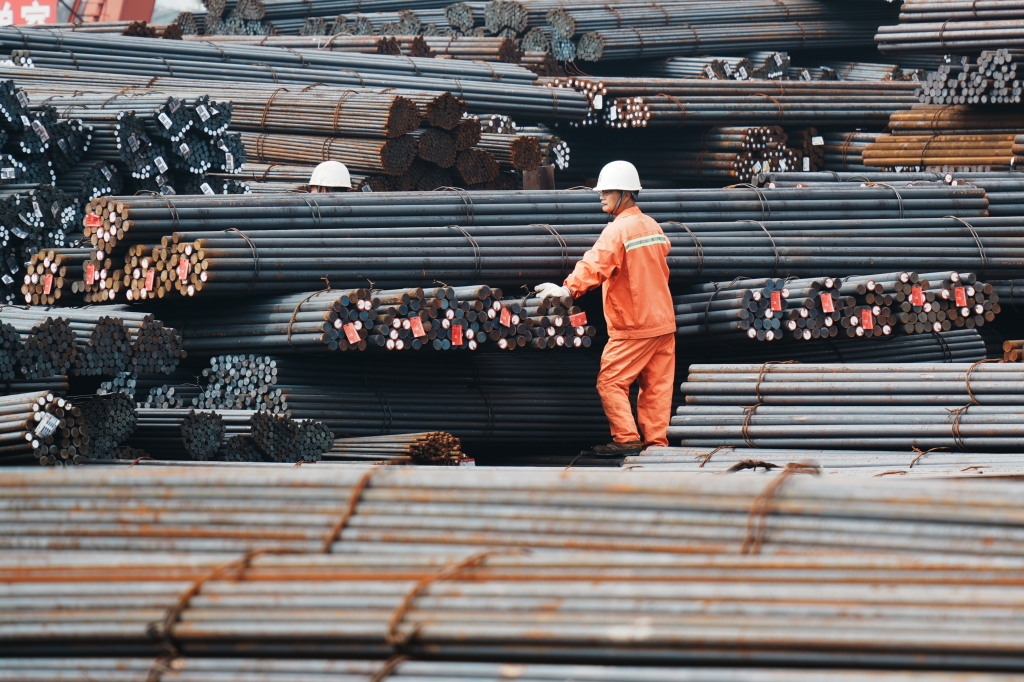
In conventional economic terms, overcapacity refers to production capability that substantially exceeds sustainable market demand. Whether such a condition exists, however, depends not only on today’s output but also on expectations regarding future demand. Commercial shipbuilding differs from many manufacturing industries because vessels require years to design and construct, remain in service for decades, and are ordered based on anticipated rather than immediate transportation needs. Capacity that appears excessive during periods of weak demand may prove insufficient if global shipping requirements expand rapidly over the following decade.
Several structural trends suggest that future demand may prove to be the decisive variable in evaluating today’s shipbuilding capacity. As discussed earlier, much of the global merchant fleet is approaching retirement while environmental regulations, technological upgrading, and changing trade patterns are expected to generate sustained demand for replacement vessels. At the same time, expanding energy transportation, particularly in liquefied natural gas and crude oil, continues to increase demand for specialized commercial ships. If these trends continue, the global shipbuilding industry may be entering one of its largest fleet renewal cycles in decades. Under such conditions, assessing industrial capacity solely against current production risks overlooking the longer-term requirements of the maritime economy.
This broader perspective also helps explain why governments increasingly describe commercial shipbuilding in terms of resilience rather than efficiency. The same industrial capacity that one country characterizes as excessive may be viewed by another as strategic reserve, supply-chain security, or industrial preparedness. Recent policy debates in the United States illustrate this shift. Proposals to expand shipyard capacity, establish Maritime Prosperity Zones, strengthen maritime finance, and support supplier development all seek to create production capabilities that may not be fully utilized under normal market conditions. From a narrow commercial perspective, such investments could appear inefficient. From a strategic perspective, however, they are intended to preserve industrial capacity that governments believe may become essential under future economic or geopolitical circumstances.
None of this suggests that concerns over market distortion or state support should be dismissed. Rather, it suggests that the debate over “overcapacity” cannot be separated from expectations about future demand, strategic resilience, and the role governments assign to commercial shipbuilding. As more countries return to maritime industrial policy, the central question is gradually shifting from whether governments should support commercial shipbuilding to how such support should be designed, and how expanding industrial capacity can be balanced with the continued openness and efficiency of the global maritime trading system.
Whereas China spent the past two decades building a maritime industrial ecosystem, the United States is now attempting to rebuild one after decades of industrial contraction. This renewed emphasis on commercial shipbuilding reflects a broader shift in how the United States views maritime industrial capacity. For decades, the decline of domestic commercial shipbuilding was largely accepted as an economic consequence of globalization, comparative advantage, and the concentration of production in East Asia. Today, however, commercial shipbuilding is increasingly viewed through the lens of economic security, industrial resilience, and long-term strategic competition. Recent policy discussions suggest that the central concern is no longer simply the loss of market share, but the erosion of the industrial ecosystem that once supported large-scale commercial shipbuilding in the United States.
This changing perspective is reflected in a growing number of policy initiatives. The Trump administration’s America’s Maritime Action Plan, congressional proposals, legislations such as the Shipbuilding Investment and Workforce Act, and recommendations from policy institutions all point toward a remarkably consistent conclusion: rebuilding commercial shipbuilding requires far more than expanding individual shipyards. Across these proposals, recurring priorities include strengthening supplier networks, expanding maritime financing, developing a skilled workforce, modernizing shipyard infrastructure, supporting research and innovation, and encouraging closer cooperation with allied shipbuilding nations. While the specific policy recommendations differ, they collectively recognize that commercial shipbuilding depends upon rebuilding an entire industrial ecosystem rather than simply increasing production capacity.

This emerging approach also represents a notable evolution in U.S. industrial policy. Much of Washington’s recent attention has focused on reducing dependence on Chinese shipbuilding, but policymakers increasingly acknowledge that restrictive measures alone cannot restore domestic competitiveness. Port fees, tariffs, and investment restrictions may influence commercial behavior, yet they do not automatically generate skilled workers, supplier networks, engineering expertise, or commercially viable shipyards. Increasingly, the objective is not only to redirect future ship orders away from China, but also to create sufficient industrial capacity elsewhere to absorb those orders. In this respect, rebuilding commercial shipbuilding has become as much an industrial development challenge as a trade policy challenge.
At the same time, the United States has largely avoided framing this effort as an attempt to replicate China’s scale. Instead, recent policy discussions increasingly emphasize diversification, resilience, and cooperation with allies including Japan and South Korea. Rather than seeking to replace China’s position entirely, the emerging strategy aims to expand alternative sources of commercial shipbuilding capacity while reducing excessive dependence on any single producer. This reflects an important shift in Washington’s thinking. The central question is no longer whether commercial shipbuilding should receive government support, but how governments can rebuild sustainable maritime industrial ecosystems capable of supporting future commercial demand, economic security, and strategic resilience.
Commercial shipbuilding has returned to the forefront of strategic policymaking not simply because China has become the world’s largest shipbuilder, but because the global maritime economy is entering a period of profound structural change.
Looking beyond annual production figures reveals a broader reality: commercial shipbuilding is fundamentally an industrial ecosystem. This broader perspective helps explain both China’s emergence as the world’s leading commercial shipbuilder and the growing realization in Washington that rebuilding shipbuilding capacity requires rebuilding the industrial foundations that sustain it.
As governments increasingly anticipate a prolonged period of fleet renewal and changing global shipping demand, assessments of industrial capacity are becoming inseparable from questions of resilience, preparedness, and long-term economic strategy. The same production capacity may be interpreted as market distortion, strategic reserve, or industrial resilience depending on how governments evaluate future demand and the role they assign to commercial shipbuilding.
Washington’s maritime strategy could be understood as a dual-track effort: rebuilding physical maritime capabilities while simultaneously strengthening influence over shipping, logistics, and maritime governance. The renewed emphasis on commercial shipbuilding demonstrates that these two tracks are becoming increasingly interconnected. Industrial capacity, shipping networks, financing, logistics, and maritime governance are no longer separate policy domains, but mutually reinforcing components of a broader competition over the future architecture of the global maritime economy.
Ultimately, however, the long-term challenge extends beyond competition itself. Commercial shipping remains one of the principal foundations of global commerce, and its continued efficiency depends upon an open, reliable, and economically sustainable maritime system. As governments pursue greater resilience and seek to diversify commercial shipbuilding capacity, the challenge will be to strengthen maritime industrial capabilities without undermining the global trading system upon which those same industries depend. The future of commercial shipbuilding will therefore be shaped not simply by production volume, but by the ability to maintain industrial ecosystems needed for the next generation of global shipping.

US and China must team up to keep maritime trade routes free and safe