
ICAS Bulletin (online ISSN 2836-3418, print ISSN 2836-340X) is published every other week throughout the year at 1919 M St NW, Suite 310, Washington, DC 20036.
The online version of ICAS Bulletin can be found at chinaus-icas.org/bulletins/.
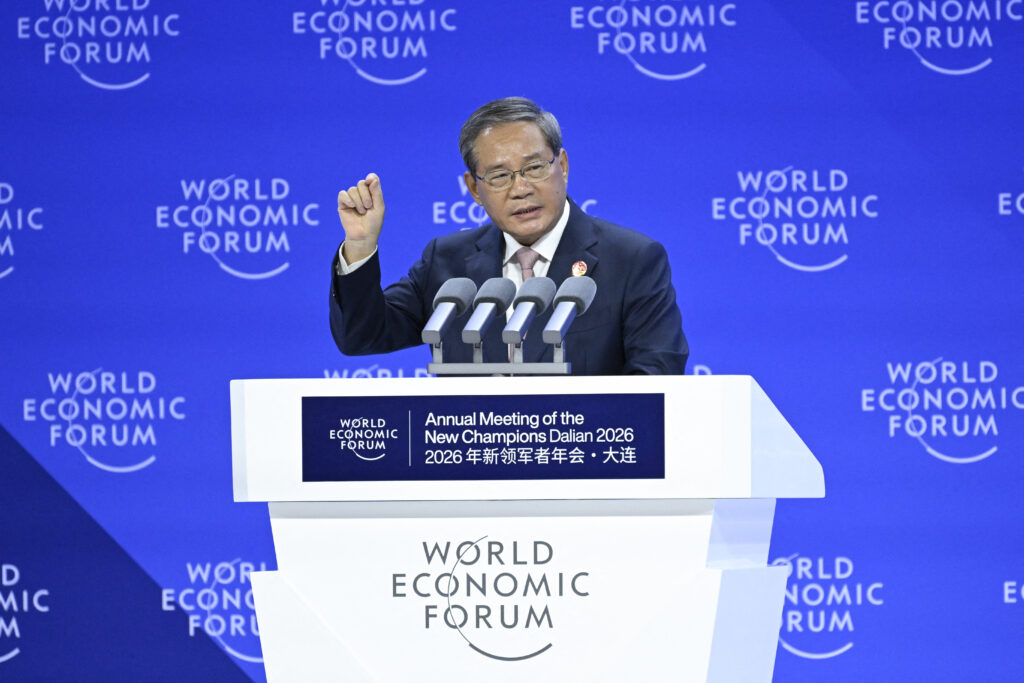
– On June 24, Chinese Premier Li Qiang rejected western narrative of “China Shock 2.0” and instead pleaded for “China Opportunity 2.0”, as he stressed the country is serving as a powerhouse for global economic growth. Premier Li’s remark came at the 2026 Summer Davos, which was held in Dalian from June 23-25.
– Citing Huawei in his remarks, Li argued that Chinese innovation comes from the hard work of companies instead of government subsidies, despite facing “unfair” external influences.
– The June 29 official manufacturing purchasing managers index showed that China’s manufacturing activity expanded faster than expected in June, with high-tech production climbing on demand, tied to the global artificial intelligence investment boom.
– On June 30, it is reported China’s Midea Group Co. is considering listing German robot maker Kuka in mainland China, during a time when robotics firms are lining up to list shares in China.
– Morgan Stanley has also doubled China’s humanoid robot shipment forecast on June 24, for the second time this year, as a growing roster of Chinese manufacturers raced to scale production and deploy robots in real-life scenarios.
– In order to accelerate AI-related innovation, on June 28, China gave the green light for a national intellectual property protection center in a new megacity outside Beijing, which is expected to cut approval times for hi-tech patents by 70%.
– China’s export driven economic growth has nevertheless concerned the west about a “China Shock 2.0”, as Europe and China agreed on June 29 to enter three months of talks to avoid a trade war amid the bloc’s large trade deficit with Beijing.
– The EU national leaders, during the June 18 EU Summit, have asked the European Union to come up with new trade instruments to deal with “China Shock 2.0” as they seek to continue to engage with China to fix the persistent trade problems.
– The latest survey also showed that global financial firms are pivoting to South Korea, and are taking a more measured approach to China as they balance commercial opportunities and the regulatory environment.
Associated News References:
“Midea Is Said to Consider China IPO for German Robot Maker Kuka,” Bloomberg, June 30
“China factory activity grows faster than expected in June on tech export demand,” CNBC, June 29
“Global financial firms pivot to South Korea, cautious on China and India, survey shows,” Reuters, June 29
“China’s newest IP office to cut hi-tech patent approval times ‘by 70%’,” South China Morning Post, June 28
“EU sets up three months of talks with China over €360bn trade deficit,” The Guardian, June 28
“‘Beijing Unfazed by China Shock 2.0 as Premier Touts Openness,” Bloomberg, June 24
“Morgan Stanley doubles China humanoid robot shipment forecast as commercialization accelerates,” CNBC, June 24
“EU leaders ask Brussels to come up with new trade weapons to counter China shock,” South China Morning Post, June 19
– On June 30, the House China Select Committee opened national security investigations into five drugmakers over their clinical trials in China.
– One the same day, it was reported that the Trump administration is drafting a ban on imports of foreign inverters, which connect solar projects and batteries to the grid, over China-related supply chain concerns.
– On June 26, the U.S. Federal Communications Commission said it will ban the import of more equipment from Chinese manufacturers, as the agency continues to crack down on Chinese-made electronic gear.
– On June 24, Chinese cybersecurity firm 360 announced that it has developed the “domestic answer” to Anthropic’s Mythos, which was reported to carry cybersecurity threats earlier in the month.
– On June 22, China imposed trade restrictions on dozens of U.S. entities, including MP Materials and USA Rare Earth, two producers of rare-earth minerals.
– In a separate statement, China also excluded 46 U.S. companies, mostly in the defense sector, from participating in government procurement projects.
– China’s latest export controls were viewed as a response to the latest U.S. blacklisting of Chinese firms including Alibaba and Baidu, in its updated H1260 entity list.
– On June 16, it was reported that the U.S. has held off adding China’s AI startup DeepSeek, memory chipmaker CXMT, and more than 100 other companies to the Commerce Department’s Entity List.
Associated News References:
“US House committee opens investigation into Merck, AbbVie China drug trials,” Reuters, June 30
“US is working on ban targeting Chinese energy inverters, sources say,” Reuters, June 30
“US bans imports of more Chinese technology goods,” Reuters, June 26
“China’s 360 says it has developed tools to match Anthropic’s Mythos,” Reuters, June 24
“China Slaps Restrictions on Dozens of U.S. Companies,” The Wall Street Journal, June 22
“China imposes trade curbs on dozens of U.S. firms in retaliation for Pentagon blacklist,” CNBC, June 21
“US holds off blacklisting China’s DeepSeek, more than 100 firms deemed security risks, sources say,” Reuters, June 16

“Bessent Says Only China Buying Iranian Oil, Others Are Wary,” Bloomberg, June 30
“China Resources New Energy, Asia’s biggest IPO this year, to debut July 2,” Reuters, June 30
“China’s Meituan says new AI model trained on domestic chips,” Reuters, June 30
“US retailers frontload China orders for holiday season, shipping firms say,” Reuters, June 29
“China’s CXMT wins $3 billion memory supply deal with Tencent, sources say,” Reuters, June 29
“China unveils white paper on global governance, calls for stronger Global South representation,” CNA, June 18
Three themes stood out in Washington’s policy discussions over the past two weeks. The first concerns reflections on the aftermath of the U.S.-Iran conflict following the signing of the ceasefire deal, with debate focusing on whether the military campaign failed to achieve its strategic objectives. A number of analyses also examined the broader geopolitical implications, including how the crisis may have reshaped China’s strategic position vis-a-vis that of the U.S. The second centers on artificial intelligence, where, citing Chinese threat, the Trump administration’s recent actions affecting advanced AI development have sparked renewed debate over balancing national security with technological innovation. Finally, these discussions have evolved into a broader conversation on U.S.-China AI competition, with analysts debating both how the United States can sustain its technological edge and whether aspects of China’s approach to AI development offer lessons for building a more effective innovation ecosystem.
June 18 hosted by CSIS
June 18 hosted by Asia Society
June 18 hosted by Stimson Center
June 25 hosted by Hudson Institute
June 25 hosted by Cato Institute
June 25 hosted by CSIS
July 1 hosted by CSIS
July 1 hosted by Cato Institute
July 2 hosted by Hudson Institute
July 2 hosted by Carnegie Endowment for International Peace
July 7 hosted by Stimson Center
July 7 hosted by CSIS
July 8 by US-China Business Council
July 14 hosted by Cato Institute
July 15 hosted by CSIS
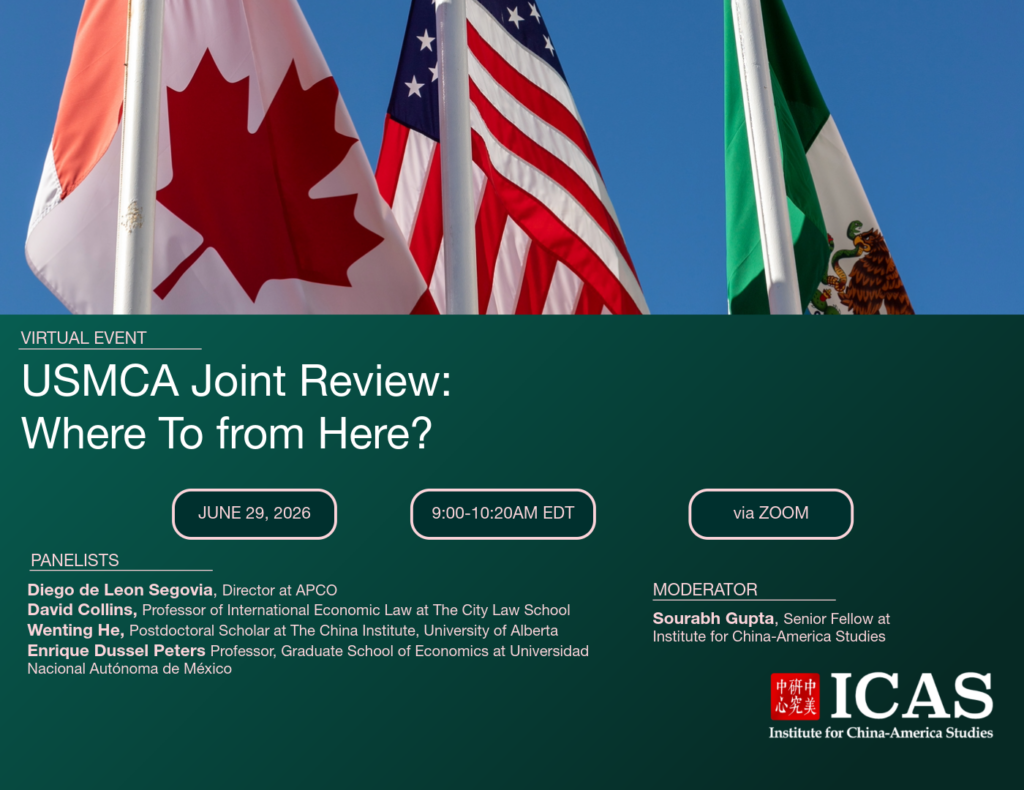
USMCA: Where To from Here?
Monday, June 29, 2026
On June 29, ICAS held a virtual discussion, “USMCA Joint Review: Where To from Here?”, with panelists Diego de Leon Segovia (Director at APCO), David Collins (Professor of International Economic Law at The City Law School), Wenting He (Postdoctoral Scholar at The China Institute, University of Alberta) and Enrique Dussel Peters (Professor, Graduate School of Economics at Universidad Nacional Autónoma de México). Moderating the discussion was Sourabh Gupta, Senior Fellow and Head of the Trade n’ Technology Program at ICAS. The summary and the video recording of the event will be released in the forthcoming days.
Beyond the victim-coercion narrative in the South China Sea
By Nong Hong
June 30, 2026
The South China Sea is unlikely to become less contested in the near future. That is precisely why the quality of international analysis matters. If each encounter is folded too quickly into a familiar script of victimhood and coercion, both legal analysis and diplomacy are likely to suffer. Law will lose authority when it is treated chiefly as a political idiom. Diplomacy will become more difficult when external validation carries greater value than patient management of risk. A more credible approach would neither dismiss Philippine concerns nor overlook Chinese interests.
This article was originally published in China Daily on June 30, 2026.
Can China’s Global Governance White Paper Reframe the Reform Debate?
By Nong Hong
June 29, 2026
The white paper matters because it clarifies China’s preferred framing of global governance reform: fairness, representation, sovereign equality and practical delivery. This framing is likely to resonate because the dissatisfaction it speaks to is real. The more difficult task lies in translating broad principles into practices that are consistent, transparent and widely accepted. For many countries, especially in the Global South, the need for global governance reform is already clear. The question now is how any reform agenda can make the system not only more representative, but also more trusted.
This article was originally published in The Voice of the South China Sea on June 29, 2026.
Constructing candid, peaceful coexistence
By Sourabh Gupta
June 29, 2026
History provides the substantive basis for the practical way forward. The goal is not to ignore competition but to compartmentalize it. A durable framework would leverage these proven areas of mutual gain — agriculture, selective industrial investment, and public health — as stabilizing ballast. It would institutionalize safeguards to protect critical US technologies while allowing the economic and public health benefits that have demonstrably accrued to US households to continue.
Antarctic Tourism After ATCM 48: From Visitor Management to Access Governance
By Nong Hong
June 18, 2026
From May 11-21, 2026 in Hiroshima, Japan, the 48th Antarctic Treaty Consultative Meeting failed to produce a finished regulatory regime for Antarctic tourism. However, it did clarify something important: tourism is no longer a peripheral issue for the Antarctic Treaty System. Parties discussed concrete methods for the regulation, management, and monitoring of Antarctic tourism, and agreed to continue these discussions during the intercessional period. ATCM 48 therefore moved the debate beyond general concern and further into the language of governance.

On Friday, June 26, 2026, Senior Fellow Sourabh Gupta was quoted by South China Morning Post on U.S. plans to ban Chinese drones.
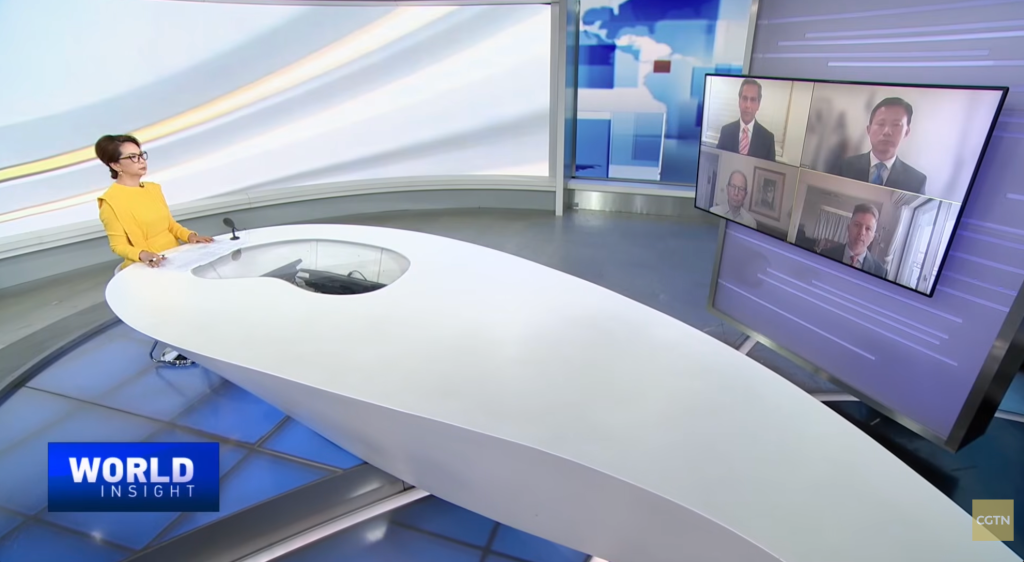
On Wednesday, June 17, 2026, Senior Fellow Sourabh Gupta appeared on CGTN’s World Insight to discuss the G7 summit.
On Wednesday, June 17, 2026, Senior Fellow Sourabh Gupta was quoted in China Daily on USCBC 2026 Member Survey