
ICAS Bulletin (online ISSN 2836-3418, print ISSN 2836-340X) is published every other week throughout the year at 1919 M St NW, Suite 310, Washington, DC 20036.
The online version of ICAS Bulletin can be found at chinaus-icas.org/bulletins/.

–On August 24, it was reported that the U.S. is preparing a 7.5% tariff on Chinese goods over allegations of excess manufacturing capacity, a move that would restore Trump’s second-term duties on China to around 20% ahead of the September summit with Xi Jinping.
–On August 30, Treasury Secretary Scott Bessent said that other countries should reconsider their trade terms with China, saying “the world cannot have a China with a $1.2 trillion trade surplus.”
–On August 31, the U.S. hosted the second meeting of the G20 Finance Ministers and Central Bank Governors in Asheville, North Carolina, running through September 1.
–On September 1, the G20 chair’s statement was released with China dissenting from paragraphs on trade imbalances, Strait of Hormuz shipping, IMF surveillance powers, and debt restructuring, while the other 19 members present endorsed the statement.
–Following the statement’s release, Bessent told reporters that China had blocked a joint G20 communique over the dispute, calling China “the dissenter” among G20 members and adding that “it’s unfortunate the Chinese didn’t want to come along.”
–On September 3, China’s Commerce Ministry pushed back on the G20 statement, accusing other members of “promoting protectionism” and calling on the U.S. to lift sanctions imposed on Chinese companies and citizens over Iran-related measures.
–On September 8, China’s customs agency reported that exports rose 25% year-on-year in August, widening the country’s trade surplus to $119.1 billion, with exports to the U.S. up 34.4% to $42.5 billion.
Associated News References:
“US Eyes China Overcapacity Tariffs of 7.5% Before Xi Visits,” Bloomberg, August 24
“Bessent to G20 Finance Leaders: Get Tougher on China,” The Hill, August 31
“G20 Chair’s Statement,” U.S. Department of the Treasury, September 1
“China Prevented G20 Communique Over Imbalance Spat, Says Bessent,” Bloomberg, September 1
“China Hits Back at G20 Statement on Its Reliance on Exports, Accusing Them of ‘Promoting Protectionism,’” CNBC, September 3
“China’s Exports Pick Up in August, Jumping 25% as Its Trade Surplus Widens,” Associated Press (via NBC News), September 8

–On August 31, Xi joined Putin, Indian Prime Minister Narendra Modi, and other heads of state in Bishkek for the two-day Shanghai Cooperation Organisation summit.
–During their August 31 meeting, Xi and Putin pledged to strengthen the SCO’s role, with Xi saying China would work with Russia to advance “an equal and orderly world multipolarity.”
–On September 1, Kremlin foreign policy aide Yuri Ushakov said Putin and Xi had discussed the possibility of a first-ever trilateral meeting with Trump at the APEC summit in Shenzhen in November.
–On September 2, Xi traveled to Cairo for his first visit to Egypt in a decade, where he and Egyptian President Abdel Fattah el-Sissi marked 70 years of diplomatic ties.
–Also on September 2, el-Sissi reiterated Cairo’s support for China’s position that Taiwan is part of its territory, with the visit coming as the Trump administration’s sanctions campaign against Iran has targeted some entities in mainland China and Hong Kong.
Associated News References:
“Xi, Putin to Meet in Bishkek for Power of Siberia 2 Pipeline Talks: Kremlin,” South China Morning Post, August 29
“Leaders of China, Russia and India Are Among Heads of State Meeting to Counter US Influence,” AP News, August 31
“Xi, Putin Vow to Deepen Strategic Ties After Shanghai Cooperation Organisation Summit Meet,” South China Morning Post, September 1
“Putin, Xi Weighed First-Ever Trilat With US at APEC, Russia Says,” Bloomberg, September 1
“Xi Visits Egypt as China Seeks Deeper Influence Across the Mideast,” AP News, September 2

–On August 27, Chinese Foreign Minister Wang Yi met U.S. Ambassador to China David Perdue in Beijing and called on both countries to “overcome obstacles to high-level exchanges” ahead of the planned Trump-Xi summit.
–On August 28, sources told the South China Morning Post that Chinese and U.S. officials were discussing whether Chinese business leaders would join Xi’s delegation to Washington, and that an extension of the one-year Busan trade truce was considered “almost certain,” though the two sides had not agreed on its duration.
–On September 1, Chinese Premier Li Qiang met the U.S.-China Business Council delegation led by Visa CEO Ryan McInerney in Beijing, pledging to address U.S. firms’ “reasonable concerns” and calling on Washington to reciprocate.
–On September 2, U.S. Ambassador David Perdue said he had held talks with Chinese counterparts in late August to prepare for Xi’s state visit, and Treasury Secretary Scott Bessent confirmed that AI would be on the agenda when Trump and Xi meet.
–On September 4, sources told Reuters that Xi was preparing to bring a large business delegation to Washington for the September 24 summit, and that Bessent, U.S. Trade Representative Jamieson Greer, and Chinese Vice Premier He Lifeng were set to meet in early September to discuss summit deliverables.
Associated News References:
“Chinese Foreign Minister Calls for US and China to ‘Overcome Obstacles’ Ahead of Presidential Summit,” AP News, August 27
“Exclusive | Chinese Executives May Join Xi’s US Trip, as Trade Truce Extension ‘Almost Certain,’” South China Morning Post, August 28
“China’s Li Pledges to Address US Firms’ ‘Reasonable Concerns’ at Beijing Meeting,” South China Morning Post, September 1
“Trump and Xi Are Set to Meet in DC. Why Some China Watchers Have Low Expectations,” CNBC, September 2
“Exclusive | China’s Xi Seeks to Bring Large CEO Delegation on US Visit, Sources Say,” Reuters, September 4

–On August 26, the U.S. declared an “economic onslaught” on Iran’s financial connections, though the sanctions list notably excluded major Chinese financial institutions, as Beijing remains Iran’s largest oil buyer and Xi’s planned September visit to Washington approached.
–On August 28, Treasury Secretary Scott Bessent said the administration’s approach to China relied on “quiet diplomacy” rather than direct sanctions on Chinese banks.
–On August 29, China’s Foreign Ministry said dialogue and negotiation were the “only viable way out” of Iran, a day after Trump was asked why the U.S. had not yet sanctioned Chinese banks and hinted such measures could still be on the table, telling reporters, “Who said I’m not?”
–On September 4, the U.S. Treasury Department sanctioned a Turkish bank, Golden Global Yatirim Bankasi, along with two subsidiaries, accusing them of helping Iran transfer oil revenue from China to Turkey to be converted into cash and gold.
–On September 8, China’s customs data showed crude oil imports strengthened in August to 37.9 million tons, up 6.2% from July, as flows from the Persian Gulf recovered though remained 23% below year-ago levels.
Associated News References:
“The US Declared an ‘Onslaught’ on Iran. China’s Banks Got a Pass,” Associated Press (via Fortune), August 26
“Talks Are ‘Only Way Out’ on Iran, Beijing Says as Trump Hints at Chinese Bank Bans,” South China Morning Post, August 29
“US Issues Sanctions on Turkish Bank That It Calls a ‘Critical Financial Lifeline’ for Iran,” Associated Press (via PBS News), September 4
“China’s Oil Imports Strengthen as Refiners Diversify Supply,” Bloomberg, September 8

“US Says Chinese Hackers Broke Into Justice Department, NASA, Federal Reserve, Senate,” Reuters, August 26
“Chipmaker CXMT Sues Pentagon Over ‘Chinese Military Company’ Designation,” Reuters, August 28
“South Korea Reviewing Military Options for Hormuz, No Decision Made, Official Says,” Reuters, September 3
“Exclusive: US, China Gear Up for Mid-September AI Safety Talks,” Reuters, September 4
“Trump Says US Will Host State Dinner for China’s Xi,” Bloomberg, September 4
“Chinese Chip Spy Suspect Arrested Before Brussels-Beijing Flight,” Bloomberg, September 7
“Xi Urges UK to Protect Chinese Investors in Call With Burnham,” Bloomberg, September 8
Two themes stood out in Washington’s China policy discussions over the past two weeks. The first centered on whether Washington’s economic pressure campaign against Iran will meaningfully extend to Beijing, or whether the approaching Trump-Xi summit will keep China effectively shielded. The reluctance to target Chinese banks and refiners despite China’s outsized role in Iran’s oil trade suggests Washington is prioritizing summit stability over sanctions enforcement, a tradeoff that may signal to Beijing that leverage over the relationship still runs in China’s favor. The second theme looked past the summit itself to what is shaping the U.S.-China relationship day to day. Commentary pointed to a few signs that competition with China continues regardless of diplomacy at the top: China keeps pressing militarily in the Western Pacific, fewer members of Congress have firsthand experience with China as travel there declines, and China stands to gain economically from separate US trade disputes with allies like Canada. Together, these suggest that a friendly summit in Washington may do little to change the underlying dynamics between the two countries.
September 11 hosted by Stimson Center
September 11 hosted by Johns Hopkins SAIS ACF
September 21 hosted by Asia Society
September 22 hosted by PIIE
Nong Hong and Sourabh Gupta Attend the Asia-Pacific Media Forum
Hosted by Xinhua News Agency
September 3-5, 2026
On September 3-5 in Shenzhen, China, Executive Director Nong Hong and Senior Fellow Sourabh Gupta attended the Asia-Pacific Media Forum ahead of the APEC conference in November, also to be held in Shenzhen. The conference was held under the umbrella of “Building a Path to Shared Prosperity for the Asia-Pacific Community: Media Consensus and Action.”
Rian Knighton Speaks on Technological and Economic Cooperation at the Asia-Pacific Civil Society Conference
Hosted by CNIE and Shandong Provincial People’s Government
September 1-3, 2026
On September 1-3, 2026 in Jinan, China, Rian Knighton participated in a panel discussion titled “Smart, Green, Inclusive: Future Direction for Asia-Pacific Science and Technology Innovation and Economic Cooperation” with Peng Jianbao (Executive Director of China International Association for Promotion of Science and Technology), Timotius Halim (President Director of Sorte Systegra Prospera), and Lin Weiwei (Executive President of Federation of Wenzhou Blazing Youth), moderated by Shan Huimin (Secretary General of the International Society of Sensing Technology). Her remarks focused on the challenges of the transition to a green economy and illustrated the financial architecture necessary to make lasting change in the Asia-Pacific. Fellow panelists touched on the importance of AI in green energy and joint climate projects between China and other nations in the region.
This commentary was originally released on South China Morning Post on August 28, 2026.
US and China Must Team Up to Keep Maritime Trade Routes Free and Safe
By Yinan Bao
August 28, 2026
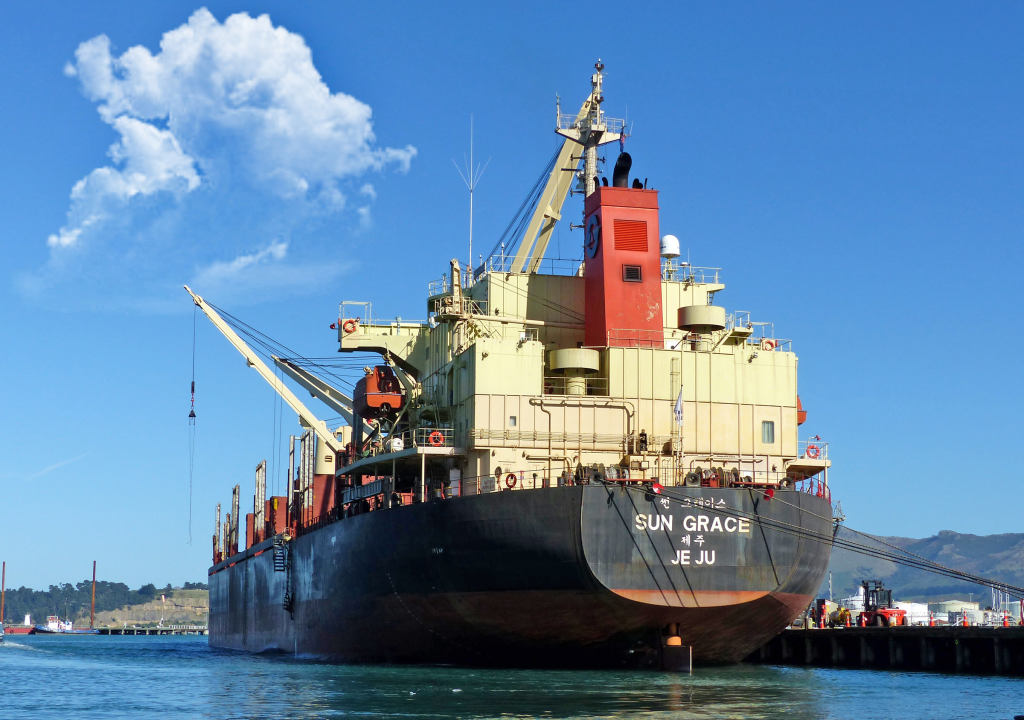
With the end of the 60-day US-Iran memorandum of understanding, tensions in the Strait of Hormuz have flared again, highlighting how the security and stability of key international waterways are becoming an increasingly urgent global concern. A key international waterway can remain legally “open” while ships face military threats, attacks, higher insurance premiums, sanctions-related risks, or forced re-routing, raising the question of whether ships can pass through safely, predictably, and at a reasonable cost rather than simply whether the waterway is “open” or “closed.”
South Korea’s Arctic Trial and the New Politics of Northern Shipping
By Nong Hong
August 26, 2026
The PanStar Acro departed Busan on August 22 for South Korea’s first government-backed commercial container-shipping trial through the Northern Sea Route. The 2,758-TEU vessel is scheduled to cross the Russian Arctic before calling at Felixstowe, Rotterdam and Gdansk, completing the round trip in about 40–45 days. Supported by the South Korean government, the voyage is intended to collect data on sailing time, distance, fuel consumption and operating costs. Its broader significance, however, lies in Seoul’s decision to test an Arctic route at a time when the security of established maritime corridors can no longer be taken for granted.
On Tuesday, September 8, 2026, Senior Fellow Sourabh Gupta was quoted by Xinhua on the role of media cooperation in the Asia-Pacific at the Asia-Pacific Media Forum.
On Monday, September 7, 2026, Senior Fellow Sourabh Gupta was quoted by Global Times on the role of international media in documenting China’s global engagement.
On Monday, September 7, 2026, Senior Fellow Sourabh Gupta was interviewed by Xinhua on how media cooperation can foster shared prosperity in the Asia-Pacific.
On Saturday, September 5, 2026, Senior Fellow Sourabh Gupta was quoted by China Daily on Guangdong’s manufacturing capacity and its role in commercializing AI innovation.
On Monday, August 31, 2026, Senior Fellow Sourabh Gupta was quoted by South China Morning Post on whether prediction markets could influence Beijing’s approach to the Trump-Xi summit.