
ICAS Maritime Affairs Handbill (online ISSN 2837-3901, print ISSN 2837-3871) is published the last Tuesday of the month throughout the year at 1919 M St NW, Suite 310, Washington, DC 20036.
The online version of ICAS Maritime Affairs Handbill can be found at chinaus-icas.org/icas-maritime-affairs-program/map-handbill/.
The prolonged conflict between the United States and Iran resulting in the closure of the Strait of Hormuz demonstrates the economic strains placed on a globalized world subservient to the exertion of politics, whereby countless countries are now facing new material challenges. States such as Sweden have abandoned typical maritime business practices, resulting in abnormal conduct such as sailing with transponders off. This adaptation in and of itself reveals the growing sense of distrust and paranoia when conducting shipping expeditions. These disruptions in logistical operations are highly psychological, which has already resulted in increased activity in previously secondary regional ports such as Egypt’s port of Sidi Kerir.
The scale of these disruptions to the flow of material goods for states has forced many to reevaluate who has their best interest in mind, fueling the search for new partnerships. This is most visible in Saudi Arabia’s organization of a multinational defense coalition with over ten other states. Currently, there is a decline in communication channels between the U.S. and Iran after the breaking of the memorandum of understanding (MoU). The U.S. subsequently issued a counter-blockade against Iran after the country closed the Strait of Hormuz once again. Further, the interruptions of scheduled imports and exports not only reveal sustained power imbalances through economic means, but sets a new precedent for what is constituted as reasonable means of war. The effects of economic warfare are far-reaching, with exponential spikes in the cost of refined oil revealing the profound link of global supply chains within countries’ domestic populations. This heightened awareness of the global supply chains in various countries across the world will only increase scrutiny towards the foreign policy aims of key actors involved.
“Three Chinese Tankers U-Turn in Hormuz as Risks Remain High”
August 19 – Bloomberg
[China, Strait of Hormuz]
Increased confusion has settled in for ships across the Strait of Hormuz, leaving supertankers and crude oil carriers disoriented as to how to navigate the strait. To avoid recent skirmishes between and on their ships, countries such as China, Sweden, and Liberia have made U-turns, sailing with transponders off, changed navigation paths, or remained idle completely.
“Saudis Give Full Oil Allocations to at Least Three Europe Buyers”
August 19 – Bloomberg
[Saudi Arabia, European Union]
Saudi Aramco, the Saudi state-owned national oil company and largest oil producer in the world, has taken new measures to continue providing crude oil to its European and Asian customers. The company plans to provide contractual volumes in September, with two thirds of buyers receiving shipments from Egypt’s Mediterranean port of Sidi Kerir while the third is yet to be determined.
“Iranian official warns shipping companies against backing US”
August 18 – Middle East Eye
[United States, Iran]
Iran is enforcing comprehensive measures to challenge the U.S.’ extensive commercial and maritime network used to weaken the state. An Iranian official explicated that shipping and logistics companies such as Maersk, Overseas Shipholding Group, and Crowley Government Services will be marked by the Iranian military for their material support of the U.S.’ maritime campaign, such as through the refueling of ammunition and equipment.
“13 Countries Join Saudi-led Maritime Defense Alliance”
August 18 – Shipping Telegraph
[Saudi Arabia, Middle East]
The Kingdom of Saudi Arabia has formally initiated the development of a multinational defense alliance aimed at “safeguarding freedom of navigation, international trade and energy supply routes” across its western border through the Red Sea and around the Gulf of Aden. The alliance is currently in its developing stages, with the 13 states that have completed the process to join the alliance having not been identified yet. The coalition plans to consolidate around optimizing response times to attacks on commercial vessels at risk of further derailing global maritime trade.
“Yemen’s maritime blockade forces Saudi oil fleet to ‘go dark’”
August 12 – The Cradle
[Yemen, Persian Gulf]
Saudi tankers have been forced to take increasingly drastic measures to avoid any maritime confrontation with the Yemeni Armed Forces (YAF) who have imposed a blockade of cargo shipments. Many tankers have turned to shutting off their AIS tracking systems. Saudi export volumes remain difficult to accurately measure and independently verified. Data intelligence trackers such as Kpler, have estimated that oil exports decreased to 2.38 million barrels per day from 2.71 million barrels.
“US forces strike container ship in Gulf of Oman off Pakistan”
August 11 – Seatrade Maritime News
[U.S., Panama, Pakistan, Oman]
A U.S. Navy MH-60 helicopter launched two hellfire missiles at the container ship Vela Nova due to the ship seeking passage through the Gulf of Oman during the U.S. Navy’s counterblockade on the Strait of Hormuz. Vela Nova container was initially Panama-flagged, but its registered owner is from the Liberian company Gold Valley Marine Investment and operated by the Turkish Doris Shipping & Trading company. Although all 17 crew members aboard survived, the ship’s lack of clear affiliation raised larger concerns about recent incidents of attempted reflagging in the Strait.
“Oman’s Turtle Coast Hit by Oil Leaking From the Tanker Caroline Bezengi”
August 4 – The Maritime Executive
[Oman, Cameroon, Russia]
The Cameroon-flagged ship Caroline Bezengi was found beached off of the coast of Oman en route from Novorossiysk, Russia back in June. The vessel has suffered particular signs of deterioration along its side and coupled with its position above a significant exposure of bedrock, is in a dangerous position, transporting cargo with an estimated worth over $100 million dollars. It is possible that the vessel was tagged with explosives from Ukrainian ships.
Strategic competition and maritime tensions between states continue to persist in the Indo-Pacific region. China is reported to conduct land reclamation at the Antelope Reef and Vietnam has also begun to bolster its navy, particularly in its defensive capabilities in the form of anti-submarine warships. India is also spending millions of dollars to invest in shipbuilding. These increasing investments in naval defense systems by many countries in the Indo-Pacific region will normalize the heightening of defensive posturing towards a country’s neighbors. This posturing can have detrimental effects on the role of diplomatic measures in curbing maritime confrontations both militant and non-militant in nature.
There is also a newfound sense of attention towards the establishment of financial, diplomatic, and industrial policies that demonstrate states’ priority to become more self-reliant in maritime contexts. This is reflected in India’s bond markets to increase state-owned maritime projects. The bolstering of bond markets will provide India not only with more optimized control over its naval modernization capabilities, but continuously provide increased access to new maritime sea areas with the help of specialized shipyards via greenfield port expansion. Naval investments such as Vietnam’s recent onset of defensive manufacturing in the form of a large anti-submarine warship, shows that these types of economic decisions may be influenced by capabilities of neighboring and recurring regional actors, and in particular China, as one of their most distinct maritime advantages is their variety of submarines. This reveals how counter-balancing naval asymmetry is more important than a generalized fleet.
“China Completes First Stage of Work at Disputed South China Sea Reef, Images Show”
August 19 – Reuters
[China, Taiwan]
China has completed part of its man-made island known as the Antelope Reef in the Paracels Islands’ archipelago, in the northernmost part of the Taiwan Strait. Confirmed via satellite images identifying a wharf stretching 680 meters, the island is about 4 miles long. Chinese state media claims the Antelope Reef makes the surrounding area safer by focusing on scientific research such as weather forecasting, but has yet to confirm the creation of a new military base.
“India’s first blue bond draw nears as issuers line up, bankers say”
August 18 – Reuters
[India]
India’s blue bond market is witnessing exponential growth, with expectations of doubling to $1 billion dollars worth of investments by the end of the year. With investors such as the Vadodara Municipal Corp and state-owned maritime focused lender Sagarmala, the market represents the funding of ocean and water related projects through debt securities. Investments include but are not limited to the developing of maritime ecosystems, shipbuilding, and port connectivity.
“US, Japan Plan World’s Deepest Undersea Mine to Challenge China”
August 12 – Bloomberg
[U.S., Japan, China]
The United States and Japan plan to formulate a joint effort to extract rare earth deposits from an island 1,000 miles off the coast of Japan. Known as the Minamitorishima by the Japanese, and Nan Niao Dao by the Chinese, the island possesses rare earth reserves under layers of mud about 3.7 miles deep in the ocean. This stated desire for the cooperation between the United States and Japan stems from a shared objective to avoid continued dependence on China for mine-to-magnet rare earth minerals.
“Vietnam starts building largest homemade anti-submarine warship”
August 10 – Reuters
[Vietnam, China]
Vietnam has begun construction of an anti-submarine frigate at the Song Thu Shiyard in Da Nang, Vietnam. The warship is purported to be the country’s “largest and most advanced” vessel built domestically. Equipment that will accompany the ship is also scheduled to be developed domestically. While the shift does not mark a step beyond models sold by Russia, it certainly demonstrates a pivot towards more independent defense manufacturing capabilities by Vietnam.
“Cambodia deep-water port cashes in on Thai border closure”
August 8 – Nikkei Asia
[Cambodia, Thailand]
Border clashes between Cambodia and Thailand have exacerbated activity near the only international deep-water seaport known as the Sihanoukville port. Located in Cambodia, with an expressway connecting it directly to the capital city Phnom Penh, reduction in economic activity in the area has caused Japanese businesses to become worried about their presence in the area. The country is considered high risk for theft of container goods, with a staggering 40% of export containers “going empty”. In addition, logistics companies were charged storage fees after breaking the free four-day storage rule in 2025. The land border is still closed and costs have soared for Japanese companies.
“China missile test shakes Pacific islands’ anti-nuclear unity”
August 4 – Nikkei Asia
[Southeast Asia, China]
China launched ballistic missile tests from submarines near Pacific island nations, earning a lackluster response from Australia while others have stopped short of condemnation. There has been a subsequent lack of unity by smaller regional actors due to numerous islands and states having joint defense agreements with each other, such as between Australia, Papua New Guinea, Vanuatu, and Fiji.
“After Hormuz, China looks to the promise – and peril – of the Arctic’s ‘ice silk road’”
August 16 – The Guardian
[China, Russia, Europe]
After President Xi’s call for the establishment of a “polar Silk Road” with Russia in 2017, China has announced the first scheduled transit through the Northern Sea Route north of Russia. The acceleration in the search for new trade routes is a result of increased volatility surrounding the Suez Canal and Strait of Hormuz. Certain advantages have already been identified in developing an Arctic Silk Road including significant reduction in travel days (from 40 to just 18 from Ningbo to the UK), and increased securement for products sensitive to warmer temperatures such as electric vehicles and lithium batteries.
“Peru’s Economy Unexpectedly Slows as Fishing, Agriculture Slump”
August 15 – Bloomberg
[Peru]
The fishing industry in Peru has suffered the most significant decline in output, a staggering 51.94% due to reported usual weather conditions generated by warmer Pacific Ocean temperatures due to El Niño. Numerous other industries, such as agriculture, manufacturing, mining, construction, and retail have not faced declines exceeding 10%. Meanwhile, the central bank of Peru is holding out hope that increases in consumer prices will only remain temporary.
“Panama Canal Shipper Pays Record $4.6 Million to Jump Queue”
August 14 – Bloomberg
[Panama]
The G. Arete, a petroleum gas tanker owned by South Korea’s SK Shipping Co., won an auction issued by the Panama Canal authorities to bypass the queue of ships in the canal. The vessel was reported to be empty despite paying a record $4.6 million dollars to pass from the Pacific Ocean to the Caribbean side of the canal. Reports indicate that the demand to pay extra sums of money to bypass the line have skyrocketed due to both the closure of the Strait of Hormuz and concerns over droughts caused by the El Niño storm despite usually adhering to a flat rate system. From October 2025 to February 2026, the median price was around $55,000 dollars.
“South Africa advances roadmap to strengthen regional maritime security”
August 13 – International Maritime Organization
[South Africa, European Union]
South Africa is seeking to strengthen cooperation between agencies contributing to its national maritime domain ‘awareness’ organized under the National Maritime Information Sharing Centre (NMISC) in the form of a shared framework. The collaborators include the European Union, as well as help from southwestern African states including Seychelles (Regional Coordination Operations Centre) and Madagascar (Regional Maritime Information Fusion Centre). These coordinated efforts aim to increase sharing of information in order to develop comprehensive responses to maritime security threats across the Western Indian Ocean.
“Russian ghost fleet tankers use ‘Mad Max’ nets to fend off Ukraine’s drones”
August 13 – Bloomberg
[Russia, Ukraine, United States]
Ukraine has been launching attacks against Russia’s energy infrastructure docked in Russian port terminals in the Sea of Azov and Black sea. Although not completely securing deterrence, Russian vessels delivering oil have implemented new measures such as anti-drone netting, cages, and stackable water tanks. The naval base in Novorossiysk has also suffered damage, even leading to U.S. involvement to suspend Ukraine’s incursions in order to prevent the complete destabilization of Russian oil markets., though rates in shipping cargo have sharply increased.
“Scotland’s North Sea oil revenues drop by 12%”
August 12 – Bloomberg
[Scotland, United Kingdom]
Tax and licensing revenues from within the oil and gas industry have been decreasing every year since 2023 due to Russia’s invasion of Ukraine, resulting in calls for industrial policy reforms. A windfall tax of 38% is added to all profits from oil and gas companies within the UK and the UK Continental Shelf’s borders. Simultaneously, climate activists have also called for the shift away from oil and gas completely to more renewable energy alternatives.
“Panama Canal Cuts Draft for Largest Ships as El Nino Intensifies”
August 6 – The Maritime Executive
[Panama, Globe]
The Panama Canal Authority has faced numerous climate related incidents that have significantly affected operations, with the lowering of draft for larger vessels serving as a mitigation against accelerating El Niño weather patterns. The maximum draft is defined as the deepest physical distance a ship can submerge into water. Due to rising water levels, the official maximum draft for ships has been modified to 47.5 feet below sea level. Additionally, the lake that serves the Panama Canal’s water source is down almost an entire foot since July of this year. Although the lowest average water level in five years was documented in May, the number of daily transits remains high, especially for imports to the U.S. and exports to Asia.
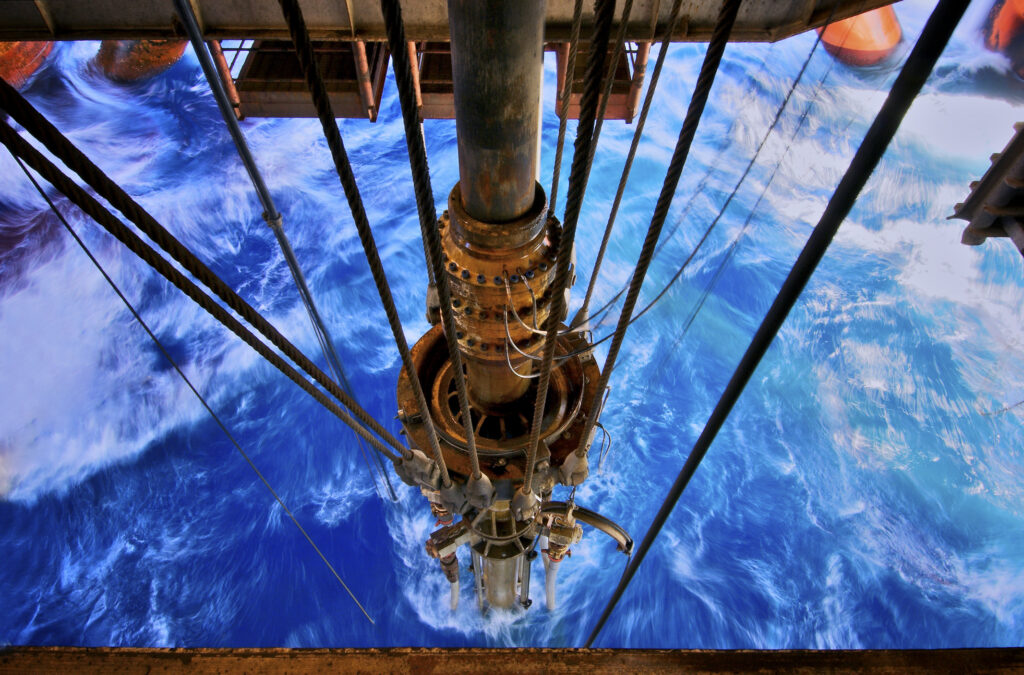
The International Seabed Authority’s meetings in Kingston concluded on 31 July with the Mining Code once again dominating much of the discussion. Progress in the negotiations remains important, but the session also revealed a quieter change in the Authority’s role. Attention is increasingly shifting to whether the Authority can provide the institutional foundations needed for any future decision on commercial exploitation to command confidence.
The July agenda reflected this development across several areas of the Authority’s work. The Council continued negotiations on the Mining Code and, on 24 July, agreed on a roadmap for the work still required before the regulations could be adopted, including further intercessional engagement on unresolved provisions. Discussions concerning the Enterprise focused on its legal status, potential operational role and the practical arrangements required for it to assume more substantive functions. Meanwhile, the Legal and Technical Commission advanced work on standards and guidelines, environmental threshold values, regional environmental management plans, contractor reporting and data management. The budget debate pointed in the same direction, drawing greater attention to the scientific, administrative and compliance resources required as the Authority’s responsibilities expand.
These discussions show that the ISA’s institutional development cannot simply be postponed until the Mining Code is complete. The Authority is already performing many of the preparatory, supervisory and administrative functions associated with an international regulator, even though the final framework for commercial exploitation remains under negotiation.
This development also reflects a broader change in the debate over deep-sea mining. For much of the past decade, debate centered on whether commercial exploitation should begin at all, an issue that continues to carry considerable political and ethical weight. As the regulatory process has advanced, attention has increasingly turned to the conditions under which any future exploitation would be governed and to whether the resulting system could command confidence among member States, scientific communities and the wider public.
Scientific uncertainty helps explain why these governance questions have become more pressing. Environmental baseline knowledge remains uneven across large parts of the Area, while monitoring methodologies continue to develop and cumulative impacts are difficult to assess across contract areas, over extended timeframes and within ecological systems that are still only partly understood. Such uncertainties cannot be set aside until the legal framework is complete, because they already bear directly on the Authority’s credibility. Where knowledge is incomplete, confidence will depend on the quality of the evidence collected, the independence and transparency of the review process, and the institution’s willingness to adjust its approach as new findings emerge.
Legal developments have added further weight to these concerns. The provisional-measures orders issued by the Seabed Disputes Chamber on 18 July in the NORI and TOML cases did not interrupt the Authority’s ongoing work, while bringing procedural integrity more clearly into view. The orders gave greater prominence to due process, transparency and fairness within the legal setting in which seabed governance is developing, particularly in relation to the Authority’s supervision of contractors. As disputes over oversight and compliance become more likely, the ISA’s legitimacy will depend as much on the clarity and fairness of its procedures as on the substance of its decisions.
The political context surrounding deep-sea mining has also grown more complex over the past decade. Concerns over the energy transition, critical minerals, supply-chain resilience and strategic competition now overlap with longstanding debates about environmental protection and the common heritage of humankind. The United States has further complicated this landscape by advancing a domestic licensing pathway for seabed mineral activities beyond national jurisdiction, raising questions about the relationship between national regulatory initiatives and the multilateral framework administered by the ISA. Developing States continue to emphasize participation, equity and benefit-sharing, while scientific organizations and civil society have placed growing emphasis on ecological uncertainty and long-term environmental risk. The Authority therefore operates within an increasingly contested governance environment in which geopolitical competition, environmental precaution and competing claims of regulatory authority increasingly intersect.
As the ISA moves into the next phase of its work, confidence in the regime will depend especially on greater transparency, stronger scientific and technical capacity, and a regulatory approach capable of responding to new evidence.
Transparency should remain a central priority, particularly in the work of the Legal and Technical Commission, the circulation of documents and the explanation of technical and scientific judgments. As political scrutiny intensifies, confidence will depend increasingly on whether member States can follow the reasoning behind key recommendations, assess the evidence on which they rest and identify the uncertainties that remain. Formal compliance with legal procedures provides only part of that assurance; the wider decision-making process must also be sufficiently open to sustain trust in the Authority’s work.
Greater transparency, however, will have limited value unless member States possess the expertise and resources needed to make effective use of the information available. Scientific and technical capacity therefore deserves particular attention, especially for developing States. Participation in the ISA now requires members to evaluate environmental baselines, scrutinize monitoring plans, interpret regulatory standards and understand the legal and financial consequences of institutional choices. Capacity-building bears directly on the quality of decision-making across the regime. The common heritage principle will carry limited practical meaning if many members retain a formal voice while lacking the capacity to participate on comparable terms.
Information and expertise, in turn, must feed into a regulatory system capable of learning from experience. However detailed the eventual Mining Code may be, it cannot anticipate every scientific, environmental and operational issue that may arise. Knowledge of deep-sea ecosystems will continue to develop, while any future exploitation would generate experience capable of revealing gaps in existing standards, procedures and assumptions. Periodic revision should therefore be understood as an ordinary part of governing under uncertainty. The durability of the regime will depend on whether the ISA establishes credible review mechanisms, preserves sufficient institutional flexibility and develops a consistent practice of adjusting its approach in light of new evidence.
The Kingston meetings marked another step in the ISA’s emergence as a governing institution. Completion of the Mining Code will remain an important milestone, but the Authority’s longer-term standing will be shaped by the practices that surround it: the assessment of scientific evidence, the exercise of oversight and the willingness to revise rules as circumstances change. The significance of July therefore lies in the clearer view it offered of what credible governance of the international seabed will require.
This issue’s Flagship Analysis was written by Nong Hong, Executive Director at ICAS.
The Gerald R. Ford-class is the newest and most powerful fleet of nuclear-powered aircraft carriers (CVNs) in the U.S. Navy to date. This new class of ship is designed to last 50 years, with six new ships set to eventually replace the entirety of Nimitz-class ships that entered service between 1975 and 2009. Since the Navy is required to maintain 11 operational aircraft carriers at all times, 10 of which currently belong to the Nimitz-class and one belonging to the Gerald R. Ford-class.
The new class has a plethora of features, with arguably the most significant upgrade being a 30% increase in aircraft sortie launches per day. Within a 24-hour surge period, the Ford class could sustain up to 270 sorties. The Ford class’ operational capacity is largely due to its four electromagnetic catapult launch system (EMALS), which generate an 150% increase in electrical power to launch fighter jets with more fuel and weapons. This launch system combined with a 500-900 reduction in crew members, renders the Gerald R. Ford-class significantly more powerful than its predecessor.
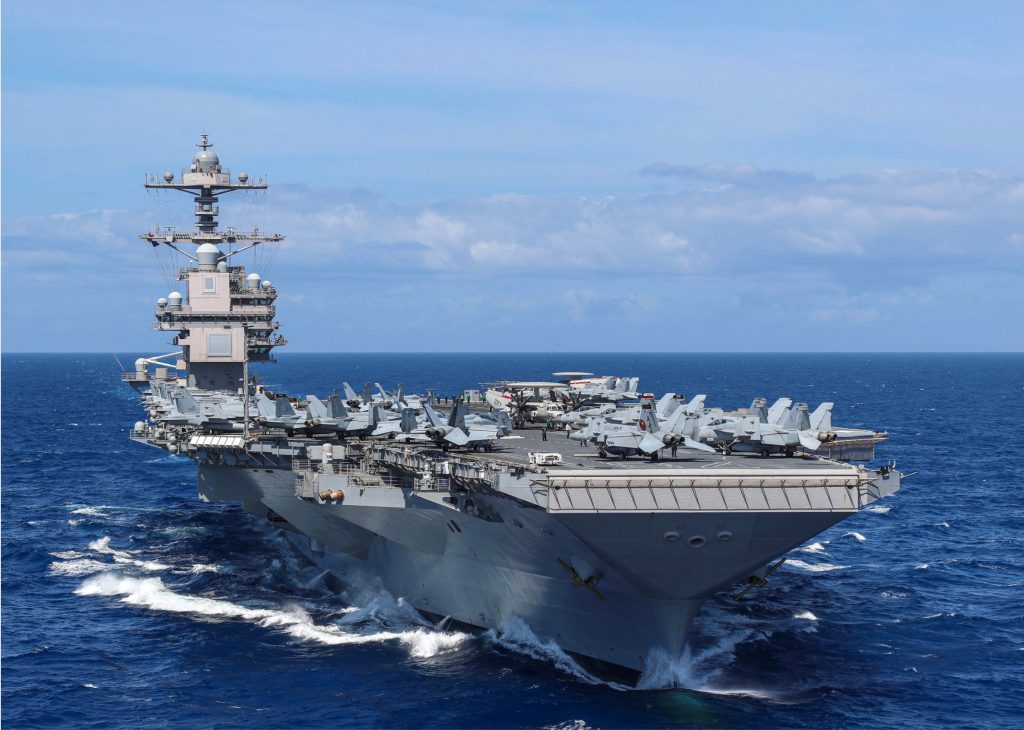
On the surface, the U.S. possessing 11 super carrier ships while the People’s Liberation Army Navy (PLAN) only having 3 super carrier ships seems like a clear advantage, however both entities possess only one super carrier with the EMALS system. Significant delays in the integration of the fifth generation stealth fighter jet known as the F-35C into the EMALS system beginning in the 2010s has effectively allowed China’s own fifth generation fighter, the J-20, to be completed and deployed in half the amount of years it takes the U.S. to produce them.
On Thursday, August 13, President Trump issued a national security memorandum for the U.S. Navy to completely overhaul the current design and functionality of the Gerald R. Ford ship-class. They are instructed to redesign the ship class to resemble those that were in service during World War II, where the current ELAMS system would be replaced by an older, steam-powered catapult system although production of the steam-powered catapult system has been phased out and are no longer in production. Risks associated with future Ford class ships such as the USS Doris Miller, include “significant cost, schedule and integration risks” that are posited to be regressive in nature.
Although the USS Gerald R. Ford was docked following its 326 day deployment across Mediterranean Sea, Caribbean Sea, and finally the Middle East Suez Canal in May 2026, recent news indicates that there currently is no estimate on the completion of its scheduled maintenance. Larger ship maintenance periods have lasted longer than anticipated than in the past, from six months to one year or longer. Prior to its return, the ship had conducted launch and recovery systems back in February 2026 but had only just been released to the public at the beginning of the third week in August. The results indicate that the generation rate of sorties compared to the Nimitz-class saw a 120-130% increase.
While the U.S. Navy has stated clear goals in its procurement, delivery, and deployment processes regarding future CVN Gerald R. Ford-class shipbuilding, the ship’s embodiment of projection of U.S. power is at odds with a sustained progression of U.S. industrial policy. In the wake of the fortification of the PLAN across the South China Sea, the Taiwan Strait, and other maritime areas, the ways in which both deployed and anticipated Ford-class models have been managed has taken the shape of a generalized, crisis response instrument.
The USS Gerald R. Ford CVN-78 experienced its longest deployment of any U.S. vessel since the Vietnam War: 326 consecutive days. The deployment has generally been touted as “record breaking”, a celebratory spin on industrial policy that signals overextension and delayed shipbuilding capacities. The ship’s deployment across hemispheres, from the Caribbean Sea in November of 2025, to the Mediterranean Sea, before finally supporting Operation Epic Fury in February 2026, obscure the fact that the longer the vessel is deployed, the longer the number of days its rest period will amount to. If the fire that ignited in the main laundry spaces aboard the ship spread, there is no telling the length of adaptive measures the U.S. Navy would confront having its most expensive vessel suddenly out of commission. The reliance on one model while the other six are still in development poses significant risks to not only the projection of U.S. naval power across the globe, but more importantly, the ability of a fleet to perform multiple functions such as catapult launches and recover aircraft on the flight deck simultaneously.
By contrast, China has shifted its focus from smaller coastal vessels to larger carriers that would potentially rival the Gerald R. Ford-class. This shift is evident in the quick turnaround time of the construction of the Fujian 003 ship, which is equipped with an electromagnetic aircraft launch system, although not identical to the EMALS system. While the “test and trial period” for the Ford class lasted at least about 18 months, the Fujian 003 was both commissioned and deployed within just one year. The U.S. Navy’s most powerful and expensive ship, the Gerald R. Ford-class, is only one example in which underestimation of its associated risks mark the ships’ trajectory as a key factor in potential escalation with the PLAN.
This issue’s Spotlight was written by Max Cowan, Part Time Research Assistant Intern at ICAS.
The research and commentary reviewed this month reveal how analysts and officials are framing two connected debates in the maritime domain. In the South China Sea, the discussion has moved beyond incident reporting toward the question of legal strategy: much of the analysis examines what observers describe as Manila’s “lawfare by accretion,” the steady accumulation of legal instruments following its deposit of a nautical chart of Scarborough Shoal with the United Nations, and debates whether this documentation strengthens the Philippines’ position or invites further Chinese pressure. A parallel conversation weighs whether Manila’s deepening alignment with partners such as Japan and Australia deters Beijing or hardens its posture. Beneath the surface, a second debate is taking shape over undersea infrastructure. The loitering of a Chinese research vessel over the Pacific Light Cable Network has fueled discussion over how states should classify, deter, and respond to gray-zone activity that may threaten the undersea cables collectively carrying the overwhelming majority of the region’s international data traffic, and whether existing legal framework under UNCLOS is adequate for that purpose. The analyses and assessments below were selected for their analytical depth, institutional credibility, and direct relevance to these evolving debates over the U.S.-China maritime competition.
South China Sea
Undersea Cables & Critical Maritime Infrastructure
Beyond Shipyards: Commercial Shipbuilding and China-U.S. Maritime Competition
by Yilun Zhang
August 11, 2026
For much of the post-Cold War era, commercial shipbuilding occupied only a limited place in international strategic discussions. As globalization deepened and manufacturing became increasingly internationalized, commercial vessels were widely regarded as products of market competition, built where production costs, financing, and industrial efficiency proved most competitive. While naval shipbuilding remained closely associated with national defense, commercial shipbuilding was generally viewed as a mature global public industrial good rather than a strategic asset.
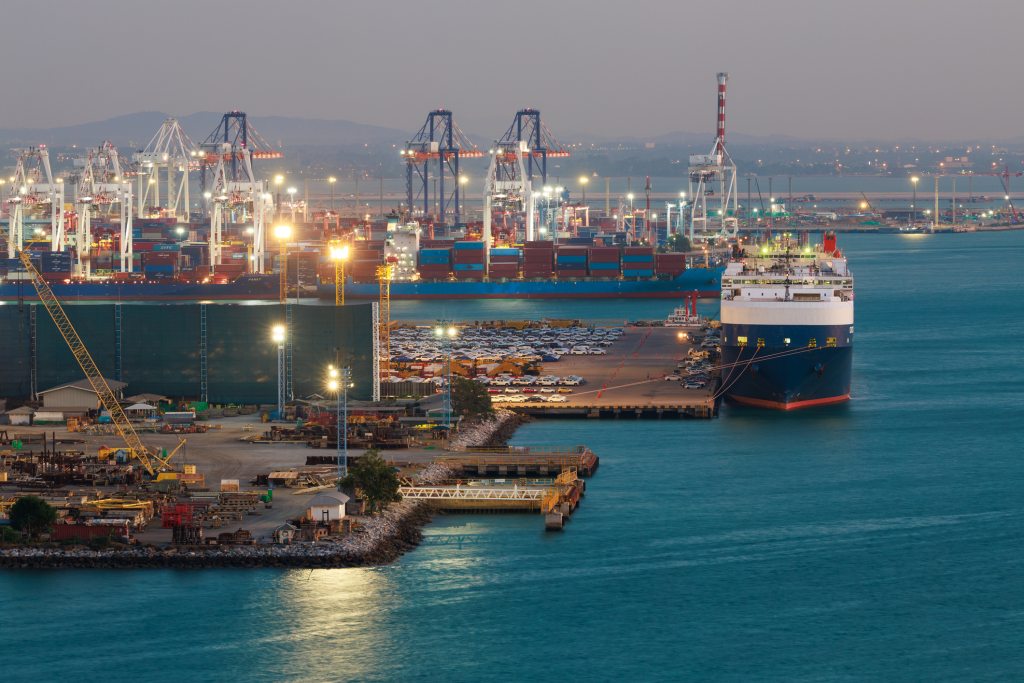

The Blind Spot: Coupang, Shipbuilding, and a Misread Alliance
by Younseo Kim
August 13, 2026
Business disputes have rarely risen to the level of high politics in the U.S.-Korea alliance. The controversy surrounding Coupang has become an exception, and its escalation reveals how readily a regulatory enforcement case can migrate into the core of an alliance relationship. What began as the Korean government’s response to a data breach at the country’s largest e-commerce platform has, within months, drawn in the U.S. Congress, the White House, the Office of the U.S. Trade Representative, and eventually Korea’s National Security Council.
Before Exploitation Begins: What the NORI and TOML Orders Mean for ISA Accountability
by Nong Hong
August 21, 2026
On 18 July 2026, the Seabed Disputes Chamber of the International Tribunal for the Law of the Sea issued orders on requests for provisional measures submitted by Nauru Ocean Resources Inc. (NORI) and Tonga Offshore Mining Ltd. (TOML) in their respective proceedings against the International Seabed Authority (ISA). The Chamber did not suspend the ISA’s ongoing inquiry into possible contractor non-compliance. It nevertheless prescribed procedural safeguards governing how the inquiry must be conducted. The orders thus preserve the ISA’s supervisory role while making clear that the exercise of that authority is subject to judicial scrutiny where procedural fairness is at stake.
South Korea’s Arctic Trial and the New Politics of Northern Shipping
by Nong Hong
August 26, 2026
The PanStar Acro departed Busan on August 22 for South Korea’s first government-backed commercial container-shipping trial through the Northern Sea Route. The 2,758-TEU vessel is scheduled to cross the Russian Arctic before calling at Felixstowe, Rotterdam and Gdansk, completing the round trip in about 40–45 days. Supported by the South Korean government, the voyage is intended to collect data on sailing time, distance, fuel consumption and operating costs. Its broader significance, however, lies in Seoul’s decision to test an Arctic route at a time when the security of established maritime corridors can no longer be taken for granted.