ICAS Maritime Affairs Handbill (online ISSN 2837-3901, print ISSN 2837-3871) is published the last Tuesday of the month throughout the year at 1919 M St NW, Suite 310, Washington, DC 20036.
The online version of ICAS Maritime Affairs Handbill can be found at chinaus-icas.org/icas-maritime-affairs-program/map-handbill/.
UN says 20,000 seafarers stranded due to Strait of Hormuz closure, despite Iran claiming it’s open
March 25 – ABC News
[Iran, United States]
The United Nations reported that roughly 20,000 seafarers remain stranded in the Persian Gulf as attacks on commercial vessels and ongoing security risks continue to disrupt transit through the Strait of Hormuz, despite Iran’s claims that the waterway is open. Shipping data and analysts indicate that vessel movement remains highly limited and unpredictable, with targeted strikes and threats deterring commercial traffic and raising concerns over crew safety and global energy flows.
Iran says ‘non-hostile’ ships can pass safely through Strait of Hormuz
March 25 – Al Jazeera
[Iran]
Iran’s mission to the United Nations stated that “non-hostile” ships may transit the Strait of Hormuz provided they neither participate in nor support acts of aggression against Iran and comply with safety and security regulations. Traffic in the Strait remains at a fraction of the levels seen before the U.S. and Israel launched their war on Iran, prompting a global energy crisis.
UK’s Royal Navy set to lead coalition to reopen Strait of Hormuz: Report
March 24 – Anadolu Ajansı
[United Kingdom, United States, France, Iran]
The Royal Navy is preparing to lead a multinational coalition to reopen the Strait of Hormuz, with plans to deploy mine-hunting systems, destroyers, and uncrewed vessels to secure commercial shipping amid ongoing conflict with Iran.
Iran attacks in Strait of Hormuz are ‘economic terrorism against every nation,’ UAE oil CEO says
March 24 – CNBC
[Iran, United Arab Emirates, Strait of Hormuz]
The UAE condemned Iran’s attacks on shipping in the Strait of Hormuz, warning that disruptions to tanker traffic have halted a key global energy route and raised oil prices, highlighting the broader economic impact of maritime insecurity.
Bahrain pushes UN-backed action for Hormuz shipping; France tables rival text
March 23 – Reuters
[Bahrain, France, Iran, United States, China]
U.N. Security Council members are negotiating competing resolutions led by Bahrain and France to protect commercial shipping in the Strait of Hormuz, as Iranian attacks have disrupted vessel traffic and raised concerns over freedom of navigation.
March 23 – PBS News
[United States, Iran]
U.S. President Donald Trump extended his deadline for Iran to reopen the Strait of Hormuz to international shipping. In his Truth Social announcement, Trump said that the U.S. would hold off on strikes against Iranian power plants for five days and claimed that there were negotiations taking place, which Iranian officials denied. In response, the Iranian Revolutionary Guard Corps (IRGC) promised retaliation if Trump made good on his threat.
Japan, Europeans signal ‘readiness to contribute’ to efforts to keep Strait of Hormuz open
March 19 – The Hill
[Japan, United Kingdom, France, Germany, Iran]
Japan and several European countries signaled readiness to help maintain maritime security and reopen the Strait of Hormuz, expressing concern over Iranian attacks disrupting global energy supplies and driving up oil prices.
EU shows ‘no appetite’ to expand naval mission in Strait of Hormuz
March 17 – Shipping Telegraph
[United States, Iran, European Union]
European Union members have rejected expanding their Aspides naval mission to protect shipping in the Strait of Hormuz despite U.S. pressure, reflecting reluctance to become directly involved in the conflict with Iran. The decision highlights growing risks to energy flows and commercial shipping as tensions threaten freedom of navigation in the Gulf.
Strait of Hormuz marks first full day’s pause as no ships cross amid Iran war
March 16 – The South China Morning Post
[Iran, United States, Israel, China]
Shipping traffic through the Strait of Hormuz dropped to zero for the first full day since the outbreak of war between Iran, the U.S., and Israel, as vessels gathered outside the corridor awaiting safer conditions. The disruption is forcing global shipping reroutes and threatening energy flows, with about 20% of global seaborne oil trade normally passing through the strait.
Japan Defense Minister Says No Plans to Send Ship to Hormuz After Trump Comments
March 15 – Bloomberg
[Japan]
Japan’s defense minister, Shinjiro Koizumi, said that the nation currently has no plans to send warships to the Strait of Hormuz after President Donald Trump put pressure on Japan to do so ahead of the summit meeting with Prime Minister Takaichi. Koizumi said that it is possible to conduct a maritime security operation in special circumstances, however no direct answer has been given.
Lloyd’s of London stresses it is still insuring shipping in strait of Hormuz
March 11 – The Guardian
[Iran, United Kingdom, United States, Israel]
The marine insurance market centered on Lloyd’s of London said it is still providing coverage for vessels operating near the Strait of Hormuz, though war-risk premiums have surged sharply due to the conflict involving Iran, the U.S., and Israel. Hundreds of ships remain stuck near the waterway as insurers adjust policies and costs in response to rising maritime security risks.
Chubb picked to lead US insurance backstop for Hormuz shipping
March 11 – InsuranceBusiness
[United States, Iran]
The U.S. government has selected Chubb to lead a war-risk insurance program backed by the U.S. International Development Finance Corporation to support commercial shipping through the Strait of Hormuz amid the ongoing Iran conflict. The program will provide up to $20 billion in reinsurance coverage to help restart oil shipments through the critical global energy chokepoint.
Projectiles hit 3 ships in Strait of Hormuz
March 11 – The Hill
[Iran, United States, Thailand, Japan]
Three commercial vessels were struck by projectiles near the Strait of Hormuz, damaging ships and forcing crew evacuations amid the escalating conflict. The attacks highlight growing risks to commercial shipping as the closure of the strait disrupts global energy trade and leaves more than 150 vessels stranded.
Report: White House Considering a Raid to Seize Kharg Island
March 8 – Maritime Executive
[United States, Iran, China]
The U.S. is reportedly considering a special forces raid to seize Kharg Island, a strategic hub that handles most of Iran’s oil exports. Control of the island could allow the U.S. to influence regional shipping lanes and energy flows in the Persian Gulf amid the ongoing conflict.
Deadly attack on tug assisting abandoned container ship in Strait of Hormuz
March 6 – Seatrade Maritime News
[UAE, Oman]
A missile attack struck the UAE-flagged tug Mussafah 2 while it was assisting the damaged container ship Safeen Prestige in the Strait of Hormuz, killing at least four crew members. The incident highlights growing maritime security risks for vessels operating in the strategic waterway.
US to reinsure maritime losses in Gulf up to about $20 billion
March 6 – Reuters
[Iran, United States]
The U.S. will provide up to $20 billion in reinsurance to support oil and gas shipping through the Strait of Hormuz after tanker traffic slowed sharply amid the conflict with Iran and insurers withdrew coverage. The plan aims to restore confidence for maritime trade and may be paired with U.S. naval escorts to help resume energy shipments through the Gulf.
Strait of Hormuz Traffic Grinds to Near Halt as Security Threat Remains ‘Critical,’ Advisory Warns
March 4 – gCaptain
[Iran, United States, Israel, Qatar, United Arab Emirates]
Commercial shipping through the Strait of Hormuz has nearly stopped as missile attacks, drone threats, and electronic interference linked to the escalating conflict raise security risks for vessels. Maritime security advisories warn the threat level remains “critical,” causing shipowners to suspend transits through one of the world’s most important energy shipping routes.
Shutdown of Hormuz Strait raises fears of soaring oil prices
March 3 – Al Jareeza
[Iran, United States, Israel, Oman, China]
Following U.S.–Israeli strikes on Iran, tensions have disrupted shipping through the Strait of Hormuz, a critical global energy chokepoint. Iranian threats and tanker attacks sharply reduced vessel traffic, driving oil prices higher and increasing insurance and freight costs. While a prolonged closure appears unlikely, the disruption has heightened global energy and supply chain concerns.
IMO & Major Maritime Agencies Issue Advisory To Shipping Companies Amidst US-Iran War
March 3 – Marine Insight
[Iran, United States]
The IMO and major maritime associations issued an advisory urging shipping companies to exercise extreme caution amid the U.S.–Iran conflict and tanker attacks in the Strait of Hormuz. Industry leaders emphasized seafarer safety, freedom of navigation, and reliance on verified information. Major carriers including Hapag-Lloyd, ONE, and Maersk have rerouted vessels and suspended some regional services.
China Calls on All Sides to Protect Ships Transiting Hormuz
March 2 – Bloomberg
[China]
China called on all sides of the Iran war to ensure the safe passage of ships through the Strait of Hormuz. After the U.S. and Israel began a bombing campaign on Iran, tanker traffic through the energy chokepoint has effectively halted. China is among one of the most exposed nations as the world’s second largest economy and depends on the wider Gulf region for both oil and gas supplies.
Global Container Major Hapag-Lloyd Suspends Strait Of Hormuz Transits Amid Middle East Conflict
March 2 – Marine Insight
[Germany, Iran, United States, Israel, Oman]
Hapag-Lloyd has suspended all transits through the Strait of Hormuz due to escalating U.S.–Israel–Iran tensions and security warnings. The move affects a critical global oil chokepoint and could lead to delays, rerouting, and higher shipping and energy costs.
Recent developments in the Strait of Hormuz reflect a rapidly deteriorating maritime security environment shaped by escalating conflict between the U.S., Israel, and Iran, with significant consequences for global energy flows and commercial shipping. Since the outbreak of “Operation Epic Fury”, traffic through the strait has at times fallen to zero with missile and drone attacks targeting commercial ships, leaving hundreds of vessels stranded and thousands of seafarers unable to safely transit the waterway. These disruptions are particularly consequential given that roughly one-fifth of global seaborne oil trade normally transits the waterway, making it one of the world’s most critical maritime chokepoints.
In response, international actors have taken diverging approaches to restoring stability and ensuring freedom of navigation. The U.S. has explored both military and economic measures, including delaying potential strikes on Iranian infrastructure and introducing a multibillion-dollar reinsurance program to support maritime trade. While countries such as Japan and several European states have expressed willingness to contribute to reopening the strait, the European Union has so far declined to expand its existing naval mission, reflecting broader hesitation to become entangled in the conflict. The United Kingdom is reportedly preparing to lead a multinational maritime coalition focused on mine-clearing operations and escorting commercial vessels, underscoring growing recognition of the need for coordinated security efforts.
Iran continues to leverage its geographic position and asymmetric capabilities to exert control over the strait. While signaling that “non-hostile” vessels may pass, Tehran has continued to threaten and target shipping, drawing sharp condemnation from regional actors such as the UAE, which described the attacks as a form of economic coercion affecting global markets. These dynamics have also extended into diplomatic arenas, where competing proposals at the United Nations Security Council highlight divisions among major powers over how to respond.
Overall, the situation in the Strait of Hormuz underscores the vulnerability of global maritime trade to geopolitical conflict, with security risks, insurance disruptions, and competing international responses creating a highly uncertain environment for shipping. Whether through military coordination, diplomatic negotiation, or economic intervention, efforts to stabilize the strait will remain central to preventing further escalation and mitigating global energy and supply chain shocks.
Manila, Beijing resume talks on South China Sea, energy security
March 28 – Reuters
[Philippines, China]
The Philippines and China have resumed high-level talks over the disputed South China Sea, marking their first meeting since January 2025. Both countries are exploring preliminary steps toward oil and gas cooperation amid the ongoing Middle East conflict.
Vietnam protests as China’s Paracels build-up escalates at Antelope Reef
March 22 – South China Morning Post
[China, Vietnam, South China Sea]
Vietnam formally protested China’s expanded land-reclamation activities at Antelope Reef in the Paracel Islands, where satellite imagery shows accelerated dredging which could enhance China’s presence in the South China Sea.
Taiwan tracks Chinese 26 military aircraft and 7 naval ships
March 15 – Taiwan News
[China, Taiwan]
Taiwan’s defense ministry tracked seven Chinese naval vessels and 26 military crafts around Taiwan over the weekend. In response, Taiwan deployed aircraft, naval ships, and coastal-based missile systems to monitor Chinese activity.
S.Korea says North fires around 10 ballistic missiles
March 14 – France24
[North Korea, South Korea, United States, Japan]
North Korea launched around ten ballistic missiles toward the Sea of Japan during ongoing U.S.–South Korea military exercises, in what Seoul condemned as a violation of UN Security Council resolutions. The tests highlight rising tensions on the Korean Peninsula as Pyongyang continues to expand its missile and nuclear capabilities.
North Korea’s Kim oversees cruise missile tests from new naval destroyer
March 5 – Al Jazeera
[North Korea]
According to North Korean state media, Kim Jong Un has overseen the test-firing of “strategic cruise missiles” from a new naval destroyer before the vessel’s official commissioning. Kim Jong Un supervised the launch of sea-to-surface missiles from the destroyer in order to assess the warship’s capabilities.
Philippine Forces Hold Naval Drills with U.S., Japanese Warships Near Taiwan
March 4 – USNI News
[Philippines, United States, Japan, Taiwan]
A joint patrol was held last week in the South China Sea between the Philippines, Japan, and the U.S.. This series of naval exercises extended to the northernmost islands near Taiwan, marking a first for the Philippines as Manila took steps to contest Chinese maritime pressure.
US patrol flights over South China Sea drop 30% as focus shifts to Middle East
March 3 – South China Morning Post
[United States, China, Philippines, Vietnam]
U.S. reconnaissance flights over the South China Sea declined by about 30% in February as the U.S.shifted military assets toward the Middle East amid rising tensions with Iran. Analysts say the reduction comes during a sensitive period in U.S.–China relations ahead of a planned summit between President Donald Trump and Chinese President Xi Jinping.
Australia’s patrol boat program boosts Marshall Islands’ maritime security capabilities
March 3 – Indo-Pacific Defense Forum
[Australia]
The Guardian-class vessel RMIS Jelmae was delivered to the Marshall Islands as part of a long-standing commitment to supporting regional maritime security through enhanced capabilities, infrastructure, and training. Australia’s first assistant defense secretary, Susan Bodell, stated that Australia will continue to empower protection of the Pacific under its Pacific Maritime Security Program (PSMP).
China Boosts Output of Advanced Nuclear-Armed Subs, US Navy Says
March 2 – Bloomberg
[China, United States]
U.S. Navy intelligence officials told the U.S.-China Economic and Security Review Commission that China has significantly increased submarine production and is developing advanced nuclear-powered submarines capable of striking the United States from waters near China. New platforms such as the Type 095 and Type 096 submarines are expected to enter service in the late 2020s and 2030s, strengthening China’s nuclear deterrent and expanding its undersea capabilities.
Recent developments across the Indo-Pacific reflects intensifying geopolitical competition and a progressively militarized regional environment. These dynamics are shaped by persistent territorial disputes, rapid military modernization, and strategic rivalry.
On the Korean peninsula, instability began in early March when North Korean leader, Kim Jong-Un, supervised cruise missile tests from a new naval destroyer, signaling efforts to enhance the country’s naval strike capacity. Later, North Korea launched ballistic missiles toward the Sea of Japan during the ongoing U.S.-South Korean military exercises. These actions were condemned by South Korea as violations of the UN Security Council resolution and highlighted the rising tensions on the Korean peninsula as North Korea advances its missile capabilities.
Furthermore, diplomatic engagement has resumed between the Philippines and China over disputed South China Sea territory. Recently, both sides held high-level talks for the first time since January 2025 and are exploring steps toward oil and gas cooperation. This development reflects efforts to manage tensions within the South China Sea amidst the ongoing Middle East conflict.
Simultaneously, cross-strait relations remain elevated. Taiwan reported an increased Chinese military presence within the region, prompting Taipei to deploy its own defenses. The U.S. Naval intelligence also reported on China’s rapid expansion of its submarine fleet. These developments underscore China’s perceived pressure on Taiwan amid U.S., Japan, and the Philippines joint naval drills.
However, this strategic balance may shift as U.S. presence within the region dropped by roughly 30% as resources shift to the Middle East due to the war on Iran. This may influence regional perceptions of U.S. engagement and deterrence credibility in the future. Meanwhile, Australia is bolstering its Pacific maritime security through increased cooperation with allies and improving capacity for surveillance and enforcement, particularly around the Marshall Islands.
Overall, the Indo-Pacific region is increasingly being defined by intensifying competition and expanding cooperation. While regional actors are strengthening alliances, there is also heightened military activity and strategic uncertainty. As such, the future stability of the region will depend on how effectively regional actors manage deterrence, maintain credibility, and develop mechanisms to mitigate conflict within the region.
EU and Iceland Strengthen Security and Defense Cooperation
March 23 – High North News
[European Union, Iceland]
The EU-Iceland security and defense partnership was signed by the EU High Representative, Kaja Kallas, and Icelandic Minister of Foreign Affairs, Þorgerður Katrín Gunnarsdóttir. This partnership will deepen critical areas of cooperation such as maritime security and the protection of critical infrastructure.
NATO Forces Wrap Arctic Warfare Cold Response 26 Drills
March 19 – USNI News
[NATO]
On March 19th, NATO wrapped up Exercise Cold Response 26 after 10 days of arctic warfare drills across Norway and Finland. During the exercise, NATO forces conducted joint flight operations, mass casualty drills, live-fire events, and multilateral land training in the northern regions of Norway and Finland. The exercise was designed to enhance NATO cooperation and demonstrate NATO’s ability to defend the Arctic region.
US confirms 157 killed in maritime strikes experts call ‘extrajudicial’
March 17 – Al Jazeera
[United States, Caribbean, Latin America]
The U.S. confirmed it has killed at least 157 people in military strikes on suspected drug-trafficking vessels off Latin America. Senior Defense official, Joseph Humire, stated that the movement of drug-trafficking vessels had decreased by 20 percent within the Caribbean, but could not give an answer as to whether the quantity of drugs entering the U.S. had gone down.
Marad’s Carmel says U.S. must build new maritime system
March 16 – FreightWaves
[United States, China, France]
The United States Maritime Administration warned that the U.S. has lost much of its global shipbuilding and shipping capacity and must rebuild its maritime system. The proposed Maritime Action Plan focuses on strengthening shipbuilding, ports, logistics, and workforce development to improve economic resilience and compete with other maritime powers.
With Ferry Strikes, Ukraine Narrows Russia’s Options at Kerch Strait
March 15 – Maritime Executive
[Ukraine, Russia, Türkiye]
Ukraine struck two Russian rail ferries supporting logistics across the Kerch Strait, damaging vessels used to transport cargo between mainland Russia and Crimea. The attacks further restrict Russia’s ability to supply Crimea and increase pressure on the Kerch Strait Bridge, now one of the few remaining logistical routes.
After Trump photo op, CMA CGM will re-flag 30 ships in France
March 13 – FreightWaves
[United States, France]
French shipping giant CMA CGM announced it will re-flag 10 large container ships under the France flag starting in 2026, increasing its home-registered fleet by 30%. The move comes after earlier discussions with the U.S. over maritime investment but reflects limited follow-through on pledges to expand U.S.-flag shipping.
India Quietly Provides Refuge for an Iranian Landing Ship
March 6 – Maritime Executive
[India, Iran, Sri Lanka]
India quietly allowed the Iranian naval vessel IRIS Lavan to dock at Kochi Port after the ship requested refuge due to mechanical issues, as tensions escalated following U.S. strikes on Iran. The incident highlights the diplomatic and maritime pressures facing regional states amid the expanding conflict.
Iranian warship sunk by the US was sailing home after taking part in an exhibition hosted by India
March 5 – AP News
[Iran, United States, India, Sri Lanka]
A U.S. submarine sank the Iranian warship IRIS Dena near Sri Lanka while it was returning home after participating in naval exercises hosted by India. The incident killed dozens of sailors and widened the breadth of the U.S.–Israel war with Iran, extending into the Indian Ocean.
US and Ecuador forces launch operation to fight drug trafficking
March 4 – BBC
[Ecuador, United States]
The U.S. embassy in Quito announced that U.S. forces, their Ecuadorean counterparts, and Europol, had dismantled a large-scale drug-trafficking network linked to the Los Lobos gang. Ecuador’s President Daniel Noboa said that around 70% of the world’s cocaine now flows through Ecuador’s ports. This cooperation builds on the U.S.’ key priority of tackling drug trafficking within the region.
Macron orders France’s nuclear-powered aircraft carrier to move from Baltic Sea to Mediterranean
March 3 – PBS News
[France, Iran, United States, Israel]
French President Emmanuel Macron ordered the aircraft carrier Charles de Gaulle (R91) to move from the Baltic Sea to the Mediterranean to help protect allied assets as the Middle East conflict involving U.S.-Israeli strikes on Iran expands. France has deployed fighter jets and air-defense systems in the region while calling for de-escalation and renewed diplomatic negotiations.
Yemen’s Houthis To Resume Missile And Drone Attacks On Ships Transiting The Red Sea
March 3 – Marine Insight
[Yemen]
Houthi rebels spoke anonymously on February 28 and confirmed that the group plans to renew their campaign against commercial shipping routes in the Red Sea after the U.S. and Israel’s strikes on Iran. The Red Sea is a vital maritime route that a significant amount of global traffic passes through and links the Mediterranean Sea to the Indian Ocean. These renewed attacks would disrupt vessel traffic within the region and add on to the fragile state of global shipping.
Oman ports targeted by drone attacks
March 3 – Seatrade Maritime News
[Oman, Iran, United States, Israel]
Drone attacks targeted the Omani ports of Duqm and Salalah amid escalating regional tensions following U.S.–Israeli strikes on Iran. While no casualties were reported, operations at several Omani maritime facilities were suspended. The attacks appear linked to broader strikes on regional oil and energy infrastructure across the Gulf.
The Arctic Circle Rome Forum – Polar Dialogue: From Glaciers to Seas (Rome, March 3–4, 2026) was not simply another polar science meeting. Hosted at Italy’s National Research Council (CNR) headquarters, it brought together participants from over 40 countries across governments, research institutions, Indigenous communities, and civil society—an unusually broad mix for a forum held outside the Arctic region itself. The organizers framed the discussions around five keywords—science, diplomacy, security, education, and research—which are a concise snapshot of where Arctic governance is heading: toward a blended space where knowledge production, geopolitical risk, and institutional design increasingly sit in the same room.
Rome also mattered as a venue. Italy’s institutions presented the Forum as part of a wider “three Poles” lens (Arctic, Antarctic, and glaciers/cryosphere more broadly), explicitly connecting polar change to global systems and to non-polar societies. This matters because it offers a pragmatic pathway for non-Arctic stakeholders to justify sustained engagement without framing every Arctic conversation as a direct geopolitical contest. In short, Rome’s message was that the Arctic is now a global governance problem, and non-Arctic actors are reorganizing their participation accordingly.
Why the “observer” question is becoming the governance question
My own participation at Rome took the form of a focused side event—“Observer States in Arctic Governance”—co-hosted by ICAS and Osservatorio Artico. The timing itself was telling: the session sat in the early morning block of Day 1, alongside panels on mineral resources, Indigenous sovereignty, and Svalbard as a laboratory. That adjacency captures the practical shift underway. Observer-state participation is no longer treated as a peripheral diplomatic footnote; it is increasingly discussed as a governance design issue that touches the core questions of knowledge, legitimacy, and operational cooperation.
The Arctic Council’s observer category was originally built to widen the circle of engagement while preserving the Council’s member-state core. But the post-2022 environment of fragmented cooperation, sanctions regimes, heightened security concerns, and competing narratives about science and strategic infrastructure has sharpened a basic dilemma: how can non-Arctic participants contribute meaningfully without eroding political trust, and how can Arctic institutions benefit from extra capacity without creating new vulnerabilities? Rome offered a candid setting to address this dilemma not as theory, but as a set of practical choices about projects, standards, transparency, and accountability.
Observers’ role: from “permission to attend” toward “capacity to contribute”
A useful way to read the Rome Forum is that it showcased two different “languages” of Arctic participation—both legitimate, but often in tension.
First language: capacity and public goods. This is the cooperative register: observers are valued when they provide measurable contributions—data, instruments, monitoring, funding, training, logistics support, or scientific outputs that reduce uncertainty and improve shared situational awareness. Rome’s agenda leaned heavily into this register through multiple sessions on observation, modeling, and research infrastructures.
Second language: risk and resilience. This is the security register: observers are evaluated through screening questions—dual-use concerns, critical infrastructure sensitivities, strategic dependencies, disinformation risks, and the possibility that scientific engagement can be instrumentalized. The Forum’s explicit inclusion of “security” as a headline theme, and sessions that connected research to geopolitical turbulence, reflected this reality.
The governance challenge is not to pick one language and discard the other, it is to build a workable interface between them. That interface usually takes the form of standards-based research practices, clearer project disclosure, stronger data governance, and more predictable participation pathways so that “capacity” can be recognized without ignoring risk. In this sense, the observer debate is becoming a litmus test for whether Arctic governance can remain open enough to solve complex scientific and environmental problems while becoming robust enough to survive strategic distrust.
Italy’s own positioning at Rome implicitly reinforced this logic. In public remarks and interviews around the Forum, Italian officials emphasized the importance of investing in research, connecting Arctic change to wider systems (including the Mediterranean), and balancing security, science, and economic objectives while also presenting Italy as a dialogue-capable, institutionally reliable partner. Whether one agrees with every framing, the underlying point is clear: for a non-Arctic observer, credibility increasingly rests on being able to demonstrate steady contributions and rule-respecting behavior, not simply interest.
Greenland as a mirror: how one place hosts multiple narratives at once
Greenland-related debates at Rome did not appear only as “Greenland panels.” They surfaced as narratives which often pull policy conclusions in different directions.
One narrative is the resource-and-security storyline: “Time to Mine? – Security Perspectives,” for example, framed Arctic mining through a security lens, with speakers from Nordic and European universities—a reminder that research institutions are increasingly part of broader strategic conversations, not merely local stakeholders. This narrative tends to emphasize critical minerals, investment screening, strategic dependencies, and the ways extractive decisions can reshape Arctic geopolitics.
A second narrative is the cryosphere-and-global-systems storyline: Greenland’s ice sheet appeared in technical discussions on observation and modeling, including a talk explicitly on monitoring Greenland ice sheet dynamics. Here, Greenland is less a “prize” and more a planetary indicator—central to sea-level rise, ocean circulation, and global climate risk. Policy implications then tilt toward data sharing, monitoring continuity, and scientific cooperation as a form of risk management.
A third narrative is the governance-and-legitimacy storyline, which runs through discussions of Indigenous sovereignty and institutional participation. Rome’s program placed Indigenous sovereignty and observer governance in the same morning block—an arrangement that, intentionally or not, underscores that “who gets to speak for the Arctic” is not only a state-centric question. When Greenland is discussed purely as a strategic geography, governance legitimacy becomes harder; when Greenland is discussed as a community and a polity with agency, cooperation becomes more complex but also more credible.
These narratives coexist, and the friction among them is exactly what makes Greenland such a revealing test case. The policy temptation is to simplify: to treat Greenland as either climate science, or minerals, or sovereignty. Rome suggested the opposite lesson: durable cooperation requires acknowledging that these layers are inseparable—and designing participation rules that can hold them together without collapsing into either securitized exclusion or naïve openness.
What Rome ultimately clarified
Two practical takeaways stand out.
First, the “observer space” is where institutional innovation is most urgently needed. The Arctic Council and the broader Arctic governance ecosystem will continue to rely on non-Arctic capacity especially in research, monitoring, education, and technology. Rome’s turnout and packed agenda reflected that demand. The question is whether participation pathways can be made sufficiently transparent, predictable, and standards-driven to keep cooperation credible under geopolitical stress.
Second, credibility now comes from steady capacity, not episodic symbolism. This is where Italy’s hosting mattered: it showcased how a non-Arctic state can use institutions (research councils, ministries, universities, and structured forums) to create continuity of engagement and to signal reliability. For observers—including China and Asian stakeholders more broadly—the strategic implication is straightforward: influence will increasingly be earned through reproducible contributions (data, methods, infrastructure, training, and rule-compatible projects) and through demonstrated respect for Arctic governance norms, rather than through one-off high-visibility gestures.
Rome did not resolve the Arctic’s hardest disagreements. But it did something more foundational: it made visible the architecture of tomorrow’s debate—a debate less about whether non-Arctic actors should be present, and more about how their presence can be structured so that cooperation remains both possible and legitimate.
This issue’s Flagship Analysis was written by Nong Hong, Executive Director at ICAS.
The Strait of Hormuz is a critical maritime choke point bound by Iran, Oman, and the United Arab Emirates, connecting the Persian Gulf to the Arabian Sea. Chokepoints such as the Strait of Hormuz are narrow channels along widely used routes and when impassable, can result in substantial supply delays, a rise in shipping costs, and broader economic instability. As the only sea passage from the Persian Gulf to the open sea, it is one of the world’s most strategically significant transit routes for global energy flows.
The Strait of Hormuz is a crucial area. According to the U.S. Energy Information Administration (EIA), in 2024, around 20 million barrels per day, or about 20% of the global petroleum liquids, passed through the strait. Hormuz is also a critical channel for importers of food, medicines, and technological supplies to the Middle East.
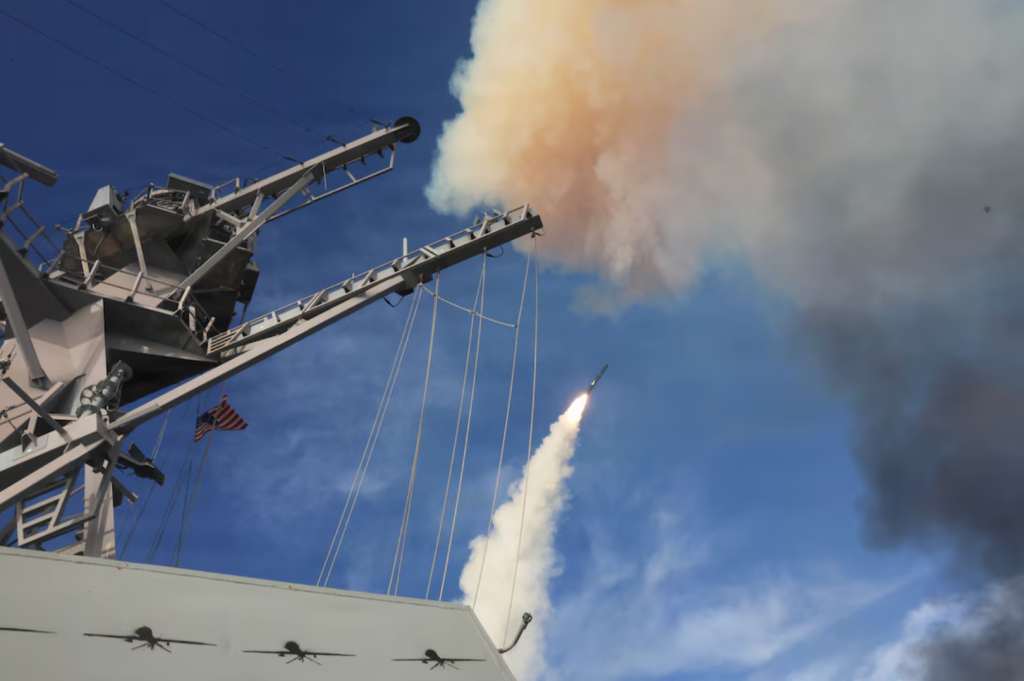
Beyond its economic importance, the Strait of Hormuz holds significant geopolitical value. Iran occupies an influential position along the strait because it controls much of the northern coastline and sits opposite Oman’s Musandam Peninsula at the narrowest part of the passage. As a result, Hormuz has long been a focal point of maritime developments and strategic signaling by regional and external powers.
Tensions between Iran, the U.S., and Israel escalated in early 2026 due to failed nuclear negotiations and military buildup within the region. On February 28, the United States and Israel carried out joint military strikes on Iran under “Operation Epic Fury”, with the stated objective of overthrowing Iran’s regime and crippling Iran’s nuclear and missile capabilities. In a televised statement, President Donald Trump claimed Iran was continuing to develop its nuclear program and missiles that had the capability to reach the U.S. In response, Iran launched retaliatory missile and drone attacks on U.S. military bases in the Middle East and Israel. An estimated 1500 people have been killed, including Iran’s Supreme Leader Ali Khamenei, with his son, Mojtaba Khamenei, succeeding him. This leadership change introduces additional uncertainty to Iran’s decision-making process.
On March 2, a senior Islamic Revolutionary Guard Corps (IRGC) adviser stated that the Strait of Hormuz was closed, warning that any vessel passing through would be attacked. These actions marked a shift from coercive signaling to active intervention, significantly affecting and increasing risks for international shipping and energy transport.
The global economic consequences of these disruptions became rapidly apparent. By March 8, benchmark Brent crude oil prices had surged past $100, their highest levels in four years, resulting in immediate supply concerns. This price escalation underlined the sensitivity of global energy markets to the instability in critical chokepoints. By the end of March, analysts with UN Trade and Development began to identify a critical temporal threshold, cautioning that failure to reopen the strait could further severe global energy shortages.
The conflict has entered its fourth week with continued reports of missile strikes, drone attacks, and maritime incidents across the region. This crisis has led many to characterize it as the most significant disruption to global energy supply since the 1970s energy crisis, when Arab countries imposed an embargo against Western nations and triggered widespread fuel shortages and global oil prices surging.
The Strait of Hormuz conflict will continue to have profound effects for global supply chains. Higher fuel costs have led to increased transportation expenses for maritime shipping, aviation, and contributed to inflationary pressures worldwide. Additionally, shipping insurance has jumped about 5% for vessels operating in or near the Gulf and some carriers have either rerouted or suspended operations altogether. These adjustments will further strain global shipping capacity and extend delivery timelines.
Energy-dependent economies in Asia, including Japan, South Korea, and India, would face acute exposure, potentially forcing reliance on strategic reserves or more expensive alternative suppliers. Furthermore, the implications for global supply chains extend beyond energy markets into various sectors. The International Rescue Committee warned that the combined closure of the Strait of Hormuz and regional airspace will severely constrain humanitarian logistics, impeding the delivery of essential goods including food, medicine, and emergency aid.
The evolving crisis surrounding the Strait of Hormuz highlights the intersection of geopolitical conflict and economic interdependence. As military escalation threatens the stability of this vital chokepoint, the risks extend far beyond the immediate region, affecting global energy security, trade flows, and supply chain resilience. The extent of disruption will depend on the duration and intensity of the conflict, as well as the ability of international actors to ensure freedom of navigation and prevent further escalation.
This issue’s Spotlight was written by Jules Montanez, Part Time Research Assistant at ICAS.
Government Releases & Other Press Statements
Analyses & Opinions
Other Research
Observer States in Arctic Governance
March 3, 2026
On March 3, ICAS hosted an event at the Arctic Circle Rome Forum with Osservatorio Artico titled “Observer States in Arctic Governance”.
The panel featured ICAS’ Executive Director, Dr. Nong Hong, as well as Sakiko Hataya and Dr. Xiang Gao from the Ocean Policy Research Institute of the Sasakawa Peace Foundation, Marco Volpe from the University of Lapland, and Jihoon Jeong of the Korea Arctic Research Consortium. The panel was moderated by Agostino Pinna, Special Envoy for the Arctic in the Ministry of Foreign Affairs and International Cooperation. More details can be found below.

Iran’s “Closure” of the Strait of Hormuz as a Reprisal to US-Israeli Joint Attack: A Legality Analysis
By Yinan Bao
March 9, 2026
On the night of February 28, 2026, Reuters, citing European and Iranian sources, reported that Iran’s Revolutionary Guards declared that “no ship is allowed to pass the Strait of Hormuz”, following the US-Israeli joint attack on Iran earlier that day. This “threat” was confirmed on March 2 as an Iranian Revolutionary Guards senior official announced that “the Strait of Hormuz is closed and Iran will fire on any ship trying to pass”. BBC and Reuters also reported on March 2 that global oil prices have jumped after several fuel tankers were attacked near the Strait of Hormuz. As of the afternoon of March 3, crude oil prices have been surging for two days. This is by no means the first time in the past year that Iran has resorted to the “closure” of the Strait of Hormuz as a reprisal to foreign military operations. In June 2025, following the US bombing of its three nuclear facilities, Iran threatened to close the Strait of Hormuz, though the timely ceasefire prevented Iran from adopting such measures.
Trump’s Maritime Insurance Gambit Signals a New Phase in U.S-China Competition
By Yilun Zhang
March 10, 2026
The Trump administration’s recent decision to mobilize the U.S. International Development Finance Corporation (DFC) to provide political risk insurance for vessels transiting the Persian Gulf should be understood as more than a temporary wartime response. It also points to a broader shift in how the United States is competing with China in the maritime domain. As China has consolidated its dominance across the physical layers of the global maritime supply chain—from shipbuilding and port infrastructure to commercial shipping and logistics—the United States is increasingly relying on a different set of instruments to retain influence: finance, regulation, insurance, and security.
Mining Code Countdown: Inside the ISA’s March Window–and the Interest-Group Fault Lines Shaping Deep Sea Governance
By Nong Hong
March 19, 2026
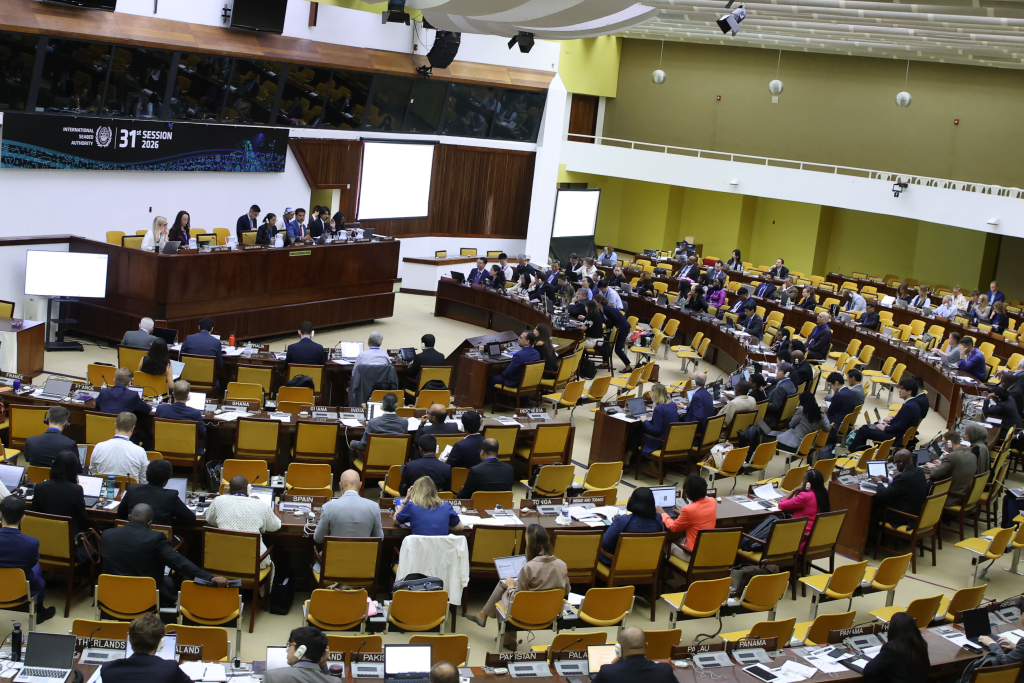
From 9–19 March 2026, the International Seabed Authority (ISA) Council meets in Kingston, Jamaica, following the Legal and Technical Commission (LTC) session held 23 February–6 March (largely behind closed doors). The ISA’s 31st Session effectively operates in two stages: a March negotiating window and a July decision window. That sequencing matters because it creates a practical test of institutional credibility: can the ISA still produce a workable multilateral rulebook before deep-sea mining governance normalizes into parallel, fragmented pathways?
Conflict in the Middle East is boosting value of the Arctic Windfall
By Nong Hong
March 27, 2026
Gulf exporters are scrambling to bypass the Strait of Hormuz after Iran choked off most of the maritime traffic in one of the world’s most critical energy corridors. Saudi Arabia and the United Arab Emirates rushed to divert exports through overland pipelines; officials warned that even naval escorts could not guarantee safe passage. About a fifth of the world’s oil and liquefied natural gas (LNG) trade passed through this narrow waterway.
The immediate shock was felt in the Gulf. The strategic aftershock is being felt much farther north.